Normal Short Vowels Worksheets for Ages 3-9
17 filtered results
-
From - To
Discover engaging Normal Short Vowels Worksheets designed for children ages 3-9 at Kids Academy! These printable resources help young learners master the fundamental sounds of short vowels in a fun and interactive way. Our worksheets feature a variety of activities, including letter recognition, phonetic practice, and creative exercises that encourage language development. Ideal for preschool through early elementary education, these worksheets promote essential reading skills and phonemic awareness, ensuring that students build a strong foundational understanding of short vowels. Explore our collection and watch your child thrive in their literacy journey with quality educational content tailored to their age and learning needs!
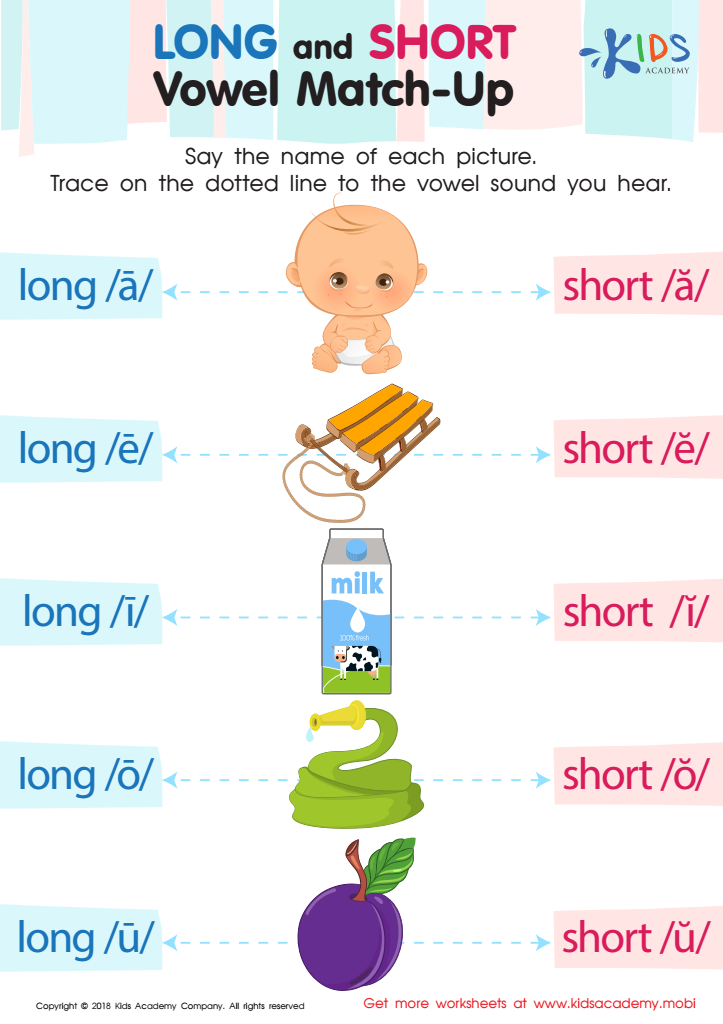
Long and Short Vowel Match up Reading Worksheet
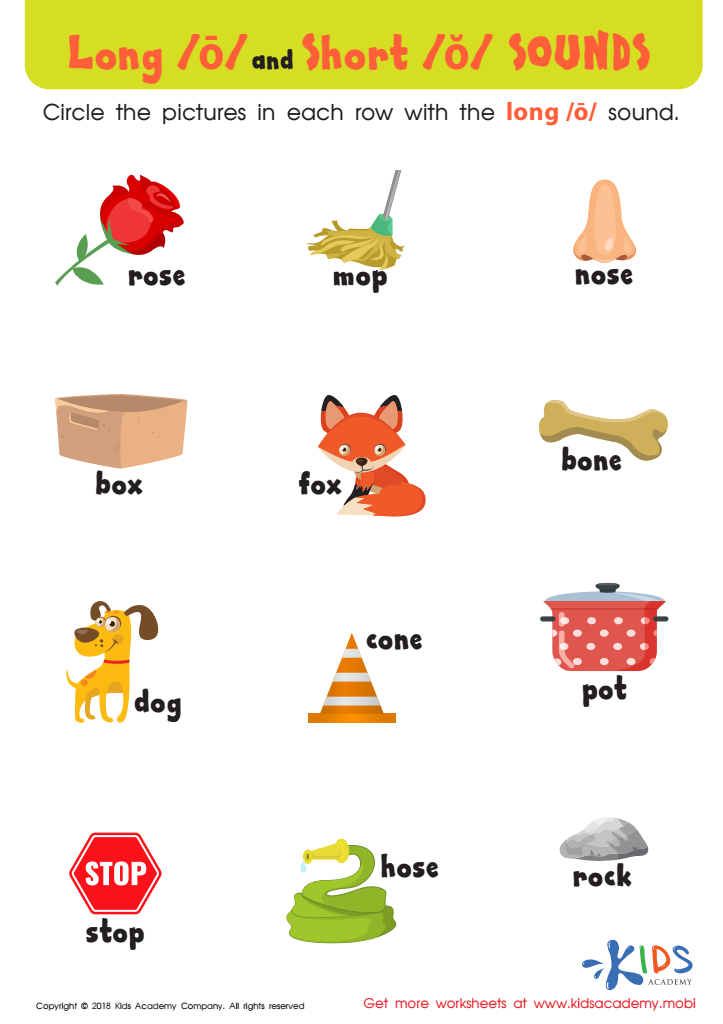
Reading: Long O and Short O Sounds Worksheet
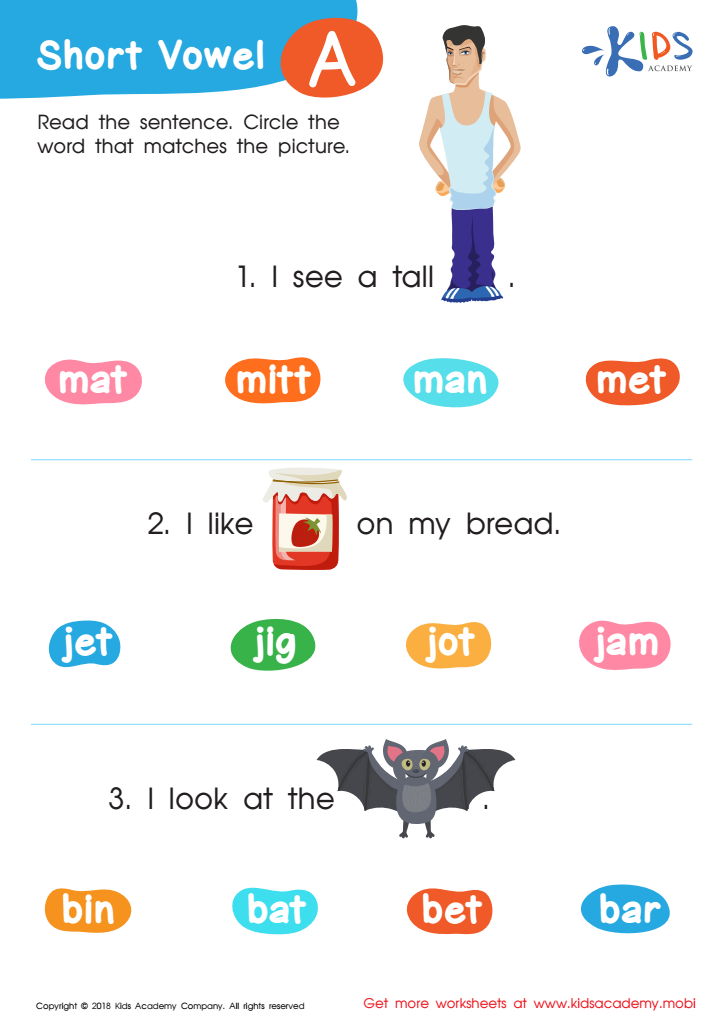
Short Vowel /a/ Worksheet
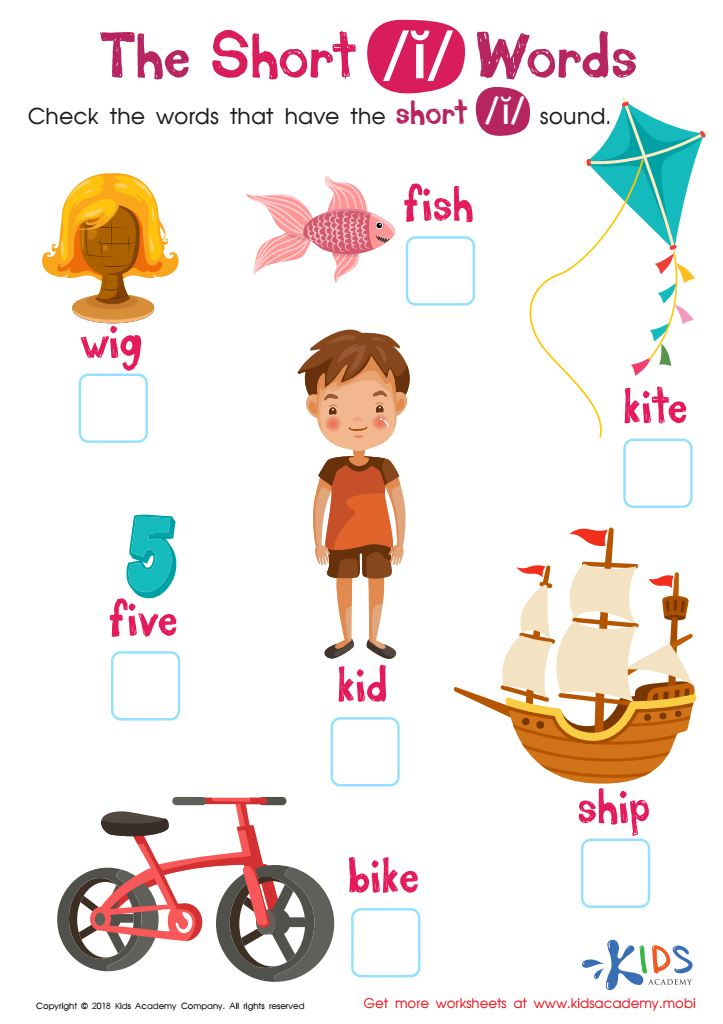
The Short I Words Reading Worksheet
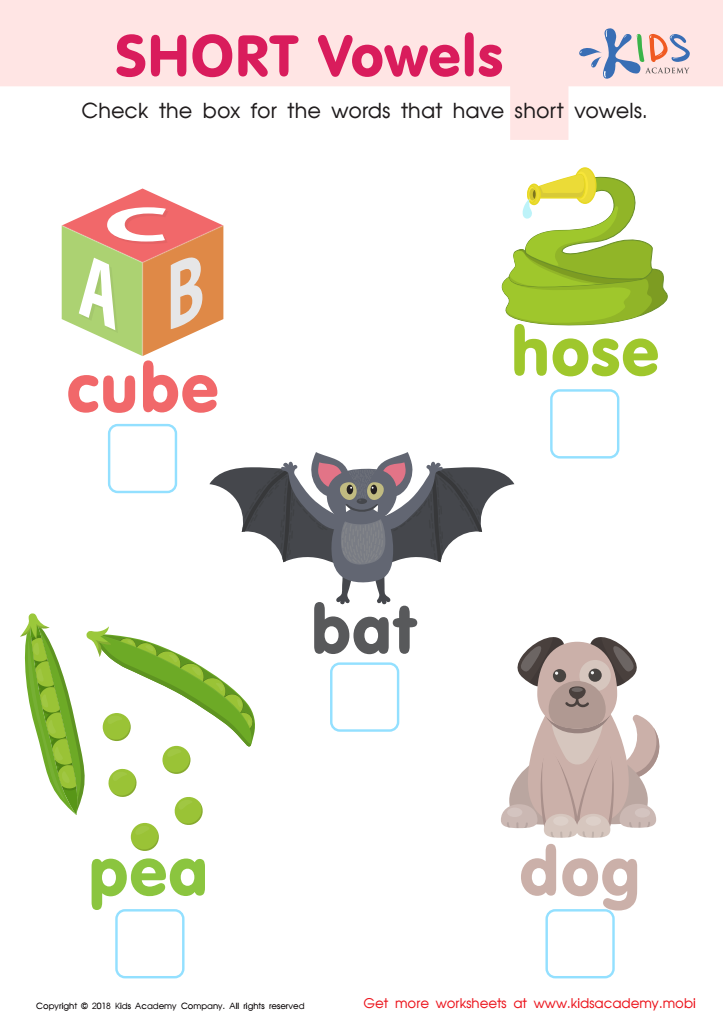
short vowels Worksheet
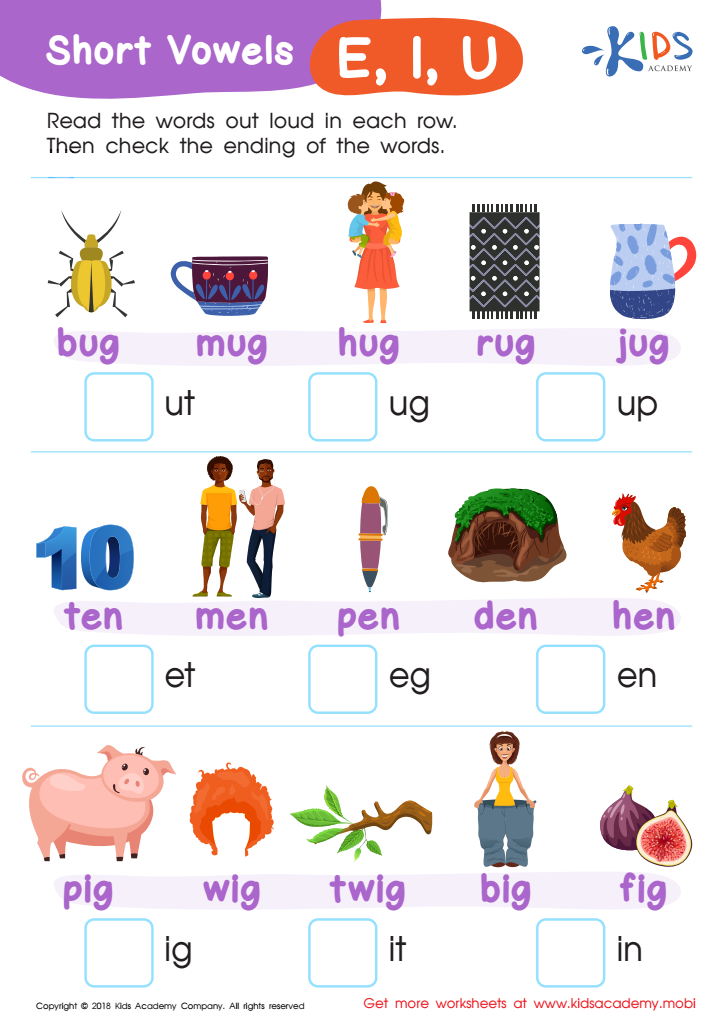
Short Vowels /e/, /i/, and /u/ Worksheet
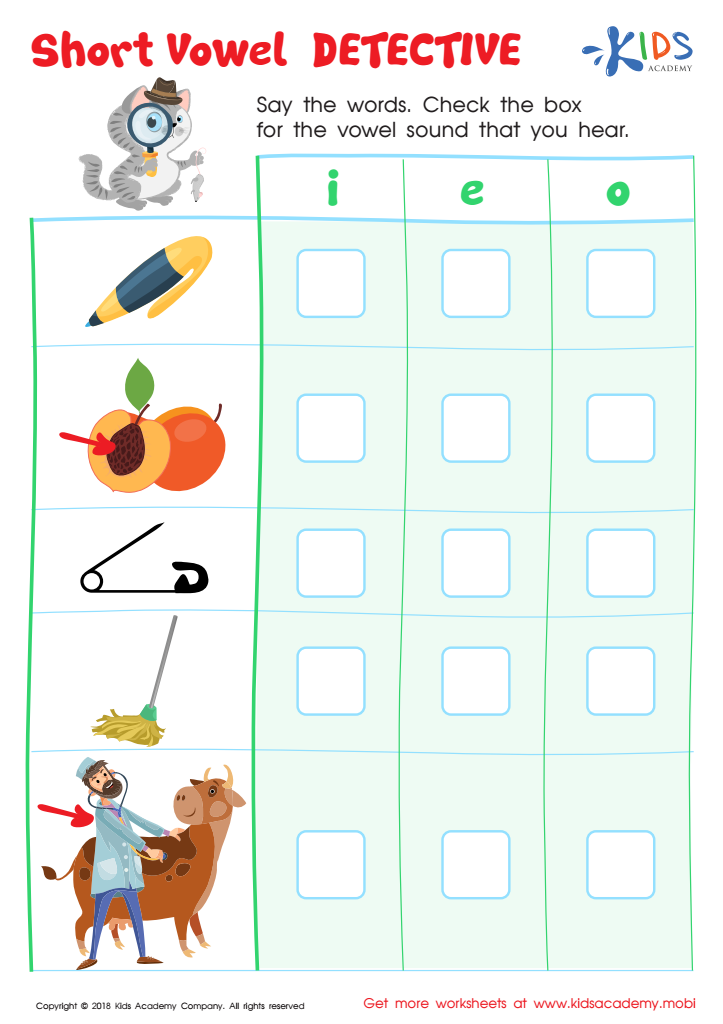
Short Vowel Detective Worksheet
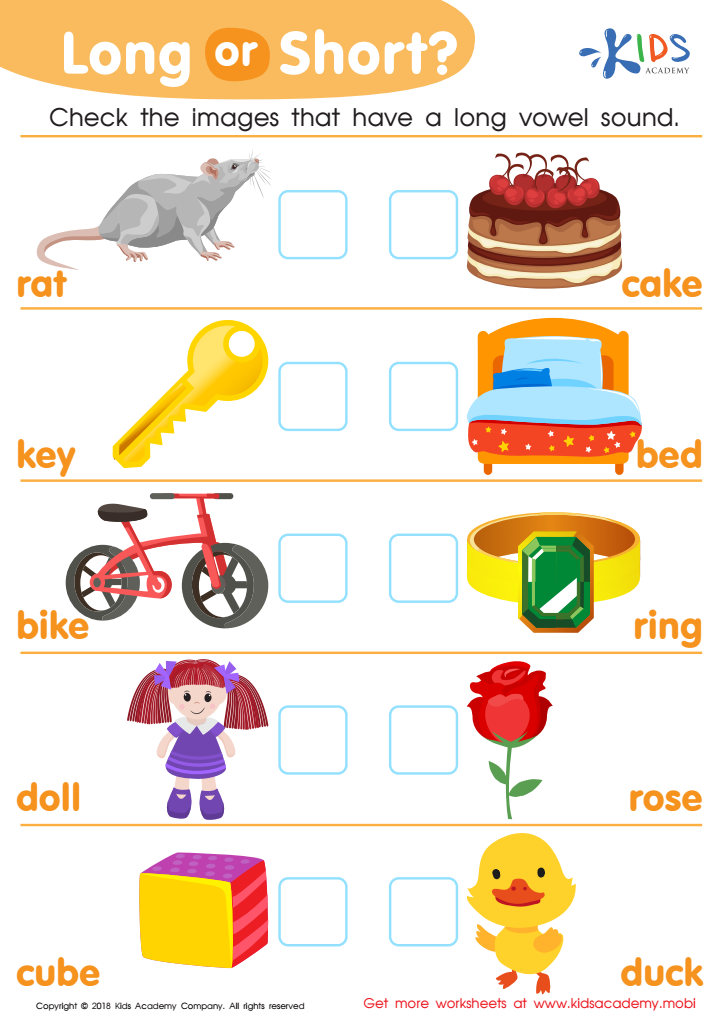
Long or Short Reading Worksheet
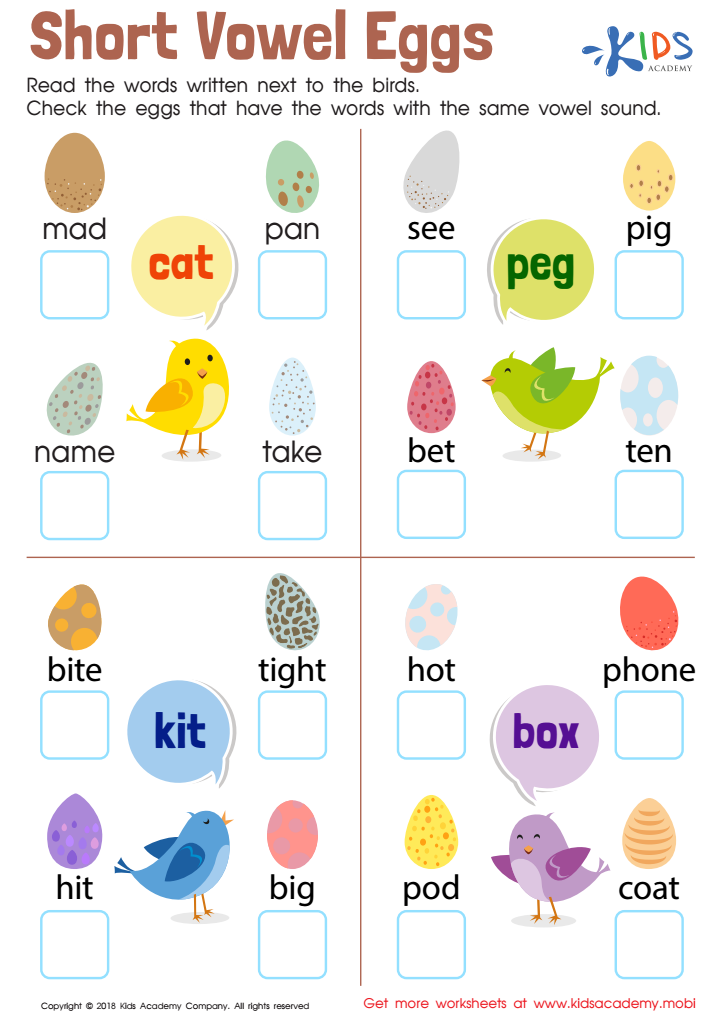
Short Vowel Eggs Worksheet

Long and Short U Worksheet
 Assign to My Students
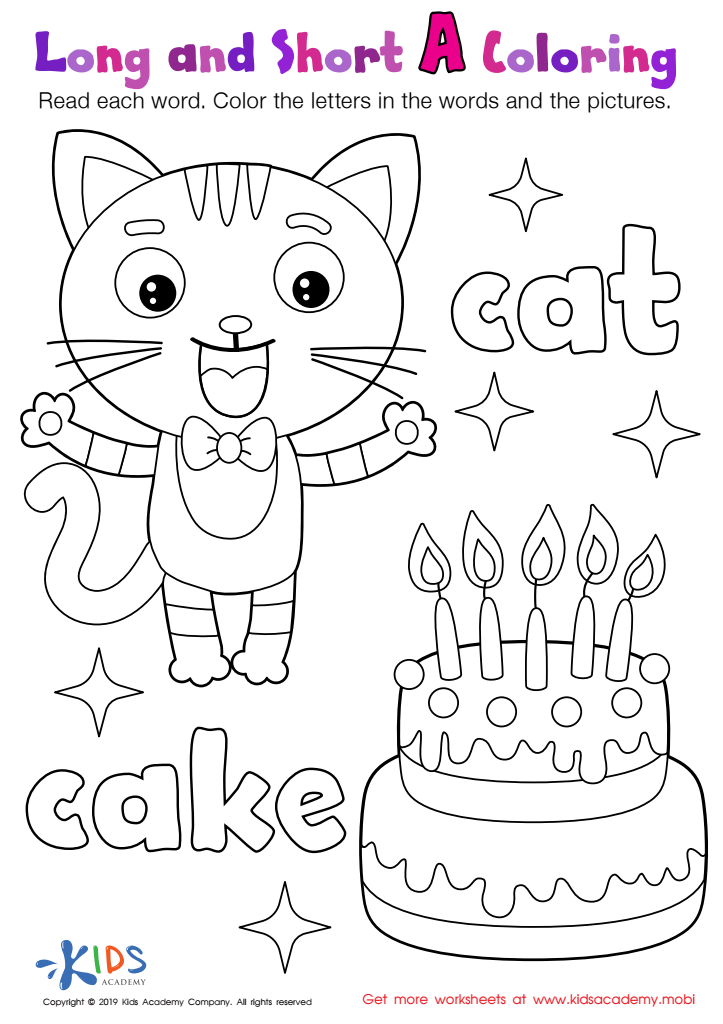
Long and Short A Worksheet
Assign to My Students
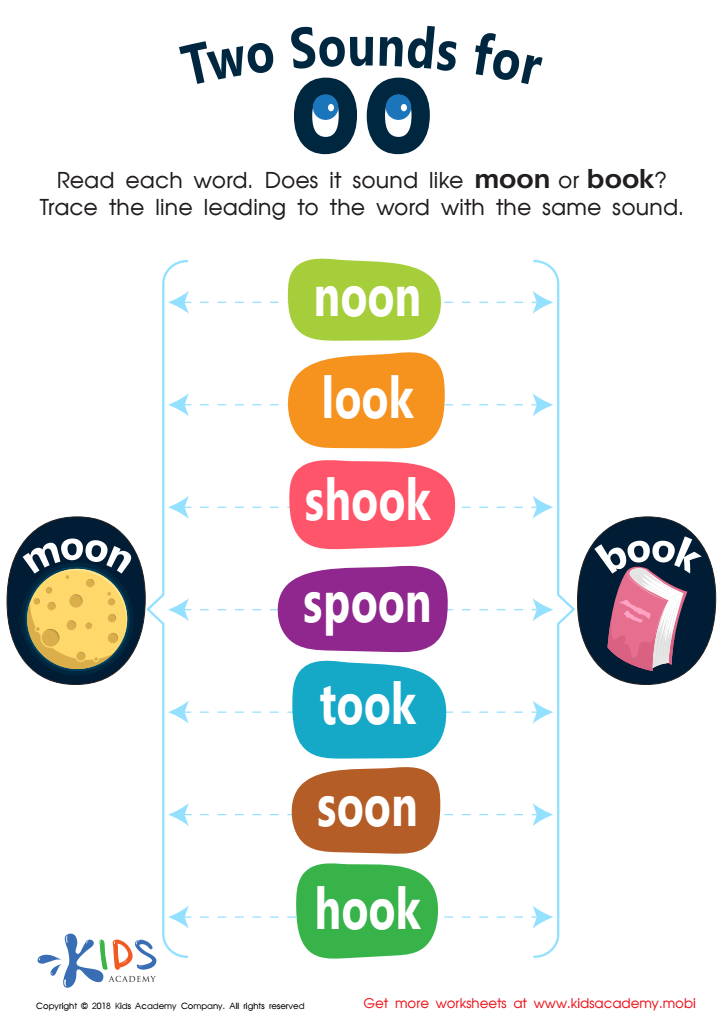
Two Sounds for OO Worksheet
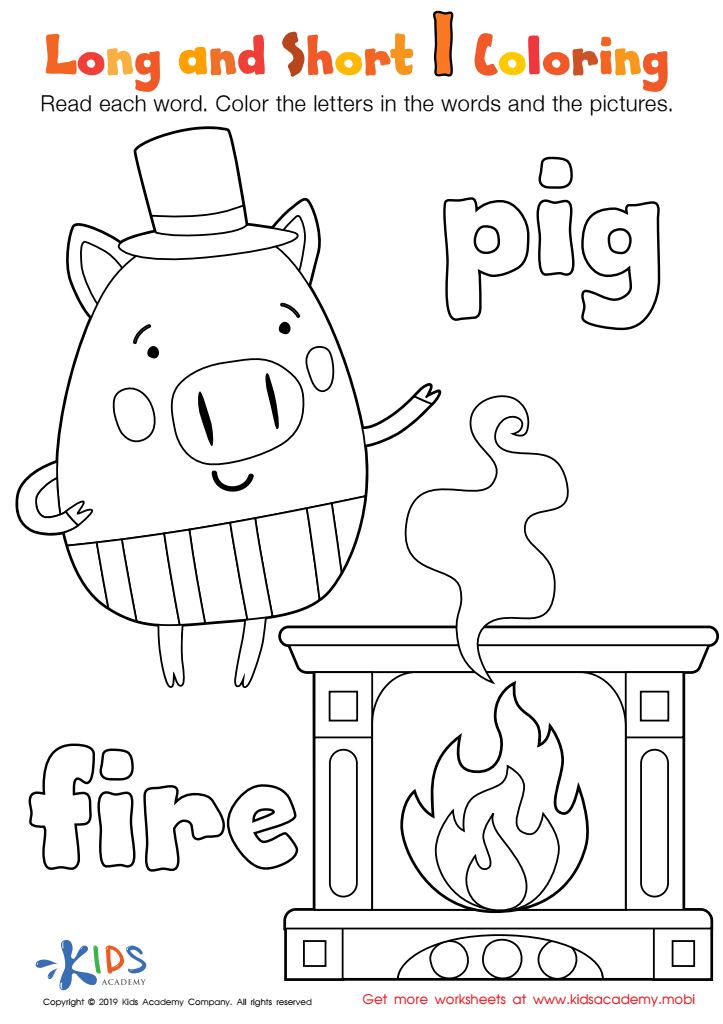
Long and Short I Worksheet
Assign to My Students
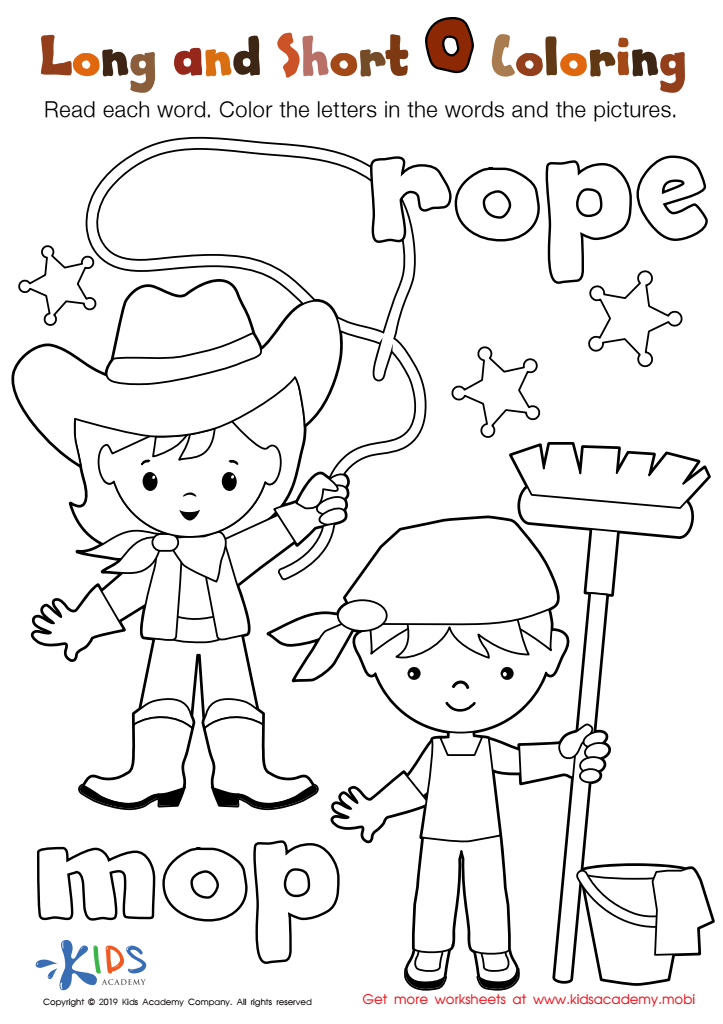
Long and Short O Worksheet
Assign to My Students
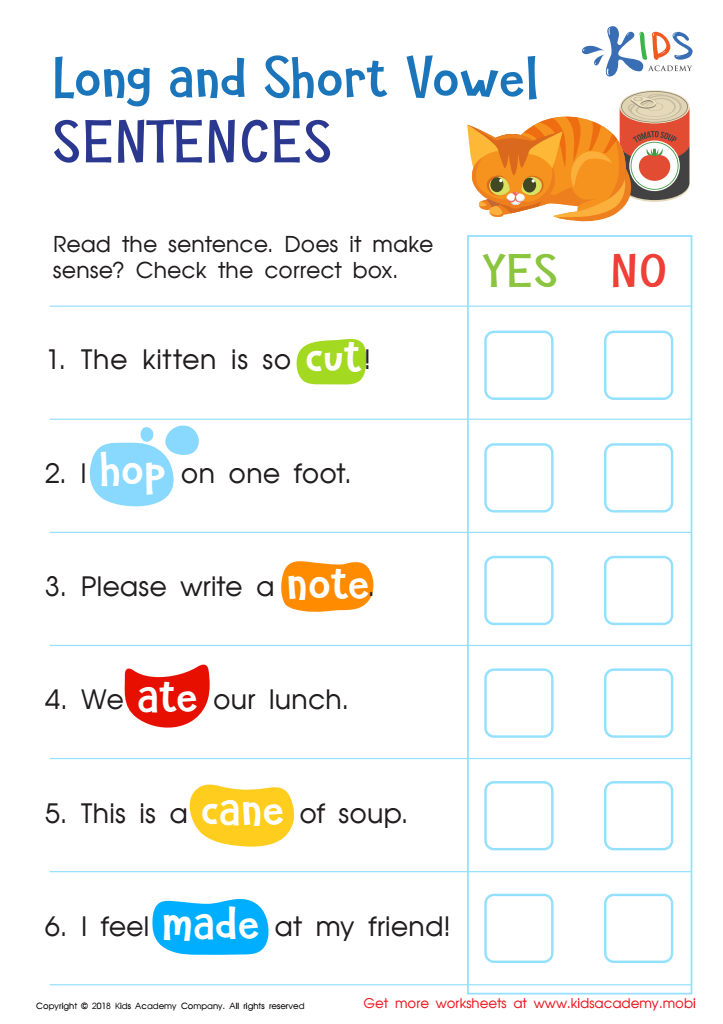
Long and Short Vowel Sentences: Assessment Worksheet
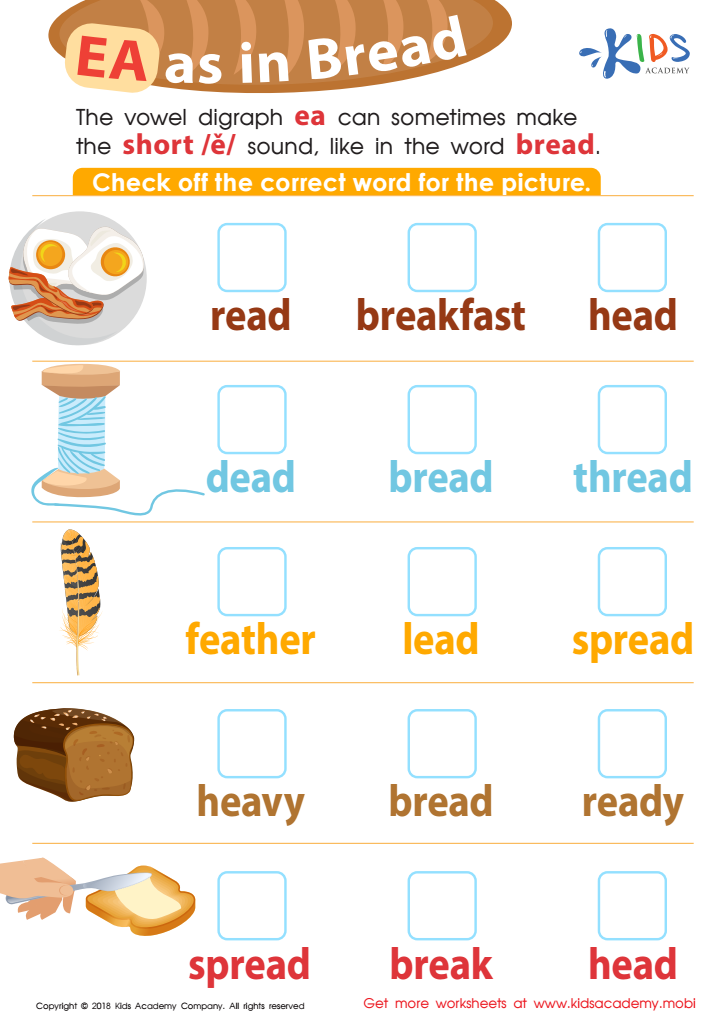
Reading: EA as in Bread Worksheet

Long and Short E Worksheet
Assign to My Students



Understanding normal short vowels is crucial for children ages 3-9 as it lays the foundation for reading and writing skills. Normal short vowels (a, e, i, o, u) are often the first sounds children encounter, and mastering these sounds is essential for developing phonemic awareness. This skill enables children to decode words and improves their ability to recognize patterns in language, making reading more accessible and enjoyable.
For parents and teachers, focusing on short vowels supports overall literacy development. Children who grasp short vowel sounds can more easily learn to blend sounds into words, enhancing their spelling capabilities and expanding their vocabulary. This knowledge also aids in preventing future reading difficulties, creating a more confident reader.
Furthermore, engaging with short vowels can enrich various educational activities, from singing songs and reading books to playing phonics games. These interactive experiences foster positive learning environments and promote critical thinking. Ultimately, awareness of normal short vowels helps adults guide children toward a strong literacy foundation, which is vital for academic success and lifelong learning. Therefore, prioritizing short vowel education is beneficial to both children's cognitive development and their overall love for reading and language.