Normal Subtraction Worksheets for Ages 3-9 - Page 2
29 filtered results
-
From - To
 Assign to My Students
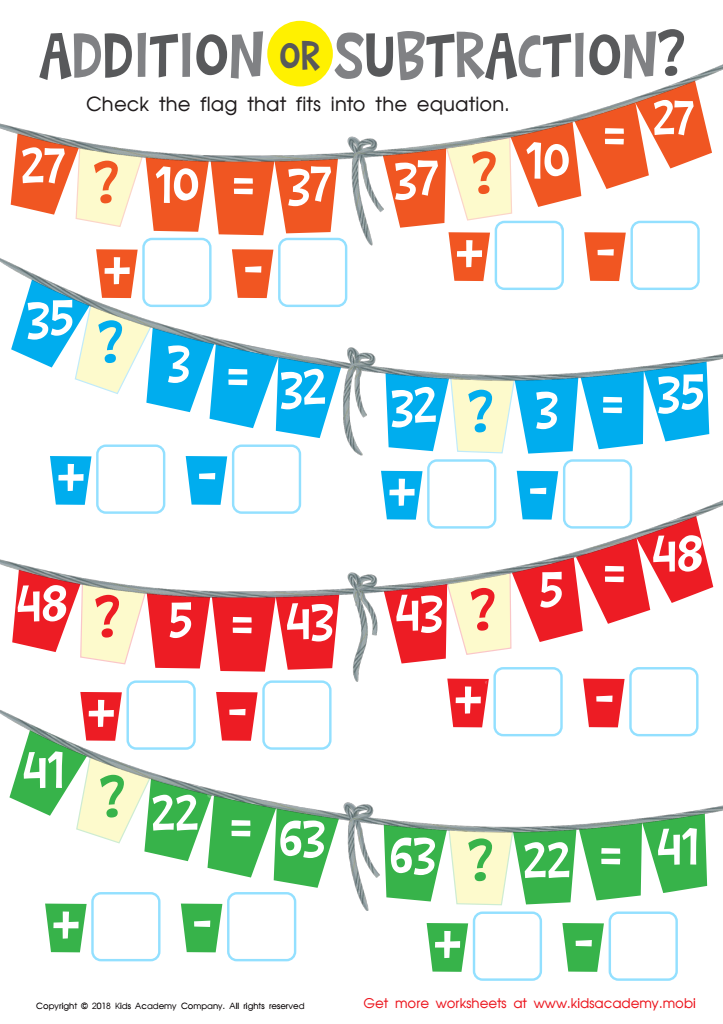
Addition or Subtraction? Worksheet
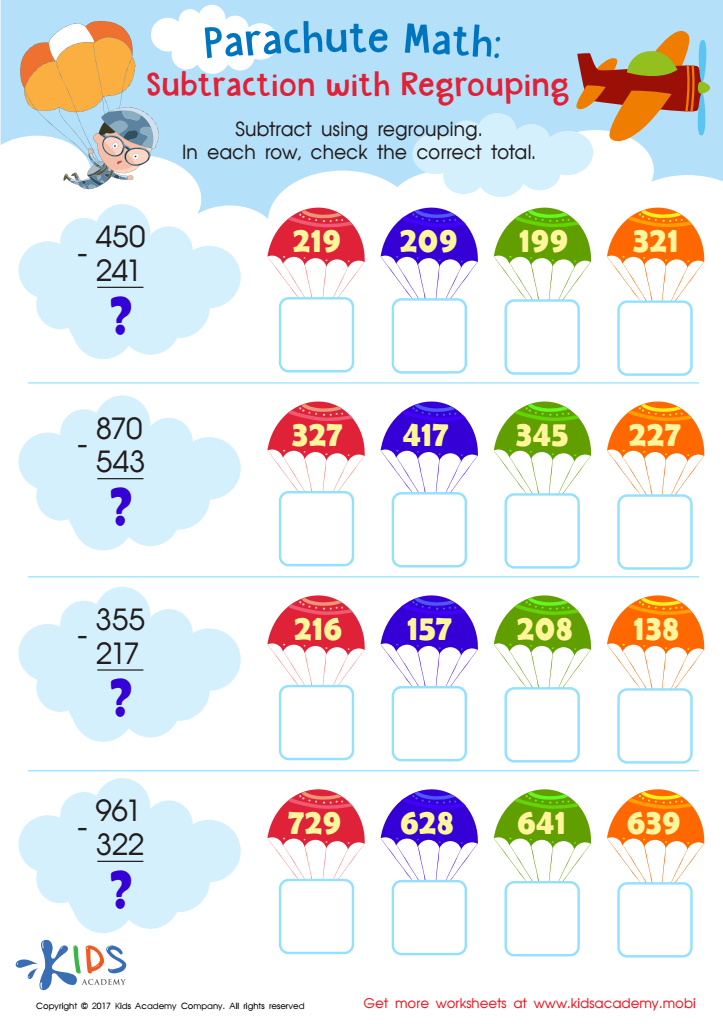
Subtraction with Regrouping for 3rd Grade Worksheet
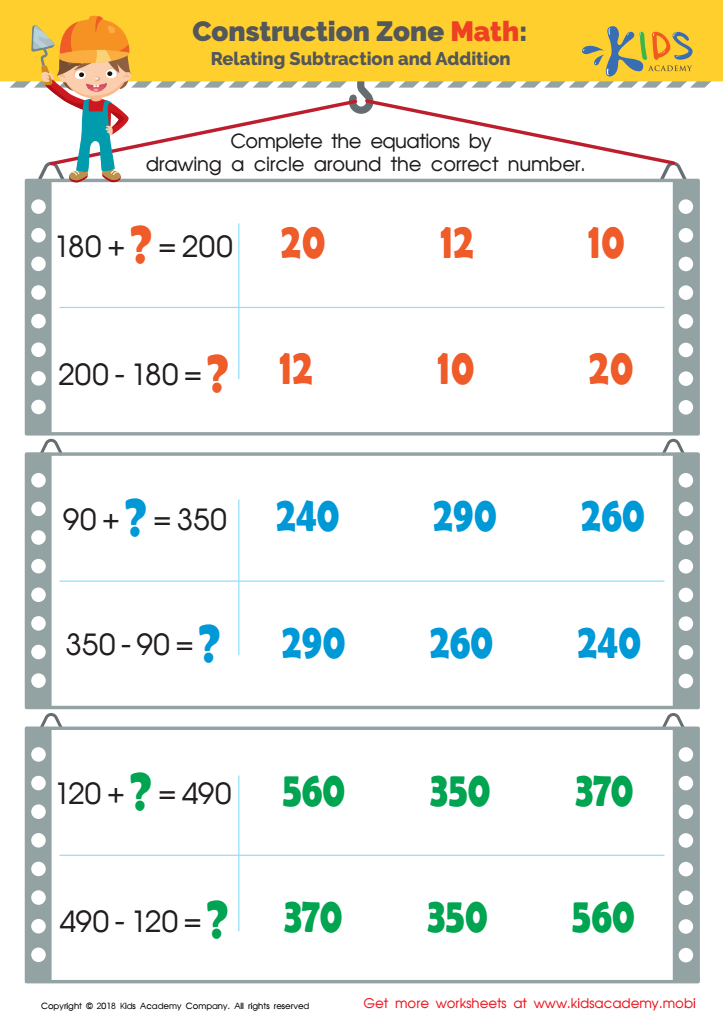
Construction Zone Math: Relating Subtraction and Addition Worksheet
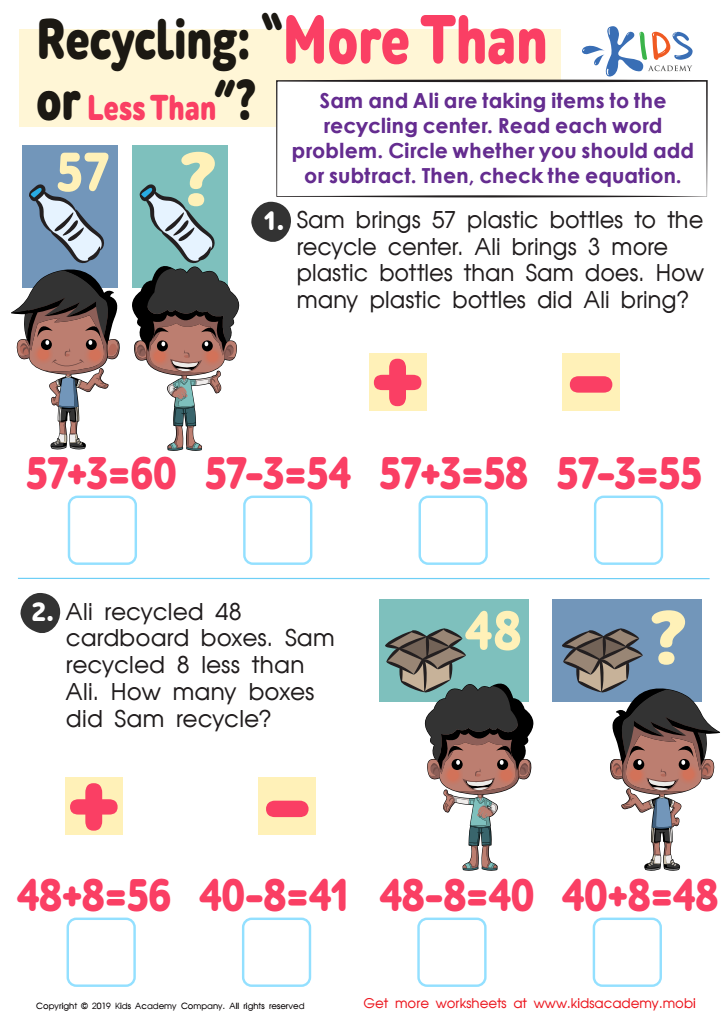
Recycling - More or Less Worksheet







Normal subtraction is a foundational mathematical skill that plays a crucial role in a child’s cognitive development from ages 3 to 9. Understanding subtraction goes beyond mere number manipulation; it enhances critical thinking and problem-solving abilities. For parents and teachers, fostering this skill helps children develop a solid math foundation, which is essential in everyday life.
At a young age, children begin to grasp the concepts of "taking away," which lays the groundwork for more complex mathematical operations. Normal subtraction encourages children to visualize relationships between numbers, fostering number sense and spatial awareness. It also introduces them to the concept of zero as a number, which is pivotal in their math journey.
Furthermore, mastering subtraction can greatly boost a child's confidence in their abilities. Success in early mathematical tasks often leads to a positive attitude towards learning in general. By integrating normal subtraction into fun and engaging activities, adults can make math enjoyable, sparking a lifelong interest in learning.
In conclusion, parents and teachers should emphasize normal subtraction as it builds essential cognitive skills and fosters a positive, foundational understanding of mathematics, setting the stage for future academic success.