Fine Motor Skills Normal Geometry Worksheets for Ages 5-7
11 filtered results
-
From - To
Enhance your child's fine motor skills with our engaging Fine Motor Skills Normal Geometry Worksheets designed specifically for ages 5-7. These worksheets offer a fun and interactive approach to learning geometry concepts, such as shapes, patterns, and spatial awareness. Each activity is crafted to promote hand-eye coordination and dexterity, vital foundations for writing and other essential skills. With colorful illustrations and age-appropriate challenges, children will enjoy practicing their fine motor skills while exploring the world of geometry. Perfect for teachers and parents, these worksheets serve as valuable resources for early learners eager to develop both their cognitive and physical abilities.
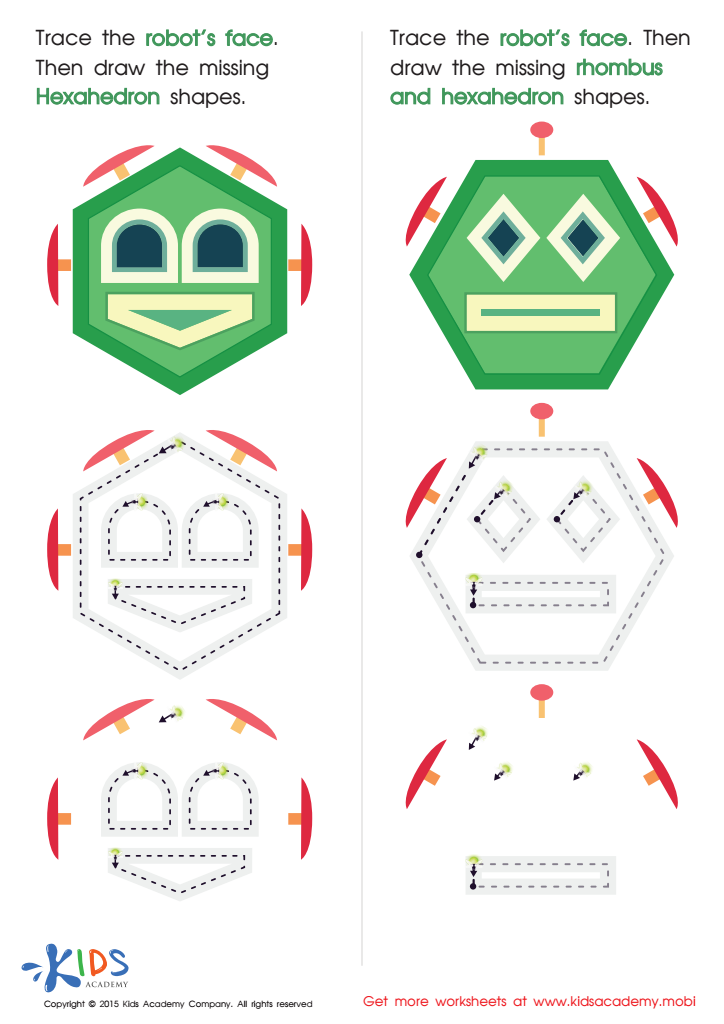
Practice Drawing Hexahedrons And a Rhombus Worksheet
 Assign to My Students











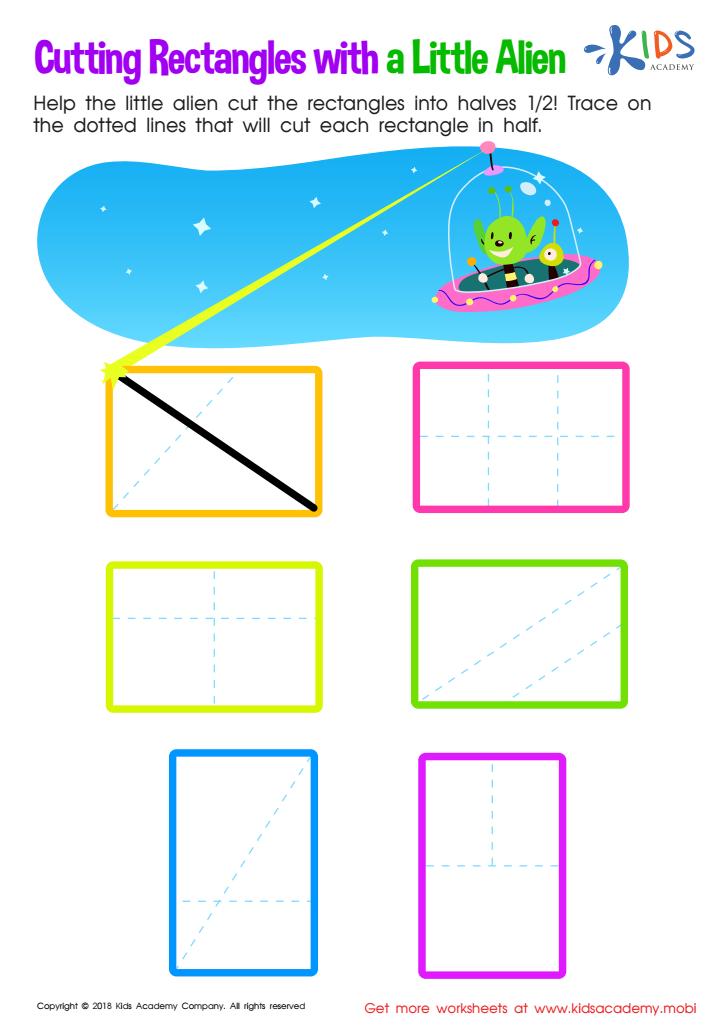
Cutting Rectangles with Alien Worksheet
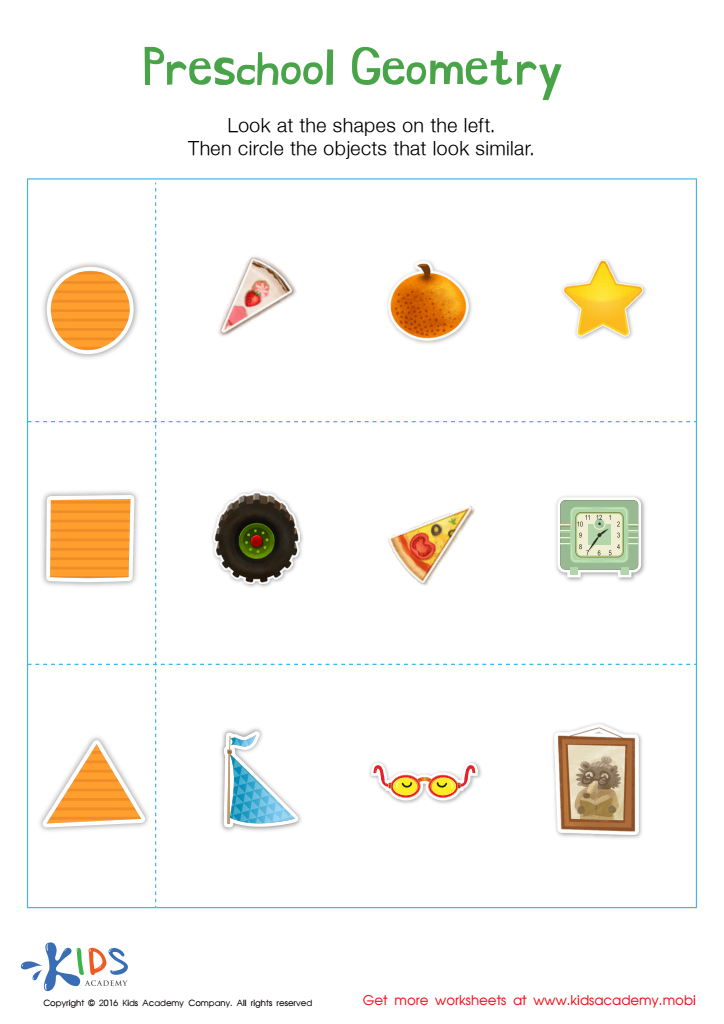
Preschool Geometry Match Up Worksheet

Learning to Draw Crescents And Triangles Worksheet
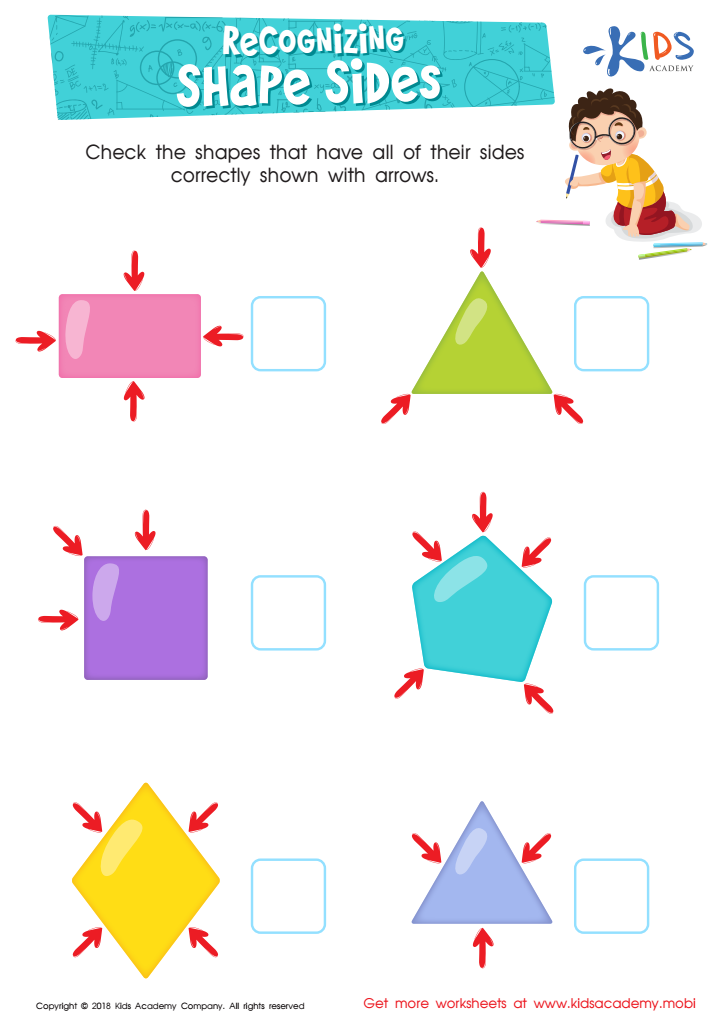
Recognizing Shape Sides Worksheet
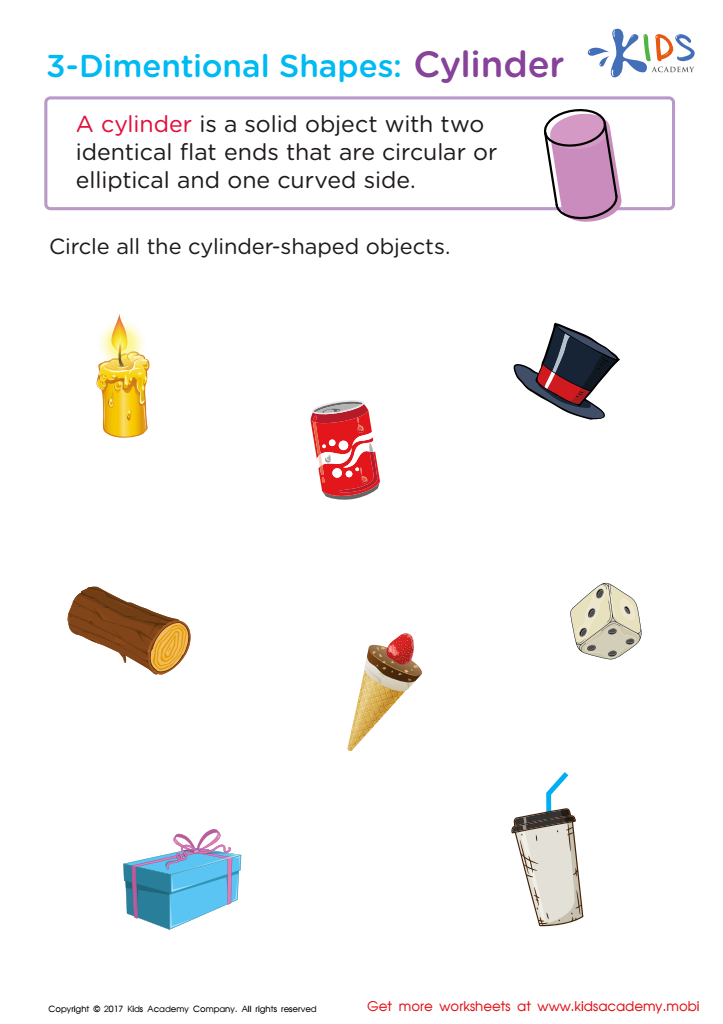
Three–Dimensional Shapes: Cylinder Worksheet
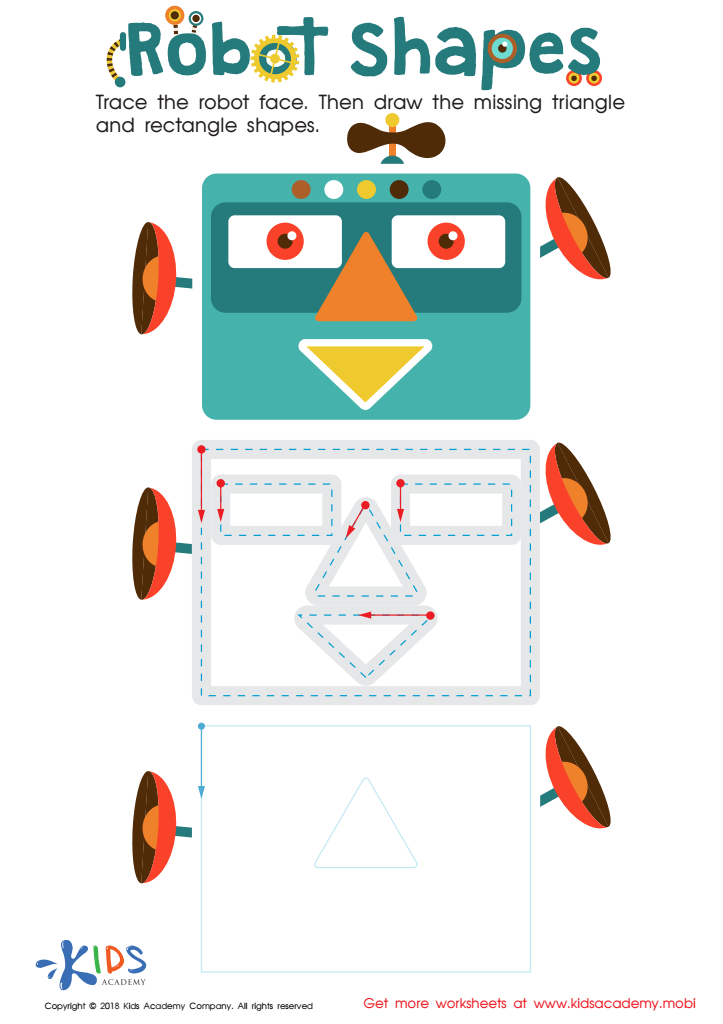
Robot Shapes Worksheet
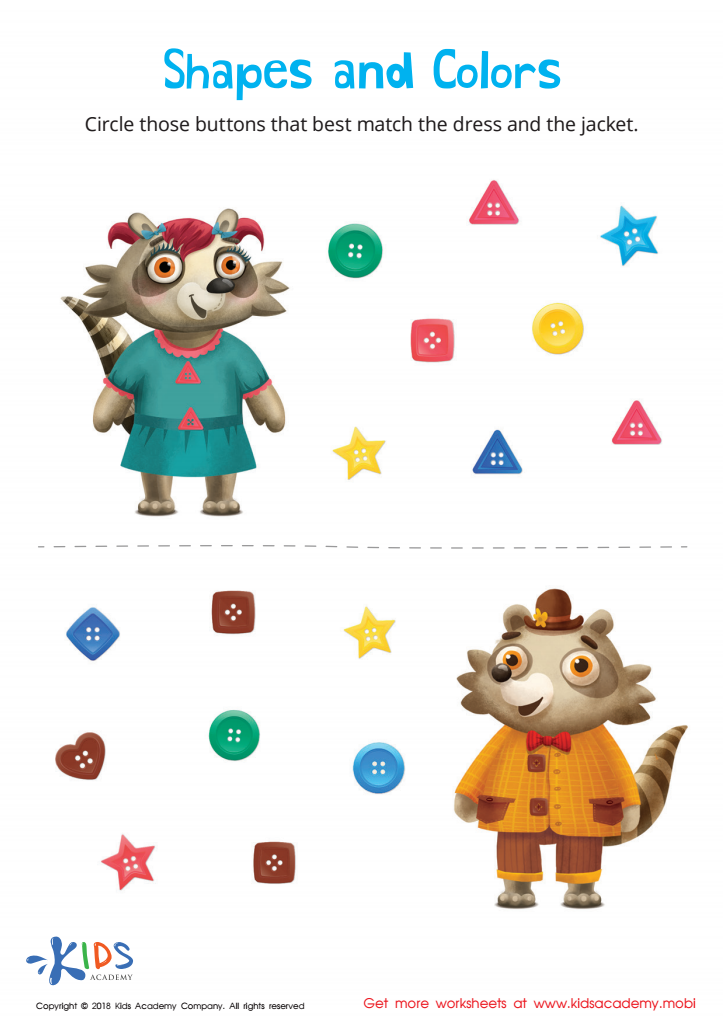
Shapes and Colors Worksheet
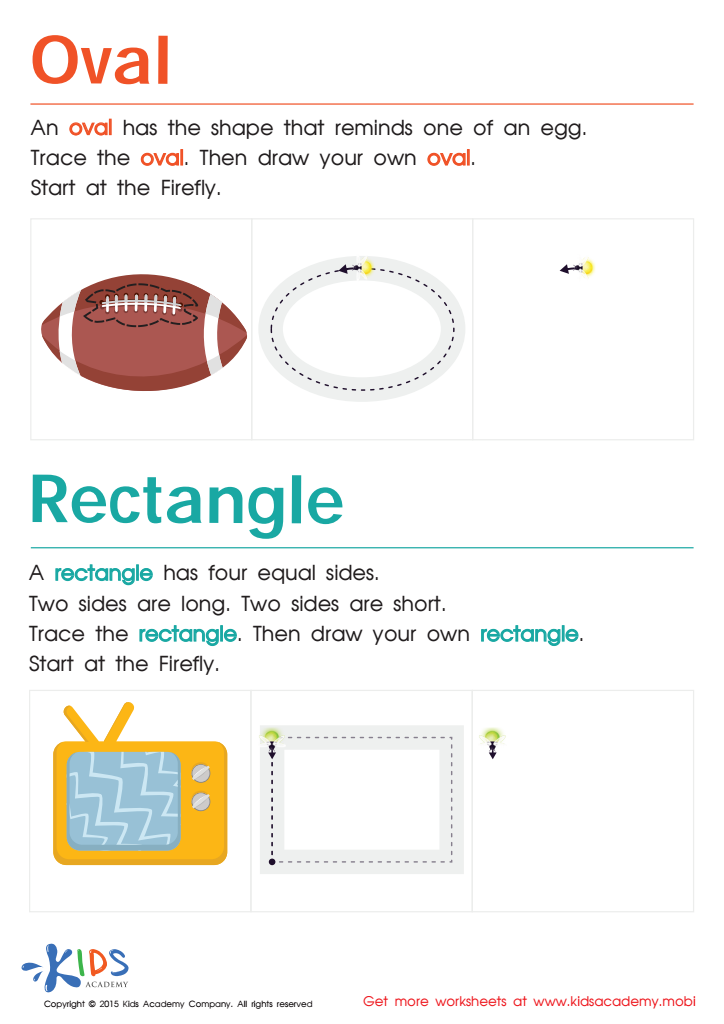
Easy Drawing of Ovals And Rectangles Worksheet
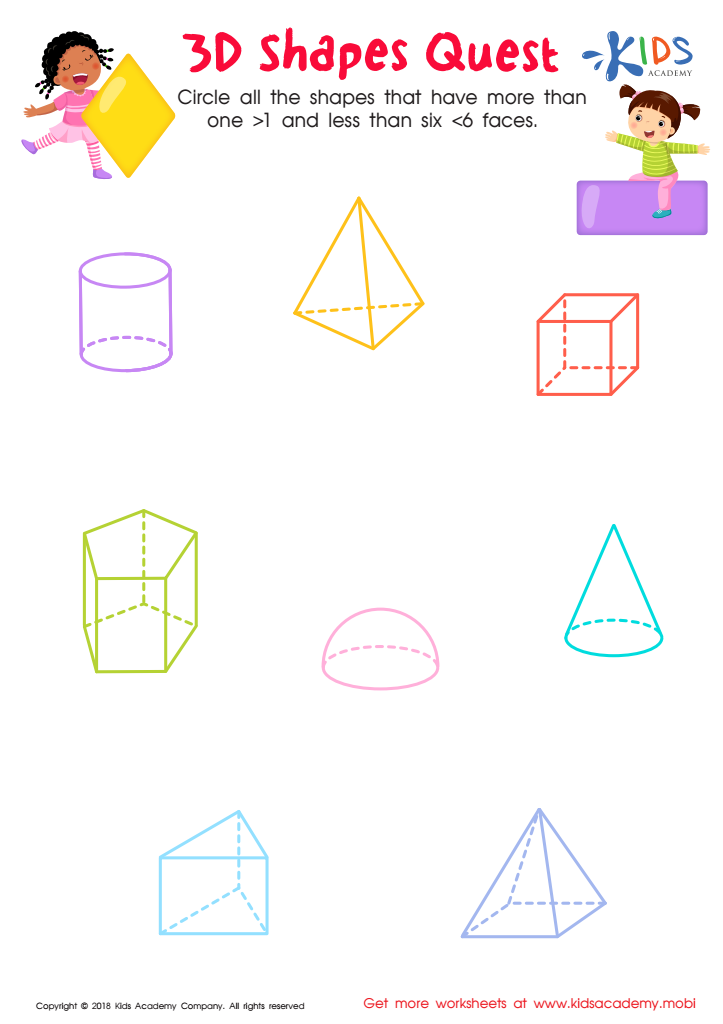
3D Shapes Quest Worksheet
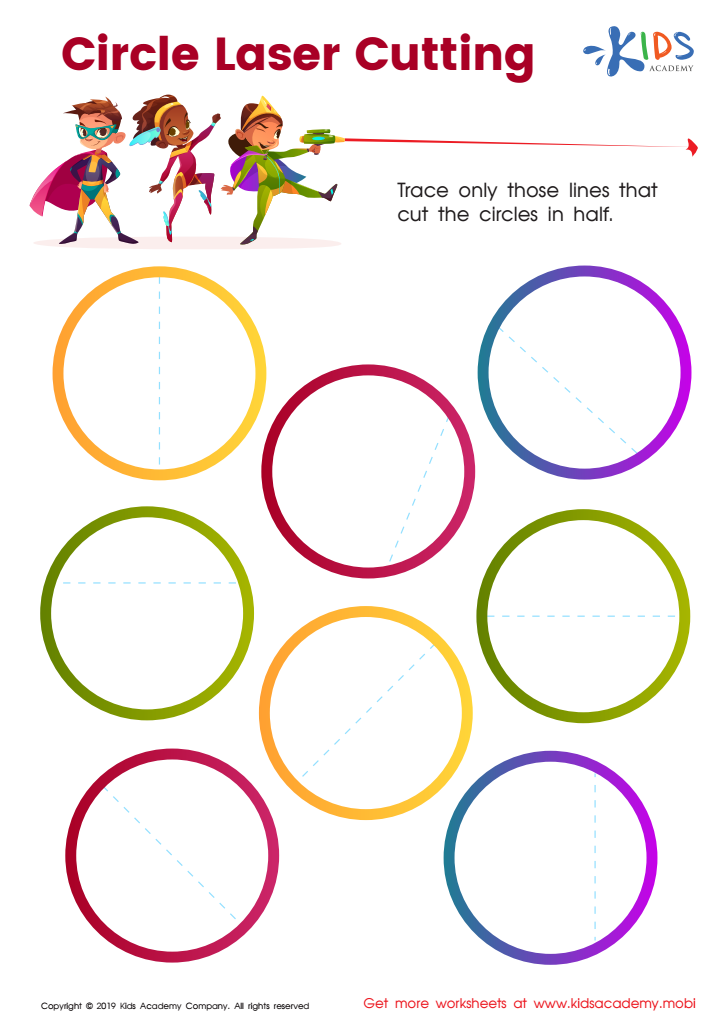
Circle Laser Cutting Worksheet








Fine motor skills are crucial for children's overall development, especially in the age group of 5-7 years. During this period, children are not just engaged in play but also in serious learning outcomes. Fine motor skills involve the coordination of small muscles, mostly in the hands and fingers, and are fundamental in performing tasks such as holding a pencil, buttoning clothes, and cutting with scissors. In the context of geometry, normal geometry involves spatial awareness and the ability to understand shapes, sizes, and their relationships.
When parents and teachers emphasize fine motor skill development concerning geometry, they help foster children’s early mathematical understanding and cognitive abilities. Engaging in activities like tracing geometric shapes, building with blocks, or drawing shapes promotes not just motor skills but also problem-solving skills. If children can manipulate shapes, they will better grasp concepts like symmetry, angles, and measurements later on, which are essential for their academic journey.
Moreover, strong fine motor skills promote independent self-care, enhance focus and concentration, and build a foundation for future writing skills. Educators and parents should collaboratively create a rich environment filled with activities that enhance these skills, ensuring that children are set up for success in both academics and everyday life.








