Normal Geometry Worksheets for Ages 5-8 - Page 4
75 filtered results
-
From - To
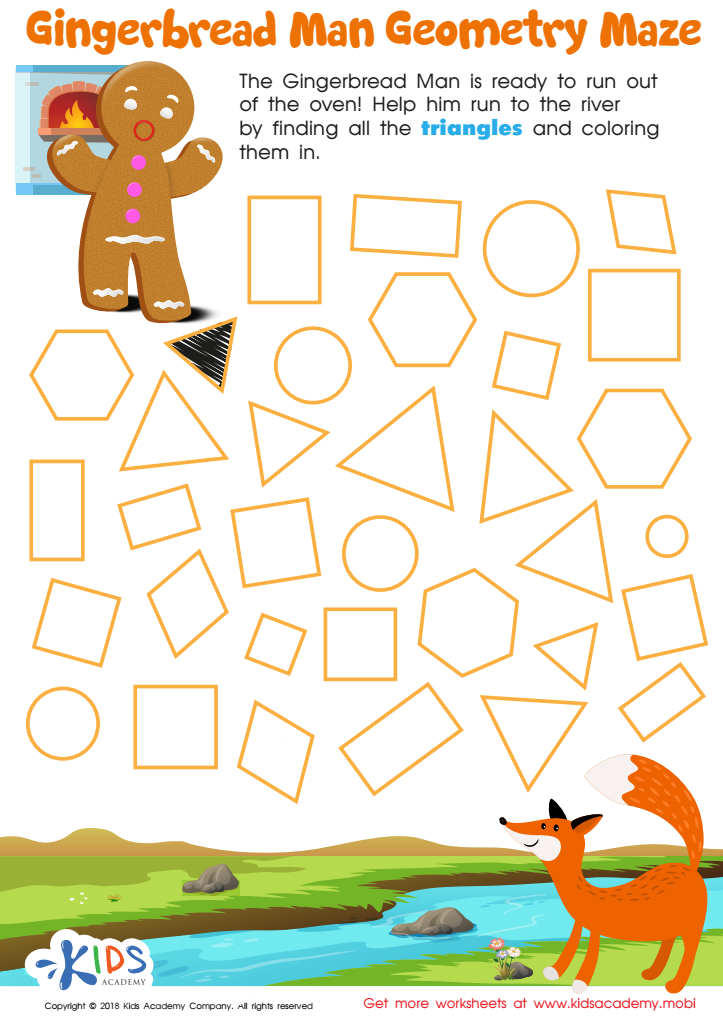
Gingerbread Man Geometry Maze Worksheet
 Assign to My Students











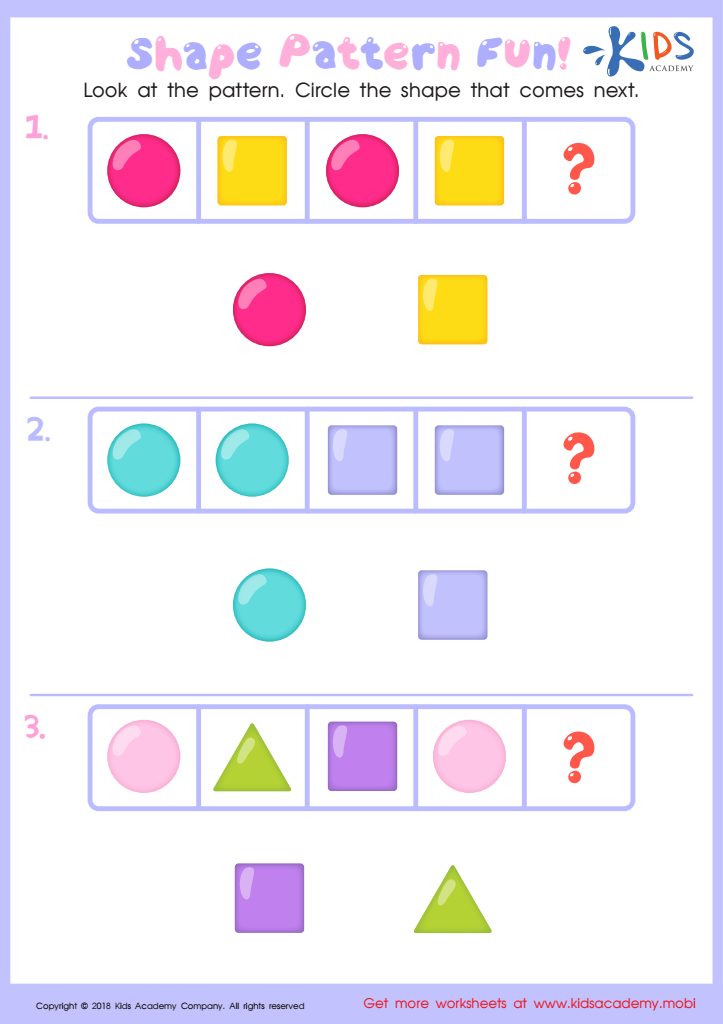
Shape Pattern Fun Worksheet
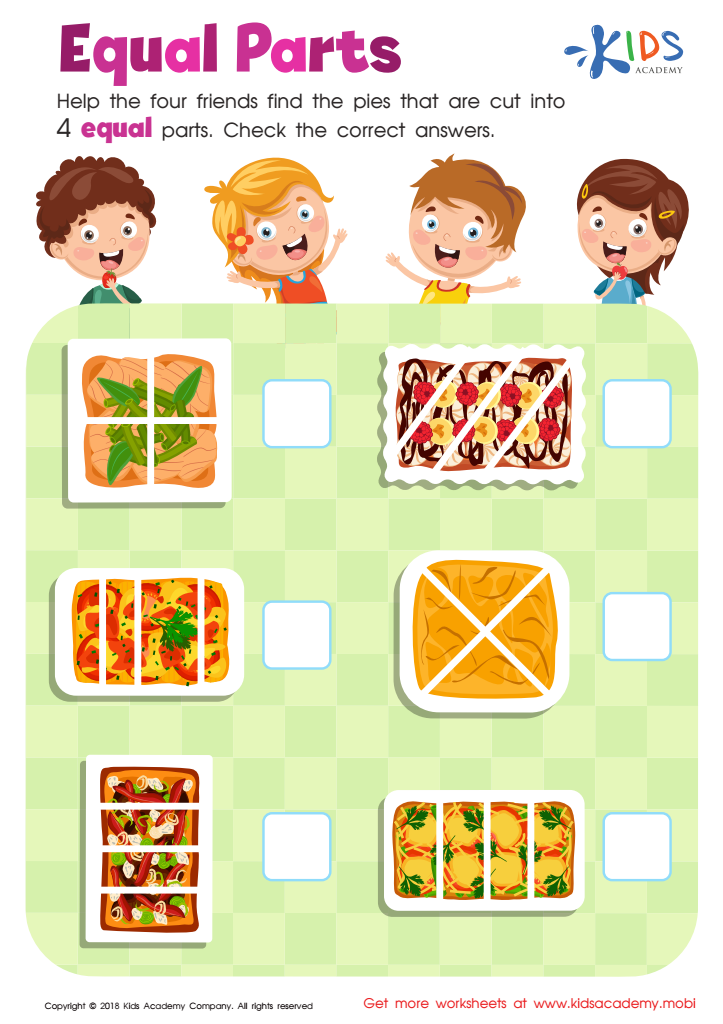
Equal Parts: Food Worksheet








Parents and teachers should care about Normal Geometry for children aged 5-8 because it lays the foundational skills for critical thinking and spatial awareness that are vital in everyday life and future learning. During these early years, children are naturally curious and eager to explore their environment. Introducing geometry concepts, such as shapes, sizes, and spatial relationships, nurtures this curiosity and enhances cognitive development through hands-on exploration.
Understanding basic geometric concepts can improve children's problem-solving skills and boost their confidence in tackling more complex mathematical challenges in the future. It provides them with tools to communicate ideas effectively and understand the structure of the world around them. Engaging with geometry through playful activities such as building blocks or drawing shapes encourages creativity and imagination.
Additionally, incorporating geometric concepts into early education makes learning fun and interactive, supporting diverse learning styles and making math relatable. By fostering geometry skills early on, parents and teachers contribute to a child’s overall academic success and life skills, instilling a love for learning that extends beyond the classroom. Investing time in understanding Normal Geometry thus contributes not only to a child’s mathematical understanding but also to their holistic development as confident and capable individuals.








