
Cognitive Development Normal Math Worksheets for Ages 6-7
22 filtered results
Difficulty Level
Grade
Age
-
From - To
Subject
Activity
Standards
Ignite your child’s math brainpower with our Cognitive Development Normal Math Worksheets for Ages 6-7. These engaging worksheets are meticulously designed to enhance critical thinking, problem-solving, and logical reasoning skills essential for early learners. They encompass a variety of activities that challenge and inspire, from basic arithmetic to complex patterns, ensuring each child stays captivated and learns joyfully. Perfect for at-home or classroom use, these worksheets align with educational standards and provide a strong foundation for future math success. Encourage your youngster’s cognitive growth and love for math today with our high-quality learning tools. Make math fun and impactful!
Favorites
With answer key
Interactive
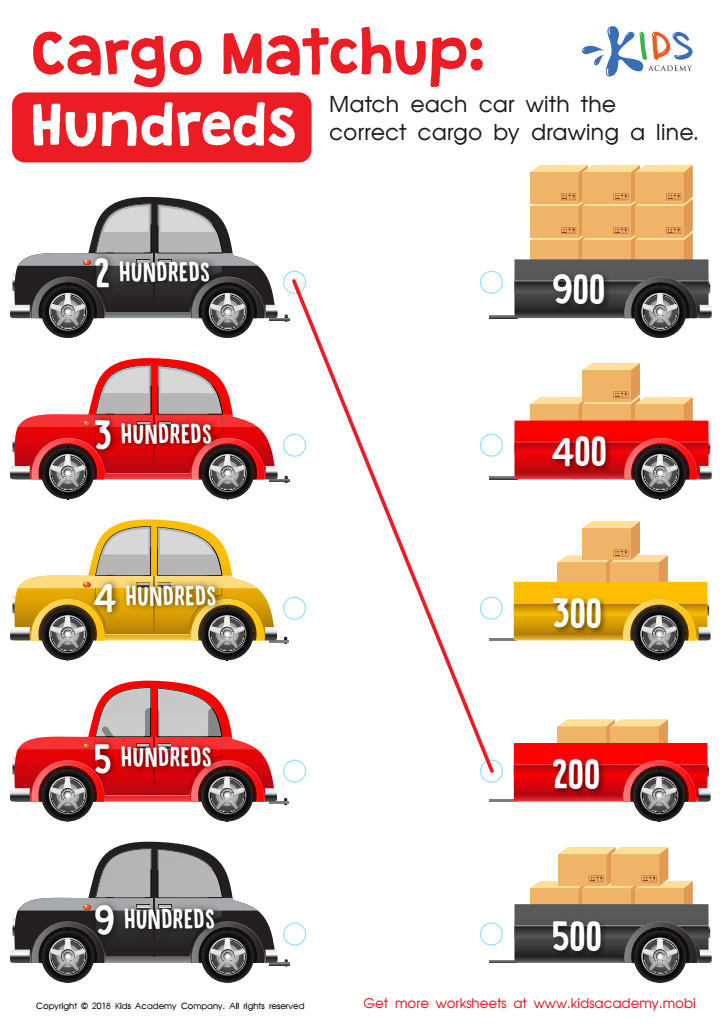
Cargo Matchup: Hundreds Worksheet
Introduce your child to counting in the hundreds using this simple worksheet. Match each car to its correct cargo by drawing a line. If they can count 1-100, they can learn to count in the hundreds! Help them master this skill with the worksheet and they'll be counting away in no time.
 Assign to My Students
Cargo Matchup: Hundreds Worksheet
Worksheet
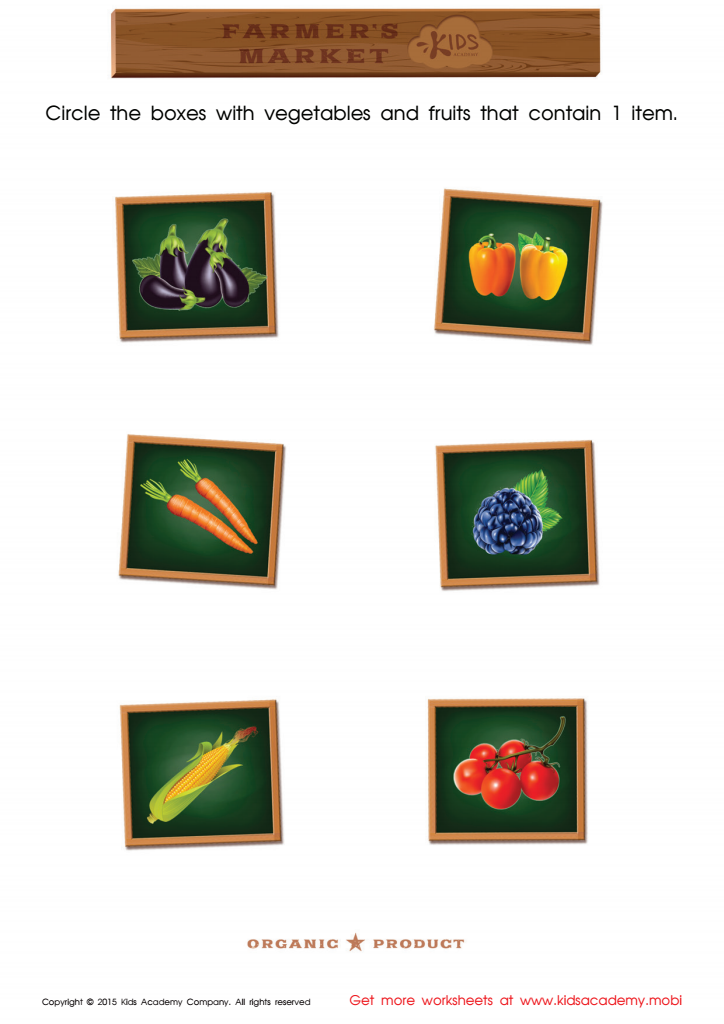
Count and Match Boxes with Vegetables
Print one and help your kid sharp his counting skills. With a variety of veggies to count, such as raspberries and eggplants, your little mathematician will have lots of fun.
Count and Match Boxes with Vegetables
Worksheet
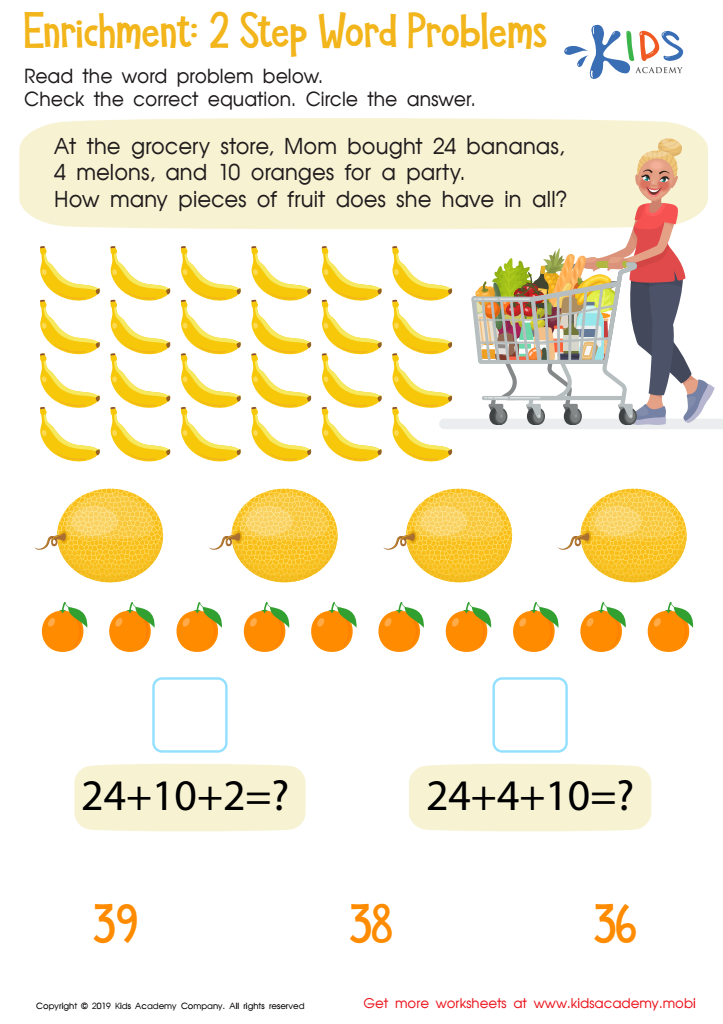
Enrichment -2 Step Word Problems Worksheet
Help your students learn math easier and faster with this colorful worksheet. Read the word problem and then guide them in checking the correct equation and finding the answer. Your students will benefit from the extra help, as they work through new concepts each day.
Enrichment -2 Step Word Problems Worksheet
Worksheet
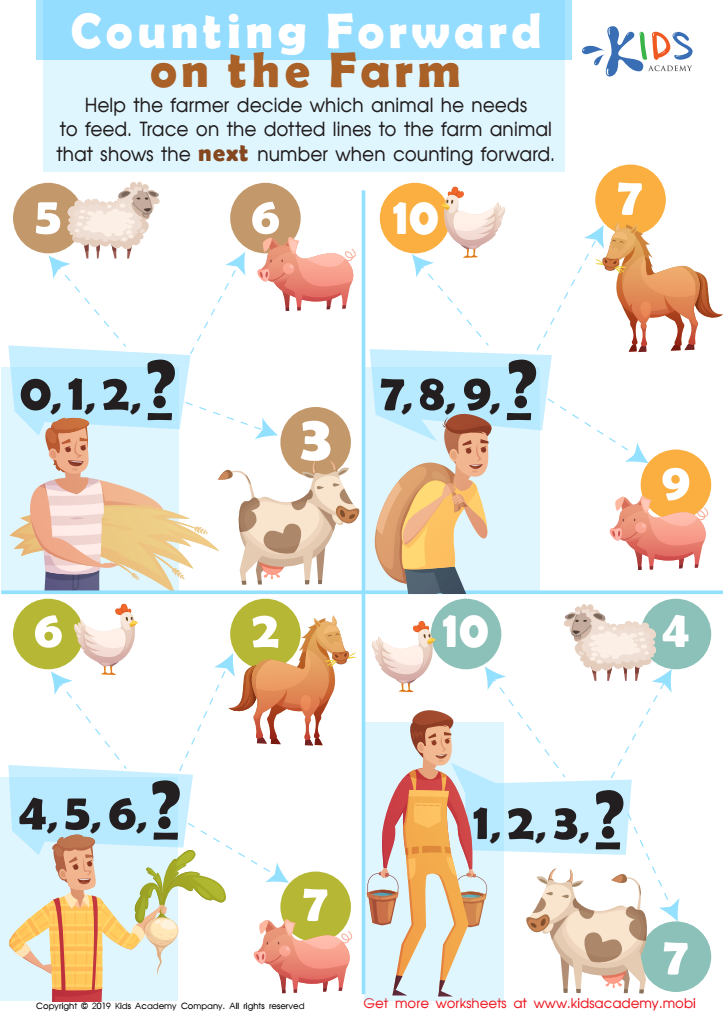
Counting Forward On the Farm Worksheet
Help your child practice counting with this fun worksheet. Have them help a farmer feed the right animal by counting on from a starting point. This activity will help them build number line thinking and refine fine motor skills.
Counting Forward On the Farm Worksheet
Worksheet
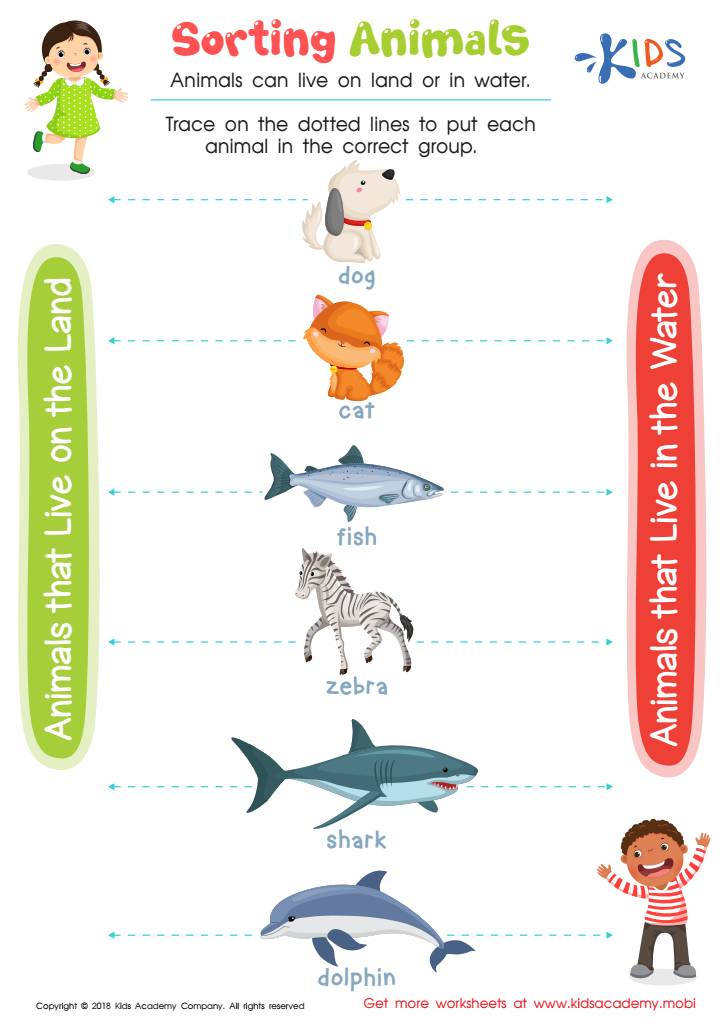
Sorting Animals Worksheet
Your kids will love this free, interactive worksheet! With image clues, they can read and trace the animal names, and then sort them into groups of land or water animals. It's an enjoyable way to boost their critical thinking, fine motor and prior knowledge skills.
Sorting Animals Worksheet
Worksheet
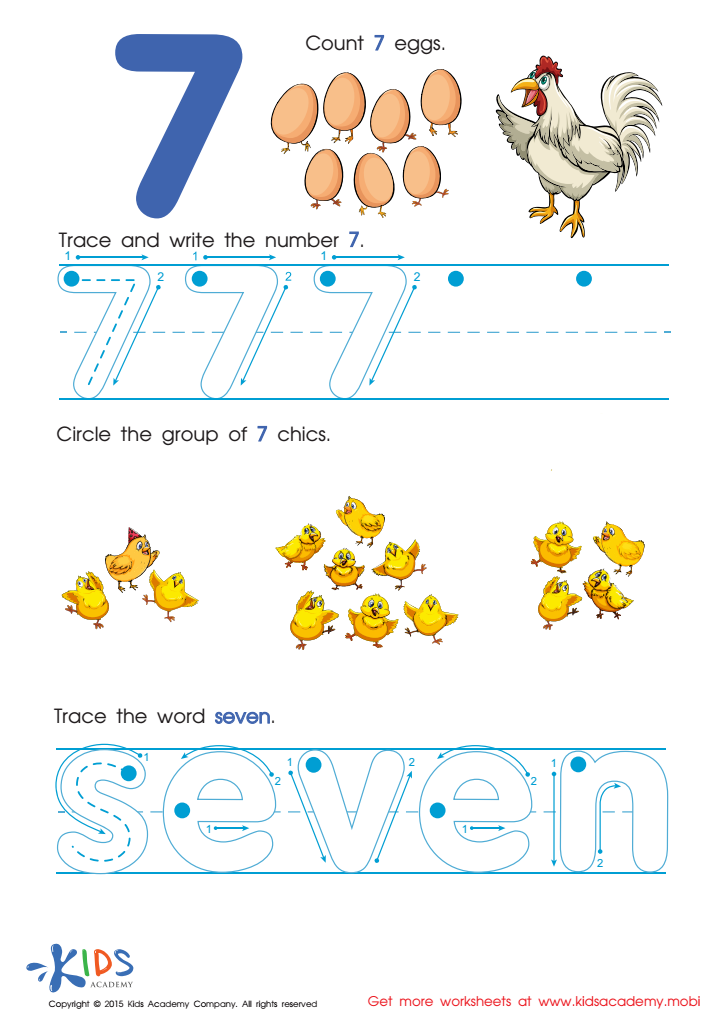
Trace And Write Number 7 with Fun Worksheet
Try one with a cute hen and its seven eggs! Trace and write the number 7, circle the group of seven chicks, and trace the word "seven". Fun and educational!
Trace And Write Number 7 with Fun Worksheet
Worksheet
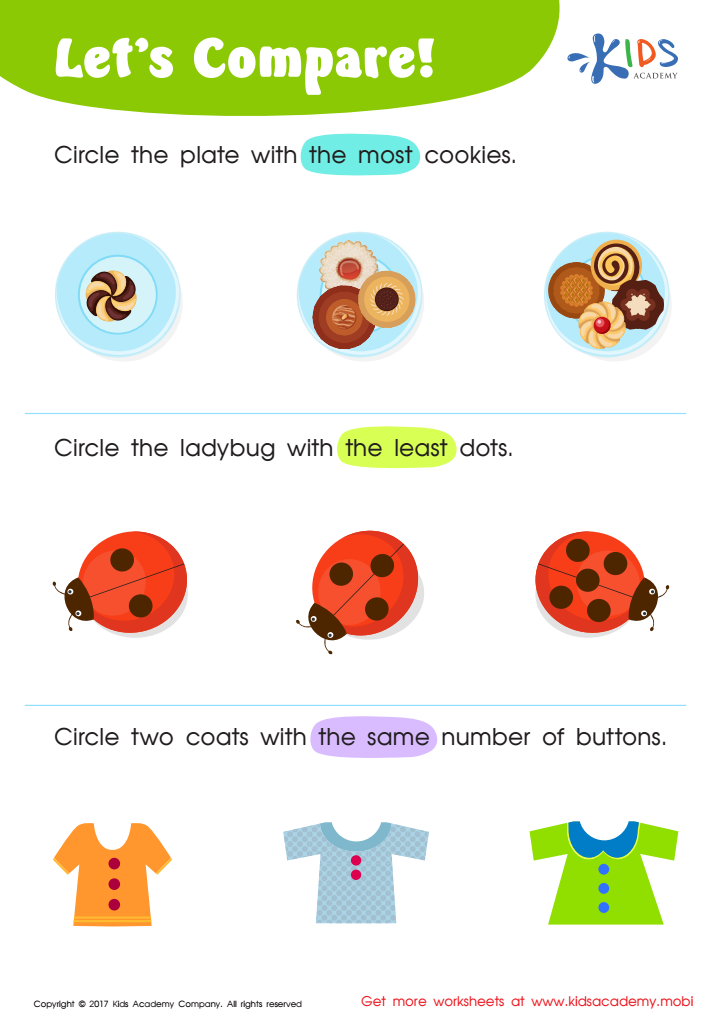
Matching: Classifying Toys by Size Worksheet
.
Have your young one's observation and counting skills ready for this worksheet; carefully look through the images and count the objects, then circle the plates with the least, most or equal number of patterns. Pay attention and have good counting abilities to make this task easy.
Matching: Classifying Toys by Size Worksheet
Worksheet
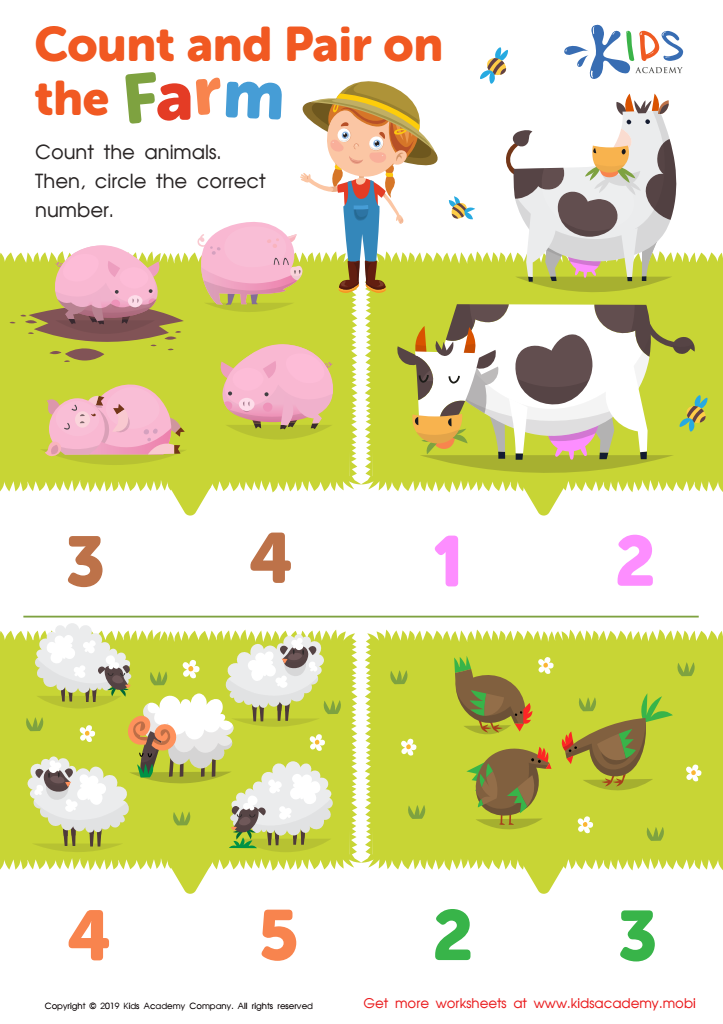
Count and Pair on the Farm Worksheet
Farms are essential to our society: they grow food and crops, and raise animals for us to use. Kids can have a great time at a farm, engaging in activities like identifying animals, counting them, and circling the correct number. On this worksheet, ask your kids to try all three!
Count and Pair on the Farm Worksheet
Worksheet
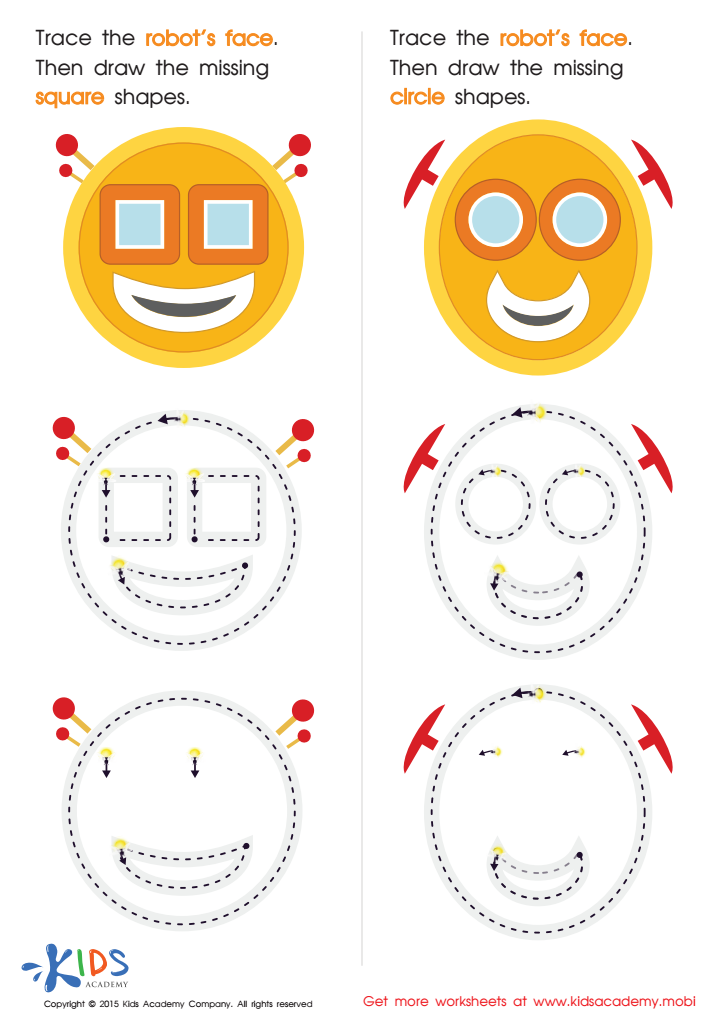
Practicing to Draw Circles And Squares Printable
Download our free printable geometry worksheets to learn shapes with your preschoolers. Trace Robot's face, draw the square parts and round shapes, remember the names for each one. Get more materials for kids at Kids Academy and make learning fun with our free printable geometry worksheets.
Practicing to Draw Circles And Squares Printable
Worksheet
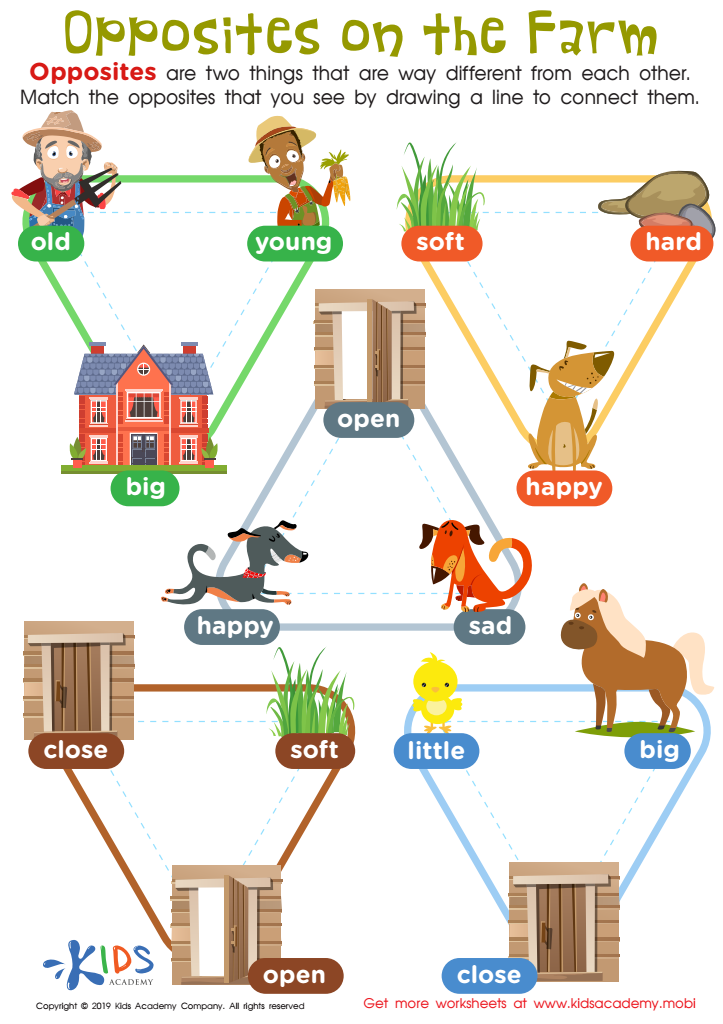
Opposites on the Farm Worksheet
Teaching children the concept of opposites is important for their development. This worksheet offers a fun way to practice. Kids can use traceable lines to match farm imagery with pairs of opposites. It's a great way to help them compare and contrast, a key skill for reading, math, writing and more.
Opposites on the Farm Worksheet
Worksheet
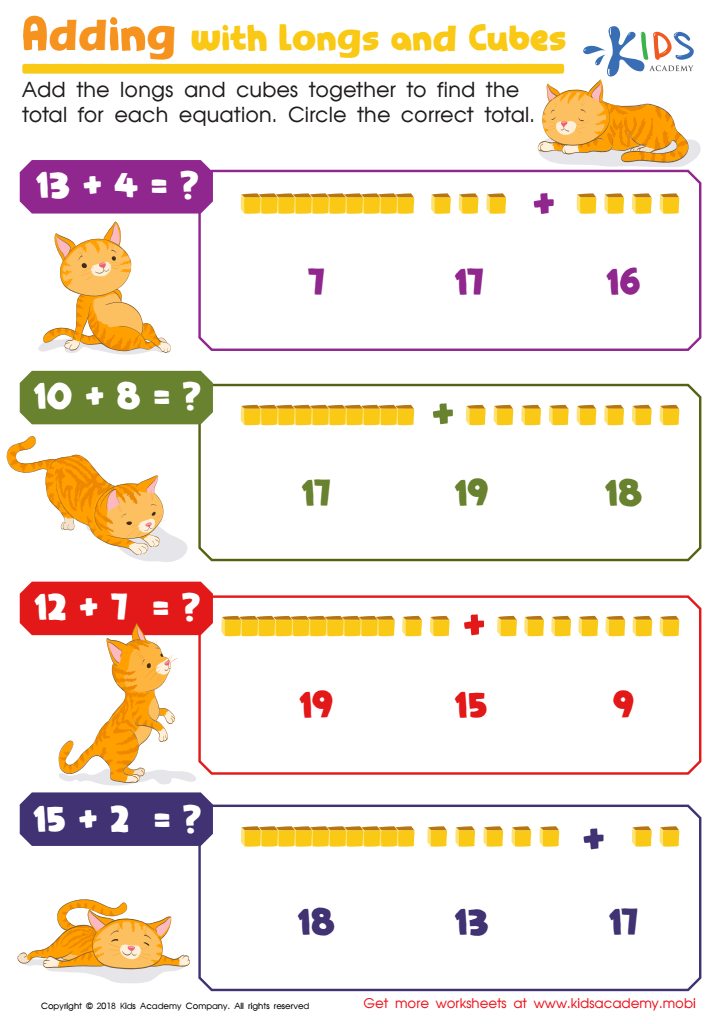
Adding With Longs and Cubes Worksheet
Math might not be your child's favorite, but they must master it to advance. If they're having difficulties or don't like it, use this worksheet to make it easier. Have them add longs and cubes together to find the total for each question, then circle the correct answer. This exercise can help make math experiences better.
Adding With Longs and Cubes Worksheet
Worksheet
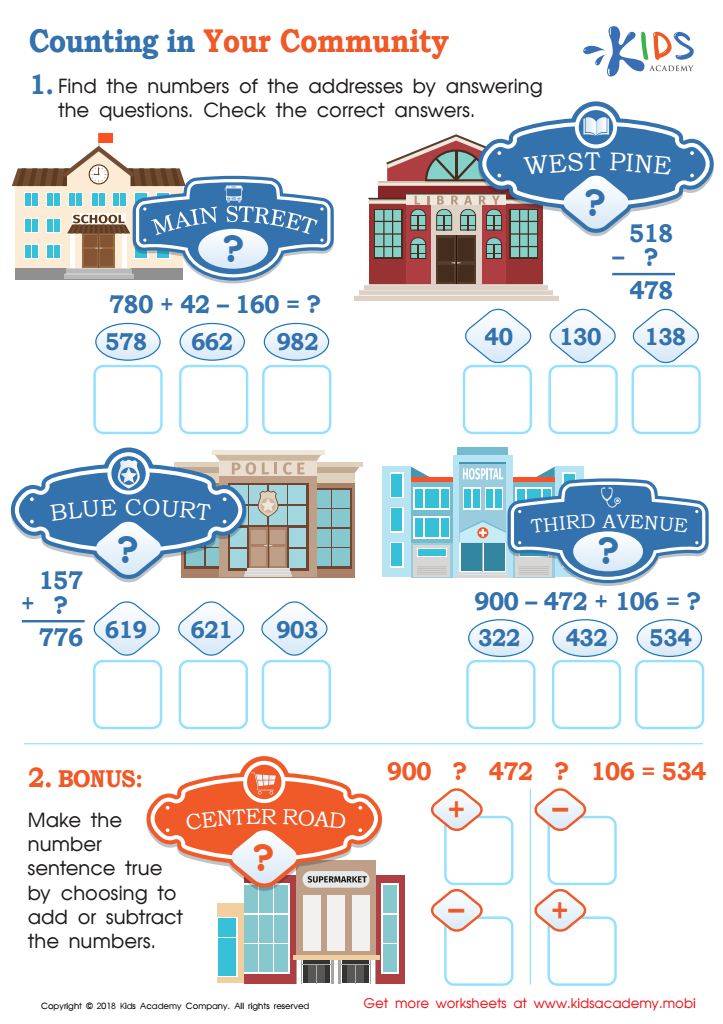
Counting in Your Community Worksheet
Introduce your kids to the idea of a community, where different people and buildings co-exist, each playing their part for the community's progress. Ask them to name the buildings they see in their community. Then work through this worksheet to find the numbers of the addresses by answering the questions. Check the answers once they've solved the equations.
Counting in Your Community Worksheet
Worksheet
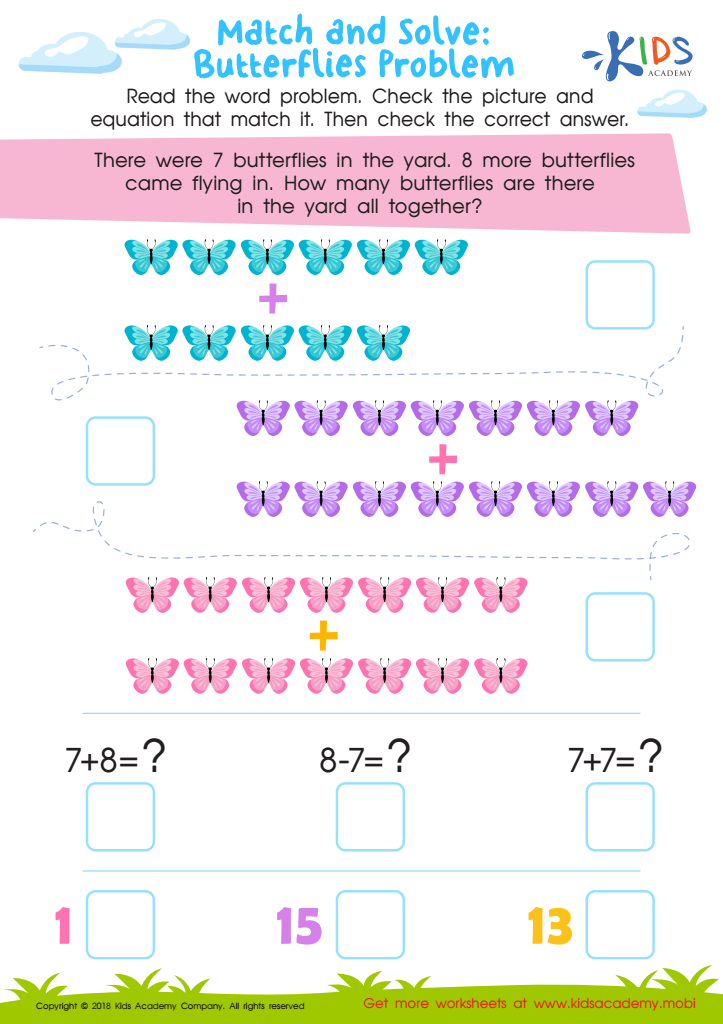
Match and Solve: Butterfly Problem Worksheet
Kids should practice math problems in different ways. This fun worksheet uses butterflies to represent numbers in word problems. Help your child read the problem and count the butterflies to find the correct illustration. Then, pick the equation with the correct answer and find the solution. Tick the box to complete! (80 words)
Match and Solve: Butterfly Problem Worksheet
Worksheet
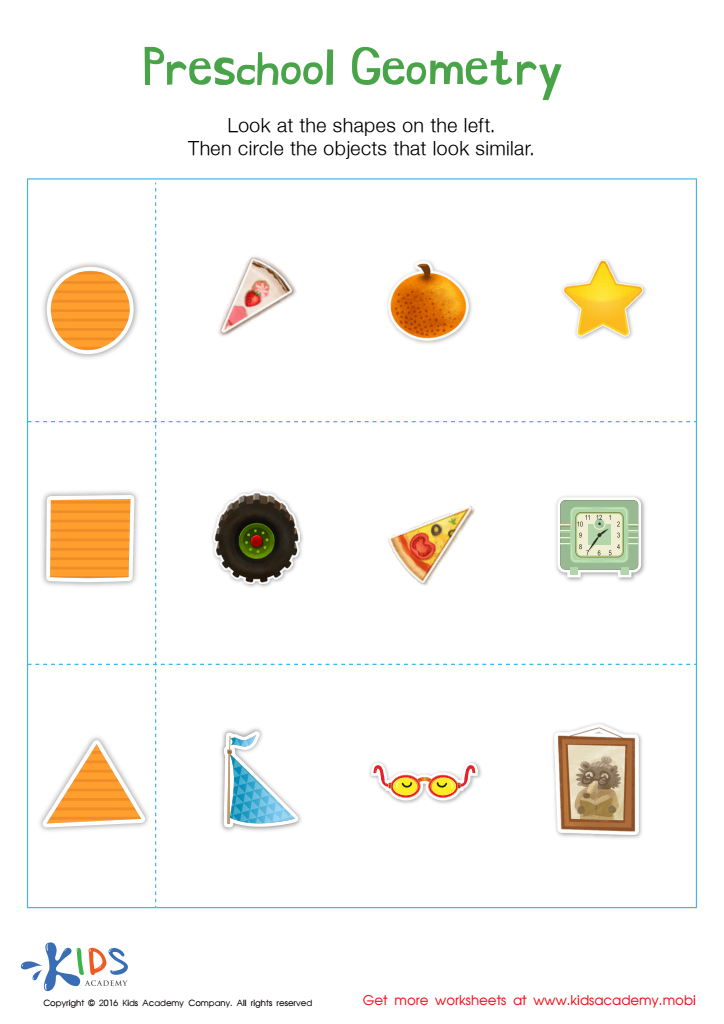
Preschool Geometry Match Up Worksheet
Teach your preschooler geometry using everyday objects. This printable worksheet helps them recognize, match, and follow directions like left and right. Start a conversation to extend their learning and they'll see how shapes appear in the world around them.
Preschool Geometry Match Up Worksheet
Worksheet
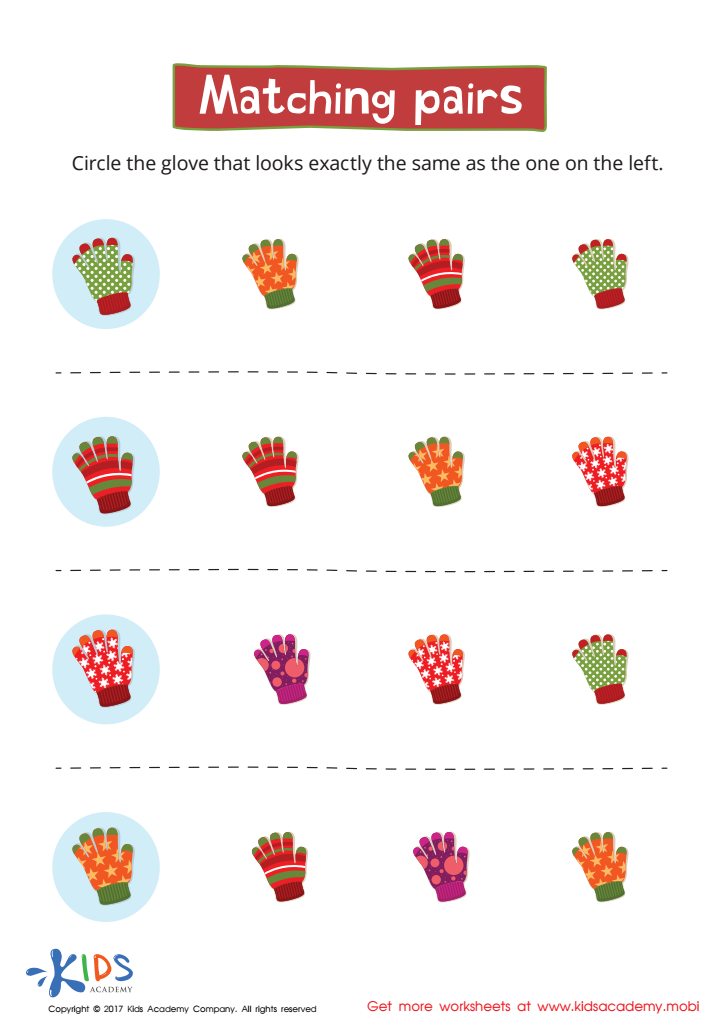
Matching: Matching Pairs Worksheet
Winter's here! Get your child ready with a fun matching worksheet. Challenge them to sort mitten designs, recognize directions, and match mittens in other rows. This helps preschoolers hone problem-solving skills and recognize shapes. Print out more seasonal activities for a diverse summer experience!
Matching: Matching Pairs Worksheet
Worksheet
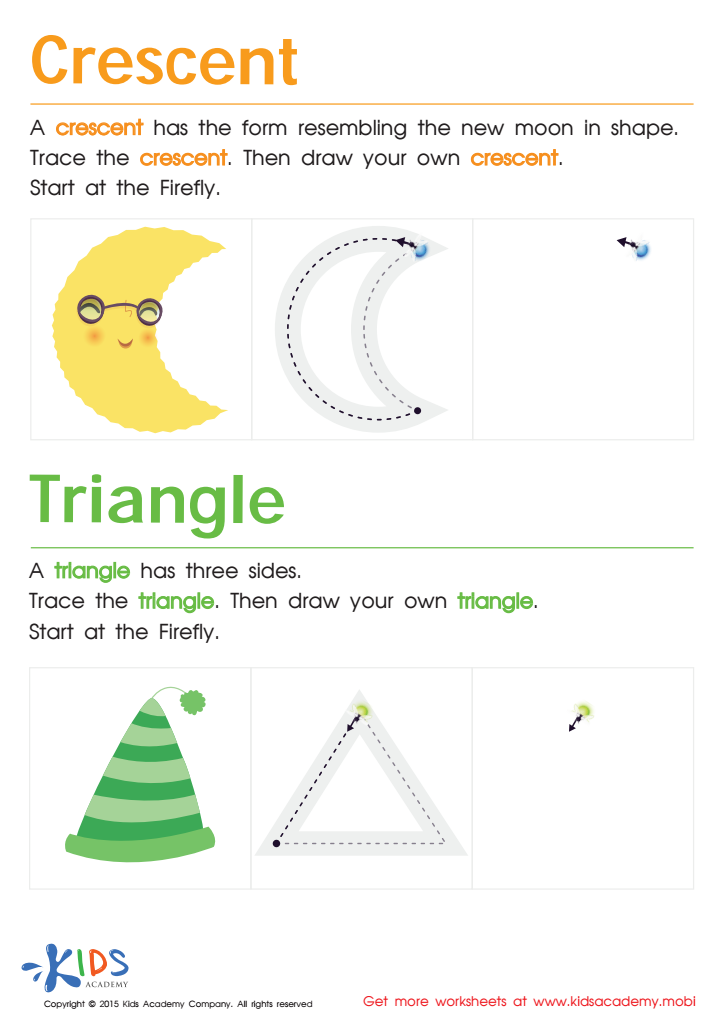
Learning to Draw Crescents And Triangles Worksheet
Help your kids draw a crescent and triangle with this free printable worksheet! Start by tracing a crescent in the form of the new moon, and then teach them that a triangle has three sides and looks like a hat. Find more geometry practice worksheets at Kids Academy!
Learning to Draw Crescents And Triangles Worksheet
Worksheet
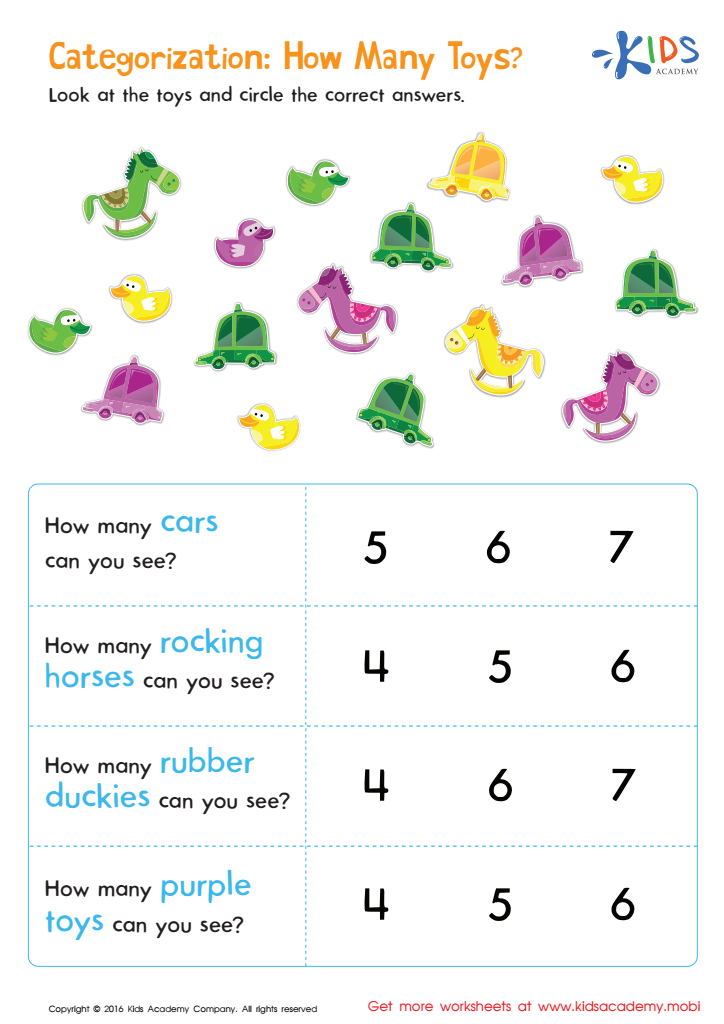
Classifying Toys by Type and Color Sorting Worksheet
Kids Academy offers free math worksheets to help practice counting, categorization & recognition skills. Kids will enjoy counting by color & type while strengthening problem-solving & literacy skills.
Classifying Toys by Type and Color Sorting Worksheet
Worksheet
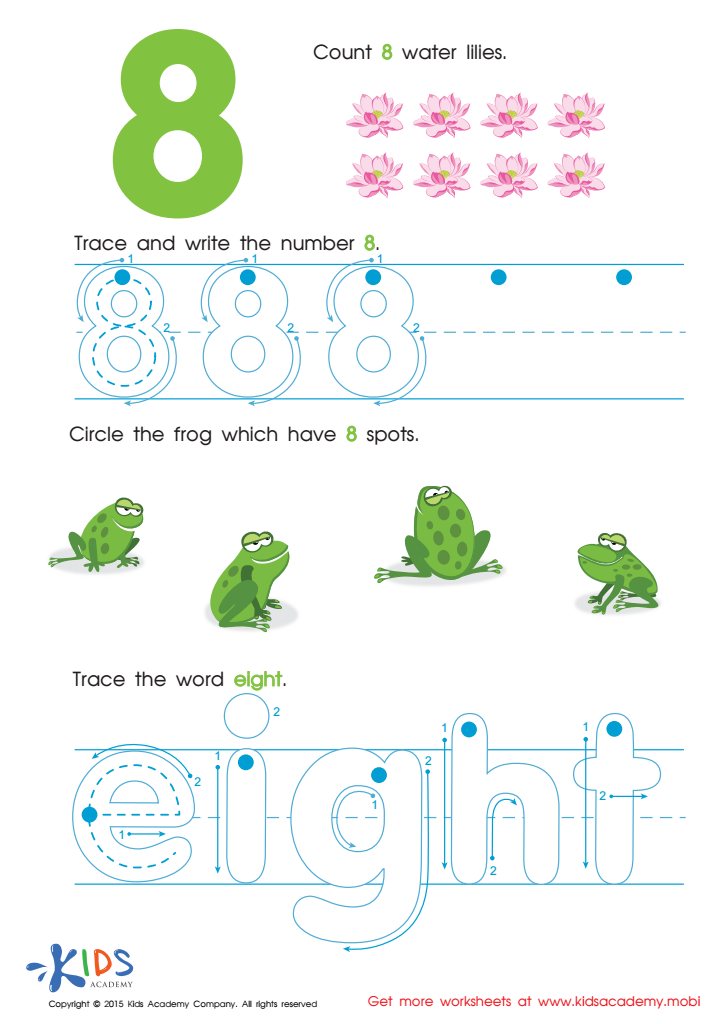
Learn Number 8 Easily Worksheet
Kids can trace, write numbers and learn to pronounce them through exciting activities and games. Try our number worksheets for preschoolers to make learning fun!
Learn Number 8 Easily Worksheet
Worksheet
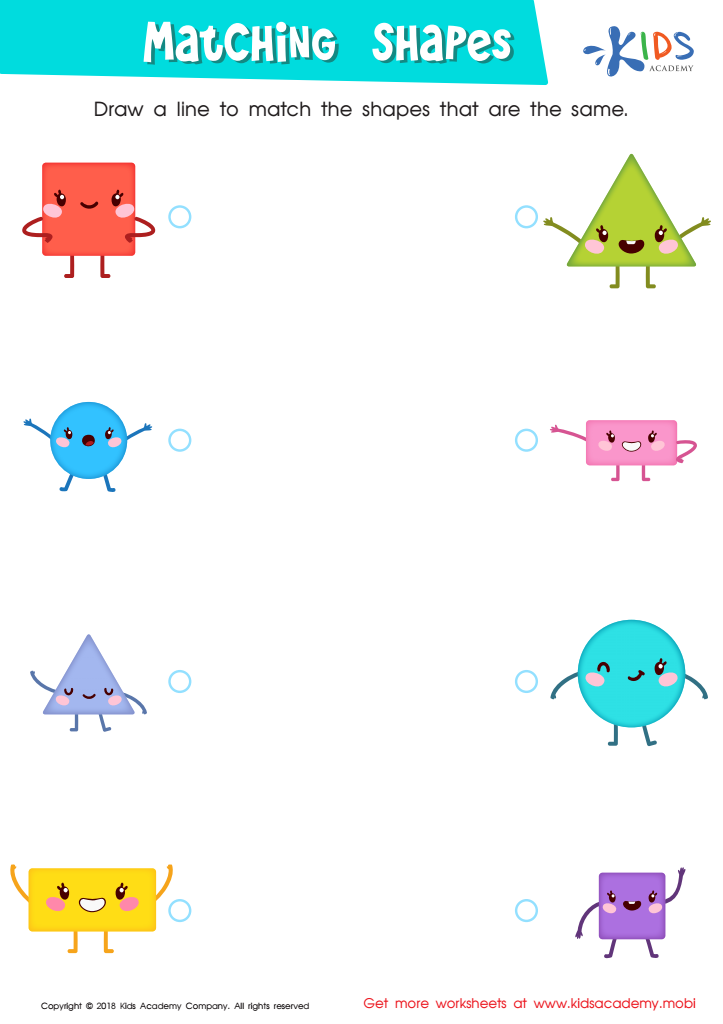
Matching Shapes Worksheet
Introduce your students to the 4 most common shapes: squares, triangles, rectangles and circles. When they progress, show them other shapes like rhombuses and parallelograms. Use this matching shapes worksheet to help them match two identical shapes. Print out the worksheet and instruct them to draw lines connecting them.
Matching Shapes Worksheet
Worksheet
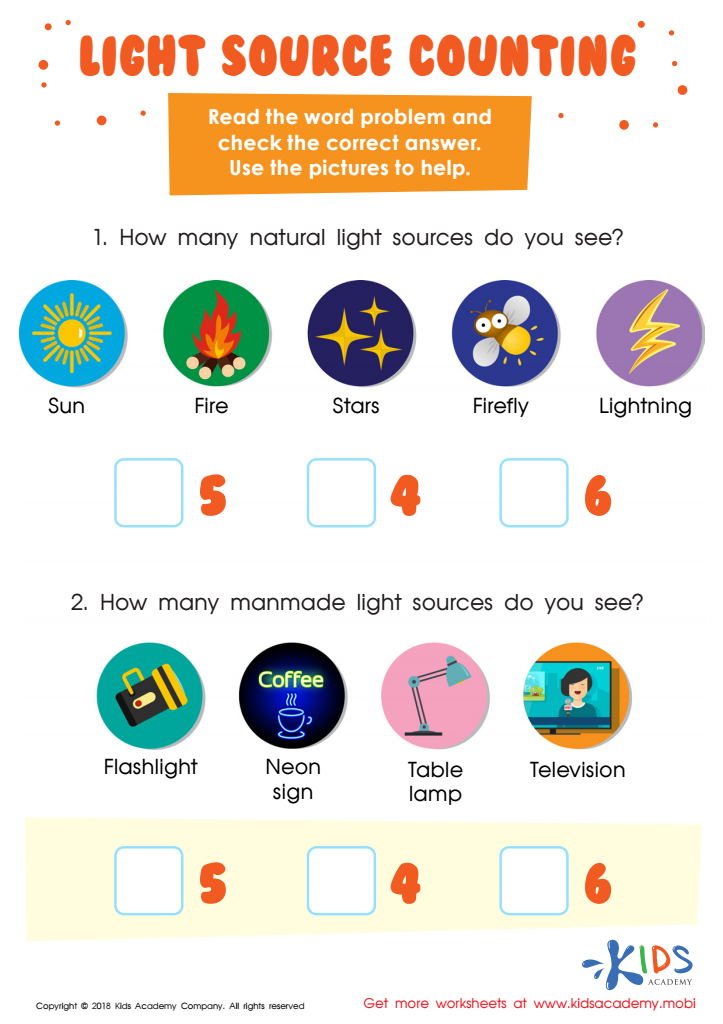
Light Source Counting Worksheet
Help your students properly understand and interpret word problems with this worksheet. Read each problem aloud and have them check the correct answers. Pictures are included to aid in problem-solving. If they're still struggling, be sure to provide guidance and support.
Light Source Counting Worksheet
Worksheet
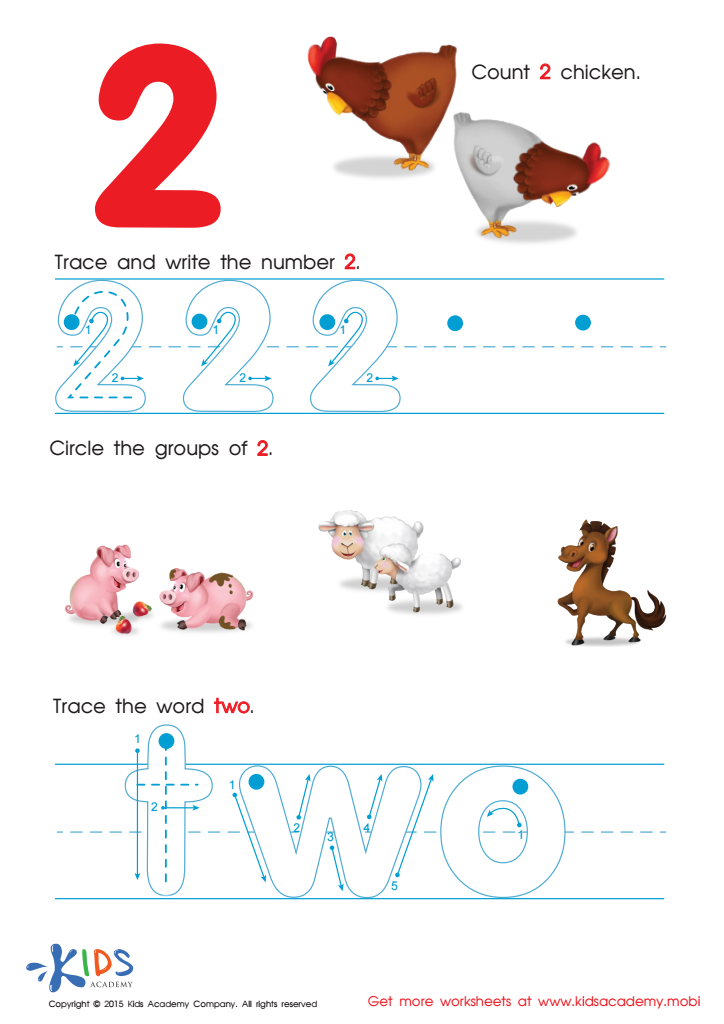
Learn to Write the Number 2 Worksheet
Teaching numbers should be fun! Ask your kids to count the two chicks, circle the groups of two among the animals, then trace and write the number and word. Get more fun worksheets from Kids Academy.
Learn to Write the Number 2 Worksheet
Worksheet
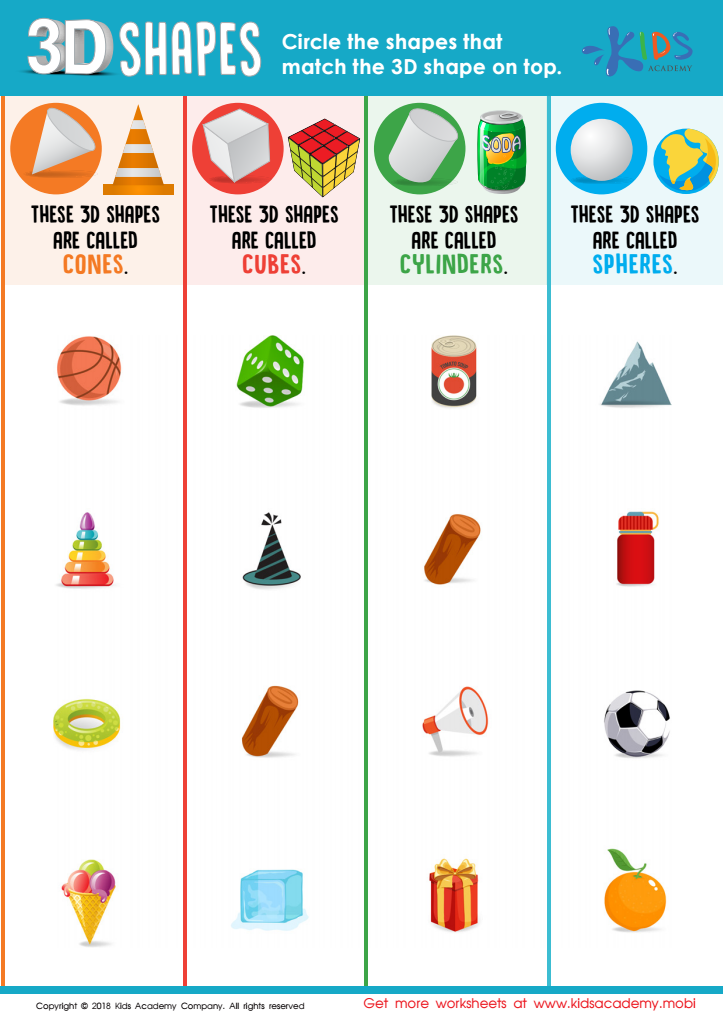
3D Shapes Worksheet
It's time to identify 3D shapes! This worksheet helps kids find and name shapes like cones, cylinders, cubes, and spheres using pictures of everyday objects. Let's explore 3D shapes in the real world!
3D Shapes Worksheet
Worksheet
Join Kids Academy for Free
Who is primarily going to use this learning content?






.jpg)

Parents and teachers should care about cognitive development in math for ages 6-7 because this stage is crucial for foundational learning. At this age, children transition from intuitive thought to more logical thinking, which influences their ability to understand and solve problems systematically. Math concepts introduced during this time, such as basic operations (addition and subtraction), patterns, and number sense, form the building blocks for more complex math skills required later in life.
Moreover, fostering cognitive development in math helps in improving critical thinking and problem-solving skills. It enhances memory, attention, and persistence, which are essential for academic success across subjects. For instance, engaging in counting exercises, identifying shapes, and understanding simple graphs promotes not only mathematical reasoning but also spatial awareness and fine motor skills.
Furthermore, early positive experiences with math can boost a child's confidence and interest in the subject. This enthusiasm can lead to greater educational attainment and improved self-esteem. Creating a supportive and stimulating environment for math learning during these formative years also bridges gaps and addresses learning disparities early on, setting the stage for long-term scholastic achievement. Engaged parents and proactive teachers can thus make a transformative difference in a child's educational journey by nurturing their early cognitive development in math.








