Counting skills Normal Addition & Subtraction Worksheets for 6-Year-Olds
16 filtered results
-
From - To
Discover engaging Counting Skills Normal Addition & Subtraction Worksheets designed specifically for 6-year-olds! These worksheets are perfect for fostering a love of math while helping children master essential counting skills. Each activity provides a fun and interactive way to practice addition and subtraction, enhancing your child's problem-solving abilities. Colorful illustrations and fun themes capture young learners' attention, making math enjoyable. Ideal for classroom or home use, these worksheets support early learners in developing confidence in their mathematical skills. Download now and watch your child flourish in their counting journey while building a strong foundation for future math success!
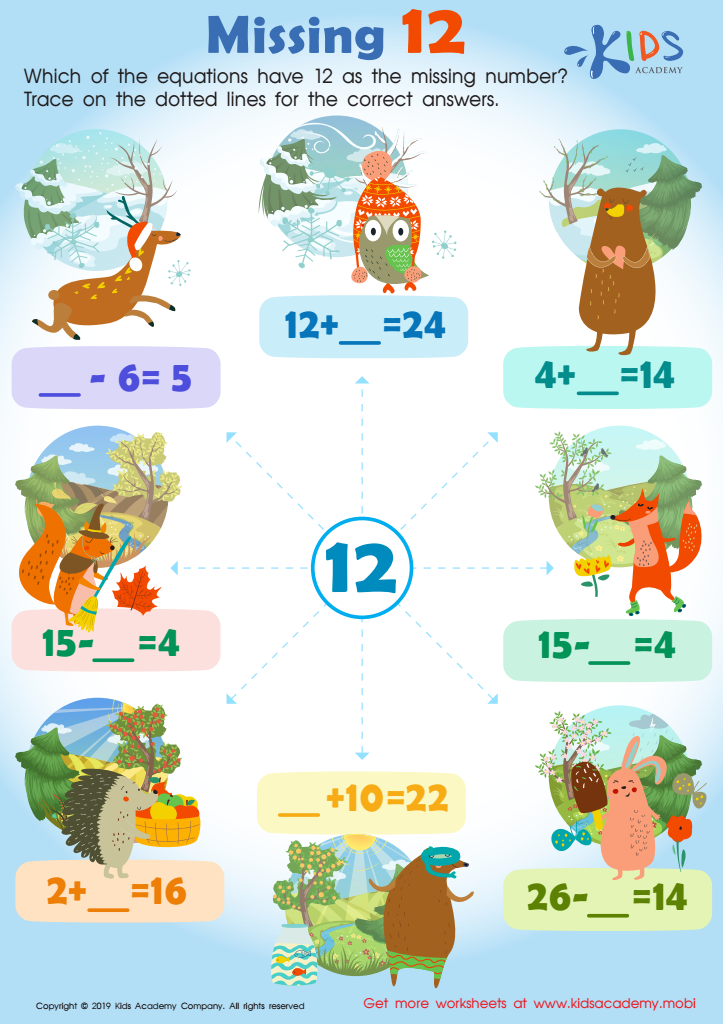
Missing 12 Worksheet
 Assign to My Students
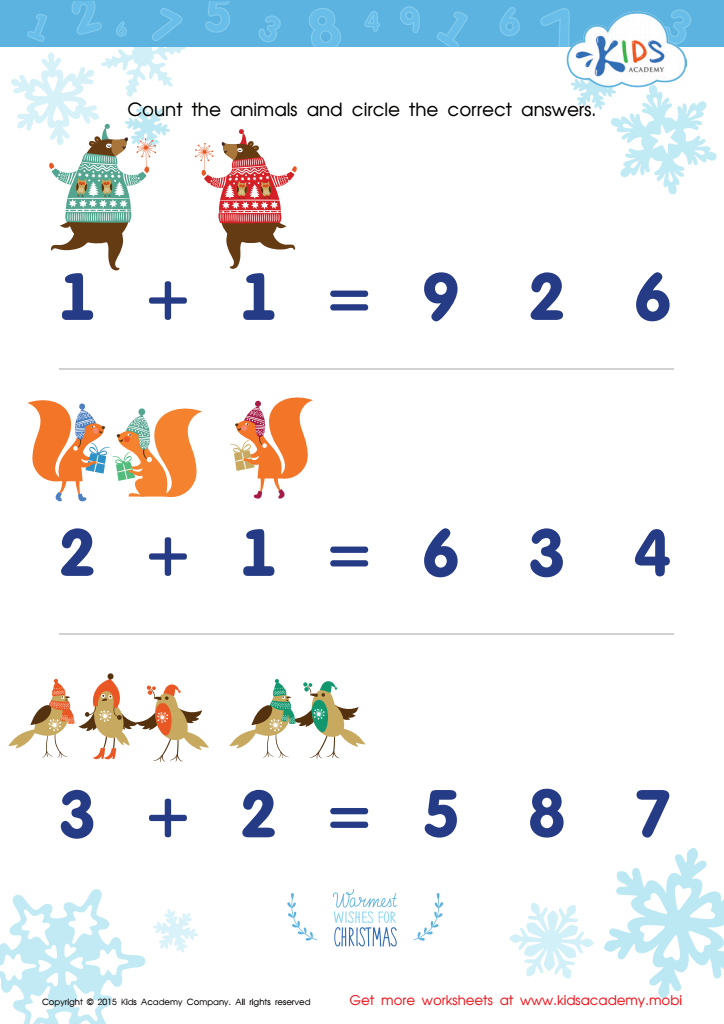
Count Funny Animals Worksheet
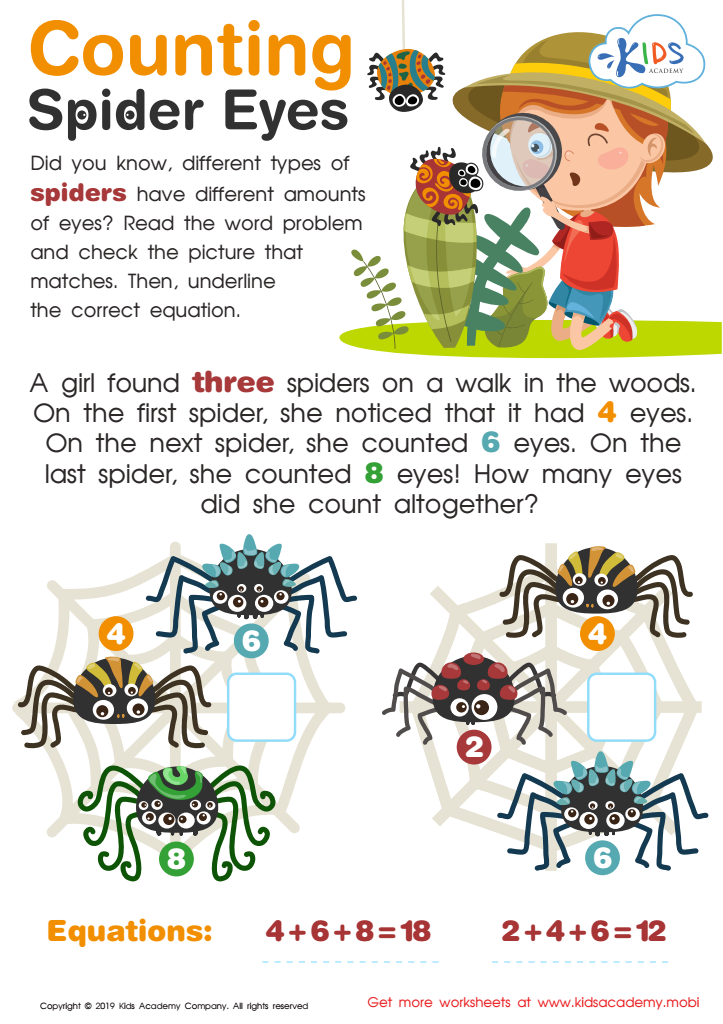
Counting Spider Eyes Worksheet
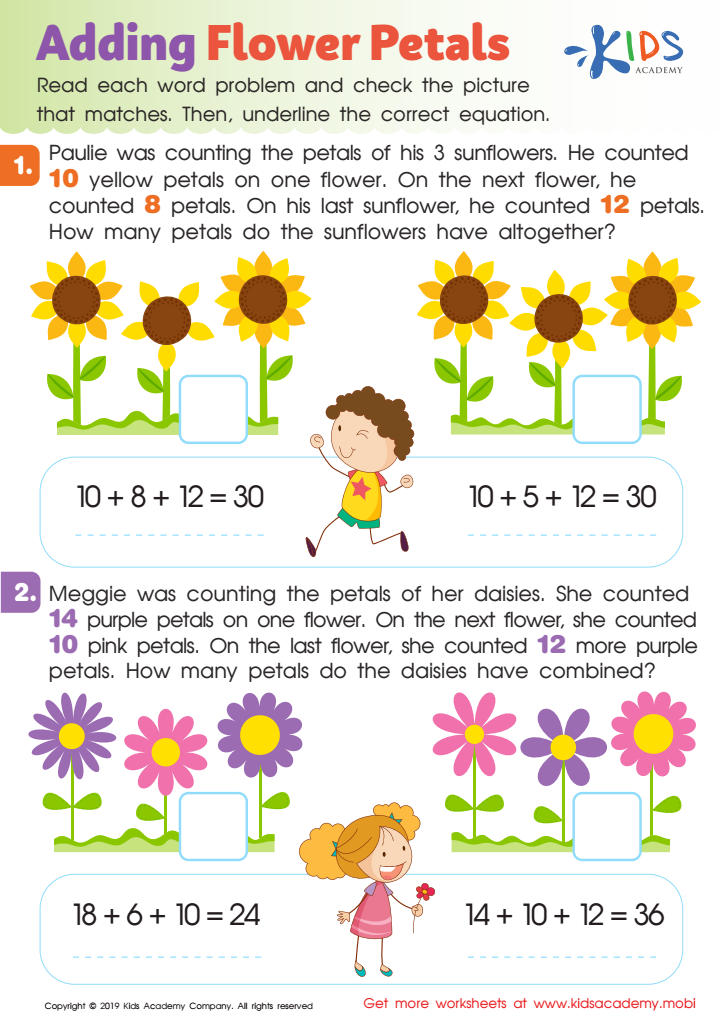
Adding Flower Petals Worksheet
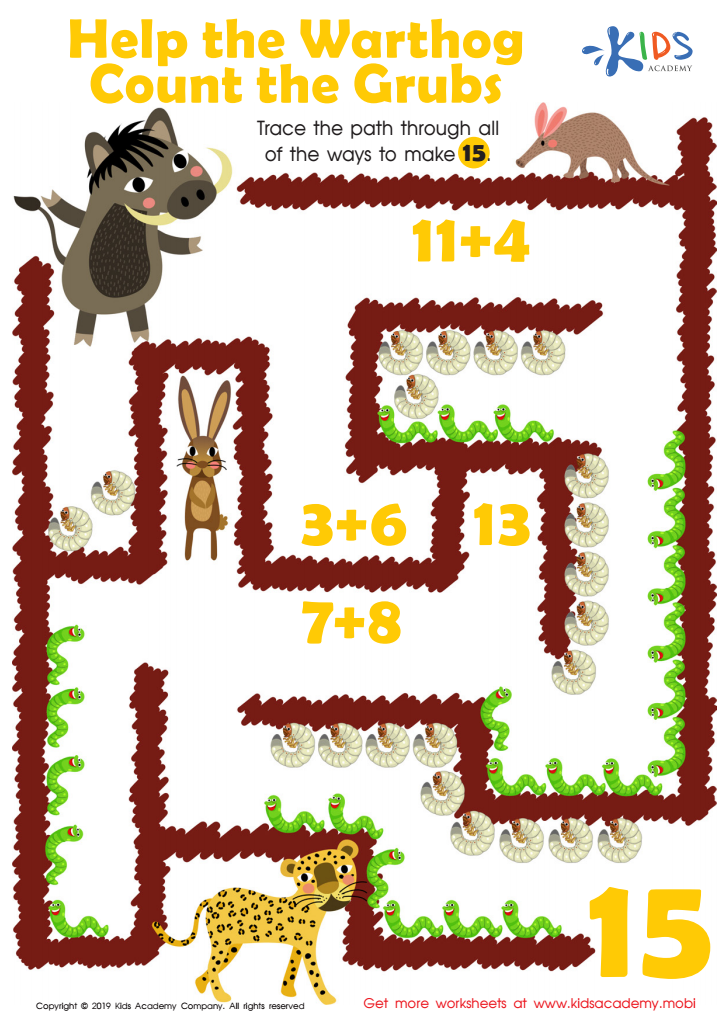
Help the Warthog Count the Grubs Worksheet
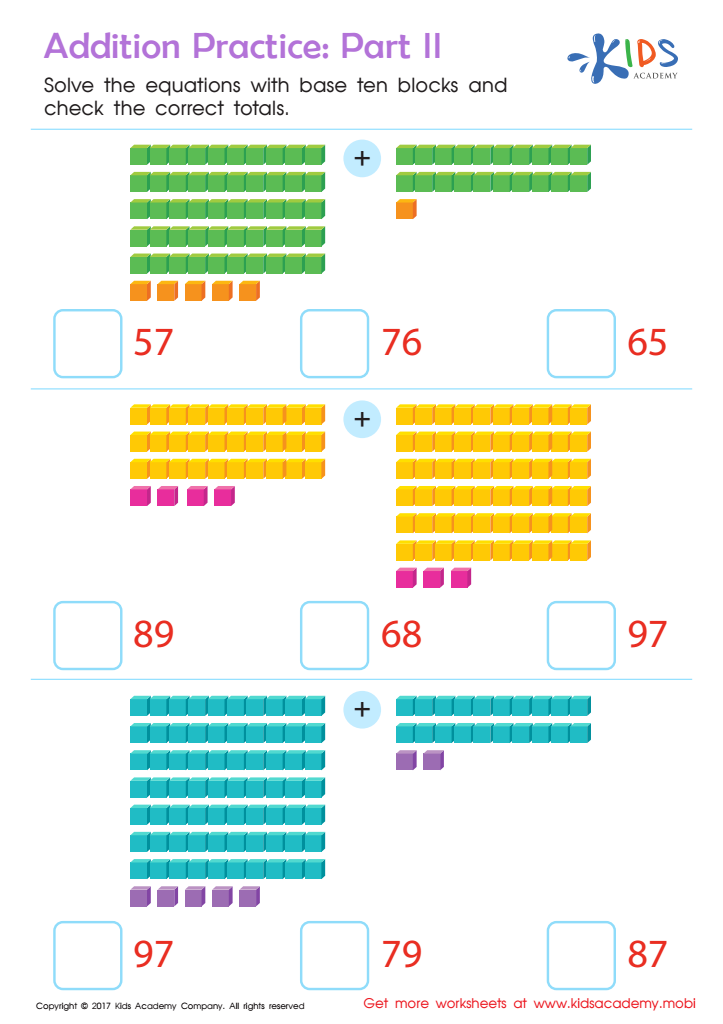
Addition Practice Sheet: Part 2
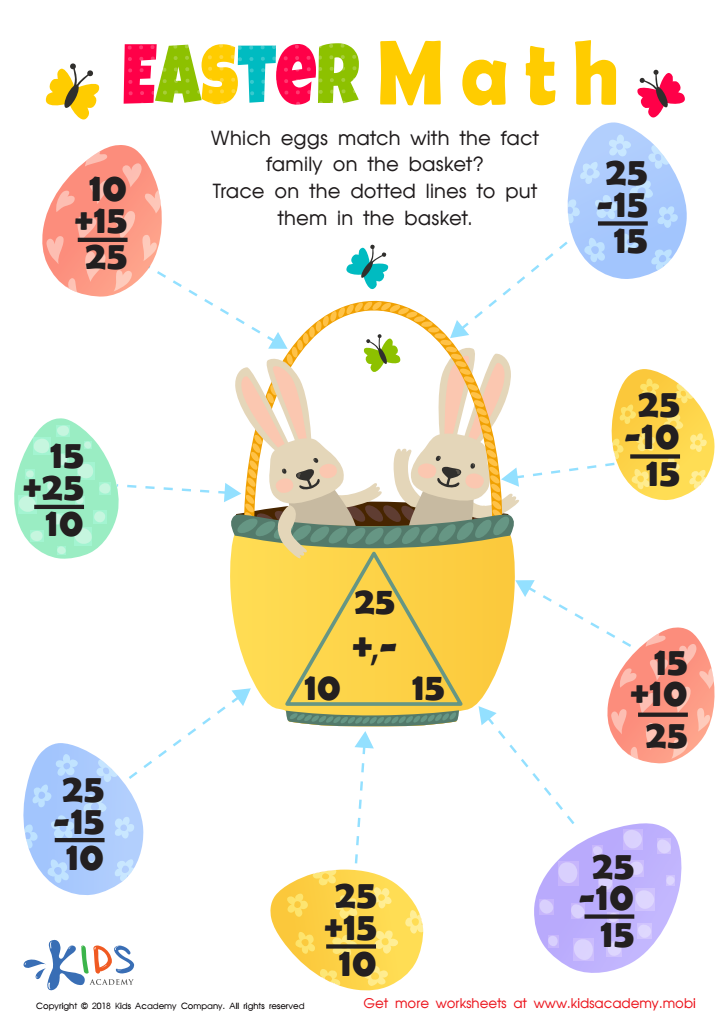
Fact Families: Easter Math Worksheet
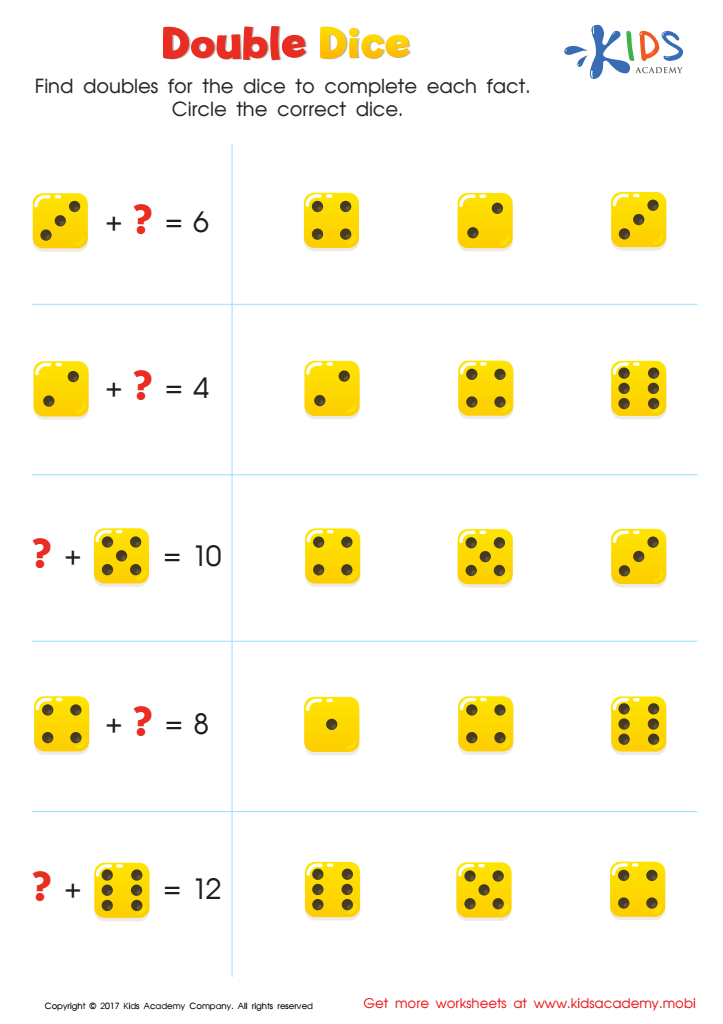
Addition Facts: Double Dice Worksheet
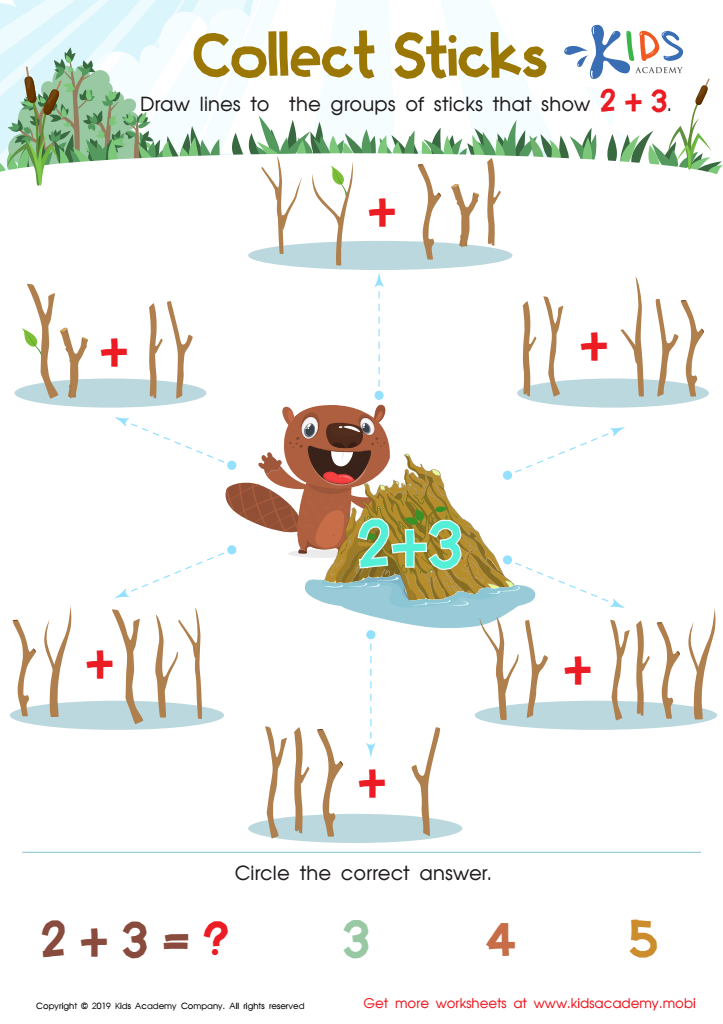
Collect Sticks Worksheet
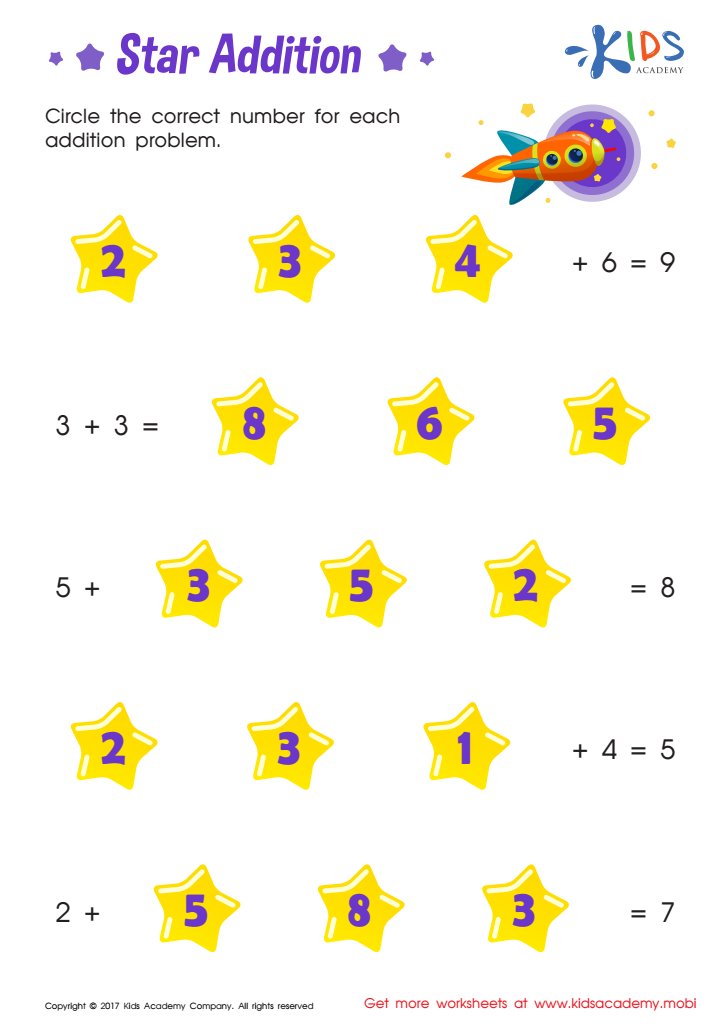
Star Addition Printable
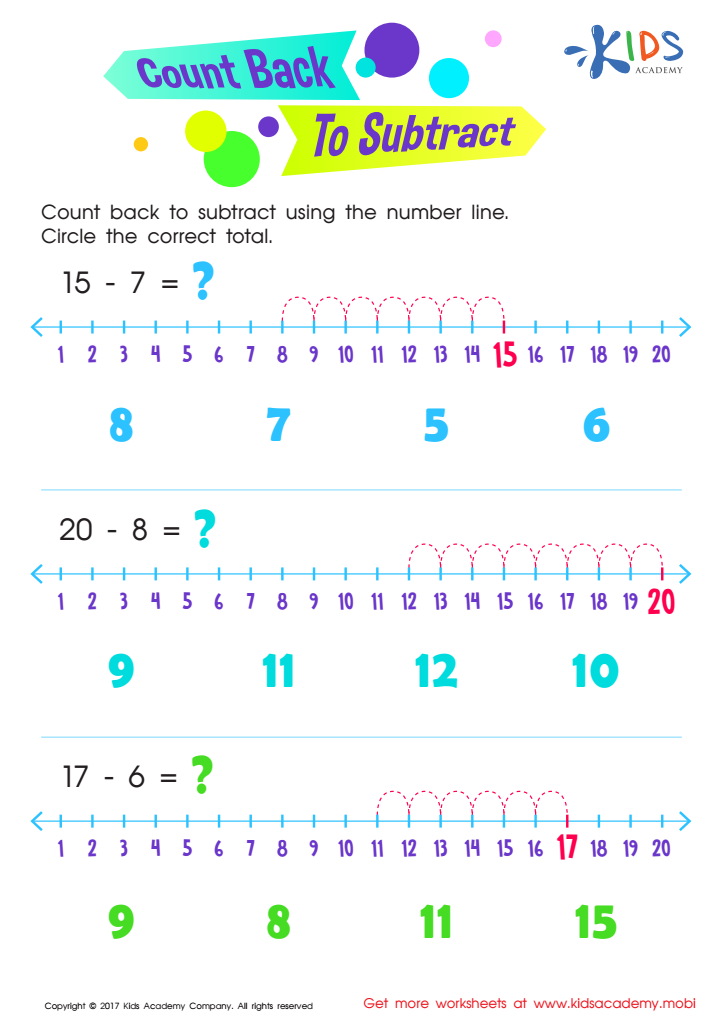
Count Back to Subtract Substraction Worksheet
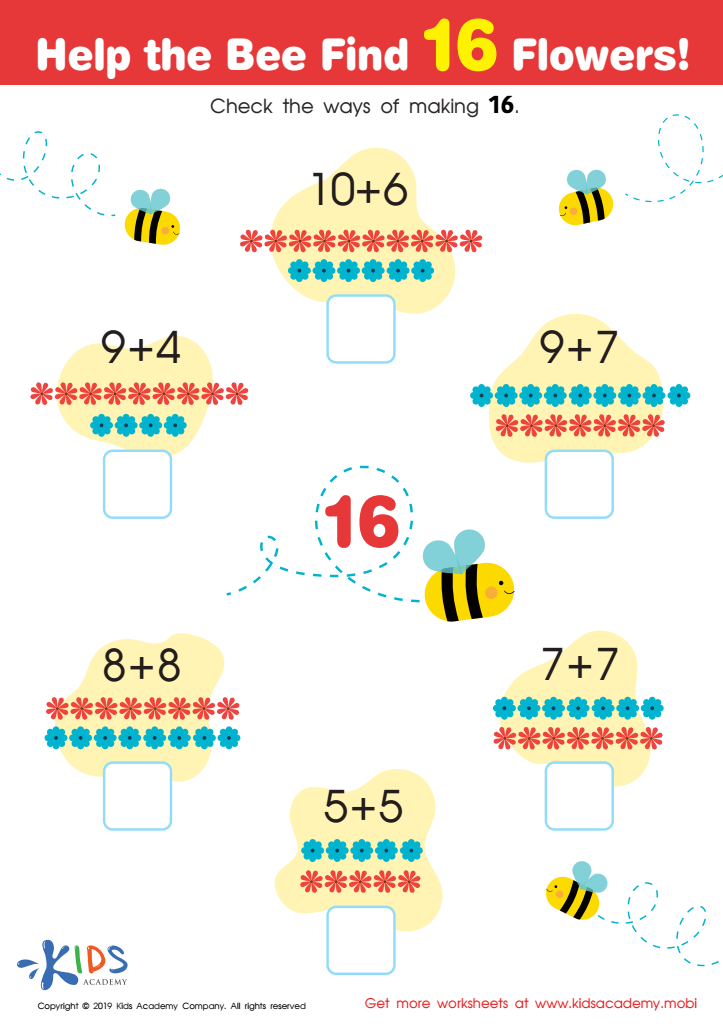
Help the Bee Find 16 Flowers Worksheet
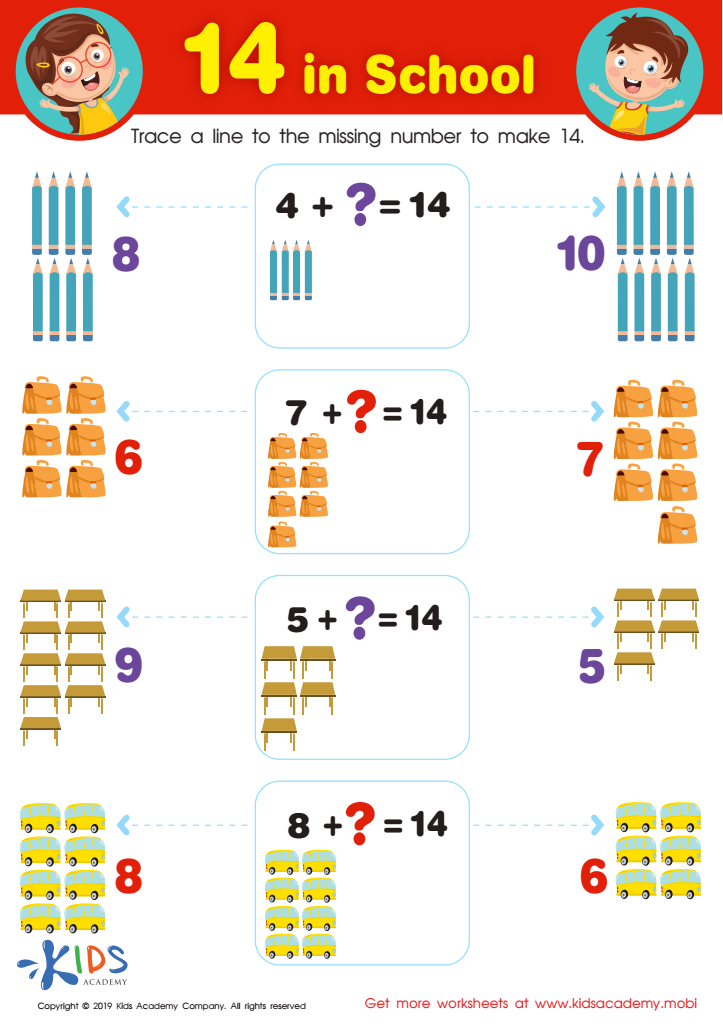
14 in School Worksheet
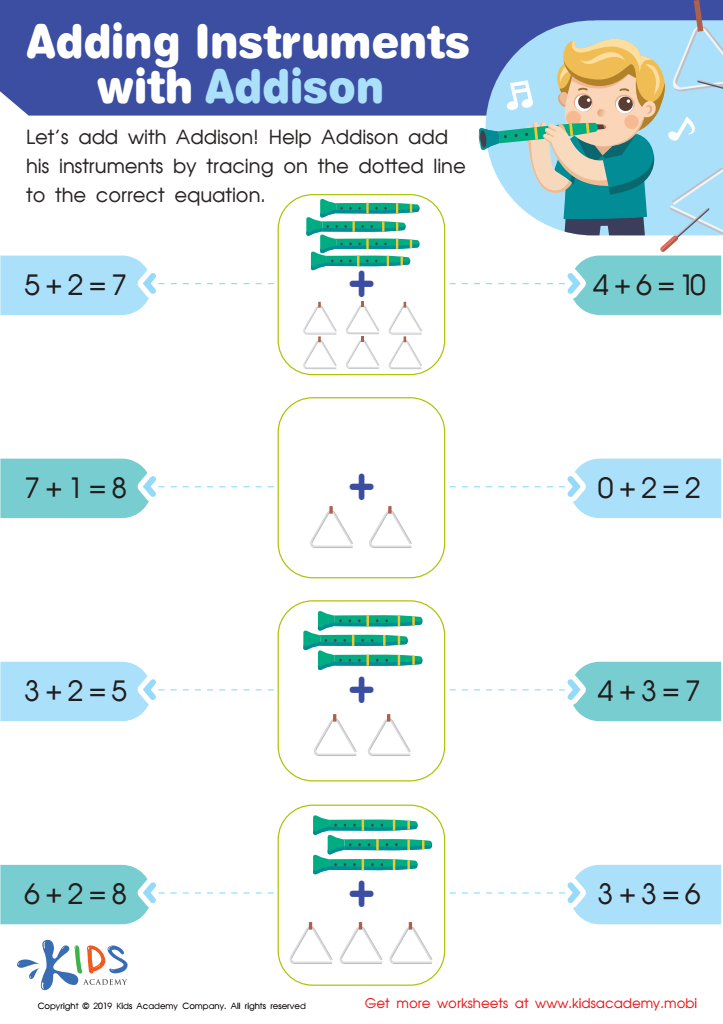
Adding Instruments with Addison Worksheet
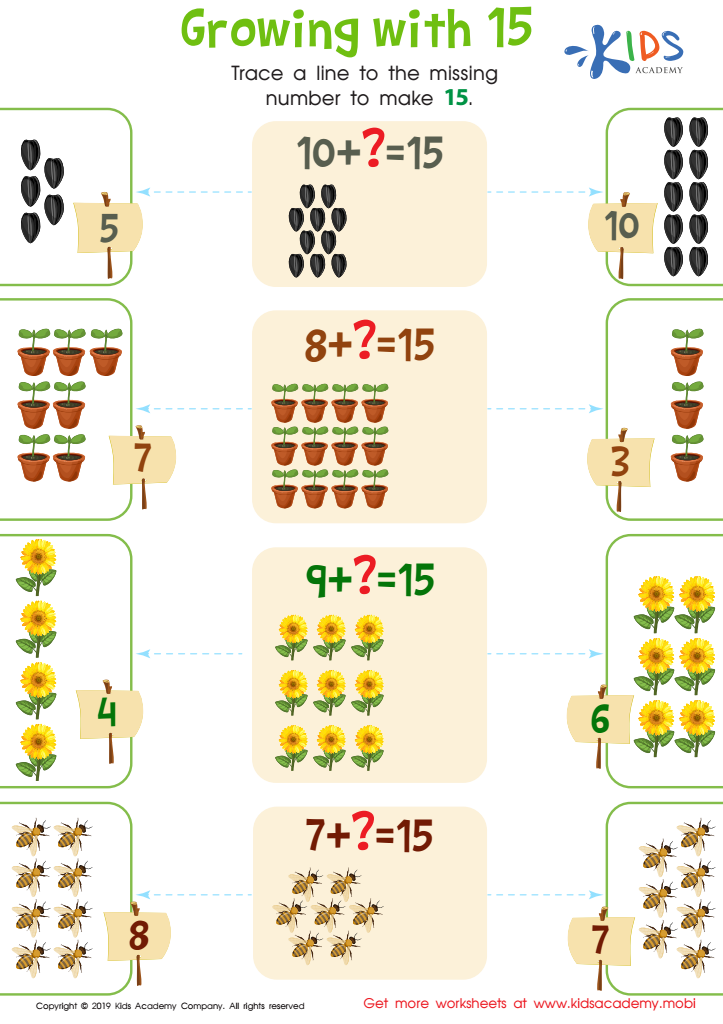
Growing with 15 Worksheet








Counting skills and the ability to perform basic addition and subtraction are foundational components of early mathematics education for 6-year-olds. Parents and teachers should prioritize these skills as they form the building blocks for more complex mathematical concepts that children will encounter later. Mastering counting helps children develop a sense of number sense, enabling them to understand quantity and numerical relationships, which are critical for everyday problem-solving.
Moreover, strong arithmetic skills foster confidence in children. As they successfully tackle simple addition and subtraction problems, their self-esteem and interest in mathematics are bolstered, encouraging a positive attitude towards learning. Early proficiency in these skills also supports cognitive development, enhancing critical thinking and reasoning abilities.
Socially, counting games or collaborative math activities can facilitate teamwork and communication skills among peers. Parents and teachers can leverage these opportunities to engage students in fun, interactive ways.
By nurturing strong counting and basic operation skills, parents and teachers not only lay the groundwork for academic success in math but also provide essential life skills. This early investment pays dividends, as confident, capable young learners are better prepared to face academic challenges in the future.








