Tracing Shapes worksheets activities for Ages 6-7
17 filtered results
-
From - To
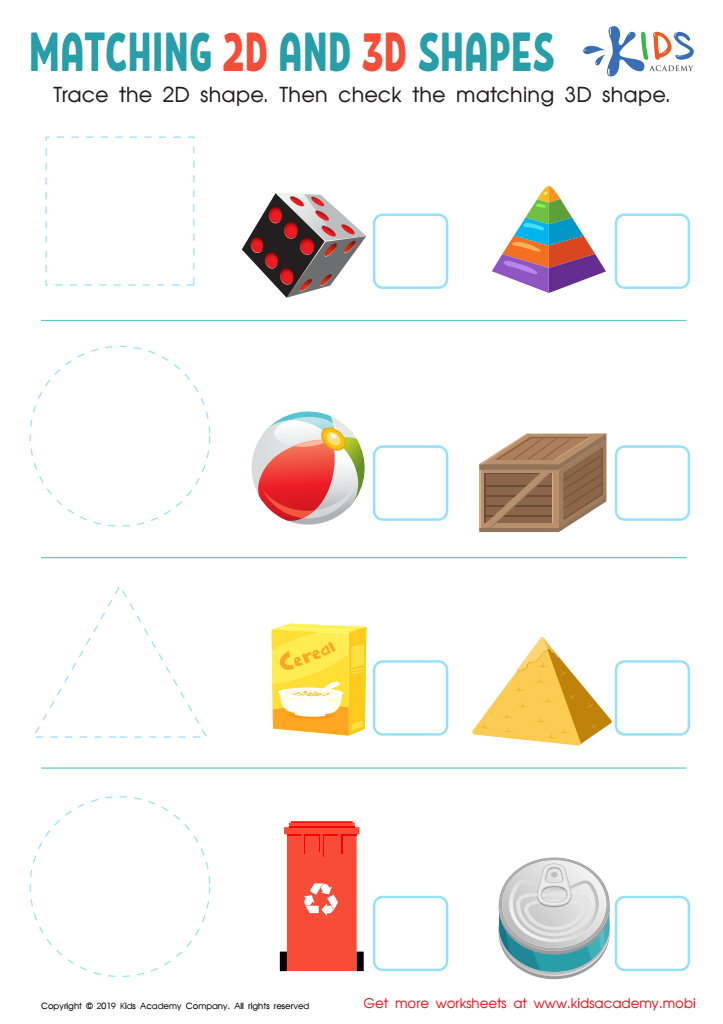
Matching 2D and 3D Shapes Worksheet
 Assign to My Students
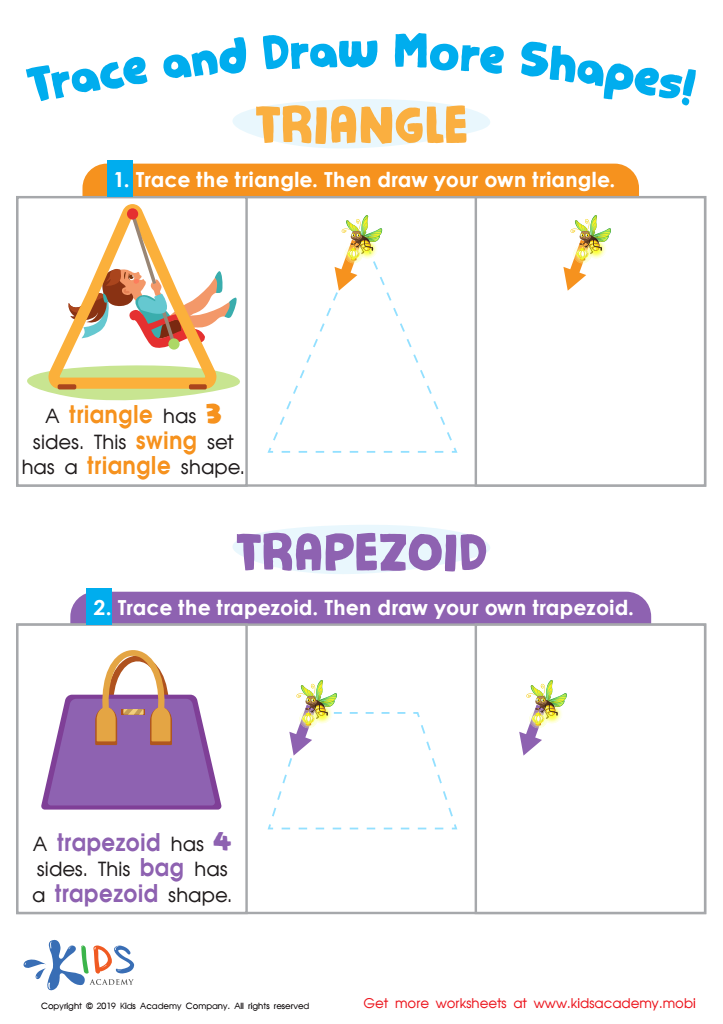
Trace and Draw More Shapes Worksheet
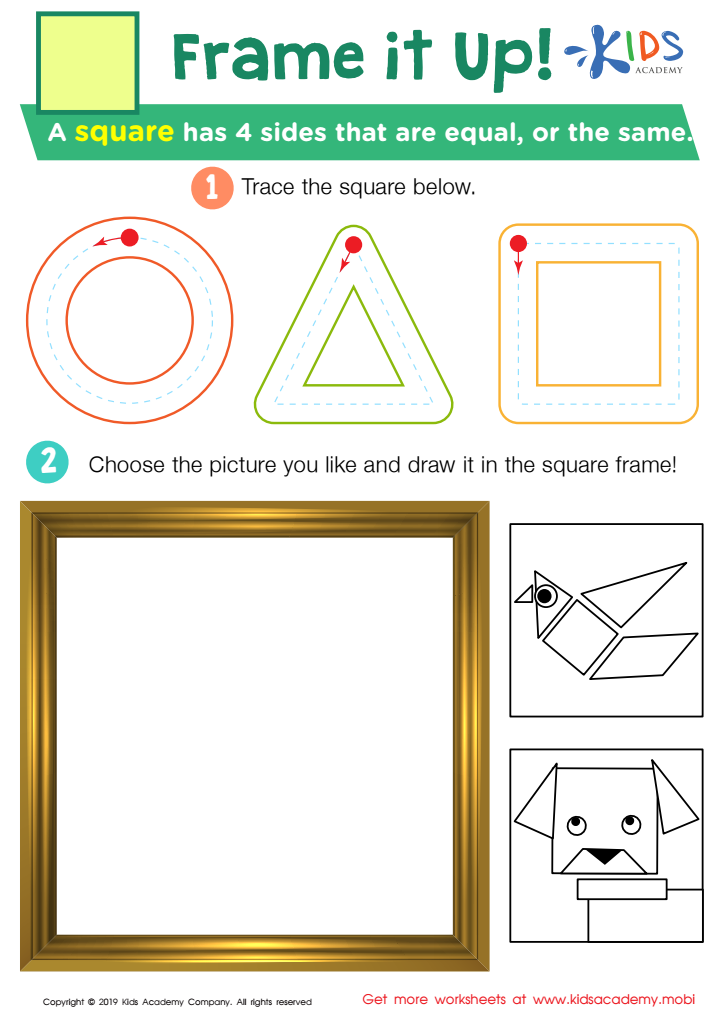
Frame it Up Worksheet
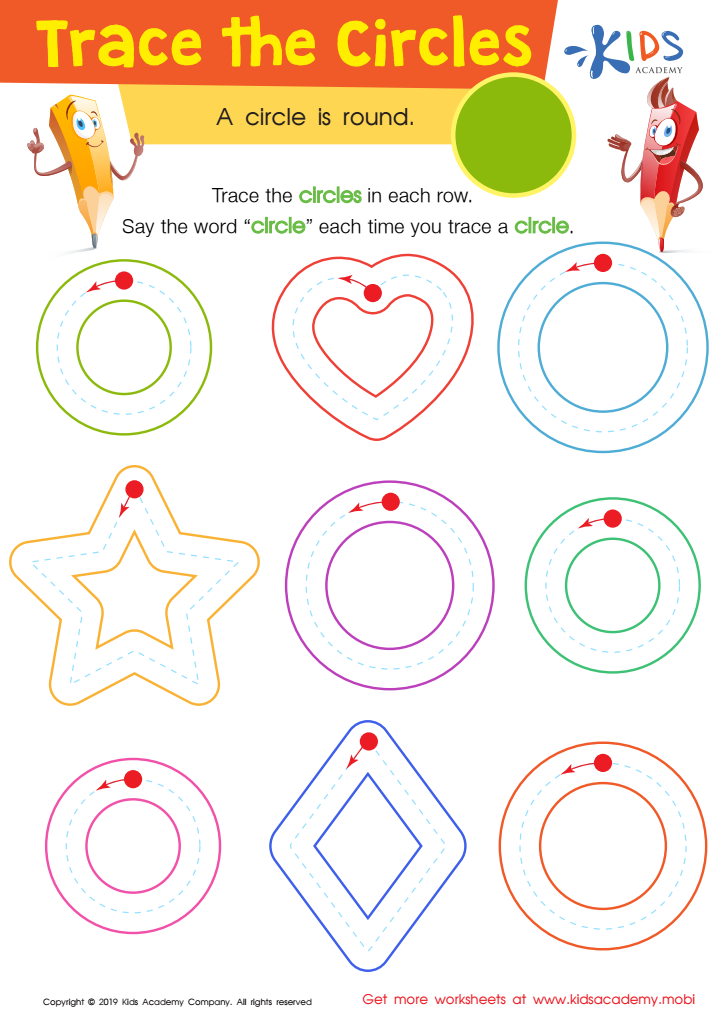
Trace The Circles Worksheet
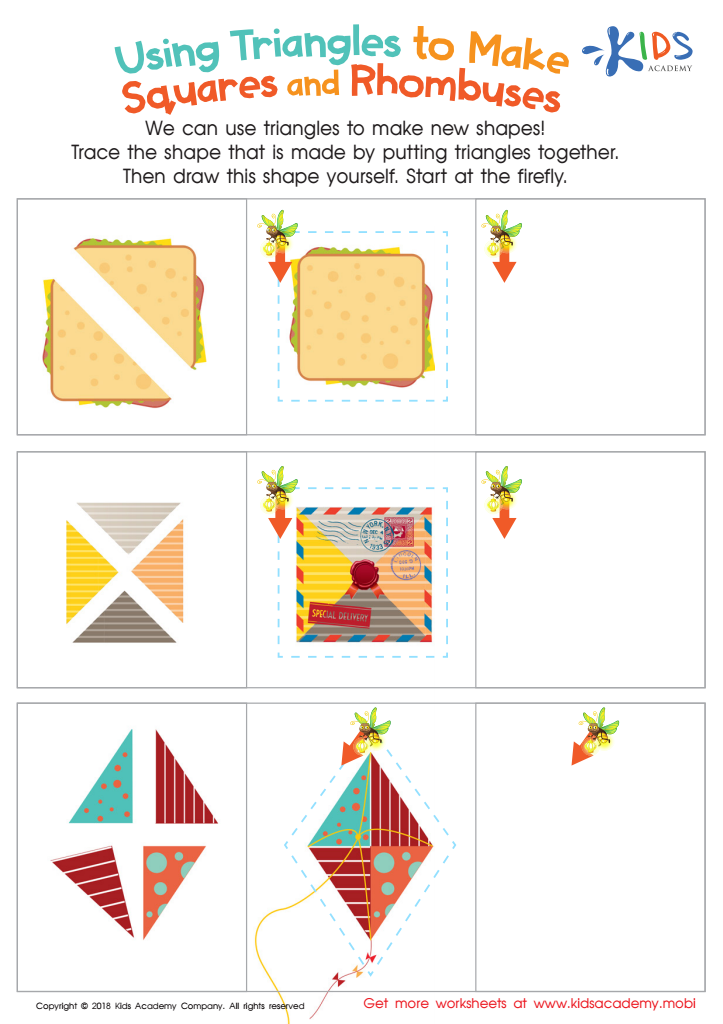
Using Triangles to Make Squares and Rhombuses Worksheet
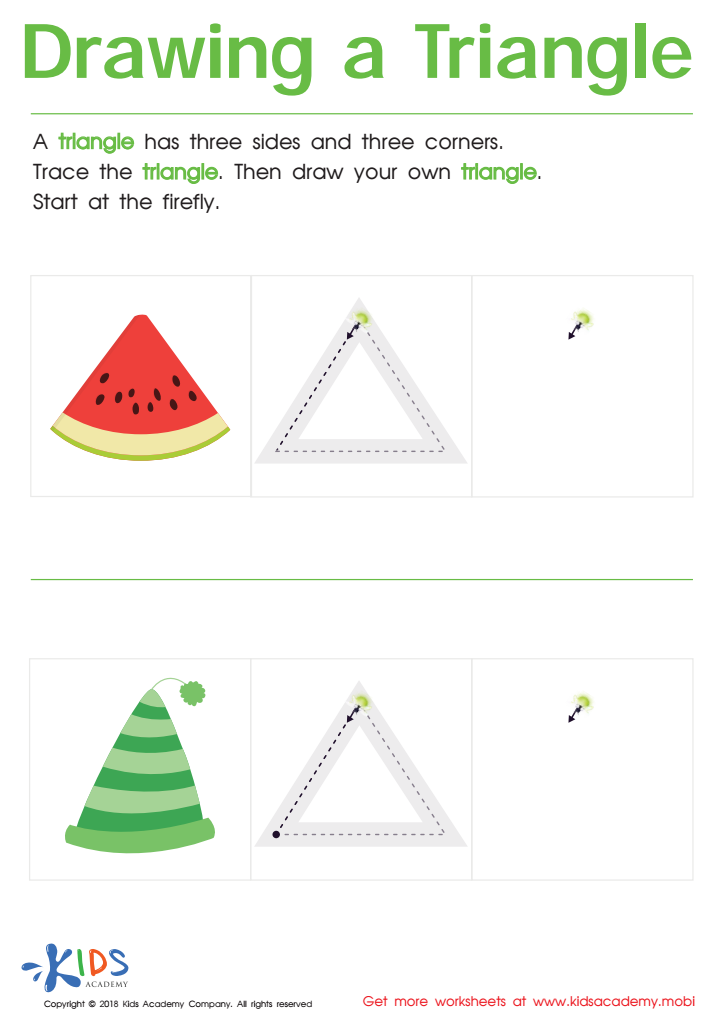
Drawing a Triangle Worksheet
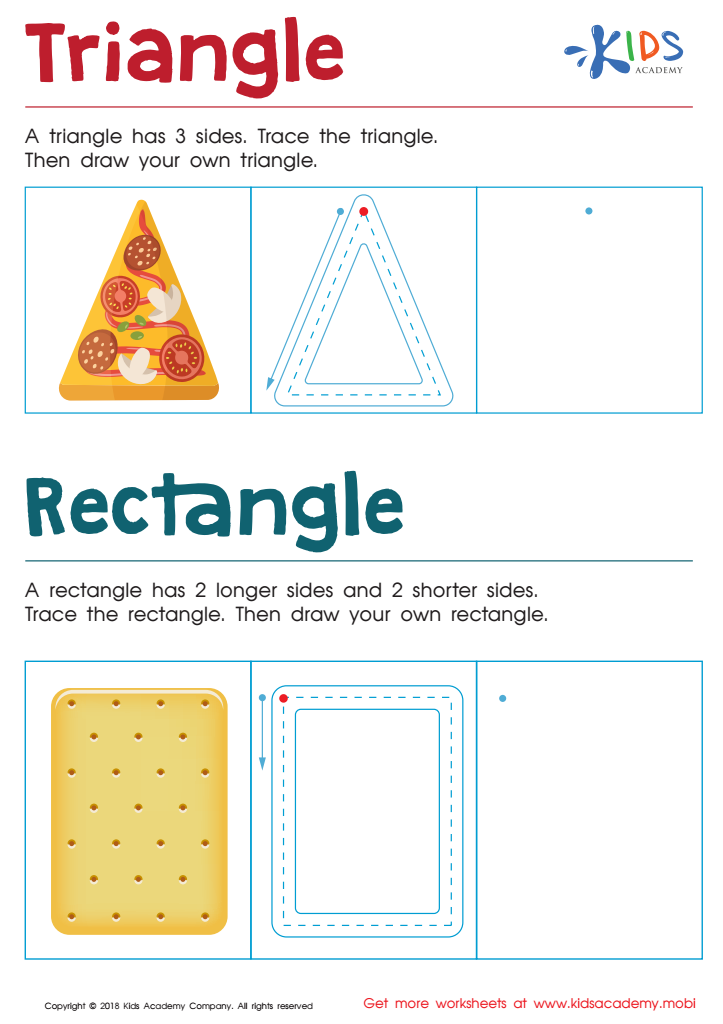
Triangle Rectangle Worksheet
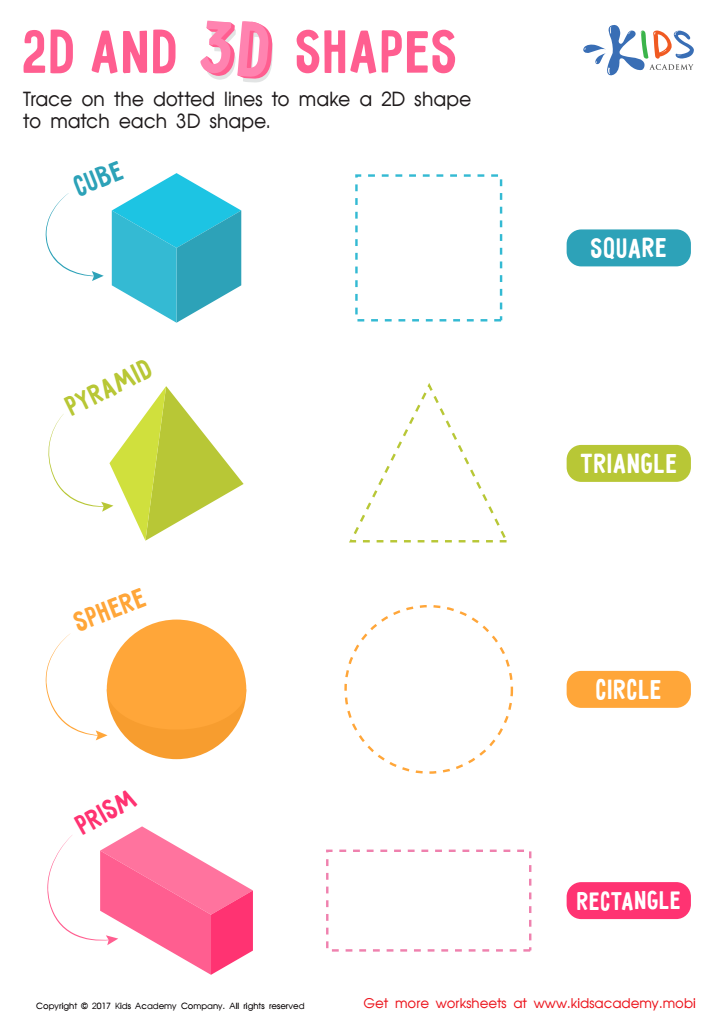
2D and 3D Shapes Worksheet
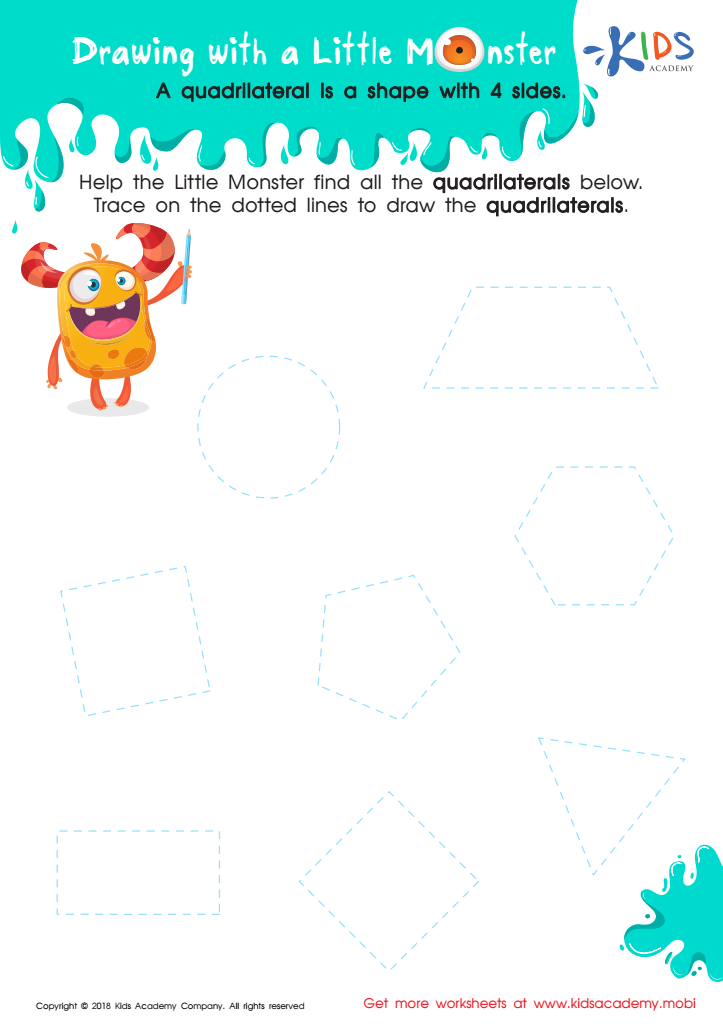
Drawing with a Little Monster Worksheet
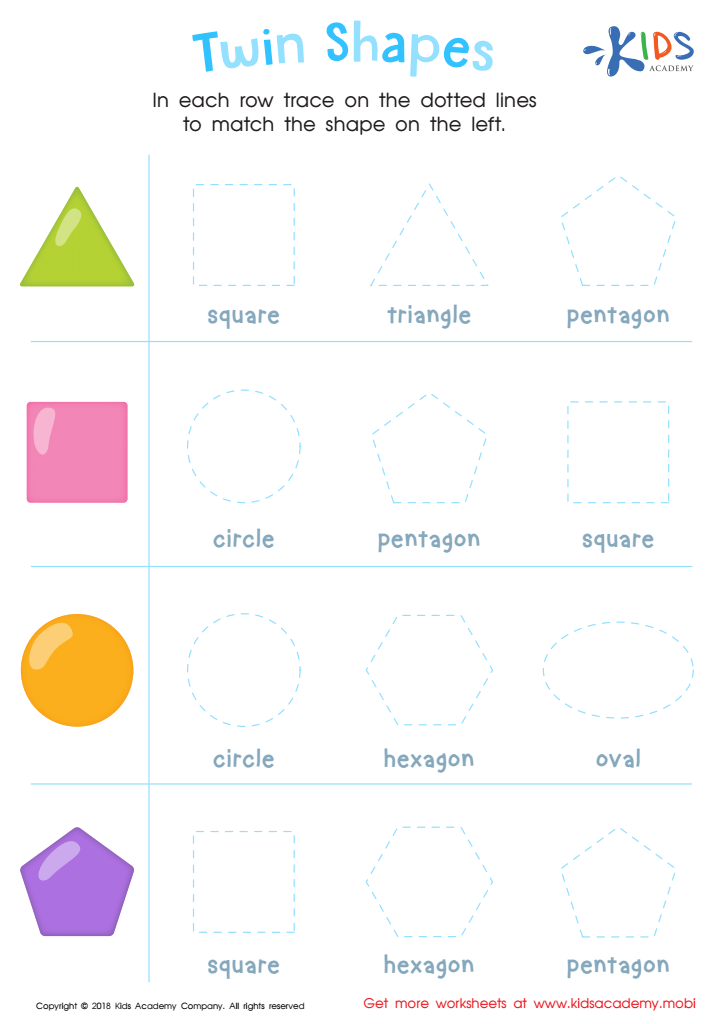
Twin Shapes Dot-to-Dot Worksheet
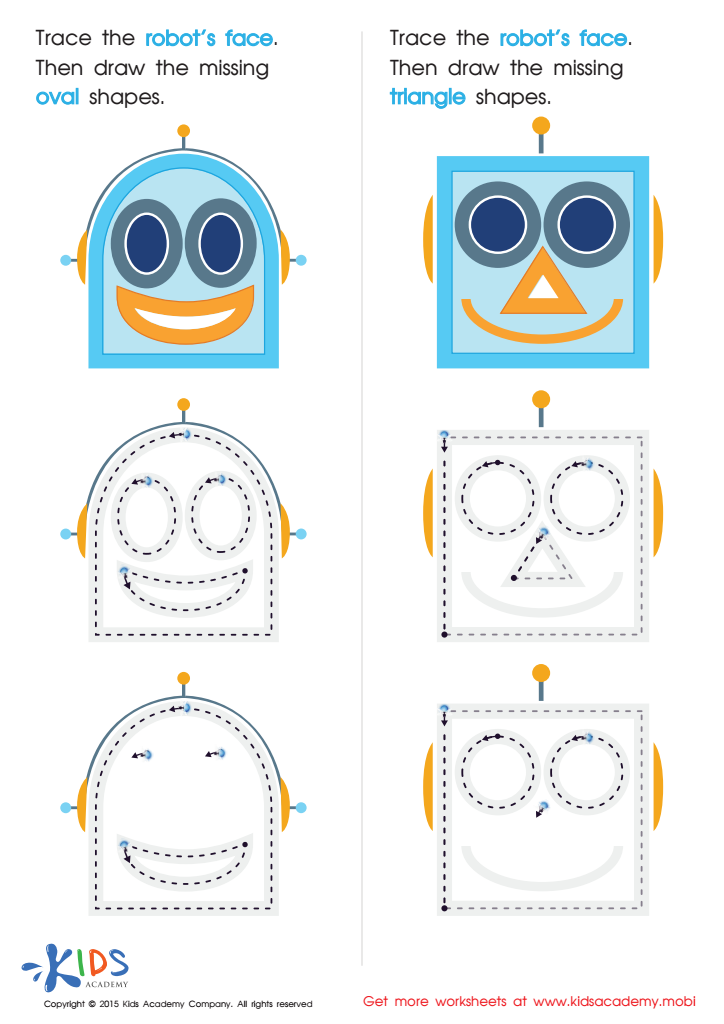
Drawing Ovals And Triangles with Fun Printable
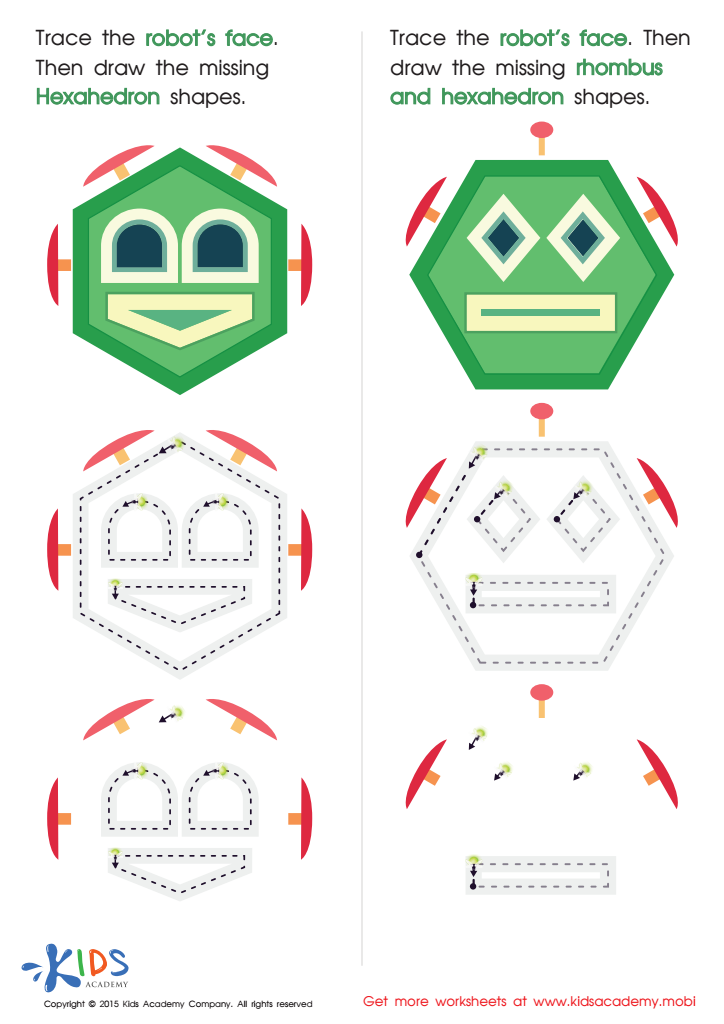
Practice Drawing Hexahedrons And a Rhombus Worksheet
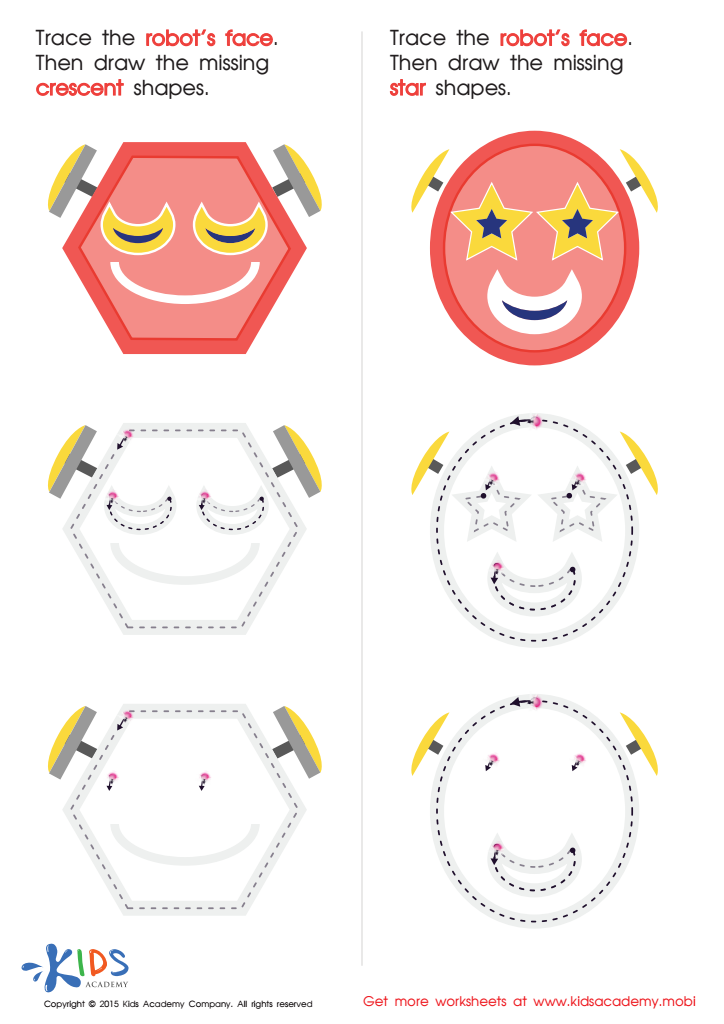
Composing a Robot's Face of Crescents And Stars Worksheet
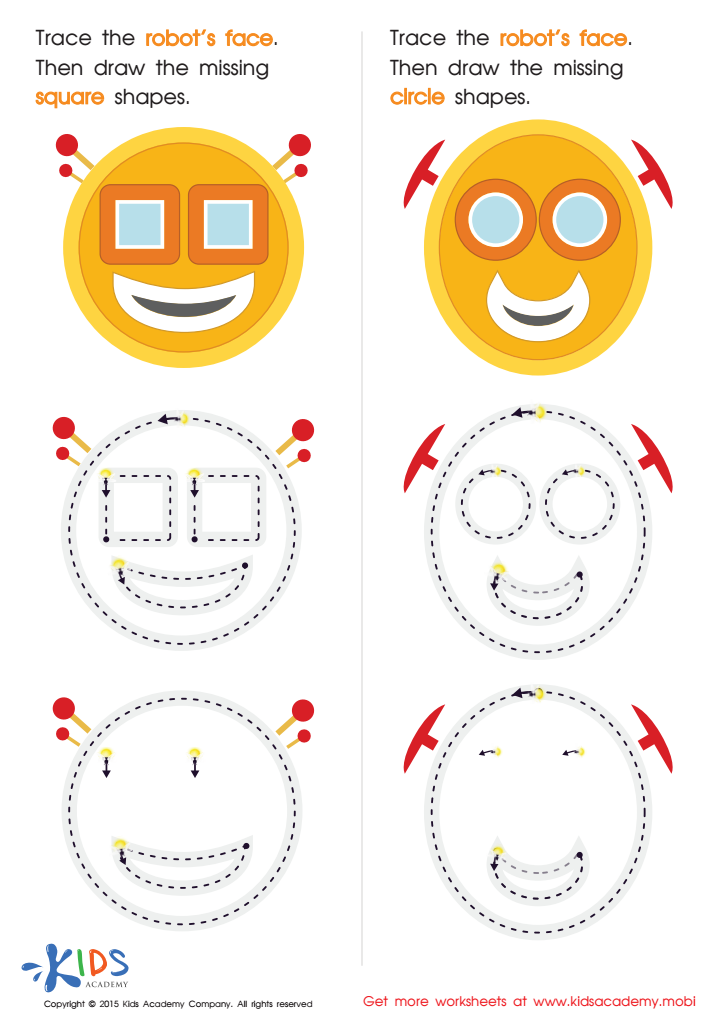
Practicing to Draw Circles And Squares Printable
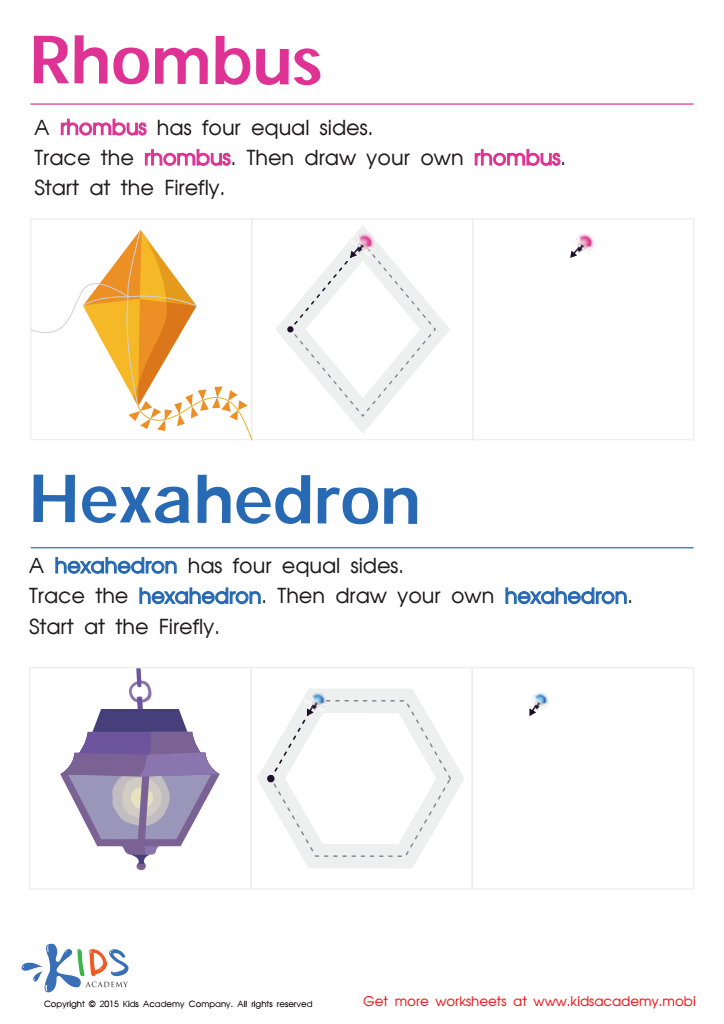
Draw a Rhombus And a Hexahedron Printable
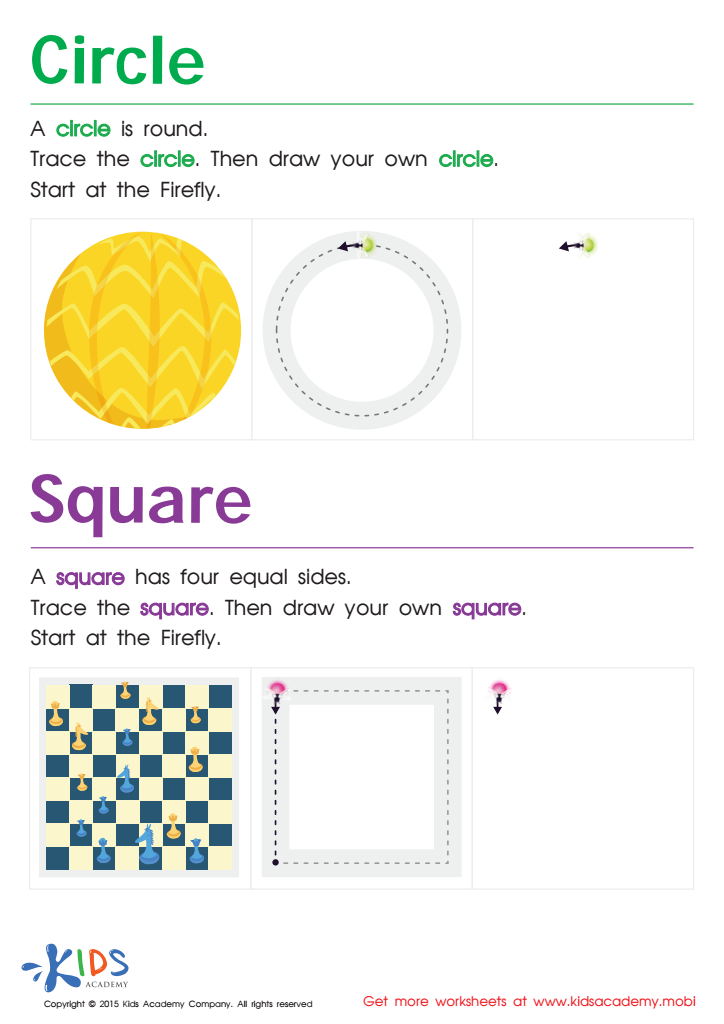
Trace And Draw a Circle And a Square Worksheet
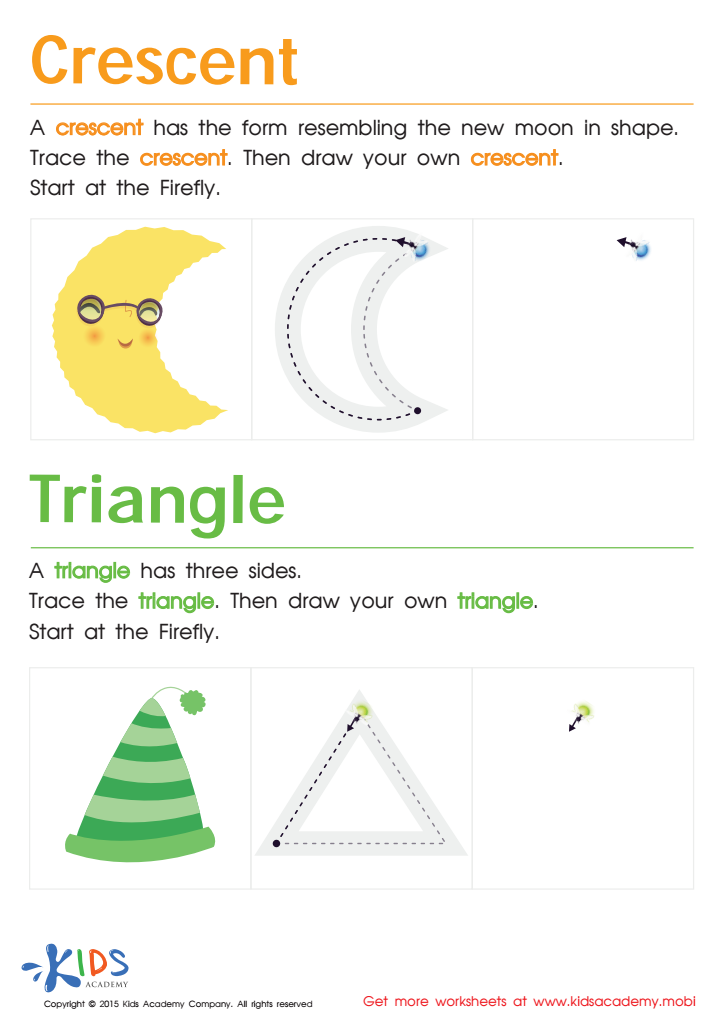
Learning to Draw Crescents And Triangles Worksheet





.jpg)


Tracing Shapes worksheets activities are an essential tool in early childhood education, offering a myriad of benefits that extend far beyond the simple act of following lines with a pencil. These activities are carefully designed to support young learners in their developmental journey, making them an invaluable resource for parents and educators alike.
Firstly, Tracing Shapes worksheets activities play a crucial role in enhancing fine motor skills. As children trace various shapes, they learn to control their hand movements and develop the dexterity necessary for writing. This foundational skill sets the stage for future academic success, as neat handwriting and the ability to draw and write without difficulty are significant assets in any educational setting.
Moreover, these worksheets serve as an excellent introduction to geometric concepts. Through tracing activities, children become familiar with different shapes, understanding their properties and distinctions. This early exposure not only enriches their mathematical vocabulary but also lays down the groundwork for more advanced geometrical learning in the future.
In addition to cognitive benefits, Tracing Shapes worksheets activities also foster concentration and patience in young learners. Focusing on tracing the contours of shapes requires attention to detail and perseverance, qualities that are invaluable in all areas of learning and personal development. As children engage with these activities, they learn to apply themselves and remain committed to completing the task at hand.
Furthermore, these worksheets can be a source of creativity and expression. Once children become comfortable with tracing shapes, they can experiment with combining them to create more complex patterns or even entire pictures. This not only reinforces their understanding of shapes but also encourages them to think creatively and express their ideas visually.
In conclusion, Tracing Shapes worksheets activities are much more than a simple drawing exercise. They are a multifaceted educational tool that supports the development of fine motor skills, introduces key mathematical concepts, and nurtures concentration, patience, creativity, and expression. Incorporating these activities into early learning curricula can significantly contribute to children's readiness for more advanced educational challenges.








