Fairy Tales worksheets activities for Ages 6-8 - Page 3
59 filtered results
-
From - To
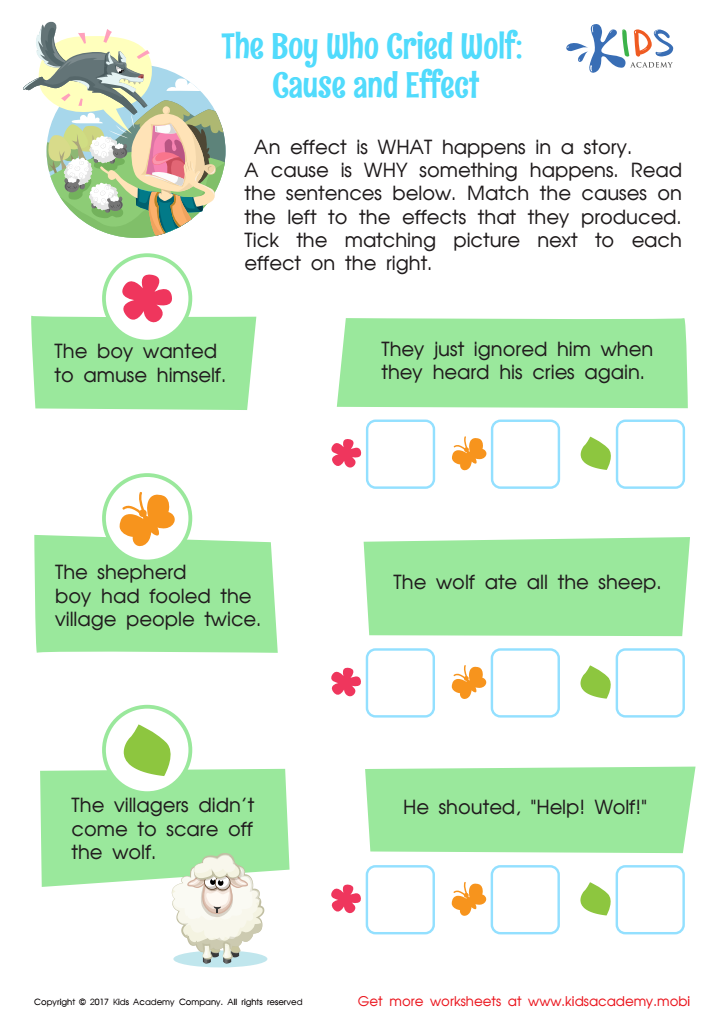
The Boy Who Cried Wolf: Cause and Effect Worksheet
 Assign to My Students
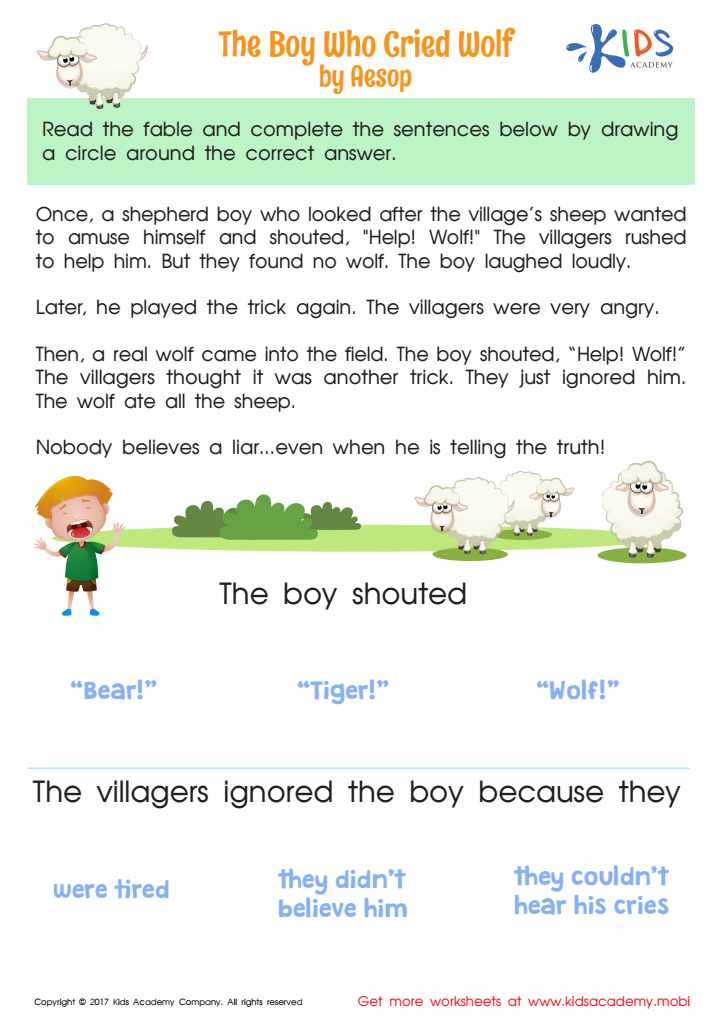
The Boy Who Cried Wolf Worksheet
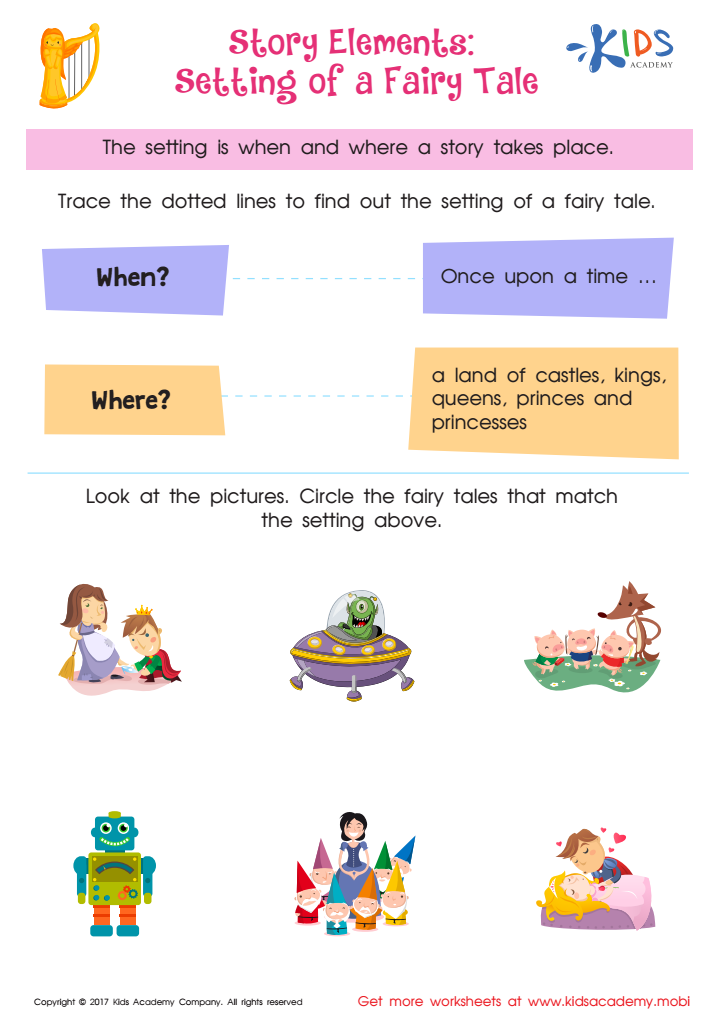
Story Elements: Setting of a Fairy Tale Printable
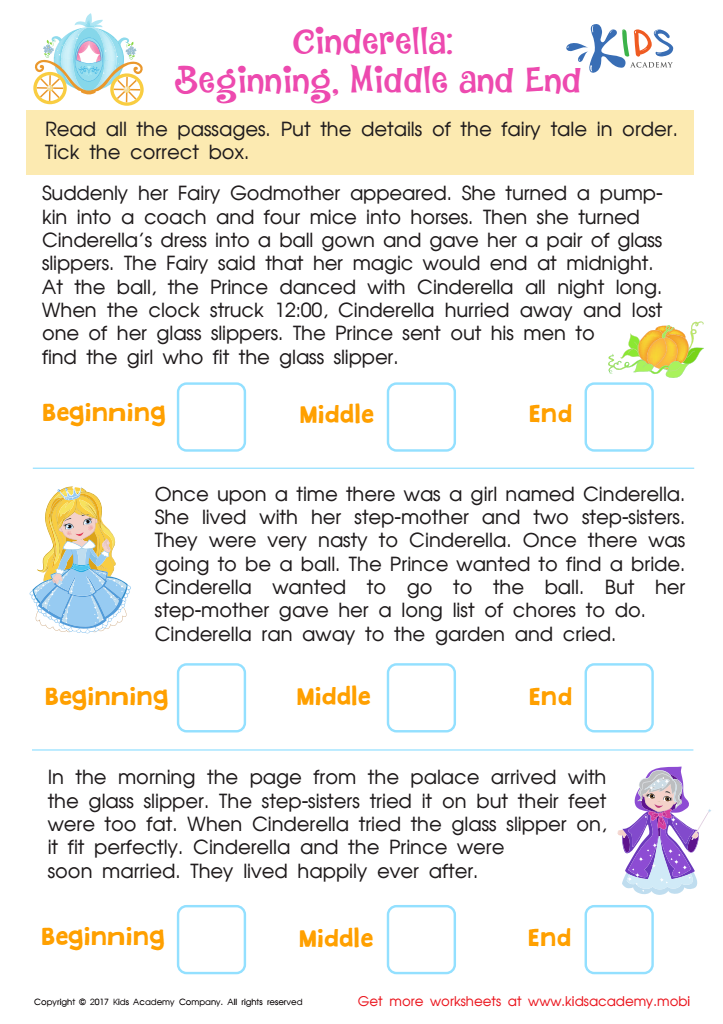
Cinderella: Beginning, Middle and End Worksheet
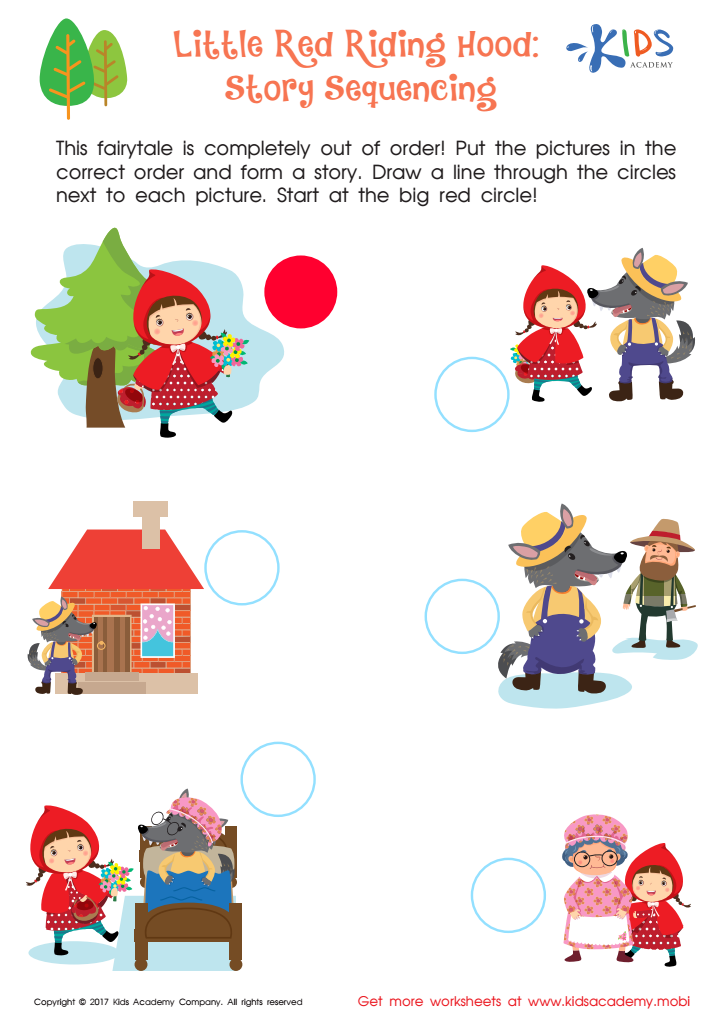
Story Sequencing Printable
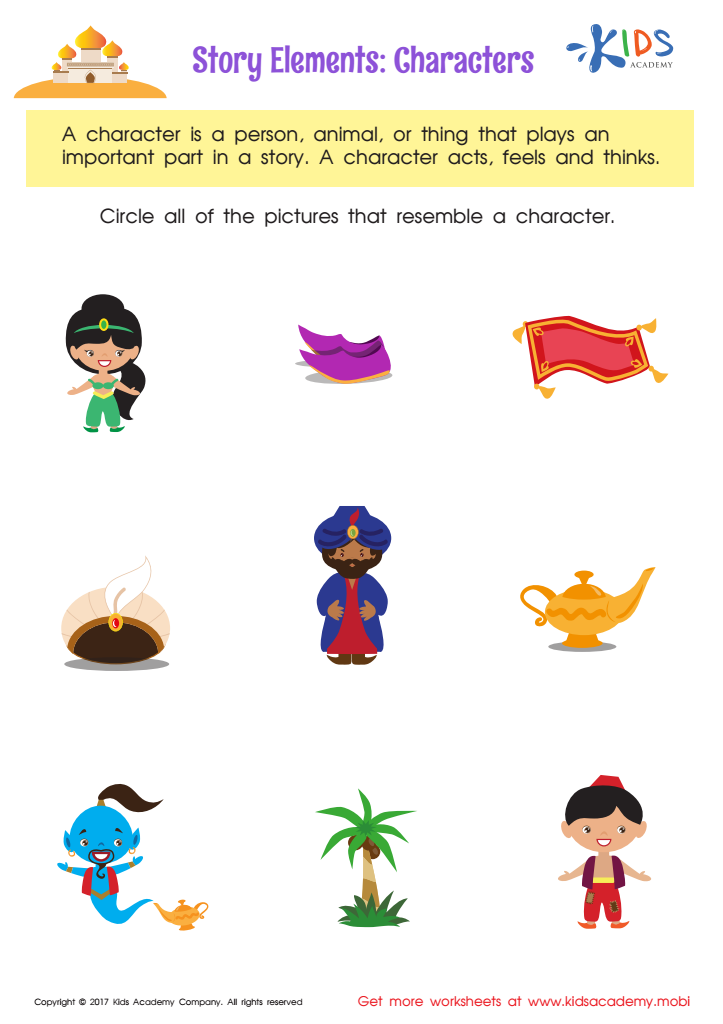
Story Elements Printable
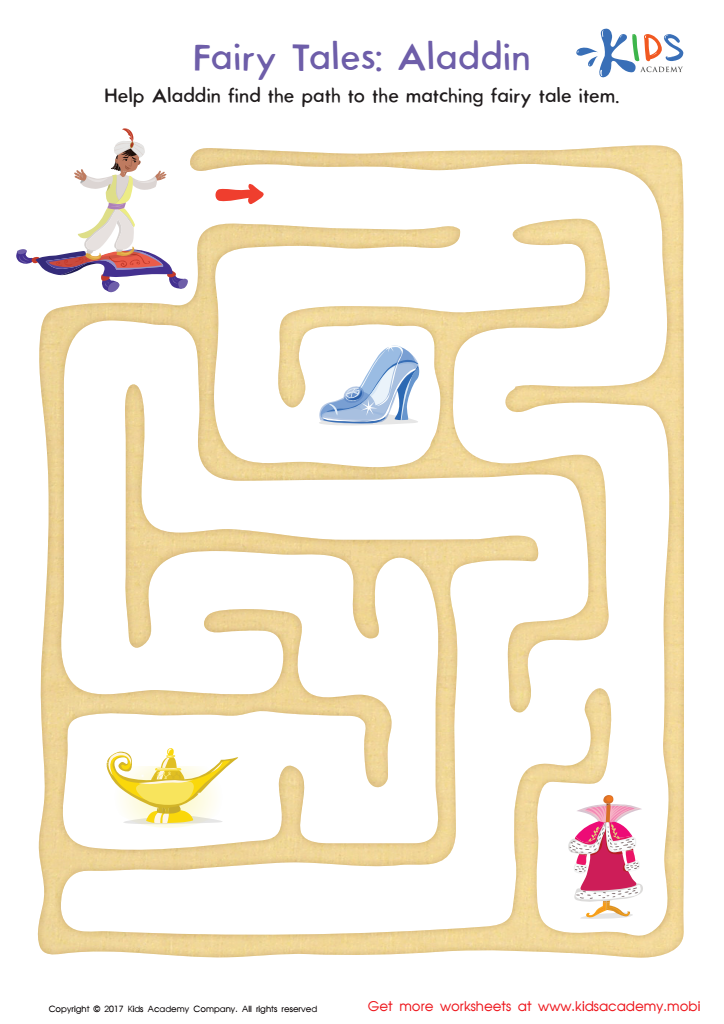
Fairy Tales Aladdin Printable
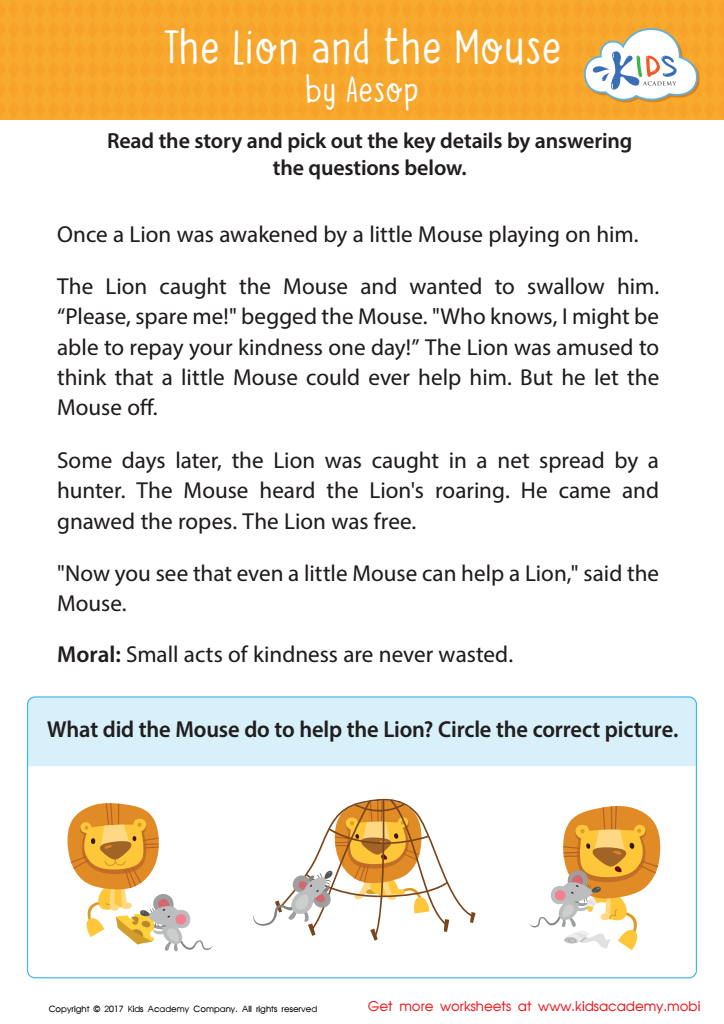
The Lion and The Mouse Sequencing Worksheet
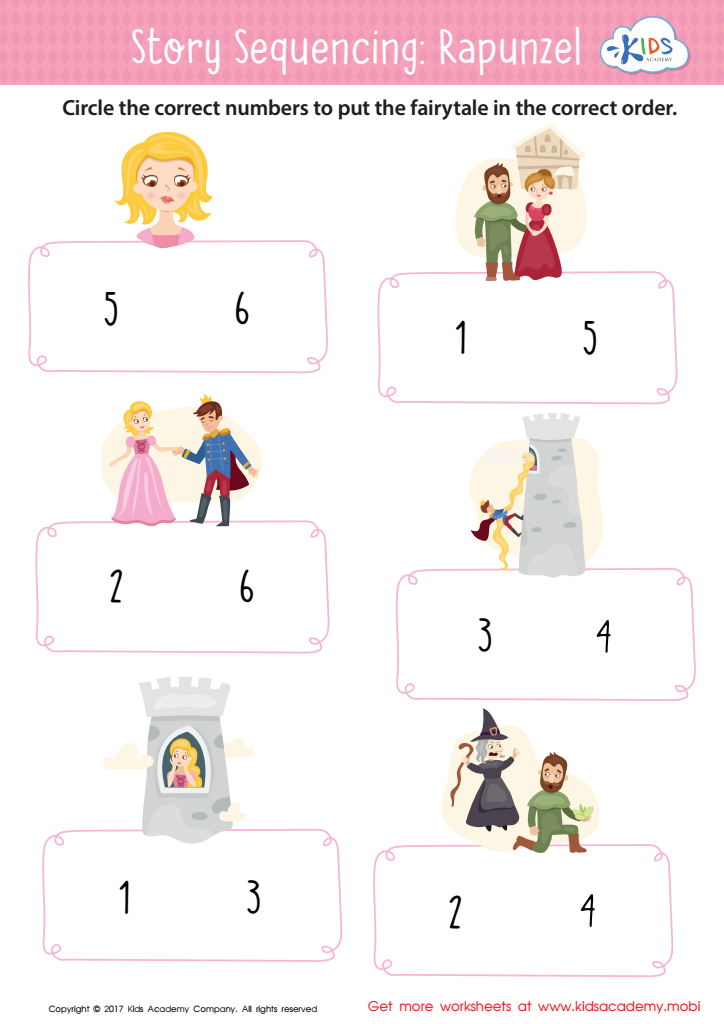
Rapunzel Story Sequencing Worksheet
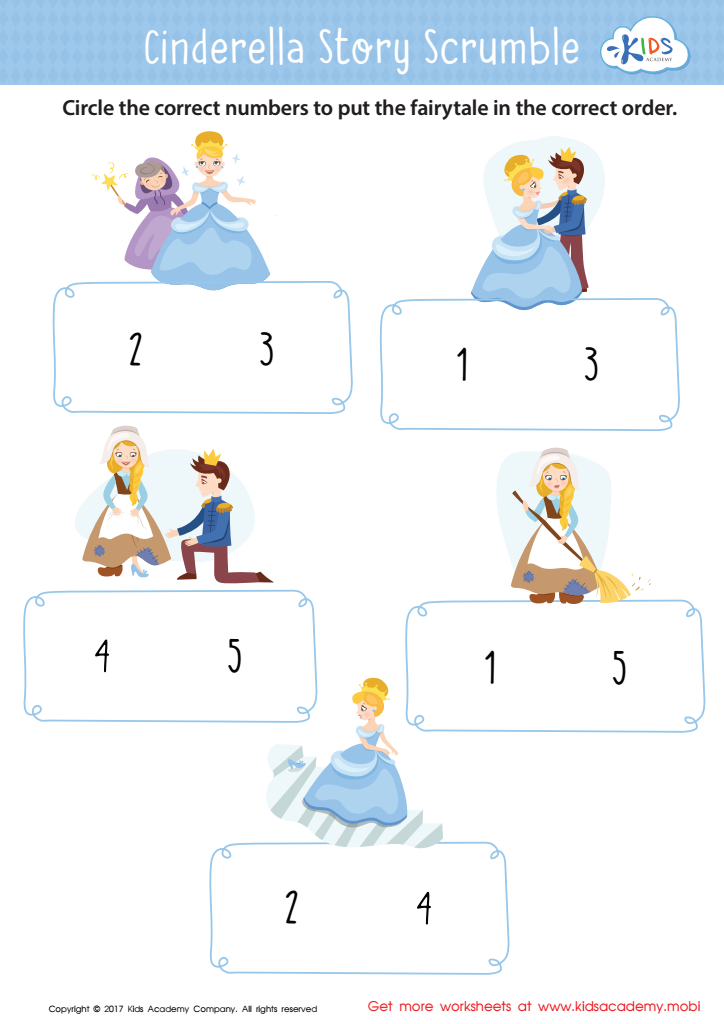
Cinderella Story Sequencing Worksheet
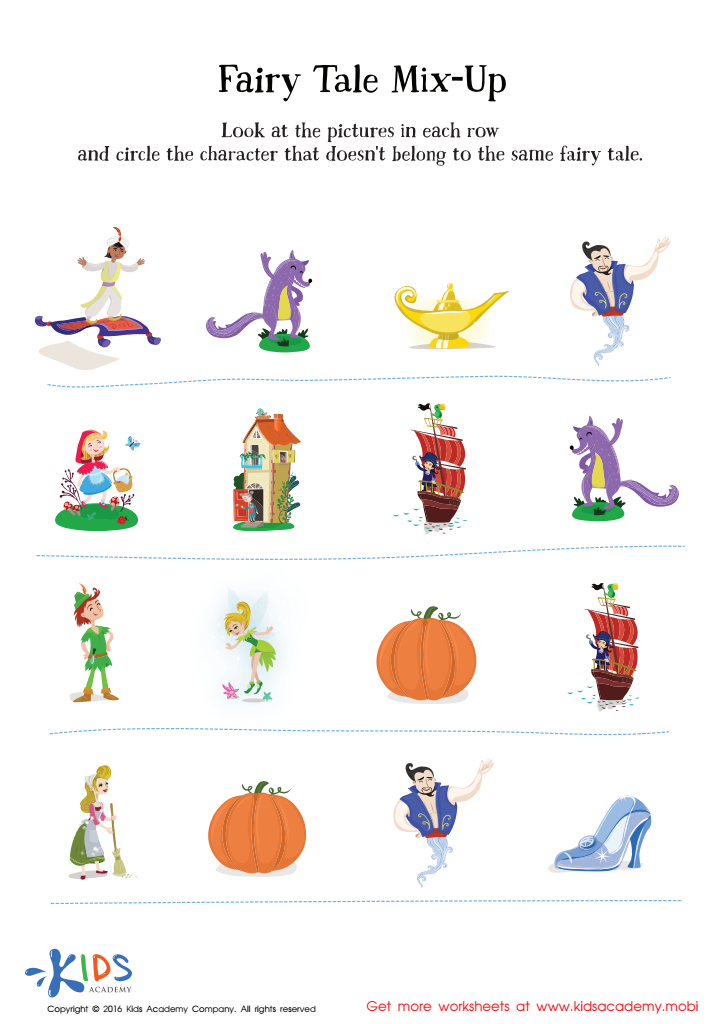
Fairy Tale Worksheet: Story Mix Up







Fairy tales play a crucial role in the development of children aged 6-8, and it's vital for parents and teachers to engage in activities related to these stories. First and foremost, fairy tales stimulate children's imagination and creativity. By exploring fantastical worlds, young listeners can learn to visualize scenarios, enhancing their creative thinking skills.
Moreover, fairy tales often contain moral lessons that teach ethical values. Parents and teachers can use these narratives to instill important concepts such as empathy, kindness, and resilience. Guided discussions about characters’ choices can help children reflect on their own behaviors and those of their peers.
Fairy tales also enhance language and literacy skills. Reading aloud and storytelling develop listening skills and vocabulary while promoting a love for reading. Activities around fairy tales, such as crafts or role-play, encourage collaborative learning and communication among peers.
Additionally, fairy tales can serve as excellent tools for cultural literacy. Many fairy tales originate from different cultures, which broadens children's understanding of diversity and fosters a sense of global awareness.
In conclusion, engaging children in fairy tales fosters creativity, imparts moral lessons, enhances literacy skills, and promotes cultural understanding, making these activities valuable for their holistic development.








