Physical Science worksheets activities for Ages 7-9
4 filtered results
-
From - To
Explore our engaging Physical Science worksheets, specifically designed for children aged 7-9! These activities promote a fun learning experience that covers essential scientific concepts such as matter, energy, and basic physics. Suitable for both home and classroom use, our worksheets include interactive exercises and critical thinking questions that challenge young learners. Enhance your child's understanding of the natural world while developing essential skills such as problem-solving and analytical thinking. With colorful visuals and engaging content, our innovative worksheets make science captivating and enjoyable! Dive into a world of discovery and watch your child's curiosity flourish with our Physical Science activities.
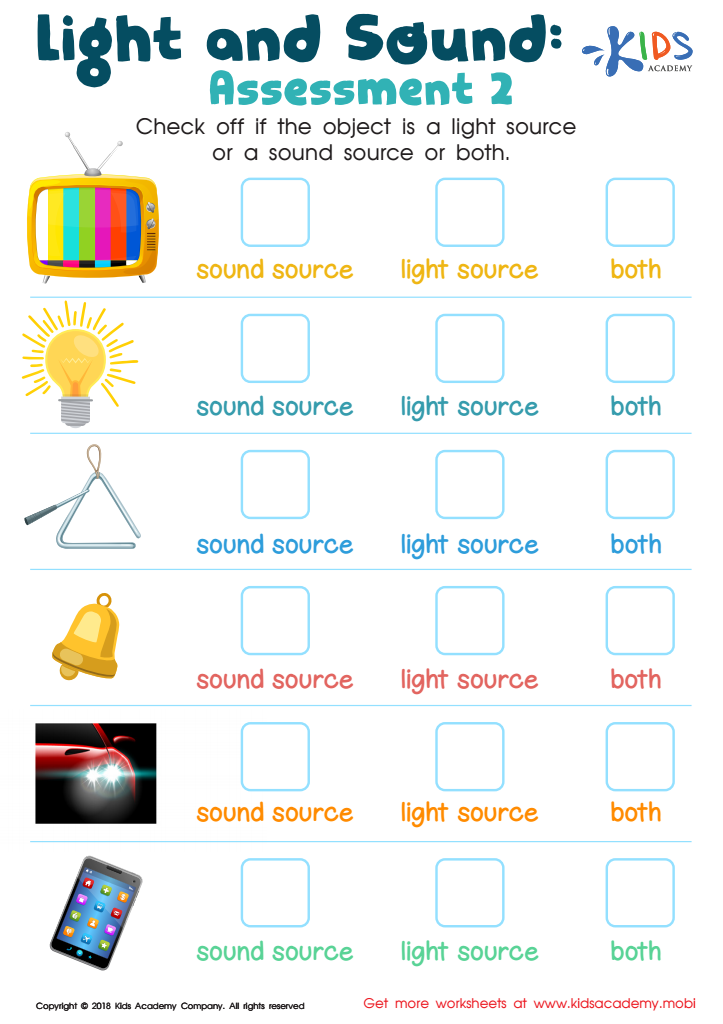
Light and Sound: Assessment 2 Worksheet
 Assign to My Students
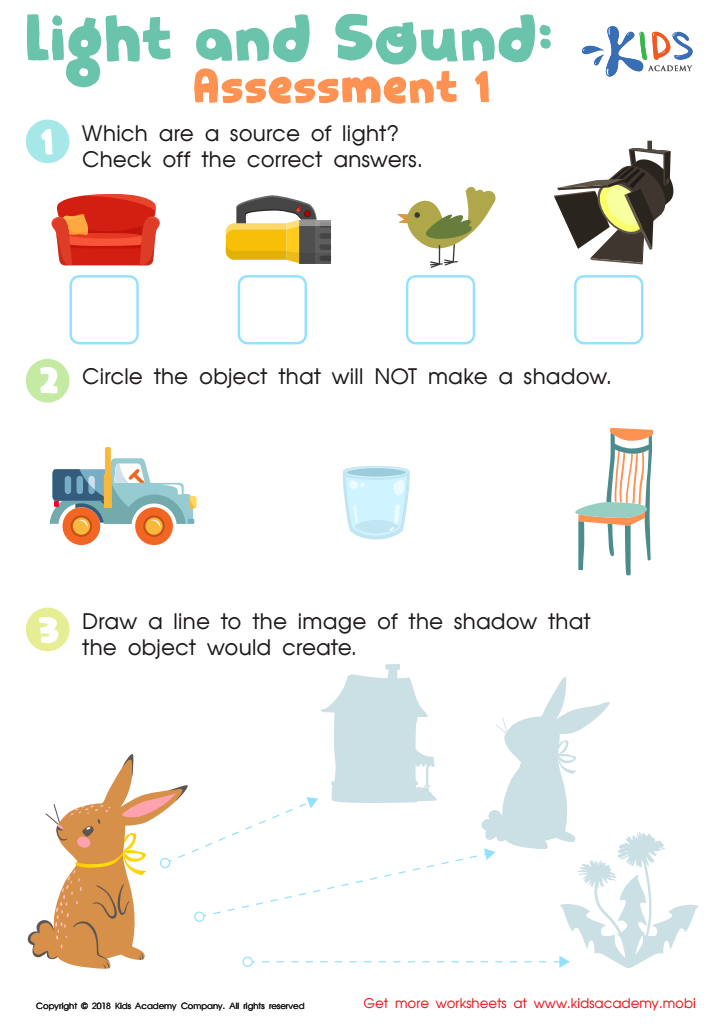
Light and Sound: Assessment 1 Worksheet
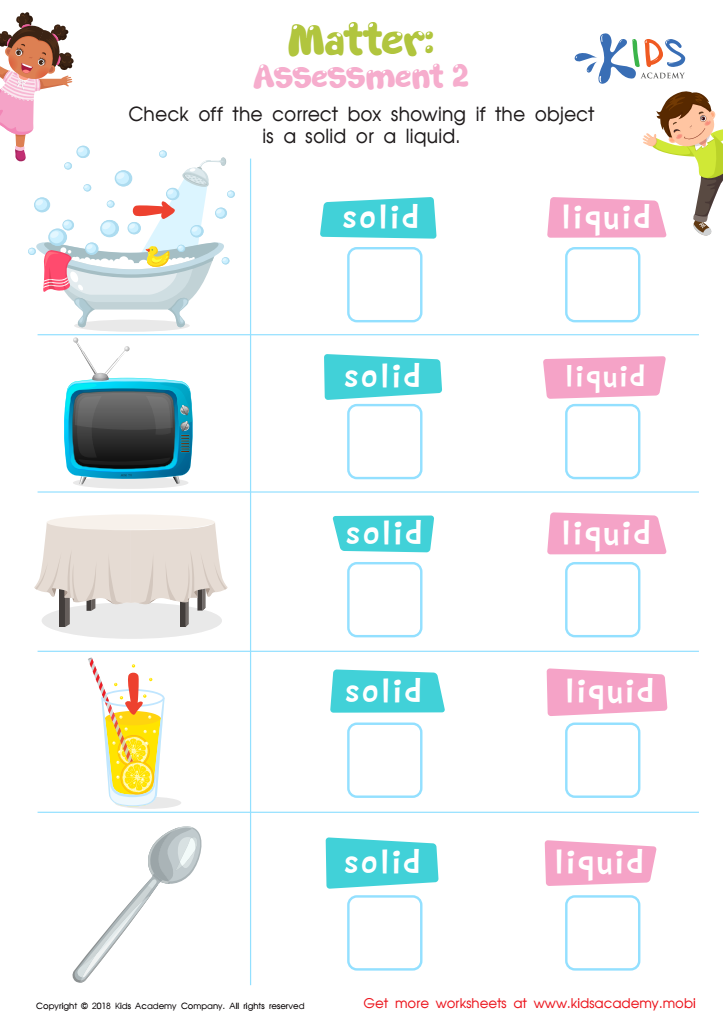
Matter: Assessment 2 Worksheet
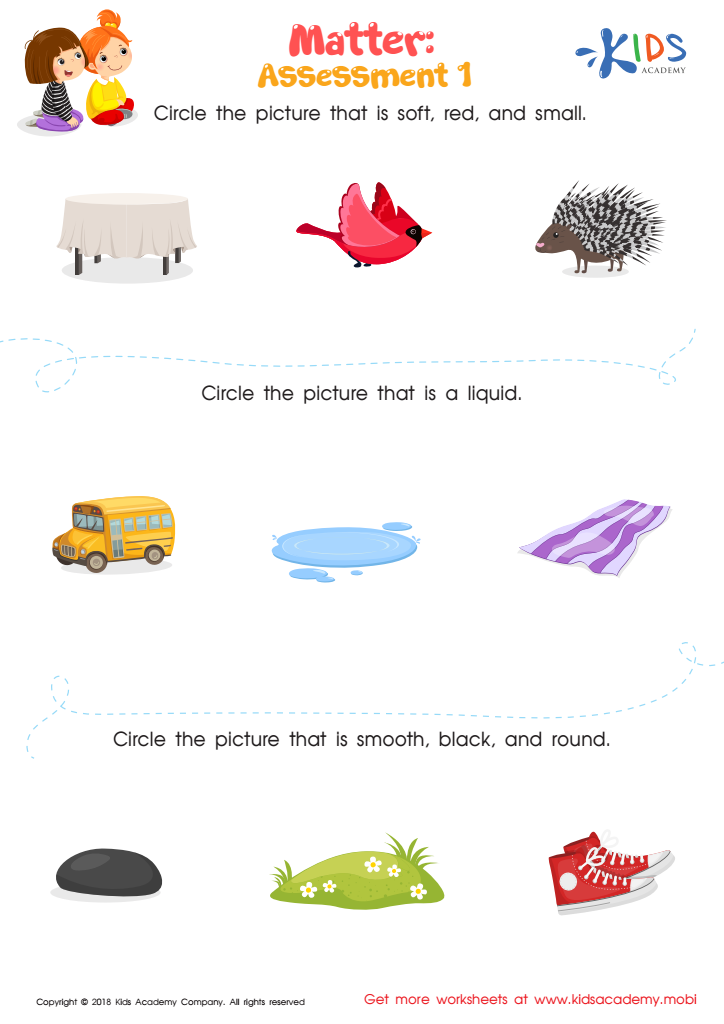
Matter: Assessment 1 Worksheet





.jpg)

Parents and teachers should care about Physical Science activities for children ages 7-9 because these early experiences lay the groundwork for critical thinking and problem-solving skills. This developmental stage is crucial as children are naturally curious and eager to explore the world around them. Engaging in hands-on science activities allows them to ask questions, formulate hypotheses, and conduct experiments, fostering a love for inquiry and exploration.
Moreover, physical science concepts, such as force, motion, and energy, can be made relatable through interactive activities, enhancing children's understanding of everyday phenomena. These activities not only build foundational knowledge in science but also nurture important skills like teamwork and communication as children often collaborate in group settings.
Integrating Physical Science into learning fosters creativity and encourages children to think like scientists, promoting perseverance when faced with challenges. Additionally, early exposure to science can influence a child's interest in STEM (Science, Technology, Engineering, and Mathematics) fields, potentially shaping their future educational and career pursuits.
Supporting Physical Science activities also aligns with educational standards that aim to develop scientific literacy, preparing children for an increasingly technology-driven world. Ultimately, prioritizing these activities provides children with the tools they need for academic success and lifelong learning.








