
Normal Building Vocabulary worksheets activities for Ages 4-9
3 filtered results
Difficulty Level
Grade
Age
-
From - To
Subject
Activity
Standards
Welcome to our engaging "Normal Building Vocabulary" worksheets designed for children ages 4-9! These fun and interactive activities aim to enhance your child's language skills, expanding their vocabulary through playful learning. Our worksheets are tailored to suit various developmental stages, ensuring that every child can benefit. From word matching to fill-in-the-blank exercises, each activity promotes understanding and retention while keeping learning enjoyable. Perfect for home or classroom use, these resources encourage the exploration of new words in context, supporting essential literacy skills. Download our worksheets today and help your child build a strong vocabulary foundation for their future education!
Favorites
With answer key
Interactive
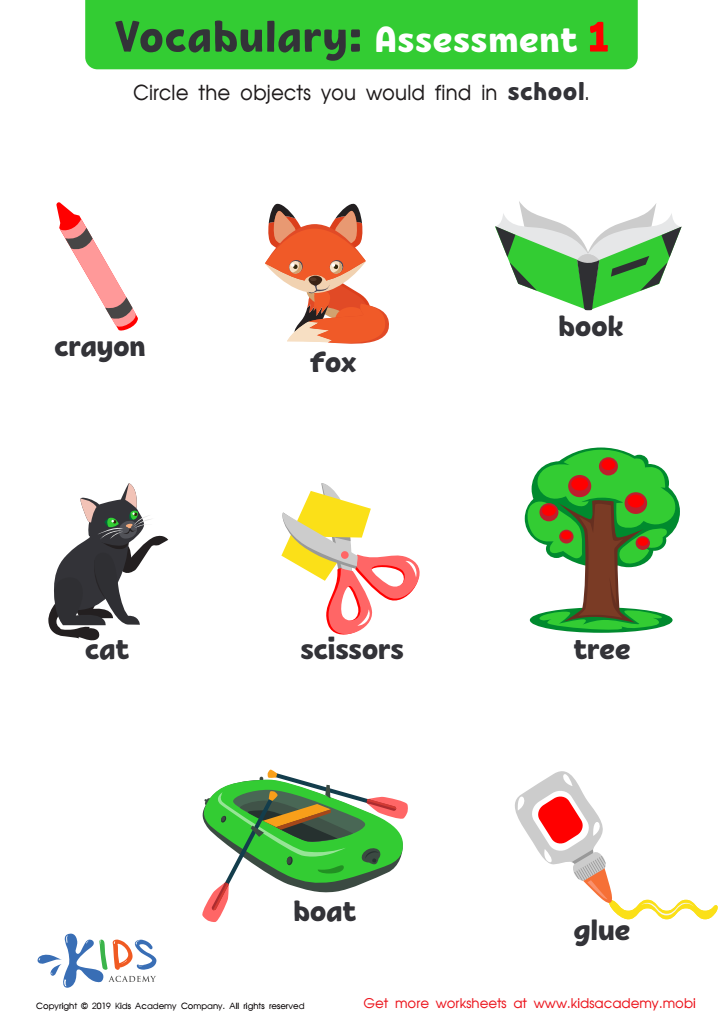
Vocabulary: Assessment 1 Worksheet
Want to check your child's vocabulary? This worksheet has kids identify objects from school through picture clues. It reinforces reading and fine motor skills, while providing an assessment of their reading growth and needs.
 Assign to My Students
Vocabulary: Assessment 1 Worksheet
Worksheet
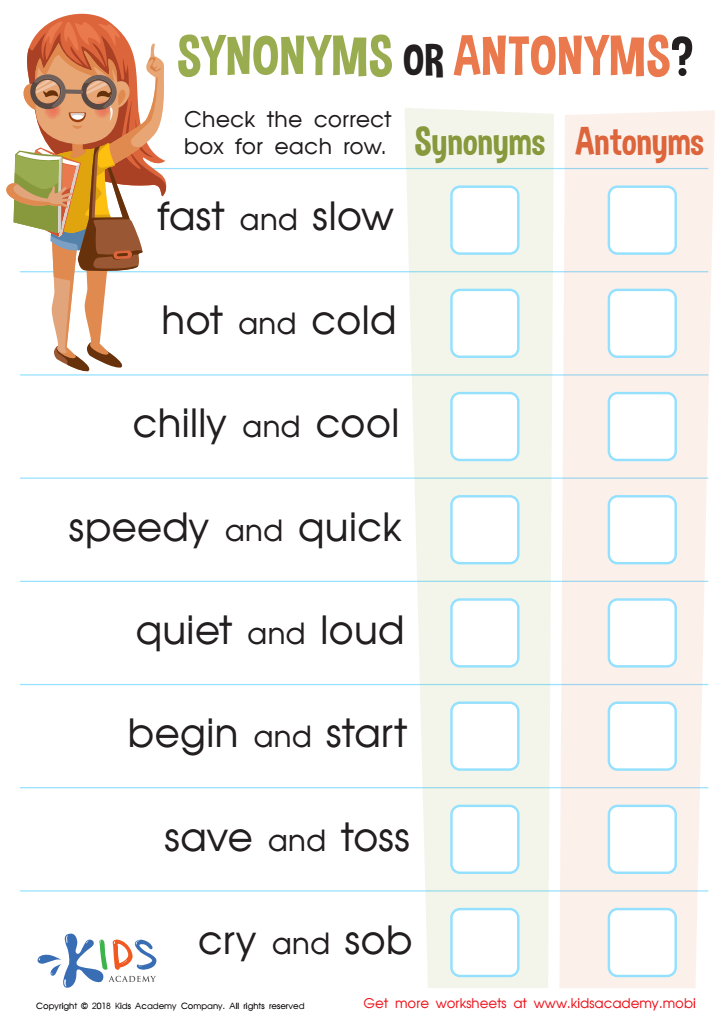
Synonyms or Antonyms: Assessment Worksheet
Test your child's knowledge with this fun worksheet! Ask them to read the words and select if they are synonyms or antonyms - e.g. 'happy' is a synonym and 'bad' is an antonym. For an extra challenge, ask them to provide two synonyms and two antonyms for each word.
Synonyms or Antonyms: Assessment Worksheet
Worksheet
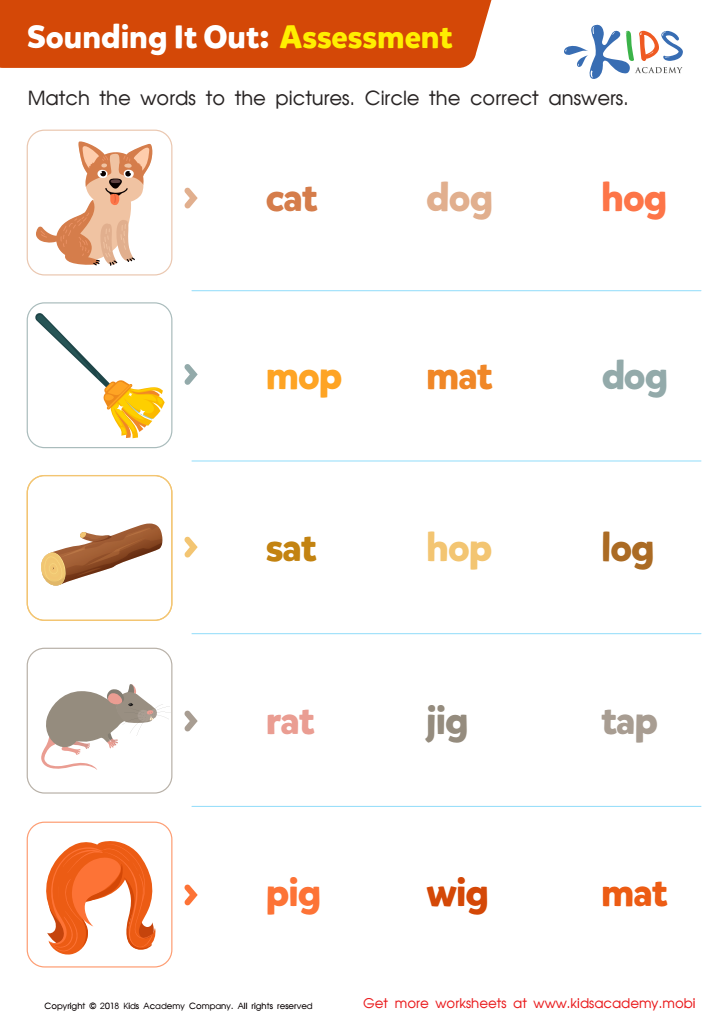
Sounding it Out: Assessment Worksheet
Give your little learner a fun challenge with this downloadable worksheet! With pictures to guide them, have them name the images and then sound out the words in the same row. Be careful though, as they all contain the same amount of similarly sounding letters. Once the correct word has been found, have them circle it!
Sounding it Out: Assessment Worksheet
Worksheet
Join Kids Academy for Free
Who is primarily going to use this learning content?








Parents and teachers should prioritize vocabulary-building activities for children ages 4 to 9 because this crucial stage lays the foundation for literacy and overall academic success. Young children are rapidly developing language skills, and enriched vocabulary directly correlates with reading comprehension and effective communication. Engaging in vocabulary-building exercises, such as songs, games, and storytelling, fosters not only word recognition but also the ability to express thoughts and emotions clearly.
Moreover, vocabulary development during these formative years supports critical thinking. By encountering new words in varied contexts, children learn to understand nuanced ideas, enhancing their cognitive abilities. This skill is vital in academic settings and everyday interactions, as it boosts confidence and social skills.
Additionally, building a strong vocabulary at an early age ignites a love for reading, encouraging children to explore and discover new worlds through books. A rich vocabulary also serves as a protective factor against future literacy challenges, ensuring children are well-prepared for complex language demands as they progress through school.
Ultimately, vocabulary-building activities create a stimulating learning environment that promotes curiosity, effective communication, and a well-rounded educational experience, setting children on a positive trajectory for lifelong learning.








