
Normal Phonics worksheets activities for 6-Year-Olds
5 filtered results
Difficulty Level
Grade
Age
-
From - To
Subject
Activity
Standards
Dive into the world of phonics with our engaging Normal Phonics Worksheets Activities! Specially crafted to enhance early reading skills, our collection offers a wide range of exercises tailored to support young learners. From mastering the basics of letter sounds to blending and segmenting, these worksheets are the perfect tool to foster a love for reading. Ideal for classroom use or at-home practice, our Normal Phonics Worksheets Activities are designed to provide a fun, interactive learning experience. Watch as confidence and reading fluency blossom with each activity. Start your phonics journey today and unlock the joy of reading!
Favorites
With answer key
Interactive
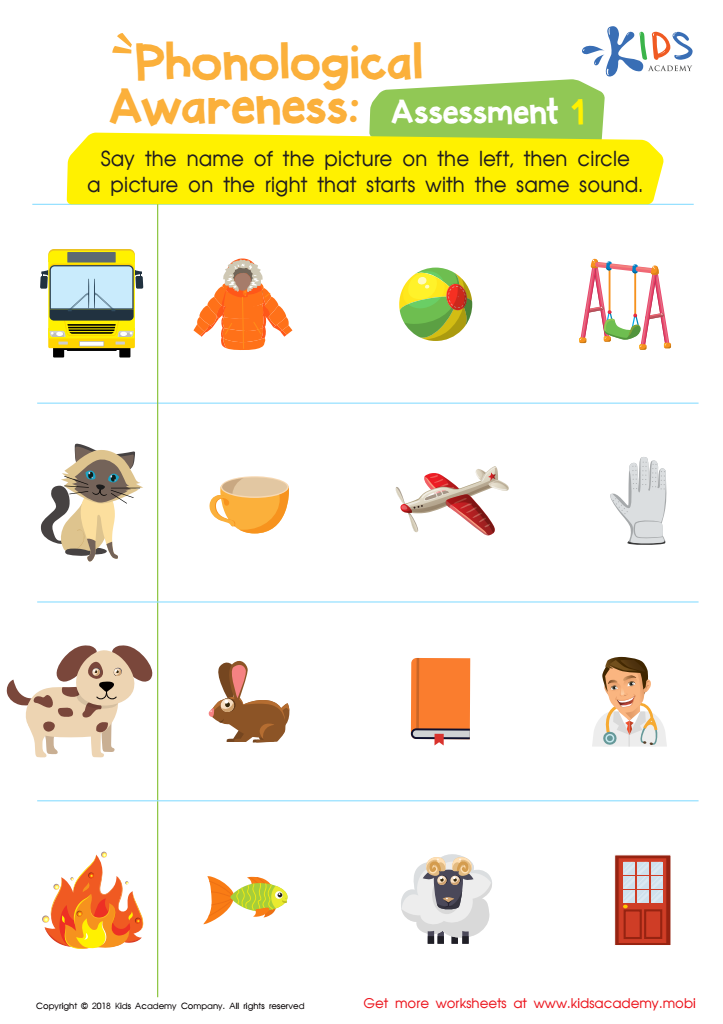
Phonological Awareness: Assessment 1 Worksheet
This worksheet helps kids build key phonics skills for pre-reading. They say each picture name aloud, focusing on the starting sound. Then, they match the sound with an image in the same row. Use as a checkpoint for kindergarten or grade 1 phonics readiness.
 Assign to My Students
Phonological Awareness: Assessment 1 Worksheet
Worksheet
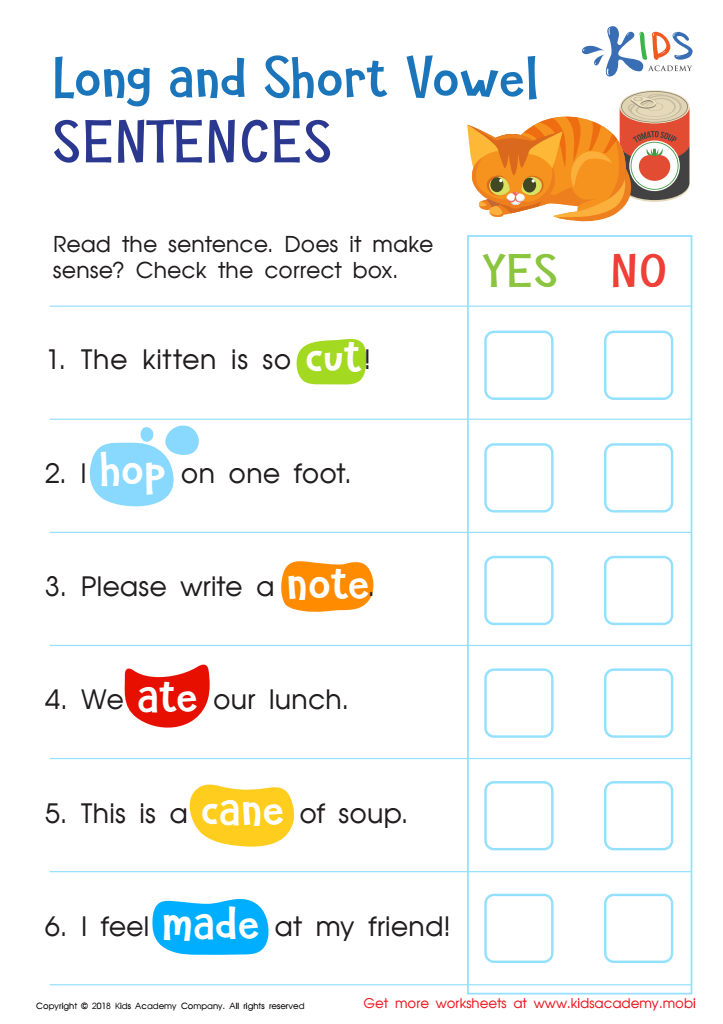
Long and Short Vowel Sentences: Assessment Worksheet
This printable worksheet helps kids practice differentiating between short and long vowel sounds. They'll use context clues to figure out which words make sense in simple sentences. A great way to build reading and writing skills!
Long and Short Vowel Sentences: Assessment Worksheet
Worksheet
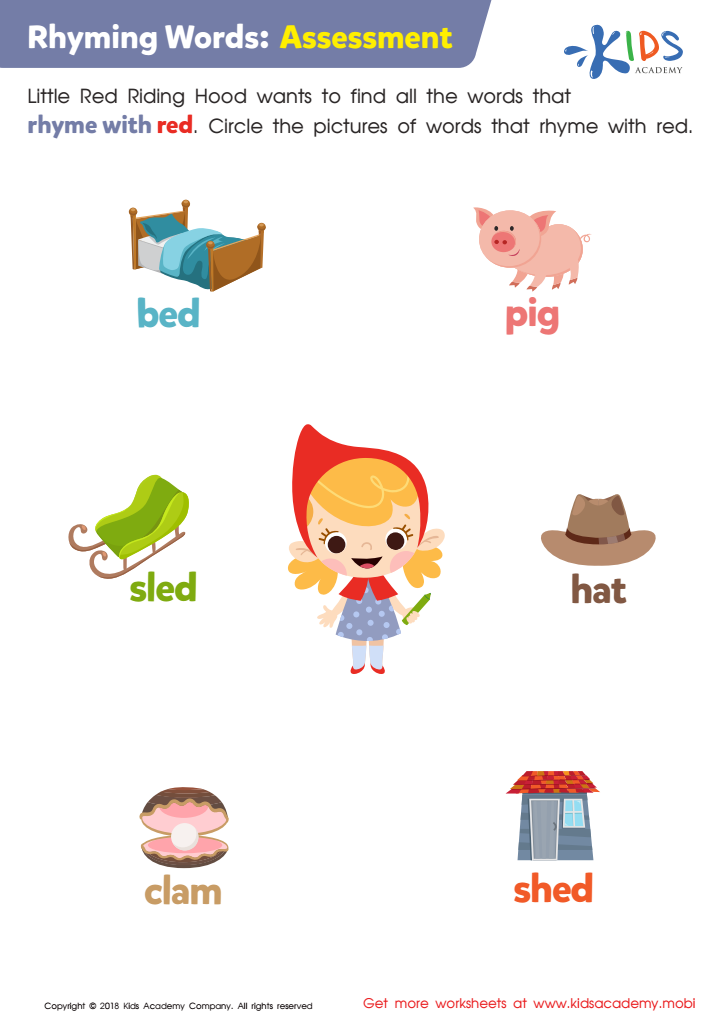
Rhyming Words: Assessment Worksheet
Help Little Red Riding Hood find rhyming words with "red". Download and print this worksheet. Have your child circle the rhyming words and pictures. Get them to say each word out loud and compare it to the word "red". When they're done, review the answers and talk about any words that don't rhyme.
Rhyming Words: Assessment Worksheet
Worksheet
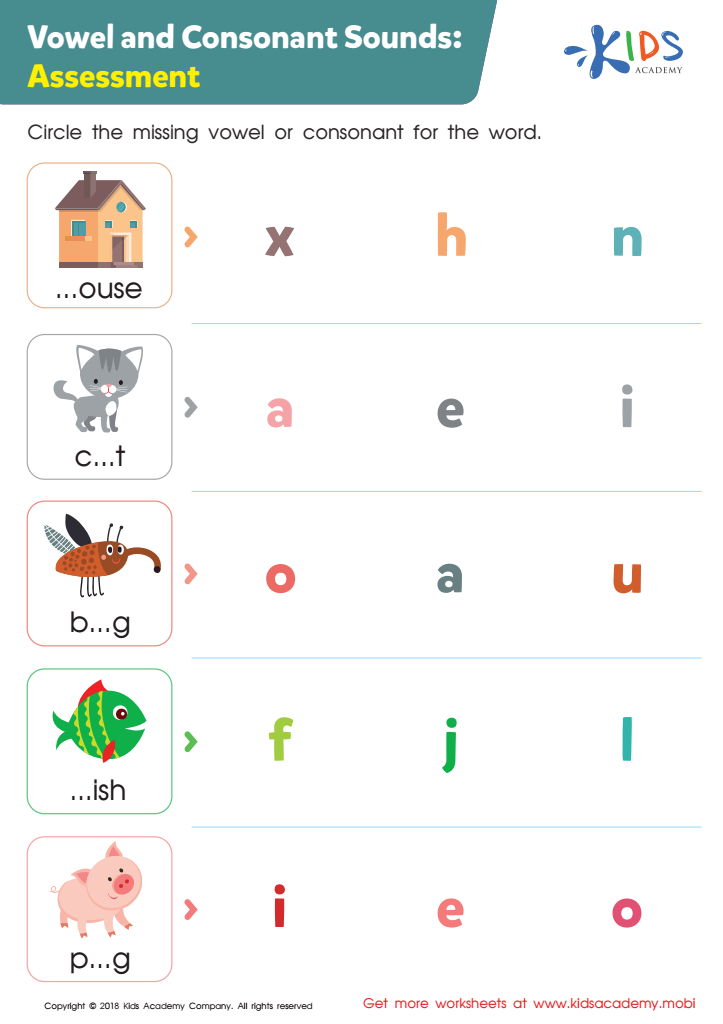
Vowel and Consonant Sounds: Assessment Worksheet
Test young elementary students on vowel and consonant sounds with this friendly phonics assessment worksheet. Get kids to name each image and look at the word underneath. Ask them to sound out the word, then circle the missing letter to complete. This will help assess their knowledge and skills!
Vowel and Consonant Sounds: Assessment Worksheet
Worksheet
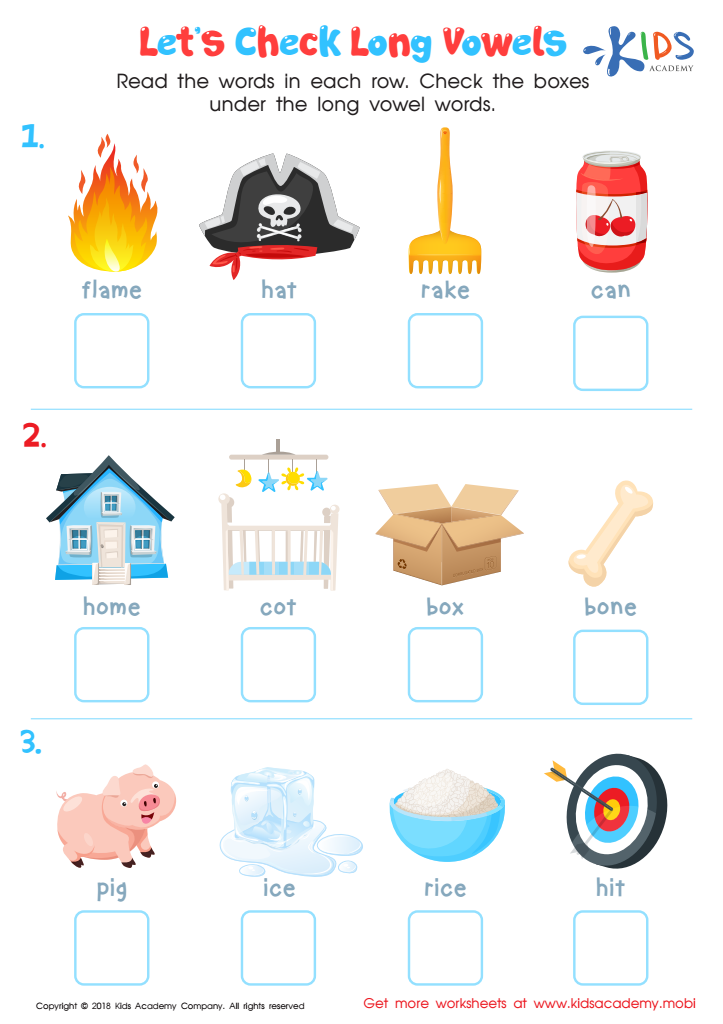
Let's Check Long Vowels: Assessment Worksheet
This worksheet helps your child identify objects and learn long vowel sounds. Ask them to say the names of the four objects in each row. Then, help them check the boxes to confirm they know the long vowel sounds. This will help them develop their reading skills.
Let's Check Long Vowels: Assessment Worksheet
Worksheet
Join Kids Academy for Free
Who is primarily going to use this learning content?




.jpg)



Normal Phonics worksheets activities are an essential part of teaching young learners how to read and write. These structured exercises bridge the gap between understanding the sounds that letters and letter combinations make and the ability to recognize those sounds in written words. The primary reason these activities are so useful is that they cater to a wide range of learning styles, ensuring that every child has the opportunity to grasp the fundamentals of phonics in a way that resonates with them.
Firstly, Normal Phonics worksheets activities are designed with gradual progression in mind. This means that they start with the basics and slowly introduce more complex concepts, allowing children to build on their knowledge without feeling overwhelmed. By regularly engaging with these worksheets, students can reinforce their learning, solidify their understanding, and develop confidence in their ability to decode words.
Another significant advantage is the variety of activities included in Normal Phonics worksheets. From matching exercises and word searches to fill-in-the-blanks and sentence construction, these activities make learning interactive and fun. This variety not only keeps students engaged but also caters to different learning preferences, whether a child learns best through visual cues, repetition, or hands-on activities.
Moreover, Normal Phonics worksheets activities facilitate individualized learning. In a classroom setting, it can be challenging for teachers to give each student the one-on-one attention they may need. However, with phonics worksheets, students can work at their own pace, allowing them to spend more time on concepts they find challenging and less on those they grasp quickly. This personalized approach helps ensure that no child is left behind.
In conclusion, the usefulness of Normal Phonics worksheets activities cannot be overstated. They offer a structured, engaging, and individualized approach to learning phonics, laying a solid foundation for literacy that will benefit children throughout their academic journey and beyond.








