
Fun and Engaging Worksheets for 7-8 Year Olds: Discover the World of Plants and Animals - Knowledge Check
1 filtered results
Difficulty Level
Grade
Age
-
From - To
Subject
Activity
Standards
Dive into the fascinating world of biology with our Normal Plants and Animals Worksheets Activities! Specifically designed to spark curiosity and enhance understanding, this collection is perfect for young learners eager to explore the natural world. Through engaging tasks and thought-provoking exercises, students will delve into the characteristics, habitats, and life cycles of various flora and fauna. Our worksheets are crafted to cater to different learning styles, ensuring that each child finds joy and excitement in discovering the wonders of normal plants and animals. Get ready to embark on an educational journey filled with discovery and fun with our Normal Plants and Animals Worksheets Activities!
Favorites
With answer key
Interactive
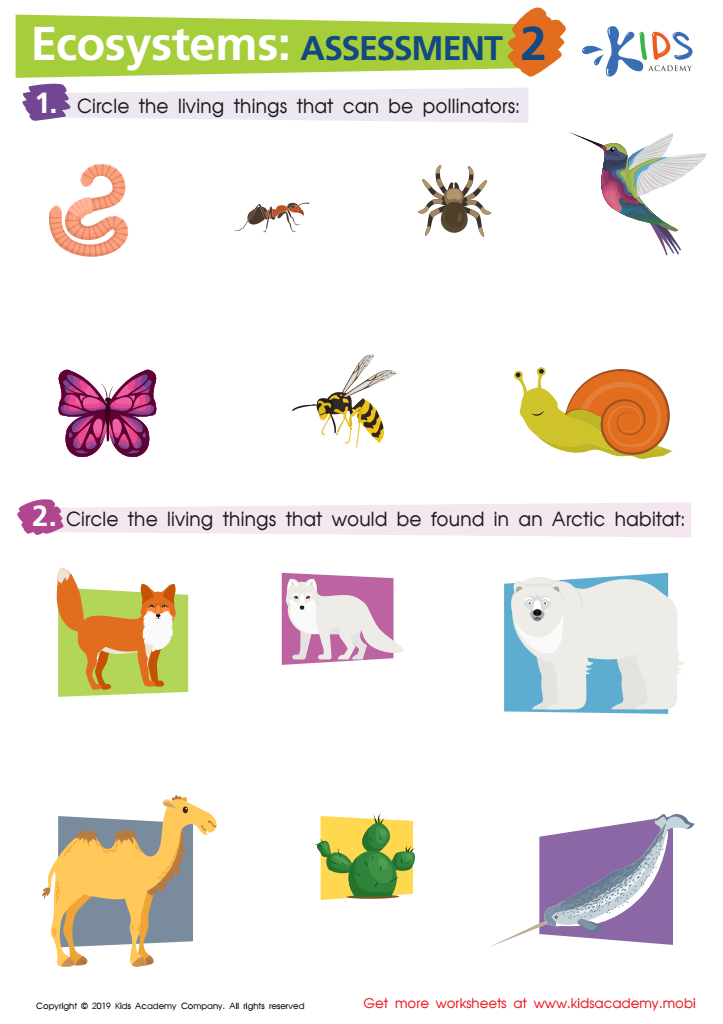
Ecosystems: Assessment 2 Worksheet
Pollinators are living or non-living things that help pollen spread. Test your child's knowledge of the ecosystem with this worksheet. Point out animals in the picture, then ask the simple questions. Help your child circle the right answers.
 Assign to My Students
Ecosystems: Assessment 2 Worksheet
Worksheet
Join Kids Academy for Free
Who is primarily going to use this learning content?




.jpg)



Normal Plants and Animals worksheets activities are a vital component of primary education, offering a structured approach to learning about the natural world. Engaging students in these activities can help to foster a deeper understanding and appreciation of the environment around them. The usefulness of these activities goes beyond simply memorizing facts; they serve to develop critical thinking, observation, and analytical skills in young learners.
First and foremost, Normal Plants and Animals worksheets activities provide a hands-on learning experience. By interacting directly with these worksheets, students can visualize and understand the life cycles, anatomical structures, and ecological roles of various plants and animals. This direct engagement makes learning more tangible and memorable compared to abstract methods.
Additionally, these activities encourage curiosity and inquiry. Children are naturally inquisitive, and these worksheets can stimulate questions and discussions about the natural world. This curiosity can lead to a lifelong interest in science and conservation, crucial for future generations facing environmental challenges.
Moreover, Normal Plants and Animals worksheets activities are designed to cater to different learning styles. Whether a student is a visual, auditory, or kinesthetic learner, worksheets can be adapted to meet their needs, ensuring an inclusive educational environment. This adaptability makes worksheets a versatile tool in the educator’s arsenal.
Furthermore, these worksheets promote literacy and numeracy skills. As students read about different species, write their observations, and calculate growth rates or populations, they are simultaneously enhancing their language and math abilities. This interdisciplinary approach ensures that the benefits of these activities extend beyond science.
Lastly, Normal Plants and Animals worksheets activities can play a significant role in teaching responsibility and empathy. Through learning about endangered species and the impact of human activities on ecosystems, students can develop a sense of stewardship for the planet.
In summary, Normal Plants and Animals worksheets activities are an invaluable educational tool. They not only enrich students' knowledge about biodiversity but also equip them with essential life skills, making them informed and responsible citizens of the world.








