Fractions of Shapes Worksheets for Ages 3-8 - Page 2
38 filtered results
-
From - To
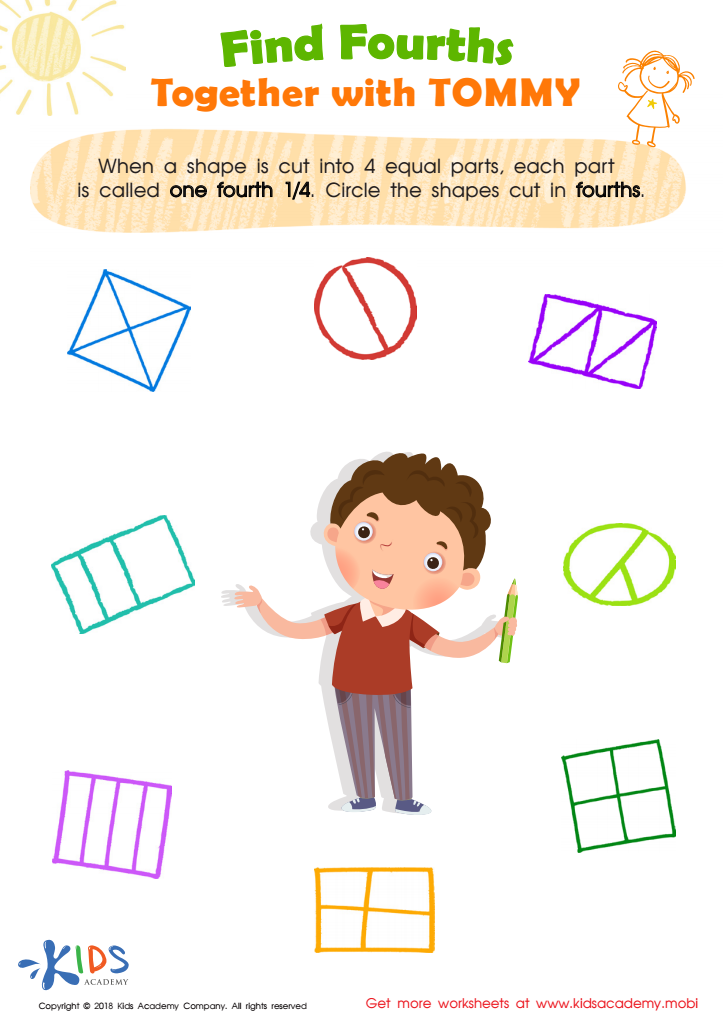
Find Fourths Together with Tommy Worksheet
 Assign to My Students
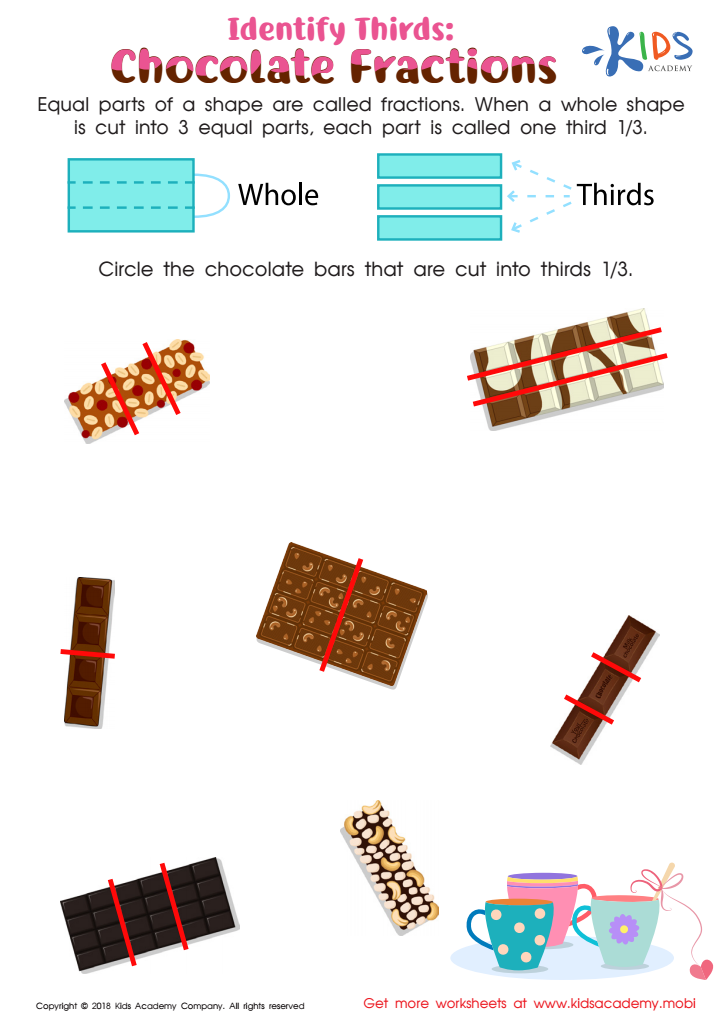
Identify Thirds: Chocolate Fractions Worksheet
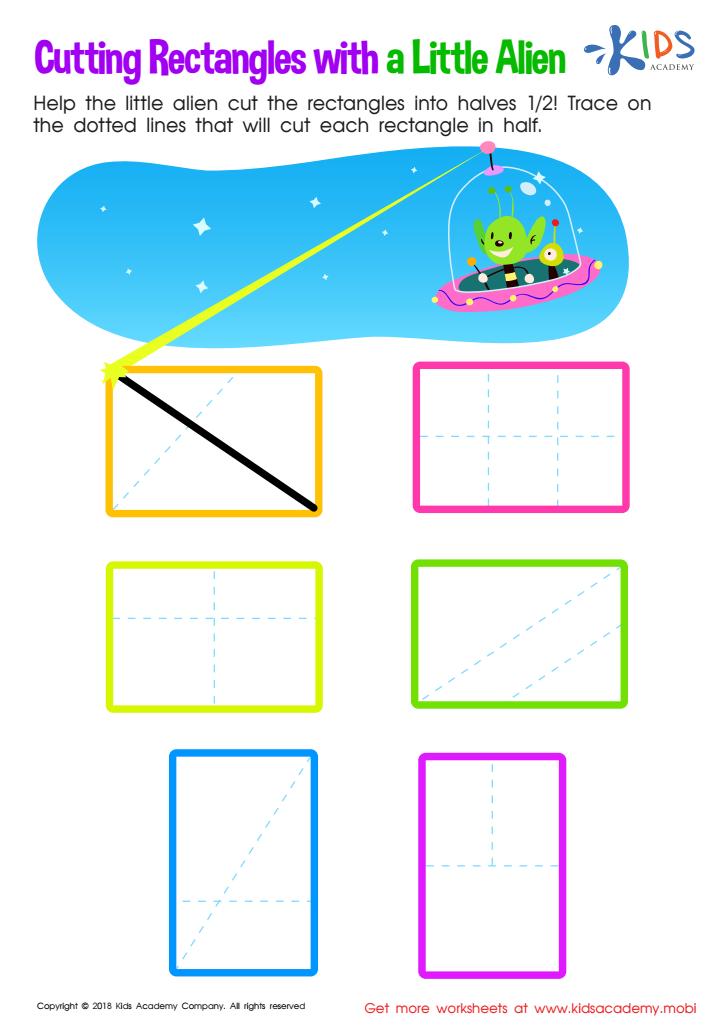
Cutting Rectangles with Alien Worksheet
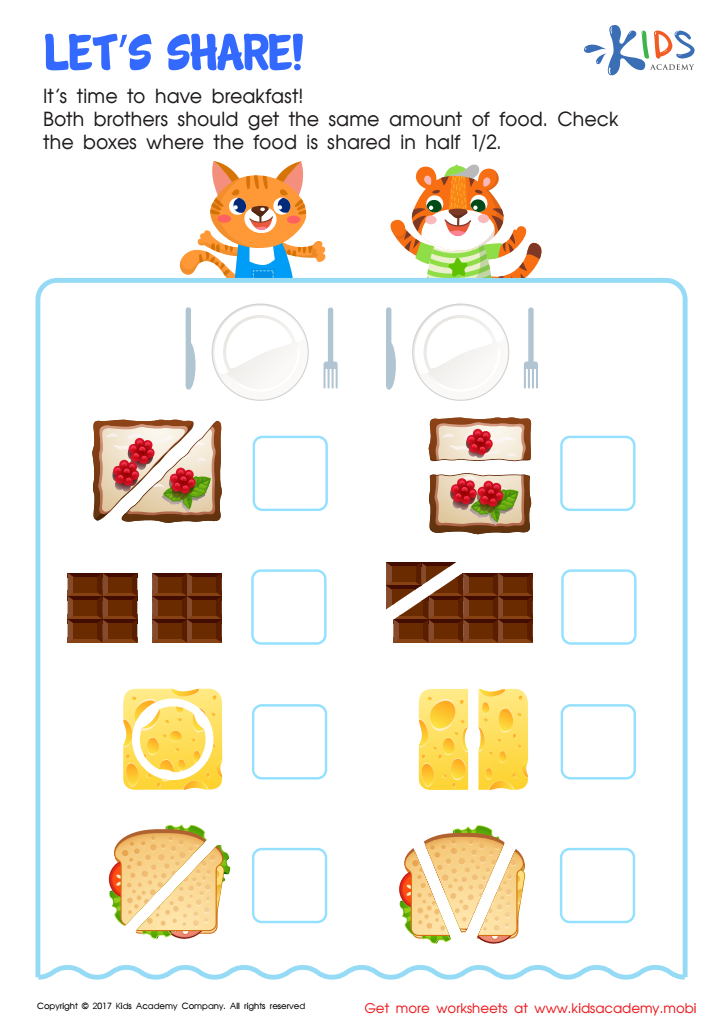
Let's Share Worksheet
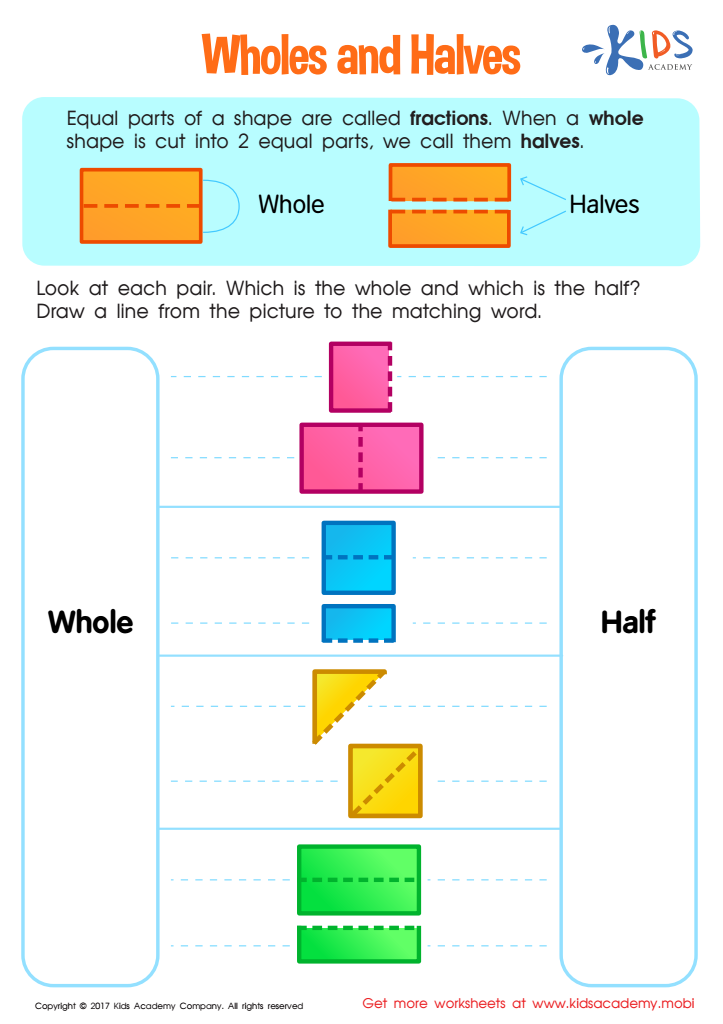
Wholes and Halves Worksheet
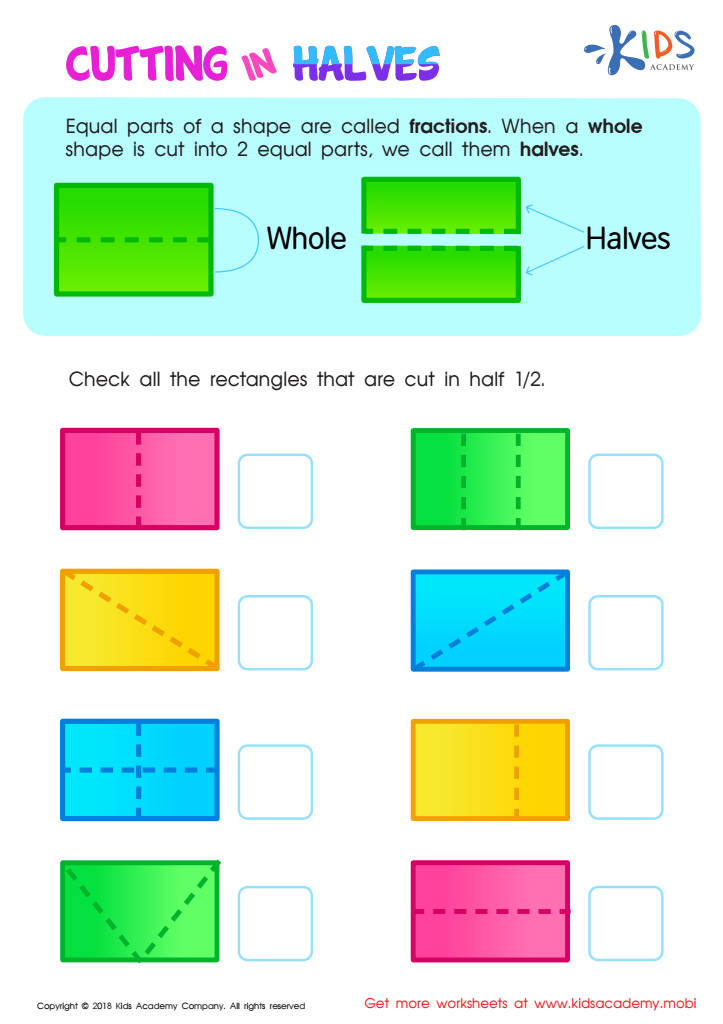
Cutting in Halves Worksheet
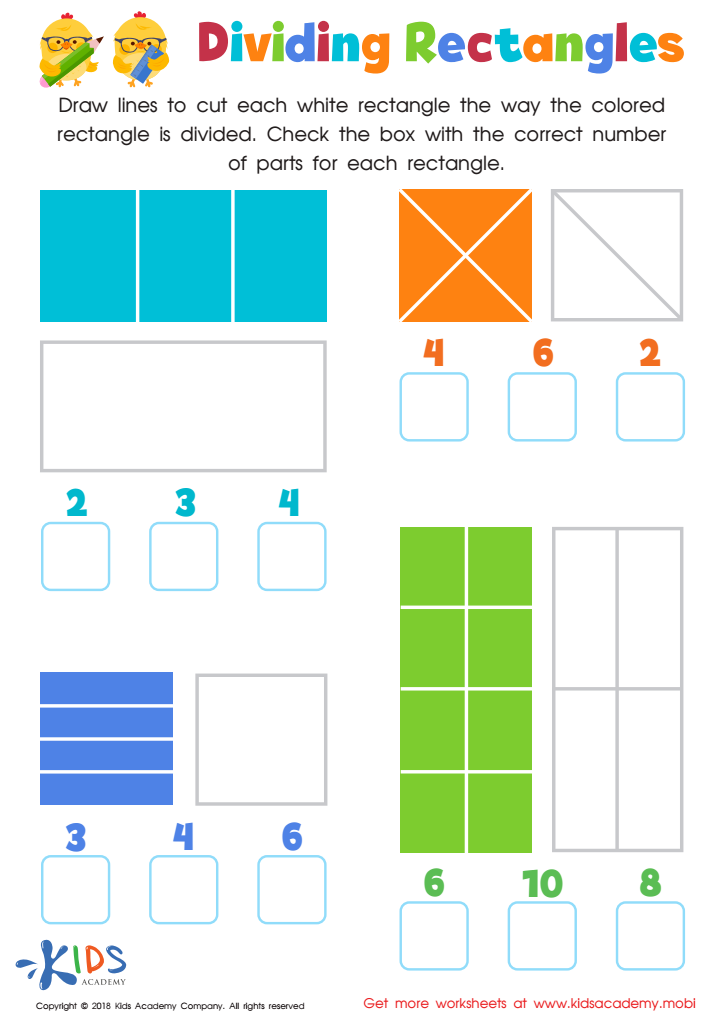
Dividing Rectangles Worksheet
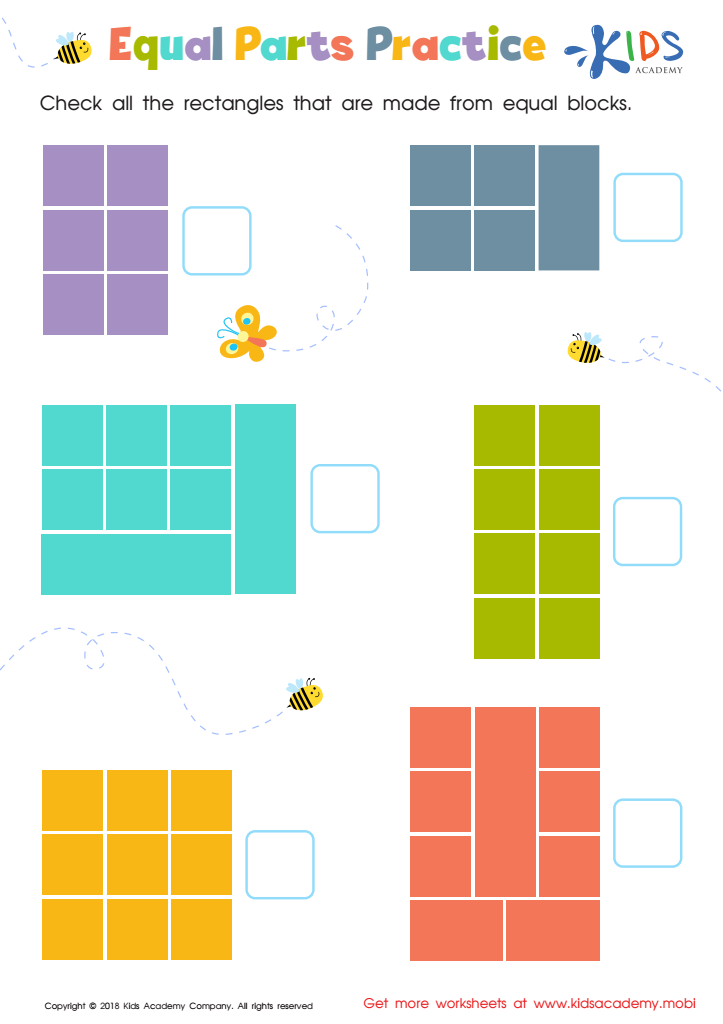
Equal Parts Practice Worksheet
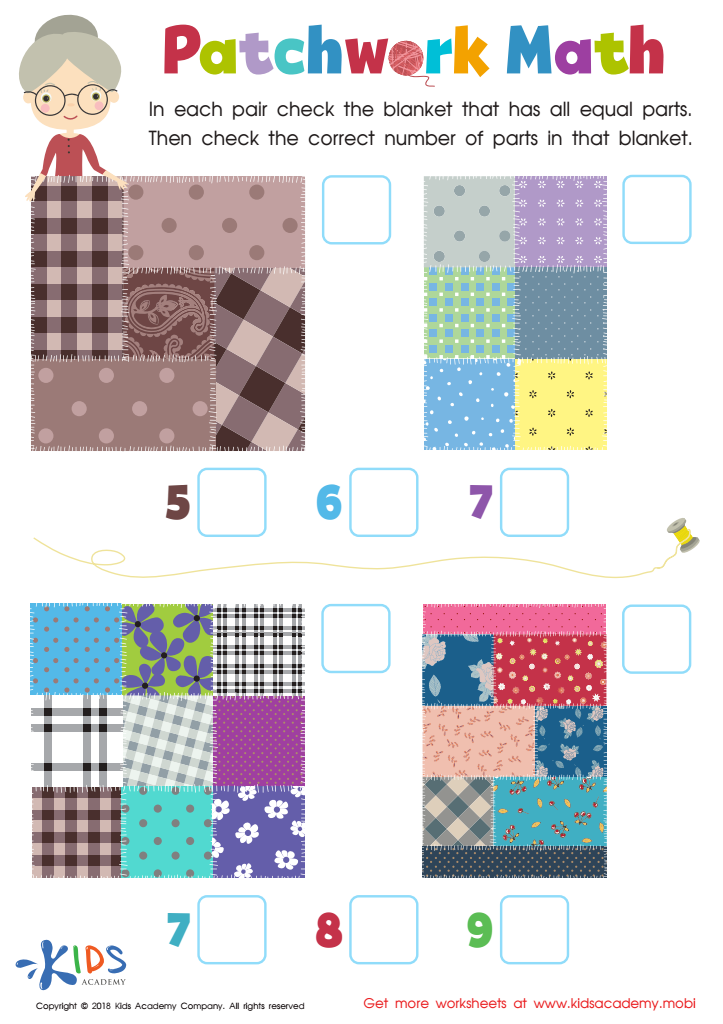
Patchwork Math Worksheet
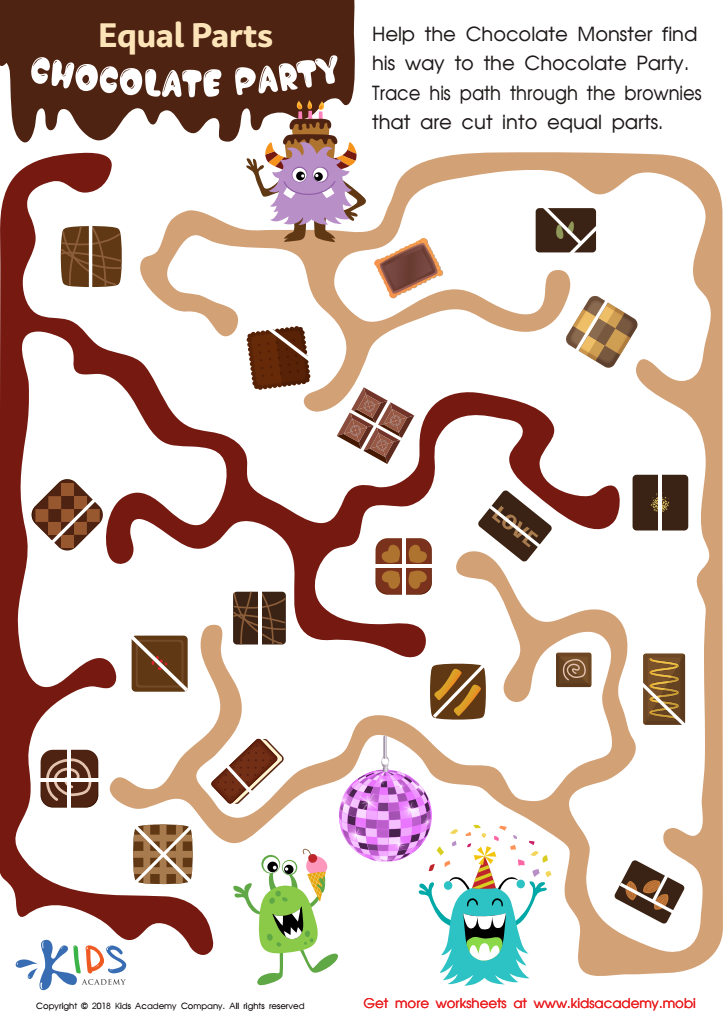
Equal Parts: Chocolate Party Worksheet
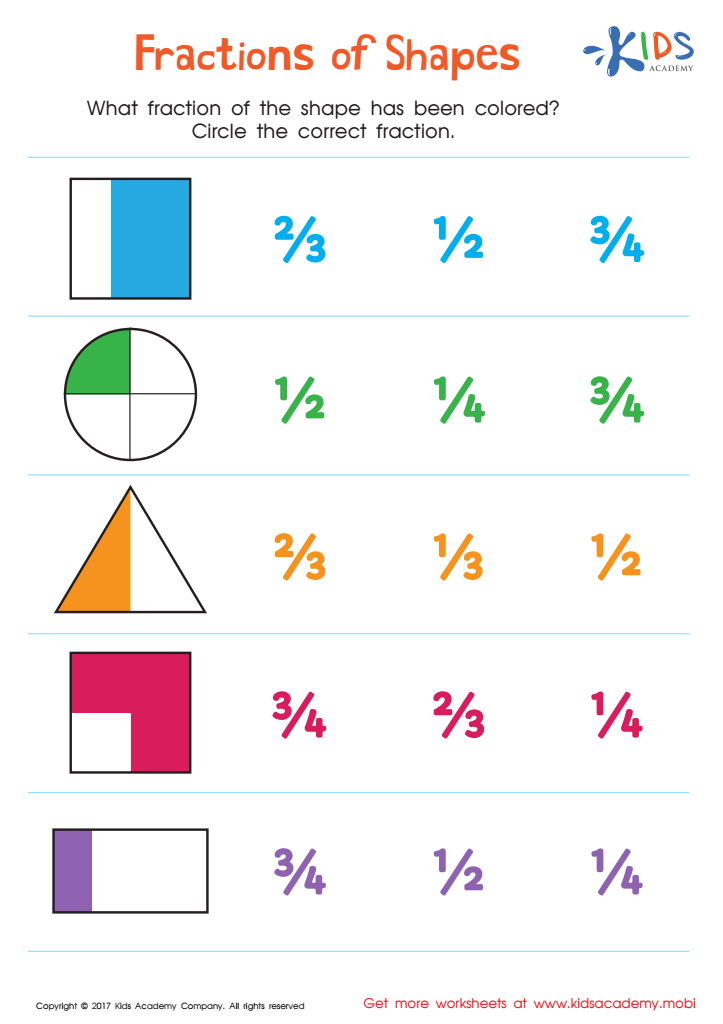
Fractions of Shapes: Math Concept Worksheet
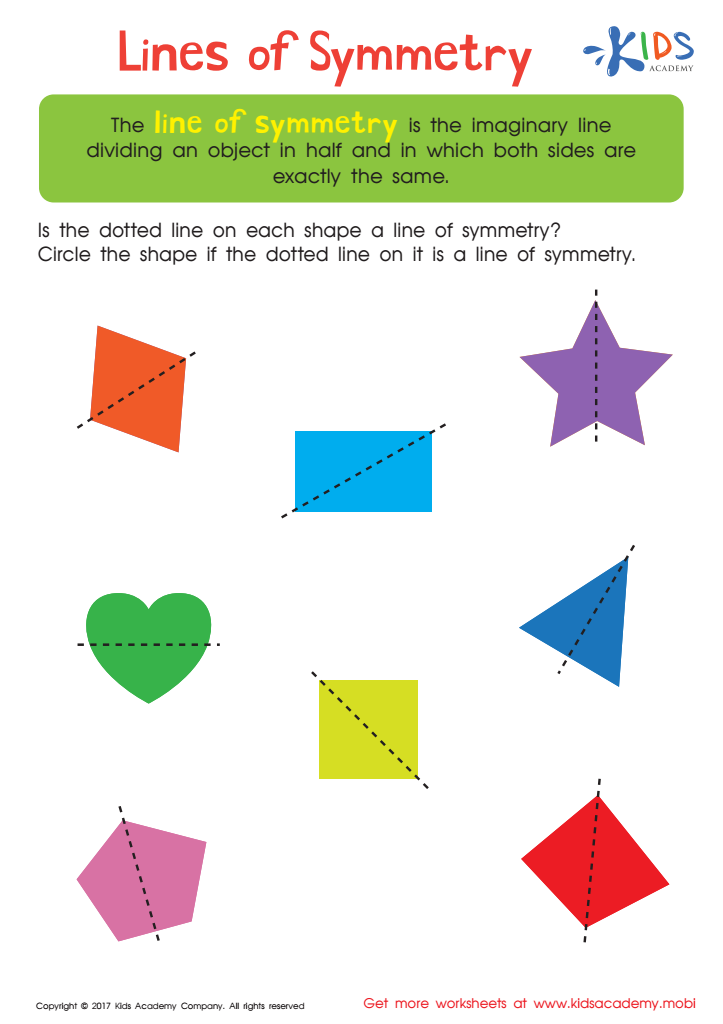
Lines of Symmetry Printable
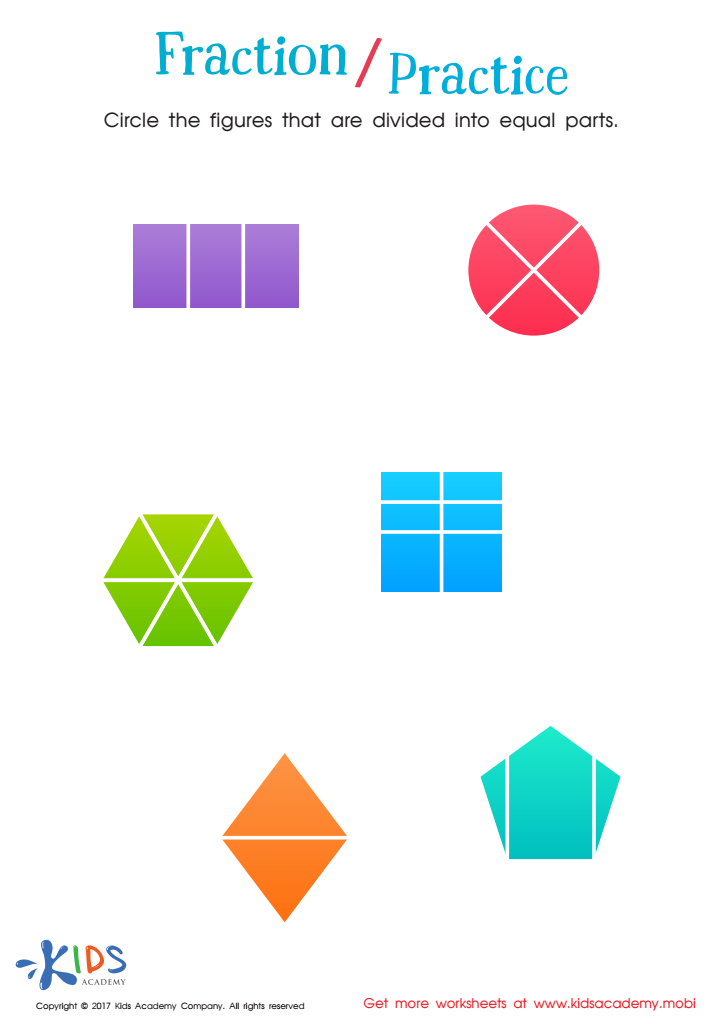
Fractions: Shapes Worksheet
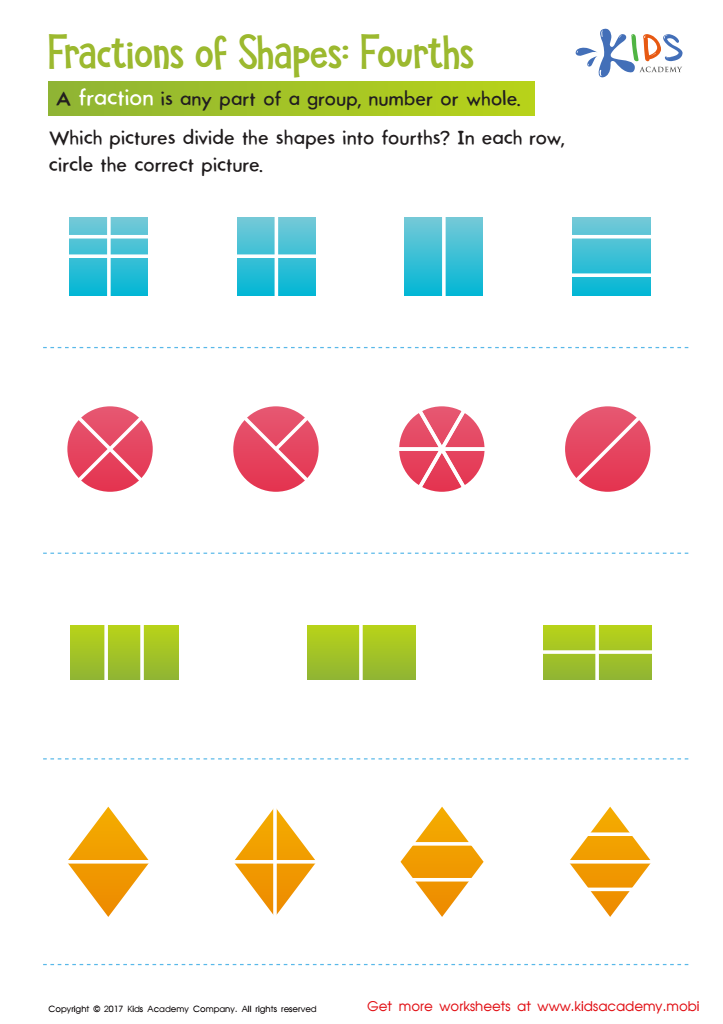
Fractions of Shapes Worksheet








Understanding fractions of shapes is fundamental for young learners, as it lays the groundwork for essential mathematical concepts and skills. For ages 3-8, engaging with fractions introduces children to ideas of part-whole relationships, which are crucial for their cognitive development. Recognizing different fractions, such as halves, thirds, and quarters, helps children grasp the concept of division and distribution in real-world contexts like sharing food or dividing objects.
Additionally, learning about fractions fosters critical thinking and problem-solving skills, encouraging children to visualize and manipulate shapes. This hands-on interaction not only enhances spatial awareness but also builds a solid foundation for future mathematical concepts, including decimals and percentages.
Moreover, understanding fractions promotes creativity and collaboration through activities that can involve art projects, cooking, or games. Such learning experiences can spark interest in mathematics and boost children's confidence as they see the relevance of math in everyday life.
Parents and teachers should prioritize fractions of shapes because these early experiences will help cultivate numerical literacy, essential for academic success and lifelong learning. Supporting this understanding empowers children to tackle more complex mathematical challenges as they progress in their education, making slavery sequel to math their daily adventures.