Time Word Problems Worksheets for Ages 3-8
3 filtered results
-
From - To
Explore our engaging Time Word Problems Worksheets designed for children aged 3-8! These worksheets provide a fun and interactive way for young learners to grasp essential time-telling concepts. By incorporating relatable scenarios, kids can practice identifying time on clocks, understanding durations, and solving problems involving daily activities. Our resources help develop critical thinking and problem-solving skills while making math enjoyable. With varying difficulty levels and colorful, kid-friendly designs, these worksheets cater to different learning stages. Perfect for classrooms or homeschooling, our worksheets provide the foundation necessary for mastering time-related math skills. Start your child's time-telling journey today!
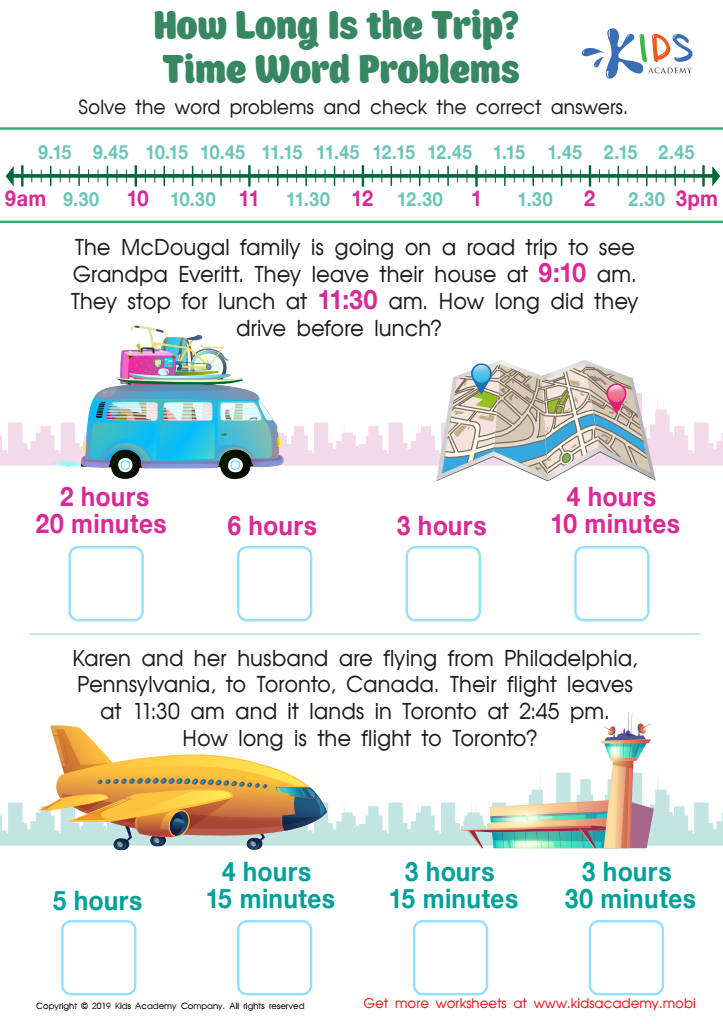
How long is the Trip? Time Word Problems Worksheet
 Assign to My Students
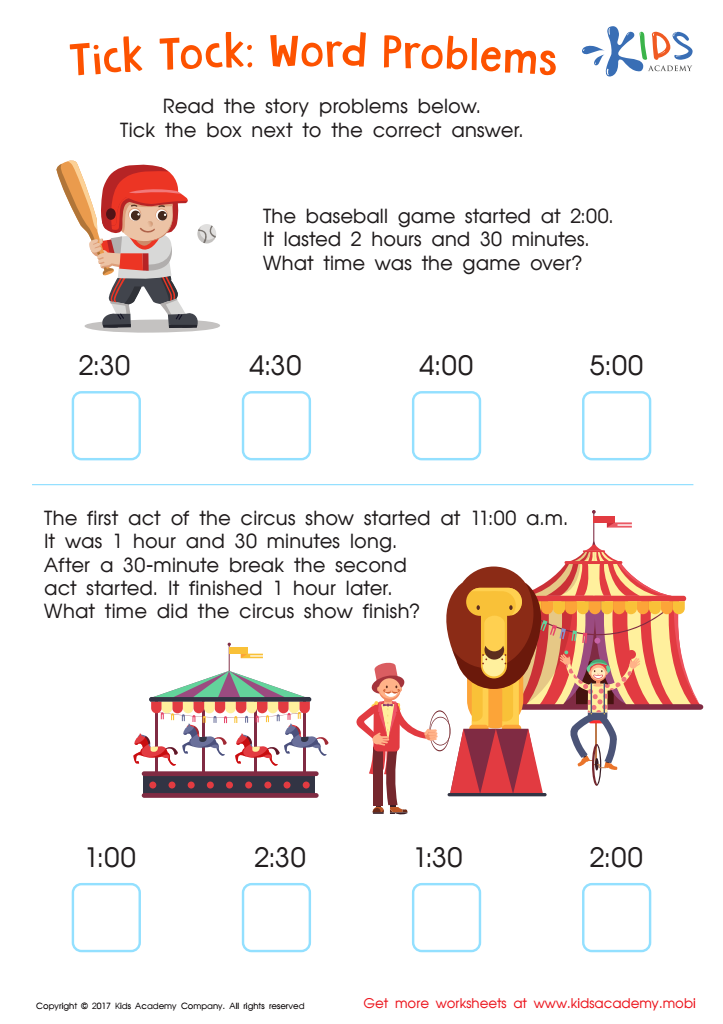
Tick Tock Word Problems Time Worksheet
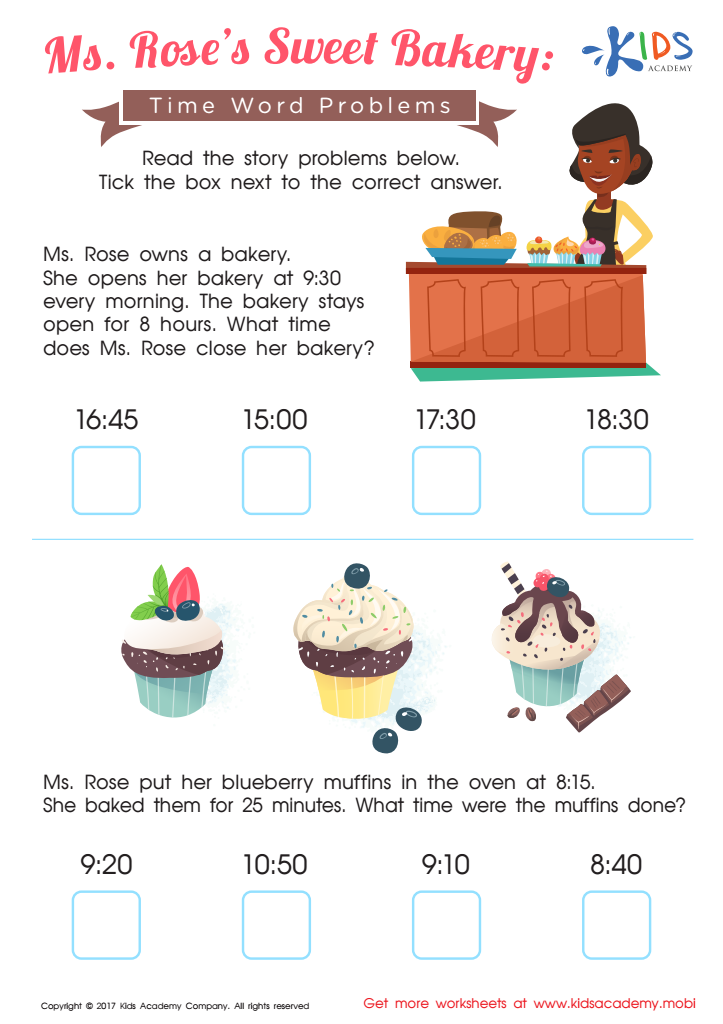
Ms. Roseв's Sweet Bakery Time Worksheet







.jpg)
Time word problems are essential for children aged 3-8 as they lay the groundwork for understanding both mathematical concepts and real-world applications. First, these problems foster critical thinking skills, enabling children to analyze situations, identify relevant information, and discern how to approach a solution. By engaging with time-related scenarios, children gain practice in sequencing events and understanding the concept of time—skills that are vital for everyday life.
Moreover, introducing time word problems encourages language development, as children learn to interpret and express their understanding of situations using word-based formats. This integration of language and math enriches their overall cognitive growth.
Beyond academics, time word problems help children develop organization and planning skills. Understanding time can assist them in managing daily routines, such as knowing when to get ready for school or when activities occur. Engaging with such problems early cultivates a positive attitude towards mathematics, fostering confidence and enjoyment in problem-solving.
Overall, time word problems offer a unique opportunity for parents and teachers to support children's academic journey while equipping them with practical skills necessary for functioning smoothly in society. This early foundation sets the stage for more complex mathematical thinking in the future.