Word Problems Worksheets for Ages 3-8 - Page 6
123 filtered results
-
From - To
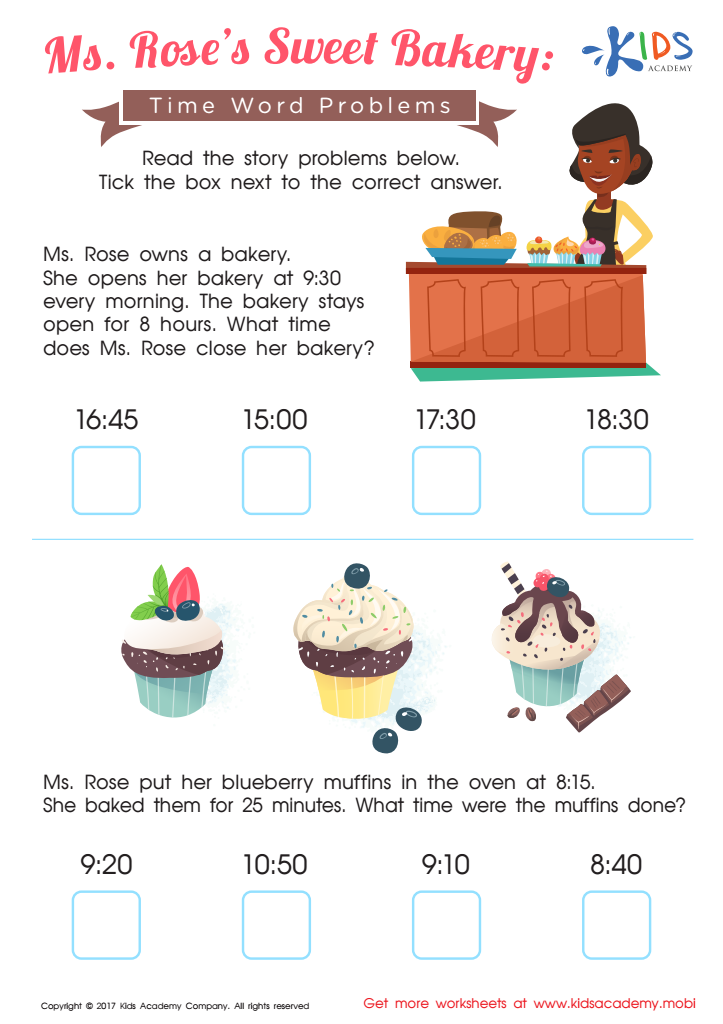
Ms. Roseв's Sweet Bakery Time Worksheet
 Assign to My Students
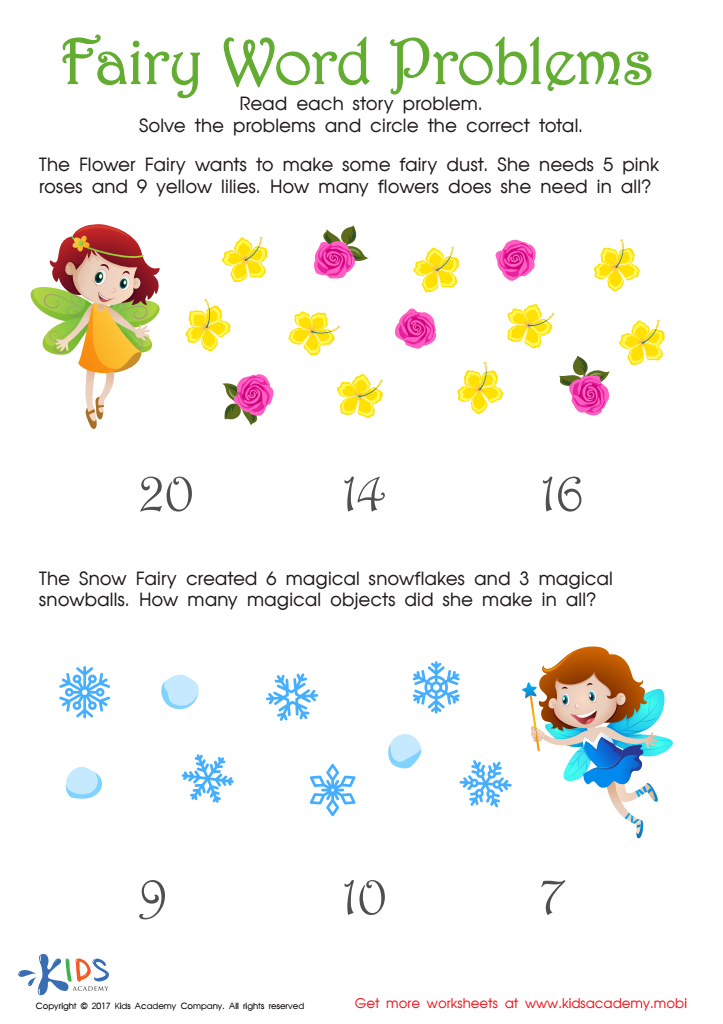
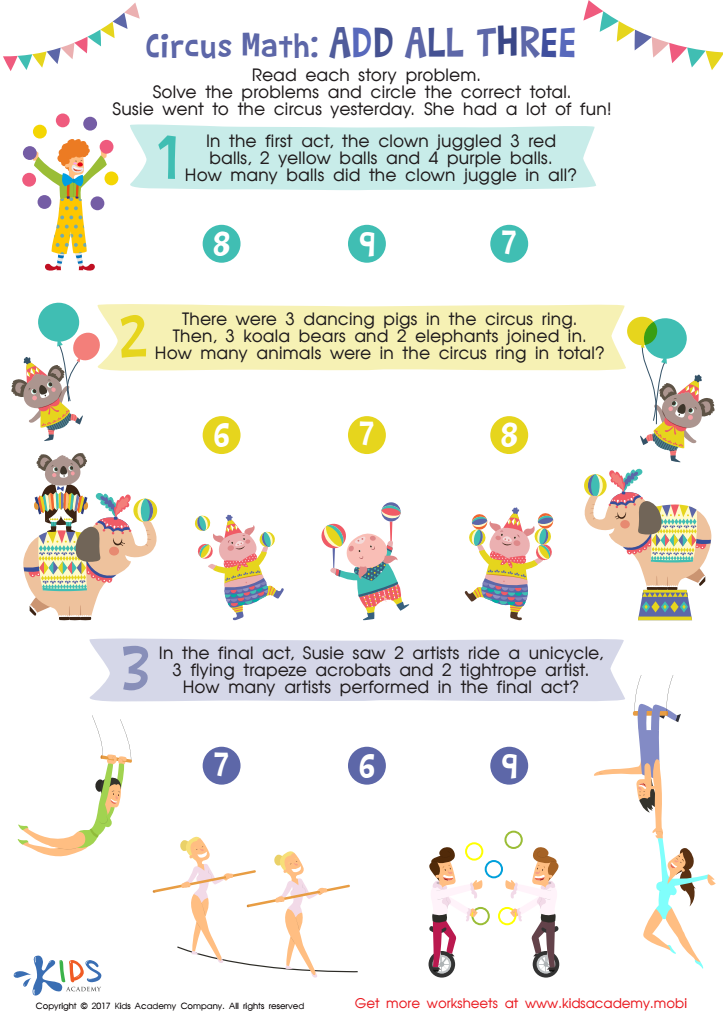
Circus Math Printable








Word problems are a vital educational tool for children ages 3-8, as they bridge the gap between abstract mathematical concepts and real-world applications. For parents and teachers, recognizing the significance of word problems can enrich a child's learning experience in multiple ways.
Firstly, word problems encourage critical thinking and problem-solving skills. Children learn to analyze situations, identify relevant information, and develop strategies to arrive at solutions. This analytical skillset is foundational not just in math, but across all subjects and real-life scenarios.
Moreover, solving word problems fosters language development. As children read and interpret the problems, they enhance their vocabulary and comprehension skills. This integration of literacy and numeracy is essential in early education, as it strengthens overall cognitive abilities.
Additionally, word problems help children apply mathematical concepts to everyday life, making learning more meaningful. It allows children to understand the relevance of math in their daily activities, from sharing snacks to counting toys.
Inclusion of diverse word problems can also support a child's ability to relate math to different cultures and contexts, promoting a more inclusive and rounded education. Overall, engaging children with word problems lays the groundwork for a robust mathematical mindset and critical life skills.








