Silent Vowels Worksheets for Ages 3-9
5 filtered results
-
From - To
Encourage your child's language development with our engaging Silent Vowels Worksheets for ages 3-9! These expertly crafted activities focus on helping young learners understand the role of silent vowels in English words. Through fun and interactive exercises, children will discover how silent vowels can affect pronunciation and spelling. Perfect for both classroom and at-home learning, our worksheets support the development of essential reading and writing skills. With colorful visuals and easy-to-follow instructions, these printable worksheets make learning enjoyable and effective for early graders. Boost your child's literacy journey today with our Silent Vowels Worksheets!
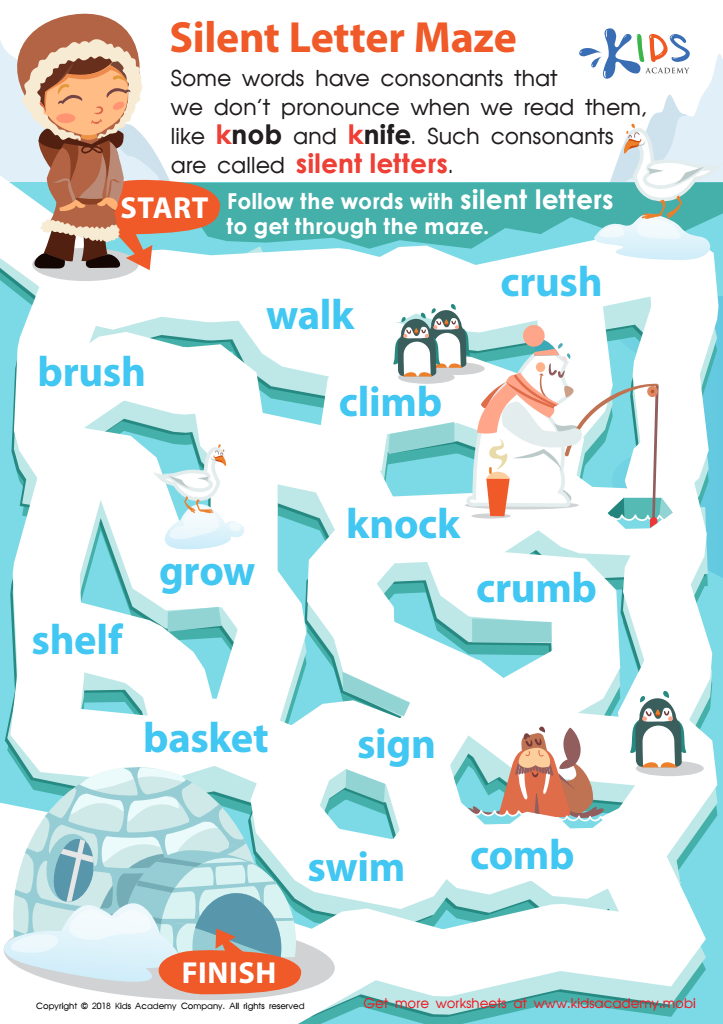
Silent Letter Maze Worksheet
 Assign to My Students
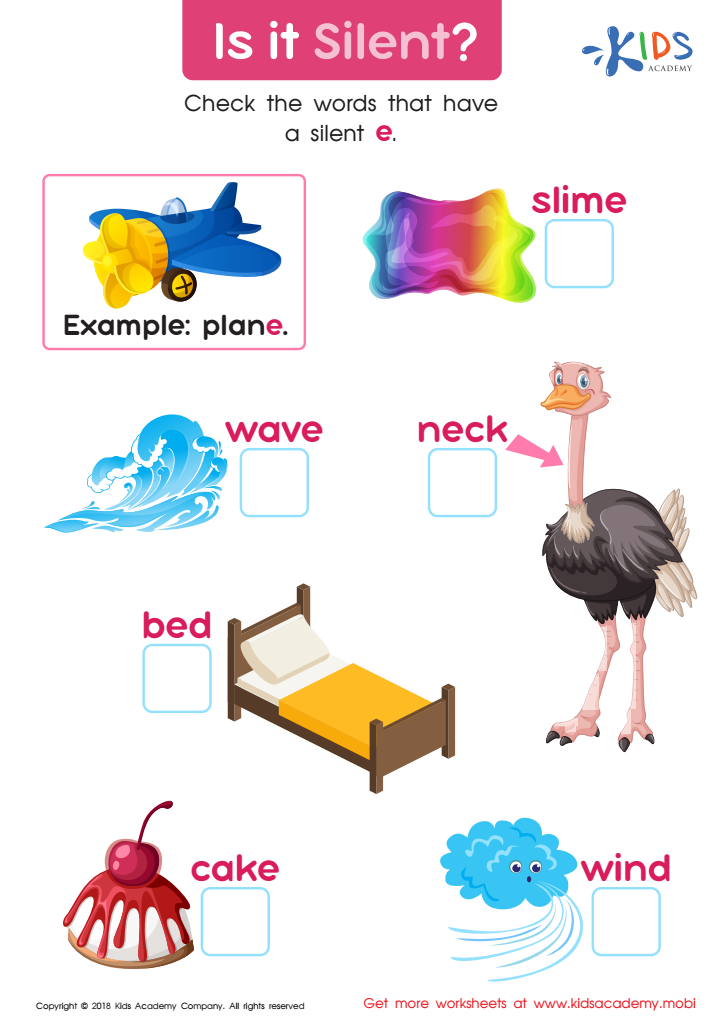
Is It Silent? Worksheet
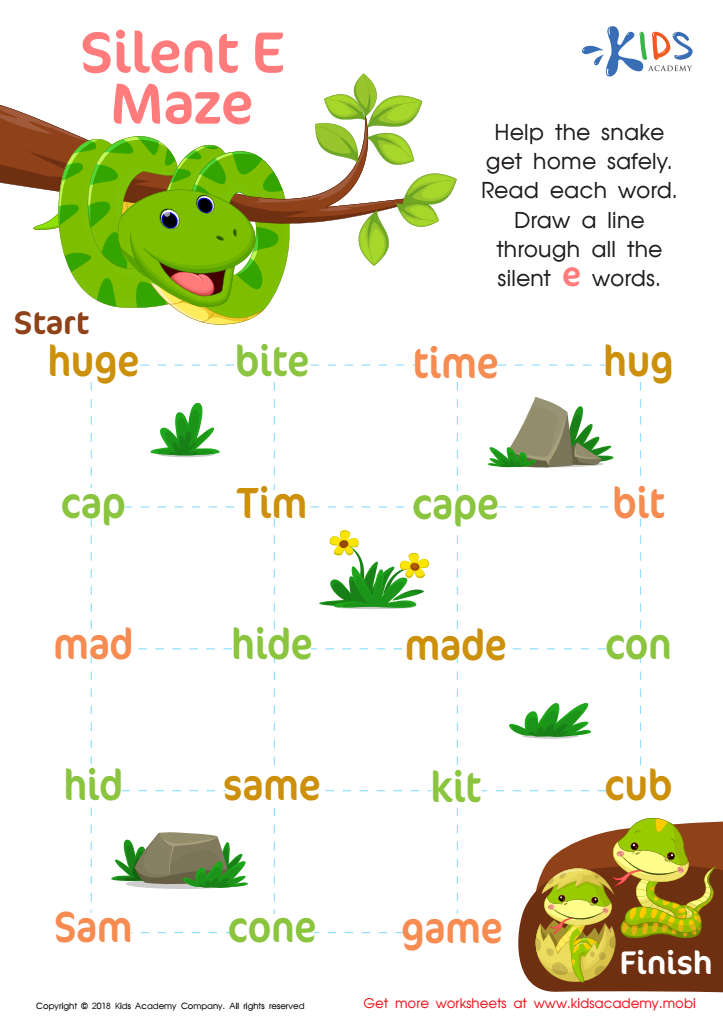
Silent E Maze Worksheet
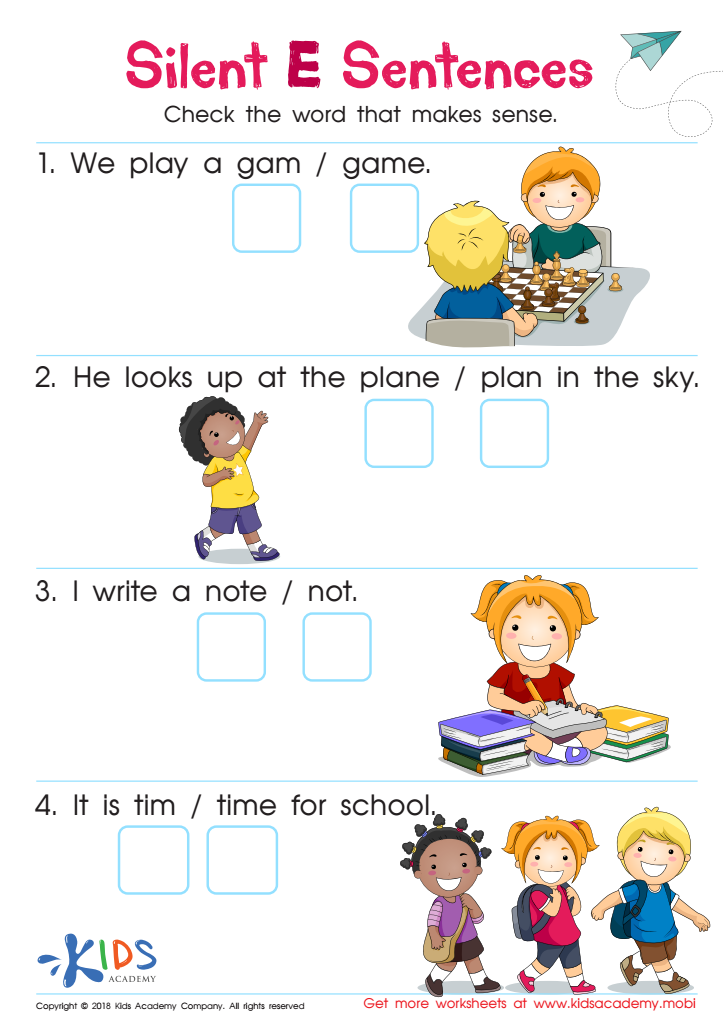
Silent E Sentences Worksheet
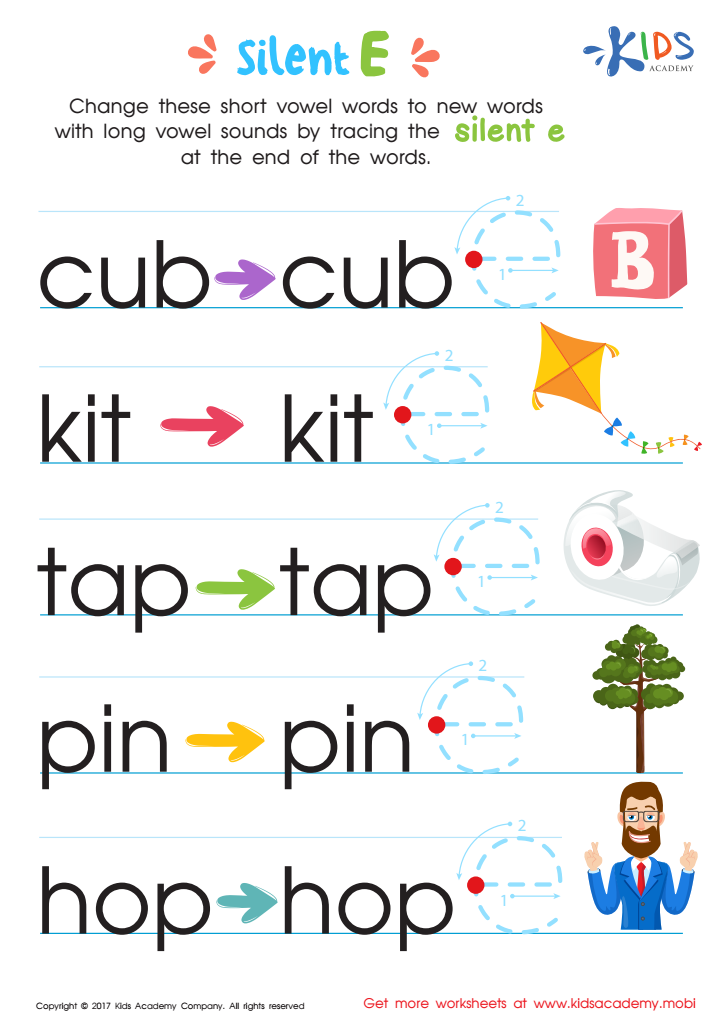
Silent E Words Worksheet


Understanding silent vowels is crucial for young children as it lays a strong foundation for their reading and spelling skills. Silent vowels are letters that appear in words but are not pronounced, such as the "e" in "bake" or the "a" in "bread." For children aged 3-9, mastering these elements can significantly impact their literacy development.
First, recognizing silent vowels enhances reading fluency. It helps children decode words more accurately and increases reading speed, leading to better comprehension. When kids understand that some vowels aren't pronounced, they can focus on the blend of sounds that truly make up the word, making reading less frustrating and more enjoyable.
Second, silent vowels play a key role in spelling. Knowing which letters in a word are not pronounced can help children remember the correct spelling of words that might otherwise be confusing. For example, understanding the silent "e" rule helps them spell words like "bake" versus "back."
Moreover, understanding silent vowels can help children improve their writing by enabling them to use more complex vocabulary correctly. This not only boosts their confidence but also enriches their language skills.
For parents and teachers, supporting children in learning about silent vowels can yield long-term benefits in their academic journey. Dedicating time to this aspect of literacy is an investment in a child's future success in reading, writing, and beyond.








