Filters

301 filtered results

Clear all filters
Favorites
With answer key
Interactive

301 filtered results

Difficulty Level

Grade


Check out this FREE Trial Lesson on Science for age 4-7!

Science Topic

Favorites
With answer key
Interactive
  • 4-7
  • Interactive
  • Science
Check Memory Worksheet

Check Memory Worksheet

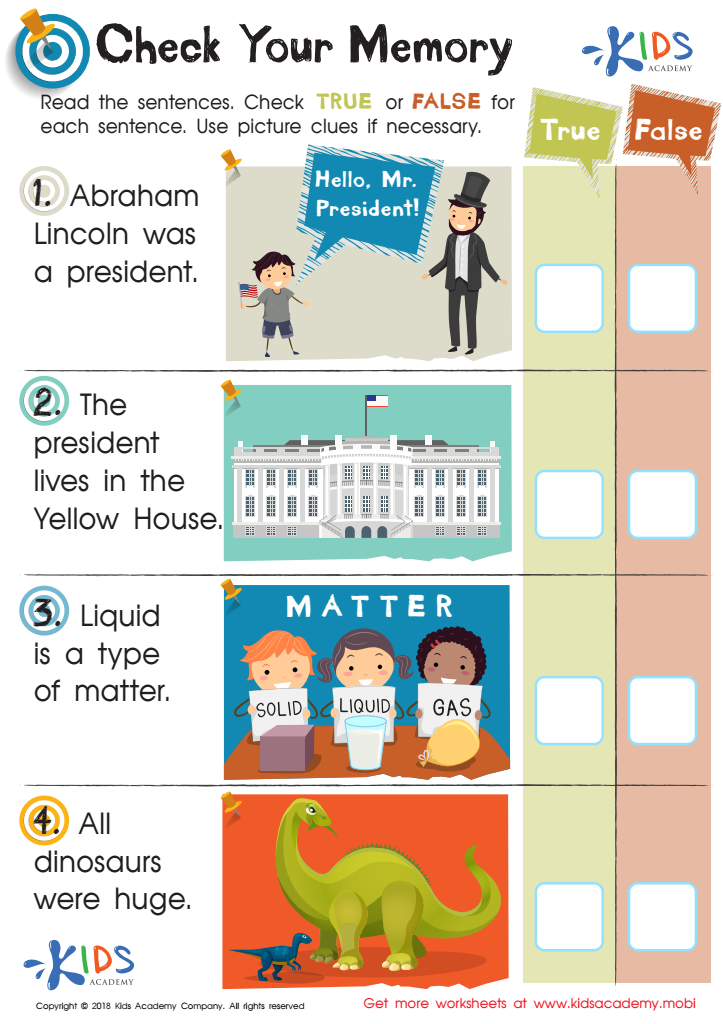
Assisting your kids with their homework and using worksheets is a great way for them to learn. The vibrant visuals in this printout can help stimulate the mind and motivate your child. Have them read the sentences and then point to the associated images. Afterwards, ask them to state True or False for each sentence. If they are still uncertain, offer them the picture clues to assist further.
Check Memory Worksheet
Worksheet
Matter Word Search Worksheet

Matter Word Search Worksheet

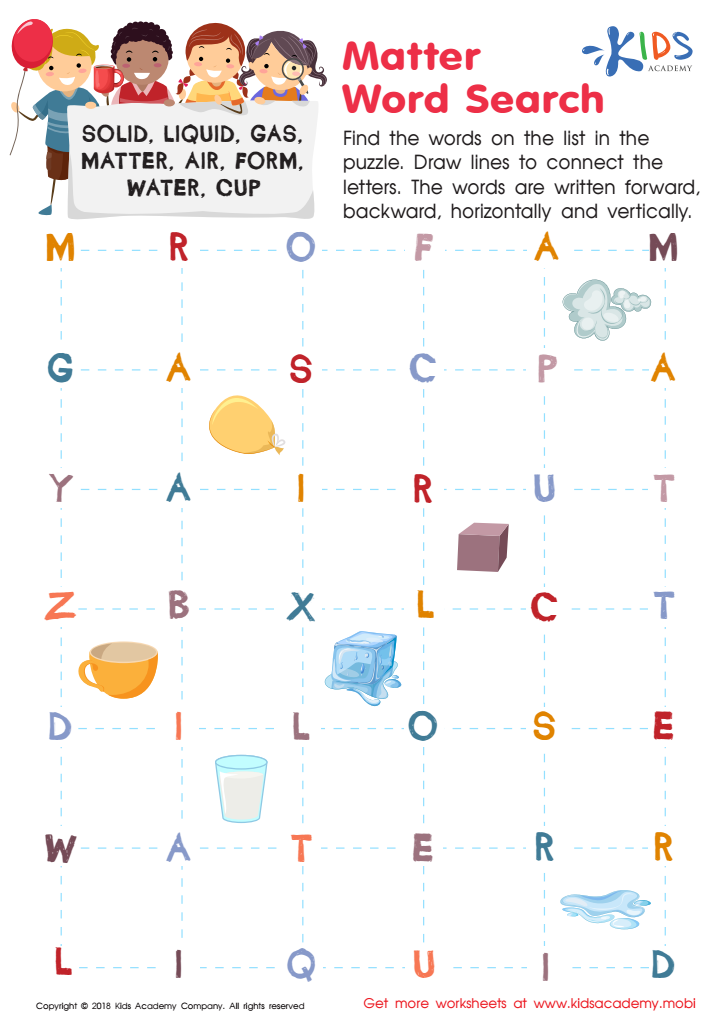
Matter is anything with weight and taking up space. It exists in three forms: solid, gas and liquid. Examples of these are ice, air and water. Help kids find the words in the puzzle, which are written forward, backward, horizontally and vertically. Connect the letters!
Matter Word Search Worksheet
Worksheet
What Is Matter? Worksheet

What Is Matter? Worksheet

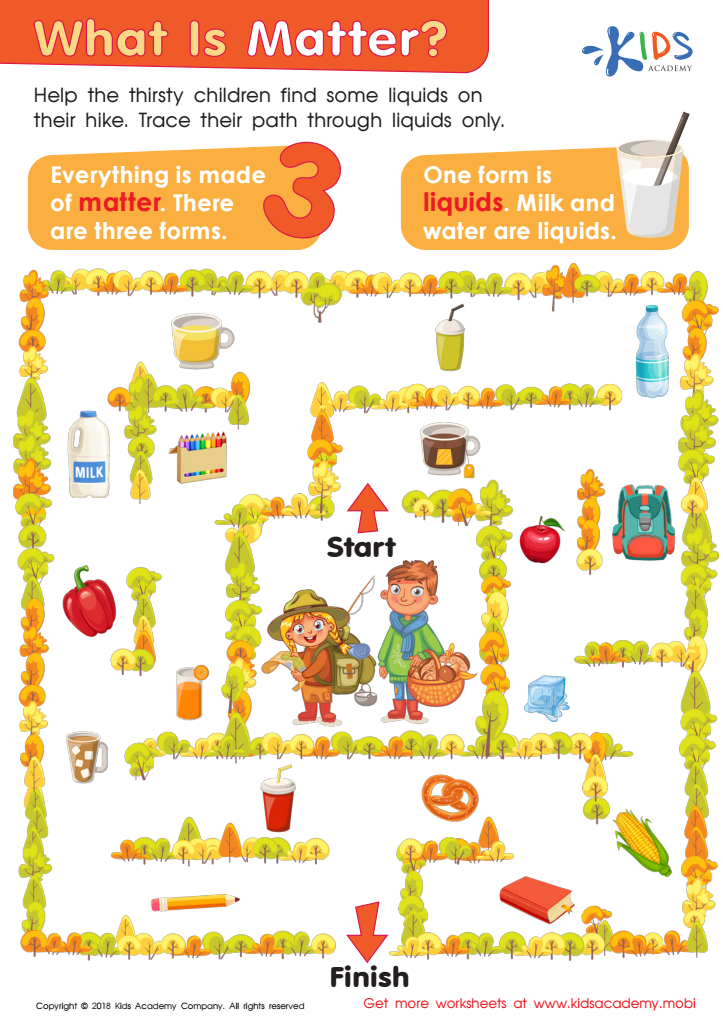
Matter is anything that occupies space and has weight. Show your child examples, like people, cars, food, animals, objects etc. Ask them to name more. Help the thirsty kids in the picture find liquids - have them trace the path in the tracing sheet.
What Is Matter? Worksheet
Worksheet
Graph: Baby Animals Worksheet

Graph: Baby Animals Worksheet

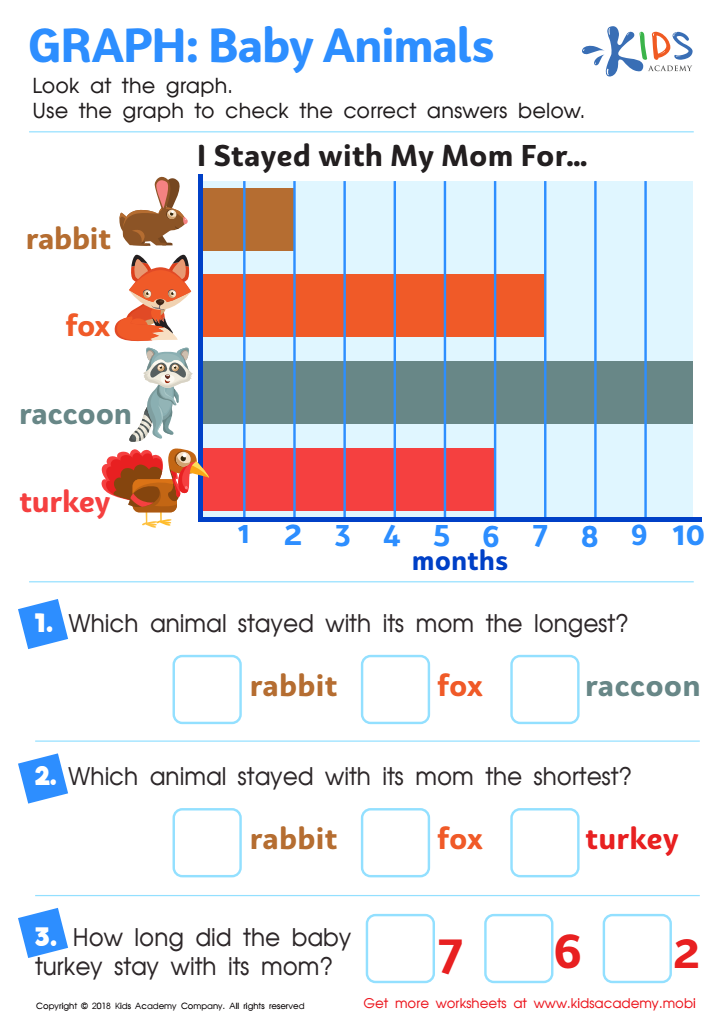
Graphs are essential for learning in math, science and ELA. This worksheet featuring baby animals is a fun way to practice reading graphs. Look at the graph and answer the questions below it. Check the boxes for the right answers based on the data.
Graph: Baby Animals Worksheet
Worksheet
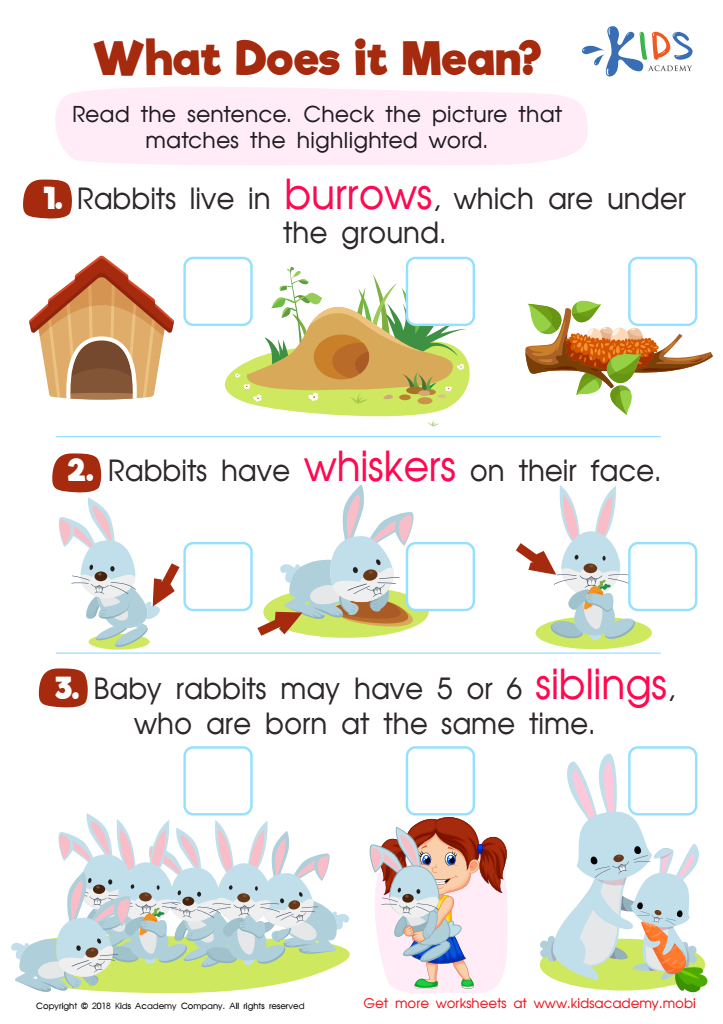
What Does It Mean? Worksheet

What Does It Mean? Worksheet

Teach your child to use context clues with this engaging Kids Academy worksheet. Read the sentences and find the pink-highlighted word. Use the other words in the sentence to figure out the meaning, then check the box next to the picture that represents it.
What Does It Mean? Worksheet
Worksheet
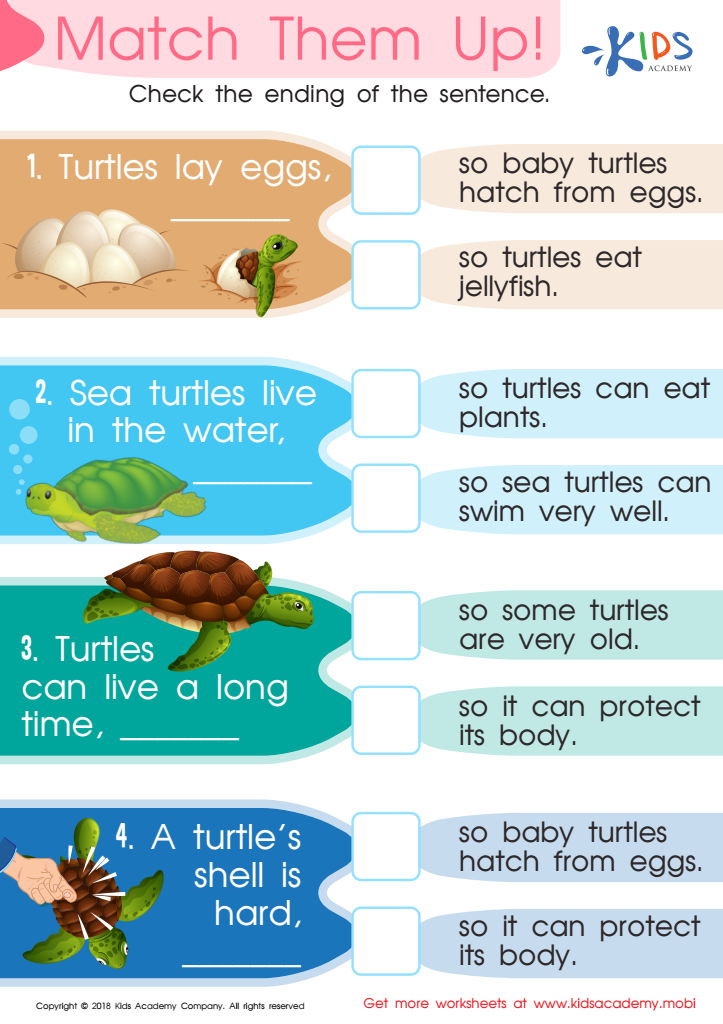
Match Them Up Worksheet

Match Them Up Worksheet

Reading offers a wealth of knowledge, but young readers may struggle to remember info from informational texts. Help your child practice comprehension with this fun turtle-related worksheet. Just read the sentence starters and select the correct ending from the options given. Check the box to indicate the right statement!
Match Them Up Worksheet
Worksheet
Weather Every Day Worksheet

Weather Every Day Worksheet

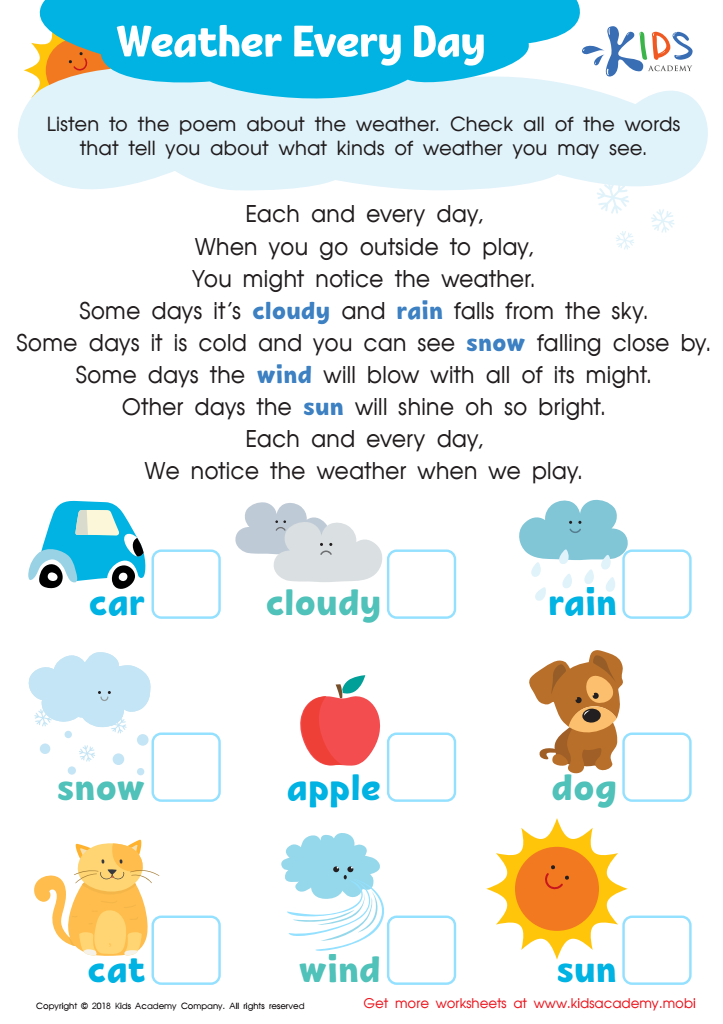
Ask your child to look out the window and tell you what the weather's like. Is it raining, stormy, cloudy, snowing or sunny? Help them observe all the different types of weather and then check the words at the bottom of the worksheet. What's their favorite type of weather? Read them this poem about the weather and see what they think!
Weather Every Day Worksheet
Worksheet
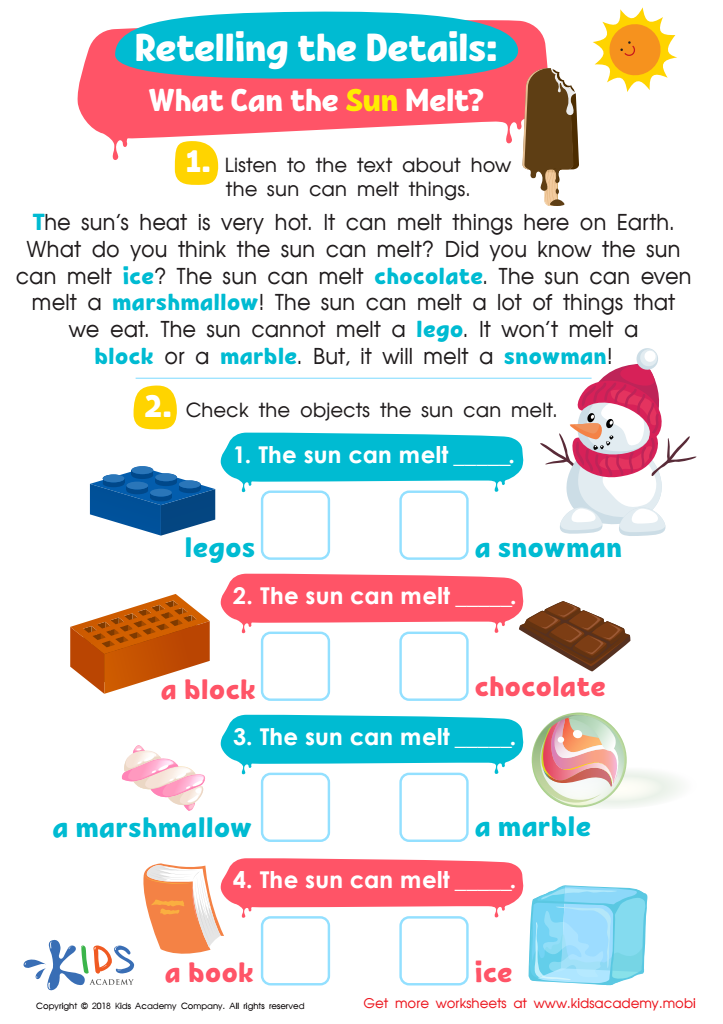
Retelling the Details: What Can the Sun Melt? Worksheet

Retelling the Details: What Can the Sun Melt? Worksheet

The sun is that hot yellow ball in the sky. Its intense heat can make us sweat and even melt things! Ask your kids what things the sun can melt. Read this short informative text and have them highlight the objects. Then, read the questions out loud and help them find the right answers.
Retelling the Details: What Can the Sun Melt? Worksheet
Worksheet
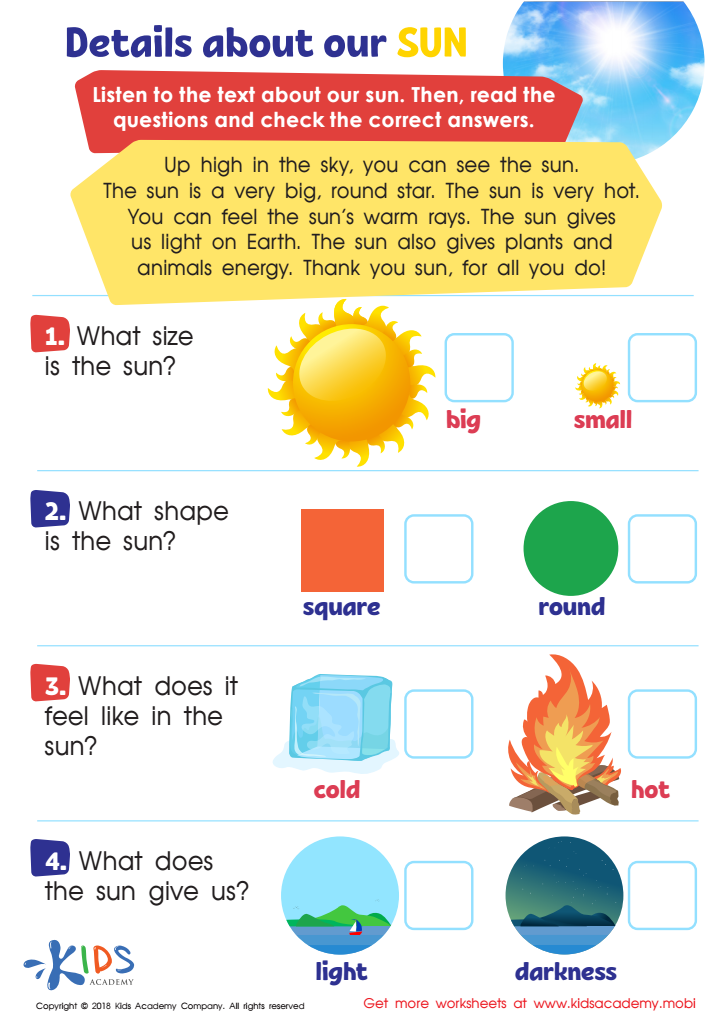
Details About Our Sun Worksheet

Details About Our Sun Worksheet

Teach your kindergartners about the sun with this worksheet. Read the informative text to them, then ask the questions and help them mark the right answers. Discover what your student knows about this big glowing ball of fire in the sky.
Details About Our Sun Worksheet
Worksheet
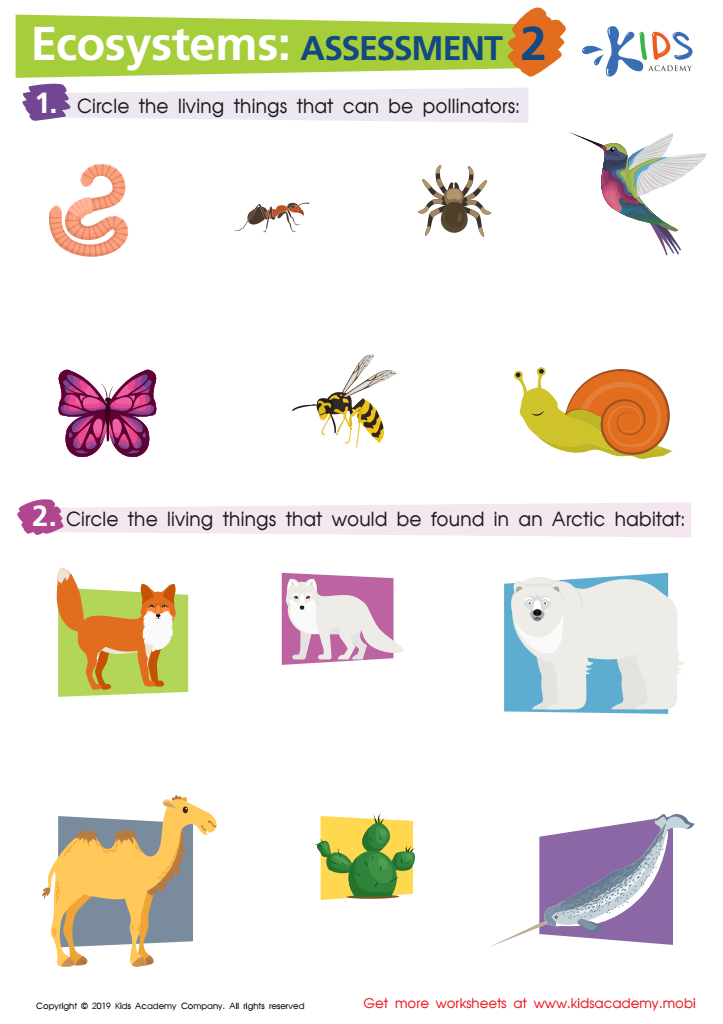
Ecosystems: Assessment 2 Worksheet
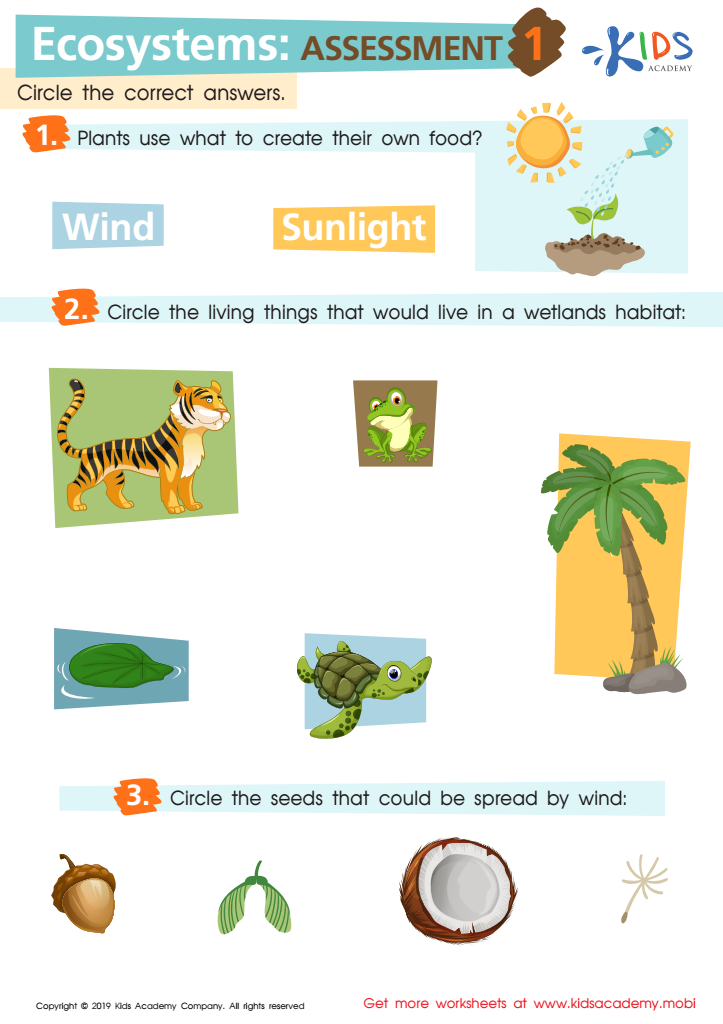

Ecosystems: Assessment 2 Worksheet

Pollinators are living or non-living things that help pollen spread. Test your child's knowledge of the ecosystem with this worksheet. Point out animals in the picture, then ask the simple questions. Help your child circle the right answers.
Ecosystems: Assessment 2 Worksheet
Worksheet
Ecosystems: Assessment 1 Worksheet
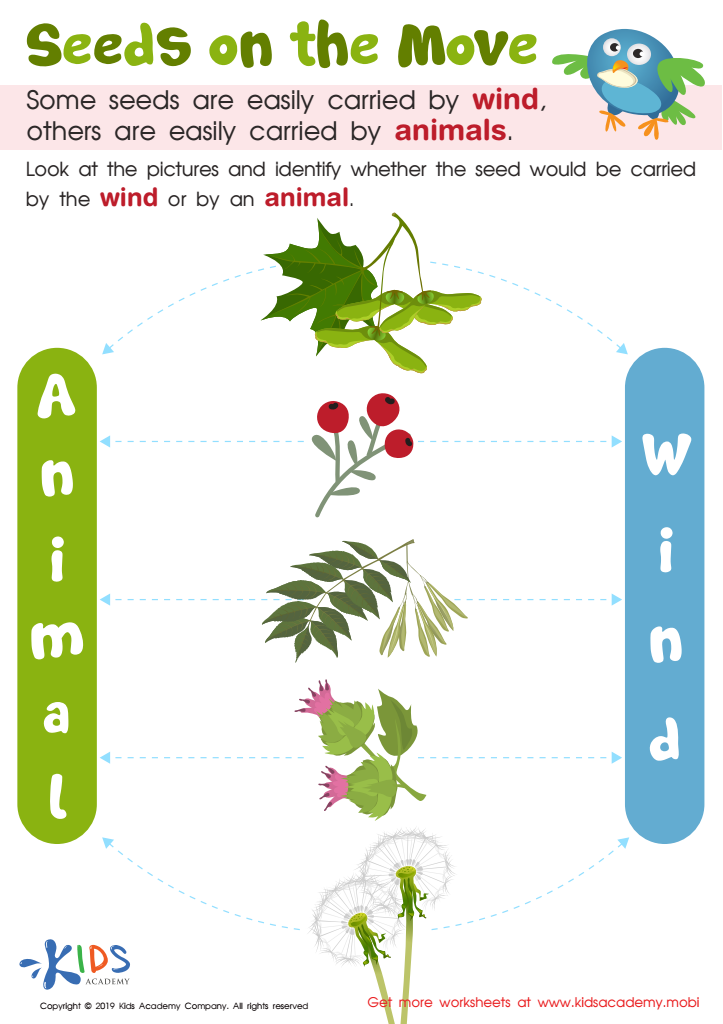

Ecosystems: Assessment 1 Worksheet

Before starting the worksheet, remind your child of the basics of the ecosystem, e.g. plants need light and winds carry small seeds. Encourage them to identify the images in the colorful printout. Ask them the questions and help them circle the correct answers.
Ecosystems: Assessment 1 Worksheet
Worksheet
Seeds on the Move Worksheet
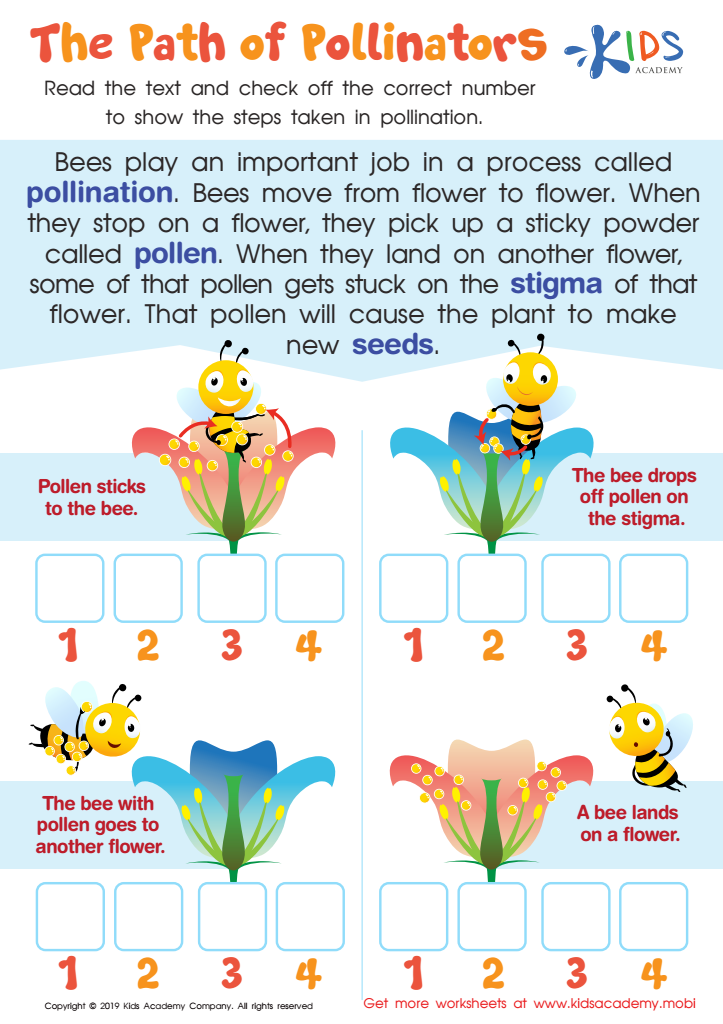

Seeds on the Move Worksheet

Help students understand the concept of spreading seeds with this fun traceable worksheet. Discuss the pictures, and see if they can identify whether the seed is carried by the wind or an animal. Explain how seeds can travel from place to place without human help, and how this helps them grow in new locations.
Seeds on the Move Worksheet
Worksheet
The Path of Pollinators Worksheet
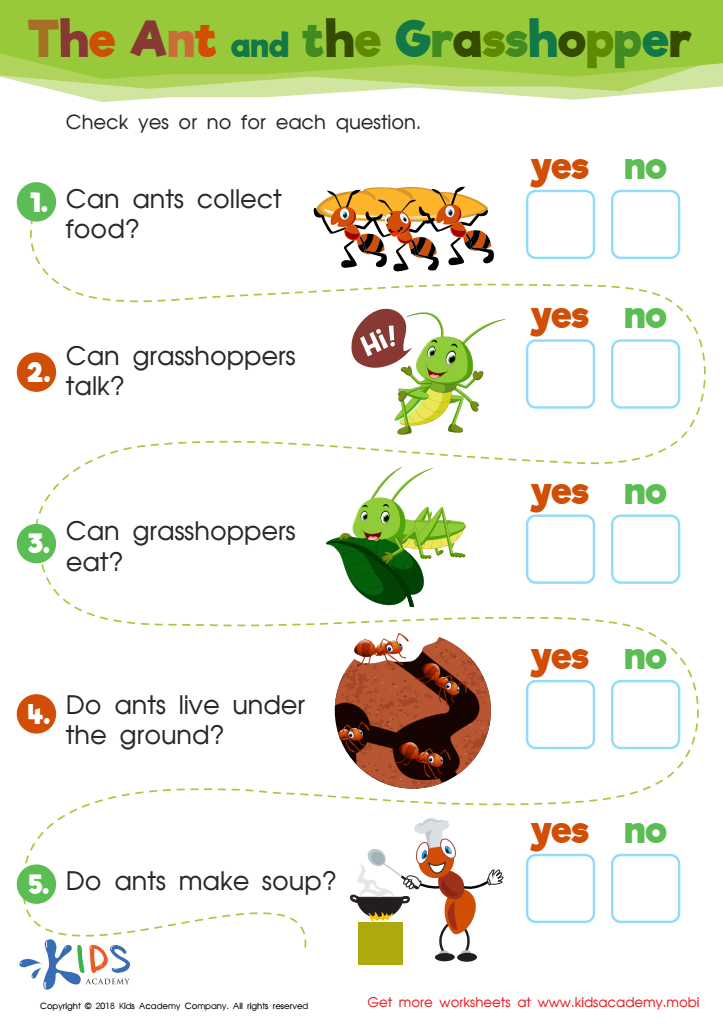

The Path of Pollinators Worksheet

Bees play a vital role in pollination: they transfer pollen between flowers, allowing them to produce new seeds. Without bees, we'd have less flowers and vegetation. Explain the process to your students and have them check off the right number to show the steps in pollination.
The Path of Pollinators Worksheet
Worksheet
The Ant and The Grasshopper Worksheet

The Ant and The Grasshopper Worksheet

Does your child know about insects? If they're a nature lover or scared of them, use this worksheet to learn more. Read each of the questions and help them fill in the yes or no boxes. This may help them become less scared of insects.
The Ant and The Grasshopper Worksheet
Worksheet
Rainforest Conservation Worksheet

Rainforest Conservation Worksheet

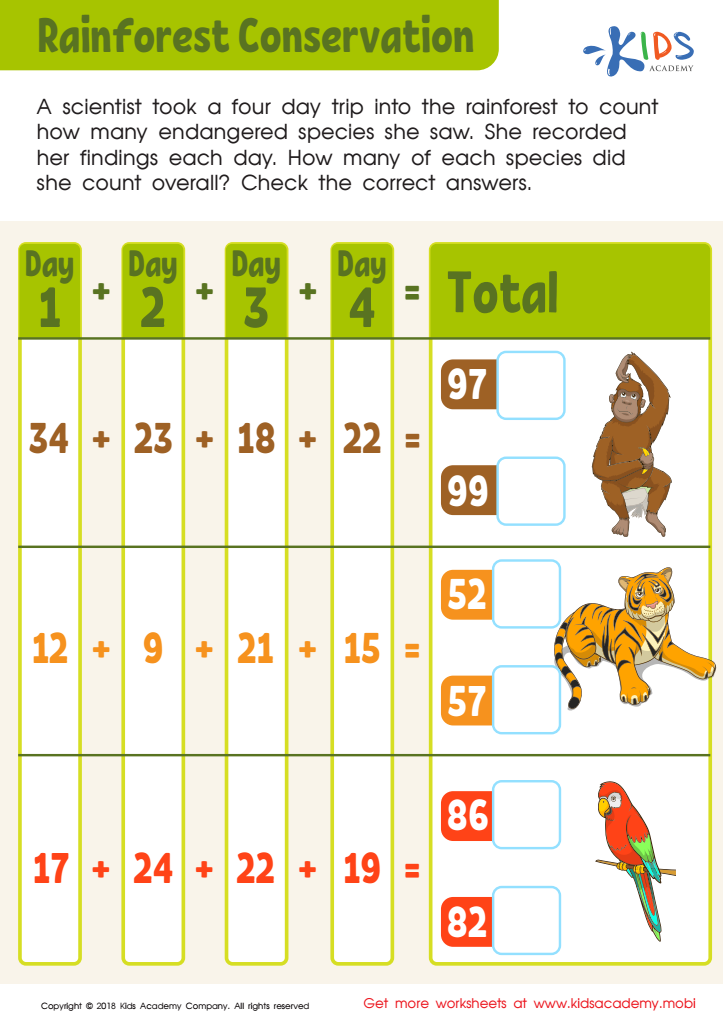
Explain to your child what a rainforest is and why it's important. A scientist took a four-day trip to count endangered species. Let your child count how many of each species were seen in total. Check the answers and help them understand.
Rainforest Conservation Worksheet
Worksheet
Who Is It? Worksheet

Who Is It? Worksheet

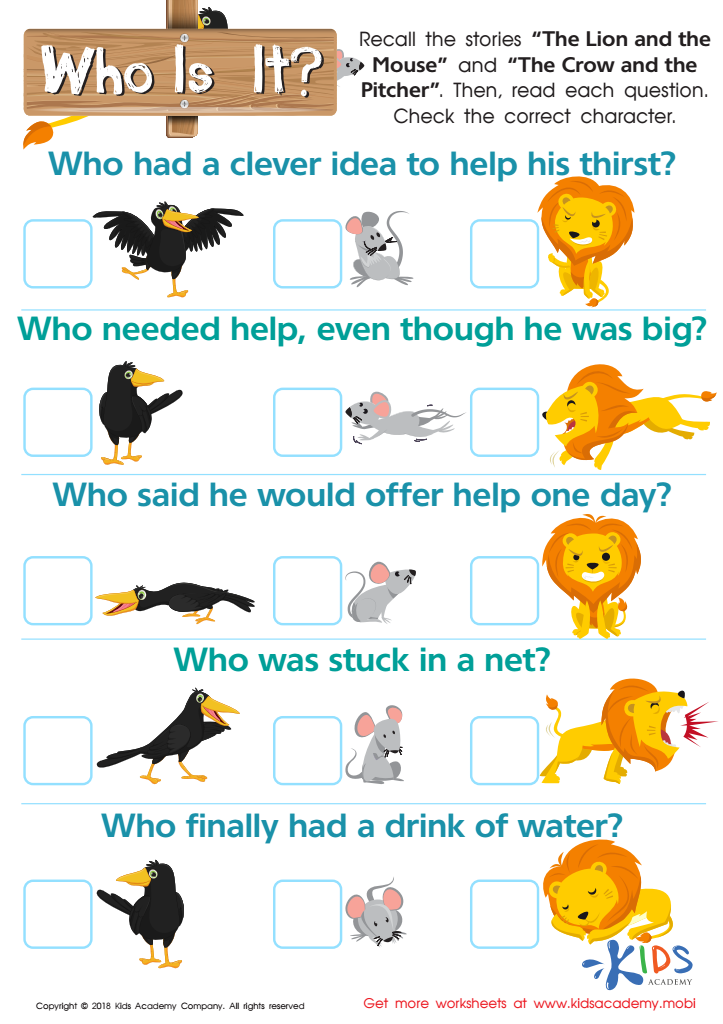
This worksheet helps students recall details from The Crow and the Pitcher and The Lion and the Mouse stories. Students will answer questions about the characters' actions. Use it to assess their understanding of both stories, as this is a key comprehension skill.
Who Is It? Worksheet
Worksheet
Animal Word Search Worksheet

Animal Word Search Worksheet

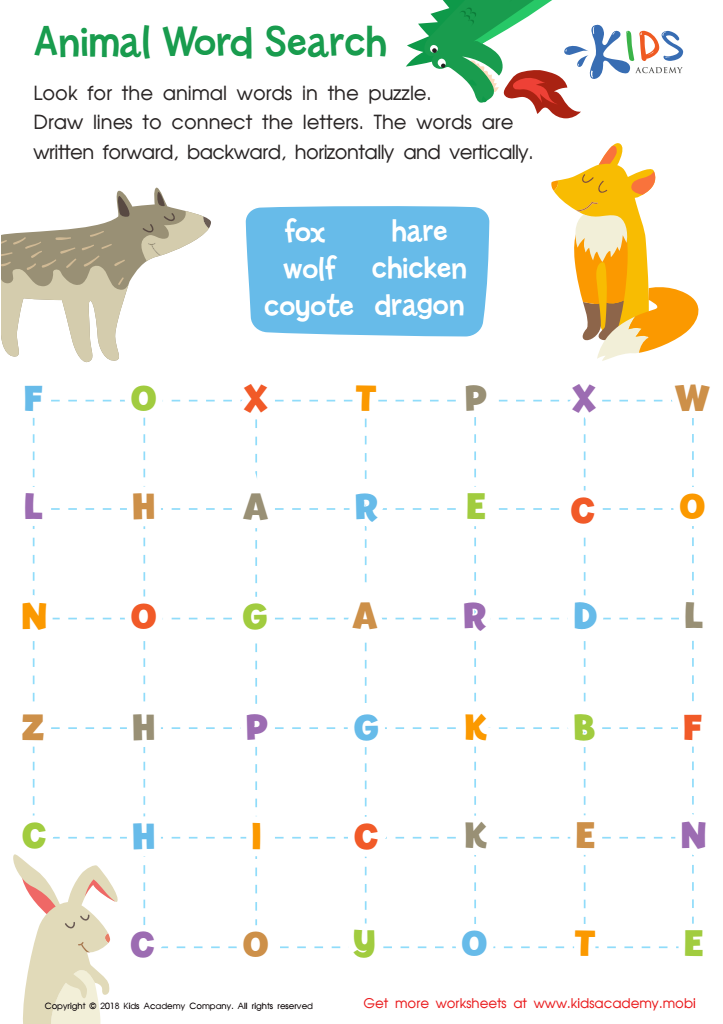
Students can have fun and strengthen spelling and vocabulary skills with this word search worksheet. Search for animal words and circle the letters in the puzzle. Words can be found forwards, backwards, horizontally or vertically, providing a great challenge to foster critical thinking skills. An enriching activity for all ages!
Animal Word Search Worksheet
Worksheet
Sensory Words Worksheet

Sensory Words Worksheet

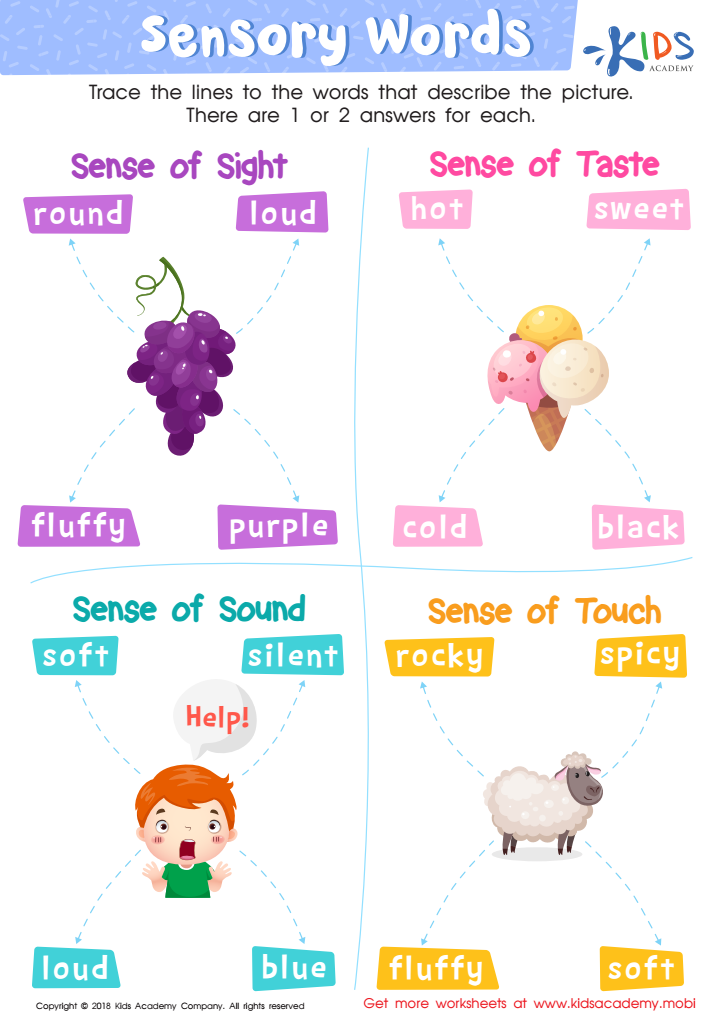
This worksheet helps students explore sensory words by looking at pictures and selecting one or two words to describe how it looks, feels, tastes, smells or sounds. Adding sensory words to texts makes them more interesting and helps students comprehend stories and articles better.
Sensory Words Worksheet
Worksheet
Feeling Words: The Boy Who Cried Wolf Worksheet

Feeling Words: The Boy Who Cried Wolf Worksheet

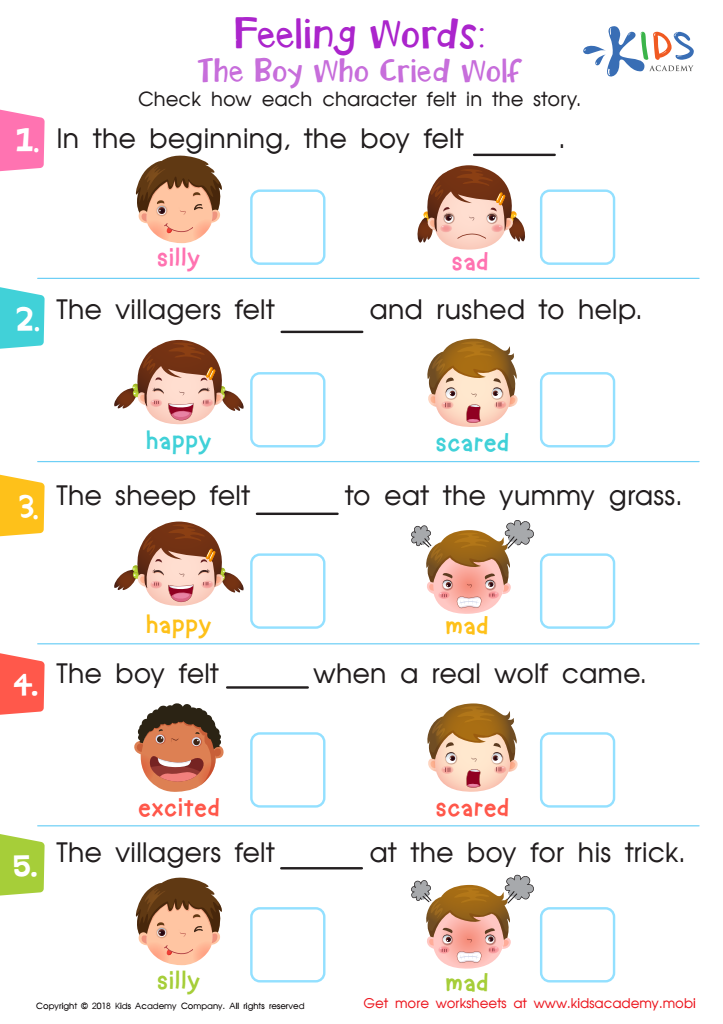
This worksheet helps students infer characters' traits and feelings by reading The Boy Who Cried Wolf. They choose the correct emotion for each character to improve their story comprehension. A great resource for the reading classroom, it teaches an essential comprehension skill.
Feeling Words: The Boy Who Cried Wolf Worksheet
Worksheet
In Front or Behind: Part 2 Worksheet

In Front or Behind: Part 2 Worksheet

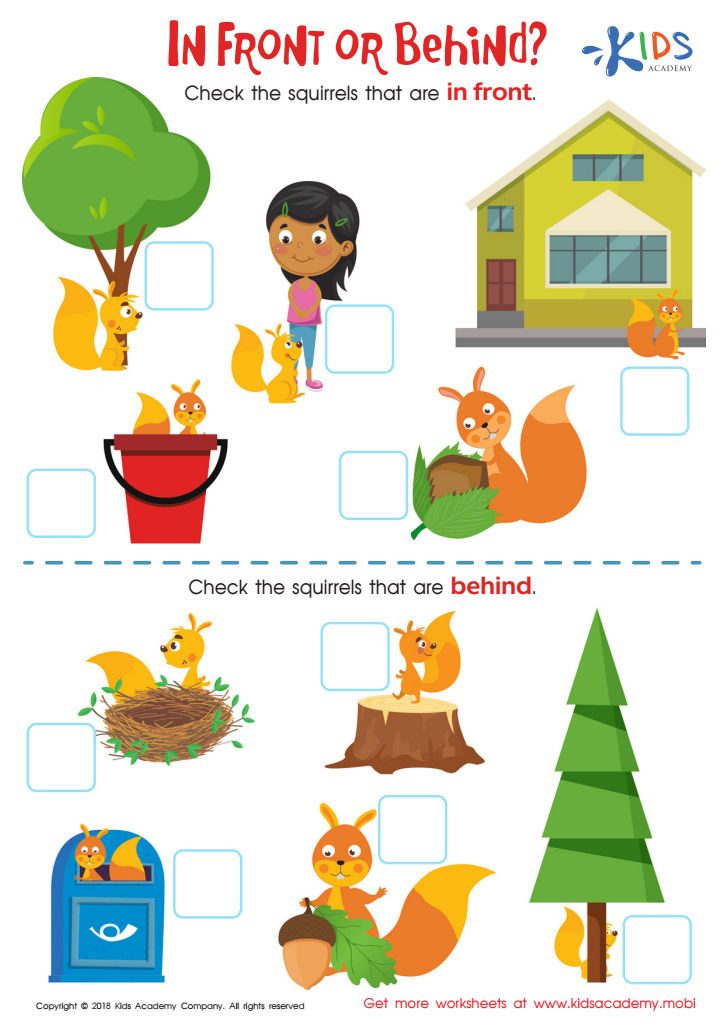
Teach positional words "front" and "behind" with this fun worksheet! Students identify where the squirrel is in relation to the object - in front or behind. It's a great exercise to practice early geometry skills and understanding object movement.
In Front or Behind: Part 2 Worksheet
Worksheet
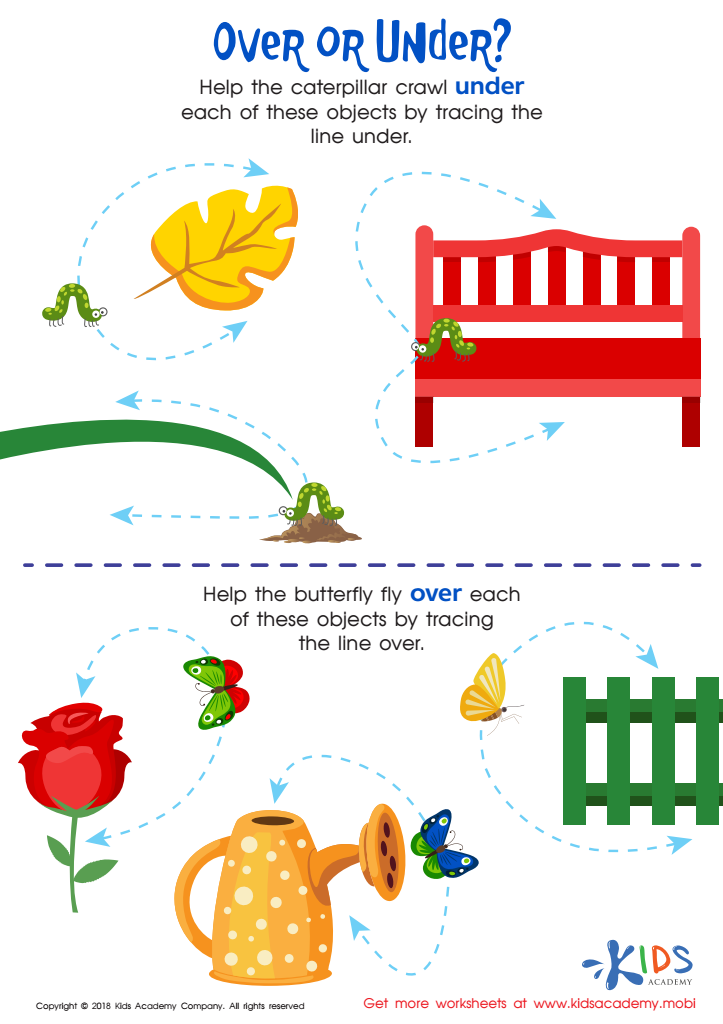
Over or Under? Worksheet

Over or Under? Worksheet

Math for young kids isn't just about numbers and counting, but also spatial concepts like geometry. This worksheet helps students learn "over" and "under" by tracing the movement of caterpillars and butterflies. Downloadable for free, it's an effective teaching tool for early learners.
Over or Under? Worksheet
Worksheet
Going up or Down? Worksheet

Going up or Down? Worksheet

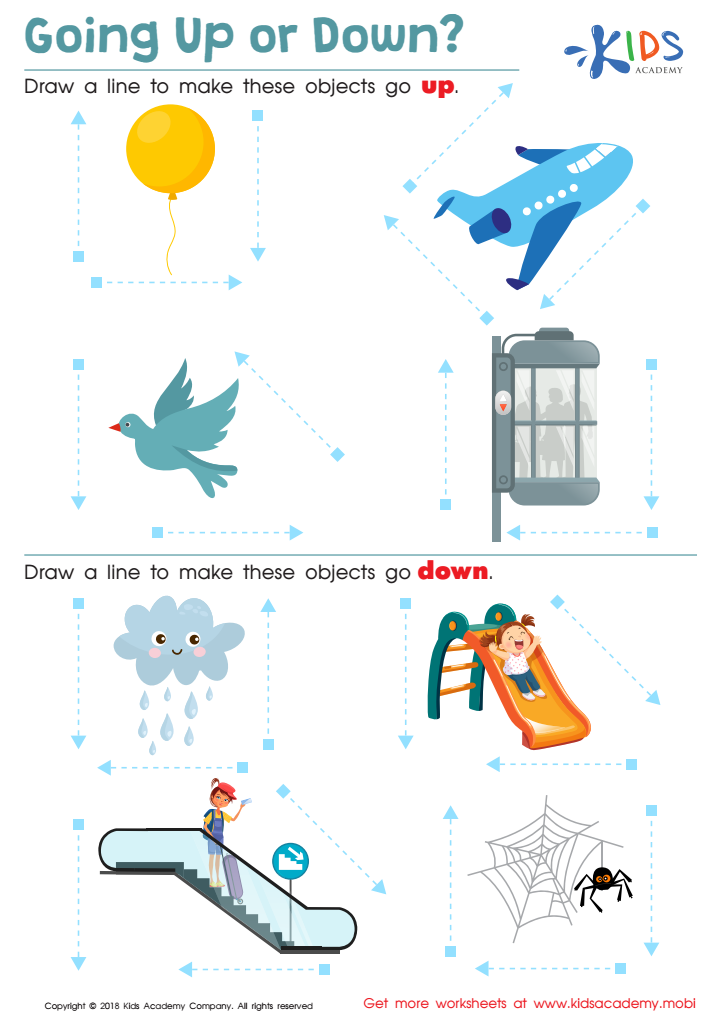
Young students learn the concept of up and down with this geometry worksheet. They trace lines to identify relative positioning as an object travels. Kids can use position words to describe an object's movement, enhancing their spatial relationship skills - an important geometry foundation.
Going up or Down? Worksheet
Worksheet
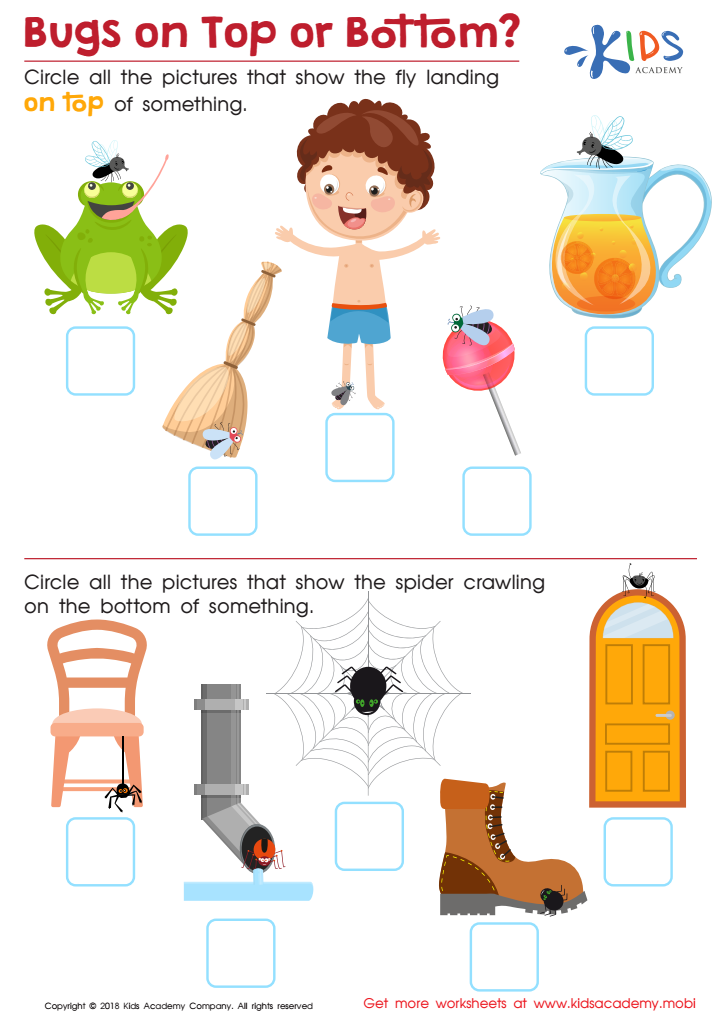
Bugs on Top or Bottom? Worksheet

Bugs on Top or Bottom? Worksheet

Preschoolers need to learn directional skills such as top and bottom. This PDF worksheet helps them recognize bugs on the top or bottom using fun visuals. It builds their spatial reasoning while teaching prepositional words in an engaging way.
Bugs on Top or Bottom? Worksheet
Worksheet
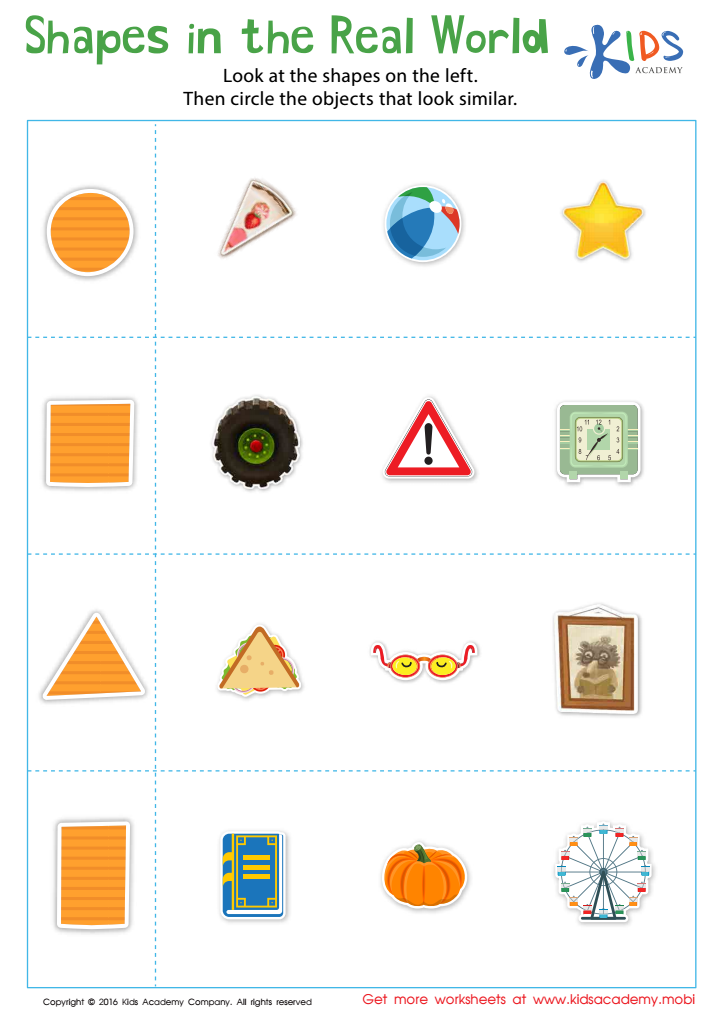
Shapes in the Real World Worksheet


Shapes in the Real World Worksheet

Teach kids math in real-world context with this fun and inviting PDF. Let them explore geometric shapes and match them with everyday objects, giving them practice with fine motor skills and reinforcing basic shapes. Help them understand that math is everywhere in their lives!
Shapes in the Real World Worksheet

Worksheet


Science for children ages 4-7 is crucial for several compelling reasons. First and foremost, young children are naturally curious; they want to know how things work, why the sky is blue, or what makes plants grow. Engaging in science at an early age nurtures this innate curiosity, helping kids develop critical thinking and problem-solving skills. These skills are foundational not only for future scientific learning but for all areas of education and life.

Moreover, early science education promotes hands-on experiences, fostering active learning through experiments and observations. This interactive approach appeals to various learning styles, making science accessible and enjoyable for all children. Furthermore, science helps build a strong understanding of the world, encouraging children to make connections between their lives and the scientific principles around them.

In terms of health and safety, understanding basic scientific concepts empowers children to make informed choices, fostering a sense of responsibility toward themselves and the environment. Ultimately, cultivating a love for science early on supports lifelong learning and prepares children to thrive in an increasingly complex and technology-driven world. Teachers and parents have the critical role of instilling this passion and curiosity, making science an essential part of early education.