Vocabulary expansion Reading Worksheets for 8-Year-Olds
52 filtered results
Difficulty Level
Grade
Age
-
From - To
Subject
Activity
Standards
Favorites
With answer key
Interactive
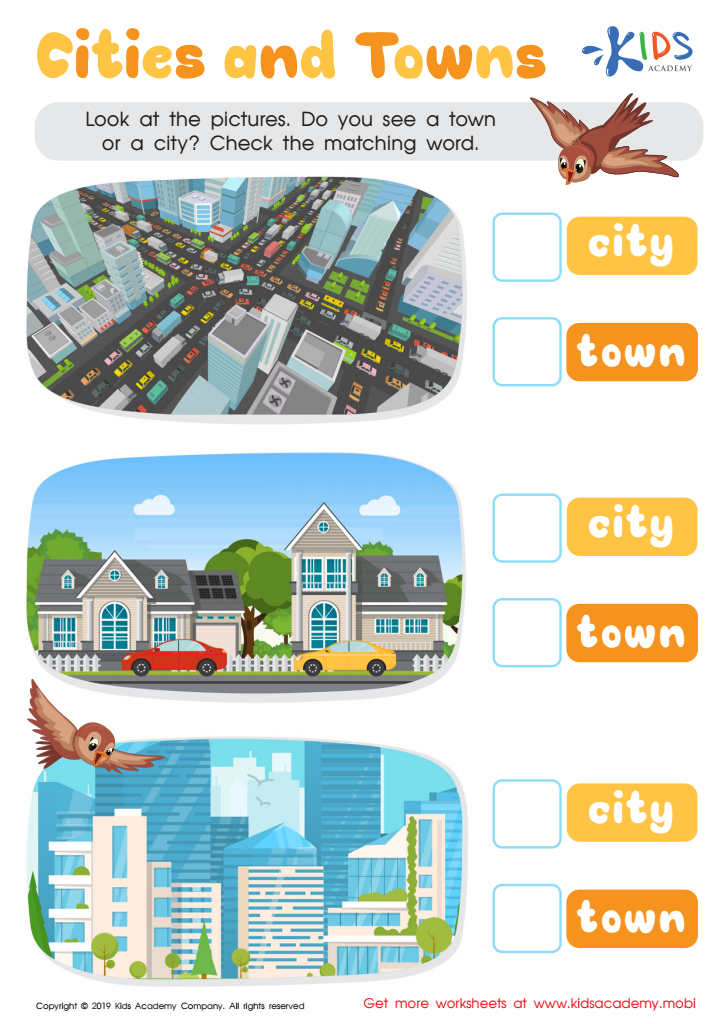
Cities and Towns Worksheet
Cities are buzzy and busy while towns tend to be peaceful. Ask your child if they can tell which one is which from a picture. This could be a great way to test their understanding of the differences between towns and cities. There are many businesses in cities, tall buildings and lots to do. Meanwhile towns are usually quieter.
 Assign to My Students
Cities and Towns Worksheet
Worksheet
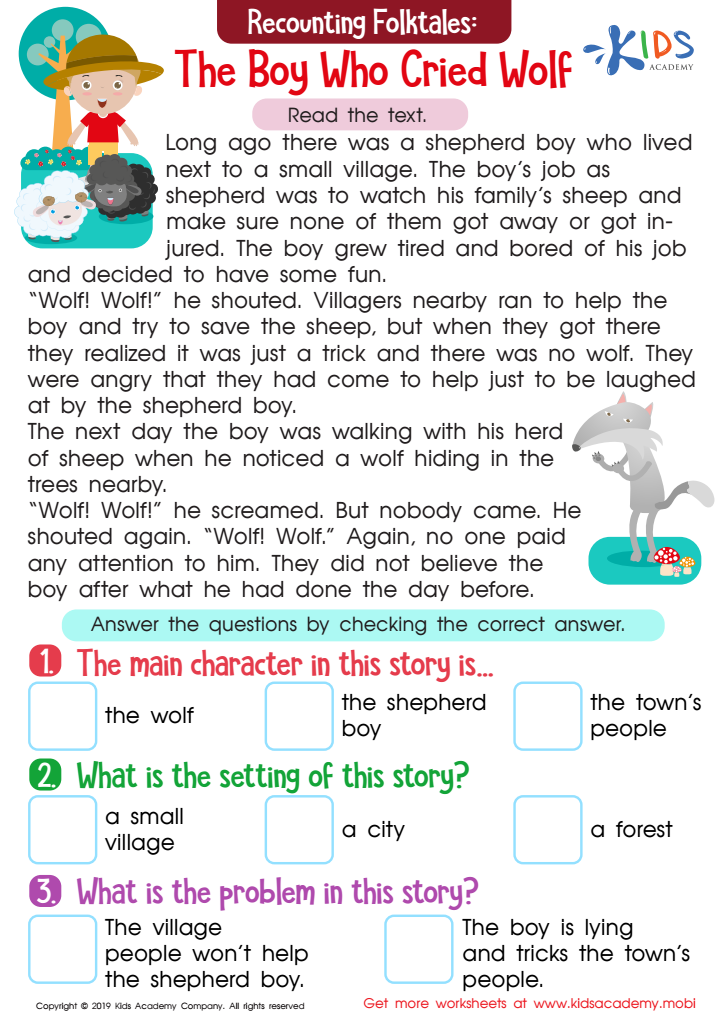
The Boy Who Cried Wolf Part 1 Worksheet
Storytime can be your kid's favorite part of the day. Ask them what their favorite stories are, then read the text in the printout. Read along with them, making sure they understand each word. At the end, go over the questions and have them check the correct answers.
The Boy Who Cried Wolf Part 1 Worksheet
Worksheet
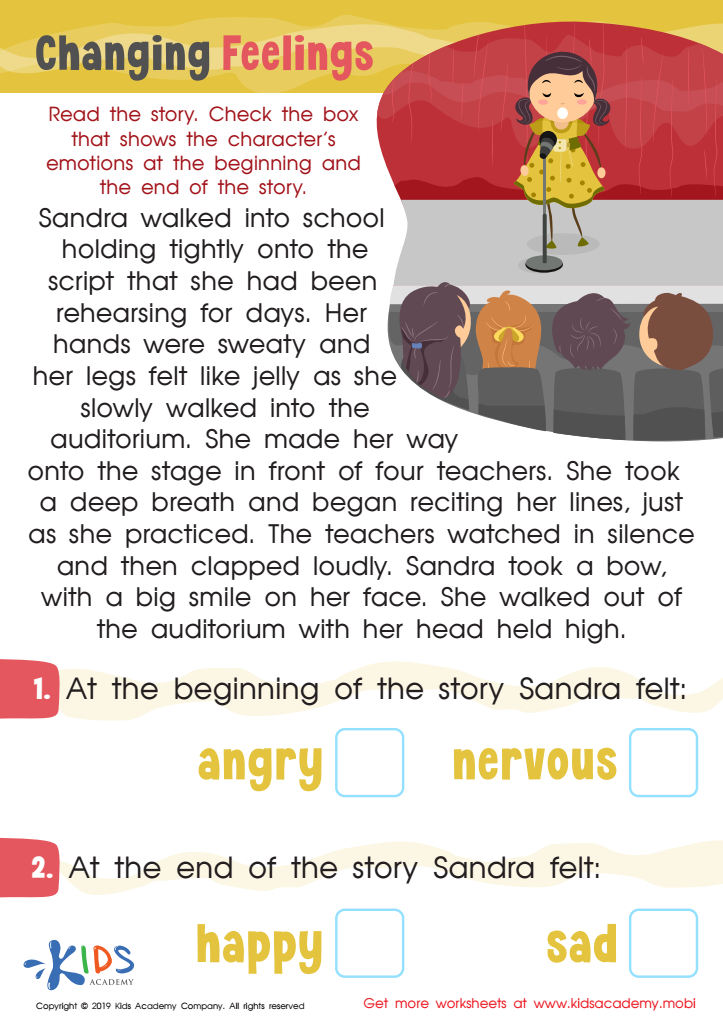
Changing Feelings Worksheet
Help your kids practice reading skills with this exercise. Ask them to read the short passage, then check the boxes showing the character's emotions at the start and end. This will help them improve their reading and understanding.
Changing Feelings Worksheet
Worksheet
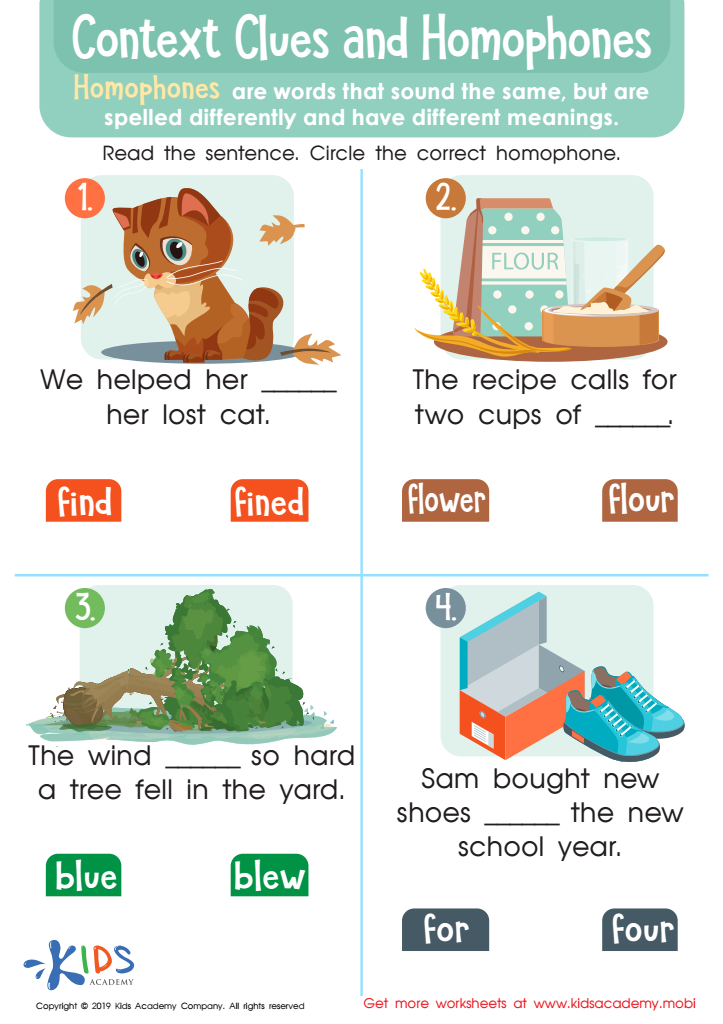
Context Clues and Homophones Worksheet
Make sure kids understand what homophones are (words that sound the same, different spellings, meanings). Give examples and look at the printout. Read each sentence and sound out words. Help them pick the right one and circle it.
Context Clues and Homophones Worksheet
Worksheet
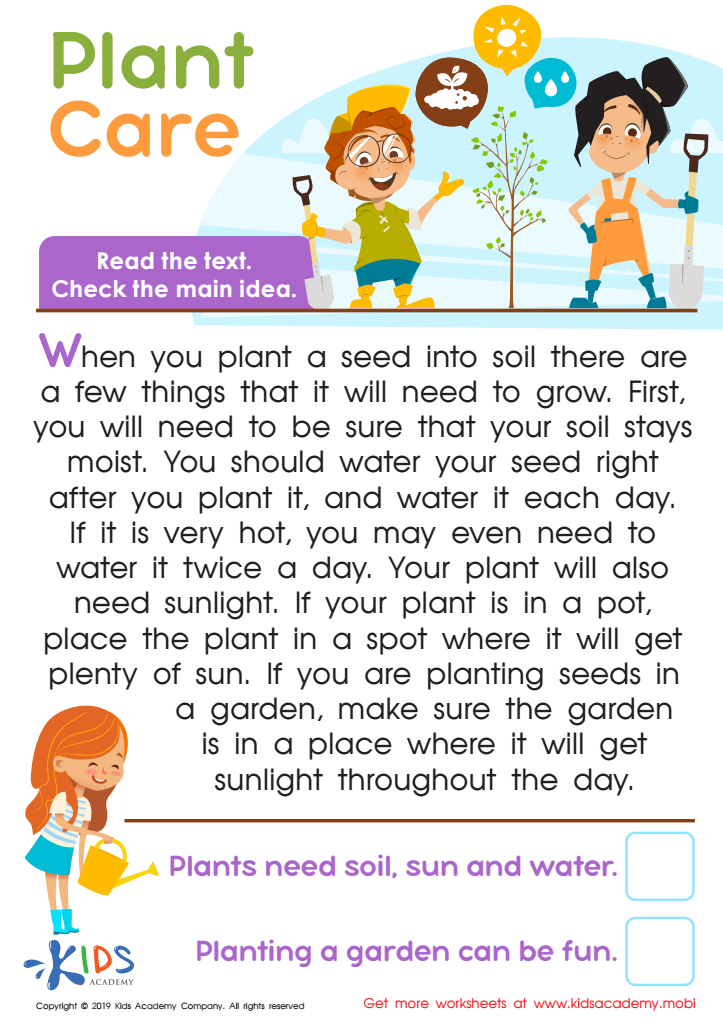
Plant Care Worksheet
Encourage your children to read by helping them practice. Print out the worksheet and read the text with them. Help them understand the words and find the main idea. This will improve their reading skills and prepare them for school.
Plant Care Worksheet
Worksheet
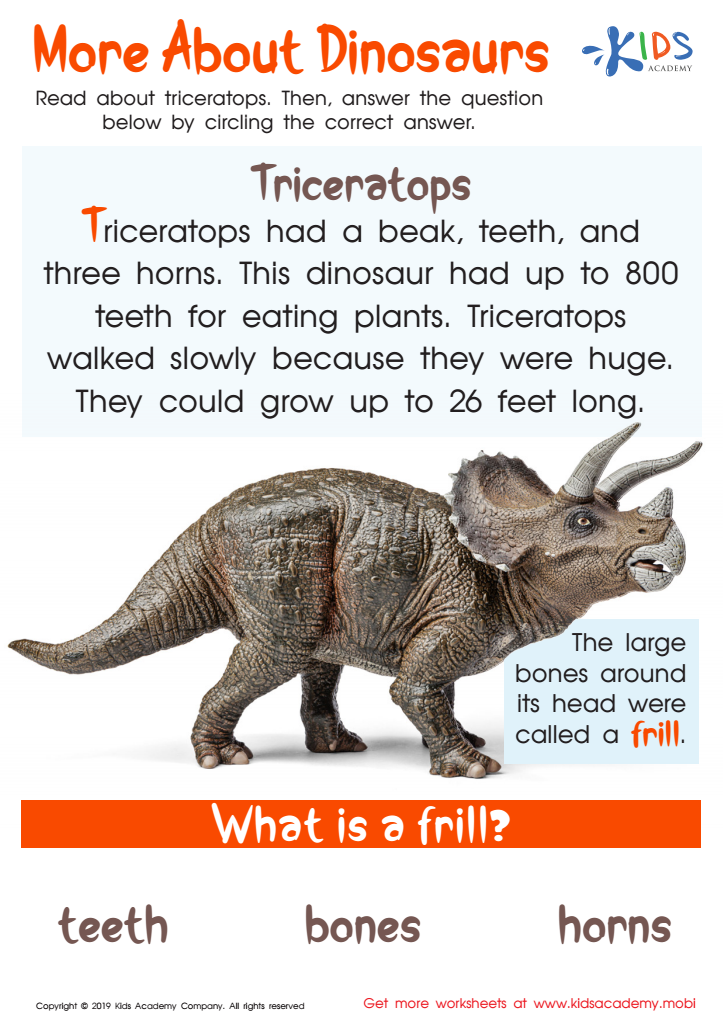
More About Dinosaurs Worksheet
Let your little archaeologist have a blast with this Kids Academy worksheet! They’ll explore the past and learn more about the triceratops while practicing their informational text skills. Be sure to highlight the textbox and show them how the frill is explained. Finish the worksheet by answering the question!
More About Dinosaurs Worksheet
Worksheet
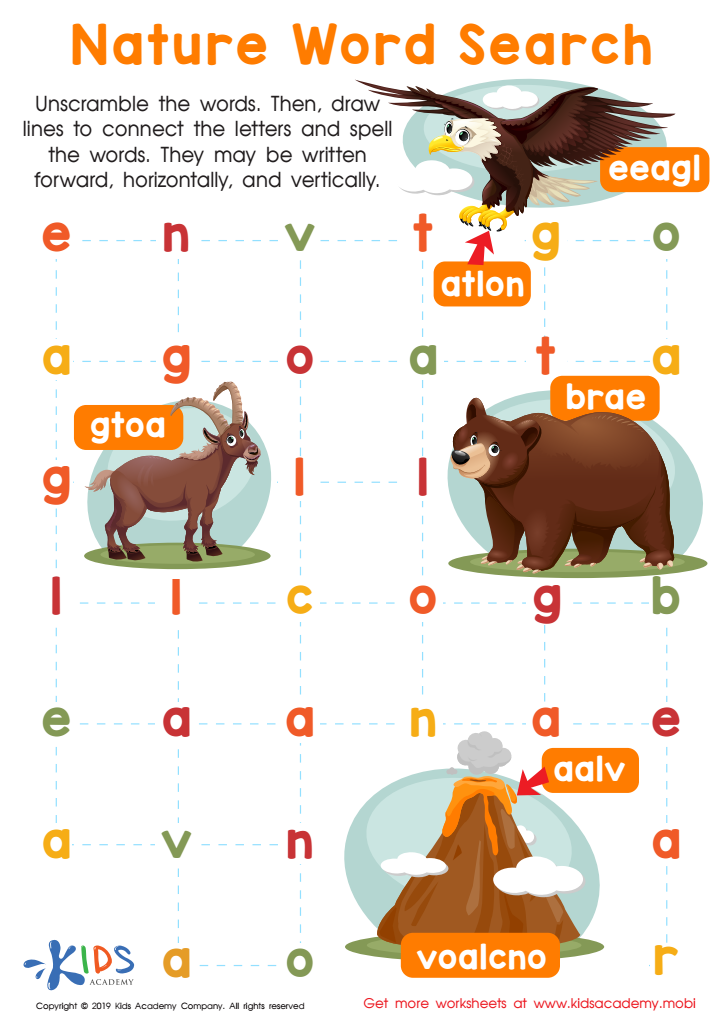
Nature Word Search Worksheet
Unscramble science vocabulary words and find them in this fun worksheet! Use the pictures as clues if you get stumped; you can also write down the words for reference. Solve the puzzle when you're done to finish!
Nature Word Search Worksheet
Worksheet
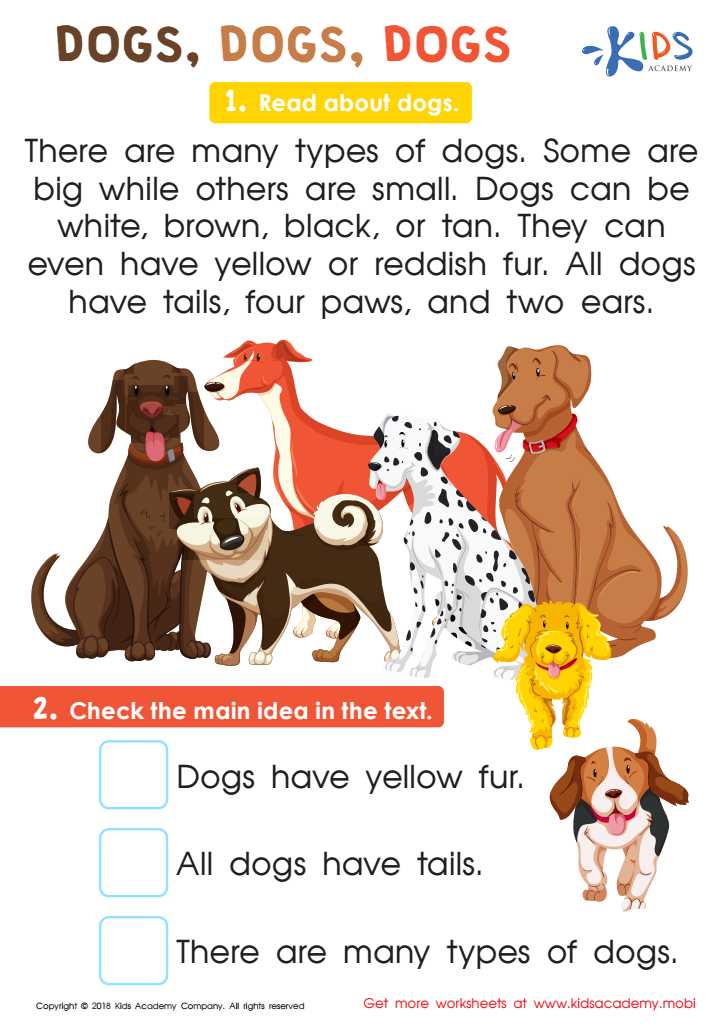
Dogs, Dogs Worksheet
Help your child understand main ideas with this fun doggy worksheet from Kids Academy! Have them read the passage and then discuss the main idea. After that, have them read the answer choices and pick the right one. This will help your kiddo hone their critical reading comprehension skills!
Dogs, Dogs Worksheet
Worksheet
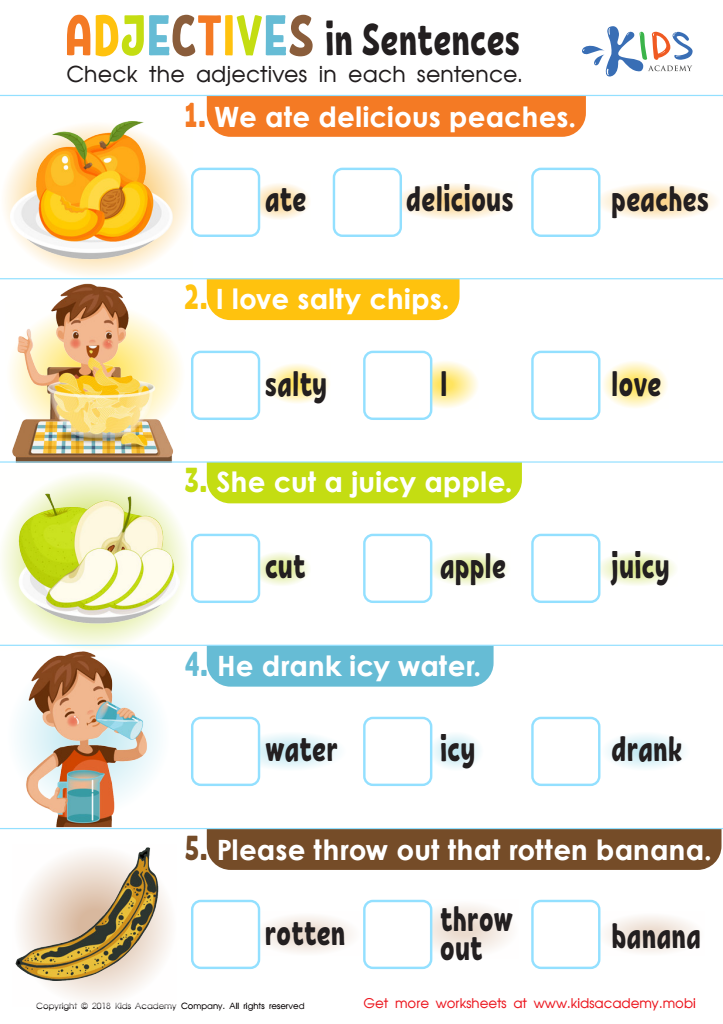
Adjectives in Sentences Worksheet
Our learners can find it hard to use writing to add detail, but adjectives can help. With this fun worksheet, kids can identify adjectives that describe food and drink. Guide them through each sentence, discussing the words and having them choose the one that gives information about the food/drink.
Adjectives in Sentences Worksheet
Worksheet
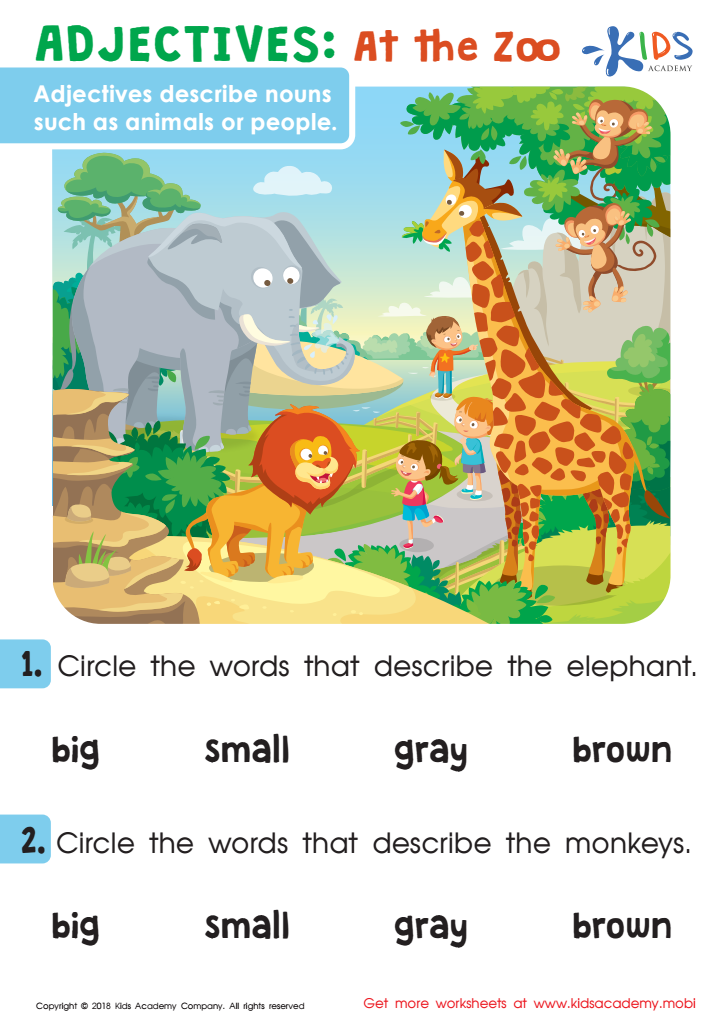
Adjectives: At The Zoo Worksheet
Take your kids to the zoo and ask them about their favorite activities and animals. This worksheet is a great way for kids to learn about adjectives. Explain that adjectives describe nouns like people or animals (e.g. big, tall, dark). Look at the printout with your kids and help them circle words that describe the animals in the picture.
Adjectives: At The Zoo Worksheet
Worksheet
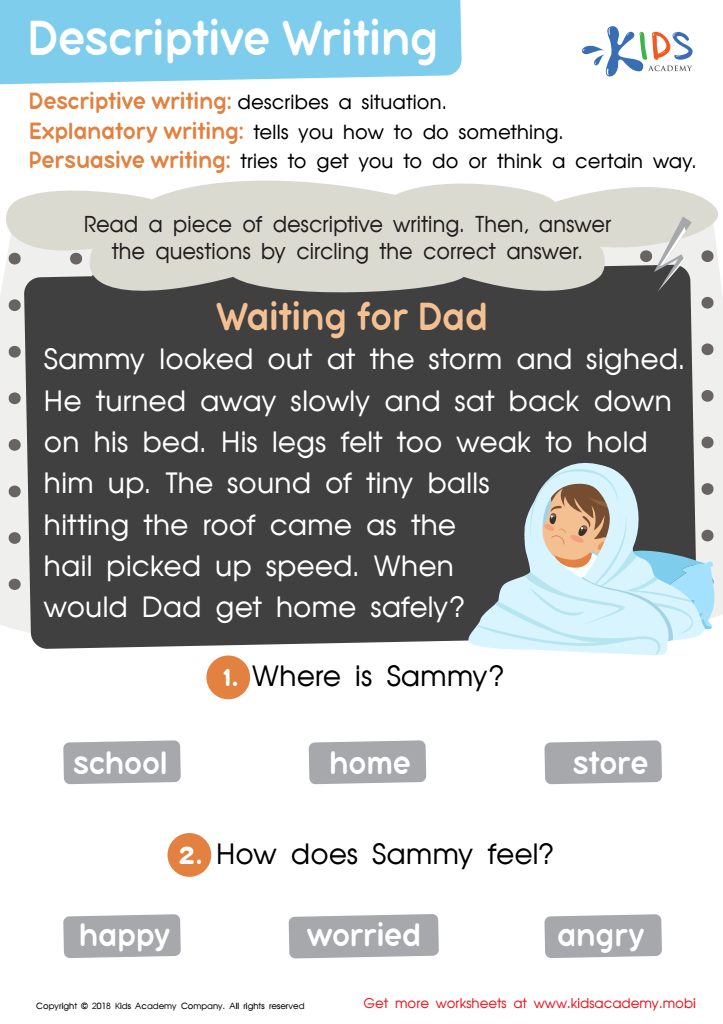
Descriptive Writing Worksheet: Part 2
In this worksheet, your kids will explore writing styles like descriptive, explanatory and persuasive. Read them the descriptive text, then have them answer the questions. Writing is an art – it's a way to express emotions, tell stories and share information.
Descriptive Writing Worksheet: Part 2
Worksheet
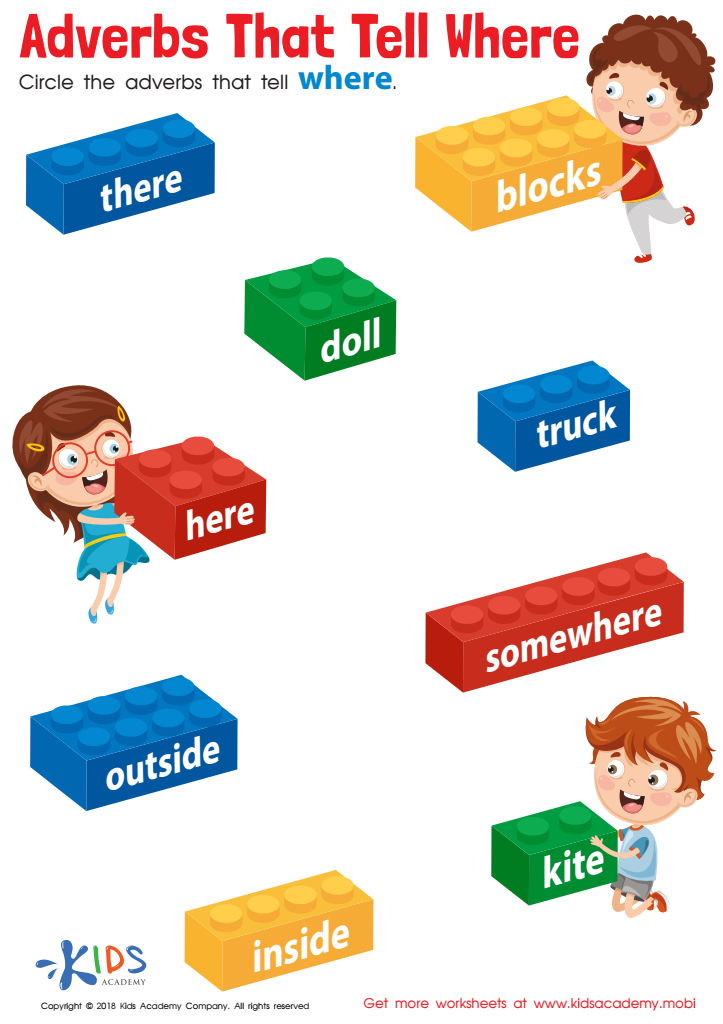
Adverbs That Tell Where Worksheet
Help your kids identify adverbs with a fun worksheet. Read the words aloud and ask them to circle the adverbs showing 'where.' Give them easy examples, like 'the girl stood over there.' See if they can create their own examples. This activity makes learning adverbs fun!
Adverbs That Tell Where Worksheet
Worksheet
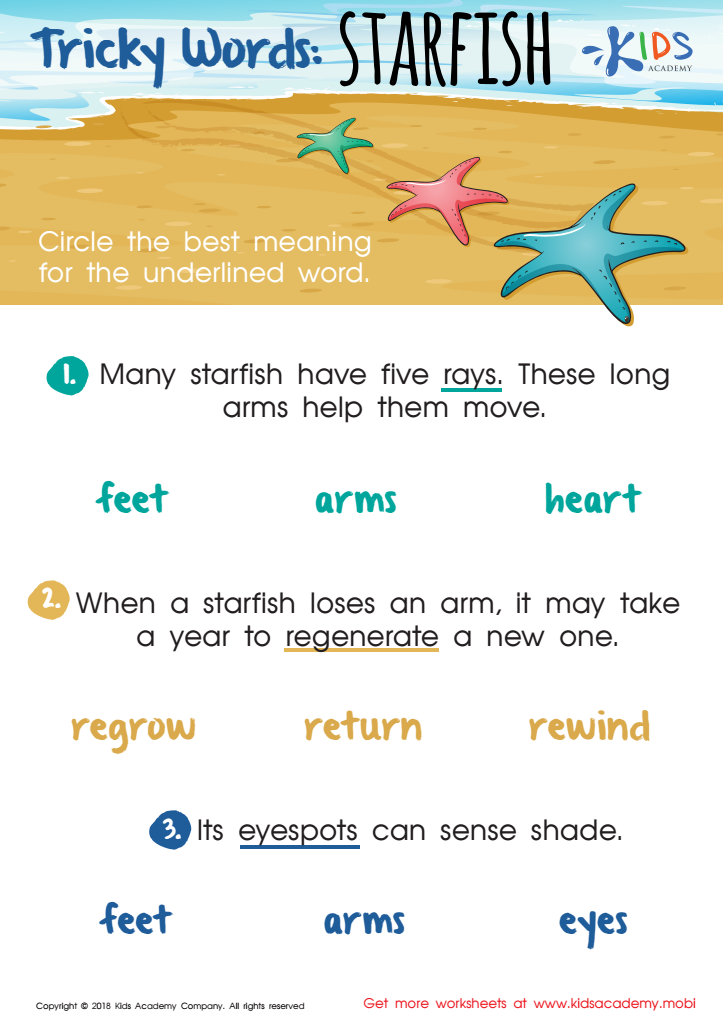
Tricky Words: Starfish Worksheet
Encourage your kids' learning with a fun worksheet! Help them circle the best meaning for the underlined words in the sentences. This activity is a great way to practice what they learn at school and have fun. Your little ones will enjoy learning new words and make the experience even more memorable.
Tricky Words: Starfish Worksheet
Worksheet
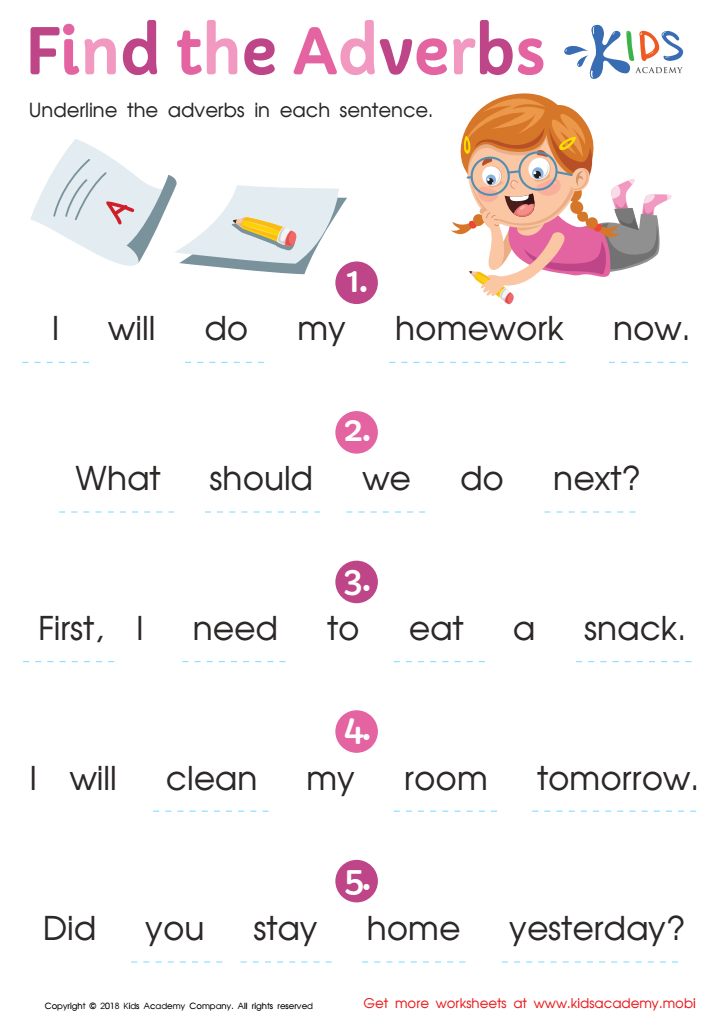
Finding the Adverbs Worksheet
Before starting, ensure your kids know nouns & verbs, then explain adverbs give more meaning to verbs. Give examples & read each sentence with them, helping to underline the adverbs. 80 words
Finding the Adverbs Worksheet
Worksheet
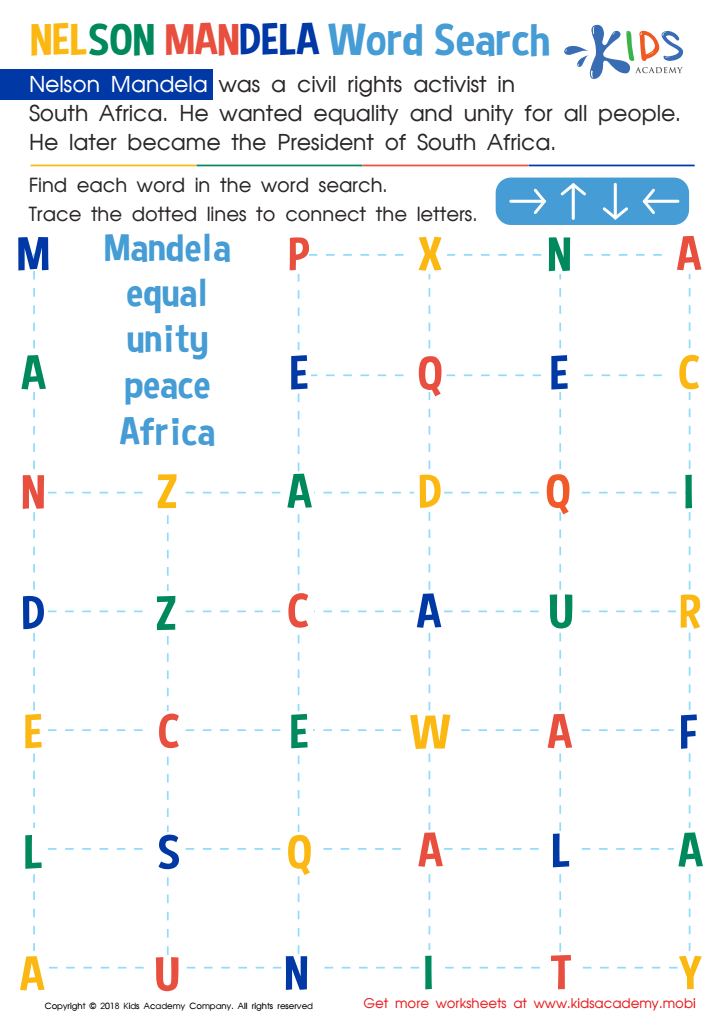
Nelson Mandela Word Search Worksheet
Kids love word searches! This fun, free worksheet teaches about the civil rights activist Nelson Mandela. It includes traceable lines and words related to him, helping improve fine motor skills. A great way to learn about a great man!
Nelson Mandela Word Search Worksheet
Worksheet
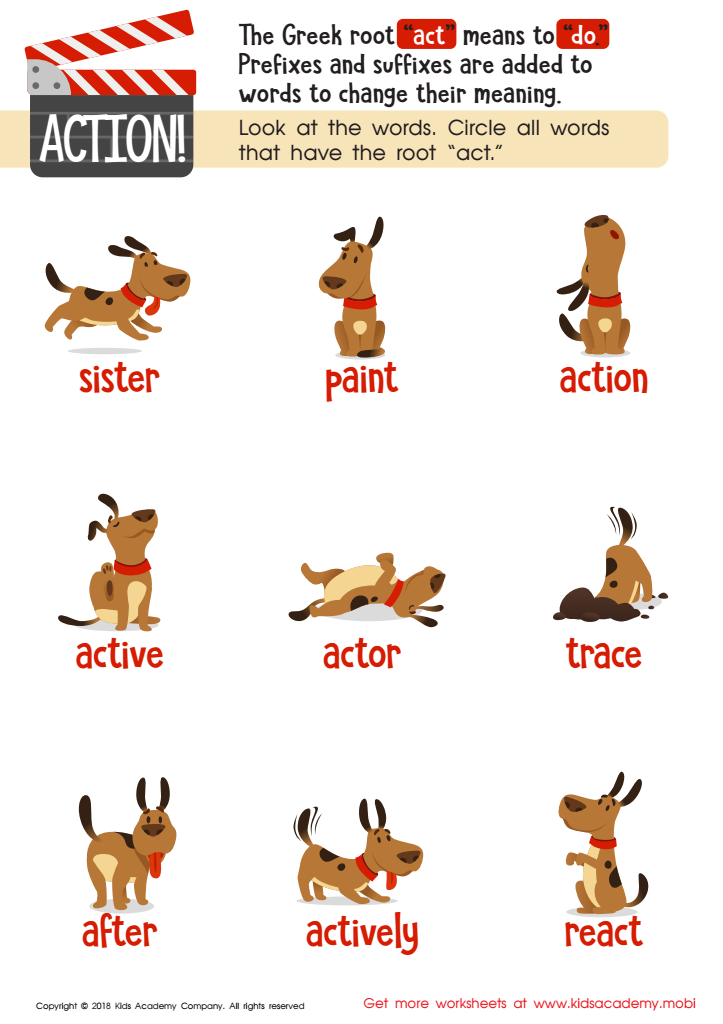
Action! Worksheet
Most English words are borrowed, and prefixes and suffixes are added to change the meaning. A popular prefix is 'act', from the Greek root meaning 'to do'. With your kids, look at the words in this worksheet and circle those with the root 'act'.
Action! Worksheet
Worksheet
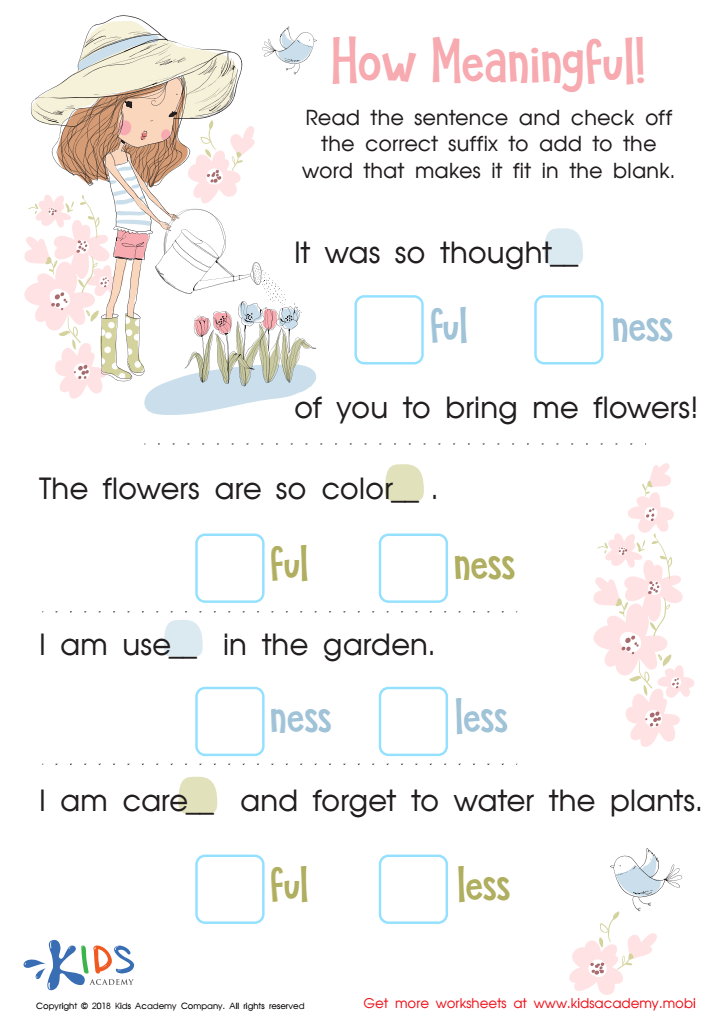
How Meaningful! Worksheet
'Meaningful' is used to describe something that carries importance to someone else. For example, calling friends on their birthdays. The suffix -ful can also be added to other words to create new meanings; try this with your kids and help them check the correct suffix to complete the sentence.
How Meaningful! Worksheet
Worksheet
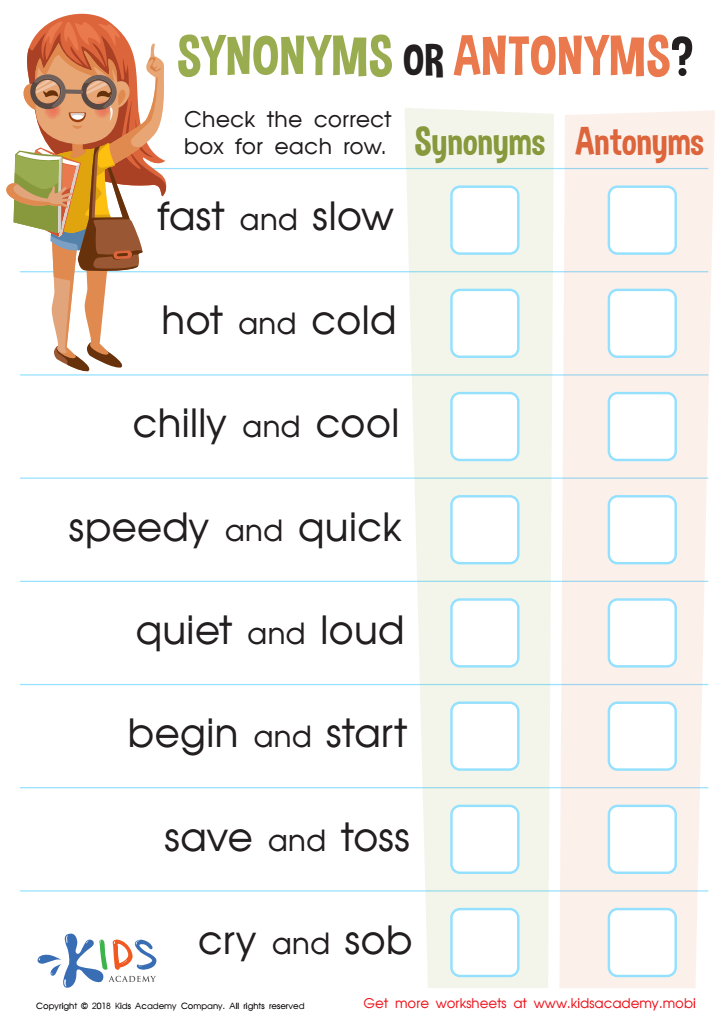
Synonyms or Antonyms: Assessment Worksheet
Test your child's knowledge with this fun worksheet! Ask them to read the words and select if they are synonyms or antonyms - e.g. 'happy' is a synonym and 'bad' is an antonym. For an extra challenge, ask them to provide two synonyms and two antonyms for each word.
Synonyms or Antonyms: Assessment Worksheet
Worksheet
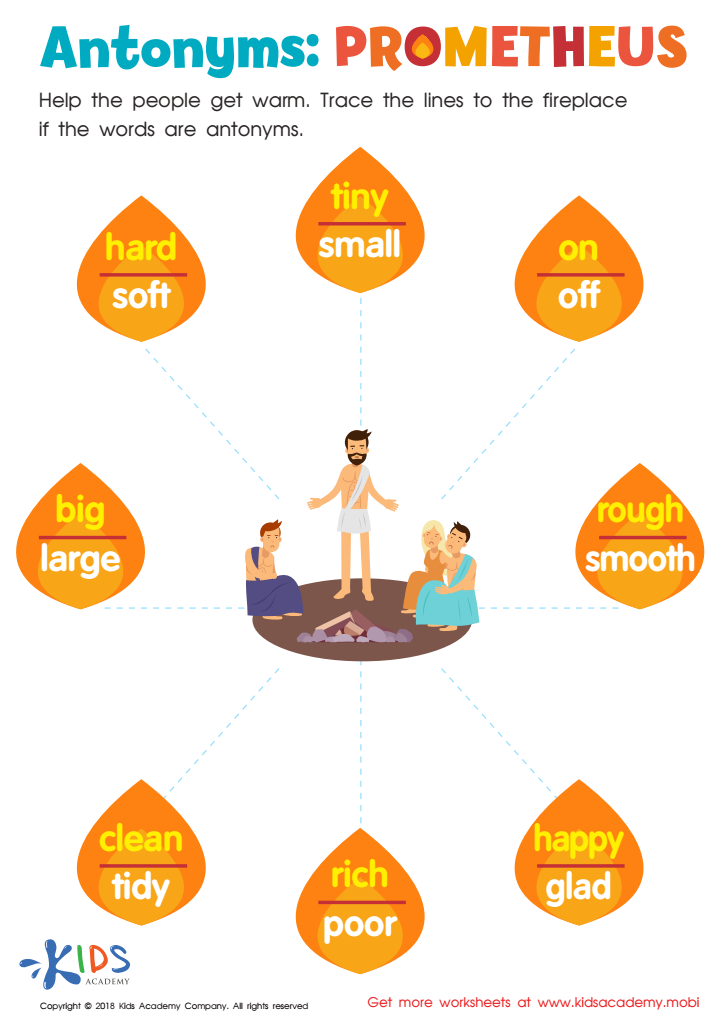
Antonyms: Prometheus Worksheet
Antonyms are words with opposite meanings to another. For example, the antonyms of 'good' are 'bad', 'poor' and 'wicked'. Ask your child to give you antonyms for 'Prometheus', which relates to fire. Invite your kids to trace the lines to the fireplace if the words are antonyms, helping the people in the tracing sheet get warm.
Antonyms: Prometheus Worksheet
Worksheet
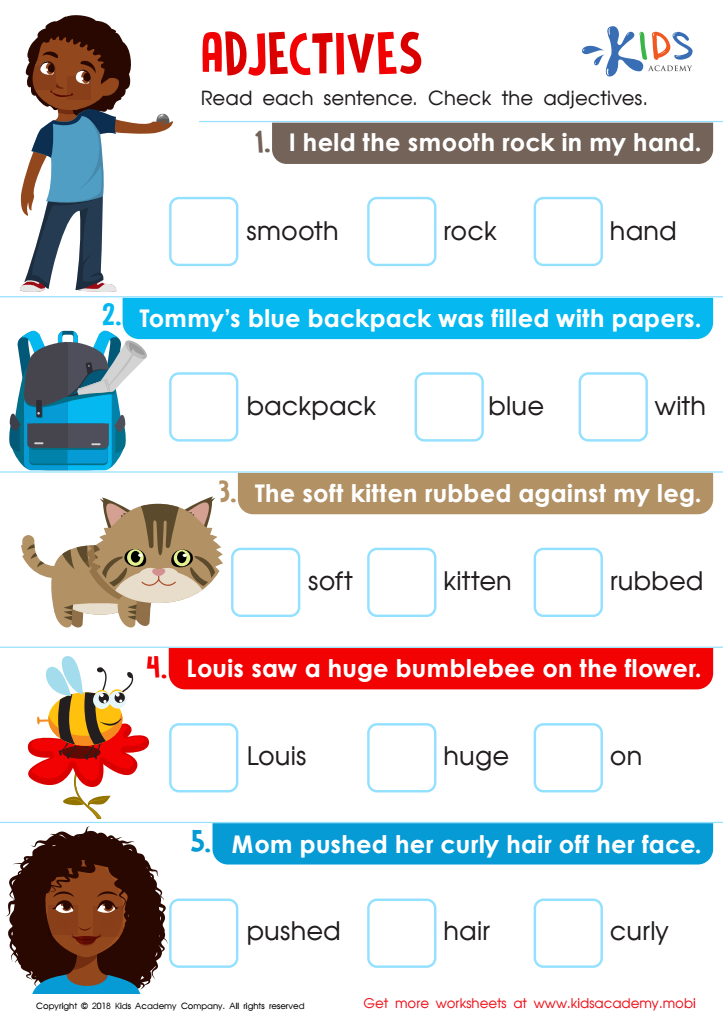
Adjectives Worksheet
Adjectives are words that describe a noun. Examples include "beautiful" and "good". Ask your students to use these adjectives in a sentence and have them identify the adjectives in five sentences on a worksheet. Point out that adjectives are essential to understand, and have them check their answers.
Adjectives Worksheet
Worksheet
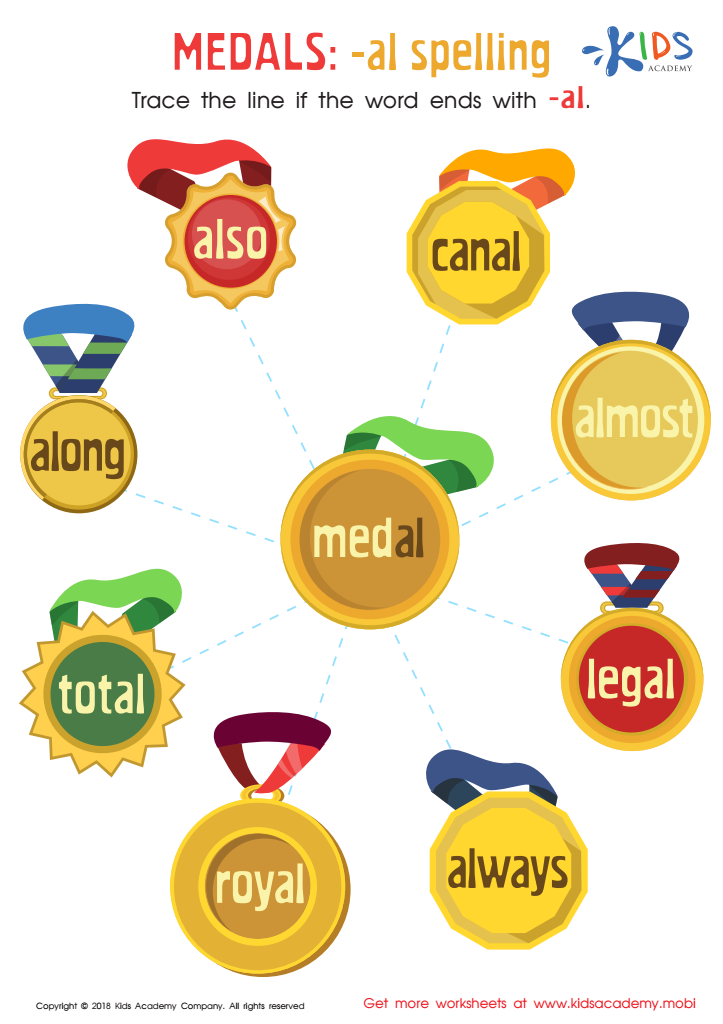
Medals: Al Spelling Worksheet
Have your students list common words ending with -al. See how many they can give and spell. Give examples of your own, assisting with spelling. Now review the words in the worksheet. Guide students to trace the line for each word ending with -al. 80 words
Medals: Al Spelling Worksheet
Worksheet
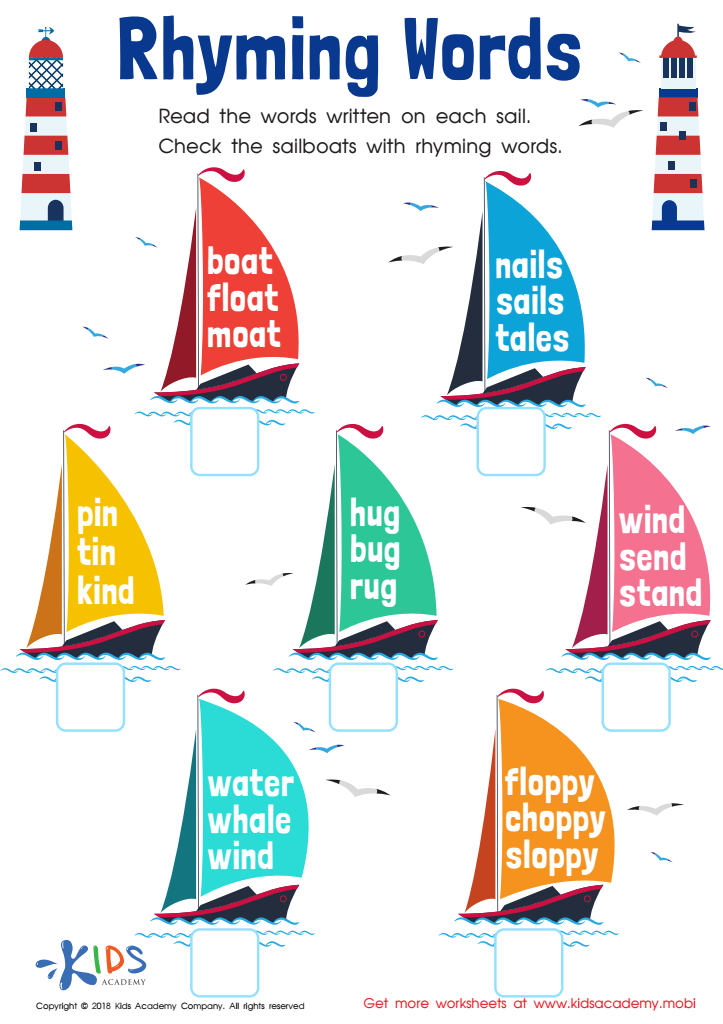
Rhyming Words Worksheet
Does your child know about rhyming words? Get them interested in poetry and explain that these words have similar sounds when pronounced. Read the words on each sailboat to your child and ask them to identify the rhyming pairs. Guide them to check the sailboats.
Rhyming Words Worksheet
Worksheet
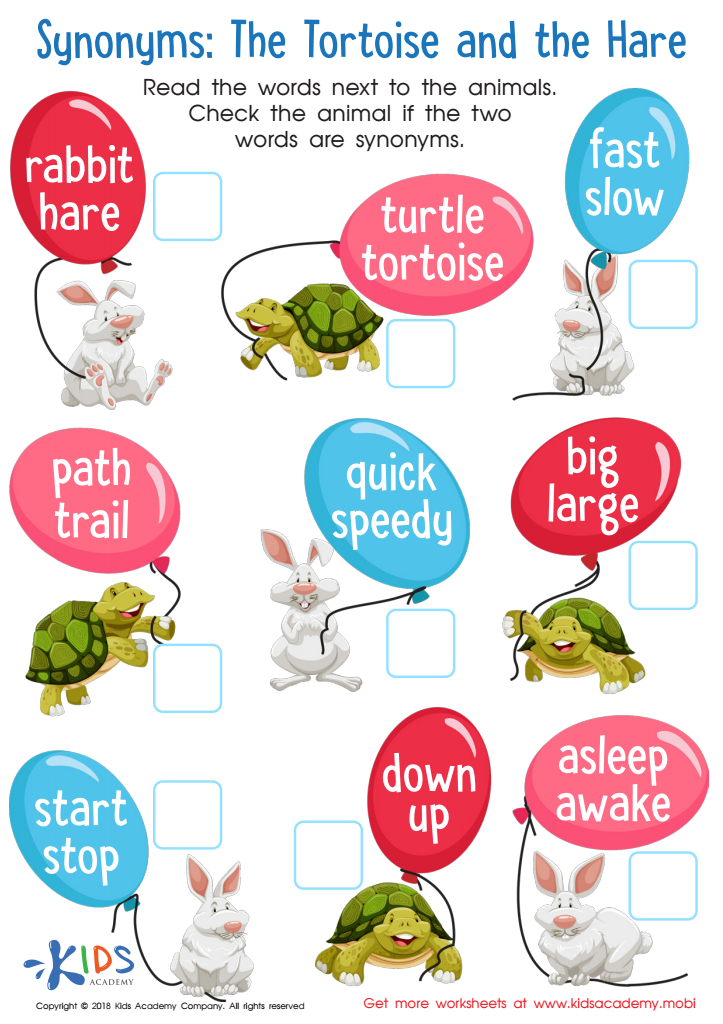
Synonyms: The Tortoise and Hare Worksheet
Help your kids identify words with similar meanings with this worksheet featuring a colourful picture of the Tortoise and the Hare. Show them how to check the boxes of animals with words that have similar meaning, then let them find more on their own. They'll love the challenge and you'll appreciate the educational value.
Synonyms: The Tortoise and Hare Worksheet
Worksheet
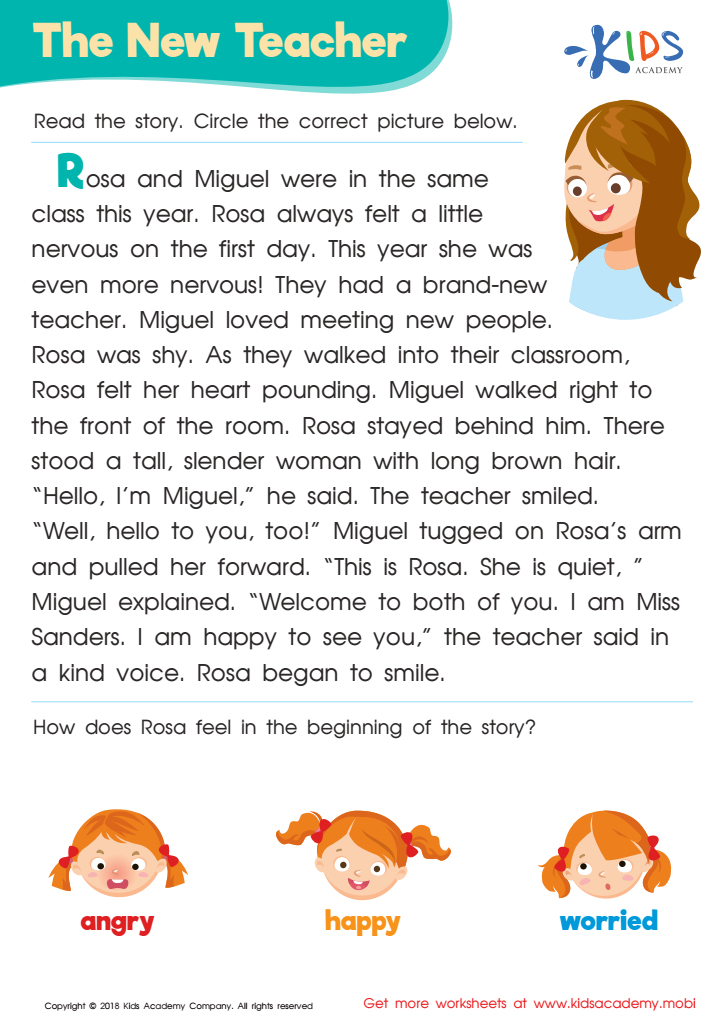
The New Teacher Worksheet
Encourage your kids to write their own short story before doing this exercise. It's about Rosa and Miguel on their first day of school, meeting their teacher. Read the story aloud and ask them to focus on Rosa's feelings. Then, help them circle the correct picture for the question.
The New Teacher Worksheet
Worksheet
Join Kids Academy for Free
Who is primarily going to use this learning content?