Easy Word Problems Worksheets for Ages 6-8 - Page 2
44 filtered results
-
From - To
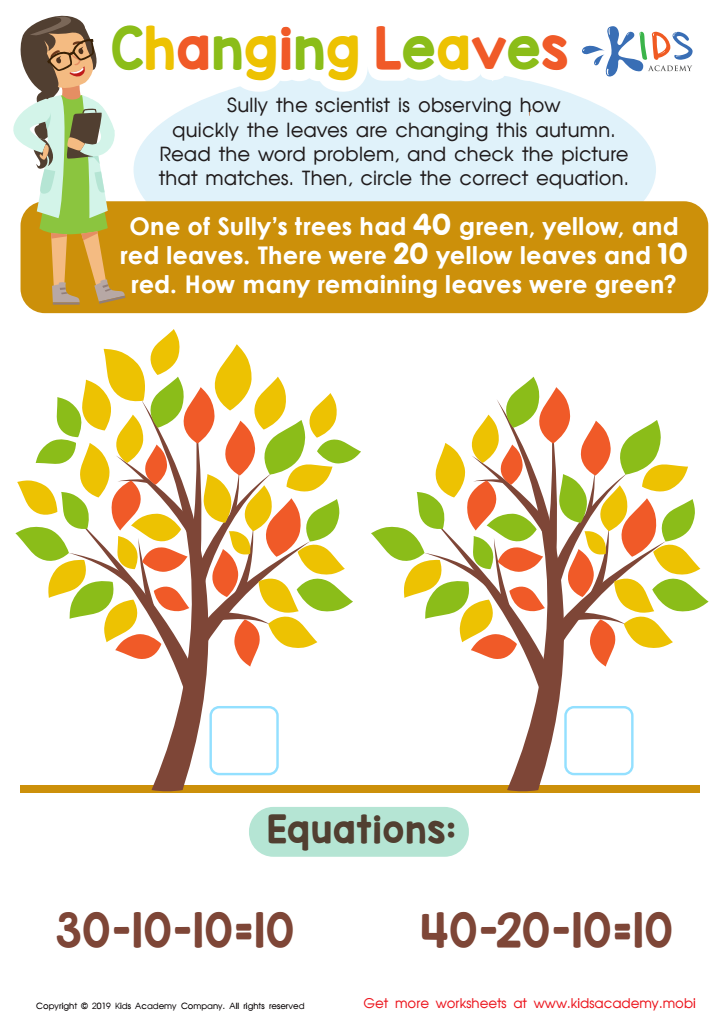
Changing Leaves Worksheet
 Assign to My Students
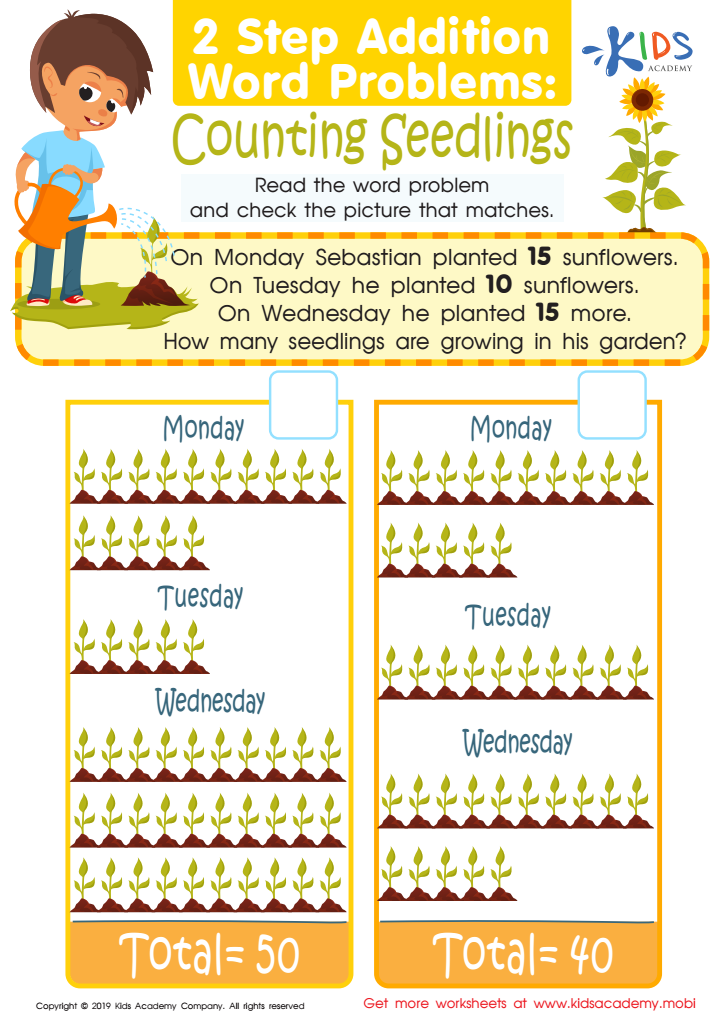
Counting Seedlings Worksheet
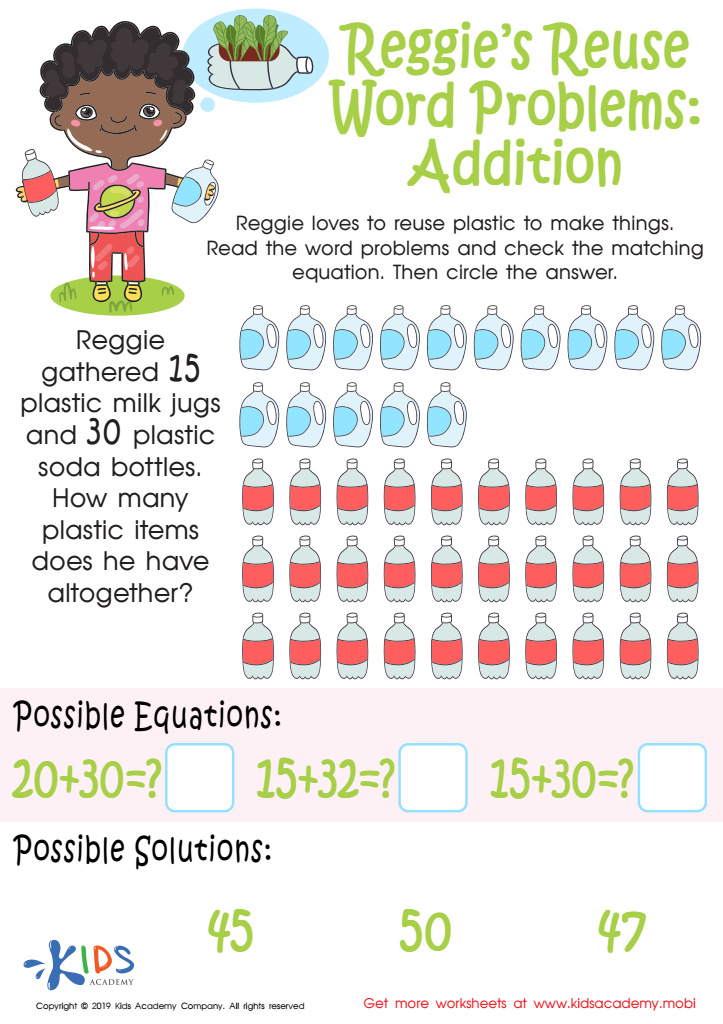
Reggie's Reuse Word Problems: Addition Worksheet
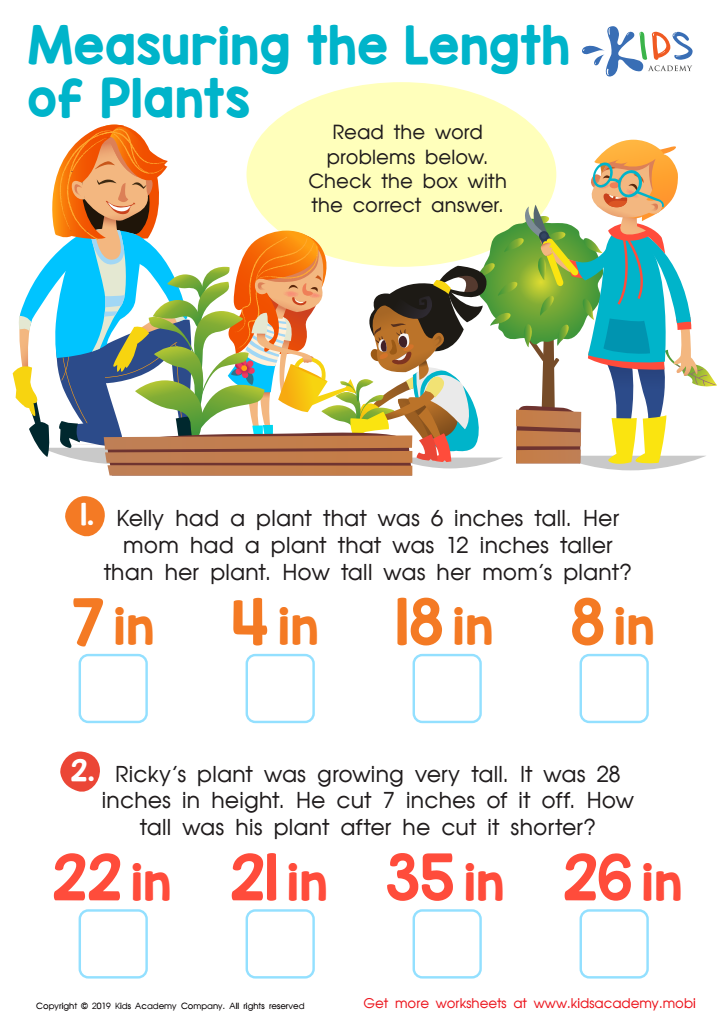
Measuring the Length of Plants Worksheet
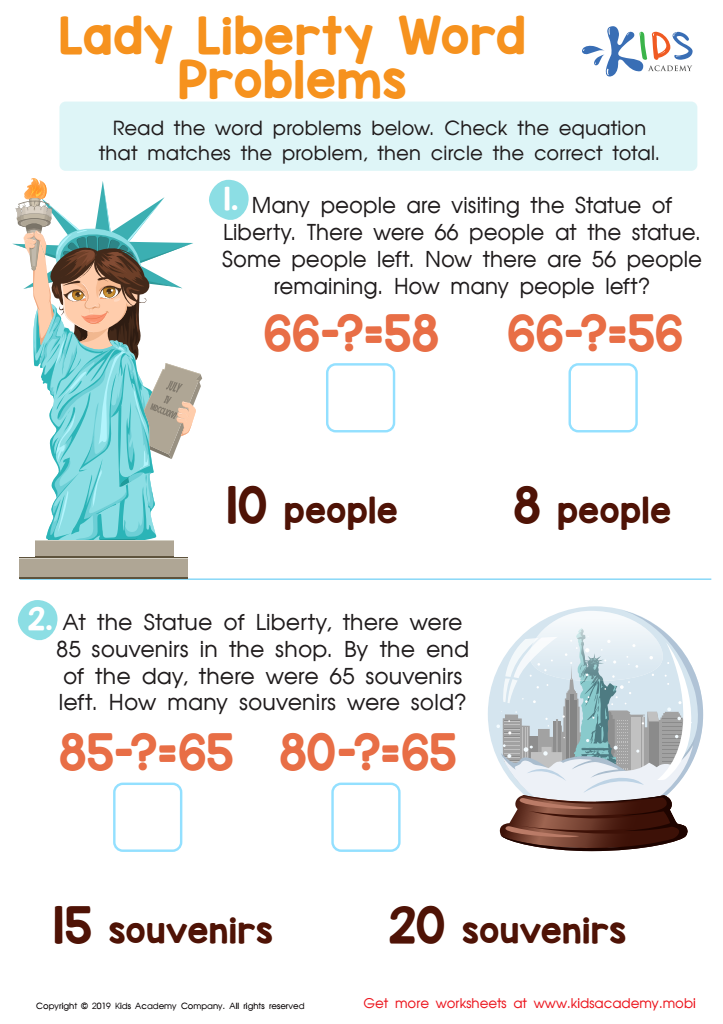
Lady Liberty Worksheet
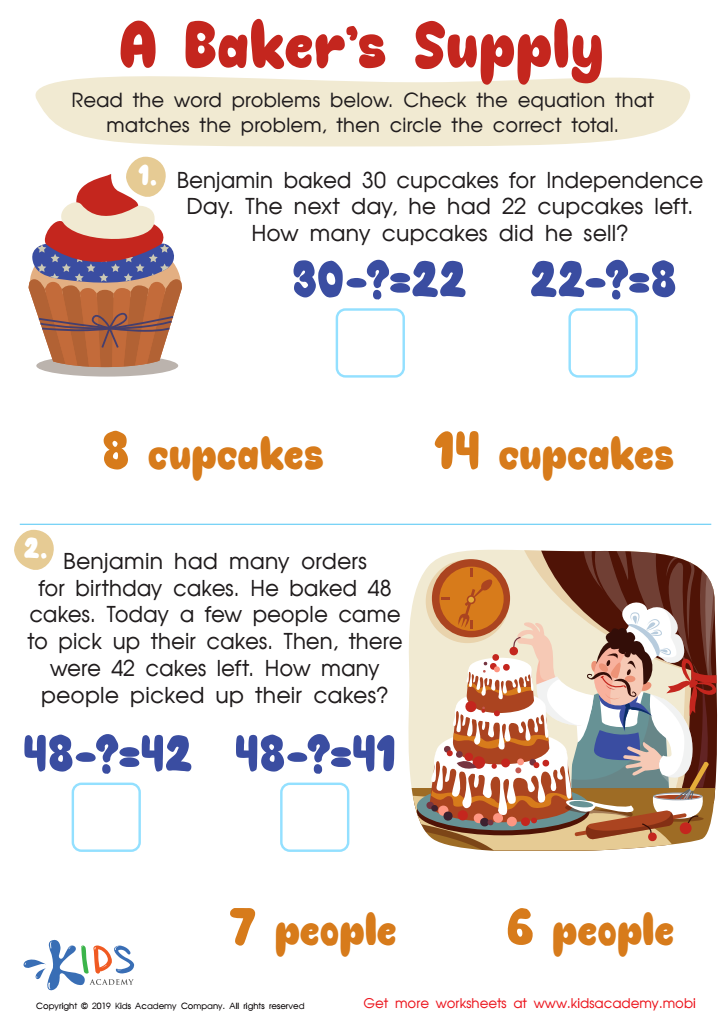
A Baker's Supply Worksheet
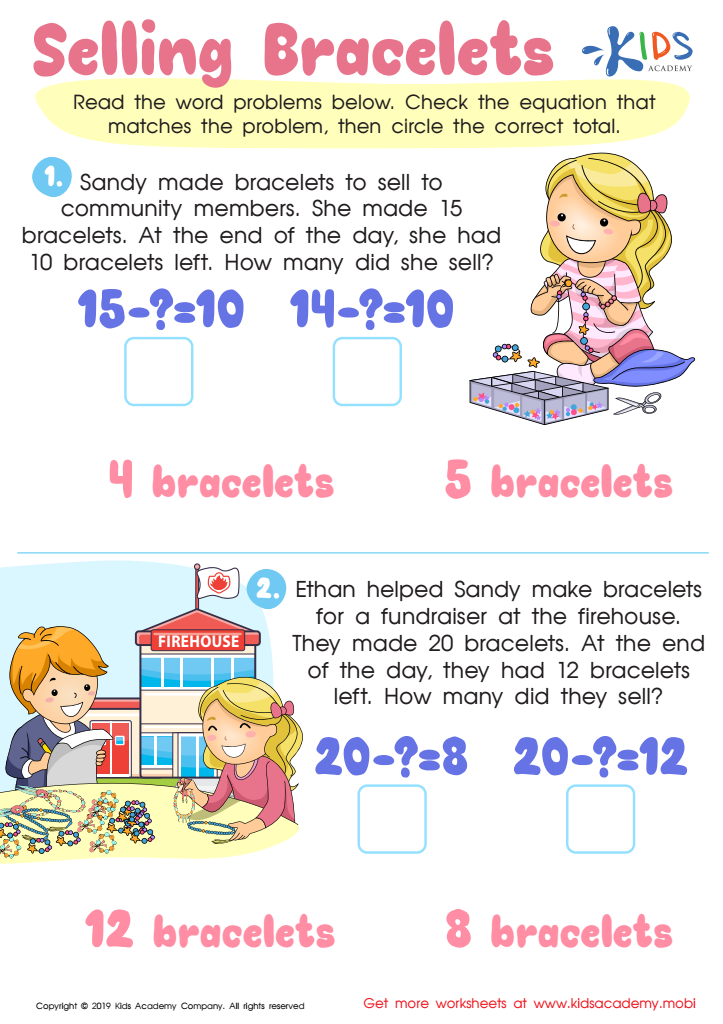
Selling the Bracelets Worksheet
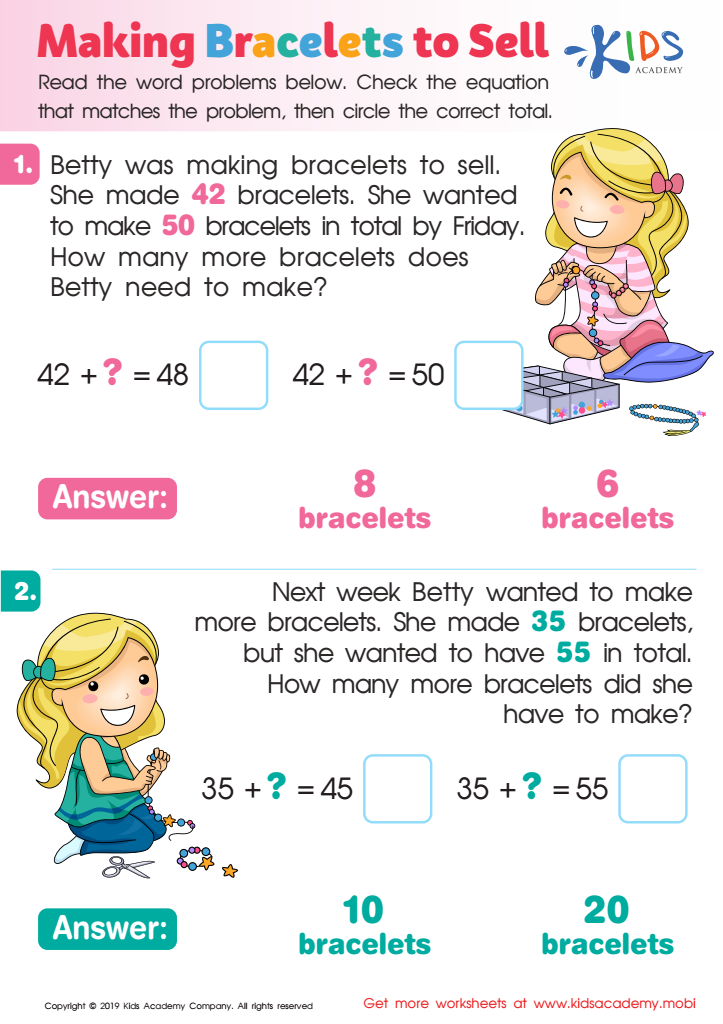
Making Bracelets to Sell Worksheet
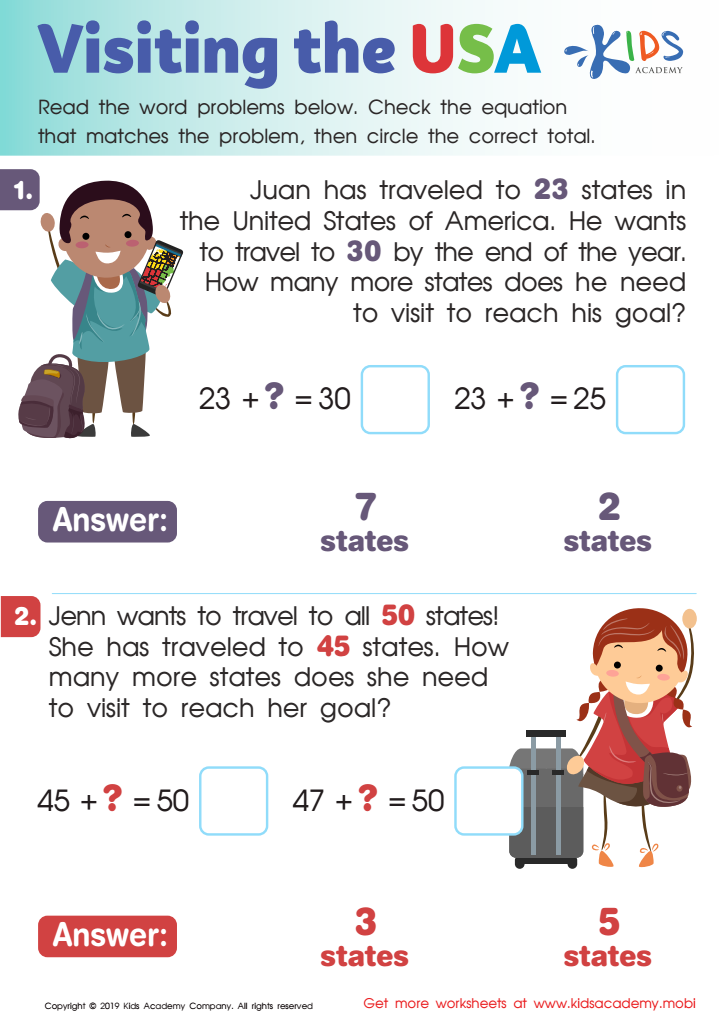
Visiting the USA Worksheet
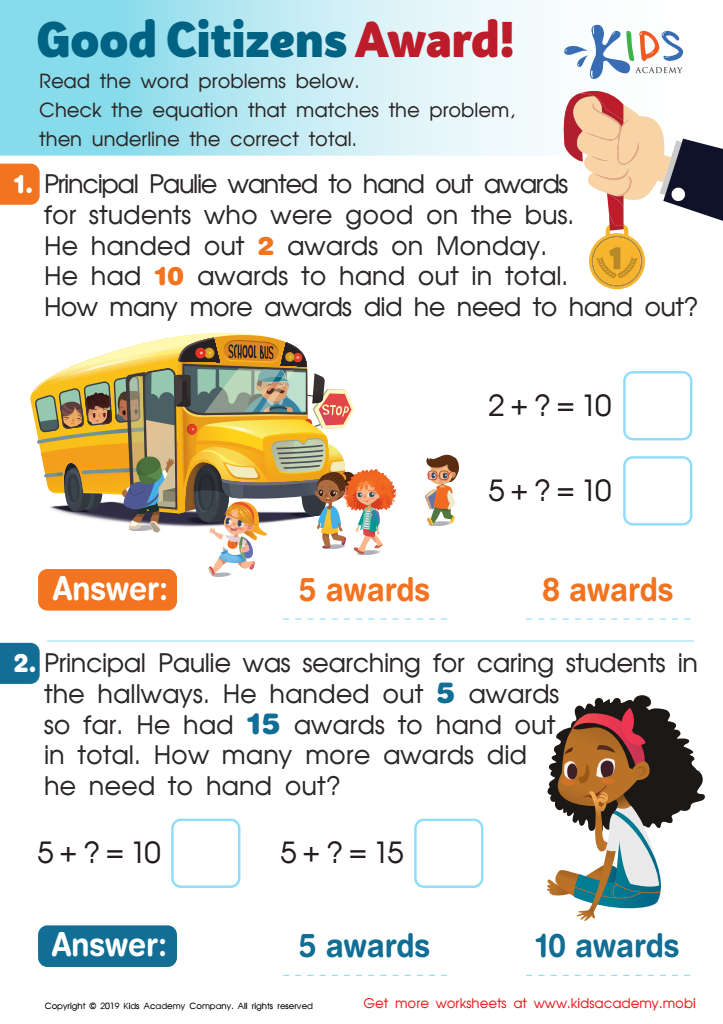
Good Citizens Award! Worksheet
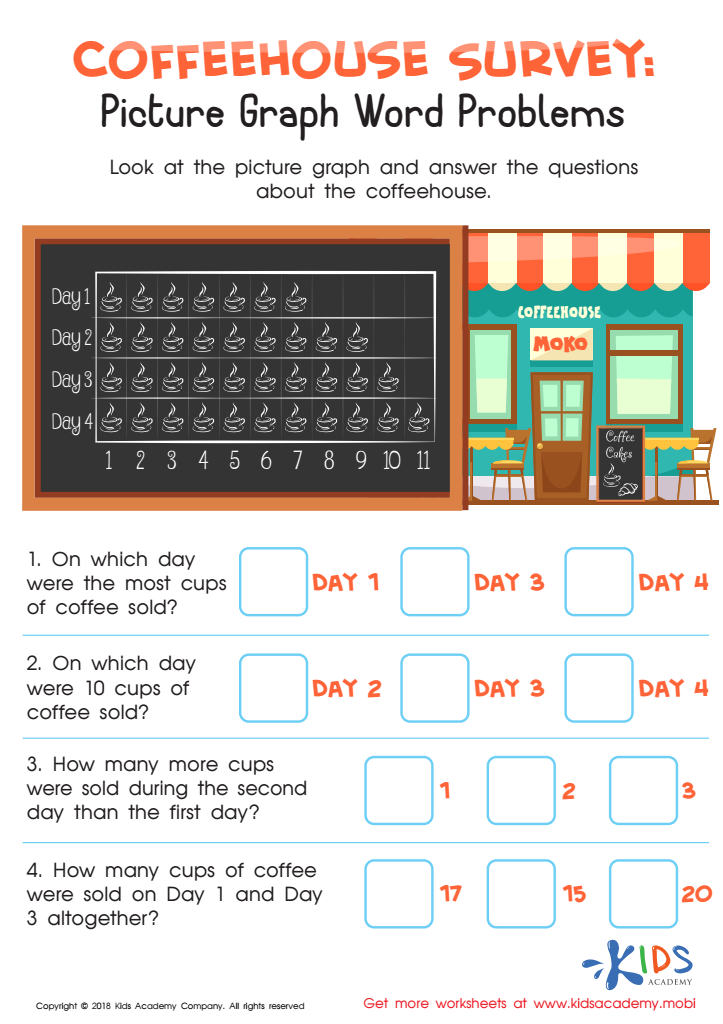
Coffeehouse Survey: Picture Graph Word Problems Worksheet
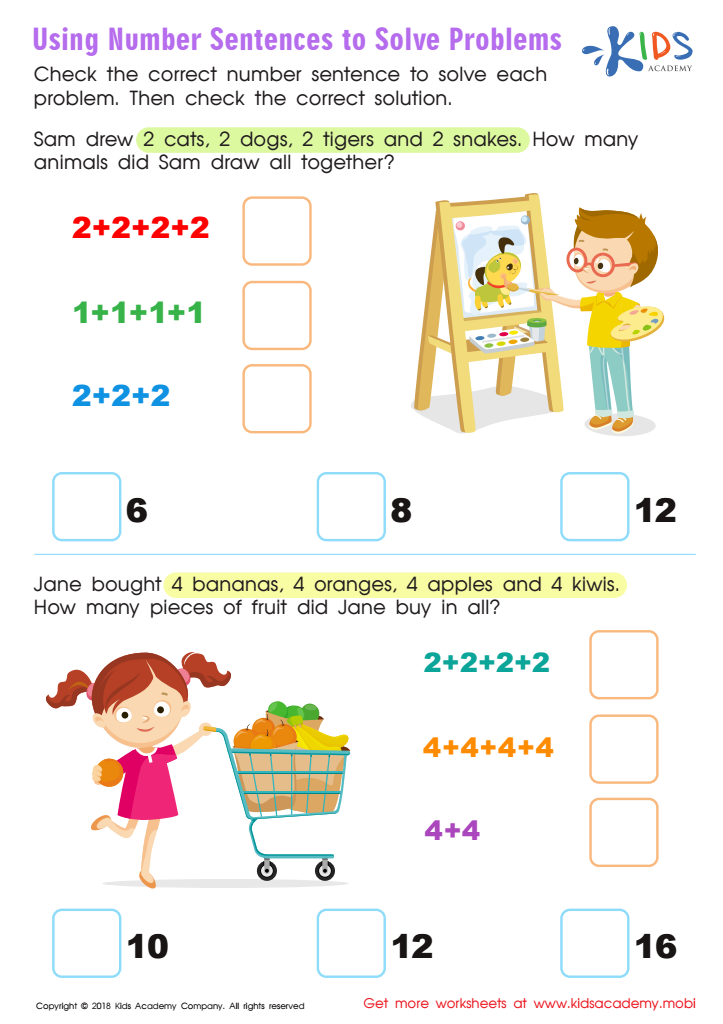
Using Number Sentences to Solve Problems Worksheet
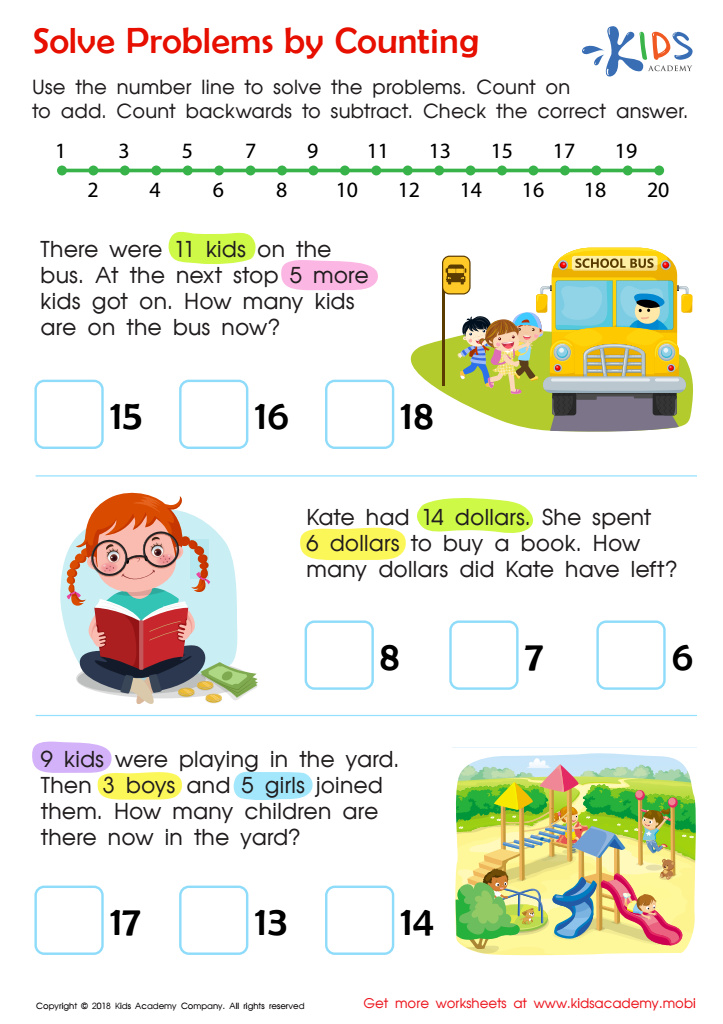
Solve Problems by Counting Worksheet
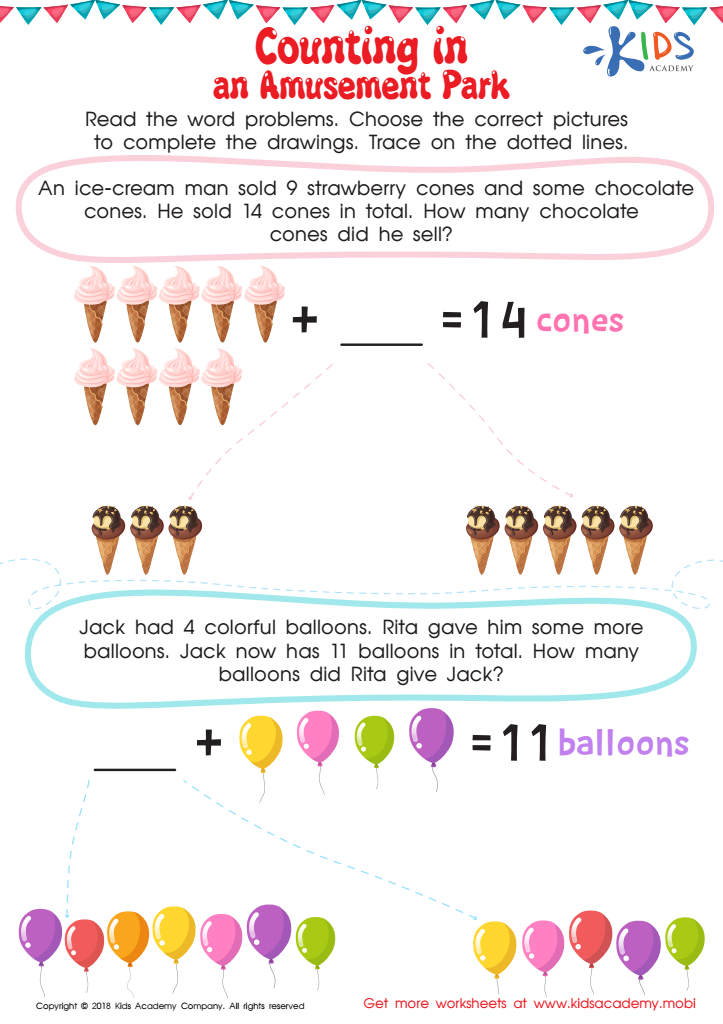
Counting in an Amusement Park Worksheet
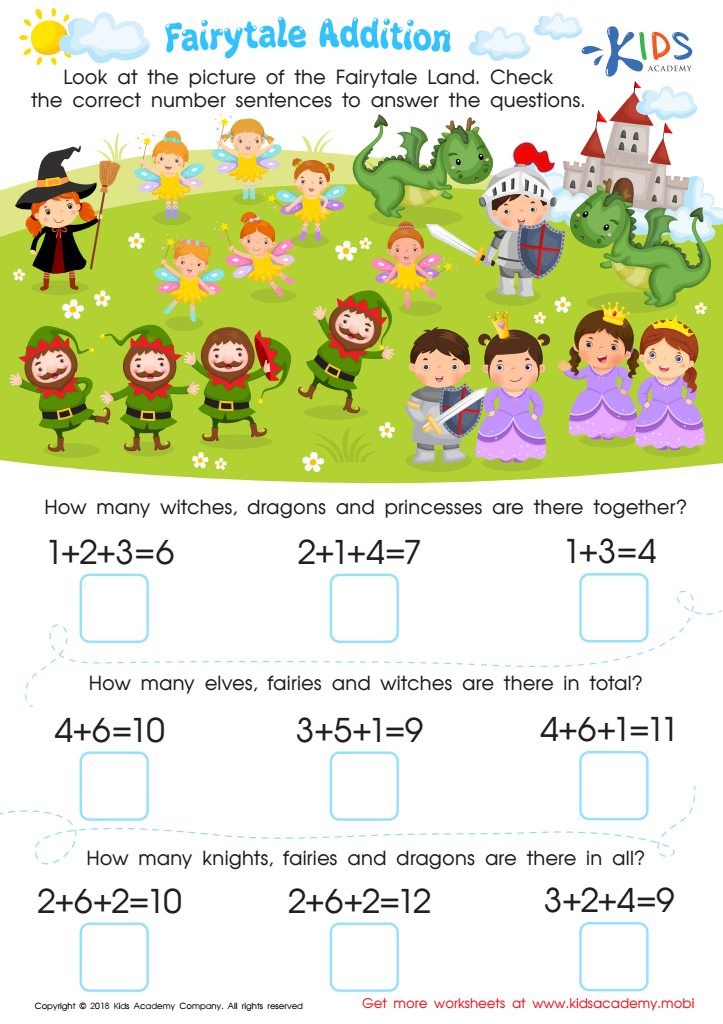
Fairytale Addition Worksheet
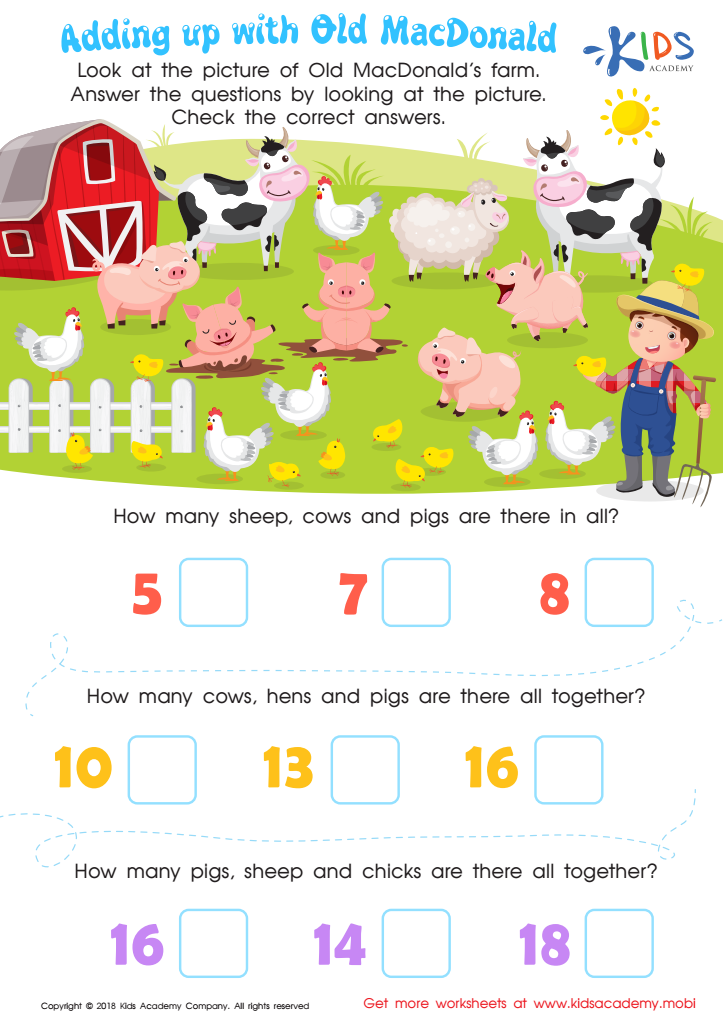
Adding Up with Old MacDonald Worksheet
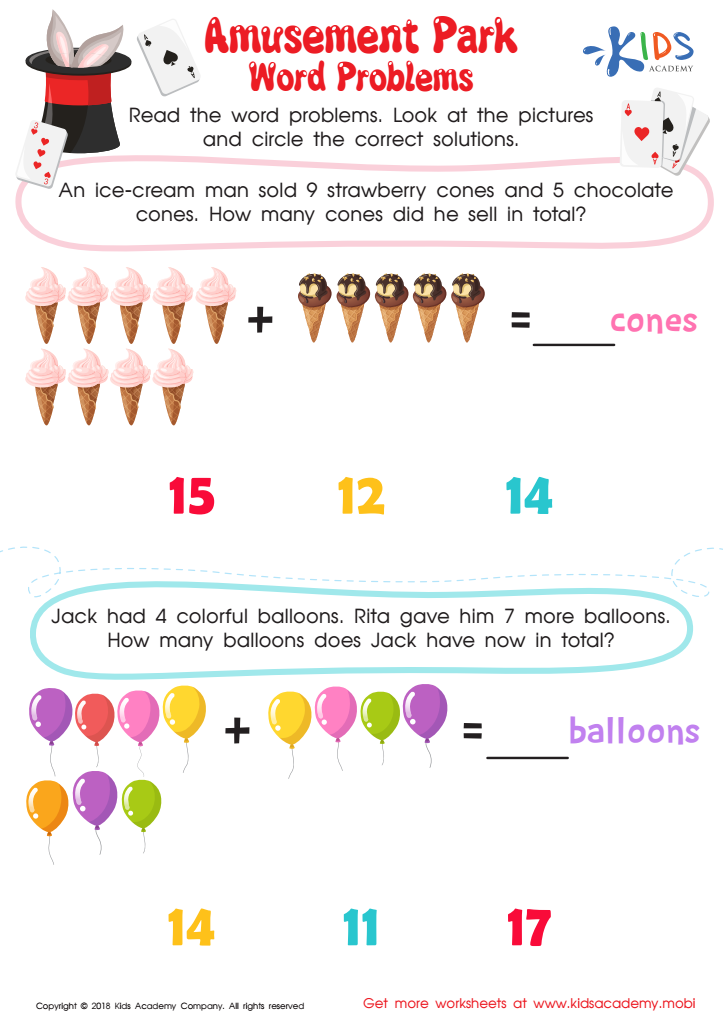
Amusement Park Word Problems Worksheet
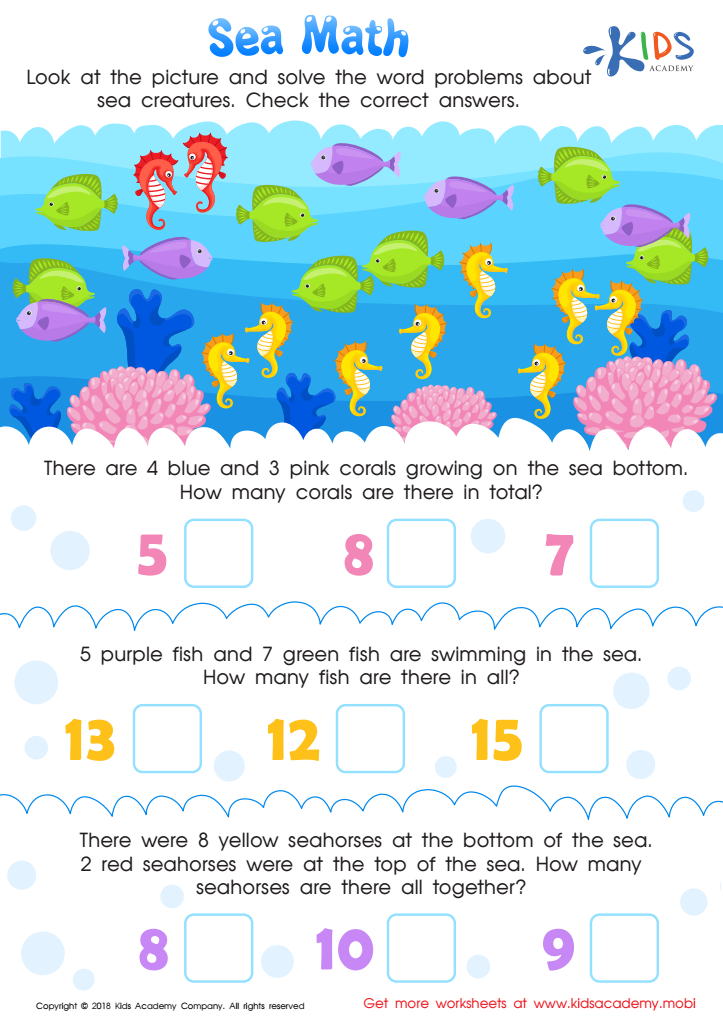
Sea Math Worksheet
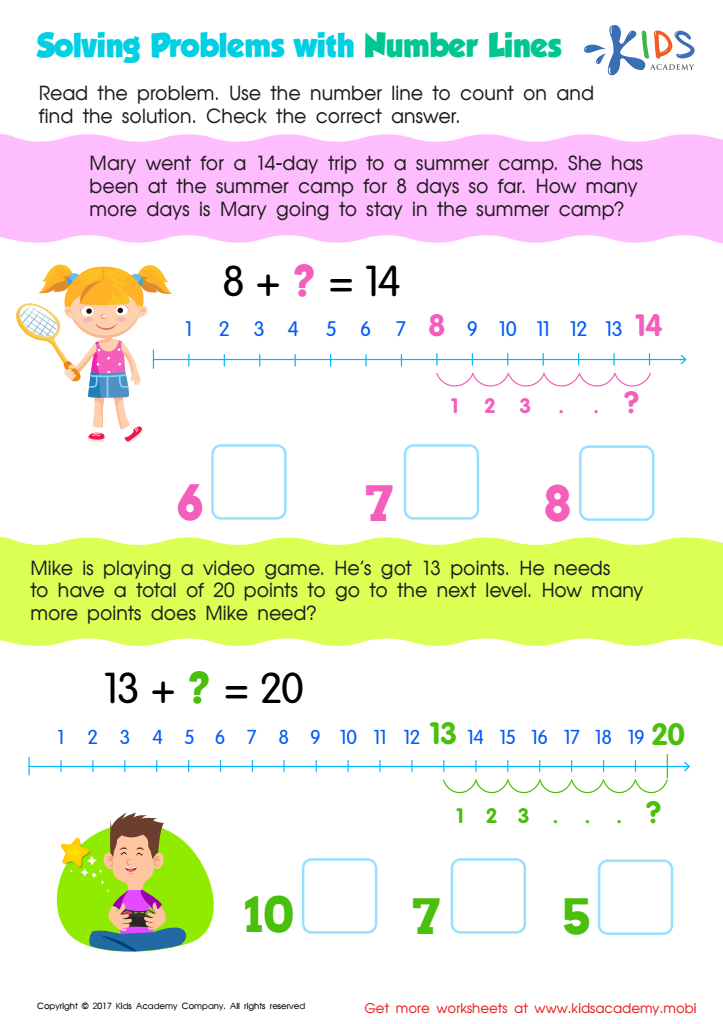
Solving Problems: Number Lines Worksheet
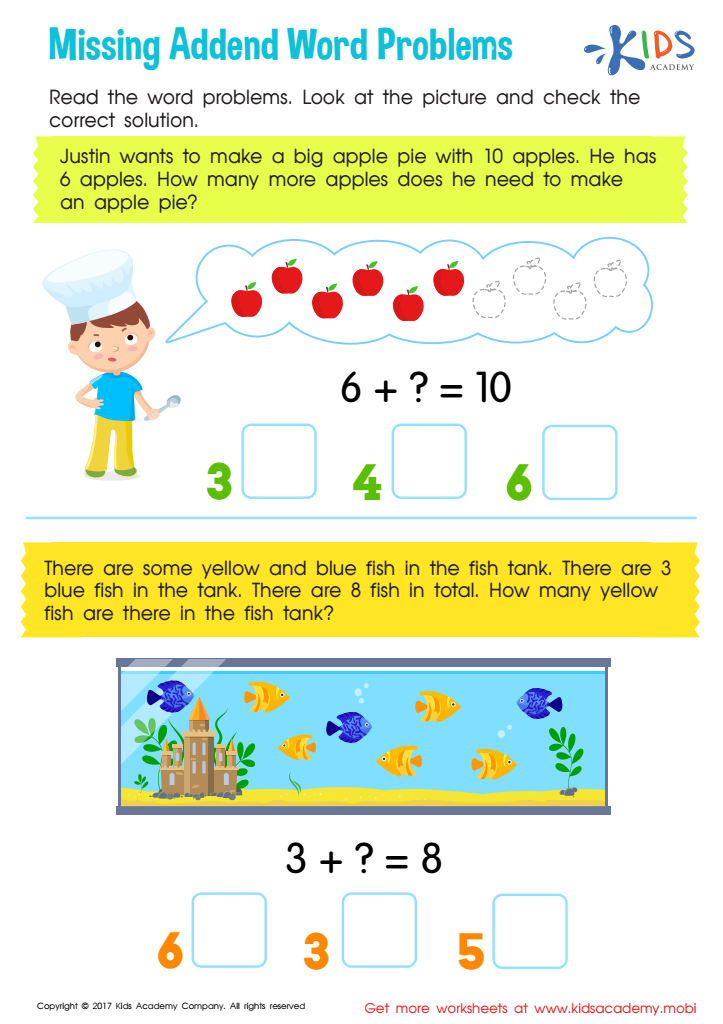
Missing Addend Word Problems Worksheet








Easy word problems for children aged 6-8 serve as essential building blocks in developing critical thinking and problem-solving skills. During these formative years, children are beginning to grasp fundamental mathematical concepts and operations. Word problems encourage them to apply their knowledge in real-world contexts, making math relatable and engaging. By decoding stories and situations presented in these problems, students learn how to extract relevant information, which is crucial not just for math but for comprehension across subjects.
Moreover, these activities promote language and literacy skills, as students must read and understand the problem before applying math solutions. This dual focus fosters a more holistic approach to learning, strengthening both their linguistic and cognitive abilities. Teachers and parents should also observe how children approach difficult problems, as this can reveal areas where they may need additional support or encouragement.
Finally, positive experiences with easy word problems can build confidence in young learners, encouraging a growth mindset and a love of mathematics. Ensuring that children engage with these activities regularly helps them become more adept at tackling increasingly complex challenges in the future, both in academics and everyday life. This investment in their early education lays the foundation for lifelong learning.








