Normal Consonant Digraphs Worksheets for Ages 3-6
13 filtered results
-
From - To
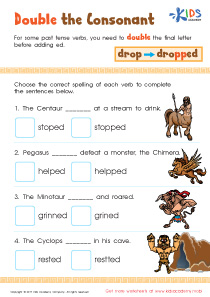
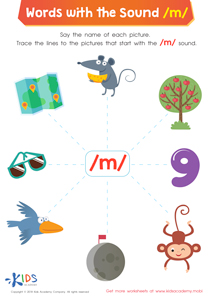
Discover our engaging Normal Consonant Digraphs Worksheets designed for children ages 3-6! These interactive resources help young learners develop essential phonics skills by focusing on consonant digraphs—two letters that create a single sound, like "sh" in "ship" or "ch" in "chick." Each worksheet features colorful illustrations and fun exercises that make learning enjoyable and effective. Children will enhance their reading and writing abilities while exploring words with digraphs. Perfect for at-home practice or classroom activities, our worksheets provide a solid foundation for early literacy. Get started today and watch your child's confidence in language grow!
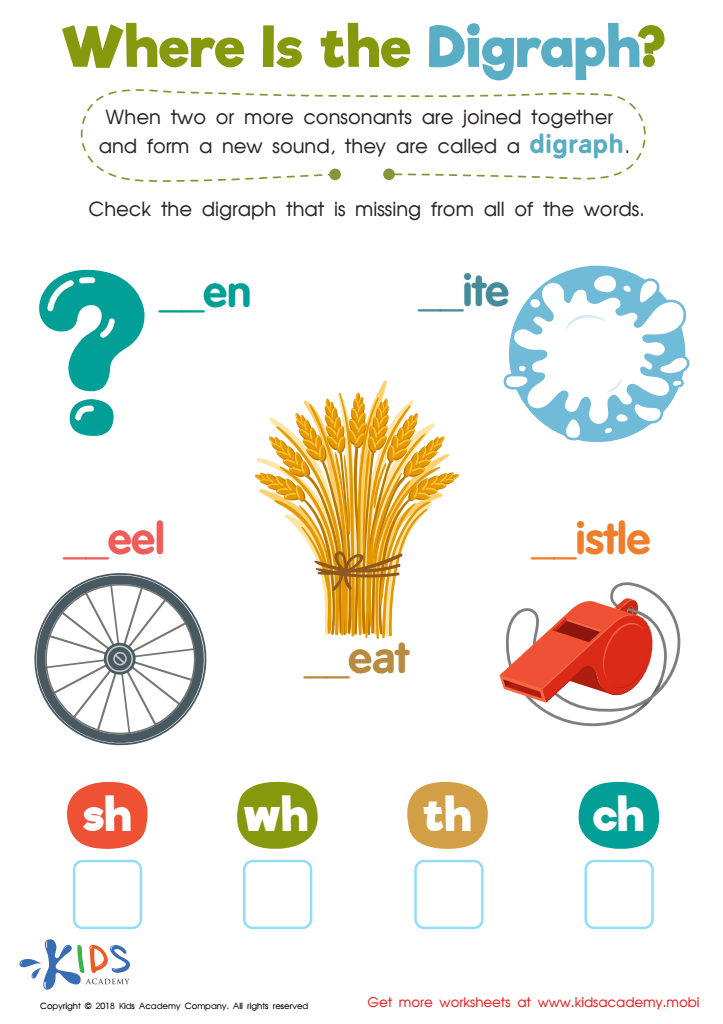
Where Is the Digraph? Worksheet
 Assign to My Students
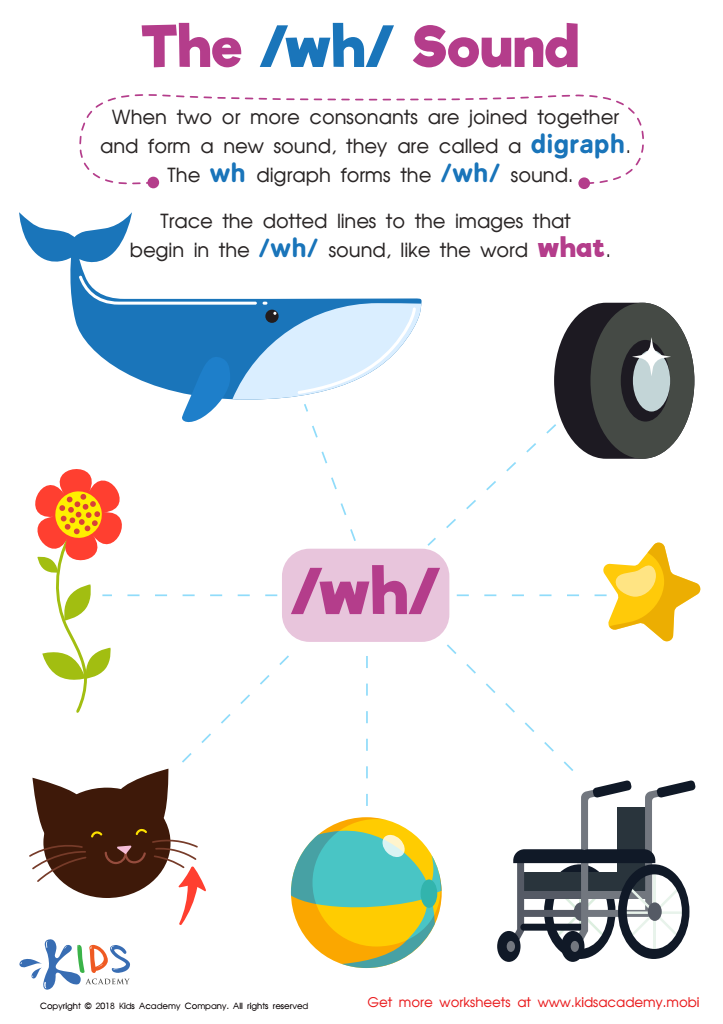
The /wh/ Sound Worksheet
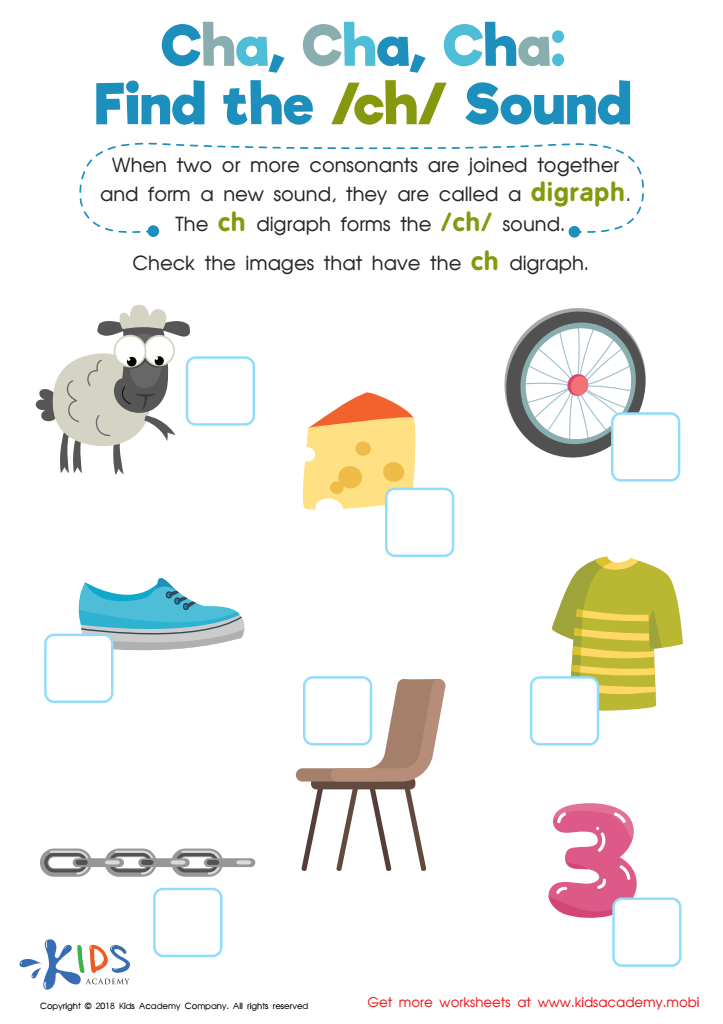
Cha, Cha, Cha: Find the /Ch/ Sound Worksheet
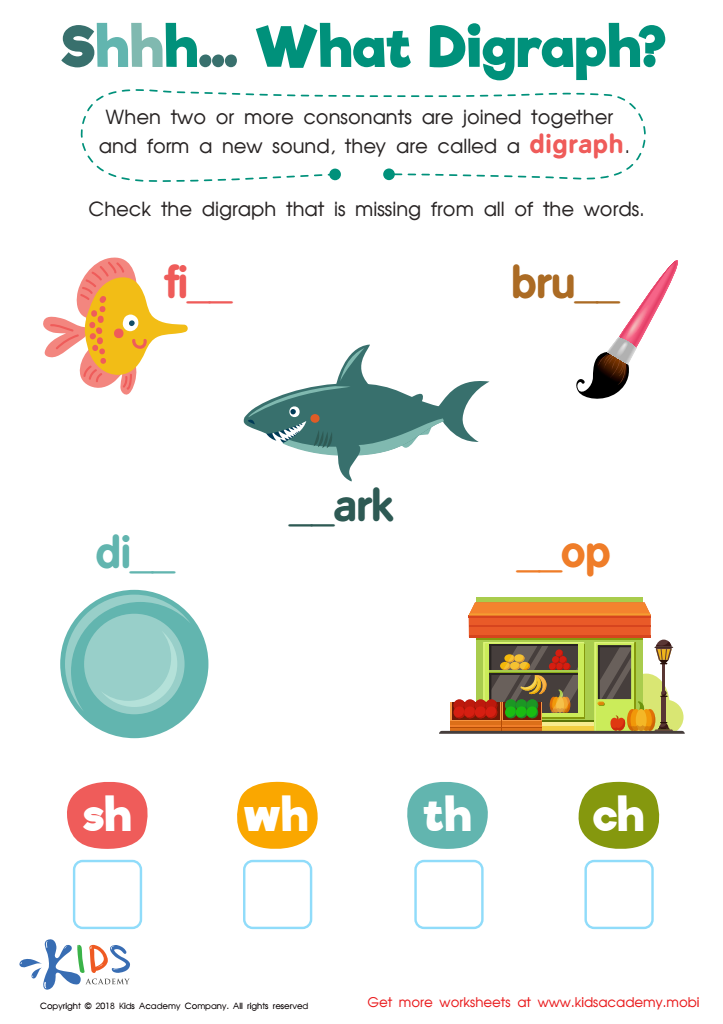
Shhh... What Digraph? Worksheet
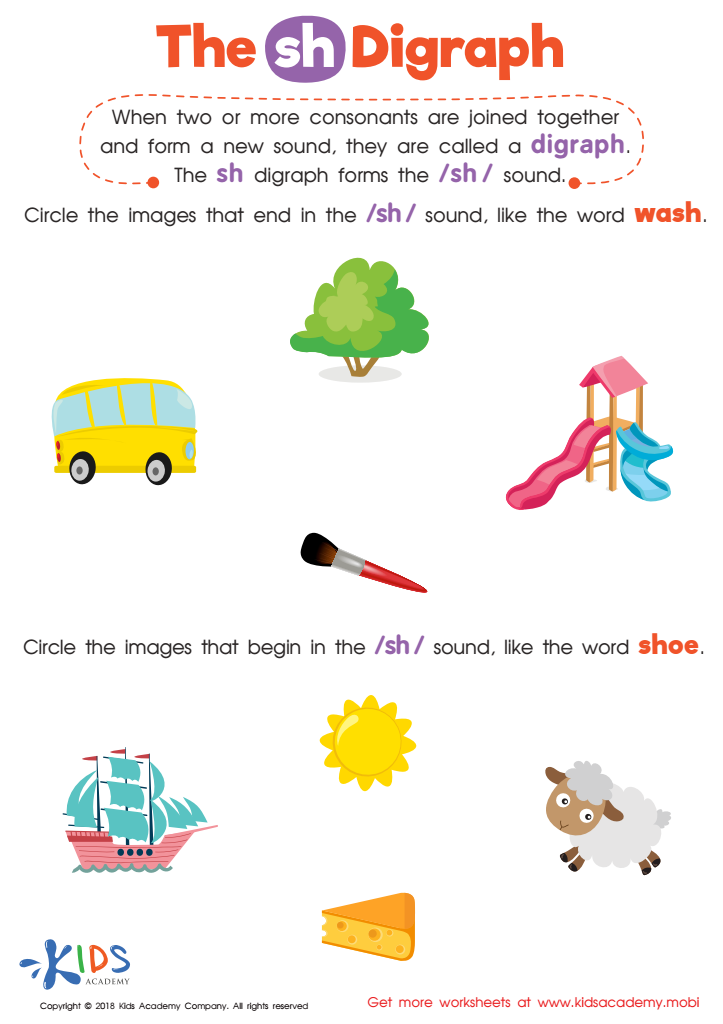
The SH Digraph Worksheet
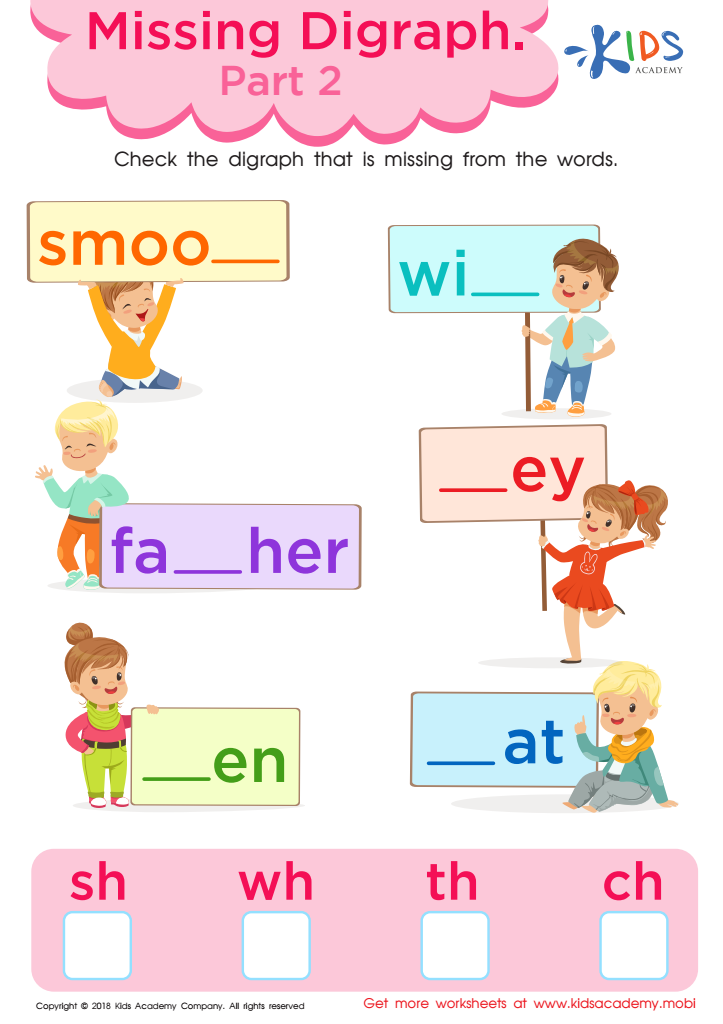
Missing Digraph: Part 2 Worksheet
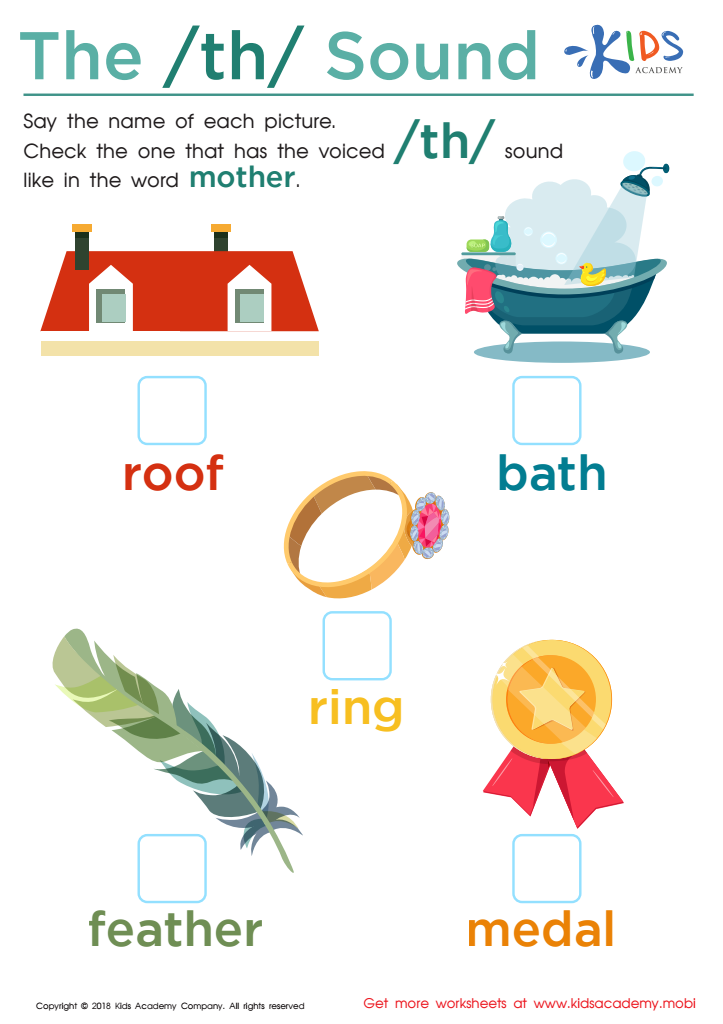
The /th/ Sound Worksheet
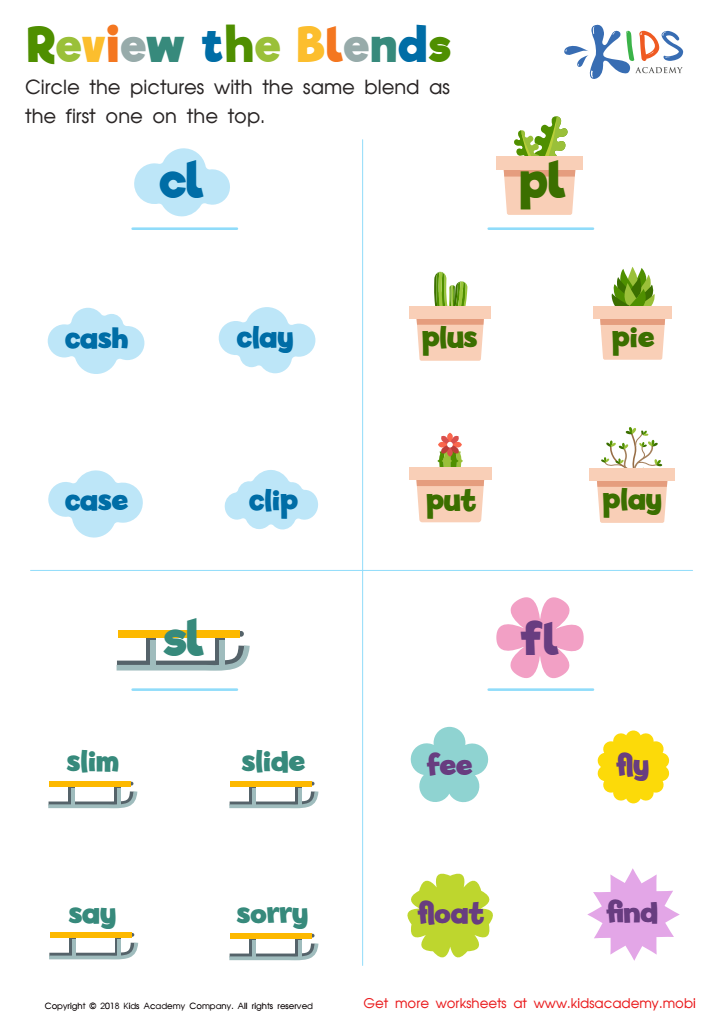
Review the Blends Worksheet
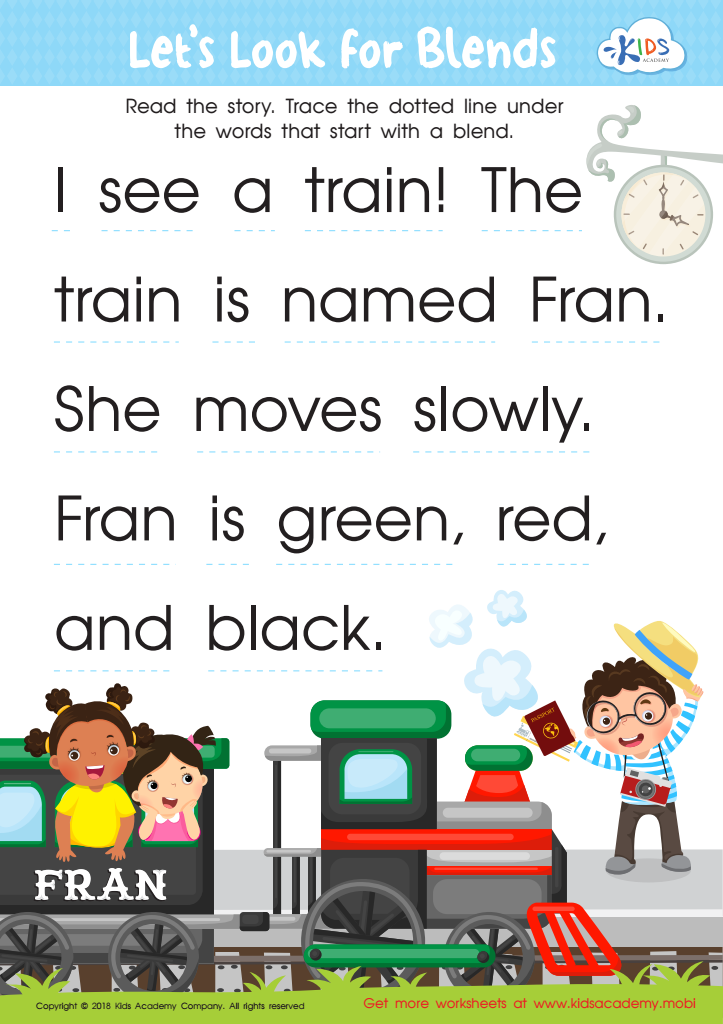
Let's Look for Blends Worksheet
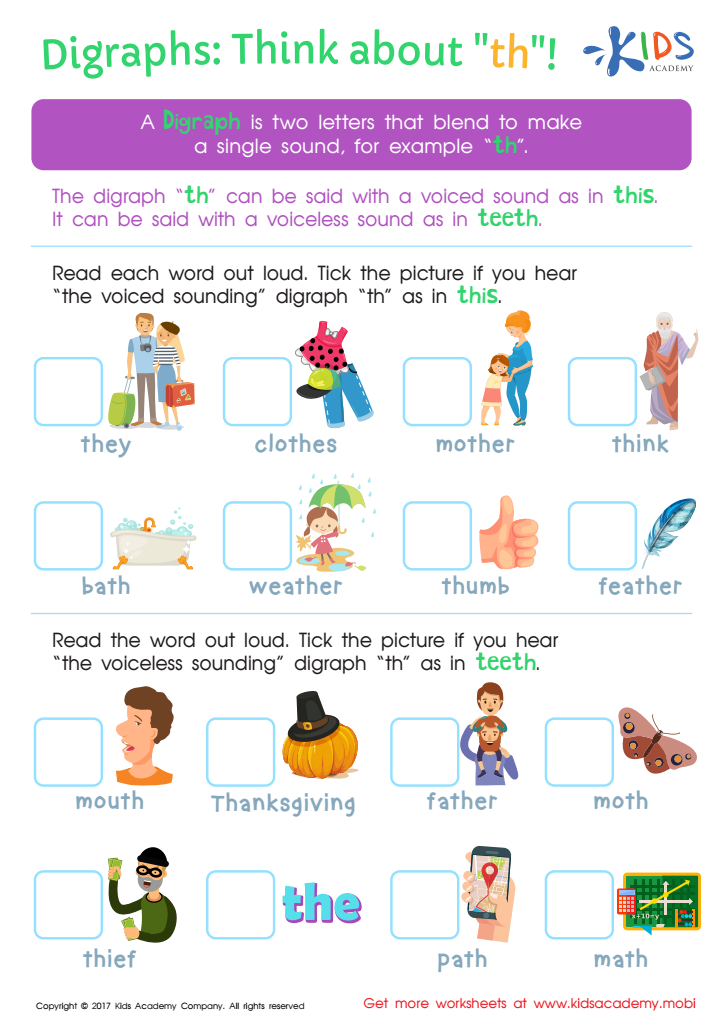
Digraphs: Think About "th" Worksheet
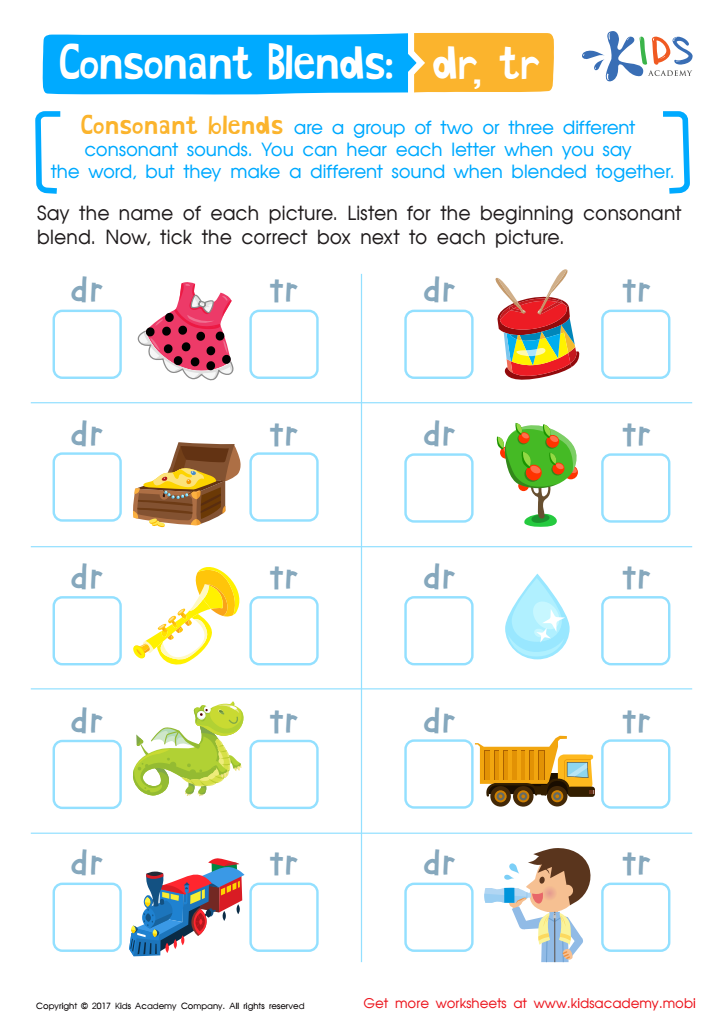
Consonant Blends: "Dr" and "Tr" Printable
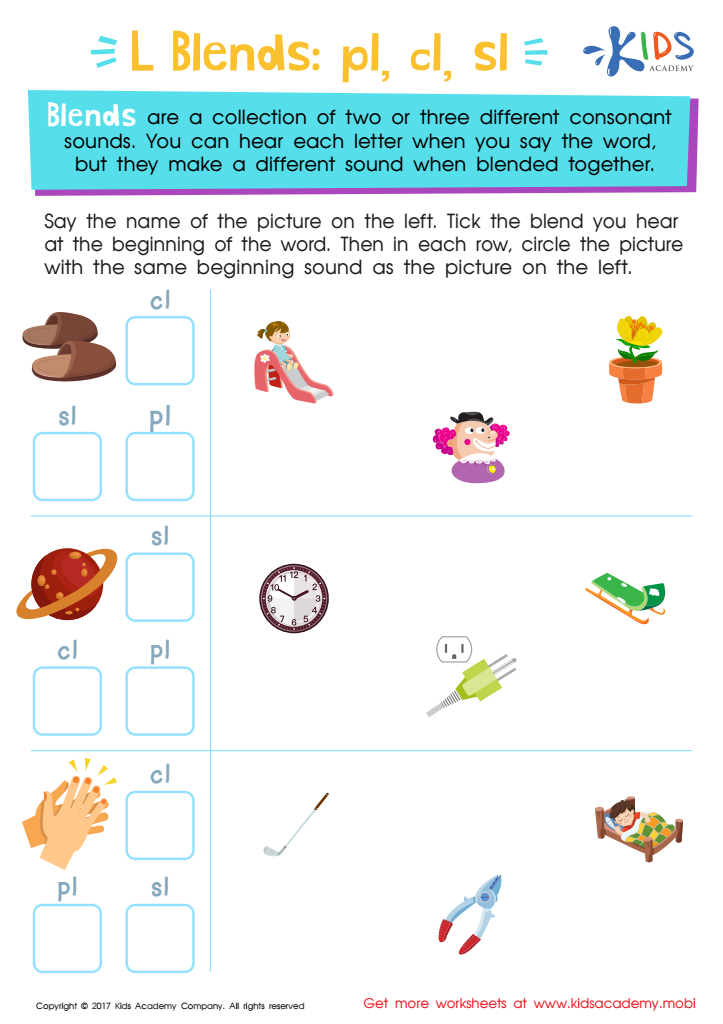
L Blends: "Pl", "Cl" and "Sl" Printable
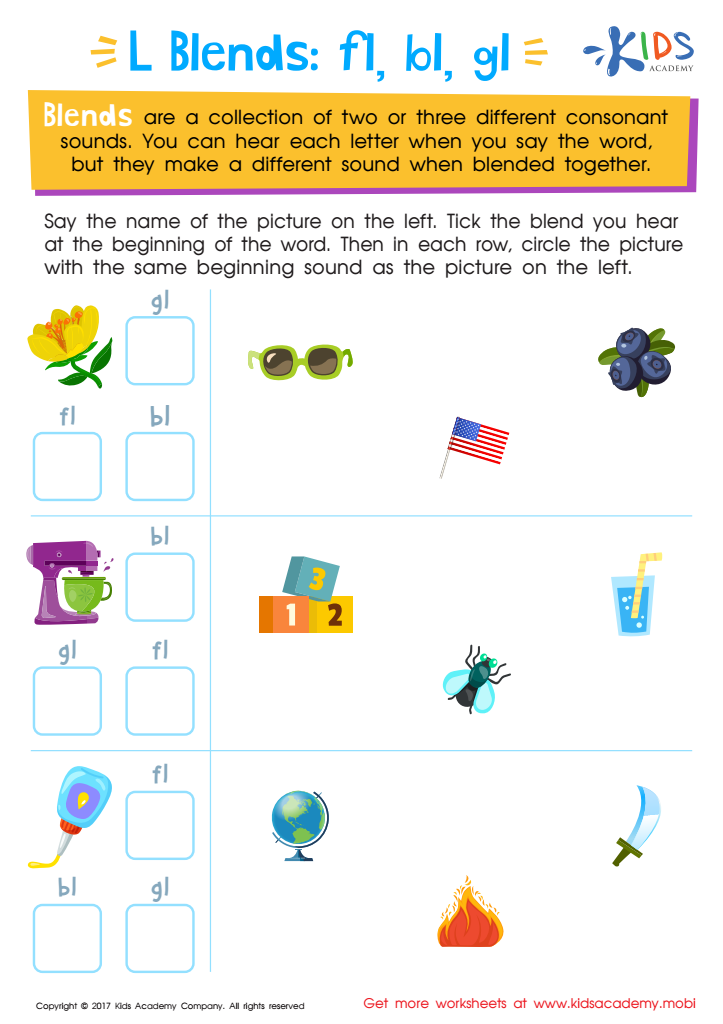
Blending Consonants: "Fl", "Bl" and "Gl" Printable


Normal consonant digraphs, such as "ch," "sh," "th," and "wh," are important for young children's literacy development from ages 3 to 6. Parents and teachers should care about these digraphs because they play a critical role in helping children build a strong foundation in phonemic awareness, an essential skill for reading and writing.
Understanding consonant digraphs is fundamental in enabling children to decode words effectively. When children learn that certain combinations of letters produce distinct sounds, they can better tackle unfamiliar words, increasing their confidence in literacy skills. Teachers and parents can facilitate this learning through playful activities like rhyming games and storytelling, making the process enjoyable and interactive.
Digraphs also enhance vocabulary expansion, as awareness of these combinations allows children to encounter a greater range of words in their reading and daily interactions. Engaging with consonant digraphs early on can straighten the path toward proficient reading later, giving children the tools they need to succeed academically.
Moreover, fostering a strong understanding of these phonetic components currently promotes critical thinking and problem-solving skills, vital for overall cognitive development. Thus, encouraging awareness and understanding of normal consonant digraphs is essential for parents and teachers in supporting early literacy.