Critical Thinking Normal Worksheets for Ages 3-7 - Page 2
72 filtered results
Difficulty Level
Grade
Age
-
From - To
Subject
Activity
Standards
Favorites
With answer key
Interactive
Jack and Beanstalk Worksheet
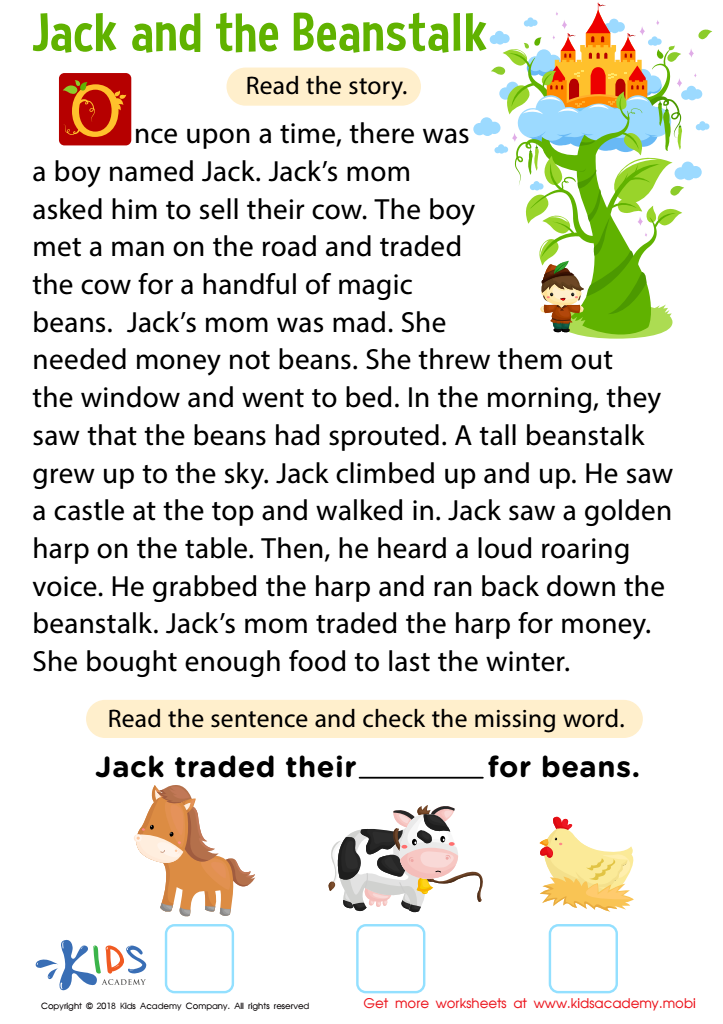
Story time can be a fun and educational experience for your kids. Read them the classic Jack and the Beanstalk - and even read it twice to help them pay attention. Afterwards, help them fill in the blank on the worksheet to expand their vocabulary and learn more from the story.
 Assign to My Students
Jack and Beanstalk Worksheet
Worksheet
Realistic Fiction: The First Day Worksheet
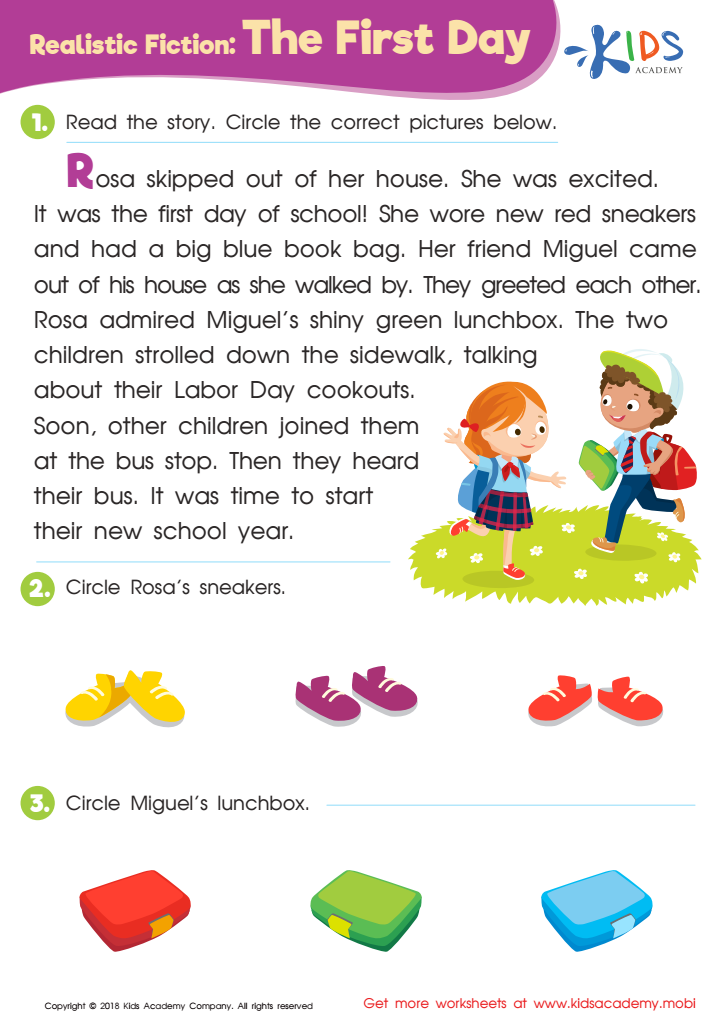
Fiction is made-up events, so story-writing is fiction writing. In this worksheet, there's a short story about Rosa, her friend Miguel, and their first day back at school. Read the story aloud to your kids and help them circle the right pictures to the questions. Repeat if needed.
Realistic Fiction: The First Day Worksheet
Worksheet
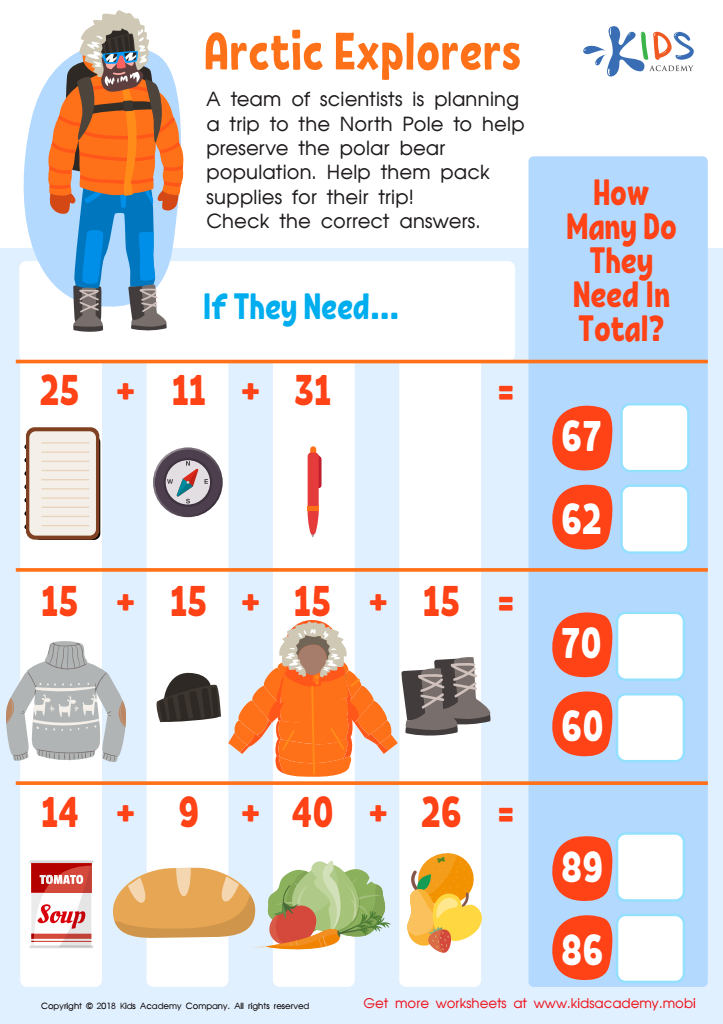
Arctic Explorers Worksheet
Help your child pack supplies for a team of scientists' trip to the North Pole! Before beginning, explain how efforts are needed to protect endangered animals like polar bears. Encourage them to check the correct clothing needed for the extremely cold region. For example, warm and protective clothing is essential.
Arctic Explorers Worksheet
Worksheet
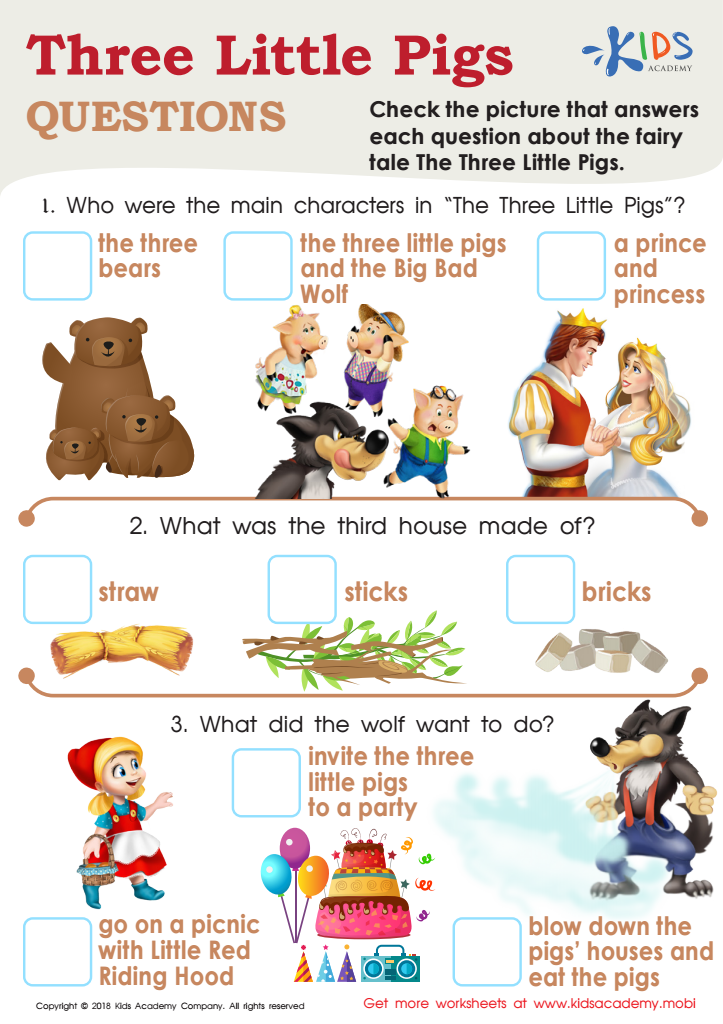
Three Little Pigs Questions Worksheet
Does your kid love bedtime stories? Test their classic fairytale knowledge with this worksheet! If they mention The Three Little Pigs, they're in luck - this pdf has them answering questions based off the classic fairytale. They'll check the picture that answers each question about the story. Is their fairytale knowledge up to scratch?
Three Little Pigs Questions Worksheet
Worksheet
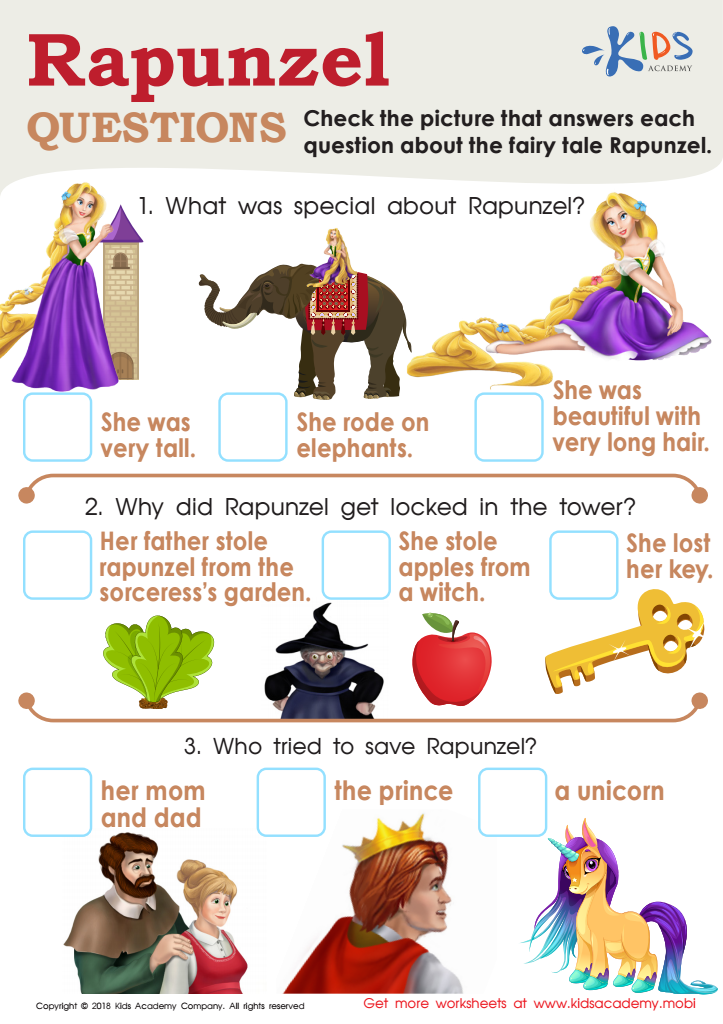
Rapunzel Questions Worksheet
Read the fairy tale 'Rapunzel' to your kids. For those who really enjoyed it, read it twice and ask questions to test their understanding. Then, get them to check the pictures related to the questions to test their comprehension of the story.
Rapunzel Questions Worksheet
Worksheet
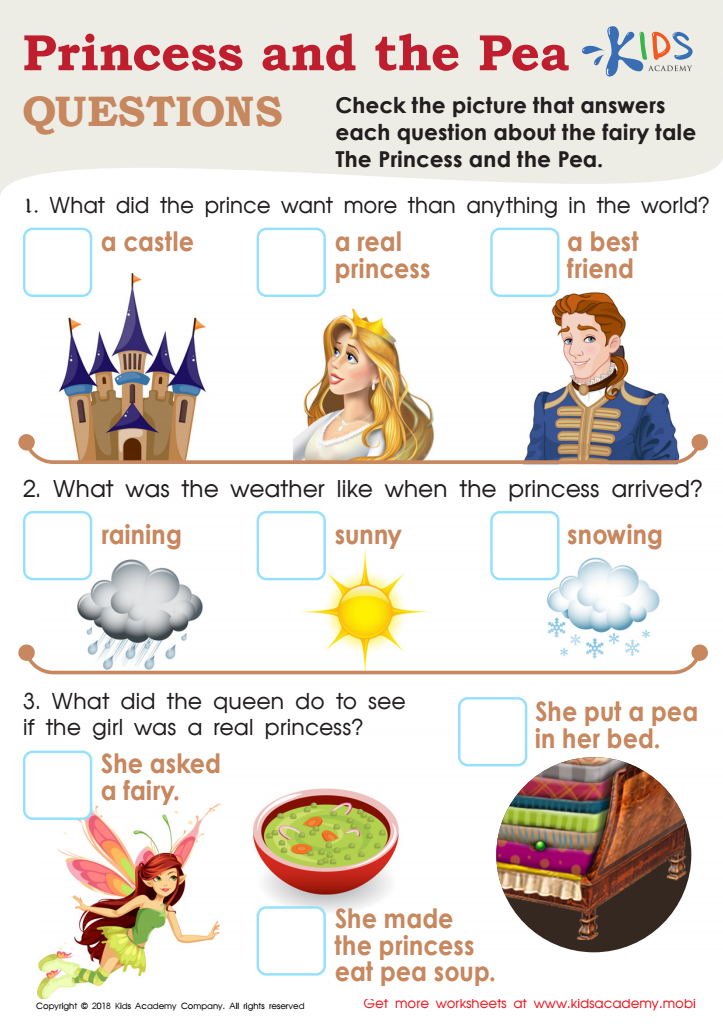
Princess and the Pea Questions Worksheet
Your kid knows The Princess and the Pea inside-out? Test their knowledge with this worksheet. Ask your little one to read the questions and match each one to the picture. It's a fun way to see just how much attention they've paid to their bedtime story.
Princess and the Pea Questions Worksheet
Worksheet
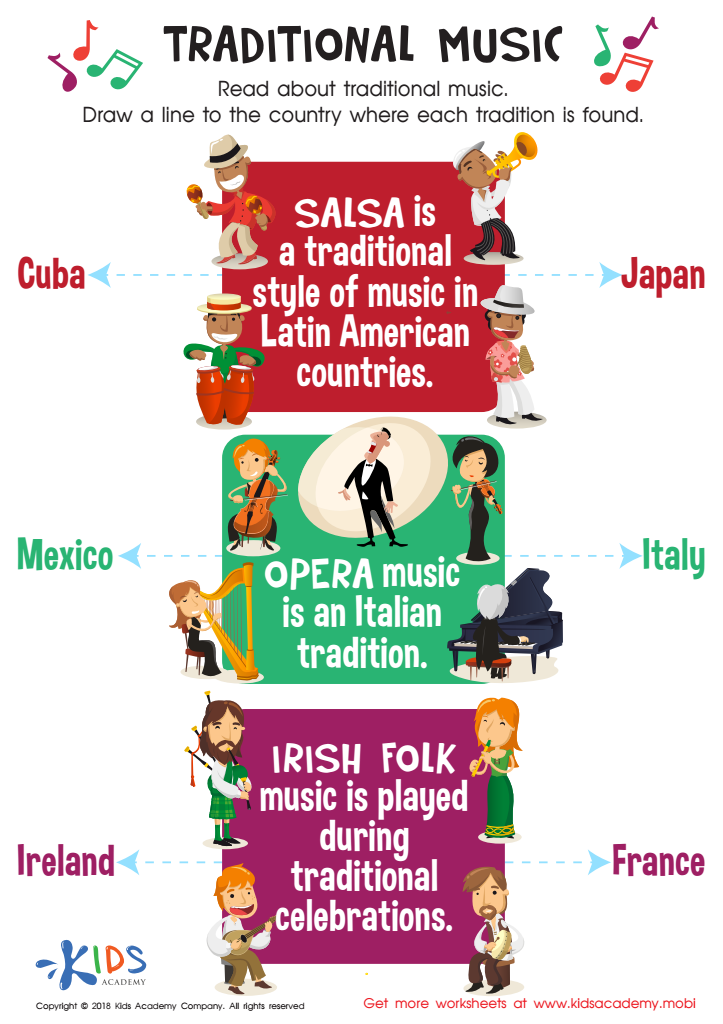
Traditional Music Worksheet
Exploring different countries' music is a great way for global learners to appreciate their place in the world. This worksheet helps them match music - like Salsa and Irish Folk - to various geographic regions with colorful visuals. It boosts reading comprehension while supporting their cultural understanding.
Traditional Music Worksheet
Worksheet
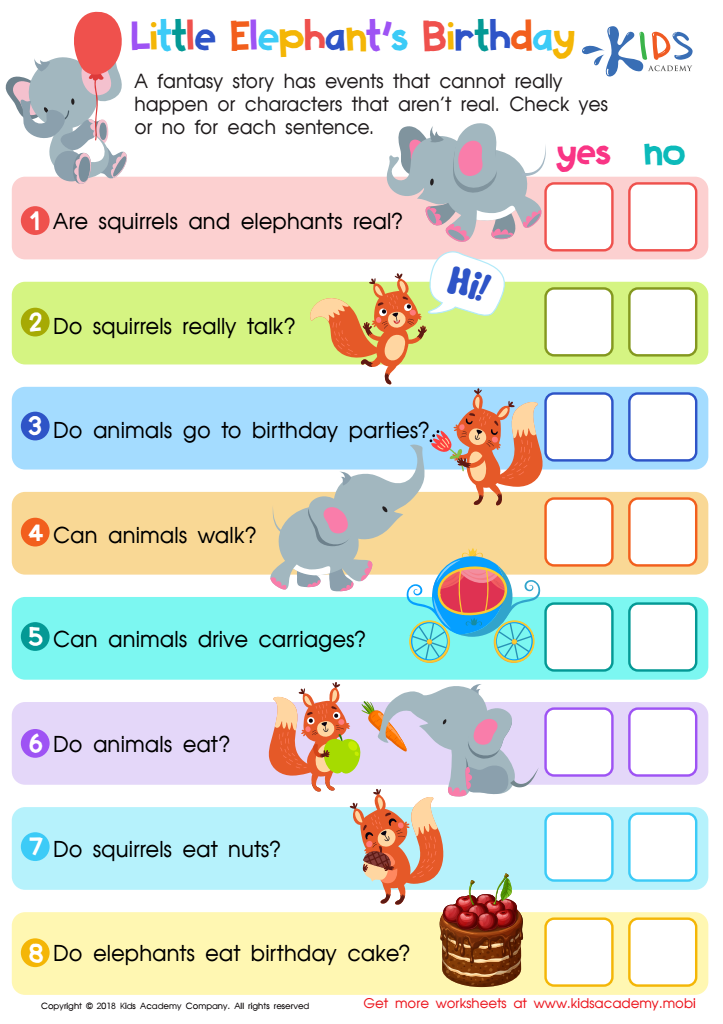
Little Elephant's Birthday Worksheet
It's Little Elephant's birthday! Help your students celebrate with this fun worksheet full of colors and pictures. Deciding which questions are facts and which are fiction will help them differentiate between fantasy stories and reality. Let them have fun learning why certain elements of fantasy can't be true!
Little Elephant's Birthday Worksheet
Worksheet
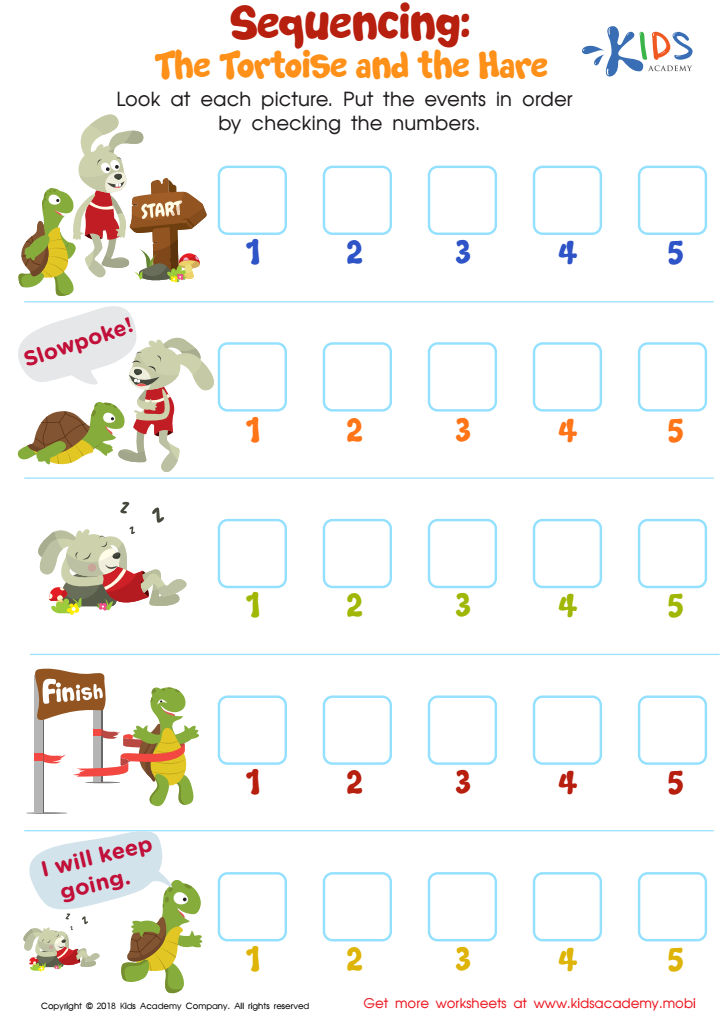
Sequencing: The Tortoise and the Hare Worksheet
Help your child become an independent reader and critical thinker with a sequencing worksheet from Kids Academy! Have them read the classic tale of the tortoise and the hare and use the accompanying worksheet to check their understanding of the story's sequence of events. Have kids identify the correct order of events by selecting the box next to the correct number for each image!
Sequencing: The Tortoise and the Hare Worksheet
Worksheet
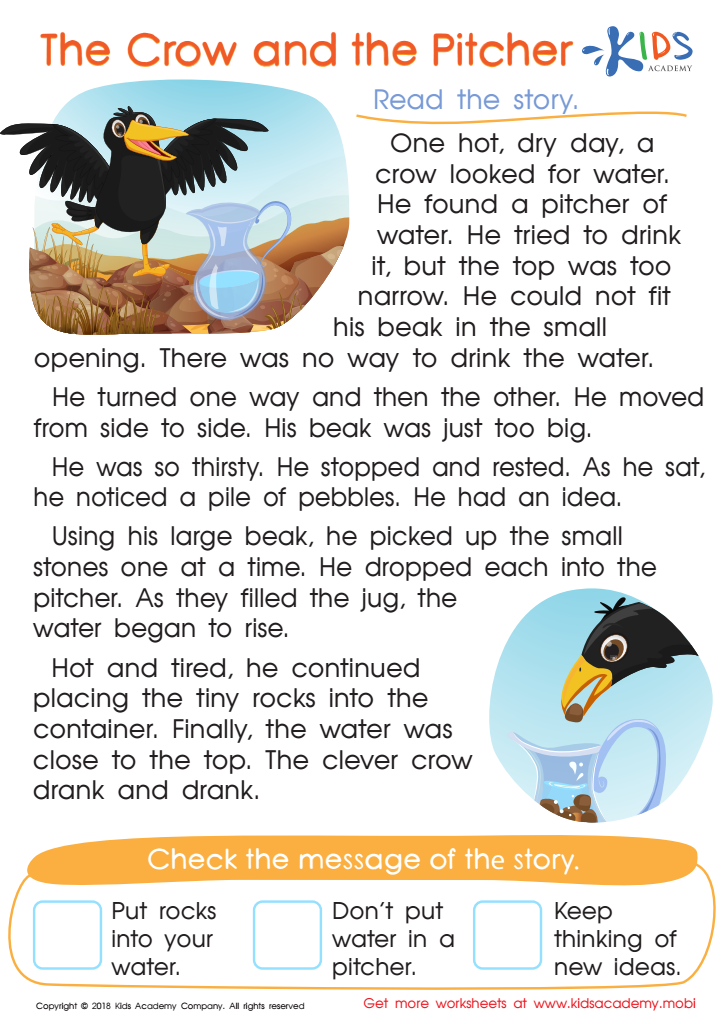
The Crow and the Pitcher Worksheet
Introduce your child to reading comprehension with this fascinating worksheet from Kids Academy! Featuring Aesop's fable of a thirsty crow, your child will enjoy reading and determining the central theme of the passage. This worksheet is a great way to give your child a purpose for reading while helping to build their comprehension skills.
The Crow and the Pitcher Worksheet
Worksheet
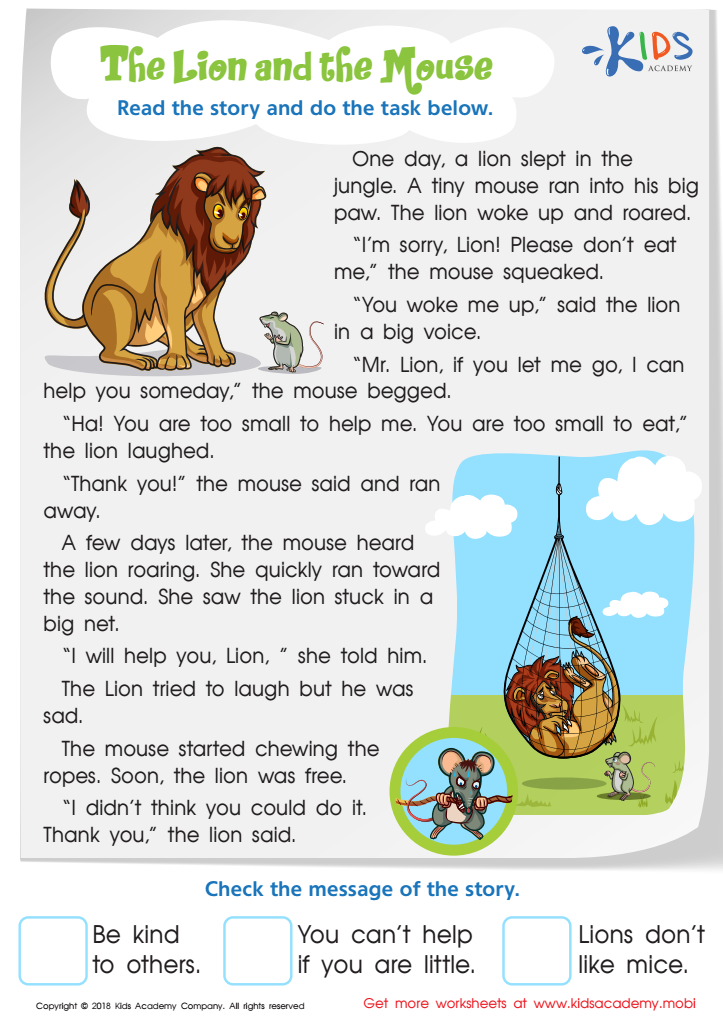
The Lion and the Mouse Worksheet
Writers often have a hidden message or theme in their stories. This printable worksheet helps readers uncover these themes by looking at what characters do and say in "The Lion and the Mouse". It's a great practice resource for learning to interpret stories.
The Lion and the Mouse Worksheet
Worksheet
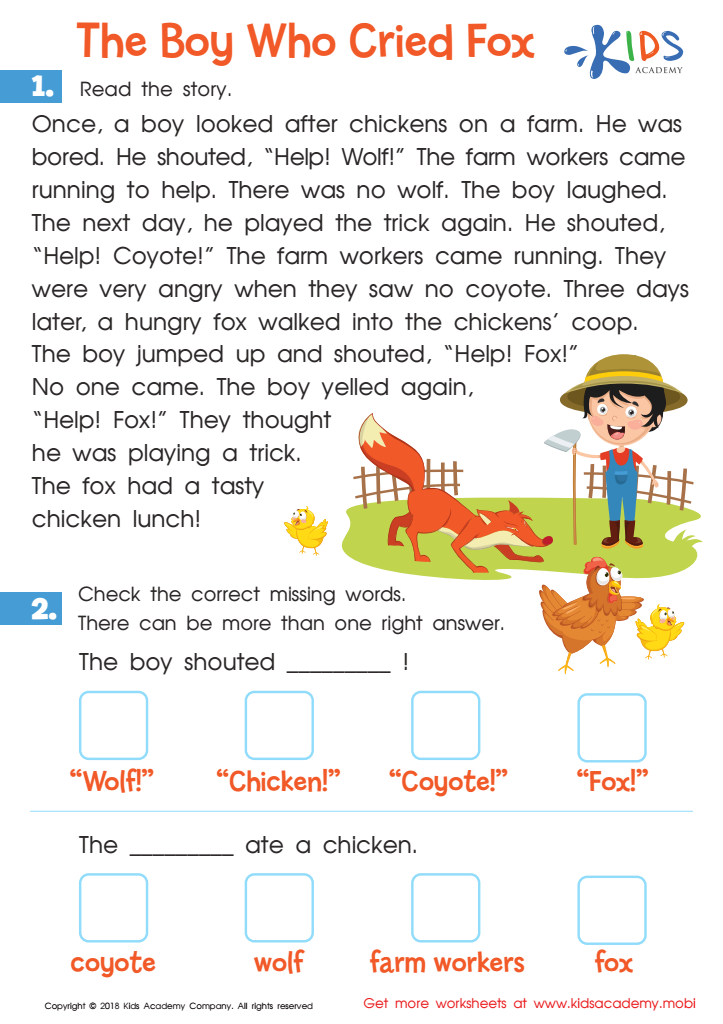
The Boy Who Cried Fox Worksheet
This worksheet encourages students to recall details from a story and answer questions to test their comprehension. Perfect for reading lessons, enrichment, or extra help.
The Boy Who Cried Fox Worksheet
Worksheet
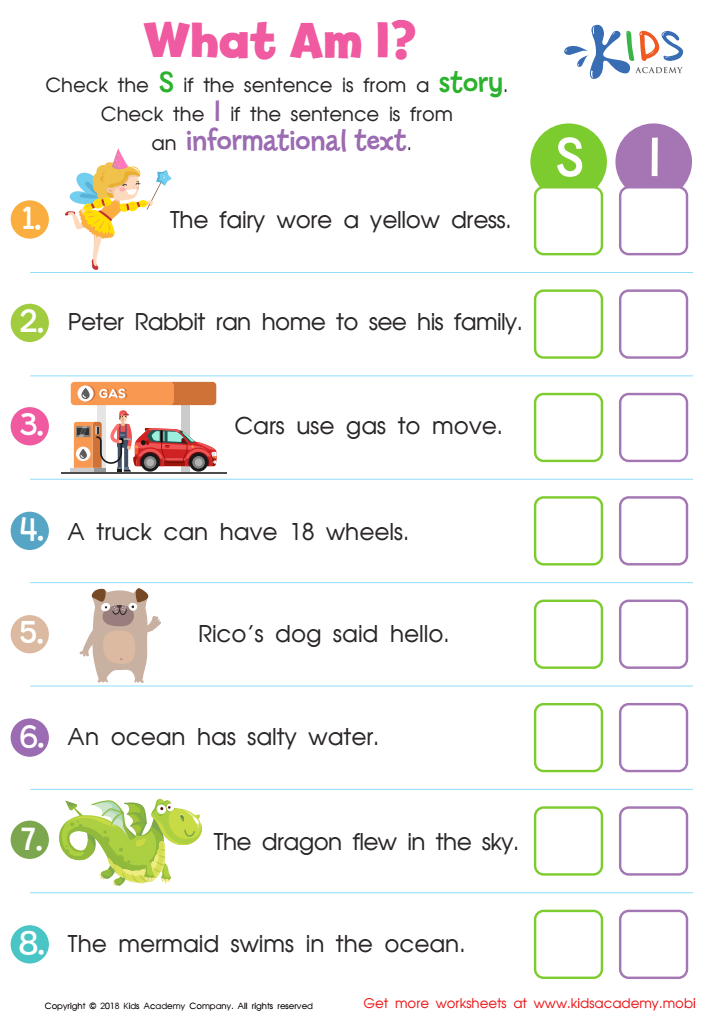
What Am I? Worksheet
This worksheet assesses students' ability to differentiate between stories and texts they read for facts. Students learn to distinguish between reading for pleasure and reading for information. It includes statements from both a story and an informational text, and students must decide what type of text it is.
What Am I? Worksheet
Worksheet
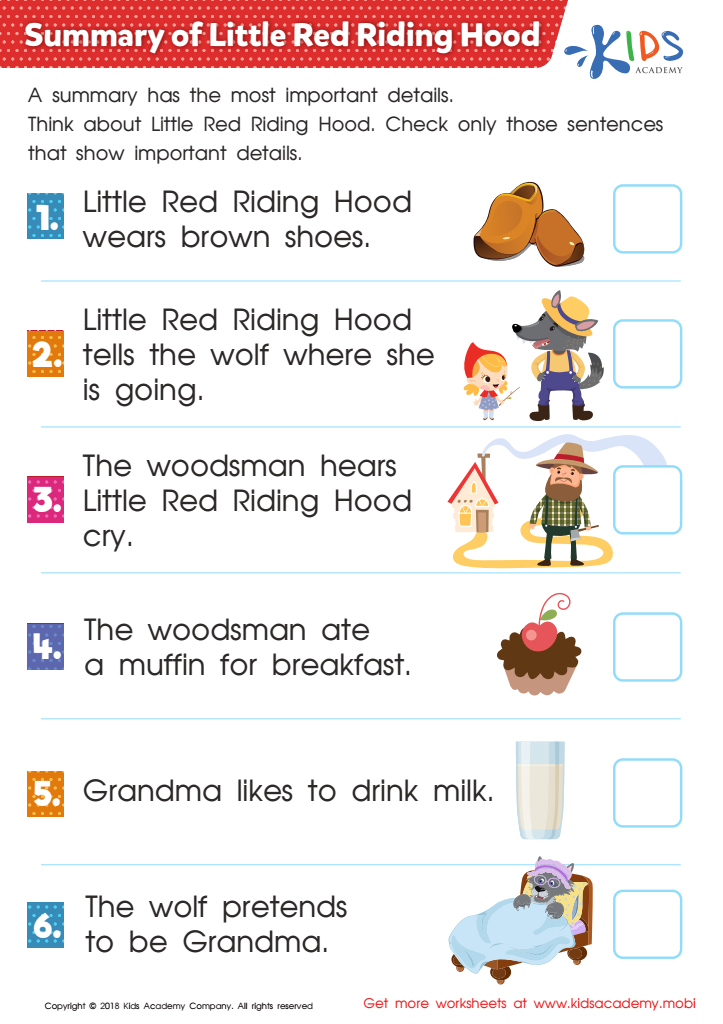
Summary of Little Red Riding Hood Worksheet
Young students may find it hard to summarize stories. This worksheet helps them learn to distinguish between important story details and unimportant ones. Practice reading Little Red Riding Hood and pick out only the important details with the help of this downloadable worksheet.
Summary of Little Red Riding Hood Worksheet
Worksheet
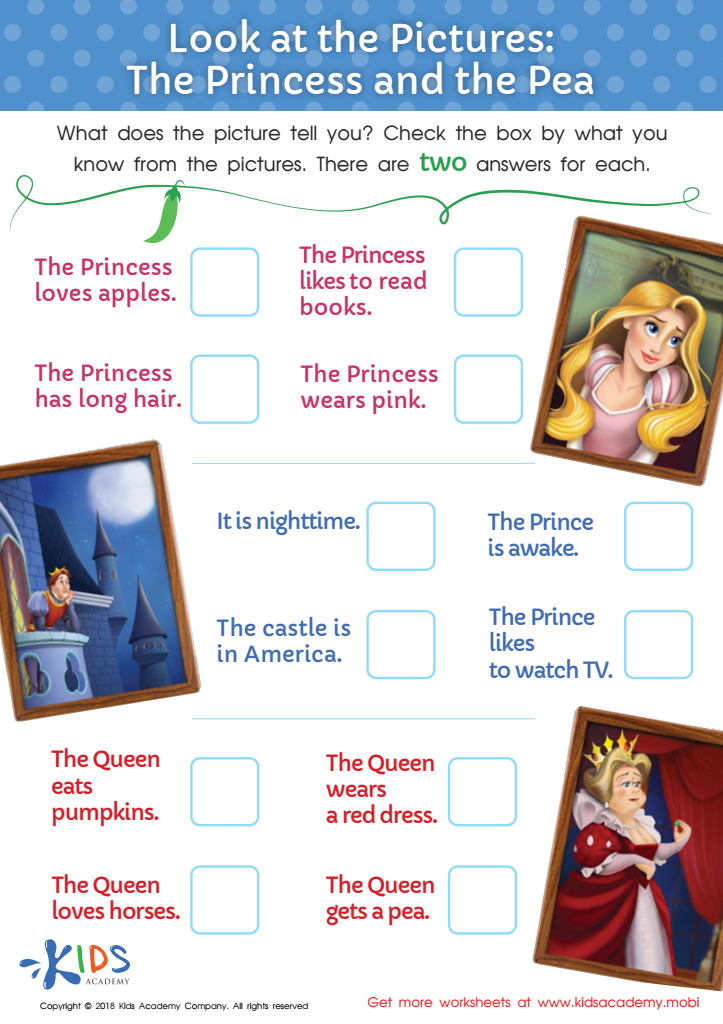
Look at the Pictures: The Princess and the Pea Worksheet
Early readers can benefit from picture clues to understand stories and text. Looking at images helps them learn the meaning of words and comprehend events. Use this worksheet on The Princess and the Pea to let students observe and learn from the pictures. It's a great way to help them comprehend early reading materials.
Look at the Pictures: The Princess and the Pea Worksheet
Worksheet
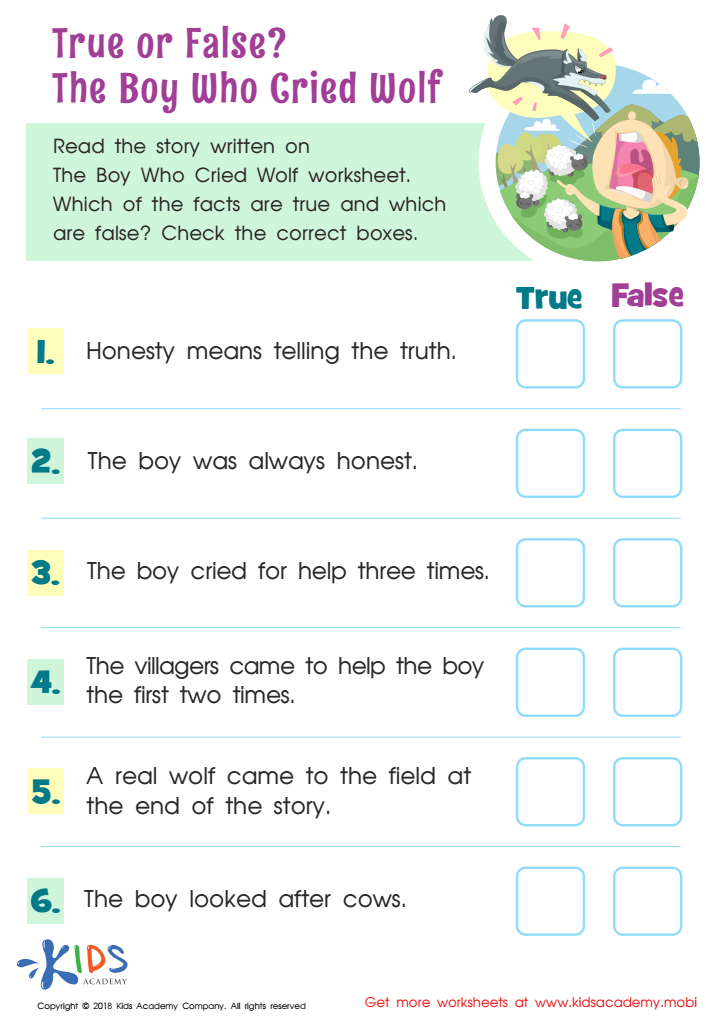
True or False? The Boy Who Cried Wolf Worksheet
Test students' understanding of The Boy Who Cried Wolf with this free downloadable worksheet. It contains true/false questions to assess comprehension of key events. Easy to complete, it checks students can recall facts from the story. Try it and see!
True or False? The Boy Who Cried Wolf Worksheet
Worksheet
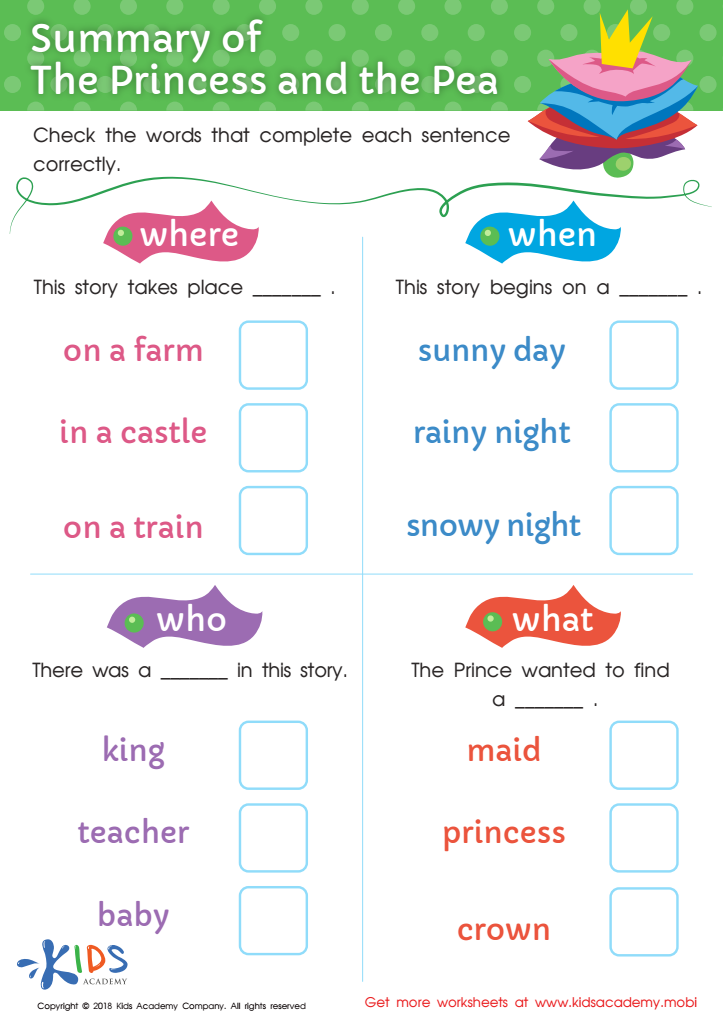
The Summary of the Princess and the Pea Worksheet
Test your student’s knowledge of the story The Princess and the Pea with this quick worksheet. With who, what, when and where questions, it's a great way to assess comprehension skills. It's a perfect resource for school or home classrooms. Download it now and start improving comprehension skills!
The Summary of the Princess and the Pea Worksheet
Worksheet
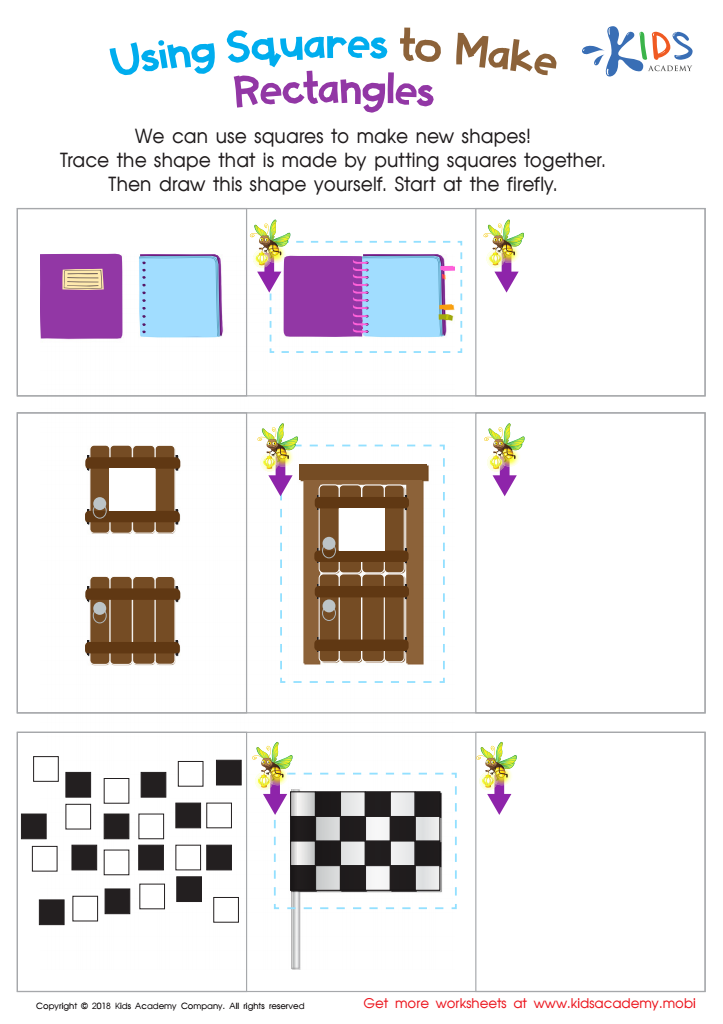
Using Squares to Make Rectangles Worksheet
Creating shapes from other shapes (composing shapes) develops spatial skills, an essential geometry standard for young students. This worksheet introduces familiar square objects, then demonstrates how they create rectangles. Students practice tracing and then drawing the shape independently. Download this free math resource for the classroom today! (80 words)
Using Squares to Make Rectangles Worksheet
Worksheet
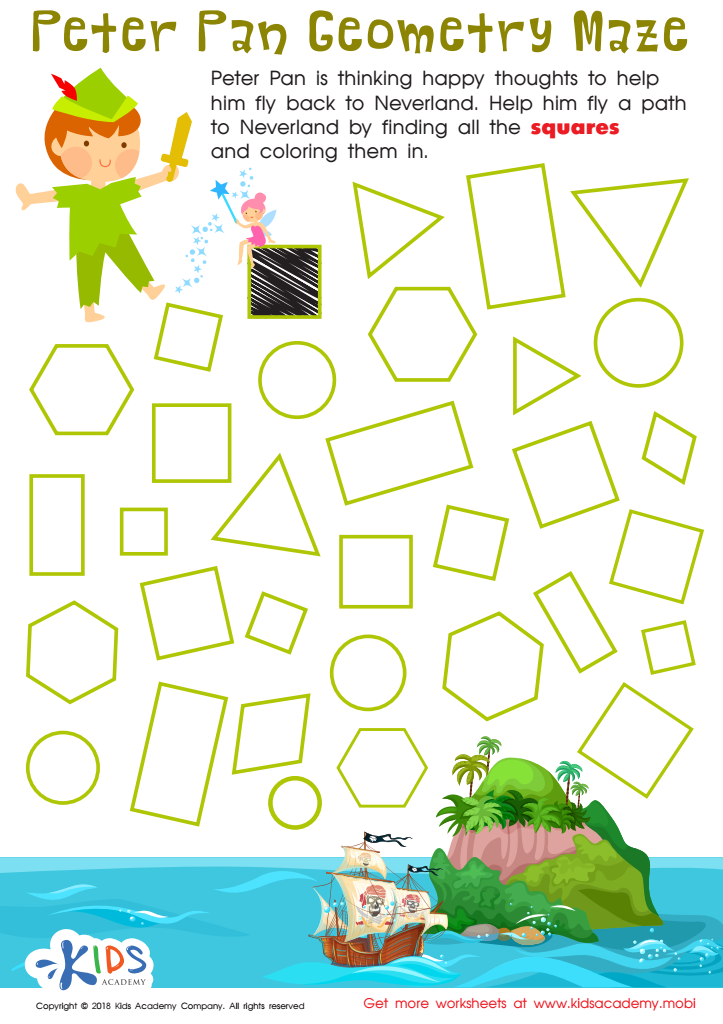
Peter Pan Worksheet
Kindergarteners can join Peter Pan on an adventure to Neverland! They can help him by coloring squares to create a path, strengthening their shape identification skills in a fun maze. Let the journey begin!
Peter Pan Worksheet
Worksheet
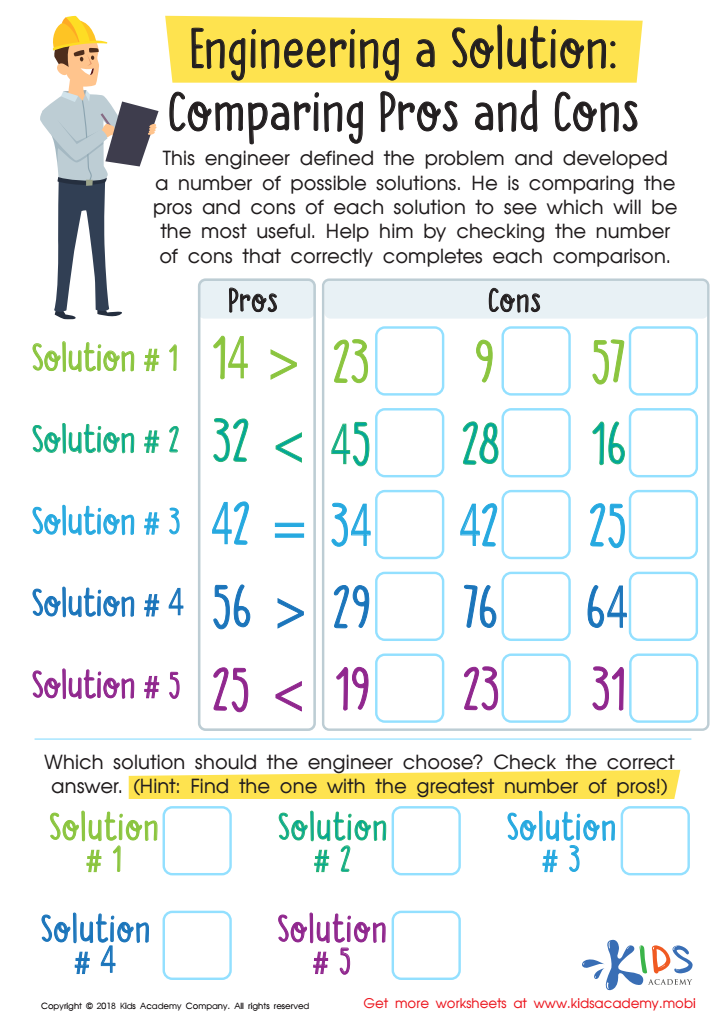
Engineering a Solution: Comparing Pros and Cons Worksheet
Help our little engineers assist the engineer in making a decision! They will solve the equations using greater than, less than, and equal to, and then decide the best solution for the problem using the pros and cons of each.
Engineering a Solution: Comparing Pros and Cons Worksheet
Worksheet
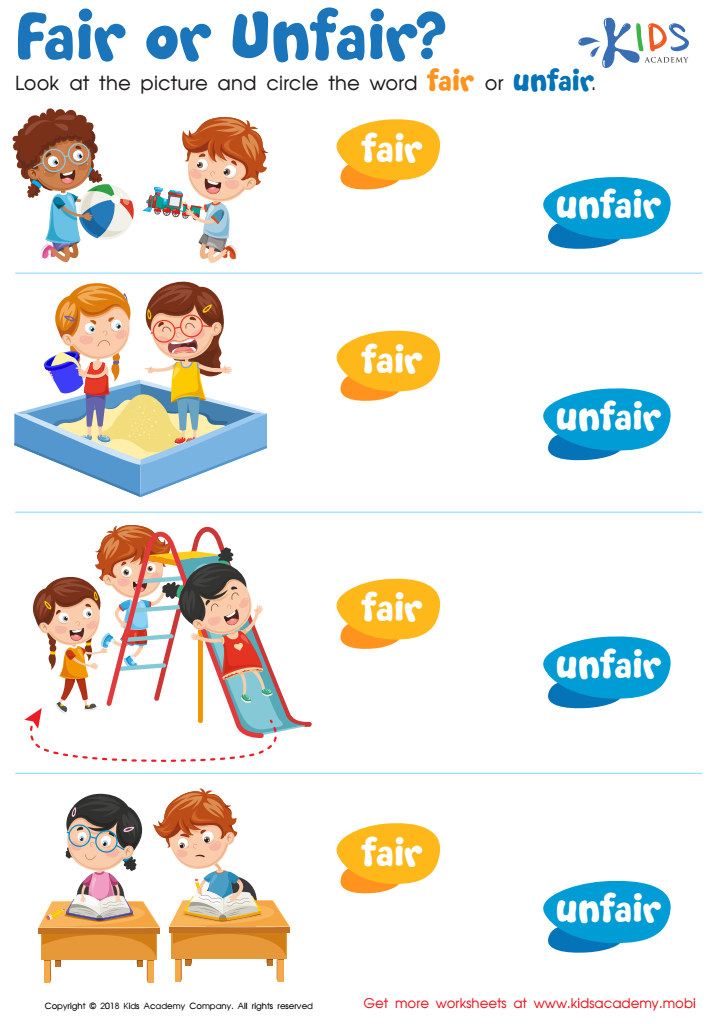
Fair or Unfair Worksheet
Look at the pictures in this worksheet with kids. Can they tell if the actions are fair or unfair? Help them decide and circle the appropriate option. When something causes harm to one person, it is unfair; when all parties benefit, it is fair.
Fair or Unfair Worksheet
Worksheet
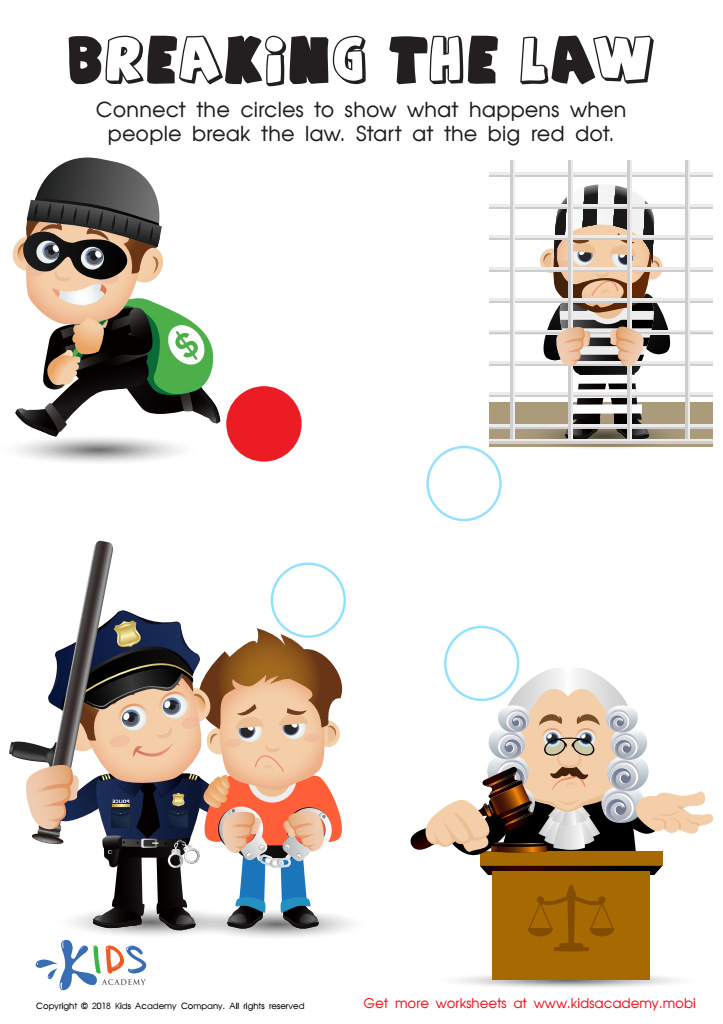
Breaking the Law Worksheet
Explain to your child why people go to jail. Show them this worksheet; it illustrates the stages a criminal goes through from breaking the law to receiving their punishment. Guide them in connecting the circles from the big red dot. Finish with a discussion on why it's important to follow the law.
Breaking the Law Worksheet
Worksheet
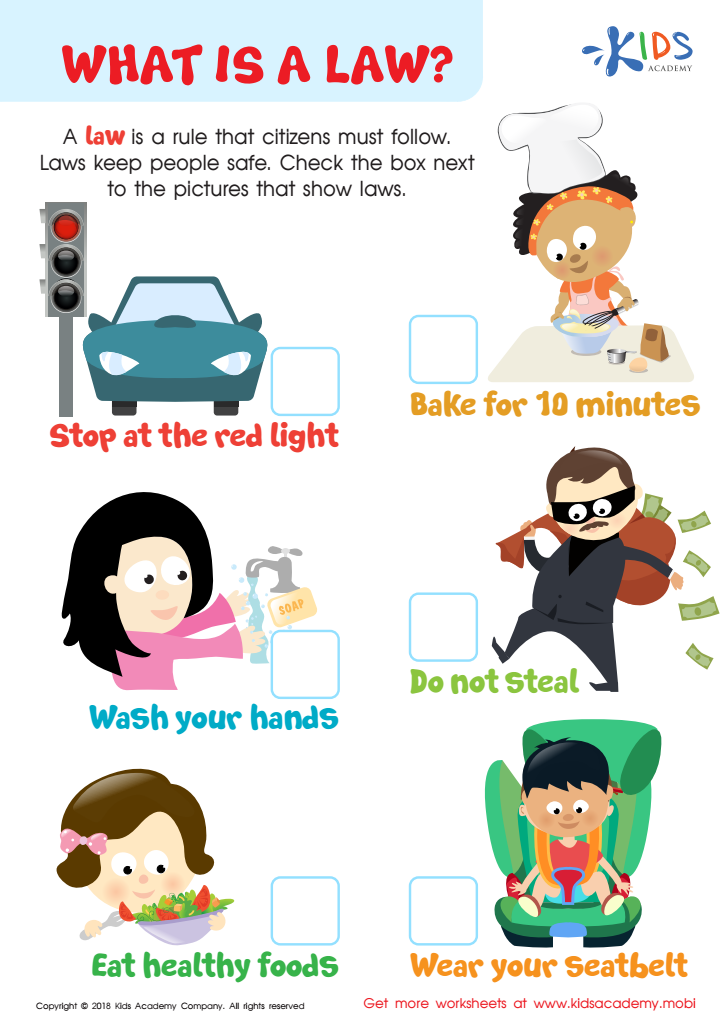
What is a Law? Worksheet
Encourage your students to think about the laws they abide by - at home, school, and the playground. Explain the importance of laws in keeping us safe, then ask them to check the box next to the pictures depicting different laws in a worksheet.
What is a Law? Worksheet
Worksheet
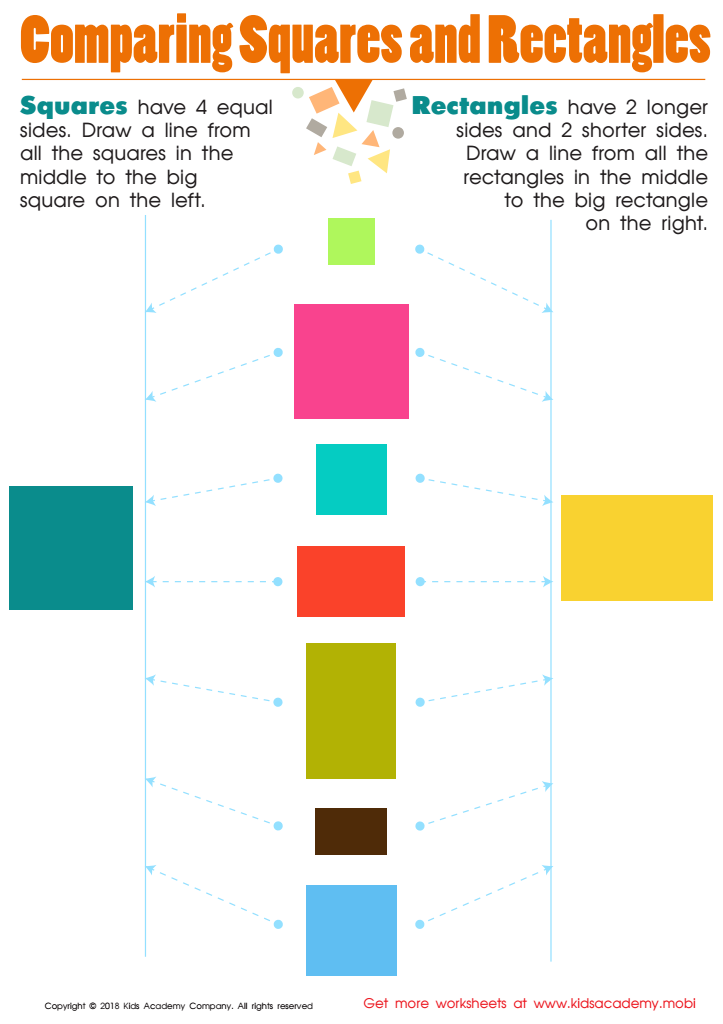
Comparing Squares Rectangles Worksheet
Help your little learner distinguish rectangles from squares with this fun geometry worksheet from Kids Academy! Read the definitions at the top, use the shapes on either side as a guide, then trace over the dotted line to match the rectangles and squares!
Comparing Squares Rectangles Worksheet
Worksheet
Join Kids Academy for Free
Who is primarily going to use this learning content?