Normal Missing Letters Worksheets for Ages 4-8
5 filtered results
-
From - To
Normal Missing Letters Worksheets for Ages 4-8 are designed to enhance early reading and writing skills in a fun and engaging way. These printable worksheets encourage children to identify and fill in the missing letters in the alphabet, boosting their familiarity with letter sequencing and phonics. Perfect for preschool to early elementary students, each worksheet uses vibrant illustrations and simple tasks to keep young learners motivated. Completing these activities helps develop critical thinking, fine motor skills, and early literacy. Ideal for classroom use or learning at home, these resources make mastering the alphabet enjoyable and interactive.
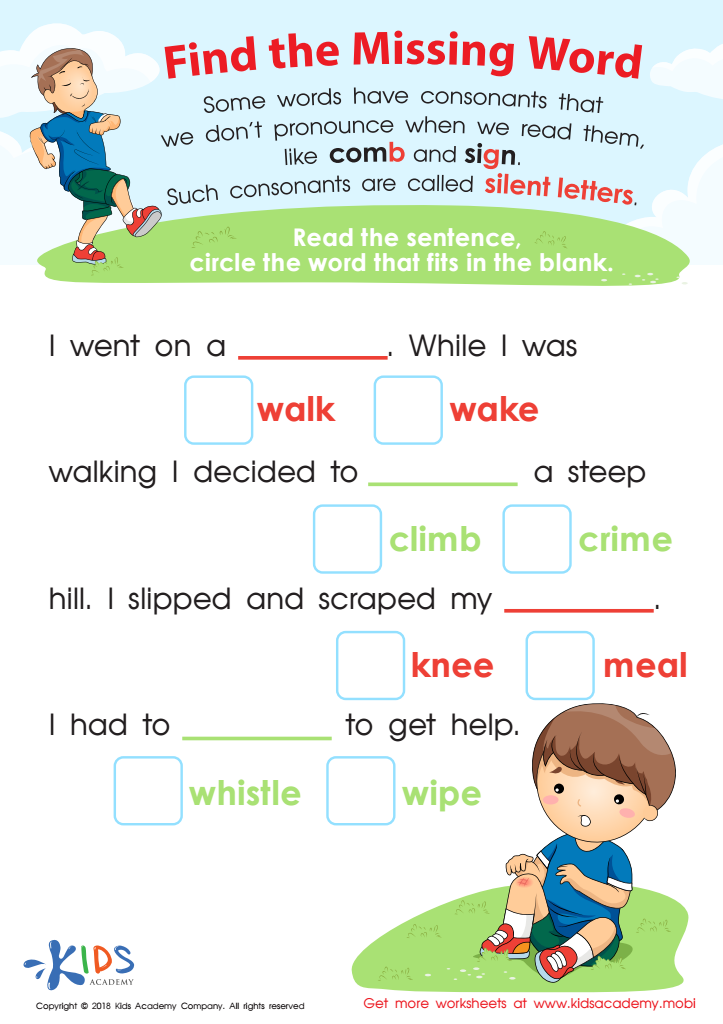
Find The Missing Word Worksheet
 Assign to My Students
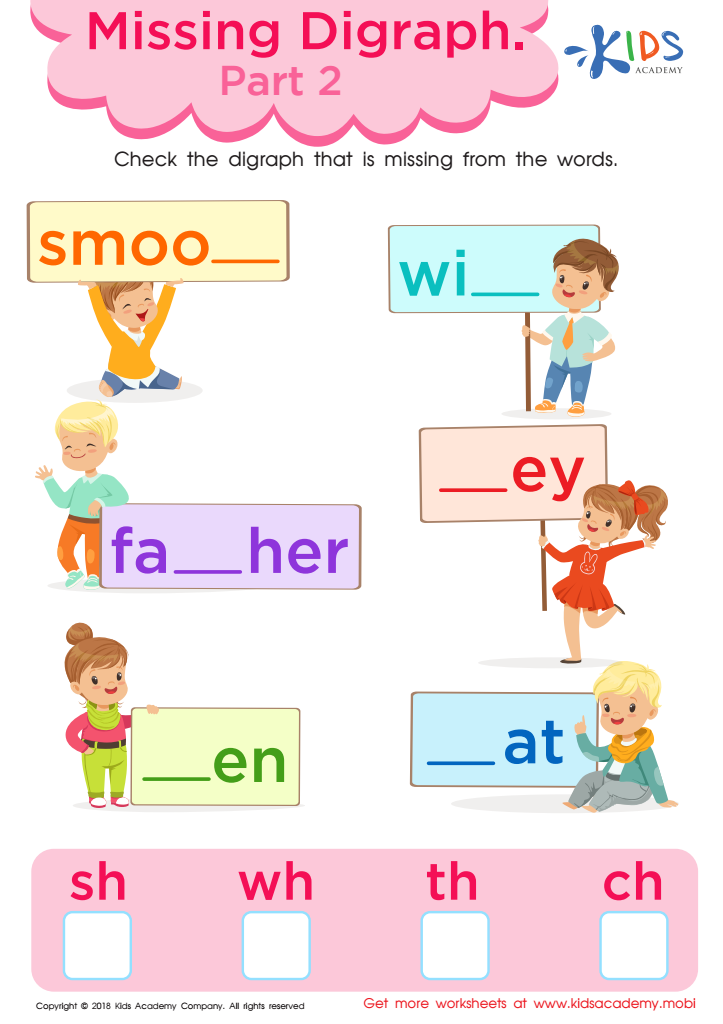
Missing Digraph: Part 2 Worksheet
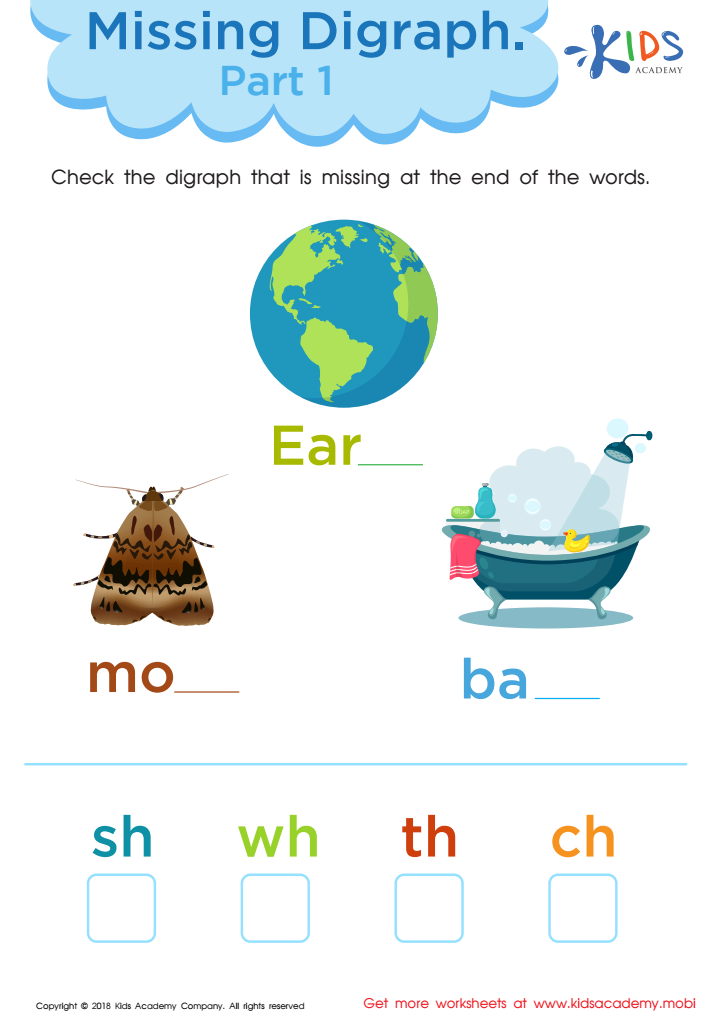
Missing Digraph: Part 1 Worksheet
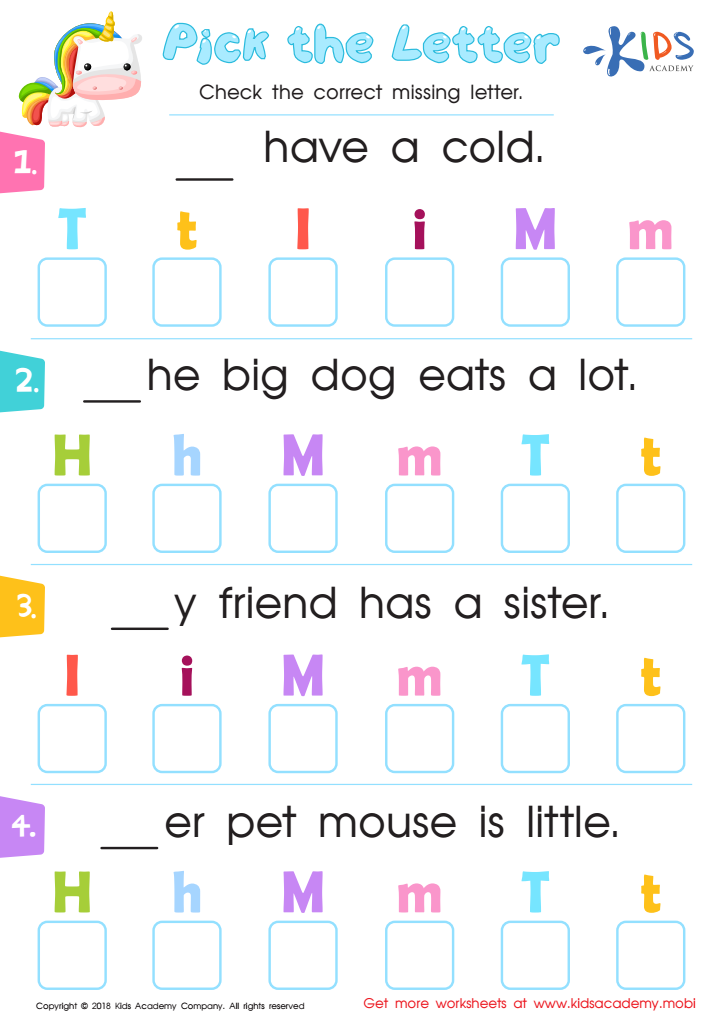
Pick the Letter Worksheet
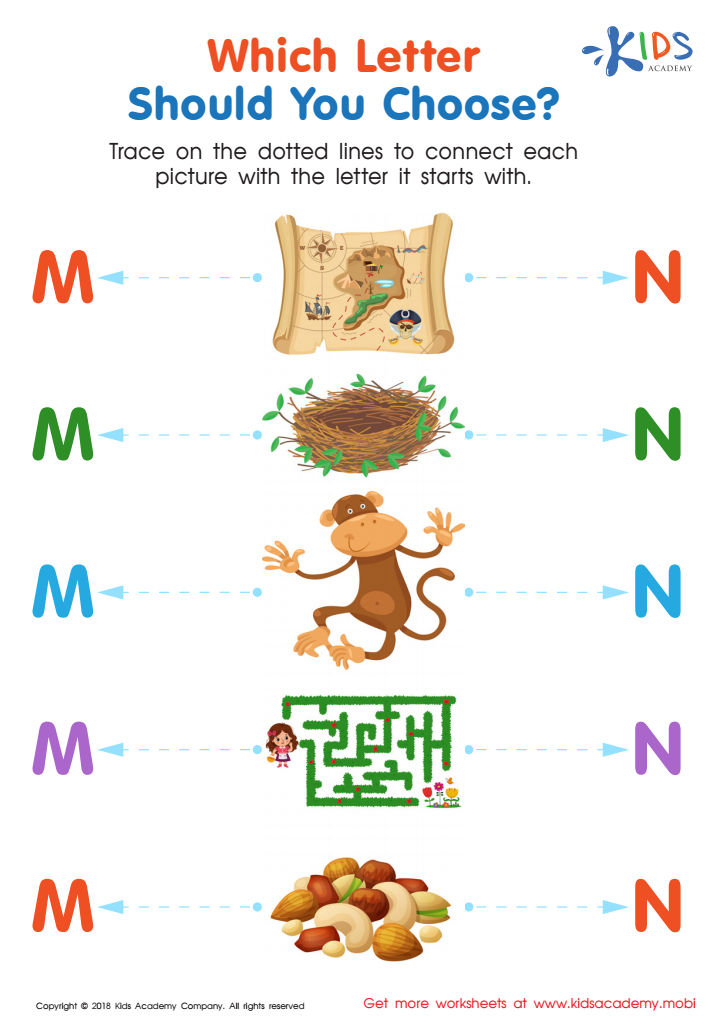
Which Letter Should you Choose? Worksheet



Normal Missing Letters activities are essential for children aged 4-8 as they play a critical role in early literacy development. These activities, where children are asked to identify and fill in missing letters from words, significantly enhance phonemic awareness and spelling skills. At this developmental stage, children are beginning to understand the relationship between letters and sounds, and this foundational knowledge is crucial for their reading and writing proficiency.
Parents and teachers should prioritize this activity because it helps solidify children's understanding of the alphabet while encouraging critical thinking and problem-solving skills. Identifying missing letters requires children to use context clues and phonetic knowledge, reinforcing their ability to decode words and improving vocabulary acquisition. For instance, recognizing that "c_t" can be filled in to form "cat" also helps solidify their understanding of vowel and consonant sounds in various word contexts.
Moreover, engaging in such activities boosts children's confidence in their ability to comprehend and manipulate language, fostering a love for reading and writing. This foundation paves the way for further academic success, as literacy skills are crucial across all subjects. Therefore, incorporating Normal Missing Letters activities in early education is an impactful way to support children's overall cognitive development and lifelong learning journey.







