Normal Silent Vowels Worksheets for Ages 4-9
5 filtered results
-
From - To
Discover our engaging "Normal Silent Vowels Worksheets" designed specifically for children aged 4-9. These interactive worksheets provide a fun way to learn about silent vowels, essential to early reading and writing skills. With colorful illustrations and friendly exercises, kids will enjoy identifying and practicing words that include silent letters. These worksheets aid in enhancing vocabulary and phonics understanding, promoting language development in an easy and enjoyable format. Ideal for classroom settings or at-home learning, our resources support young learners in mastering the intricacies of silent vowels while fostering a love for language. Start your child's phonics journey today!
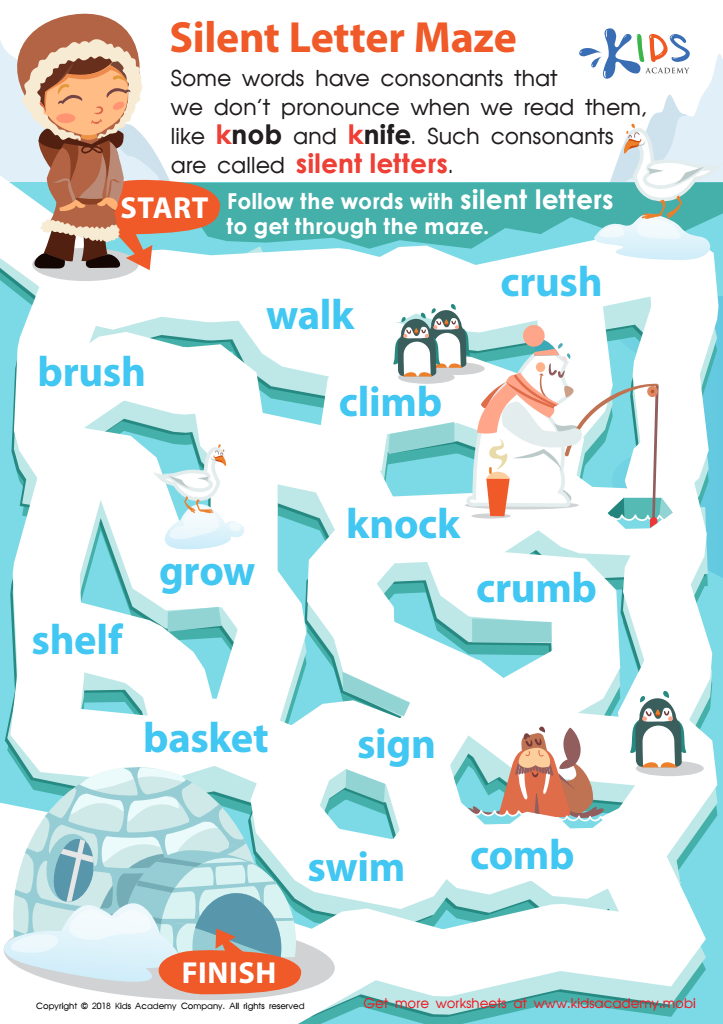
Silent Letter Maze Worksheet
 Assign to My Students
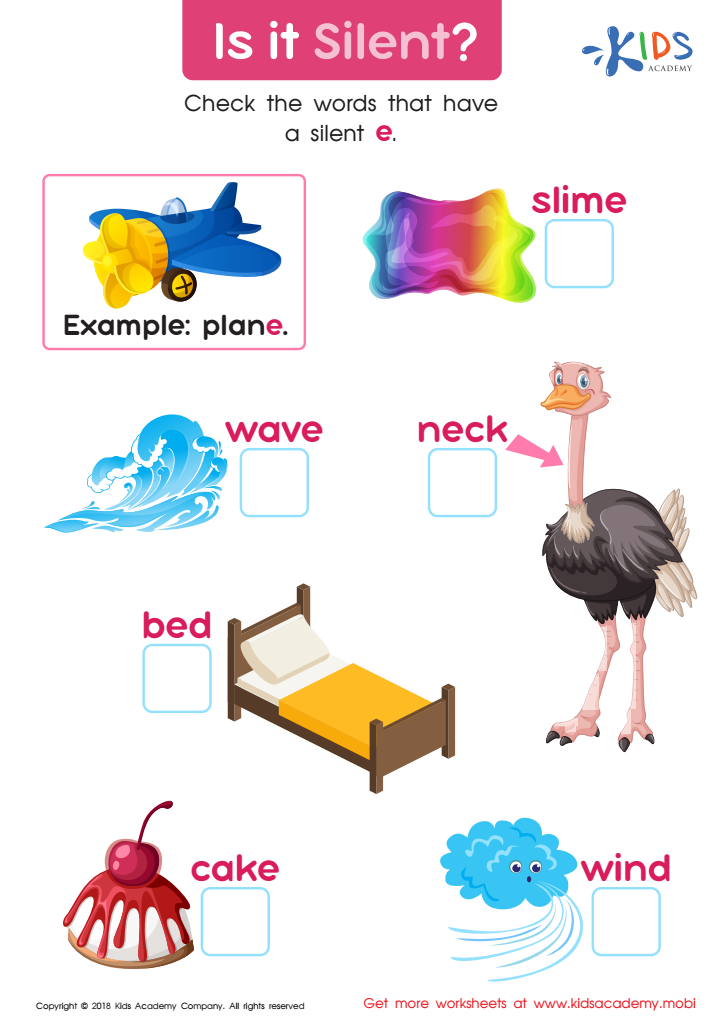
Is It Silent? Worksheet
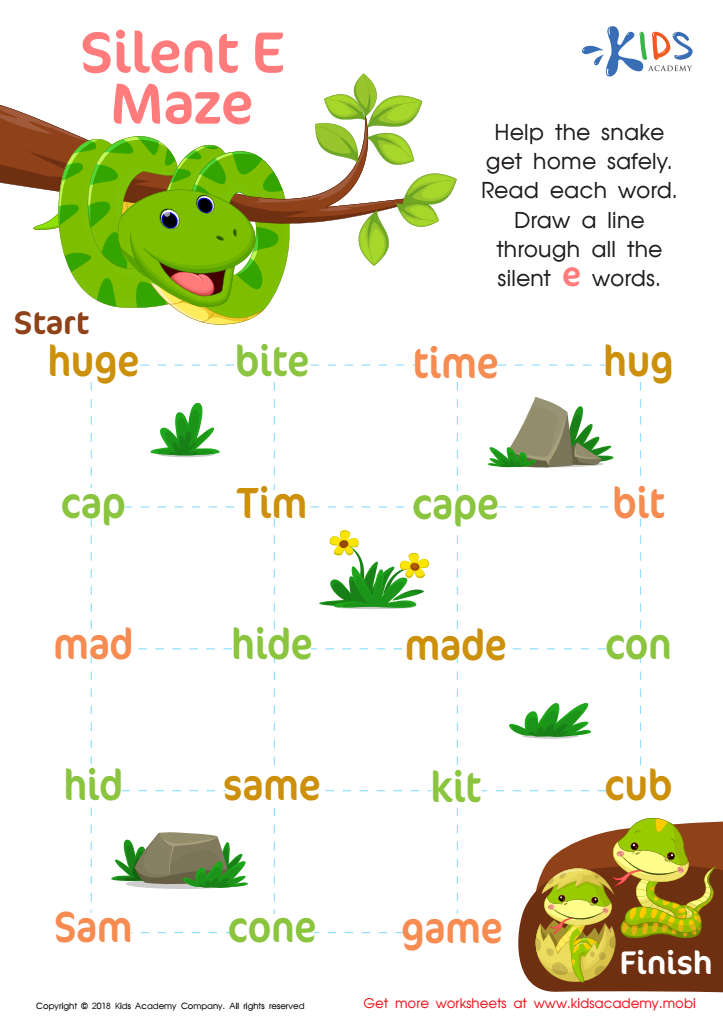
Silent E Maze Worksheet
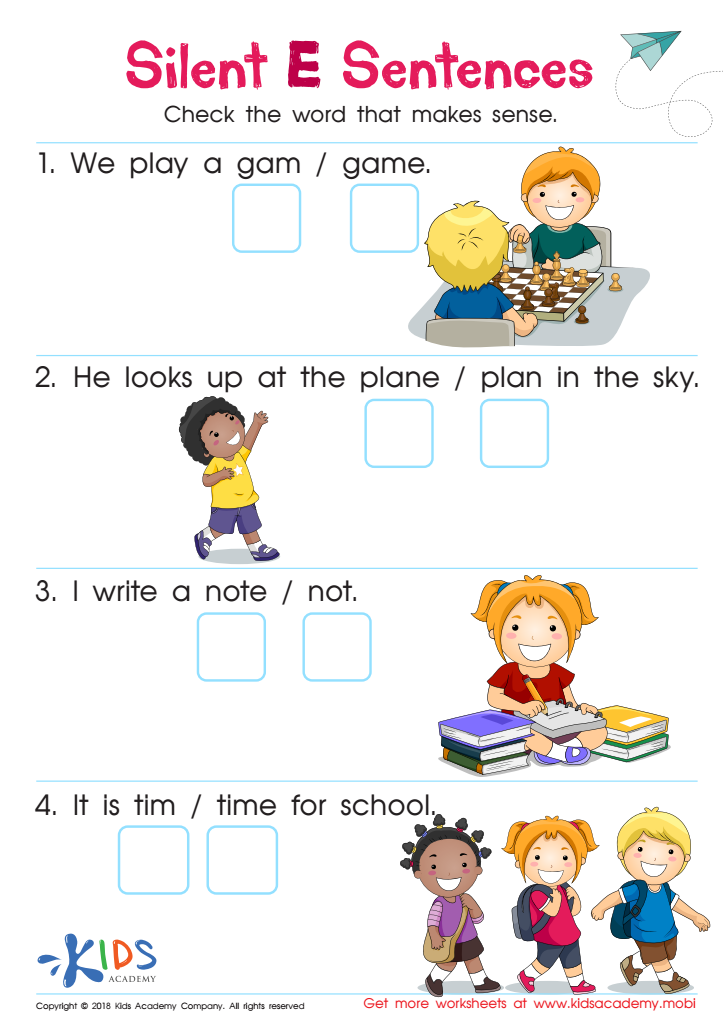
Silent E Sentences Worksheet
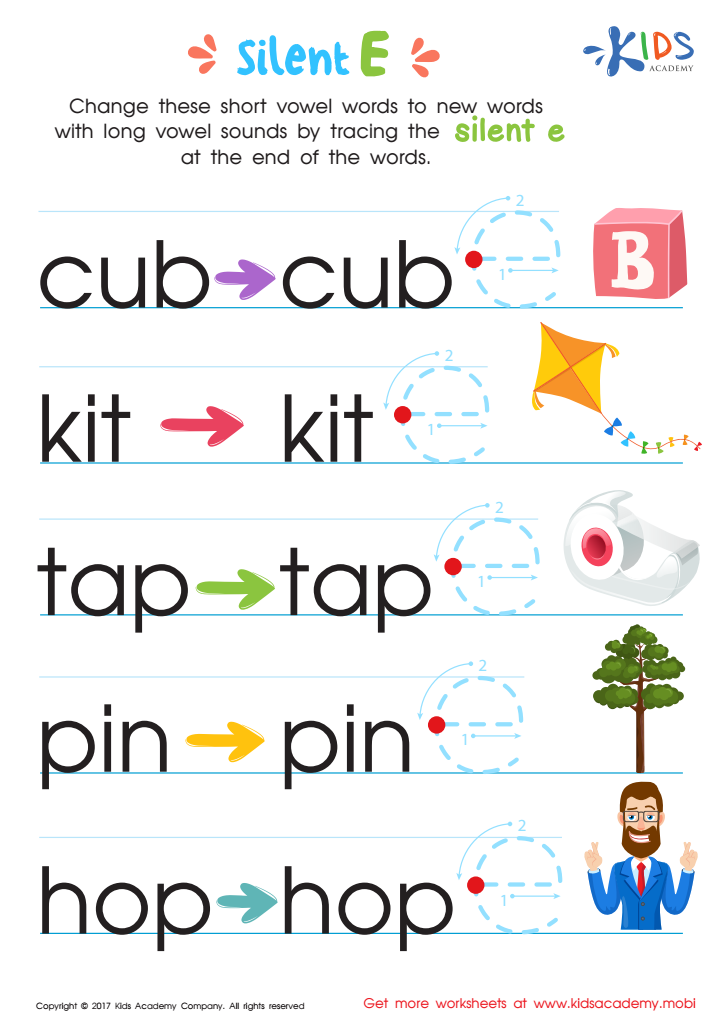
Silent E Words Worksheet


Normal silent vowels, or the vowels that appear in a word but are not pronounced, are an essential concept for children aged 4-9 as they develop their reading and writing skills. Understanding these silent vowels helps young learners improve their phonemic awareness, which is crucial for decoding and spelling. For example, in words such as "plane" or "bake," the silent vowels play a key role in differentiating between similar-sounding words, while also providing clues about word structure and meaning.
Parents and teachers should care about normal silent vowels because they contribute significantly to children's literacy development. Recognizing patterns of silent vowels enables students to become more confident readers, facilitating their ability to tackle new vocabulary confidently. This understanding also encourages better spelling habits, reducing the likelihood of confusing similar words.
By incorporating activities that highlight silent vowels into lesson plans or reading sessions, adults can make learning engaging and interactive. This fosters a love for reading and an appreciation for language, which are foundational for academic success. Ultimately, supporting children in grasping normal silent vowels lays a strong foundation for their overall literacy development, ensuring they are well-equipped for future learning adventures.