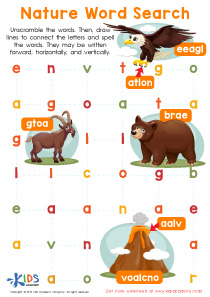
Normal Sight Words Worksheets for Ages 4-9
15 filtered results
-
From - To
Discover our engaging "Normal Sight Words Worksheets for Ages 4-9" at Kids Academy. Designed to boost your child's reading proficiency, these worksheets focus on essential sight words - the most frequently encountered words in everyday reading. Perfect for young readers, our worksheets combine fun activities with effective learning strategies to enhance word recognition and reading fluency. Tailored for ages 4-9, each worksheet uses interactive spelling tasks, matching games, and practice sentences to foster a love for reading and improve literacy skills. Help your child build a solid foundation in reading with Kids Academy's expertly crafted sight words resources.
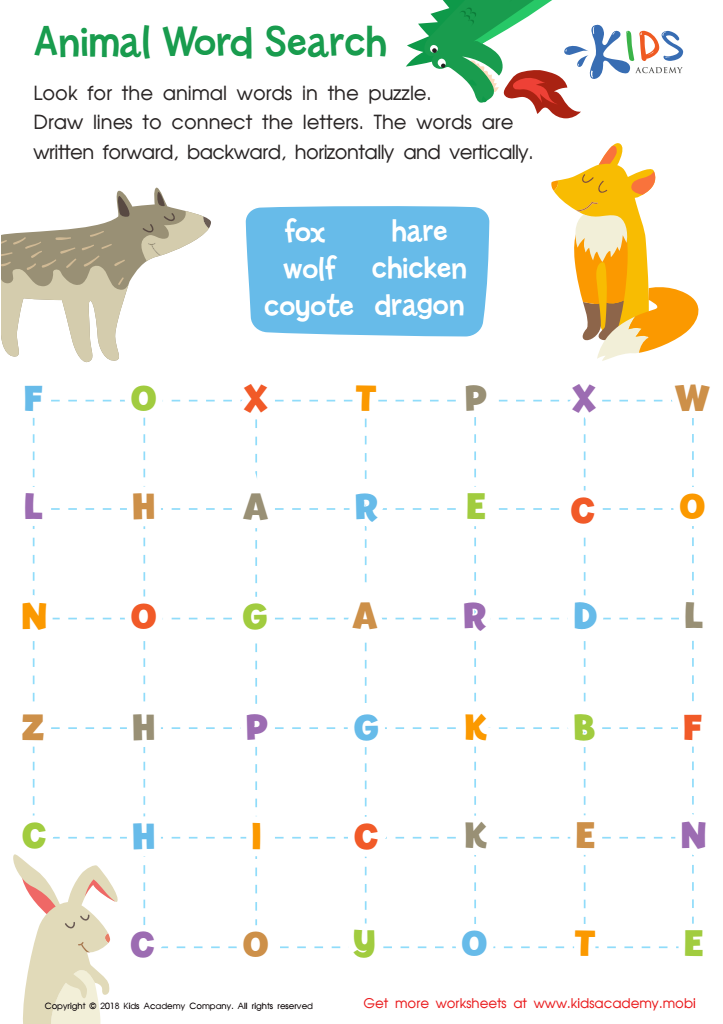
Animal Word Search Worksheet
 Assign to My Students



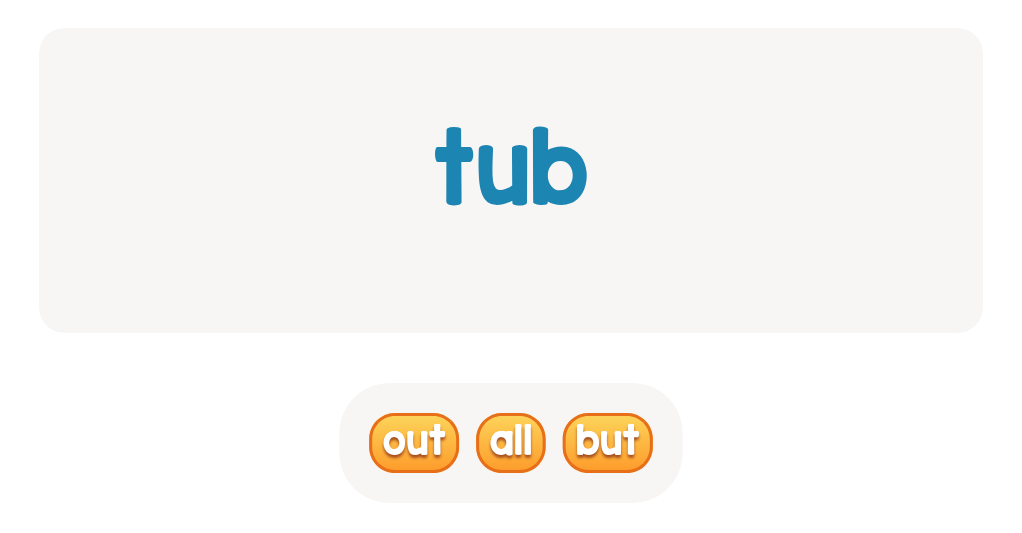
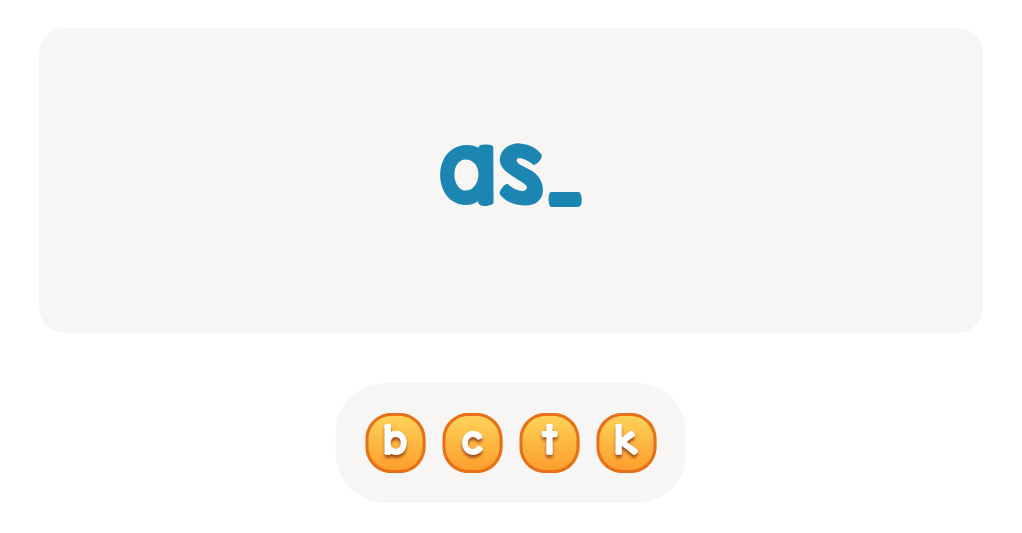
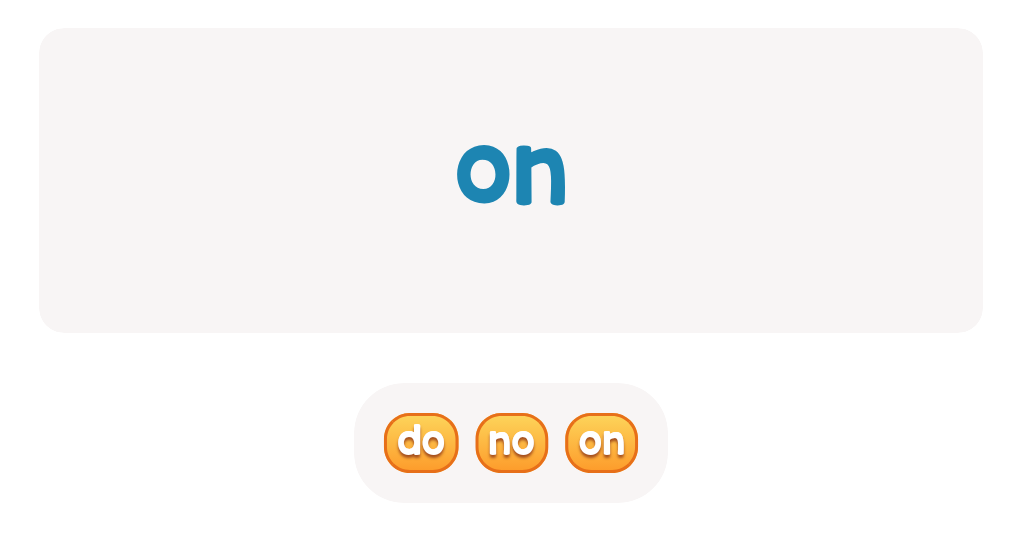
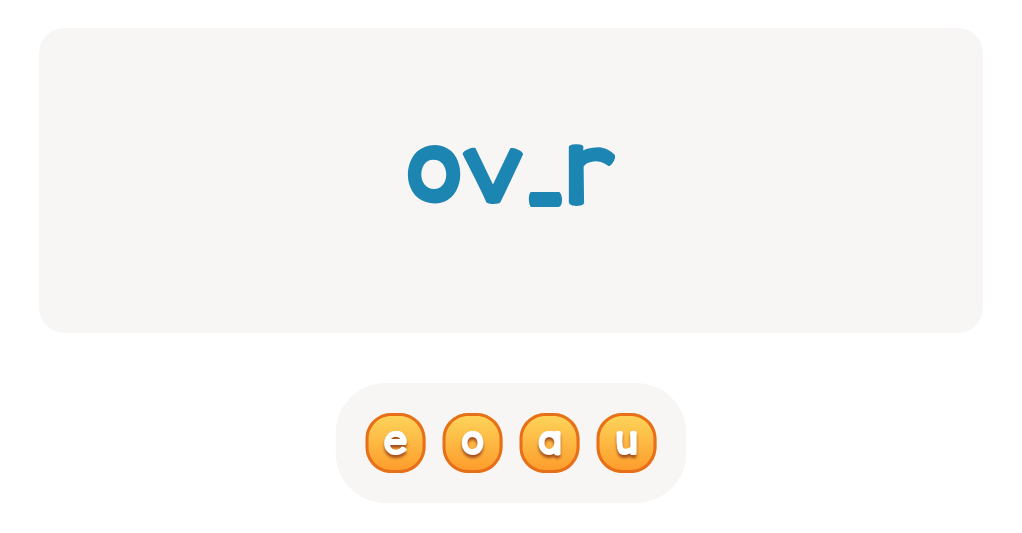
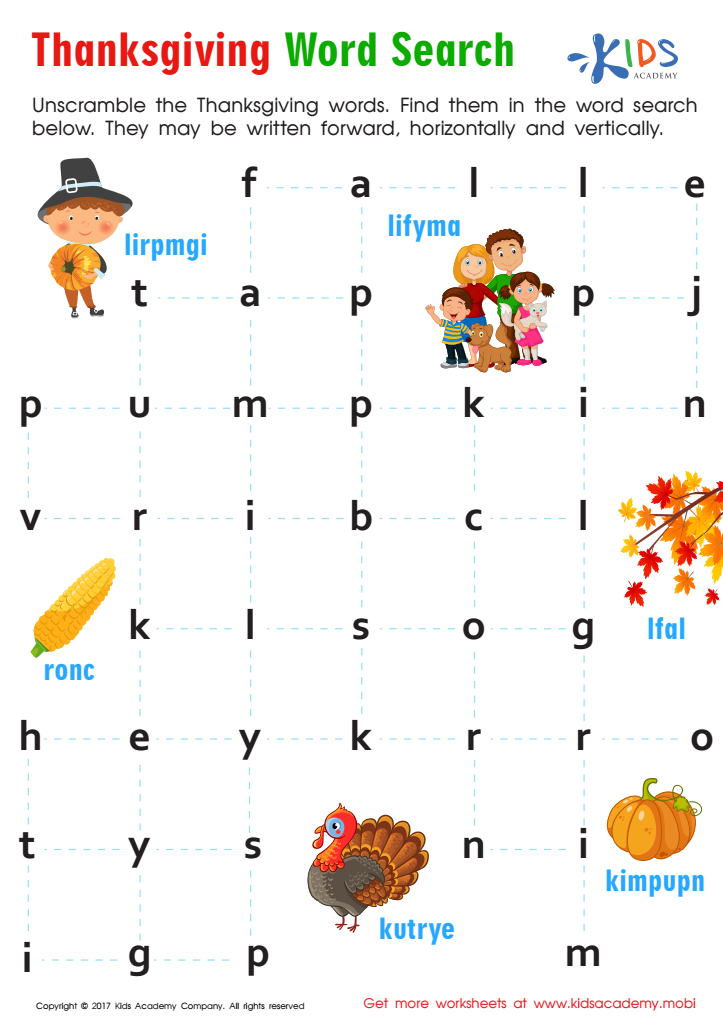
Thanksgiving Word Search Sight Words Worksheet
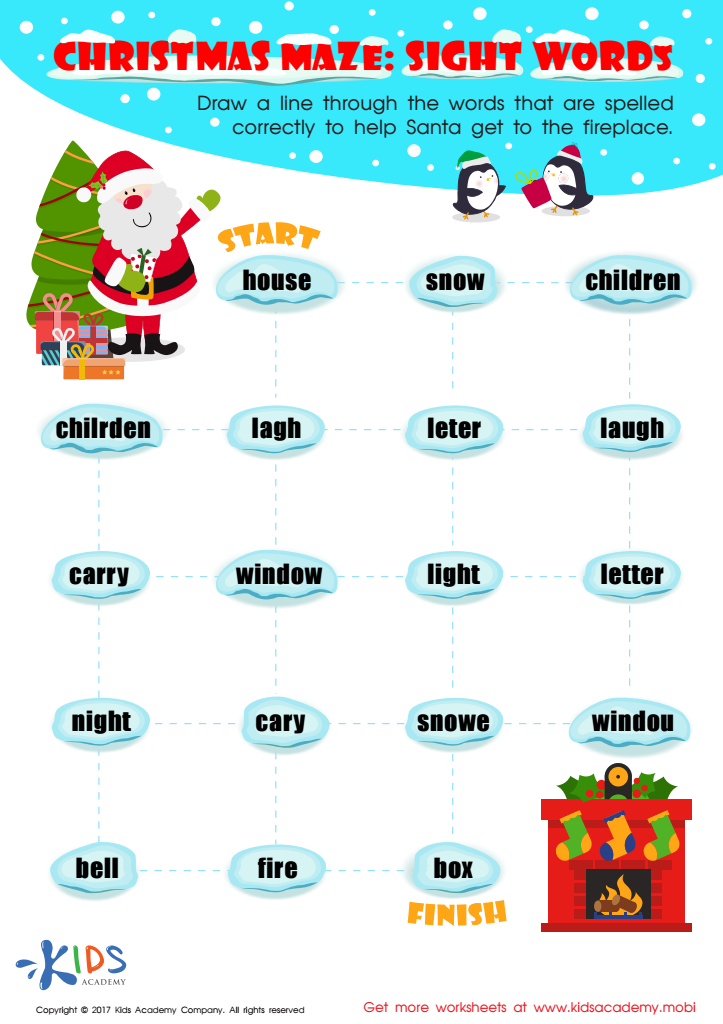
Sight Words Christmas Maze Printable
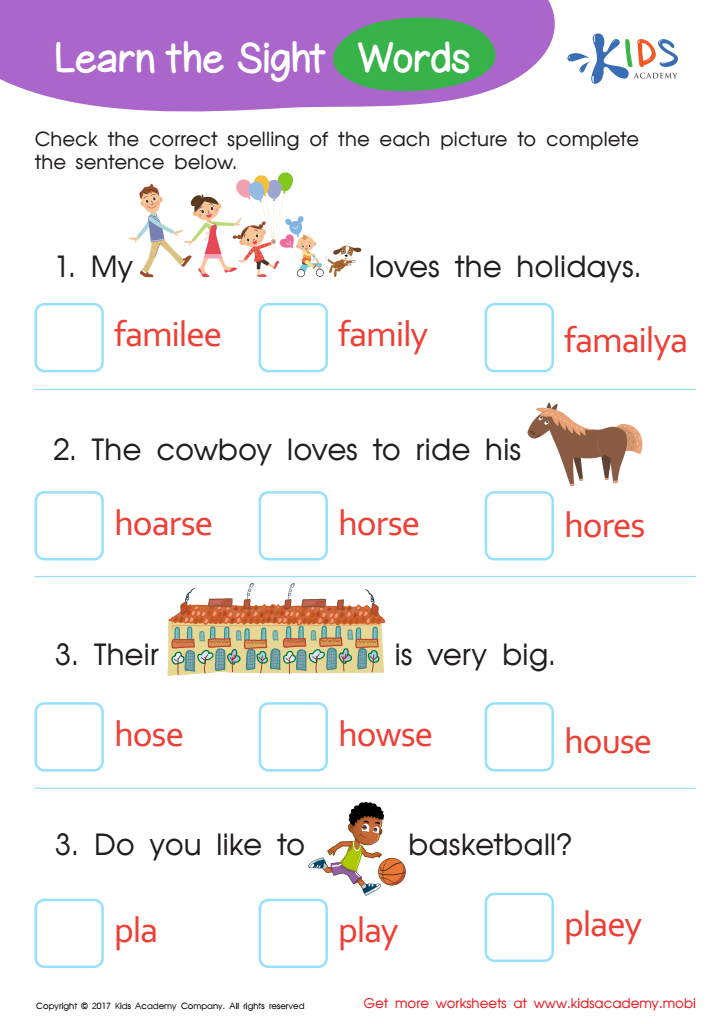
Family, Horse, House, Play Sight Words Worksheet
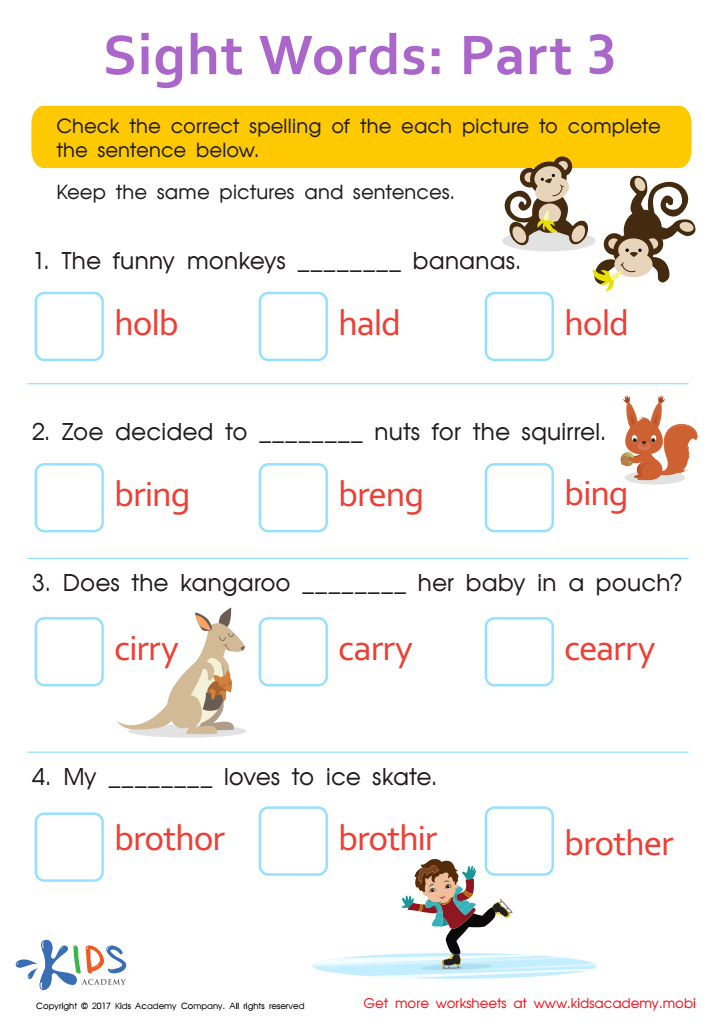
Hold, Bring, Carry, Brother Sight Words Worksheet
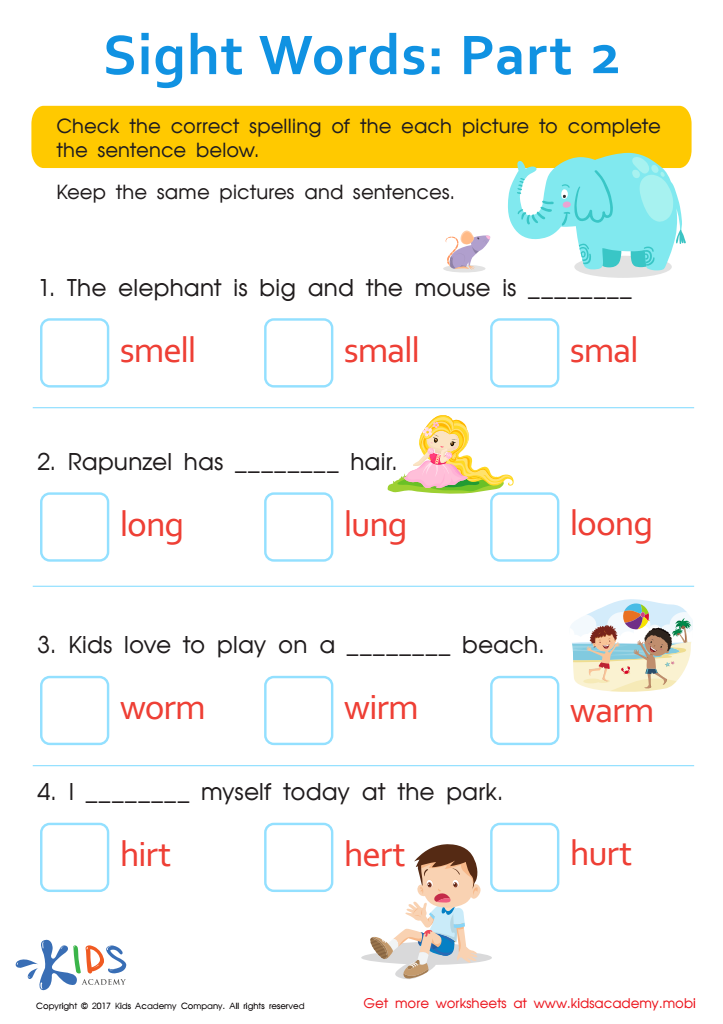
Sight Words Worksheet
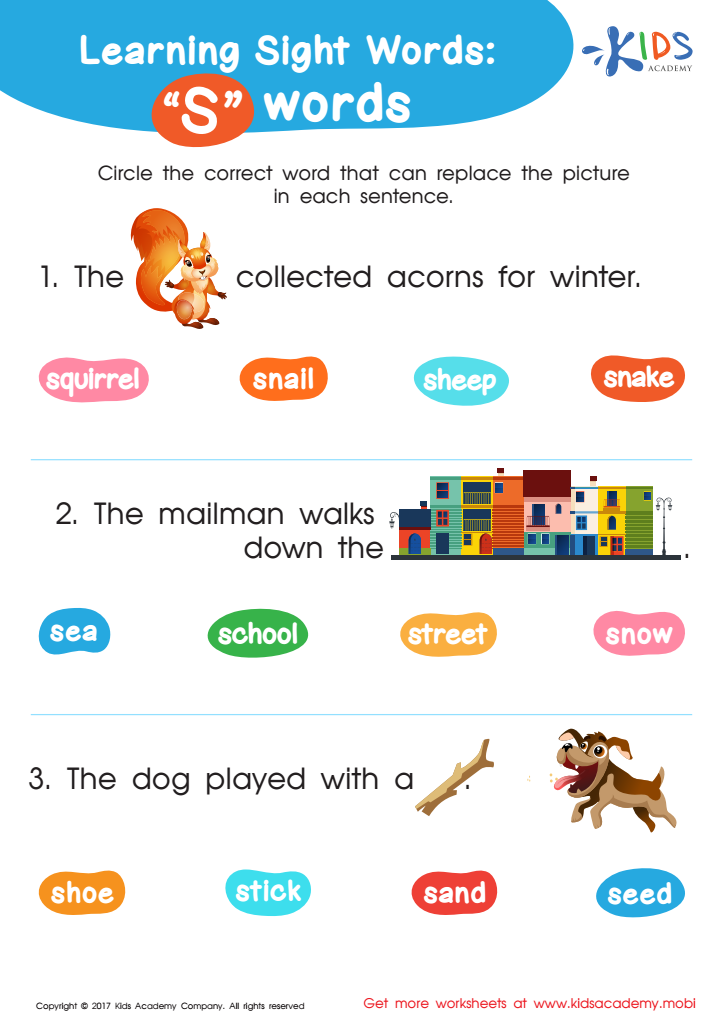
S Words Sight Words Worksheet
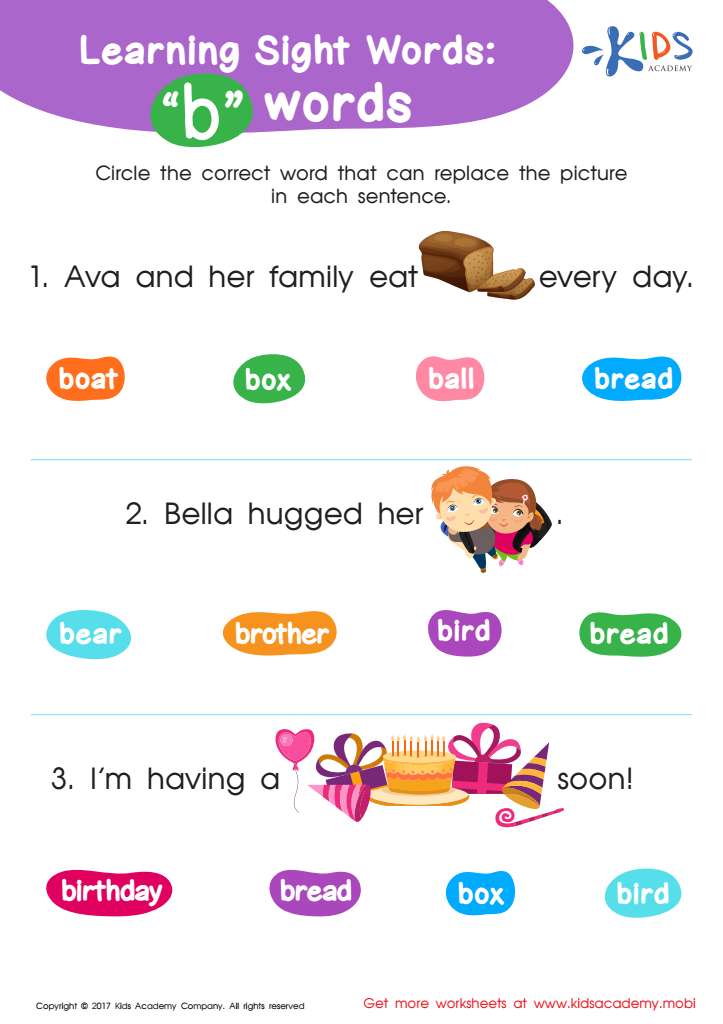
Sight Words Free Worksheet – B Words
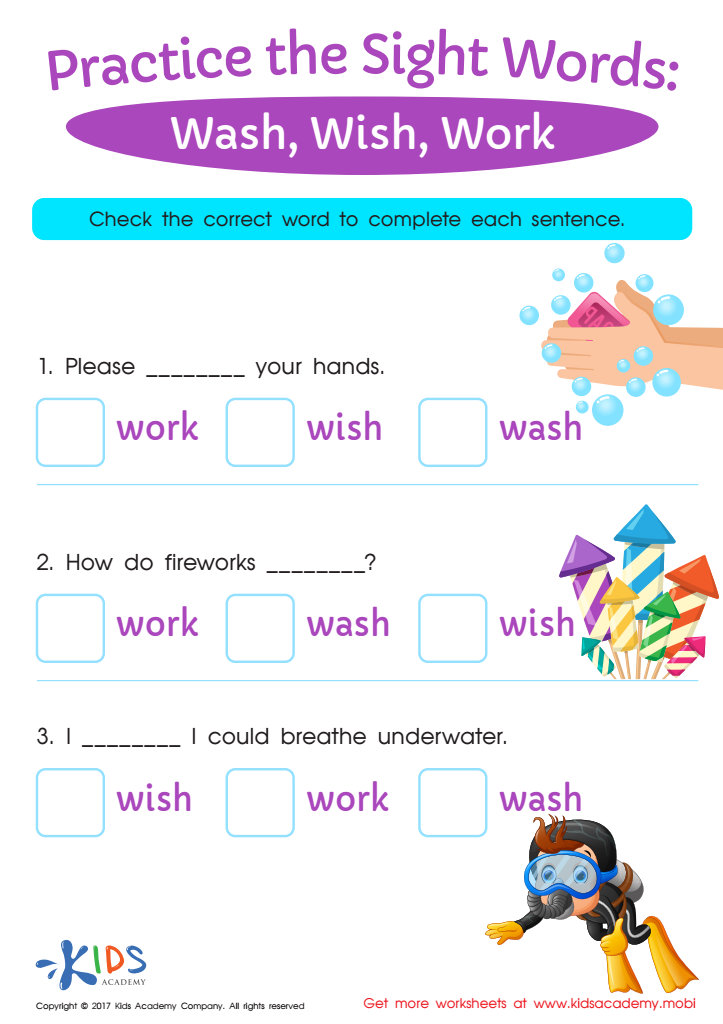
Wash, Wish, Work Sight Words Worksheet
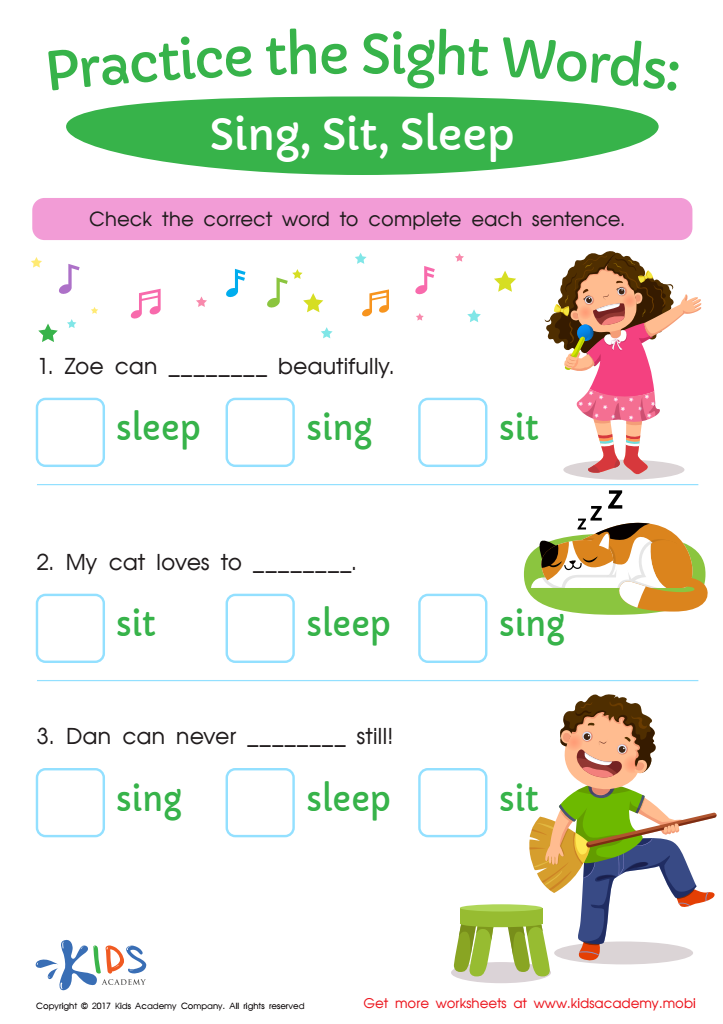
Sing, Sit, Sleep Sight Words Worksheet
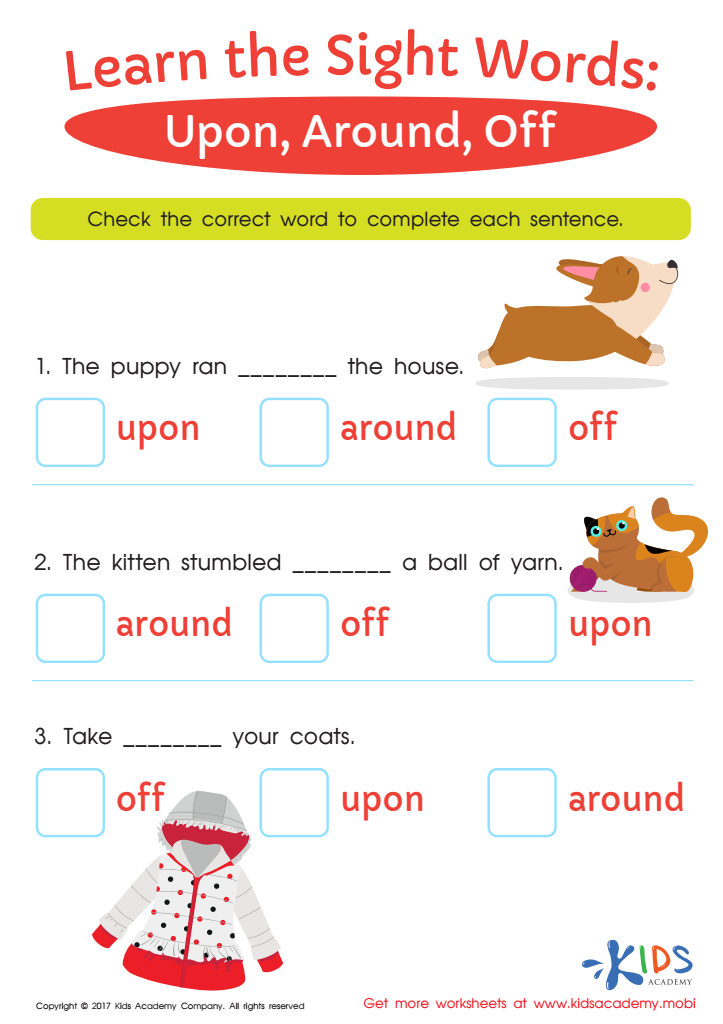
Upon, Around, Off Sight Words Worksheet
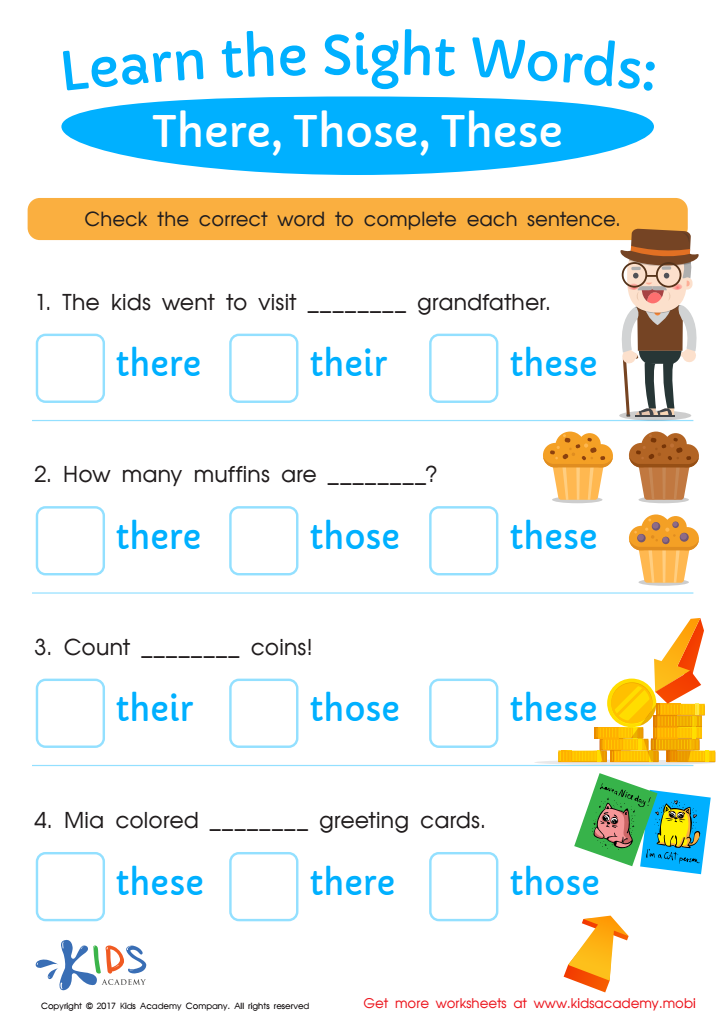
There, Those and These Sight Words Worksheet
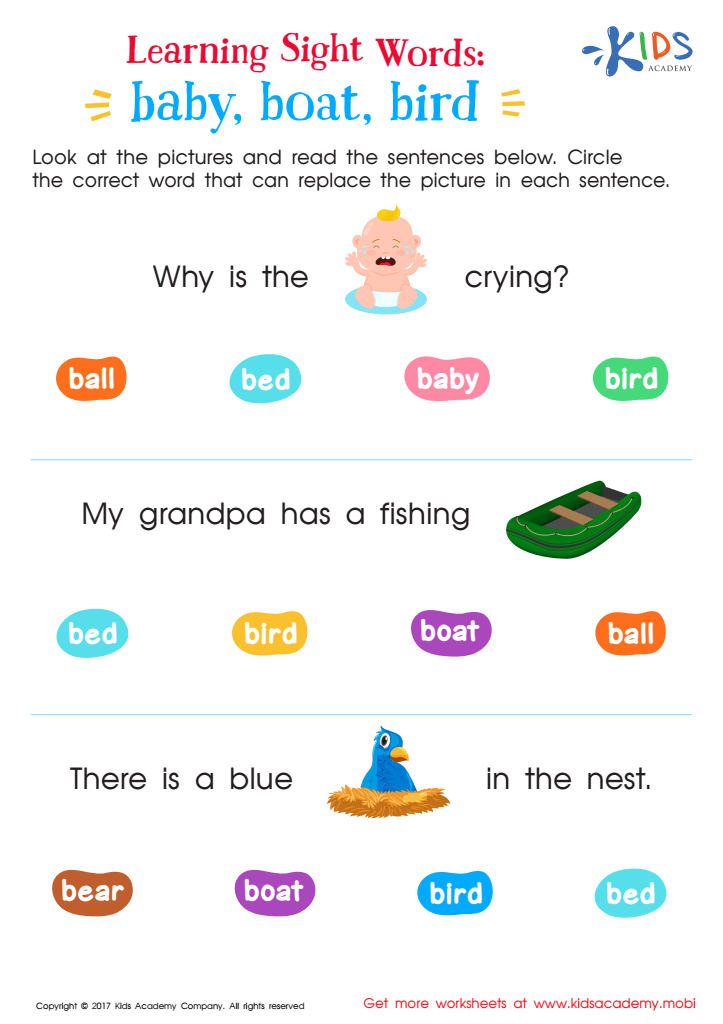
Baby, Boat, Bird Worksheet Sight Words Worksheet
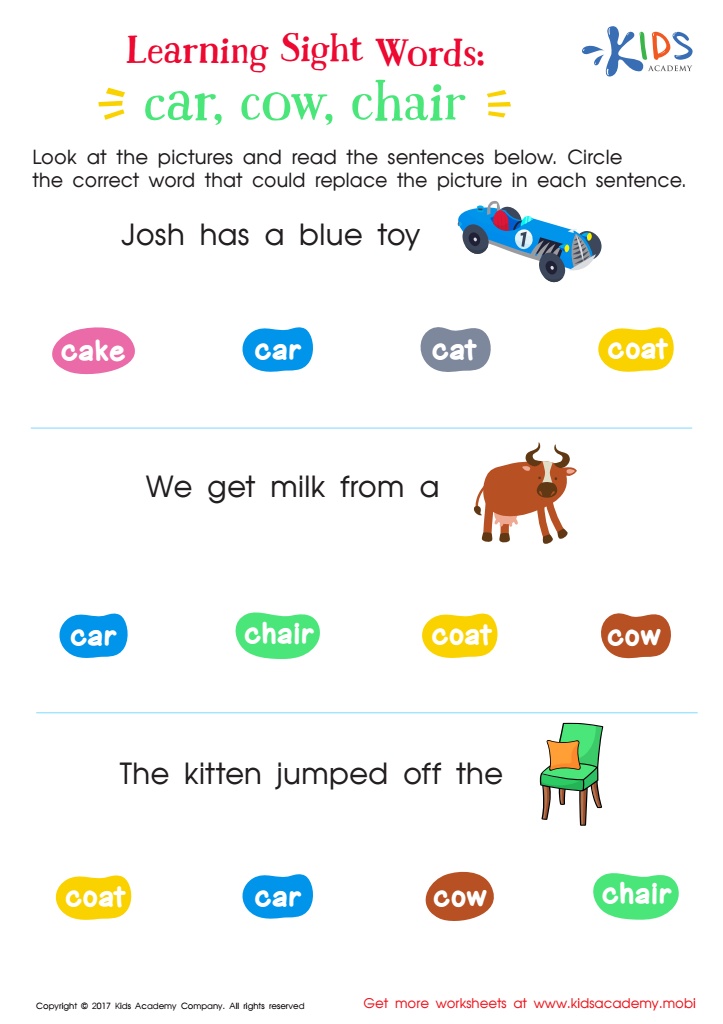
Car, Cow, Chair Worksheet Sight Words Worksheet
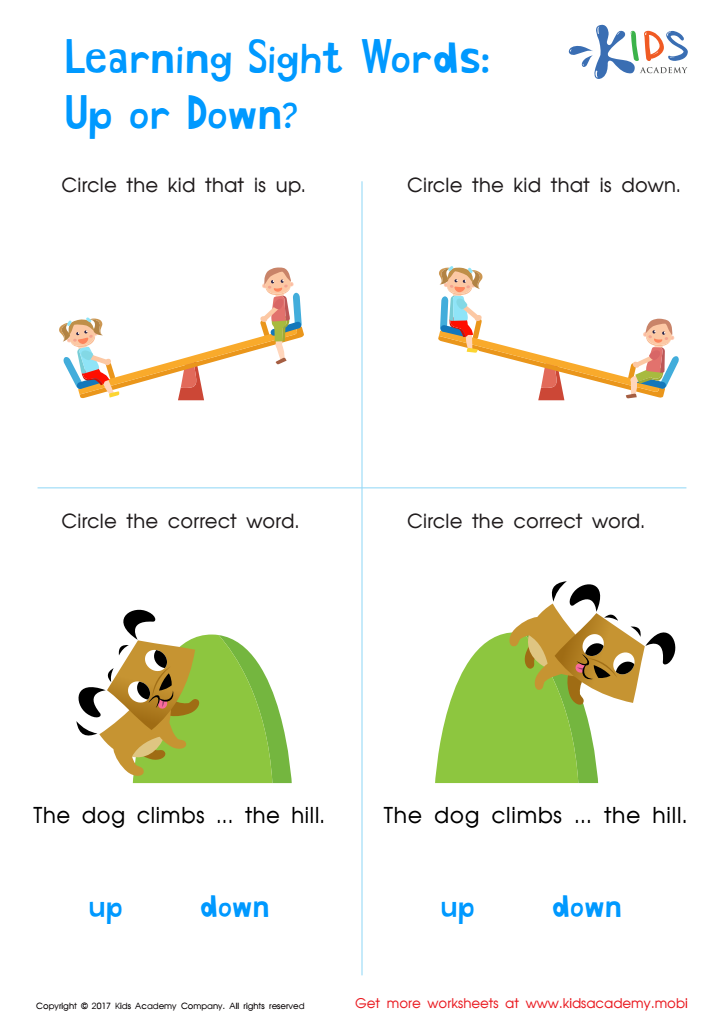
Up or Down Printable Sight Words Worksheet




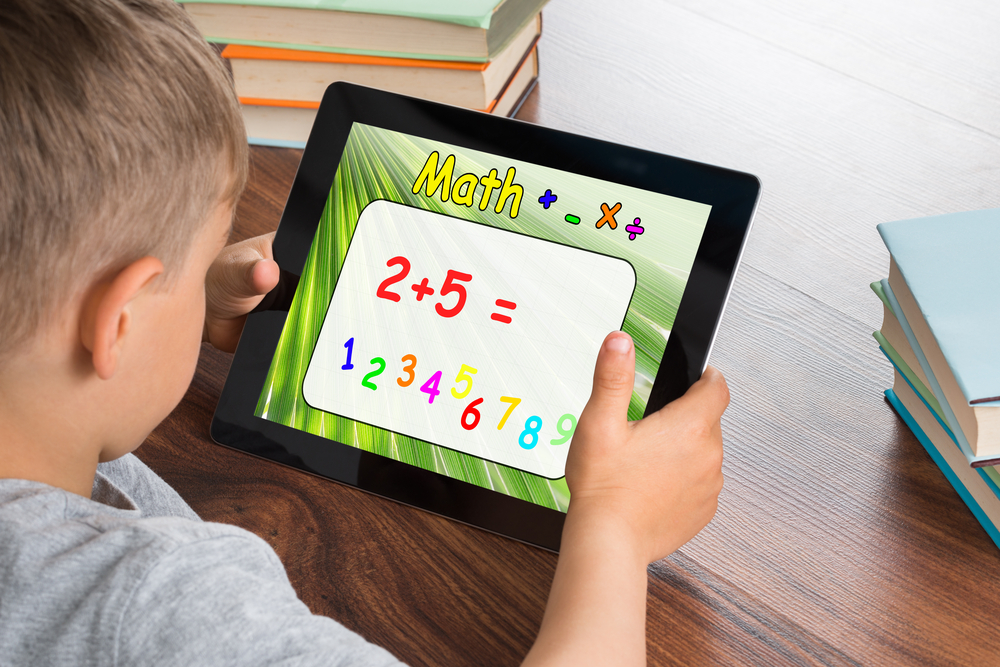



Sight words are an essential part of early childhood literacy, and parents and teachers should heavily emphasize them for children aged 4-9. First, these are high-frequency words that often cannot be easily sounded out, such as "the," "you," "said," and "could." Mastery of these words enables young readers to gain fluency, which crucially aids comprehension. Recognizing these words at a glance reduces the cognitive load required for decoding and allows children to focus on understanding the text's meaning.
During the formative years of ages 4-9, children's brains are especially receptive to language learning. Instilling sight words at this stage ensures a smoother transition to more complex reading materials. Children consistently exposed to sight words gain confidence in their reading abilities, which can lead to a positive attitude towards reading and learning in general.
Furthermore, early mastery of sight words ties into academic performance across multiple subjects. Reading is foundational to education, affecting performance in science, social studies, and even math. When children can read fluidly, they can independently explore various subjects, satisfying their curiosity and fostering a lifelong love of learning.
In conclusion, prioritizing sight words for young learners provides them with essential tools for both academic success and personal enrichment. Parents and teachers alike play a crucial role in this educational development.