Vocabulary enhancement Normal Worksheets for Ages 6-7 - Page 2
151 filtered results
Difficulty Level
Grade
Age
-
From - To
Subject
Activity
Standards
Favorites
With answer key
Interactive
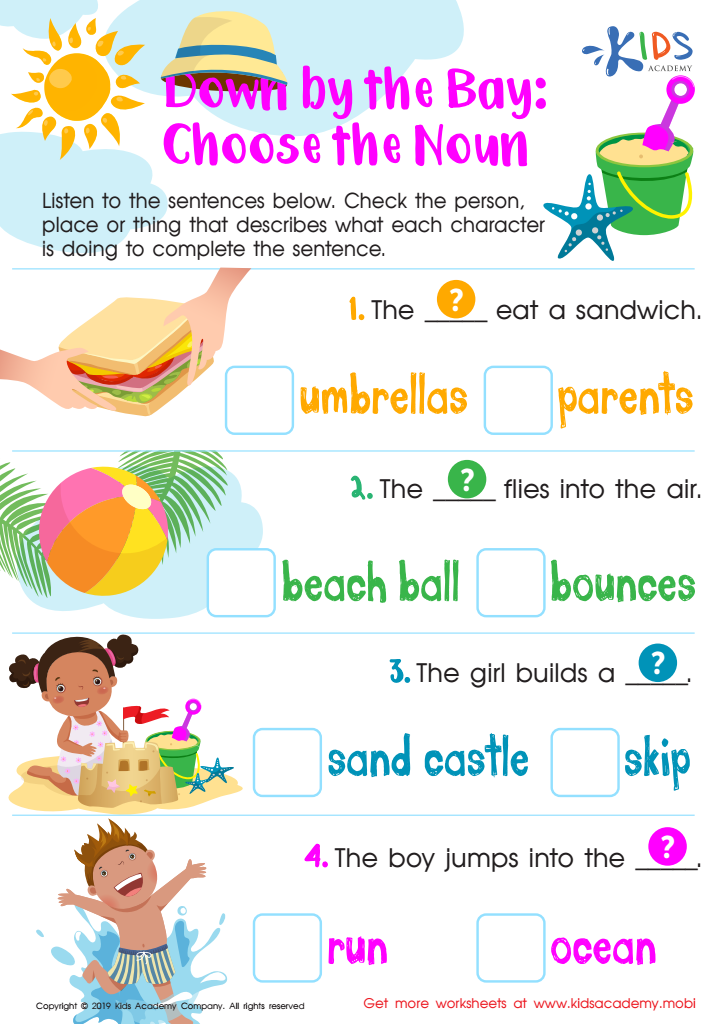
Down by the Bay: Choose the Noun Worksheet
Teach your child the basics of speaking and constructing English, like the parts of speech. Nouns are especially important; they are names of people, animals, objects, places, or things. Go through this worksheet with your kids and have them identify the nouns in the sentences. This exercise will help them understand the concept better.
 Assign to My Students
Down by the Bay: Choose the Noun Worksheet
Worksheet
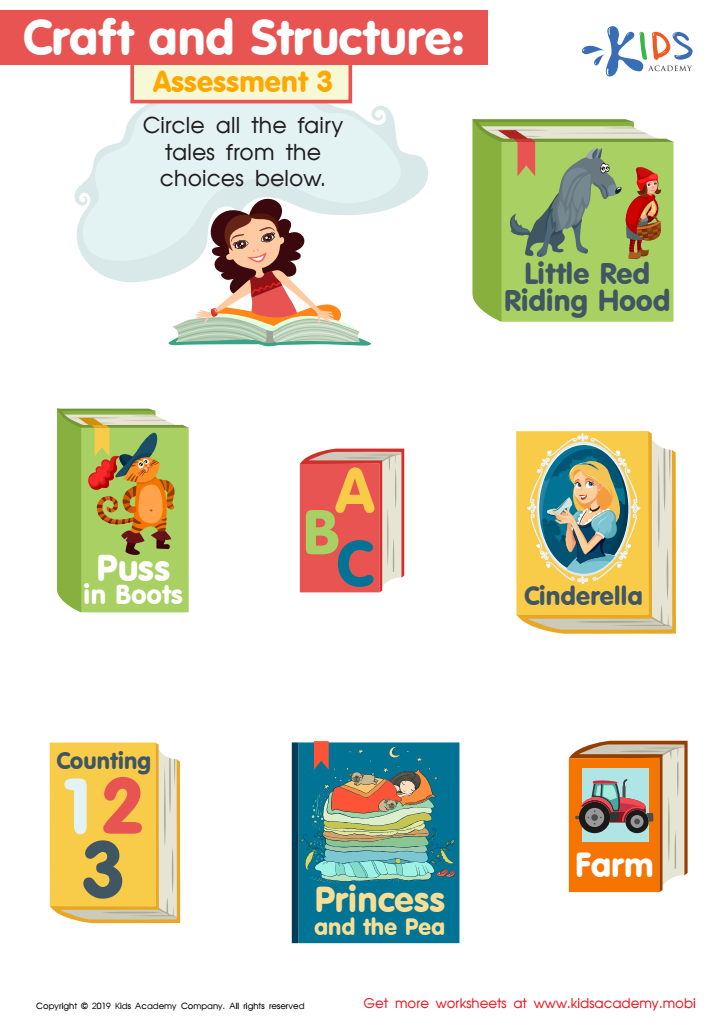
Craft and Structure: Assessment 3 Worksheet
Before starting the worksheet, ask your kids to recall their favorite bedtime stories. What characters and events can they remember? Four popular children's stories are hidden among pictures of other objects - help them search and circle the fairy tales in this PDF.
Craft and Structure: Assessment 3 Worksheet
Worksheet
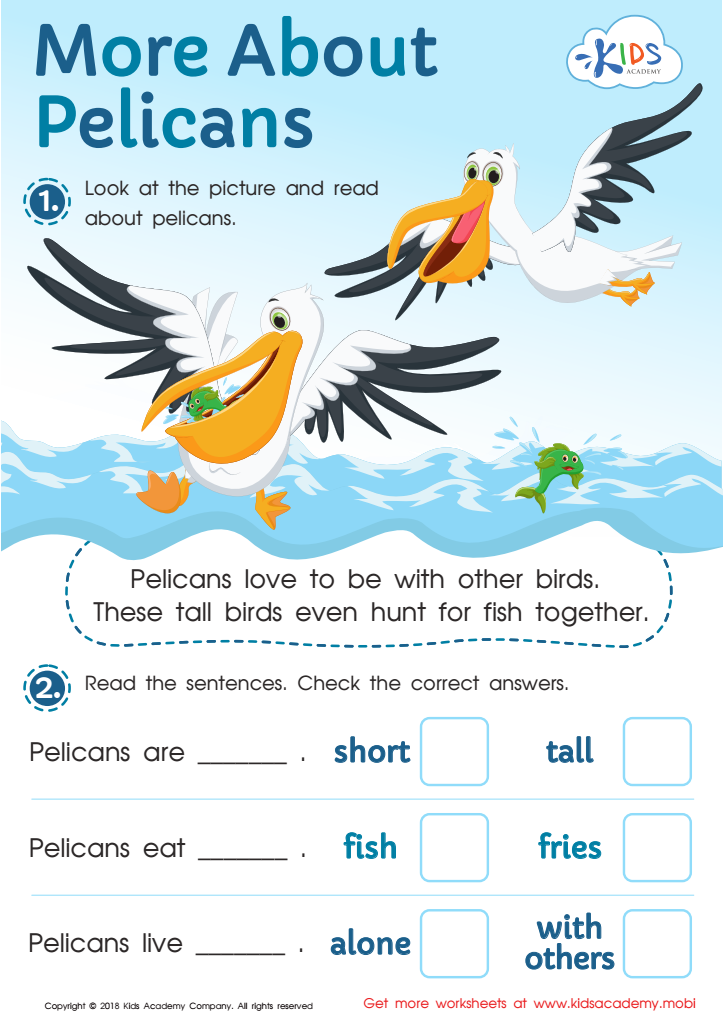
More About Pelicans Worksheet
Train your reader to look for clues in words with this fun worksheet about pelicans! As they read each sentence, they'll learn more about these majestic birds. Once they finish, answer the questions and explore even more!
More About Pelicans Worksheet
Worksheet
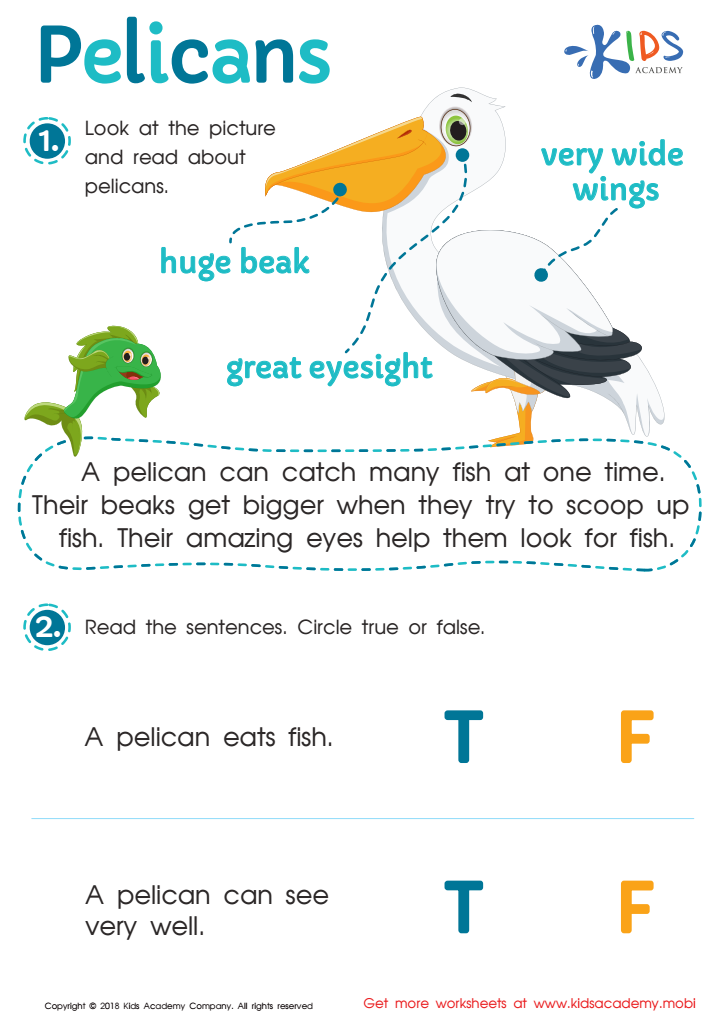
Pelicans Worksheet
This printable worksheet will help your child learn to read and analyze informational passages. It's fun and educational, featuring an animal science topic about pelicans. Read the passage and view the graph, then answer the questions by indicating if the statements are true or false.
Pelicans Worksheet
Worksheet
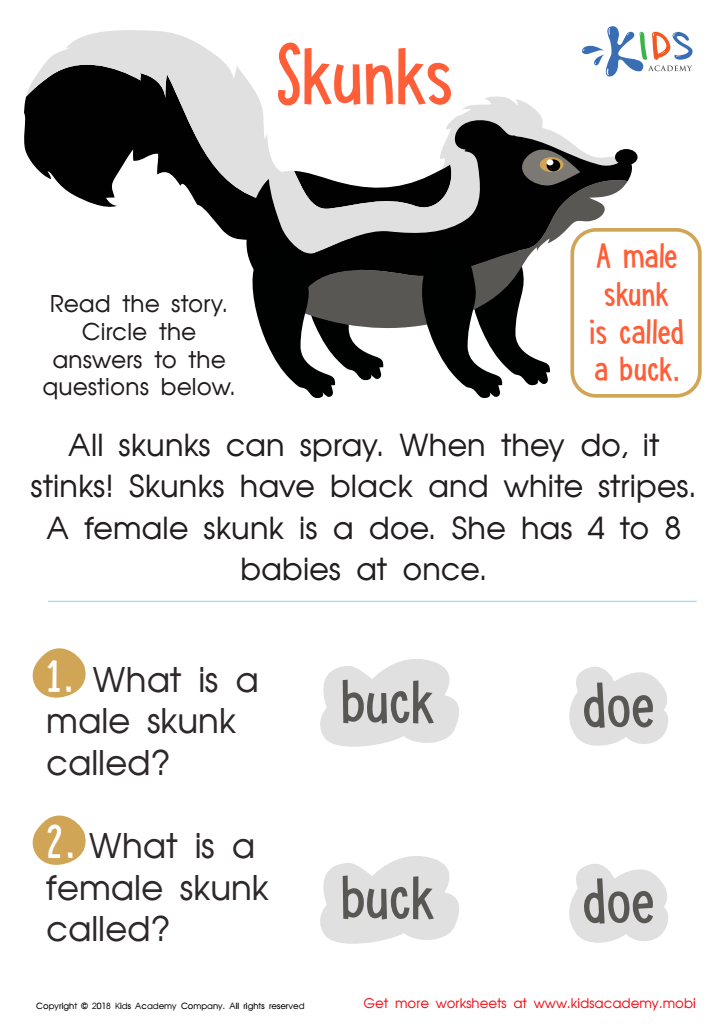
Skunks Worksheet
Kids can learn fascinating information about a beloved and smelly animal with this fun worksheet. They'll read articles, texts, and look at an accompanying picture while reading. Captions and sidebars can give extra details. Finally, answer the given questions by selecting the correct response. Reading is a fun and informative way to gain knowledge!
Skunks Worksheet
Worksheet
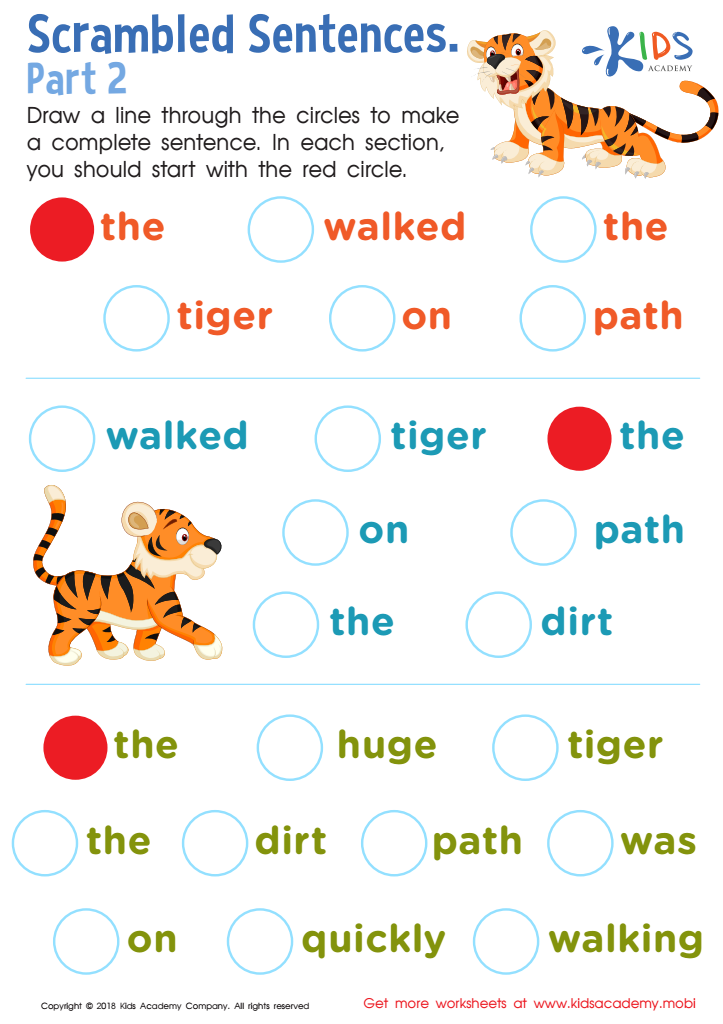
Scrambled Sentences Part 2 Worksheet
This printable worksheet helps kids construct simple, correct sentences. Introduce them to making sentences if they're new to it. Have them draw a line through the circles to form a sentence, starting with the red circle. After completing this exercise, they'll be able to craft short sentences with confidence.
Scrambled Sentences Part 2 Worksheet
Worksheet
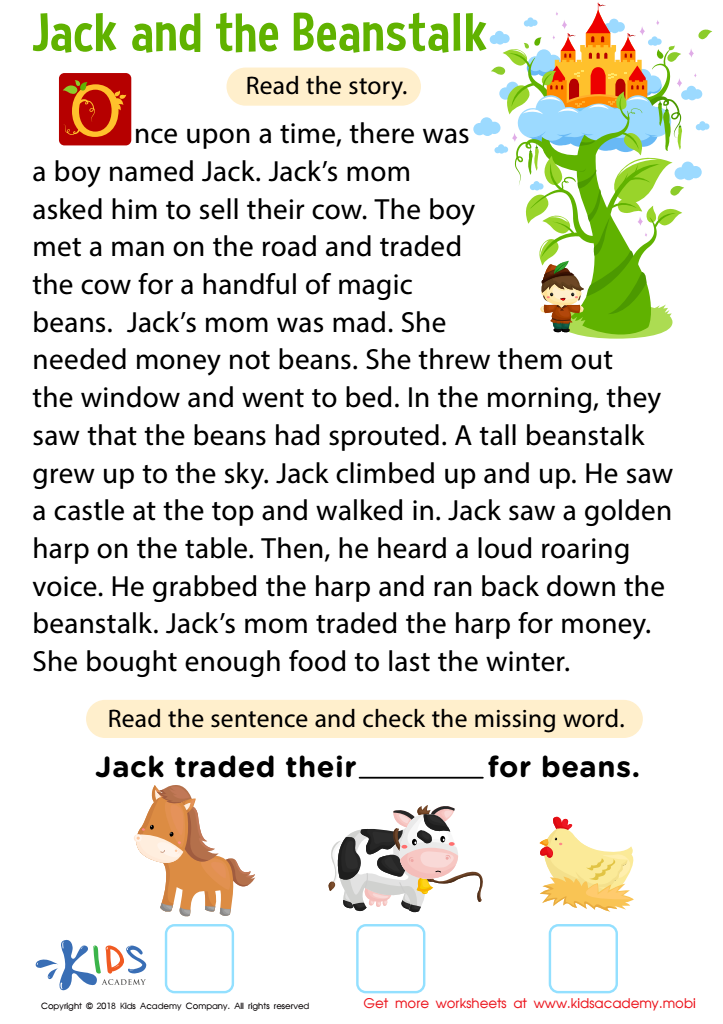
Jack and Beanstalk Worksheet
Story time can be a fun and educational experience for your kids. Read them the classic Jack and the Beanstalk - and even read it twice to help them pay attention. Afterwards, help them fill in the blank on the worksheet to expand their vocabulary and learn more from the story.
Jack and Beanstalk Worksheet
Worksheet
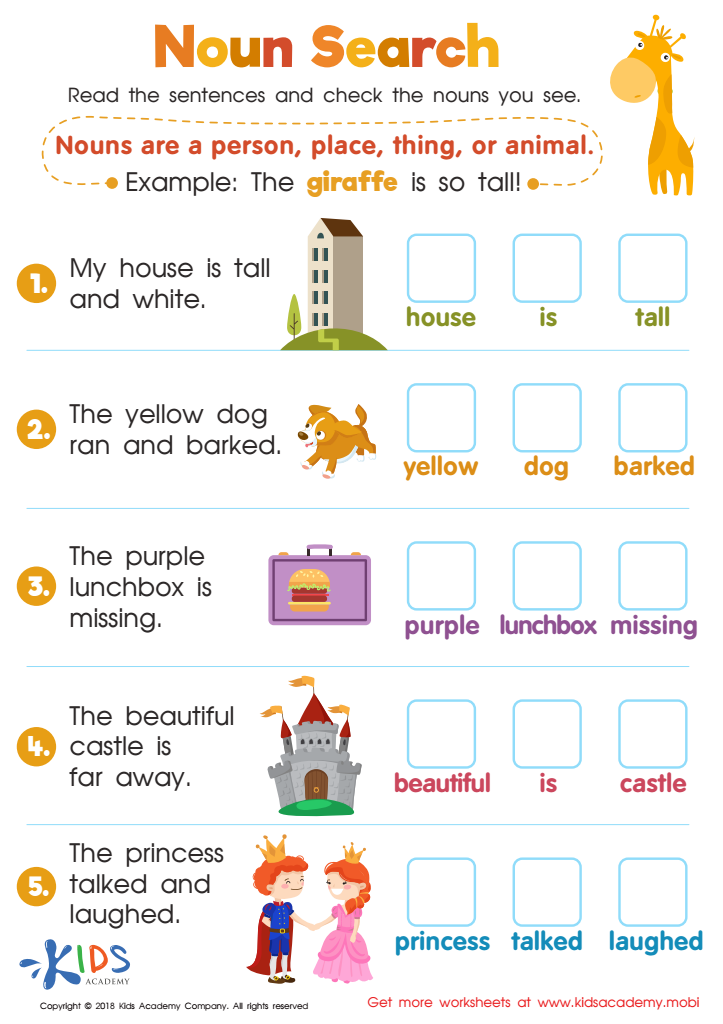
Noun Search Worksheet
Ask your kids what a noun is. If needed, remind them a noun is a name for a person, animal, place or thing. Give examples like 'dog', 'Sara', 'USA' and 'book'. Ask for more examples, then read the sentences in this worksheet and ask kids to check for nouns.
Noun Search Worksheet
Worksheet
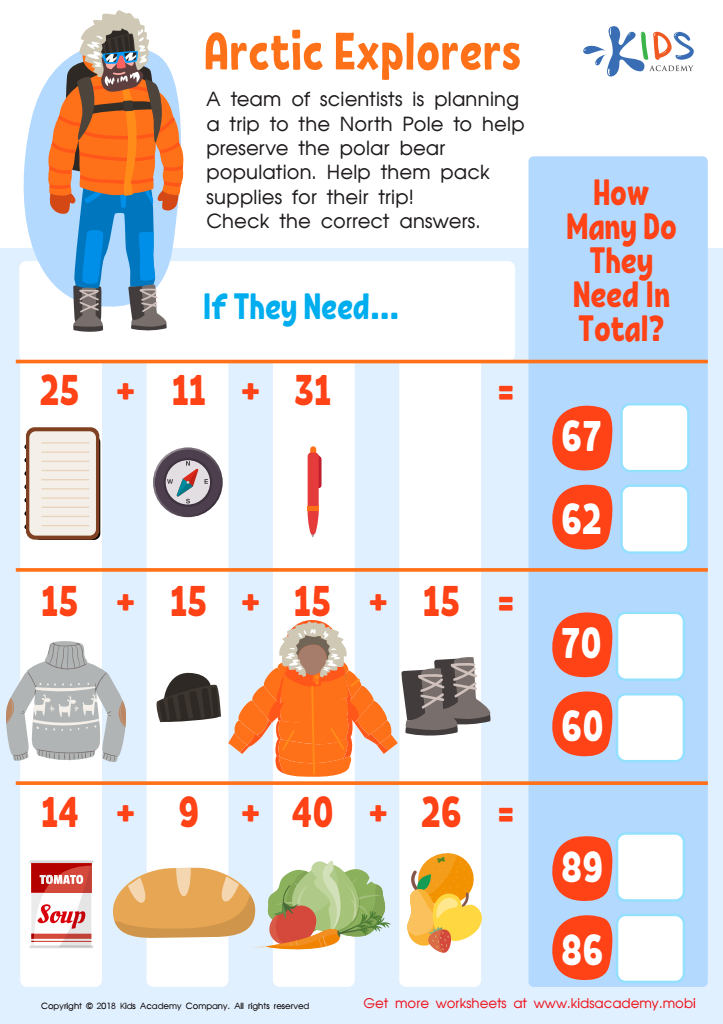
Arctic Explorers Worksheet
Help your child pack supplies for a team of scientists' trip to the North Pole! Before beginning, explain how efforts are needed to protect endangered animals like polar bears. Encourage them to check the correct clothing needed for the extremely cold region. For example, warm and protective clothing is essential.
Arctic Explorers Worksheet
Worksheet
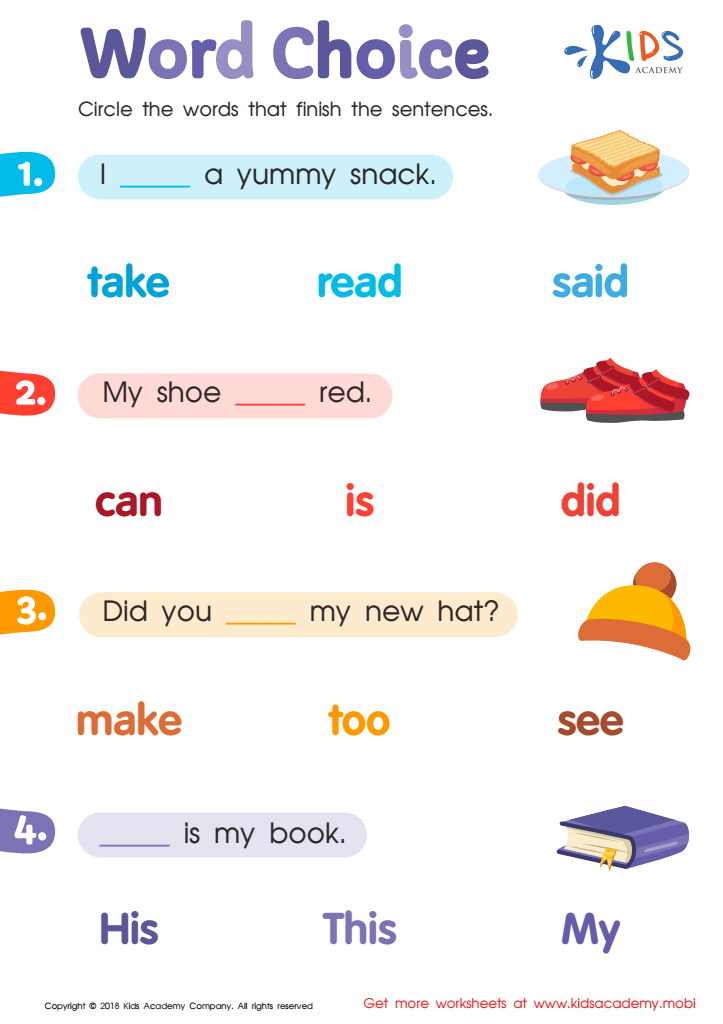
Word Choice Worksheet
This worksheet can help your children become better readers. By now, you should have an idea of their reading level. Read the incomplete sentences aloud and point to the missing piece. Have your students pick the correct word they think best fits the sentence out of the options given.
Word Choice Worksheet
Worksheet
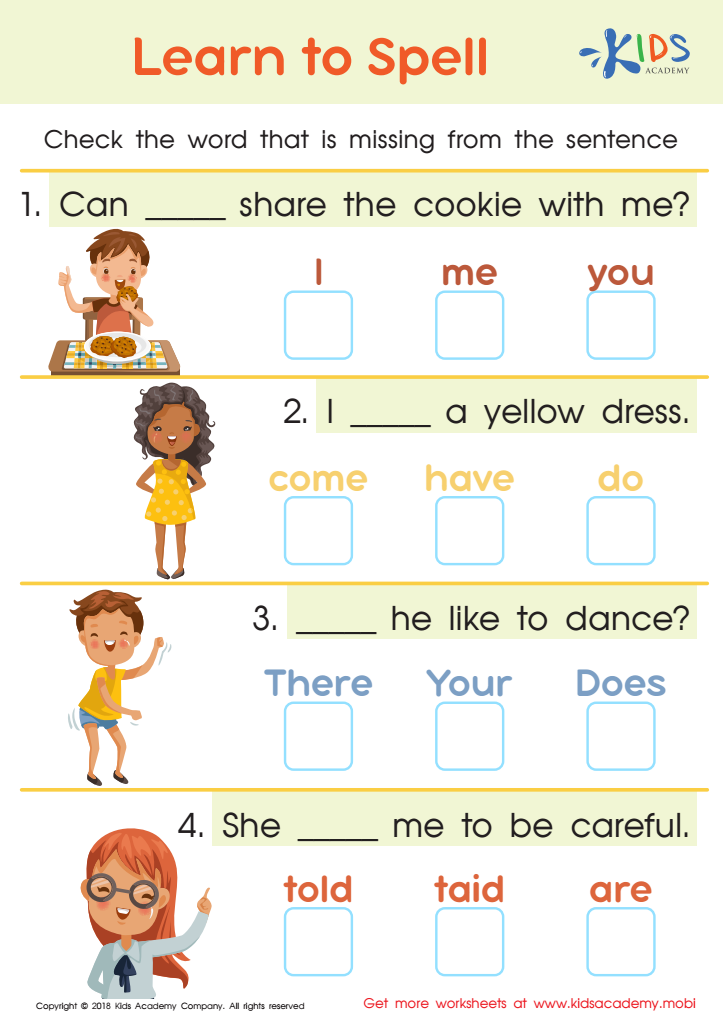
Learn to Spell Worksheet
Help sharpen spelling skills with a simple worksheet. Read sentences aloud and show which word is missing. Ask students to pick the correct word from the options. Ensure they check the missing word for accuracy.
Learn to Spell Worksheet
Worksheet
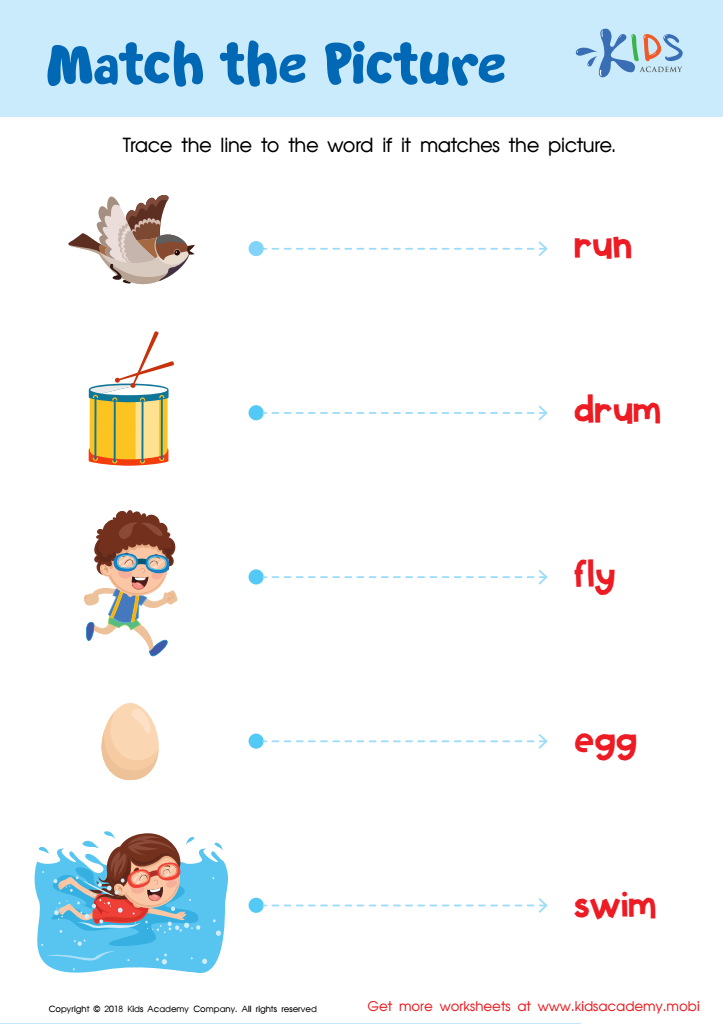
Match the Picture Worksheet
This tracing worksheet is a fun way to teach little ones that learning can be fun! Ask them to name the five images on the left and then read the words on the right. Do they match? Help them trace the line connecting the picture to the word that matches. Learning doesn't have to mean stuffy classrooms and drudgery!
Match the Picture Worksheet
Worksheet
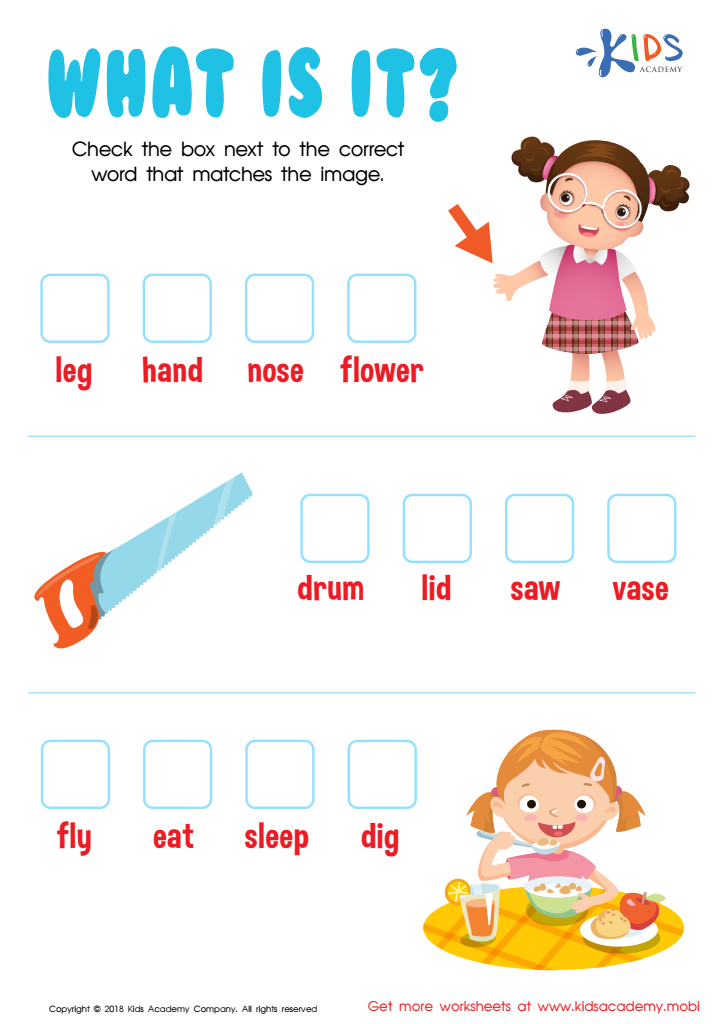
What Is It? Worksheet
Test your kids' object recognition skills with this worksheet. Have them identify each picture, then check the box next to the correct word. Point to the image and ask your child what it is; then help them select the correct answer. It's a great way to see how well they can recognize objects from pictures.
What Is It? Worksheet
Worksheet
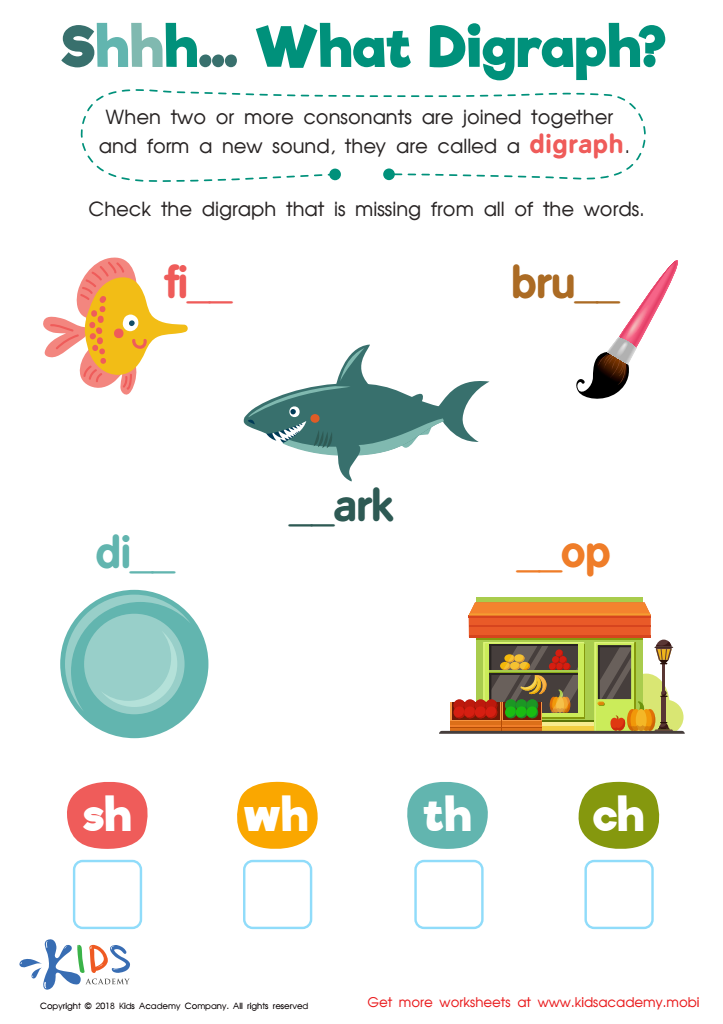
Shhh... What Digraph? Worksheet
Phonetics sounds can be combined to create a new sound - like a digraph. A great example is the /sh/ sound. Words like 'brush' and 'fish' can be heard. Ask your child to provide more examples. Look at the pictures in the PDF and see if they can identify the objects. Additionally, help them find the digraph missing from each word.
Shhh... What Digraph? Worksheet
Worksheet
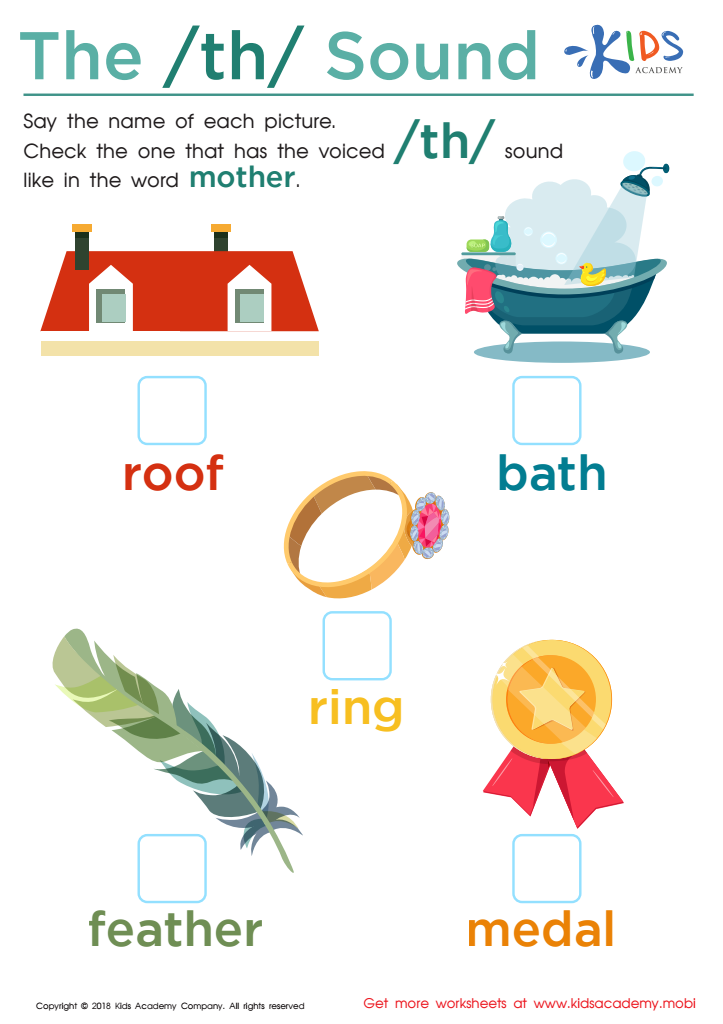
The /th/ Sound Worksheet
Confuse your students no more: have them use this worksheet to understand the /th/ sound and its two variants. With pictures, ask them to say the name of each one. Help them identify the voiced /th/ sound, like in 'mother', by having them say it aloud. Download the pdf to get started.
The /th/ Sound Worksheet
Worksheet
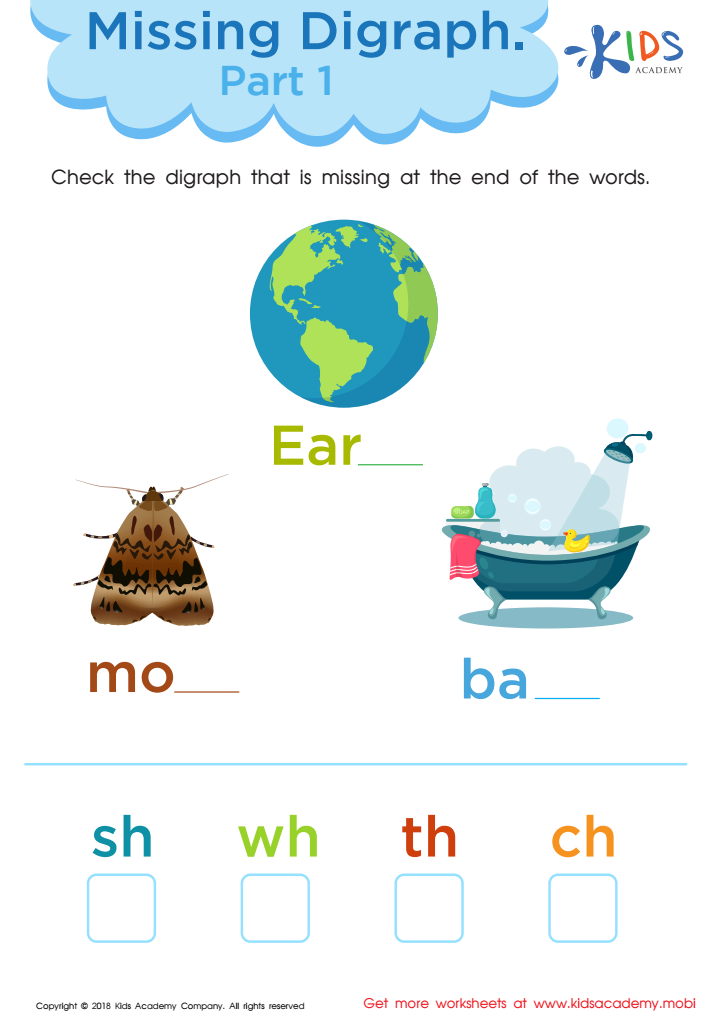
Missing Digraph: Part 1 Worksheet
Practice the 'th' digraph with this worksheet! Ask kids to say the words shown and sound out the letters below each image. Check the box with the correct digraph to complete. Examples include 'earth', 'bath' and 'moth', all ending with the same two letters. Phonics teaches that digraphs are two letters that make one sound.
Missing Digraph: Part 1 Worksheet
Worksheet
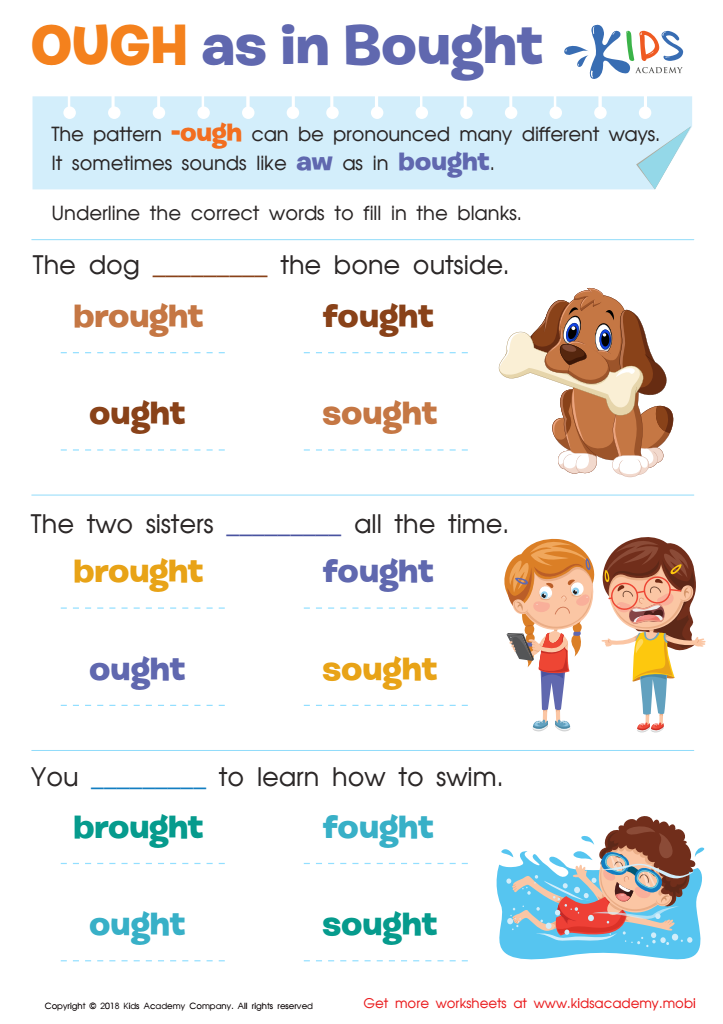
OUGH as in Bought Worksheet
Use this worksheet to teach your child the different pronunciations of -ough. For example, -ough can sound like ‘aw’ in ‘bought’. Ask your child to give more examples and help them underline the correct answers to fill in the blanks.
OUGH as in Bought Worksheet
Worksheet
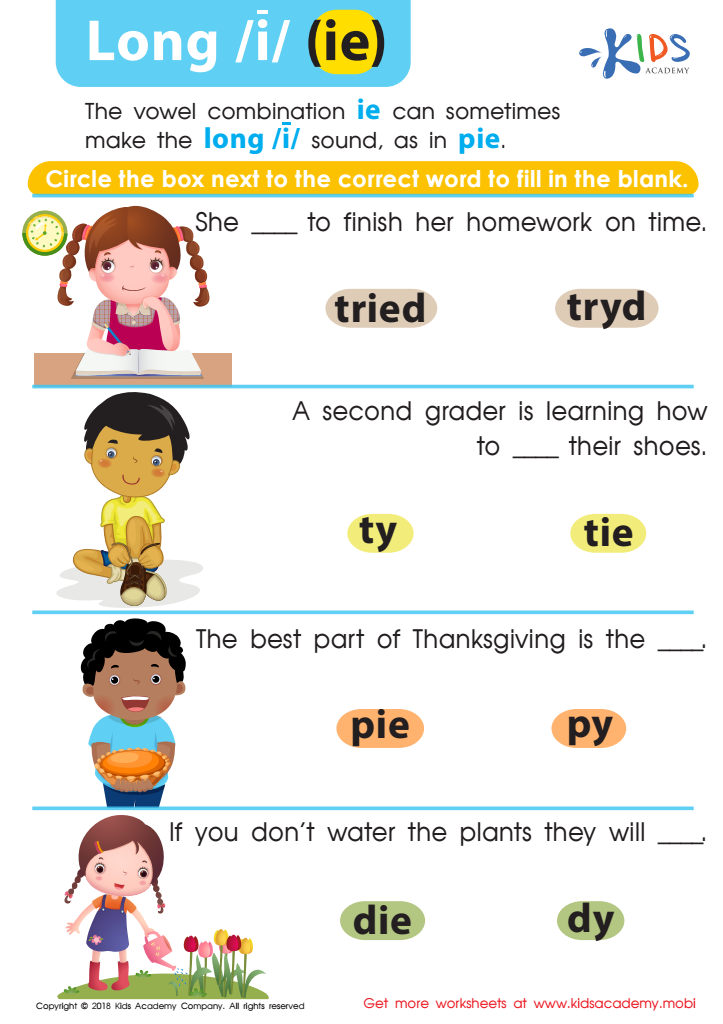
Reading: Long I and IE Worksheet
Have your child list words with the long /i/ sound (eg. 'pie'), and if needed, help them out with some examples. Read each word in the worksheet together and check their answer by having them circle the correct word.
Reading: Long I and IE Worksheet
Worksheet
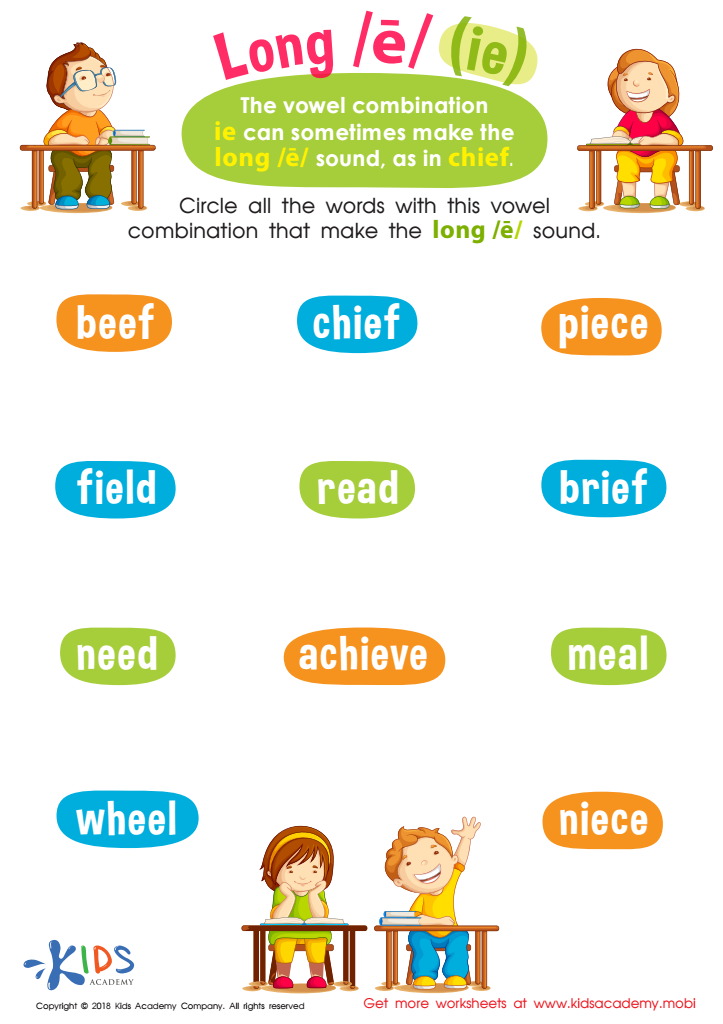
Reading: Long E and IE Worksheet
Ask your child to name some words with the long /e/ sound they hear every day. Then, read aloud all the words in the worksheet with them. Ask them to circle the words containing ie that make this sound.
Reading: Long E and IE Worksheet
Worksheet
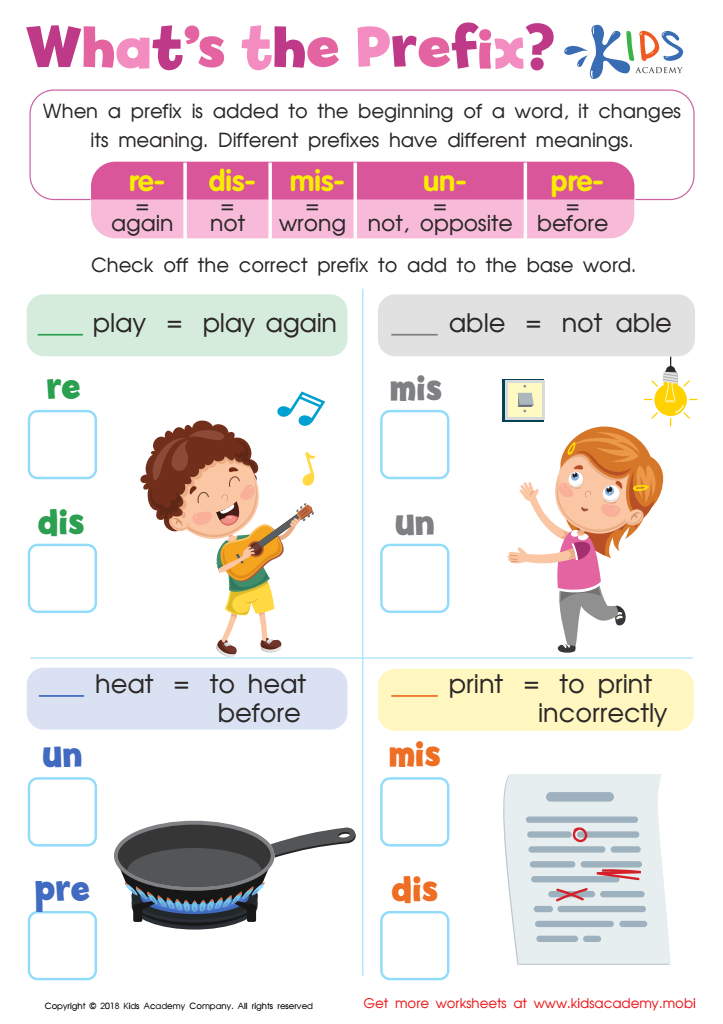
Reading: What Is the Prefix Worksheet
This worksheet helps children learn about prefixes by matching pictures and base words with the correct prefix. Learning these prefixes and their meanings is essential for reading and vocabulary comprehension. Use this free download to check your students' understanding.
Reading: What Is the Prefix Worksheet
Worksheet
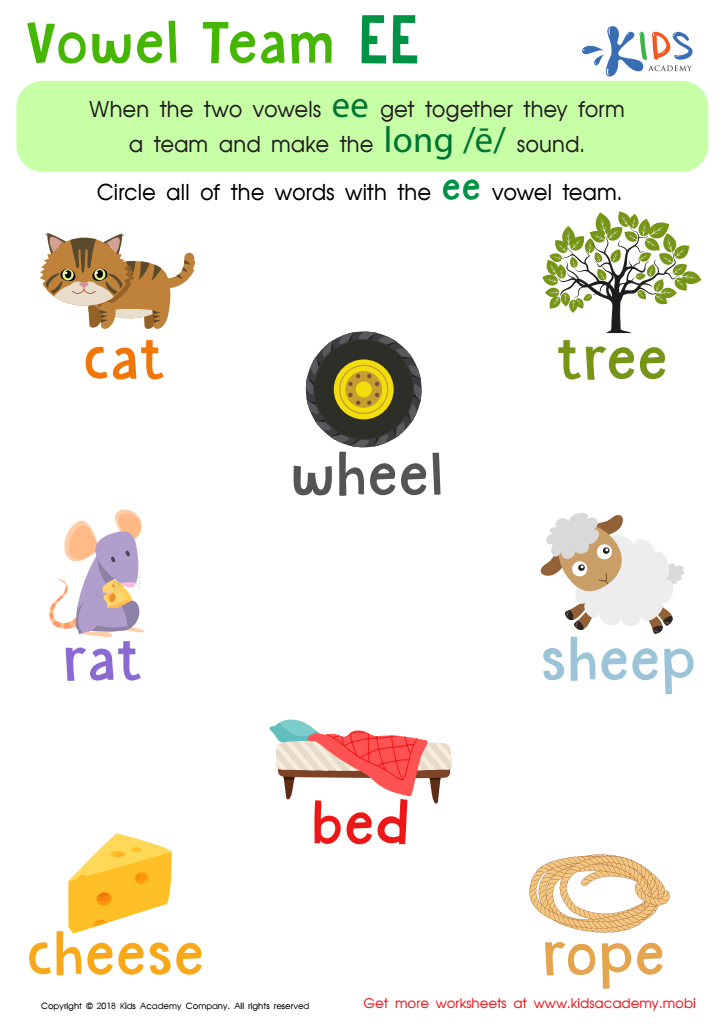
Reading: Vowel Team EE Worksheet
This worksheet is perfect for helping young learners master the /ee/ vowel team. It shows the first vowel with a long sound and the second vowel silent. It also provides pictures for unfamiliar words for readers of all levels. It's an ideal resource for teaching phonics skills.
Reading: Vowel Team EE Worksheet
Worksheet
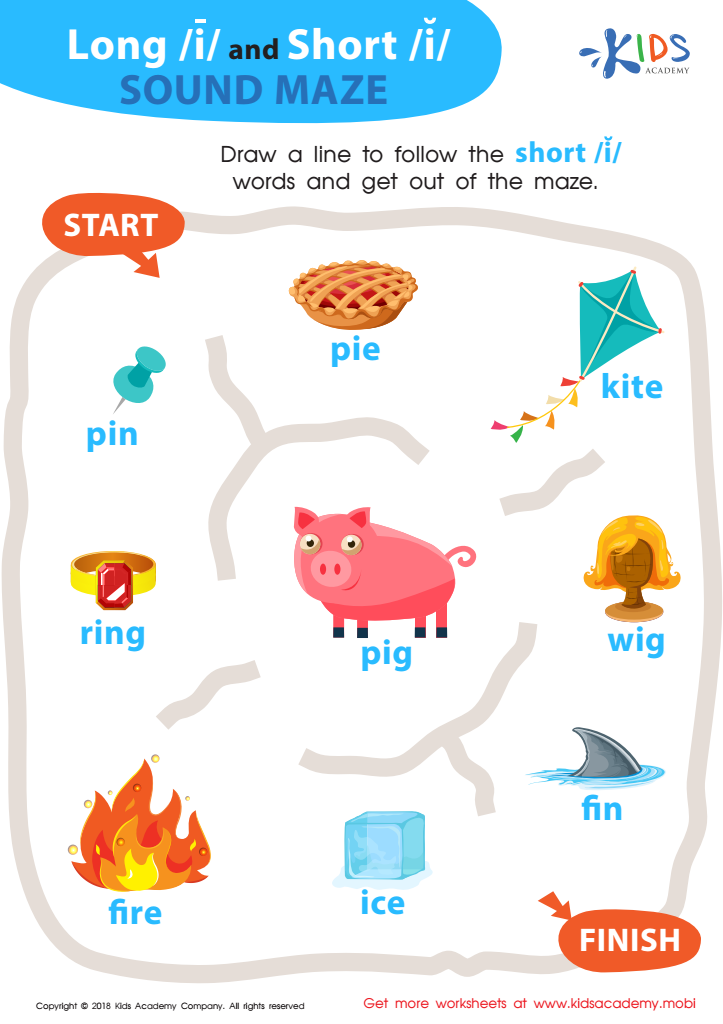
Reading: Long I and Short I Sound Maze Worksheet
Question your students if the worksheet is entertaining. They may respond negatively! Nonetheless, this activity will bring satisfaction while learning the distinction between a long and short I sound. Students read the words in the maze and only follow the words with the short I sound to finish the exercise. Grasping the difference between long and short vowels is demanding, but this worksheet helps students understand this reading skill.
Reading: Long I and Short I Sound Maze Worksheet
Worksheet
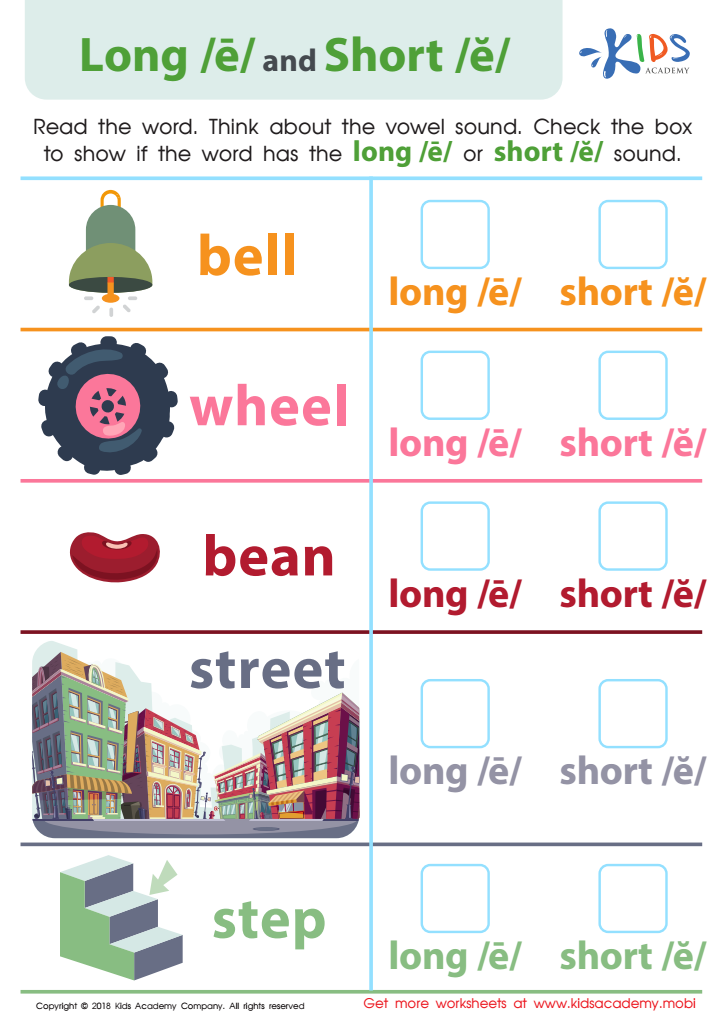
Reading: Long E and Short E Worksheet
Provide your students with valuable practice in distinguishing long and short E sounds with this worksheet. They'll look at pictures and read the words, then decide which sound is being used. It's an effective tool to help them master a difficult concept.
Reading: Long E and Short E Worksheet
Worksheet
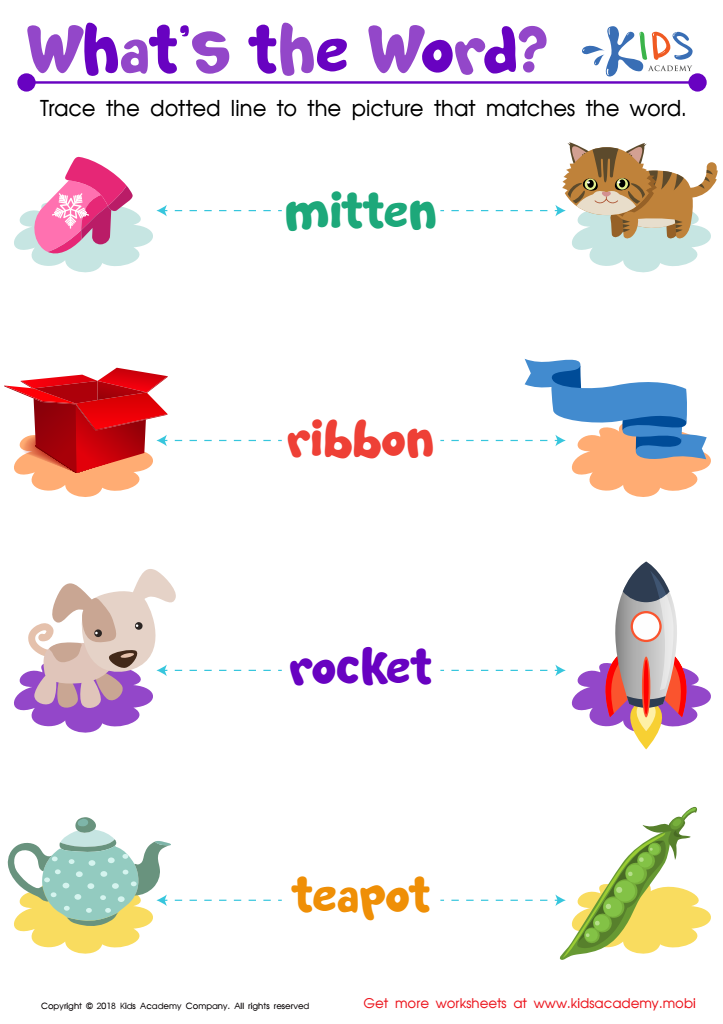
Reading: What's Word Worksheet
Teaching reading? This worksheet can help! Students read the word and draw a line to the picture for clues if needed. This will boost their vocabulary and fluency, increasing confidence and reading skills. Watch their progress as new words are added!
Reading: What's Word Worksheet
Worksheet
Join Kids Academy for Free
Who is primarily going to use this learning content?