
Normal Comparison Worksheets for Ages 6-7
7 filtered results
Difficulty Level
Grade
Age
-
From - To
Subject
Activity
Standards
Encourage your child's development with our Normal Comparison Worksheets for ages 6-7, expertly crafted to enhance their math skills through fun and engaging activities. These worksheets are designed to help kids master fundamental concepts like comparing numbers, sizes, and quantities, promoting critical thinking and problem-solving abilities. Each sheet offers colorful, interactive problems that make learning enjoyable while reinforcing key mathematical skills. Ideal for both classroom and home use, our comparison worksheets provide the perfect blend of education and entertainment to support your child's growth. Download now to give your young learner a head start in math!
Favorites
With answer key
Interactive
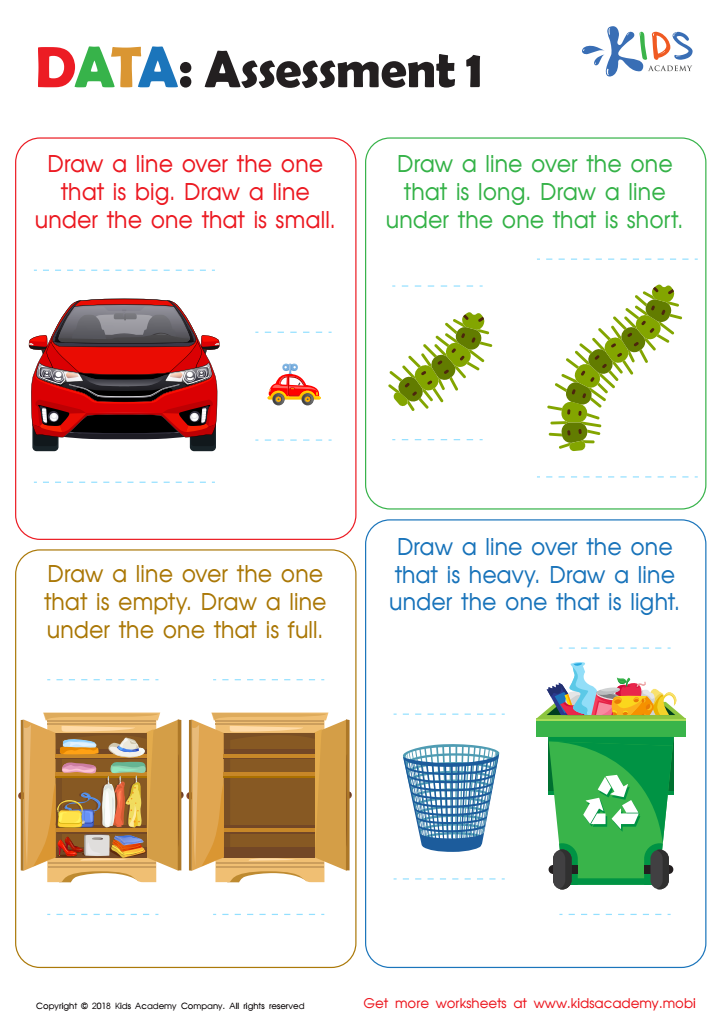
Data: Assessment 1 Worksheet
Assess your students' knowledge of measurement words with this worksheet. Have them compare and describe objects/quantities using words like "big", "small", "long", "short", "empty", "full", "heavy" and "light". Encourage further learning by asking students to provide examples of each word meaning.
 Assign to My Students
Data: Assessment 1 Worksheet
Worksheet
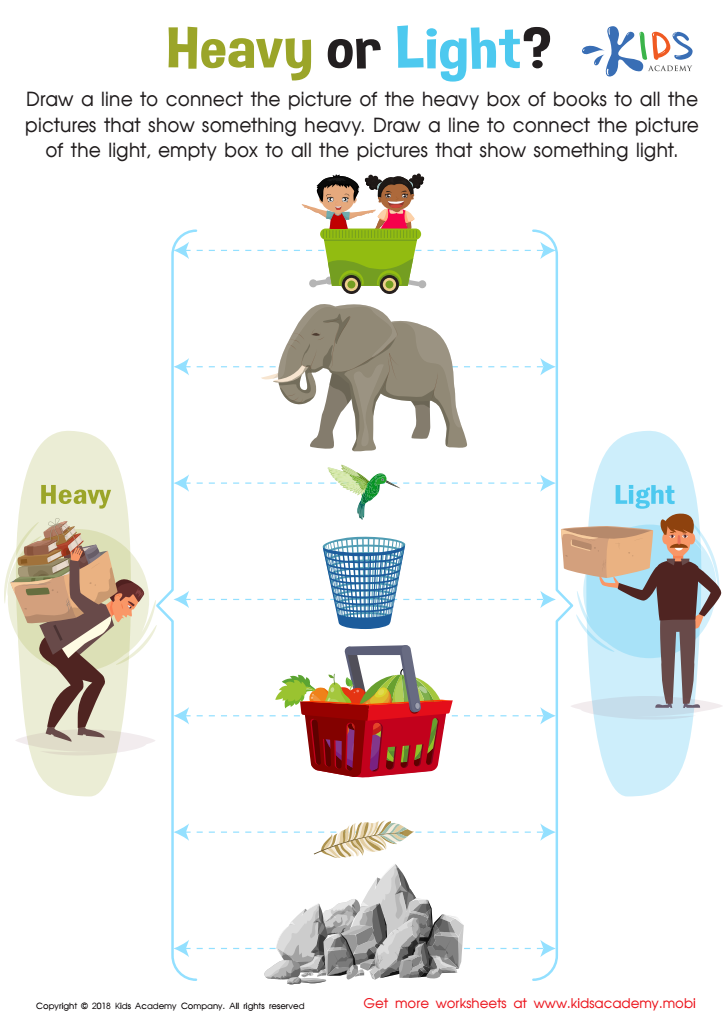
Heavy or Light? Worksheet
Kids can struggle to understand weight comparison, as size and mass matter. This free PDF helps develop fine-motor and hand-eye skills as kids trace lines to match pictures. The familiar pictures create concrete representations, ideal for learning more complex concepts.
Heavy or Light? Worksheet
Worksheet
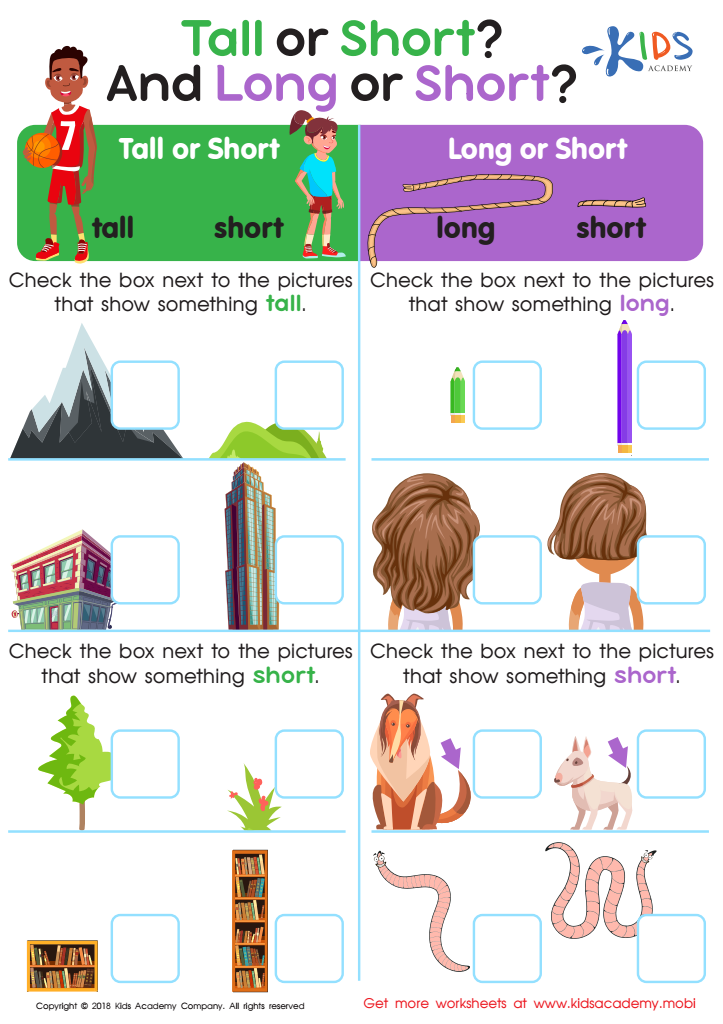
Tall or Short and Long or Short? Worksheet
This worksheet is fun and helpful for kids to understand the difference between height and length. With pictures of familiar objects, they can compare and choose the box with the right answer. This helps them gain skills and a better foundation for future measuring.
Tall or Short and Long or Short? Worksheet
Worksheet
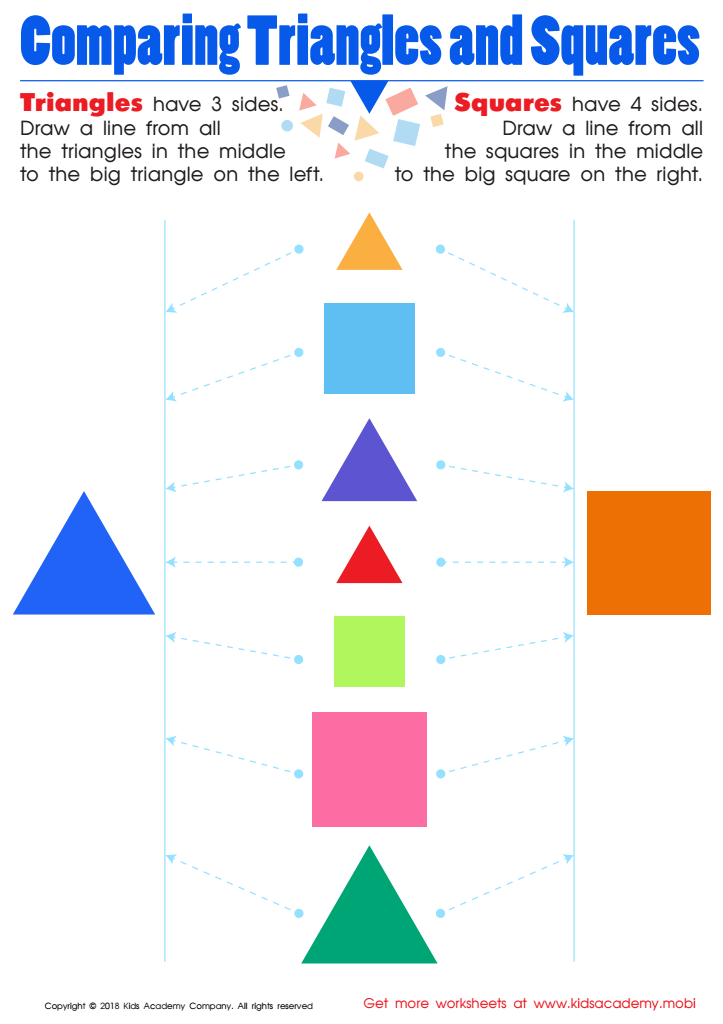
Comparing Triangles Squares Worksheet
Squares and triangles are different in the number of sides they have. Challenge kids to compare them with this fun worksheet! Read the descriptions at the top, then use the left and right shapes to match up the middle ones. Go down the page, joining the middle shapes to the side using the dotted lines!
Comparing Triangles Squares Worksheet
Worksheet
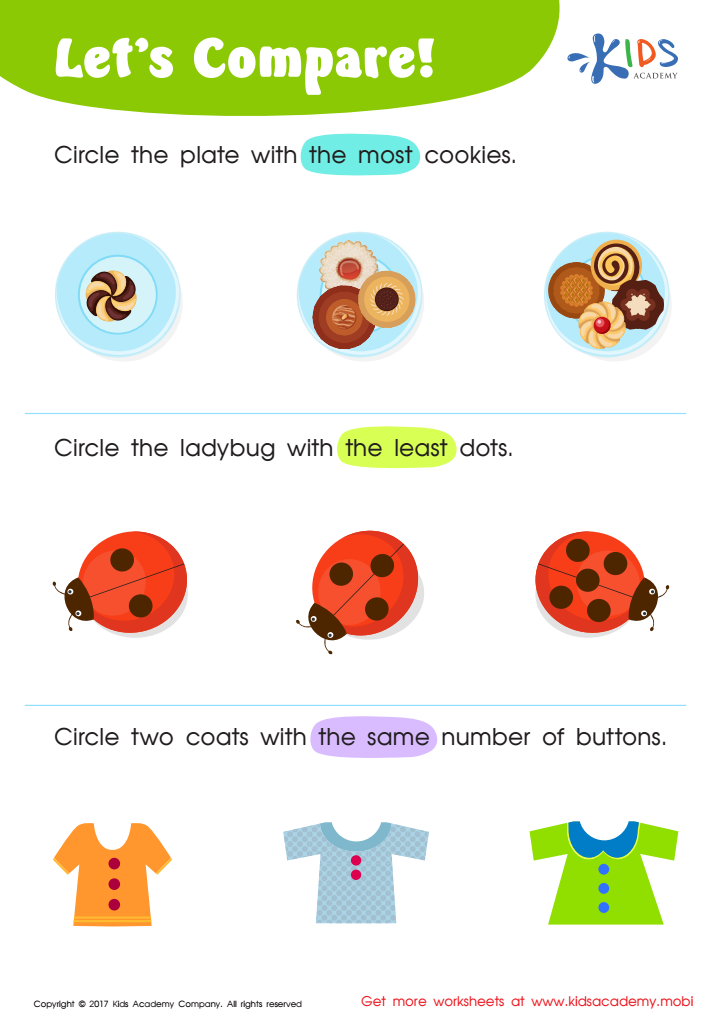
Matching: Classifying Toys by Size Worksheet
.
Have your young one's observation and counting skills ready for this worksheet; carefully look through the images and count the objects, then circle the plates with the least, most or equal number of patterns. Pay attention and have good counting abilities to make this task easy.
Matching: Classifying Toys by Size Worksheet
Worksheet
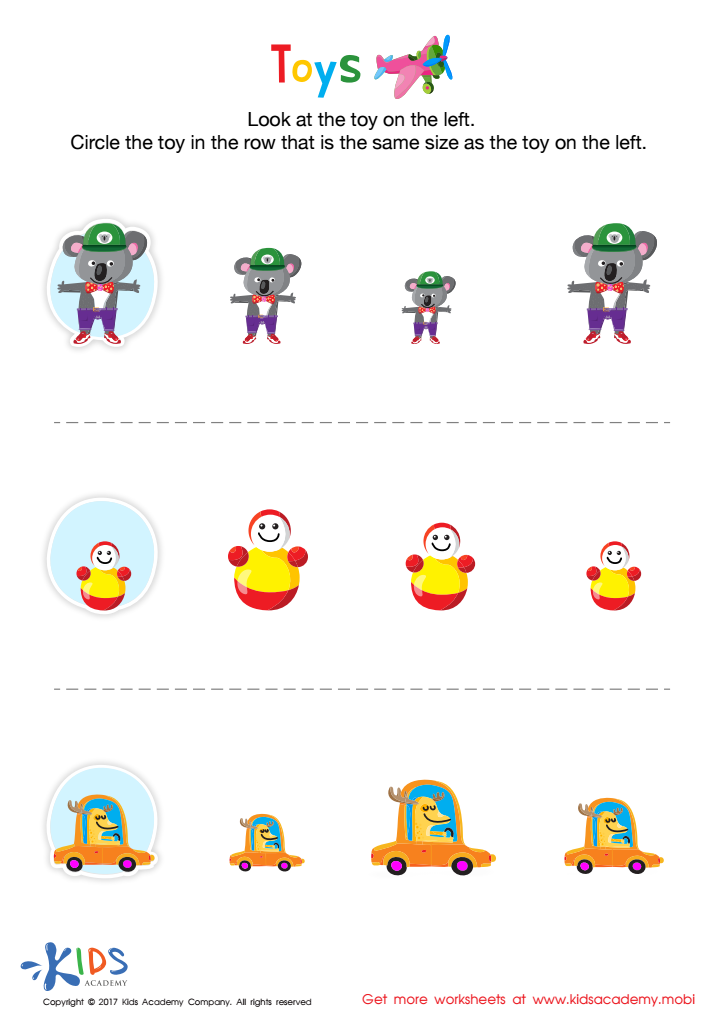
Matching: Classifying Toys by Size Worksheet
Sorting worksheets are an effective way to help your preschooler learn life and educational skills. Spatial awareness, direction recognition, and reading directions all help build a strong foundation for future educational success.
Matching: Classifying Toys by Size Worksheet
Worksheet
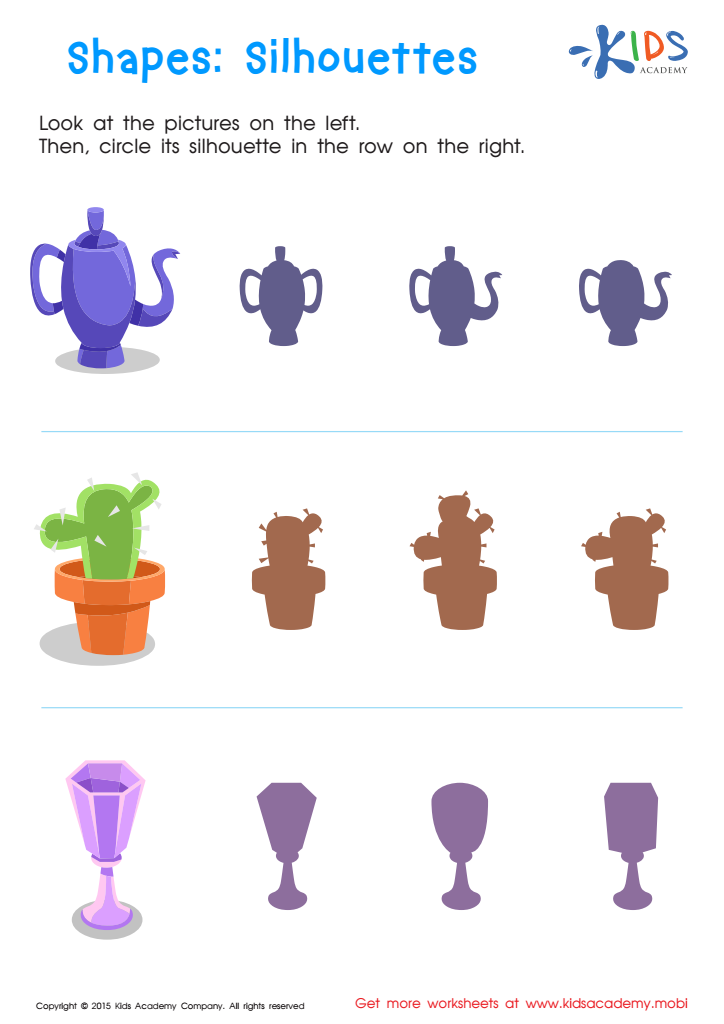
Silhouettes – Shapes Worksheet
Kids can have fun while learning to compare sizes with this silhouettes shapes worksheet! Matching pictures to silhouettes helps them build early math skills, while enjoying the activity!
Silhouettes – Shapes Worksheet
Worksheet
Join Kids Academy for Free
Who is primarily going to use this learning content?





Understanding normal developmental comparisons for children ages 6-7 is essential for both parents and teachers. Children develop at their own individual pace, but having a benchmark to compare against can help adults identify any potential challenges early on. By monitoring typical milestones in areas such as language, motor skills, cognitive abilities, and social-emotional development, parents and educators can ensure children are on the right track.
For instance, if a child struggles with reading, while most peers are beginning to read simple sentences, this may indicate the need for additional support or assessment. Similarly, recognizing if a child is socially withdrawn or unable to follow basic instructions can be crucial for early intervention. Early detection of developmental delays or difficulties allows for timely and effective intervention, which significantly improves long-term academic and social outcomes.
Furthermore, understanding normal comparison helps set realistic expectations and reduces undue pressure. It’s important to celebrate each child's unique growth while offering appropriate challenges and support. This balanced approach fosters a nurturing and supportive learning environment where every child can thrive.
Overall, tracking and understanding developmental benchmarks guides parents and teachers in providing optimal support, ensuring each child reaches their full potential and enjoys a well-rounded elementary school experience.








