Filters

232 filtered results

Clear all filters
Favorites
With answer key
Interactive

232 filtered results

Difficulty Level

Grade


Check out this FREE Trial Lesson on Science for age 6-7!

Sound Is All Around Us

Favorites
With answer key
Interactive
  • 6-7
  • Interactive
  • Science
  • Normal
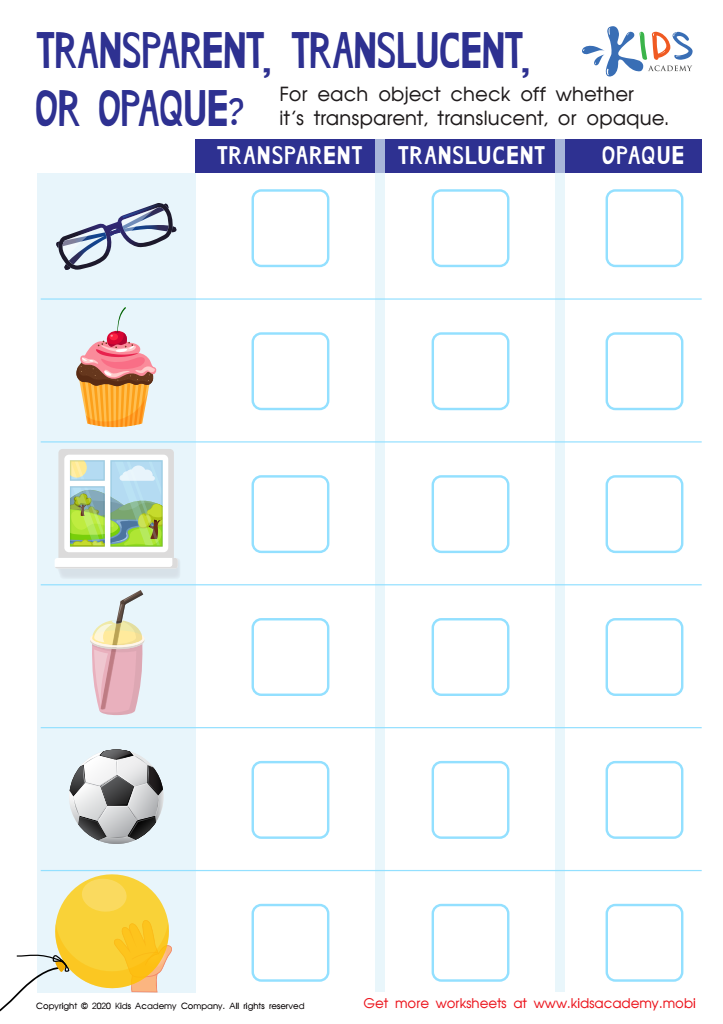
Transparent, Translucent, or Opaque Worksheet

Transparent, Translucent, or Opaque Worksheet

Remind students that transparent objects allow us to see through them, translucent objects let some light pass through, and opaque objects block all light. Have them look at pictures and decide if each object is transparent, translucent, or opaque.
Transparent, Translucent, or Opaque Worksheet
Worksheet
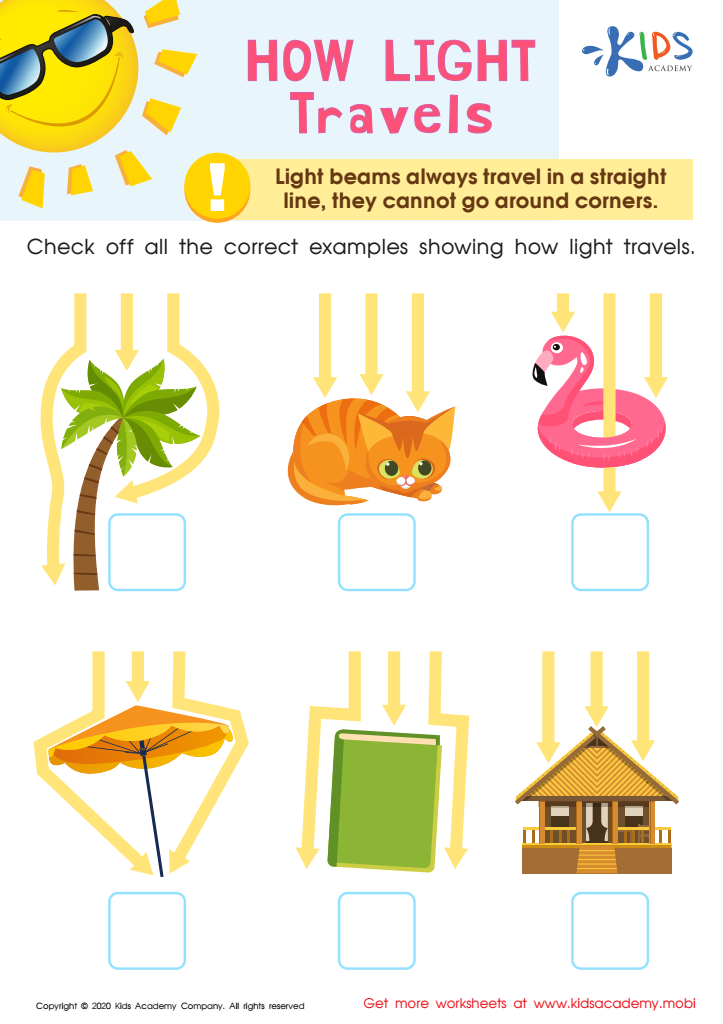
How Light Travels Worksheet

How Light Travels Worksheet

This colorful worksheet teaches students about light travel: beams move in a straight line and can't go around corners. Students view pictures and check off all the correct examples.
How Light Travels Worksheet
Worksheet
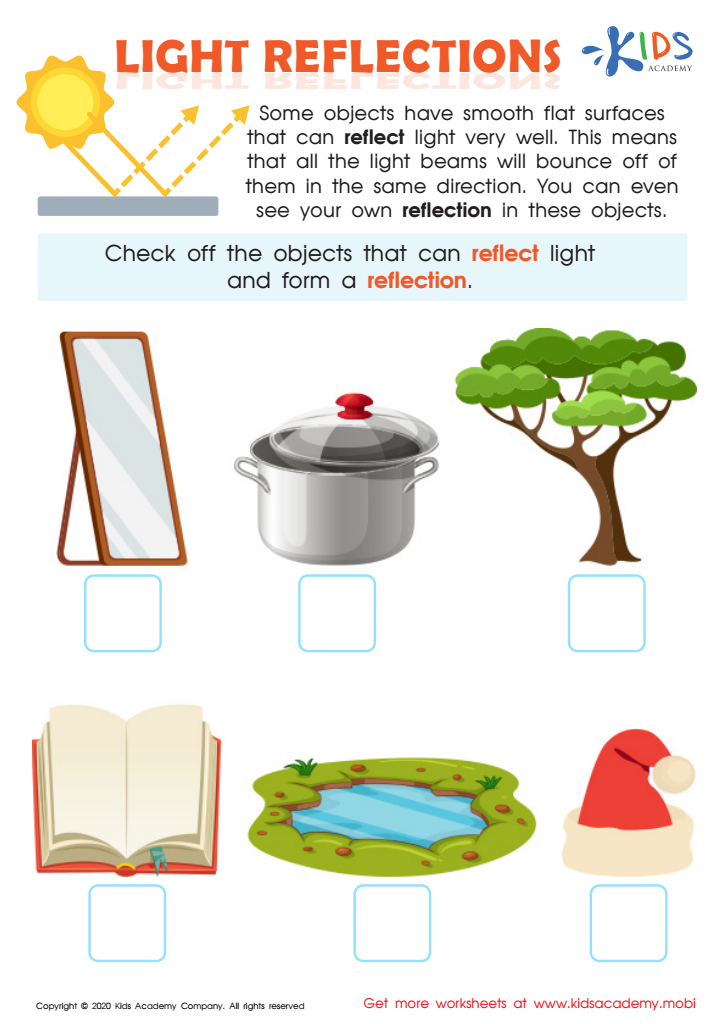
Light Reflections Worksheet

Light Reflections Worksheet

Teach your students that some objects reflect light and form a reflection. Ask them to name examples, then look at pictures and check off which objects can do this. Have them note how the light bounces off these surfaces, and observe their own reflections.
Light Reflections Worksheet
Worksheet
Which Is Brighter? Worksheet

Which Is Brighter? Worksheet

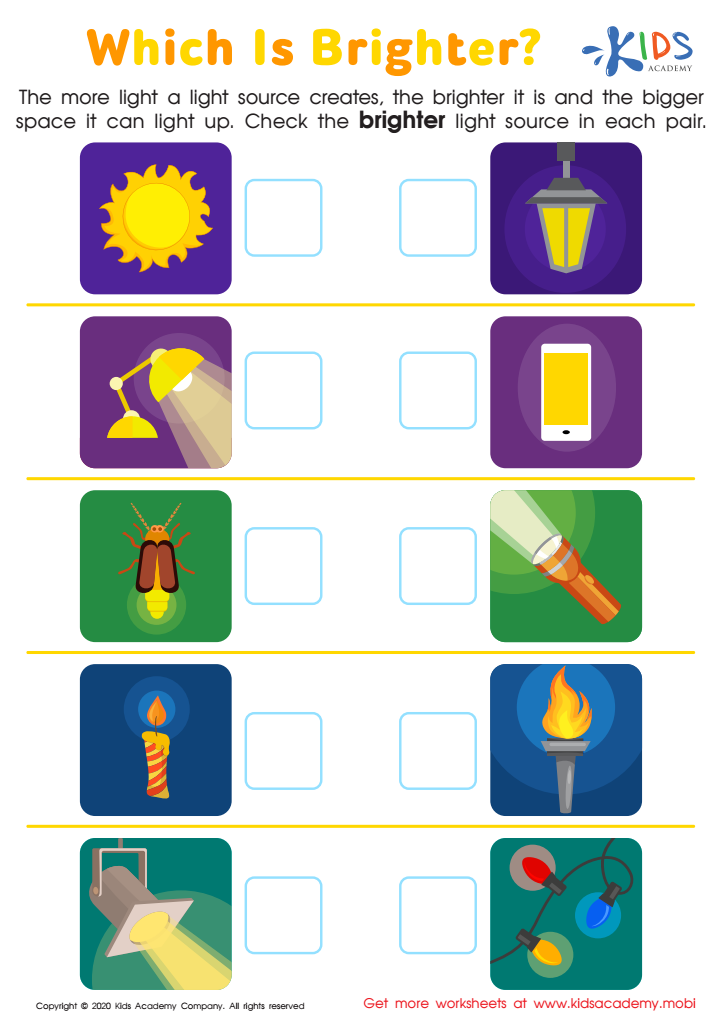
Before the exercise, ask students to recall sources of light. Use this worksheet to explain that the brighter the light source, the more space it can light up. Identify the different light sources in the pictures, then check the brighter light source in each pair. The biggest natural source of light is the sun.
Which Is Brighter? Worksheet
Worksheet
Noisy Park Worksheet

Noisy Park Worksheet

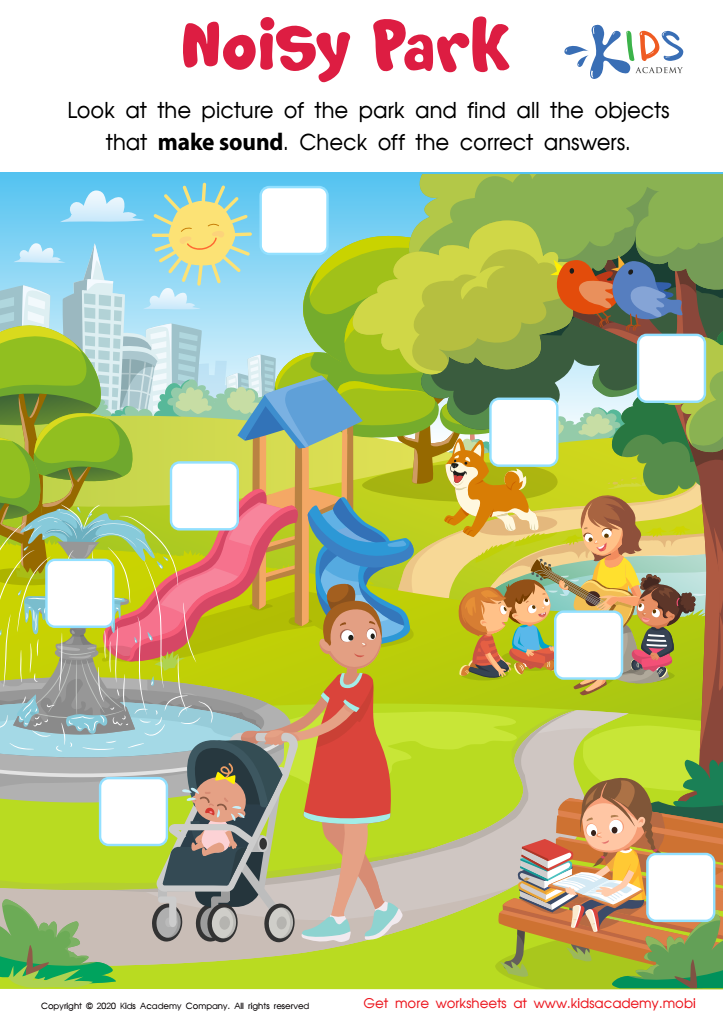
Get your students ready for the exercise by asking them to name things they see and do at the park. Then, have them identify the things in the picture, look for objects that make sounds, and verify the answers.
Noisy Park Worksheet
Worksheet
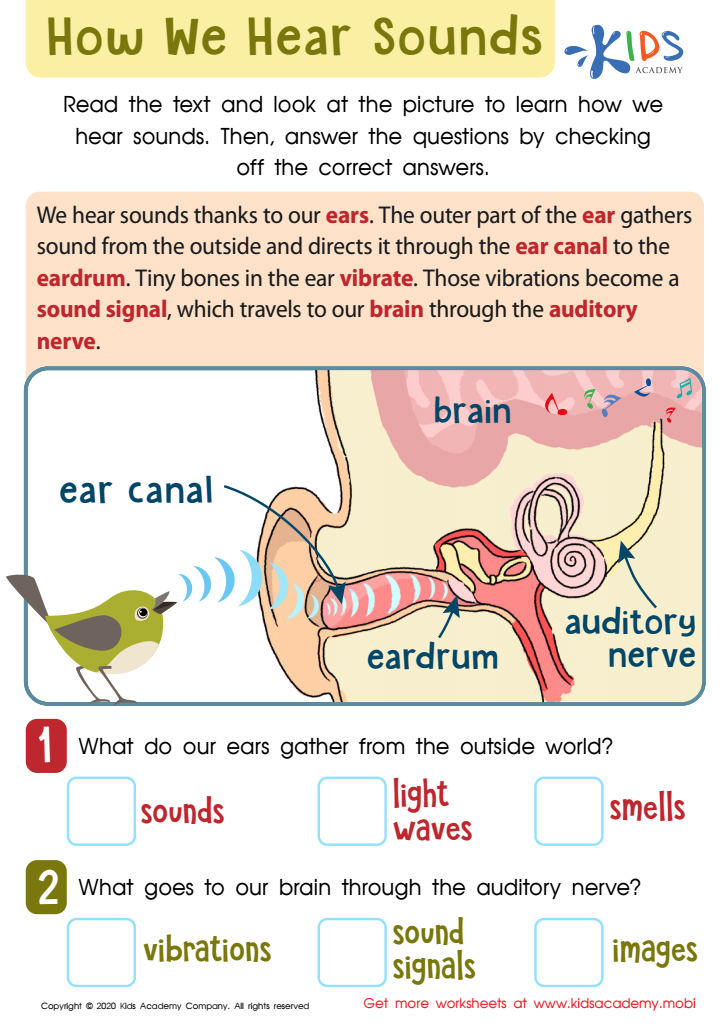
How We Hear Sounds Worksheet

How We Hear Sounds Worksheet

Before beginning this worksheet, make sure your students are aware of the five senses: sight, taste, touch, smell, and hearing. This worksheet will help them explore how we hear sounds with our ears. Read or listen to the text, study the images, and answer the questions. Check off the correct answers.
How We Hear Sounds Worksheet
Worksheet
How We See Objects Worksheet

How We See Objects Worksheet

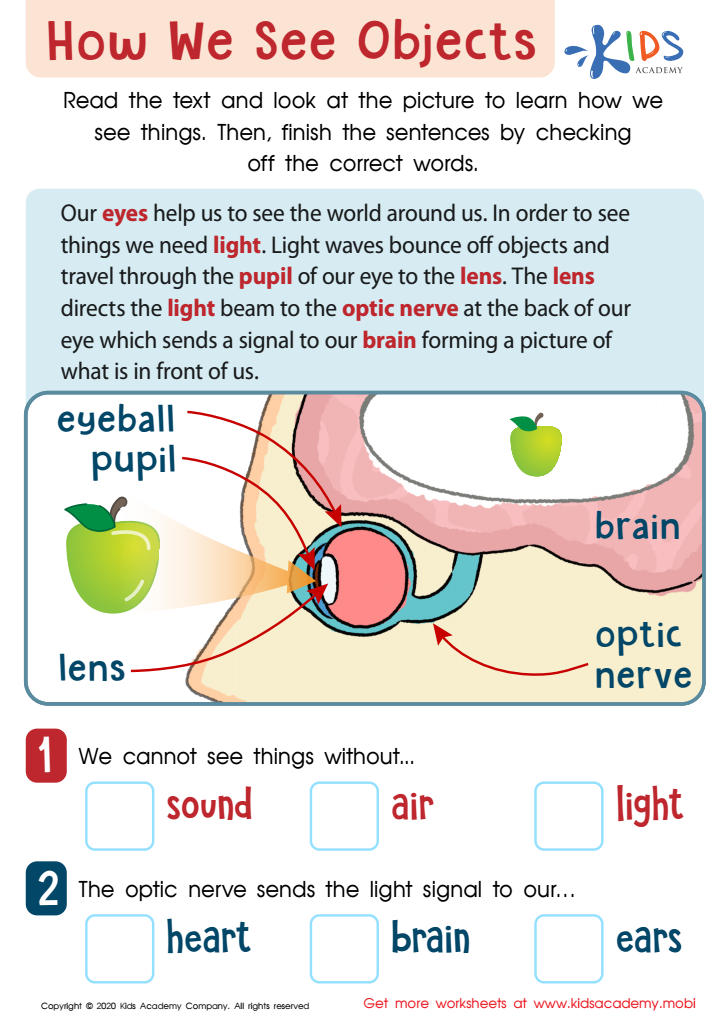
Remind your students of our five senses! This worksheet will teach them more about sight: read/listen to the text, look at pictures, then help them complete sentences. Check off the right words!
How We See Objects Worksheet
Worksheet
Seeing and Hearing Worksheet

Seeing and Hearing Worksheet

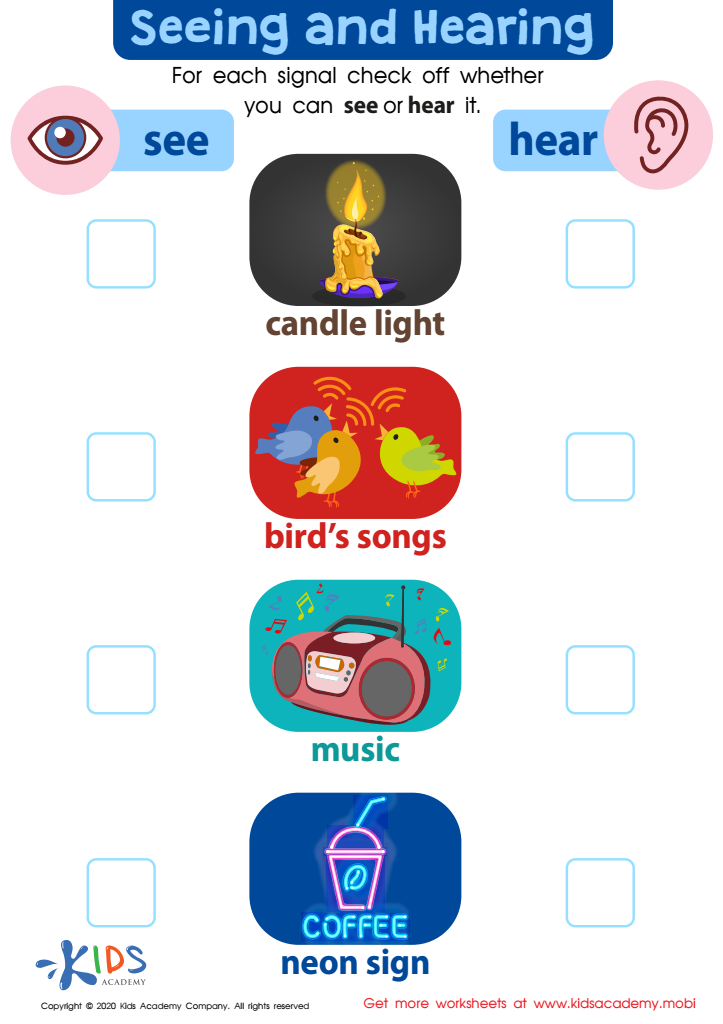
Before beginning this worksheet, ensure your students know that we have five senses: eyes (seeing), tongue (tasting), skin (feeling), nose (smelling), and ears (hearing). This worksheet will explore seeing and hearing - ask your students what they can see/hear in the picture and get them to check it off.
Seeing and Hearing Worksheet
Worksheet
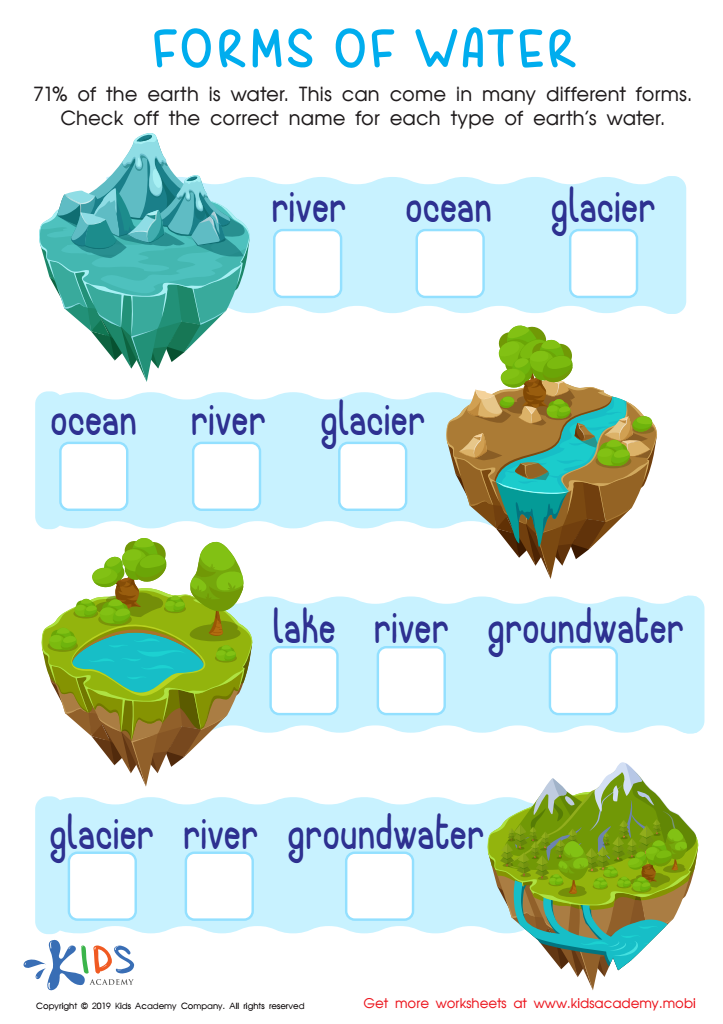
Forms of Water Worksheet

Forms of Water Worksheet

Life on Earth needs water to survive. Luckily, water makes up 75% of the Earth's surface and comes in various forms such as rivers, oceans and lakes. Ask your kids to name other forms and use this worksheet to help them identify each type.
Forms of Water Worksheet
Worksheet
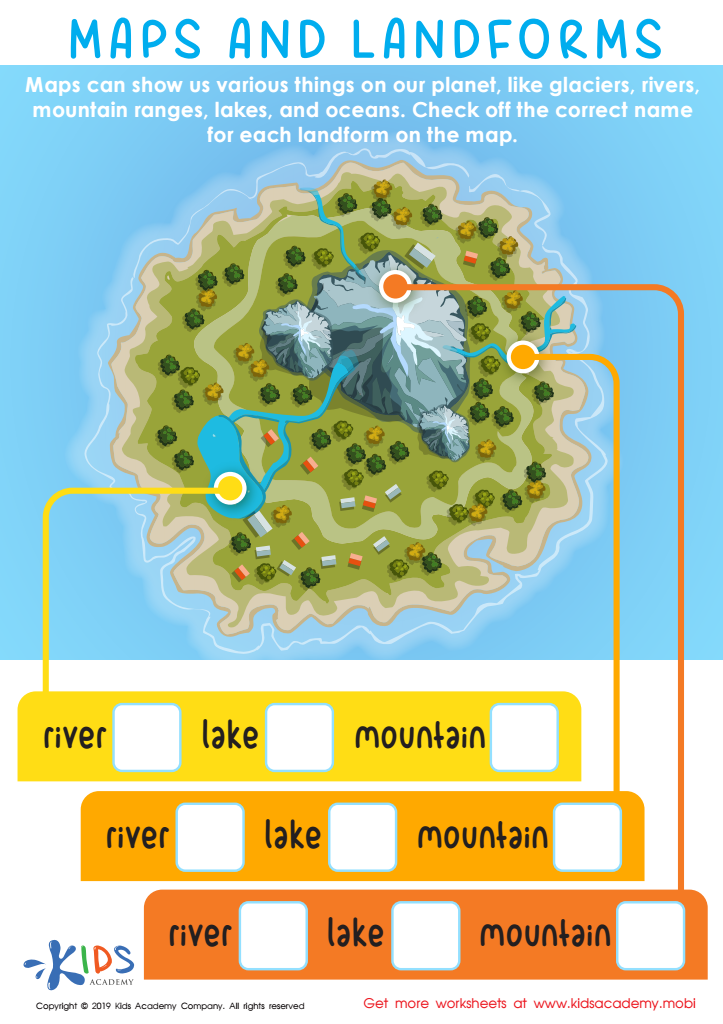
Maps and Landforms Worksheet

Maps and Landforms Worksheet

We can educate our kids on the world and its landforms by showing them a map. Point out mountains, rivers, and oceans, and help them identify each correctly. With this knowledge, they will better understand our planet.
Maps and Landforms Worksheet
Worksheet
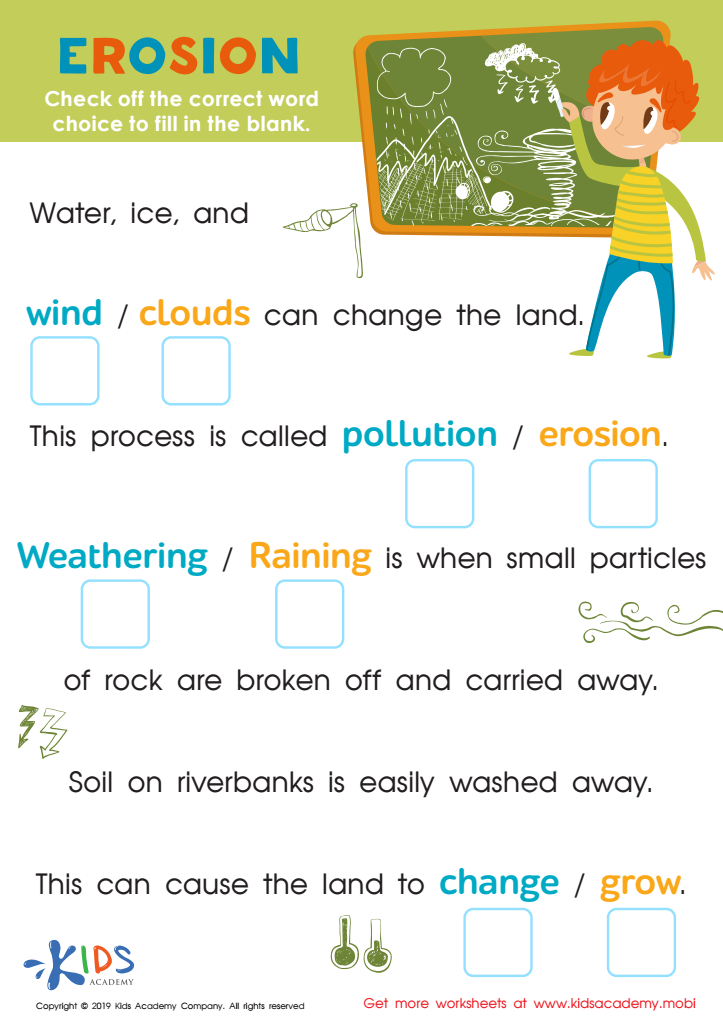
Erosion Worksheet
Erosion Worksheet

Erosion Worksheet

Erosion is when land is washed or crumbled away; it is caused by water, wind, or man. Teach kids its damaging impact, and how to prevent it. Check out this science worksheet to help them learn more. Read each sentence, then help them fill in the blanks with the correct words.
Erosion Worksheet
Worksheet
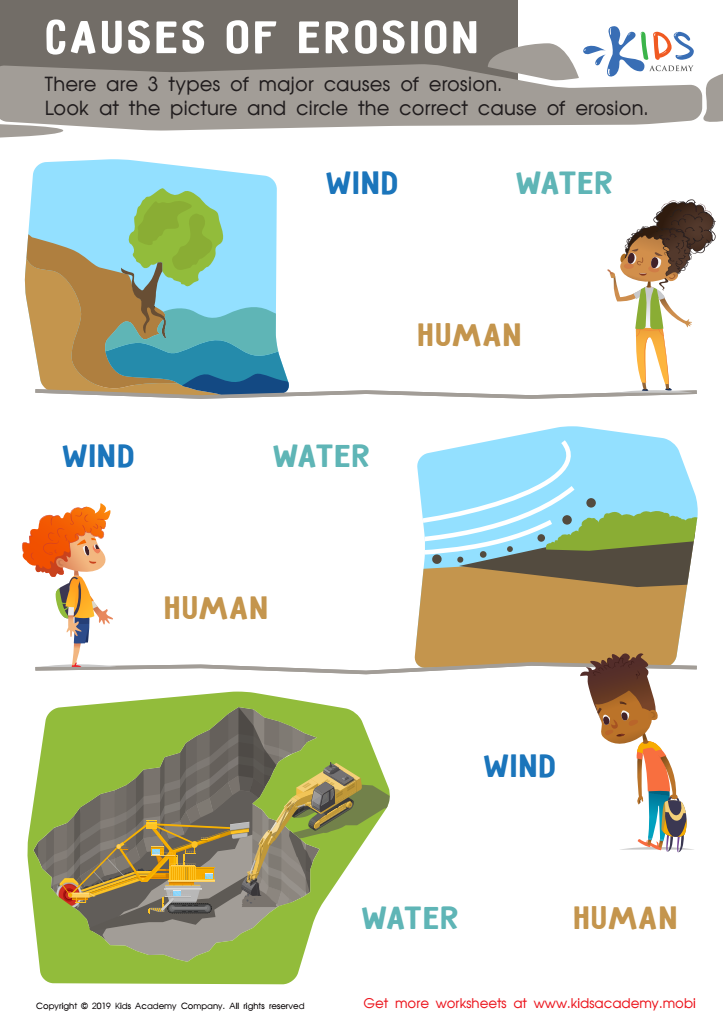
Causes of Erosion Worksheet

Causes of Erosion Worksheet

Earth is a habitable planet for humans and all life forms, providing us with what we need to survive. However, erosion caused by air, water or man can destroy or crumble parts of its surface. Teach kids the three causes of erosion and help them circle the correct one on a worksheet.
Causes of Erosion Worksheet
Worksheet
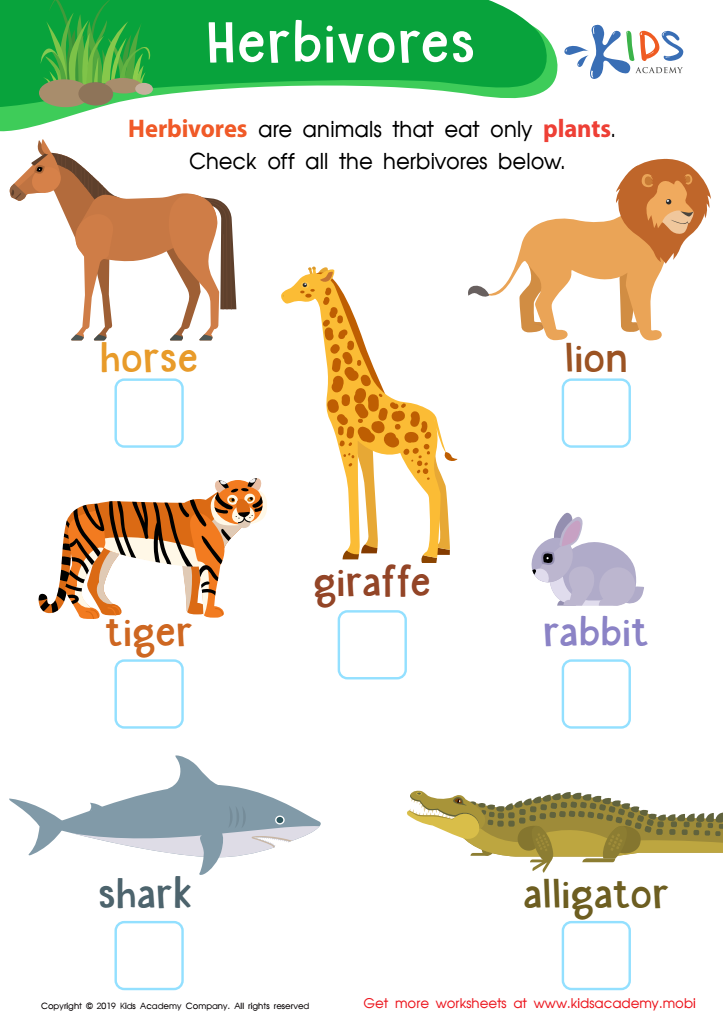
Herbivores Worksheet

Herbivores Worksheet

Explain to your kids what herbivores are: animals that survive on plants and grass. Examples include cows, rabbits, and deer. Ask them to identify the herbivores in the pictures and check them off.
Herbivores Worksheet
Worksheet
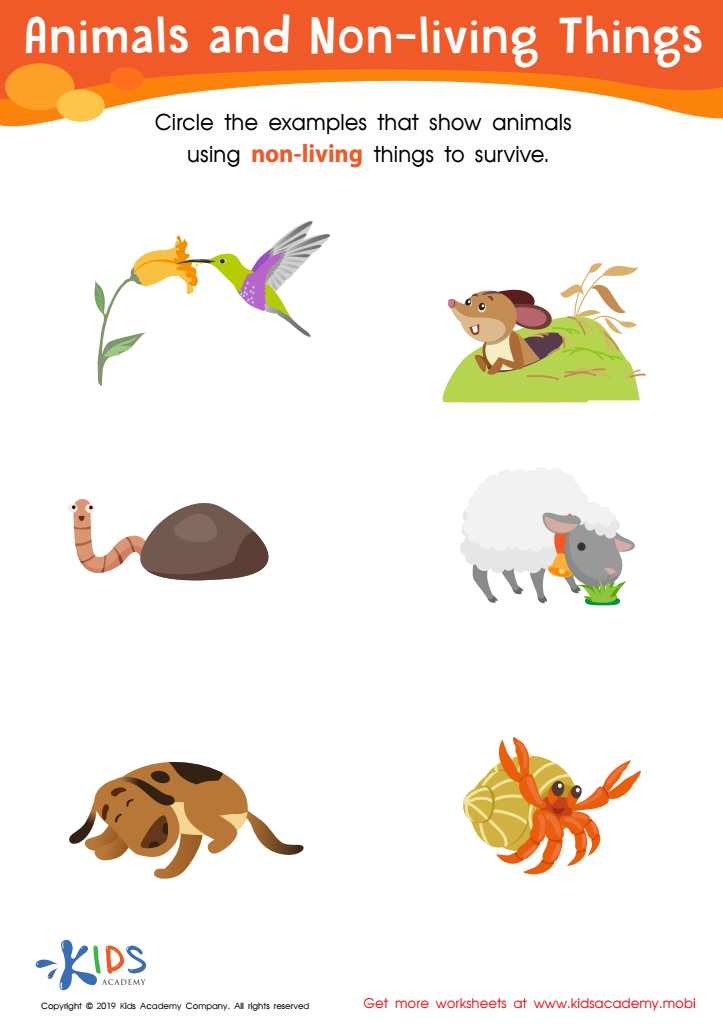
Animals and Non-Living Things Worksheet

Animals and Non-Living Things Worksheet

People and animals both require more than food to survive. We need shelter, clothing and water, while animals use non-living things like rocks and trees. Ask your kids what else is necessary to survive - then have them identify the objects in the worksheet and circle the examples of animals using non-living things.
Animals and Non-Living Things Worksheet
Worksheet
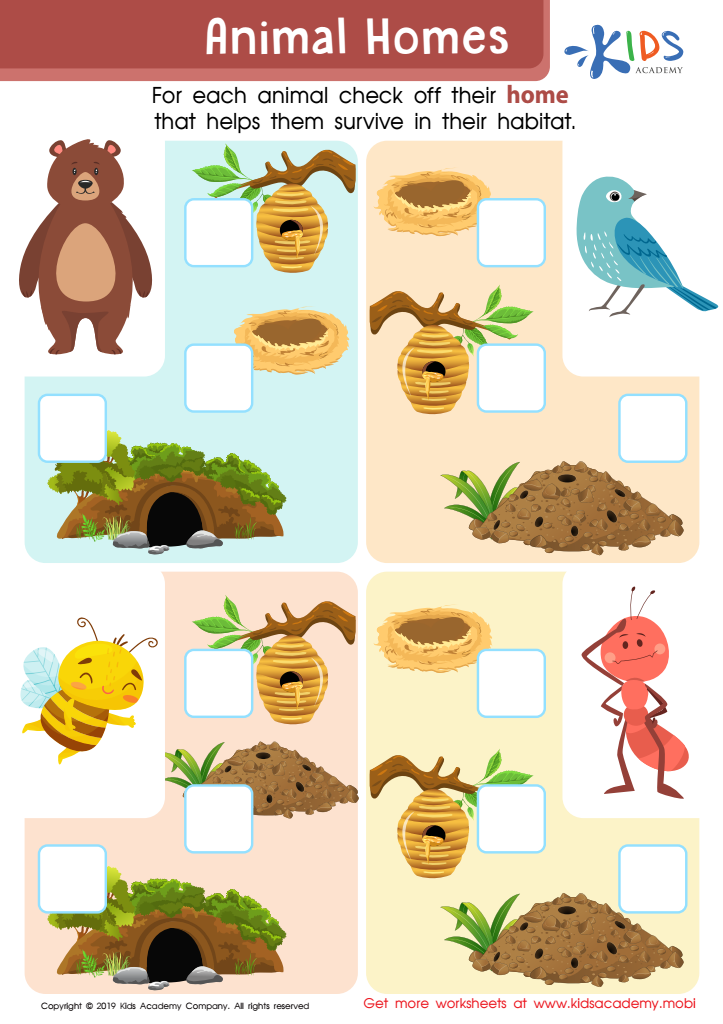
Animal Homes Worksheet

Animal Homes Worksheet

It's your duty as a teacher to protect, direct and guide your students while they're at school. Ask your kindergartners what a home means and why it's special. Use this worksheet to teach them that both people and animals have homes. Show them the pictures, and have them check off which is the home of each animal.
Animal Homes Worksheet
Worksheet
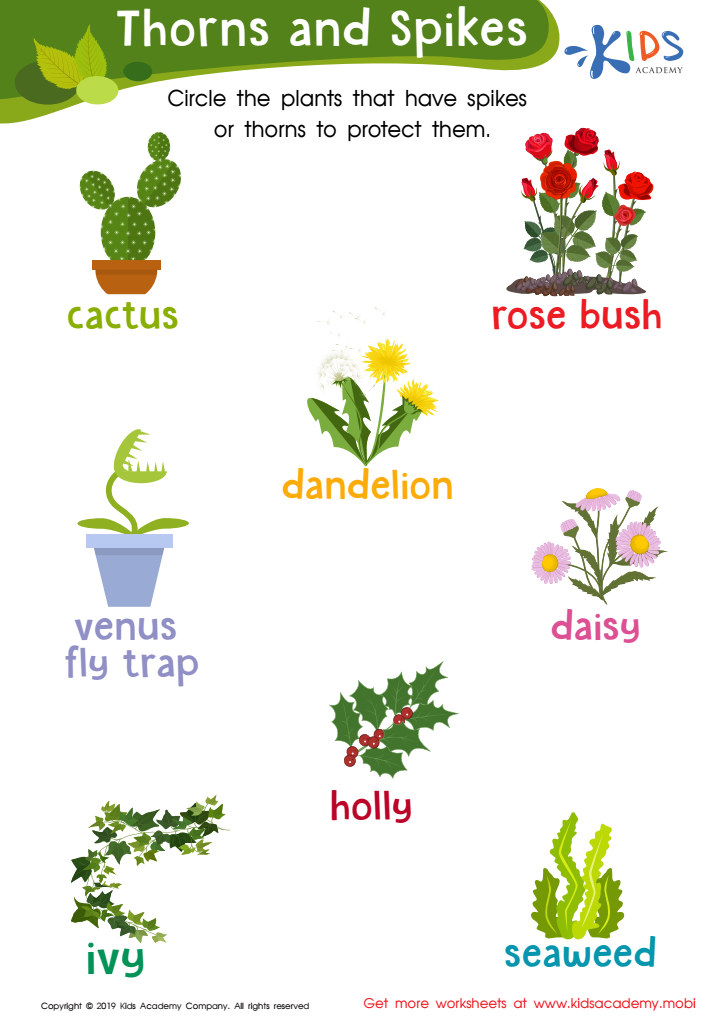
Thorns and Spikes Worksheet

Thorns and Spikes Worksheet

Can your students name and identify the plants and flowers in this worksheet? Ask them to read out the names and circle the ones with spikes or thorns. Help them appreciate nature's beauty and understand how plants protect themselves.
Thorns and Spikes Worksheet
Worksheet
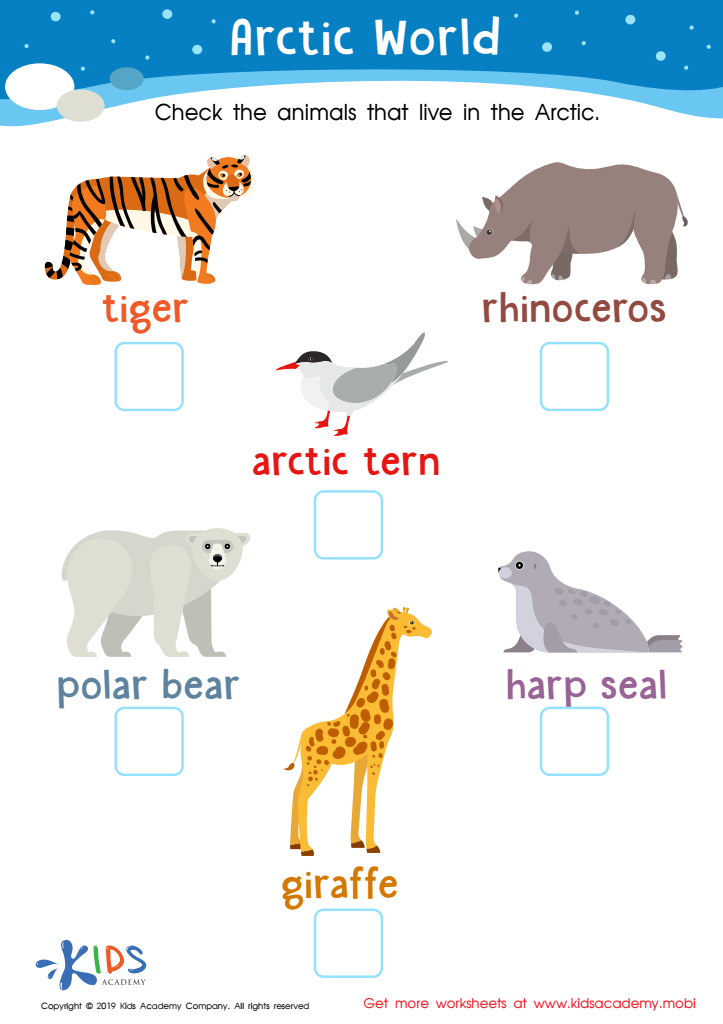
Arctic World Worksheet

Arctic World Worksheet

Ask your students if they know where the Arctic is located and what lives there. If not, use a world atlas to show them. The Arctic is very cold and snow-covered; native animals have adapted to survive the harsh conditions. Look at the animals in the worksheet and help your students decide which ones live in the Arctic.
Arctic World Worksheet
Worksheet
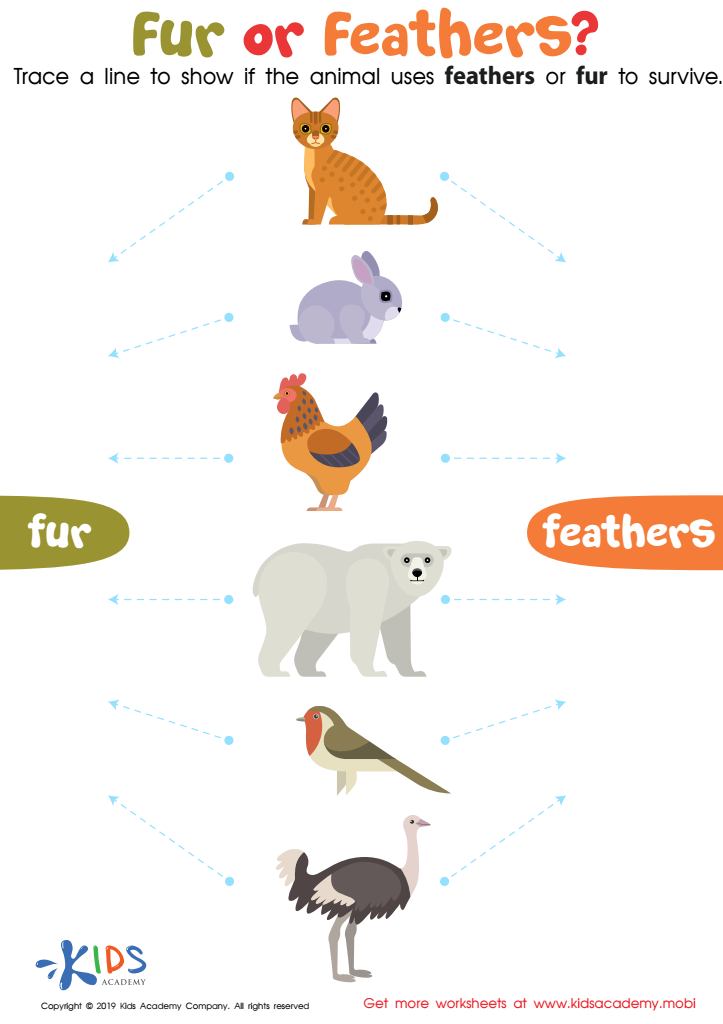
Fur or Feathers? Worksheet

Fur or Feathers? Worksheet

Examine animals you see daily. How do they differ from humans? With a pet in your home, ask your child to touch it and identify what covers the animal's body - fur or feathers? Birds have feathers, while mammals have fur. Guide your kids to identify animals in this worksheet and determine if fur or feathers keep them alive.
Fur or Feathers? Worksheet
Worksheet
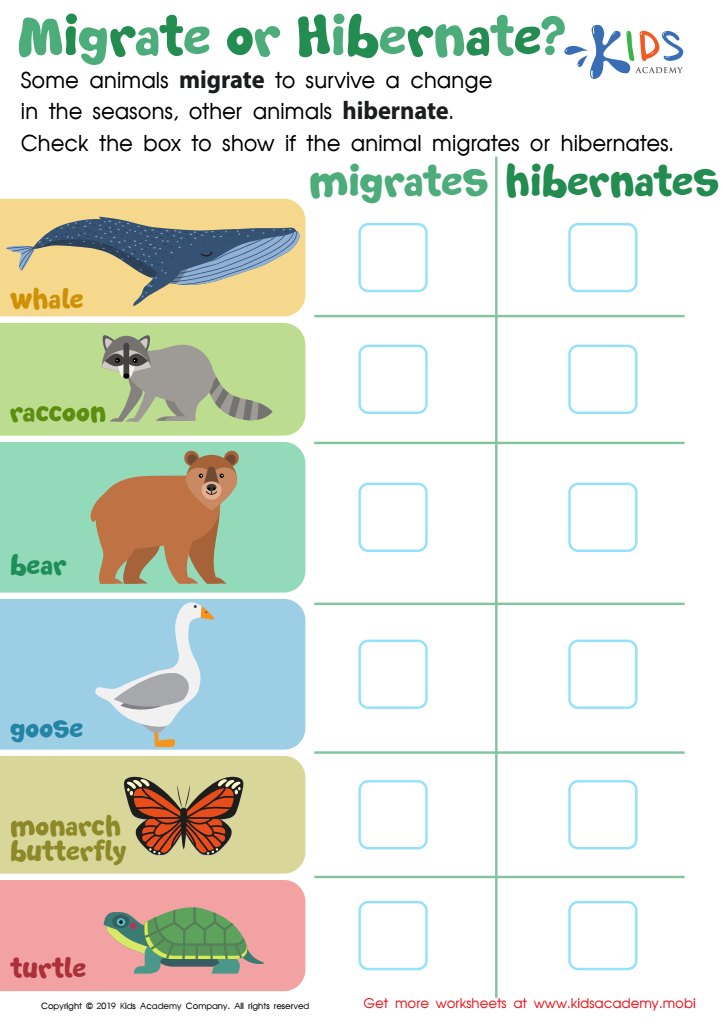
Migrate or Hibernate? Worksheet

Migrate or Hibernate? Worksheet

Many animals survive by either migrating or hibernating when the weather changes. Migration involves traveling in flocks or herds to a more temperate climate, while hibernation is when animals stay in their homes and eat and sleep for a long period of time. Show your kids this worksheet and help them decide which strategy animals use to cope with the changing weather.
Migrate or Hibernate? Worksheet
Worksheet
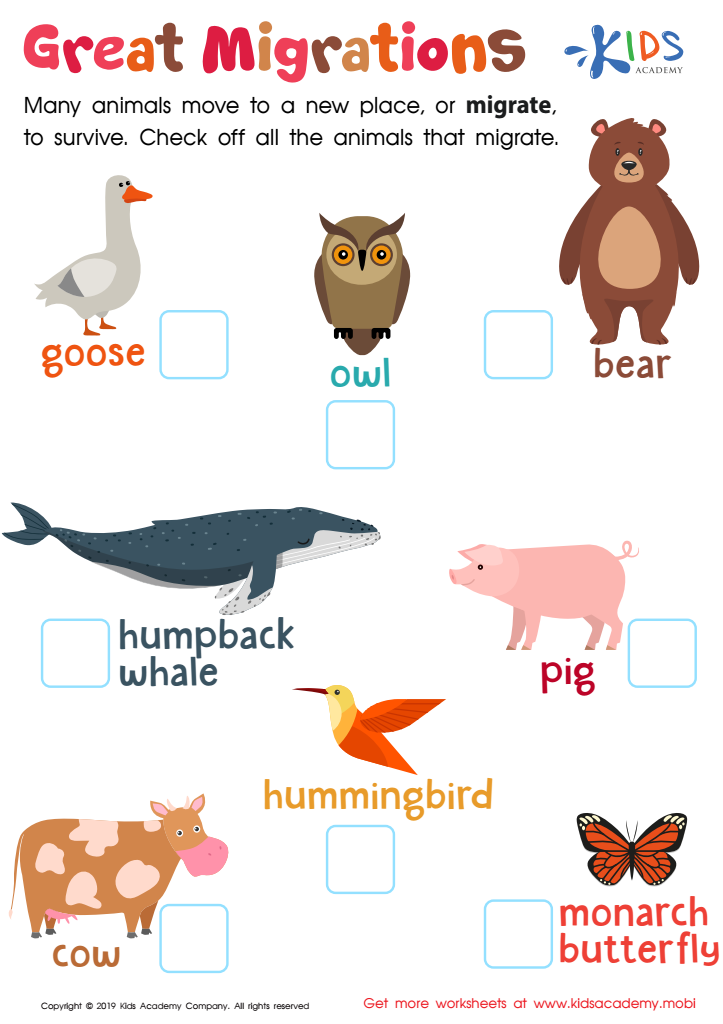
Great Migrations Worksheet

Great Migrations Worksheet

Identify animals in the worksheet with your kids. See which ones migrate: check the boxes! Migration is when birds and other animals only appear for certain seasons or long periods, then come back when the weather changes.
Great Migrations Worksheet
Worksheet
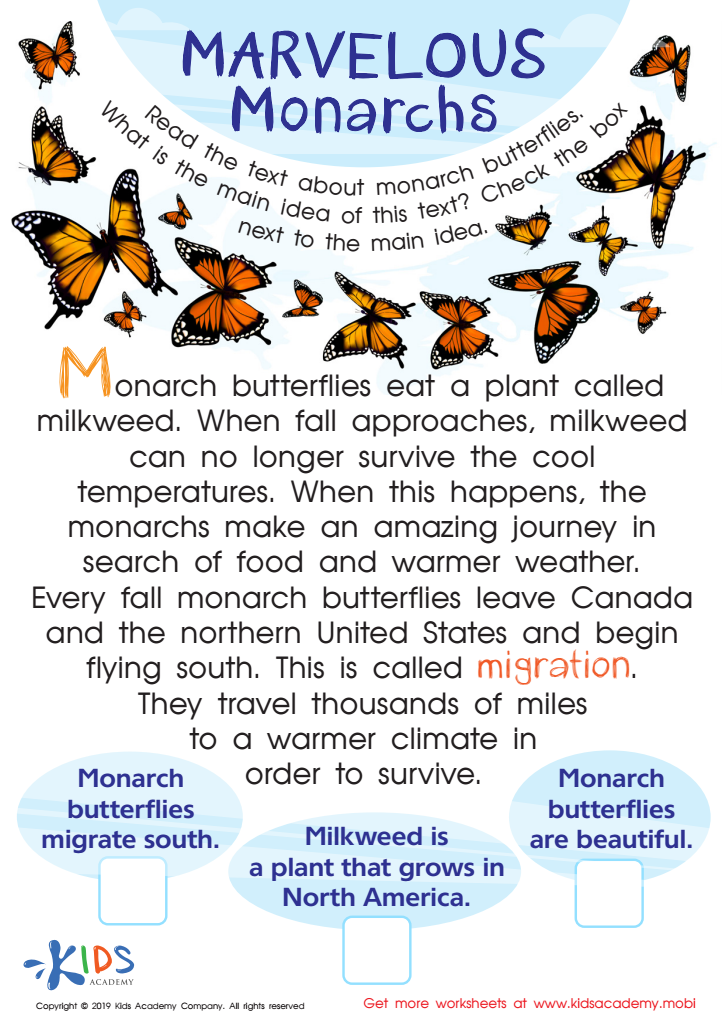
Marvelous Monarchs Worksheet

Marvelous Monarchs Worksheet

Help your kids have fun while reading - start with small words and short sentences. This worksheet can test your kids' reading and comprehension skills. Ask them to read the text about Monarch butterflies and help them locate the main idea.
Marvelous Monarchs Worksheet
Worksheet
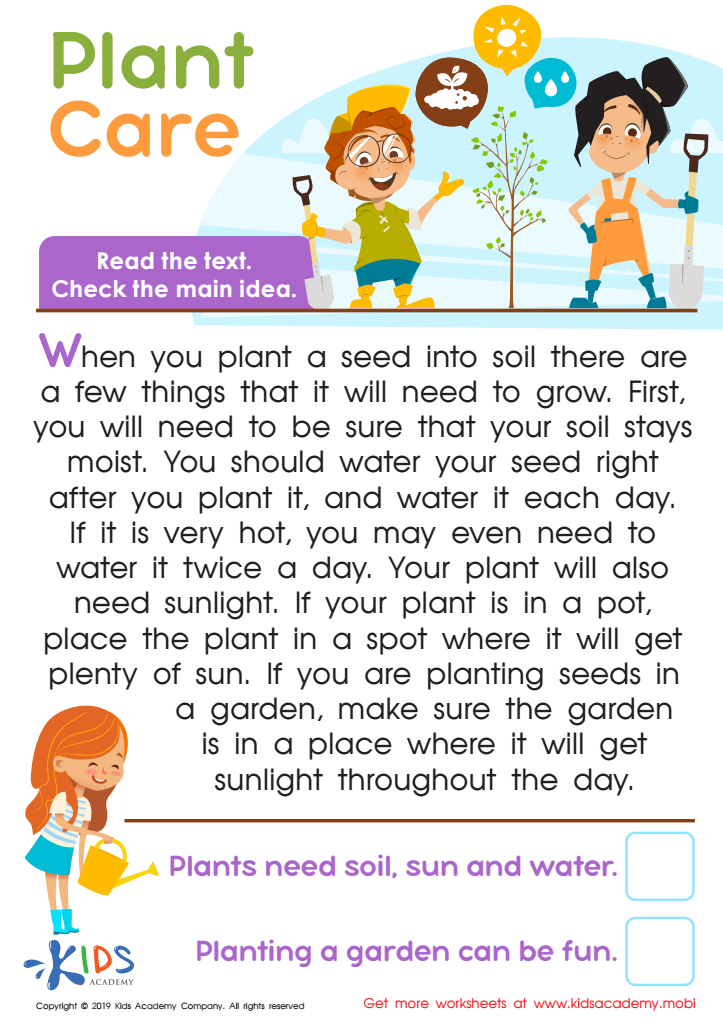
Plant Care Worksheet

Plant Care Worksheet

Encourage your children to read by helping them practice. Print out the worksheet and read the text with them. Help them understand the words and find the main idea. This will improve their reading skills and prepare them for school.
Plant Care Worksheet
Worksheet
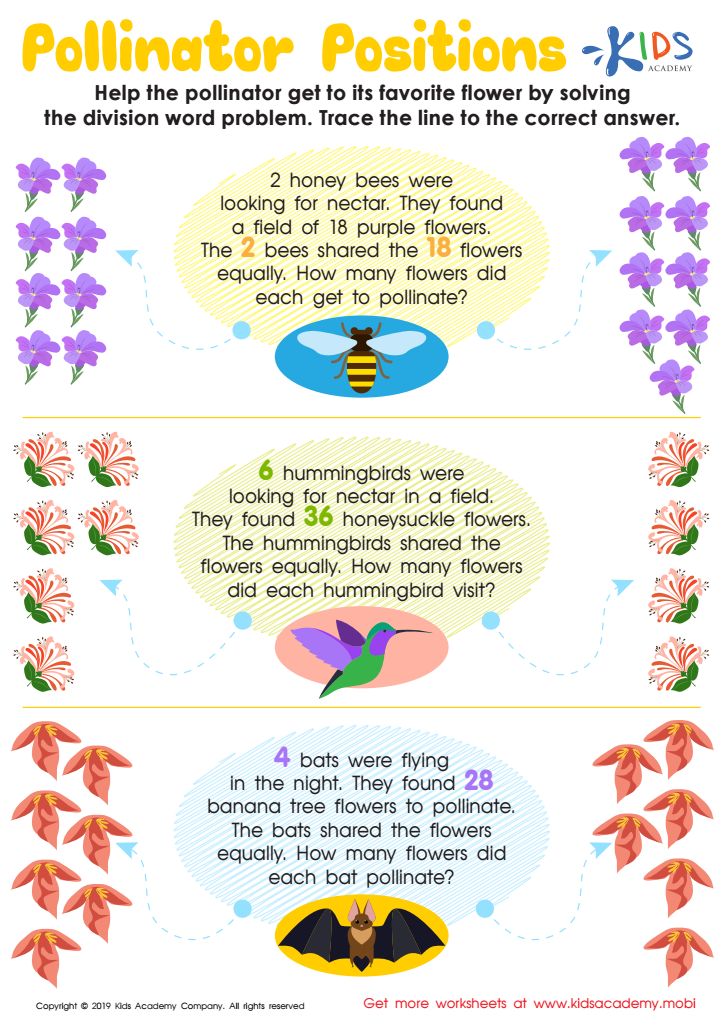
Pollinator Positions Worksheet

Pollinator Positions Worksheet

Kids will love learning about pollinators and how vital they are. Help their favorite friends get to the right flowers with this fun PDF. Children can solve the problems without even knowing they're doing division; just read the word problems and use the highlighted numbers. Finish by tracing the lines to the correct quotient!
Pollinator Positions Worksheet
Worksheet
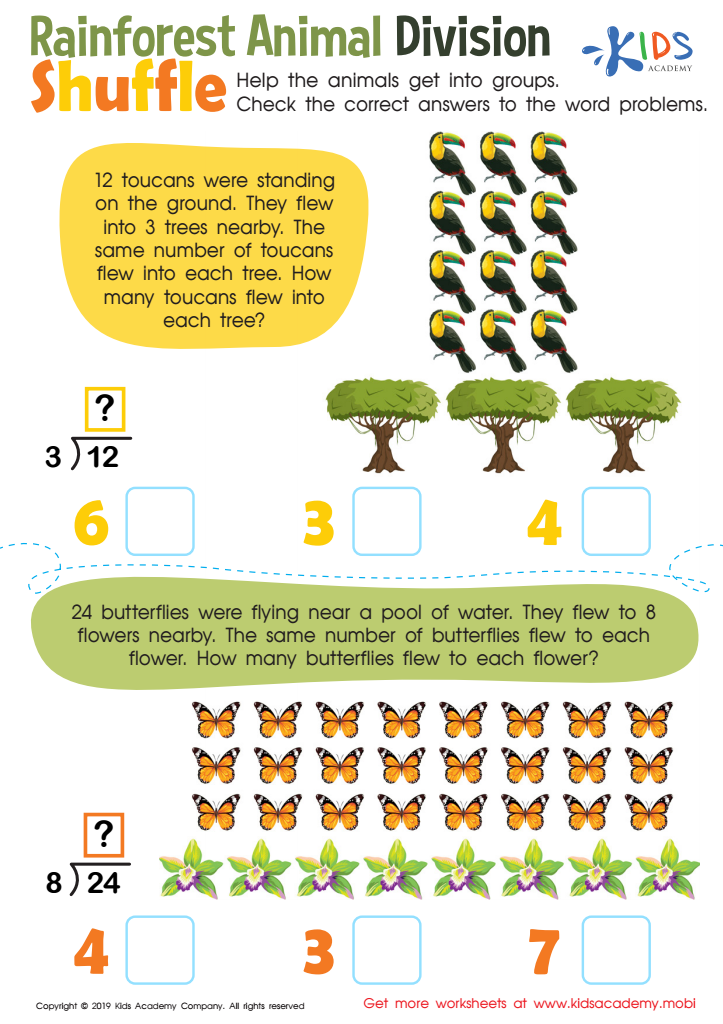
Rainforest Animal Division Worksheet


Rainforest Animal Division Worksheet

Children can save the rainforest and learn about division with this worksheet! It helps kids understand that division involves creating equal groups of specific numbers, and with its visual representation, they can grasp the concept more easily. They'll have fun learning about their place in the world and their role in protecting the environment.
Rainforest Animal Division Worksheet

Worksheet


Normal Science worksheets specifically designed for children aged 6-7 play a pivotal role in laying the foundation for a lifelong interest and understanding in scientific concepts. These educational resources are invaluable due to several reasons.

Firstly, they are tailored to the developmental stage of 6-7-year-olds, making complex scientific ideas accessible and engaging for young minds. By breaking down the vast world of science into manageable and relatable chunks, children are more likely to grasp and retain the information, fostering a positive attitude towards learning.

Moreover, Normal Science worksheets for Ages 6-7 provide a structured approach to exploring the wonders of science. Through a variety of activities, including experiments, observation tasks, and interactive questions, children are encouraged to think critically and develop their problem-solving skills. This hands-on approach not only makes learning more enjoyable but also helps to cement scientific principles in a practical context.

Additionally, these worksheets offer a diverse range of topics, from biology and physics to earth science and chemistry, ensuring that every child finds something that sparks their curiosity. This exposure to different scientific fields at an early age opens doors to future exploration and possibly even a career in science.

In conclusion, Normal Science worksheets for Ages 6-7 are a crucial tool in educating and inspiring the next generation of scientists. They make learning fun, accessible, and relevant, paving the way for a brighter, more scientifically literate future.