Normal Time Worksheets for Ages 6-8
5 filtered results
-
From - To
Discover our engaging "Normal Time Worksheets for Ages 6-8", designed to help young learners master reading and understanding the clock. Featuring colorful illustrations and diverse activities, these worksheets are perfect for both classroom and at-home learning. Students will progress from identifying hours and minutes to solving time-based problems, enhancing their math skills with each task. Created by education experts, our printable resources focus on making learning time fun and intuitive for children. Boost your child’s confidence and proficiency in telling time today with these practical and enjoyable worksheets from Kids Academy!
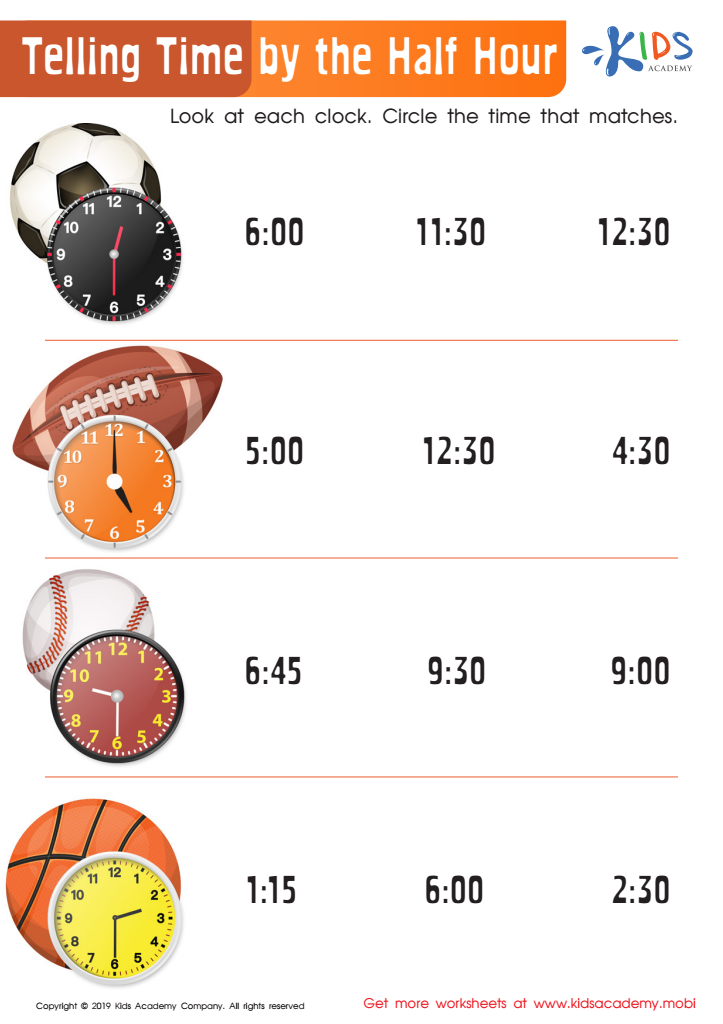
Telling Time by the Half Hour Worksheet
 Assign to My Students
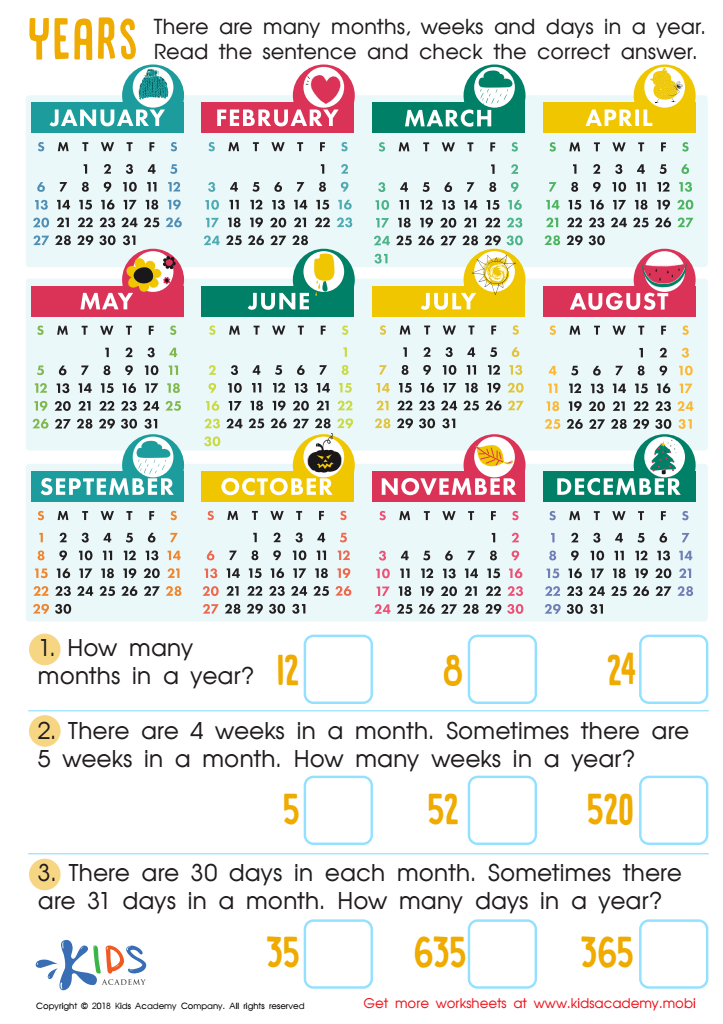
Years Worksheet
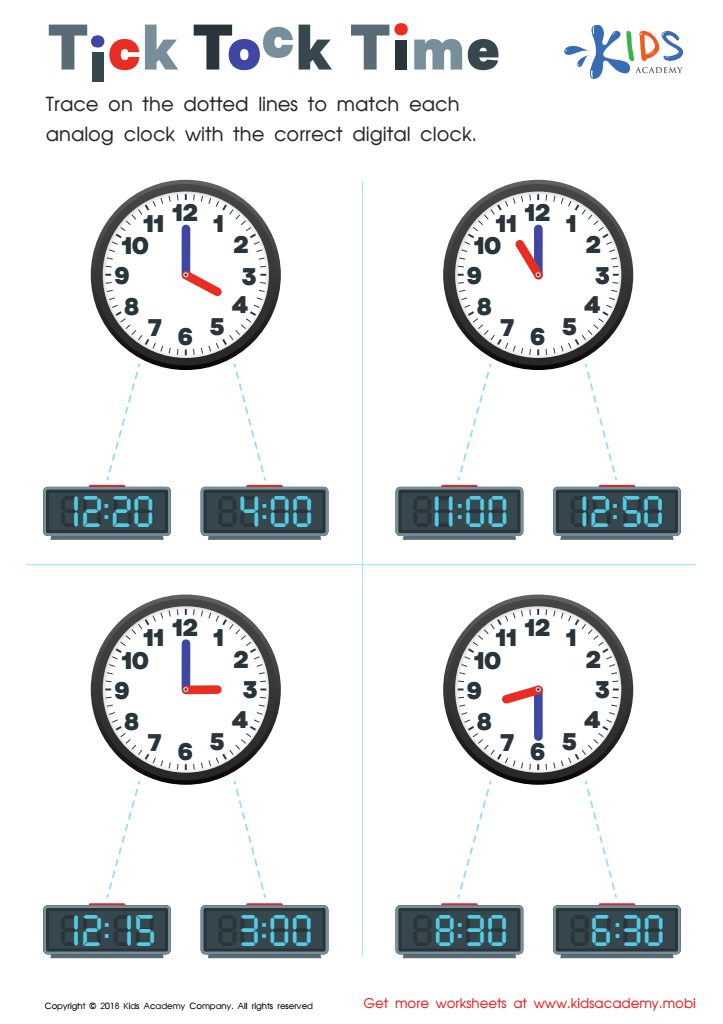
Tick Tock Time Worksheet
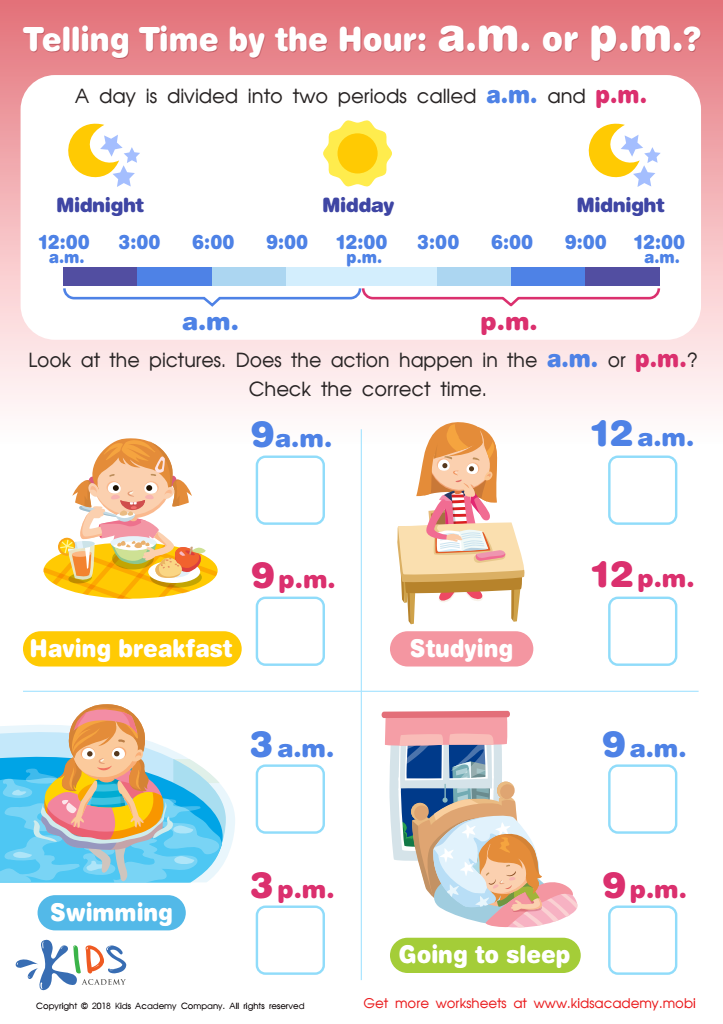
Tilling Time by the Hour: a.m. or p.m.? Worksheet
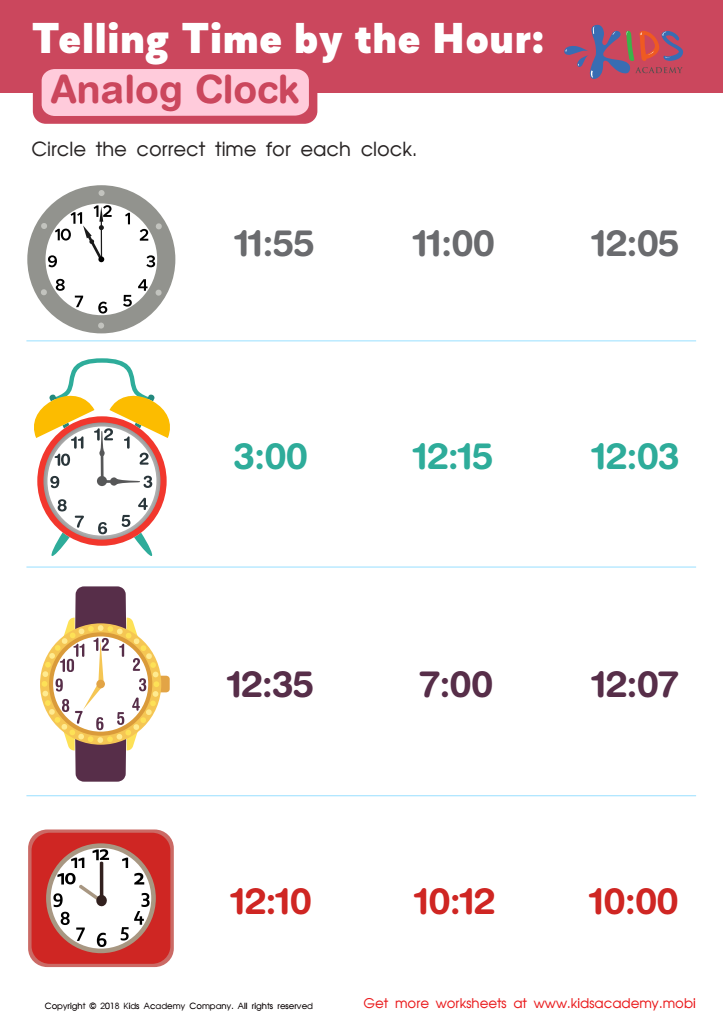
Telling Time by the Hour: Analog Clock Worksheet







Normal Time refers to the baseline amount of time that children traditionally spend on various tasks, both in learning environments and daily routines. For ages 6-8, having a consistent and well-balanced schedule is crucial for several reasons. Firstly, it helps establish a sense of security and structure, which young children thrive on. When parents and teachers adhere to a routine, children can better predict and understand the flow of their day, leading to fewer behavioral issues and increased cooperation.
Secondly, this period is critical for cognitive, social, and emotional development. Regular times for sleep, meals, play, and study allow kids to rest properly and let their brains consolidate new information, fostering better learning outcomes. Adhering to Normal Time ensures that children get optimal amounts of each activity without feeling rushed or overly tired, balancing physical exercise with cognitive tasks and leisure.
Moreover, introducing a consistent schedule teaches children the importance of time management skills early on. It encourages discipline and independence as children learn to transition between activities and understand that different parts of the day are designated for varying tasks. By caring about Normal Time, parents and teachers equip children with a strong foundation for lifelong habits, positively impacting their future academic and personal success.








