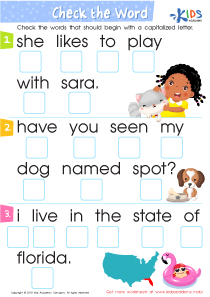
Normal Punctuation Worksheets for Ages 6-9
11 filtered results
-
From - To
Welcome to our Normal Punctuation Worksheets for Ages 6-9! These engaging worksheets are designed to help young learners master essential punctuation skills, including periods, commas, exclamation points, and question marks. Our thoughtfully crafted activities promote fun-filled learning while improving writing clarity and comprehension. With colorful illustrations and interactive exercises, children will practice identifying and using punctuation marks effectively in sentences. Ideal for home or classroom environments, these worksheets encourage creativity and foster a love for writing. Start enhancing your child's writing skills today with our free printable resources, making punctuation enjoyable and accessible for every young learner! Visit us to explore more!
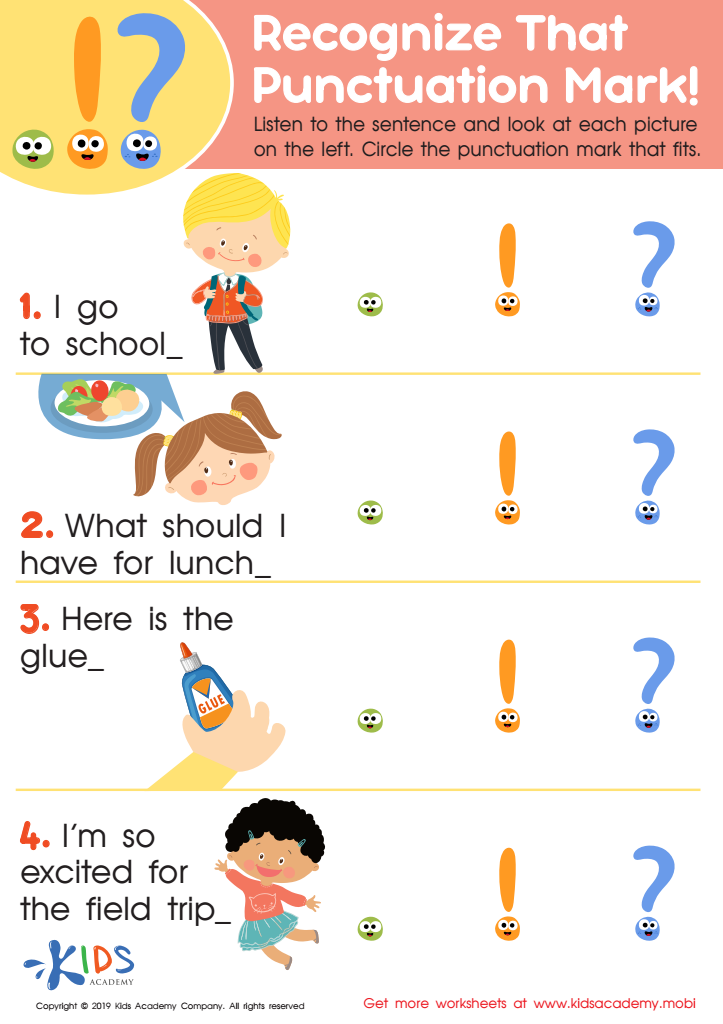
Recognize Punctuation Marks Worksheet
 Assign to My Students
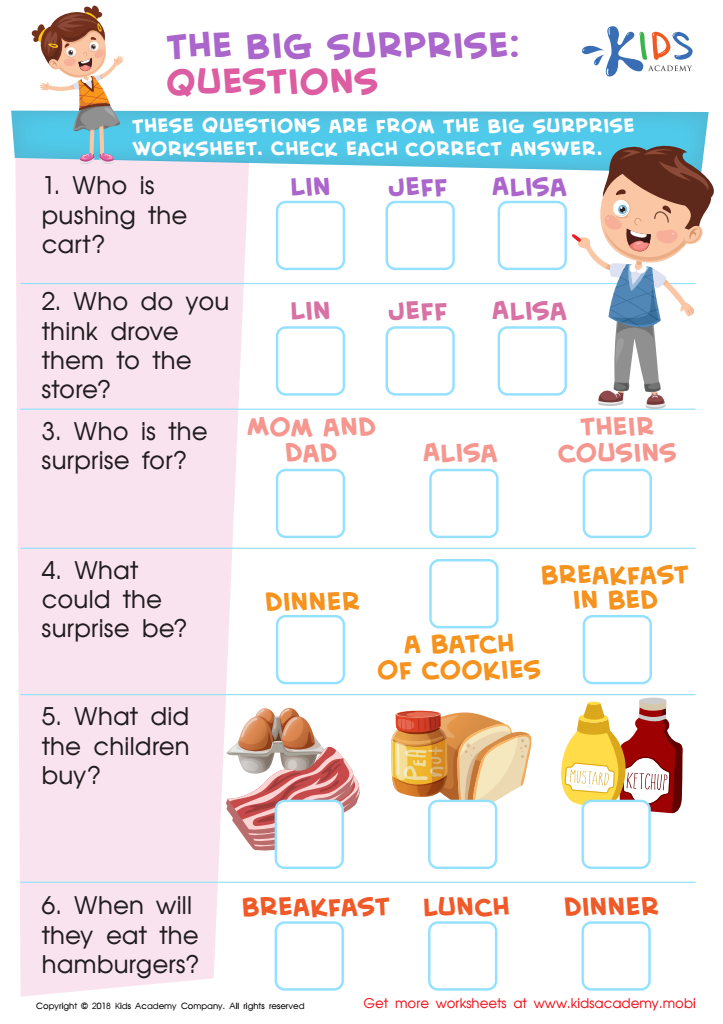
The Big Surprise: Questions Worksheet
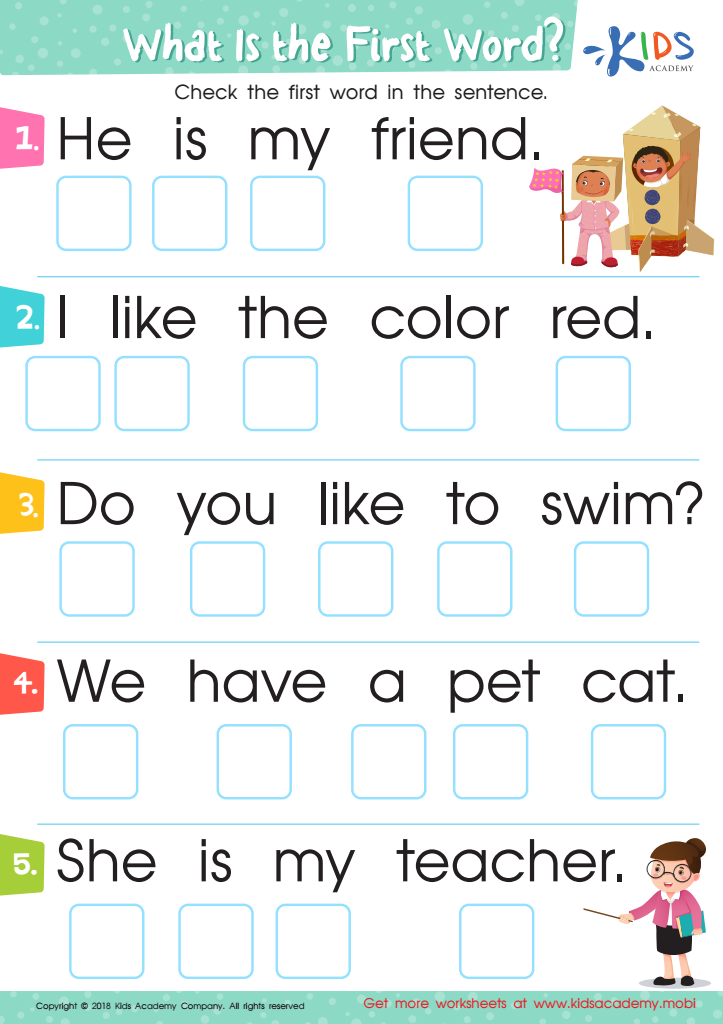
What is the First Word? Worksheet
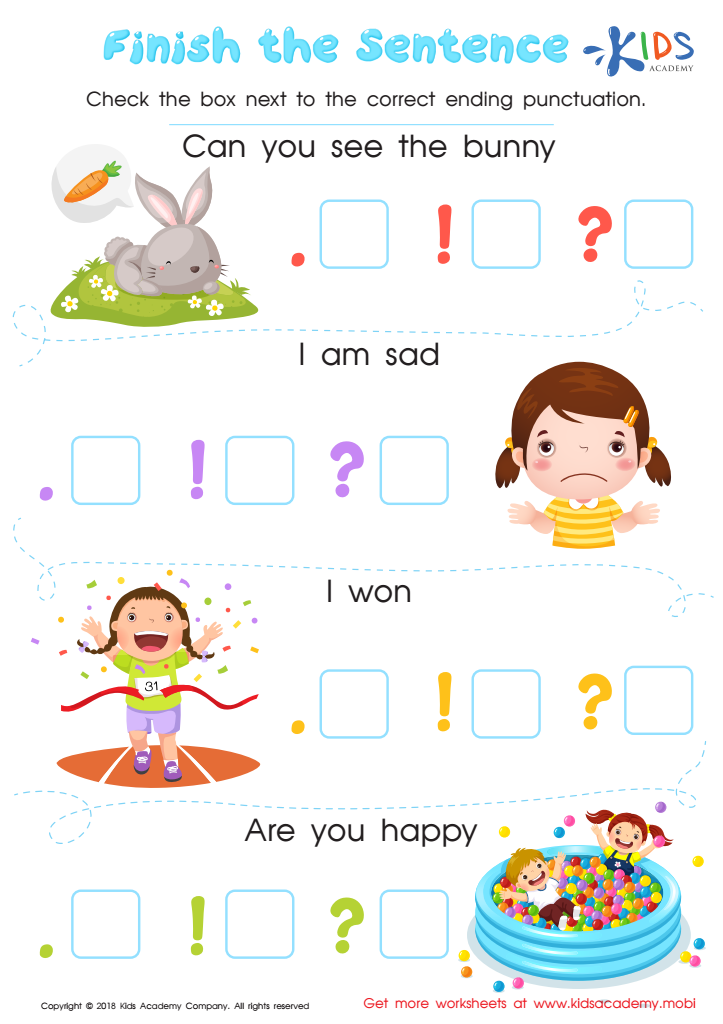
Finish the Sentence Worksheet
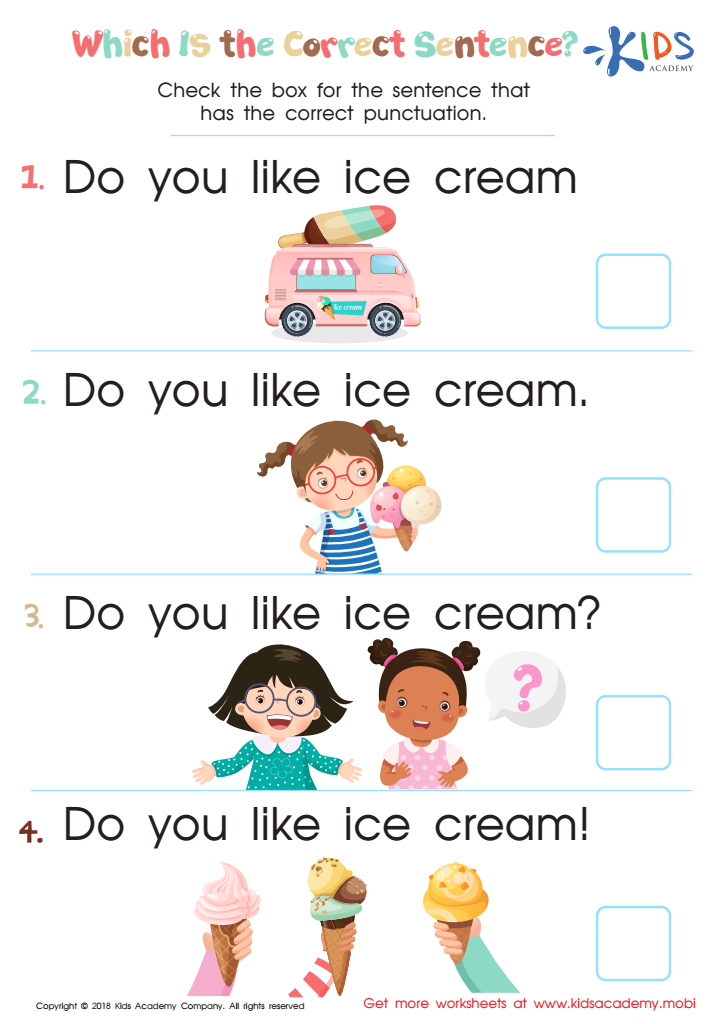
Which is the Correct Sentence? Worksheet
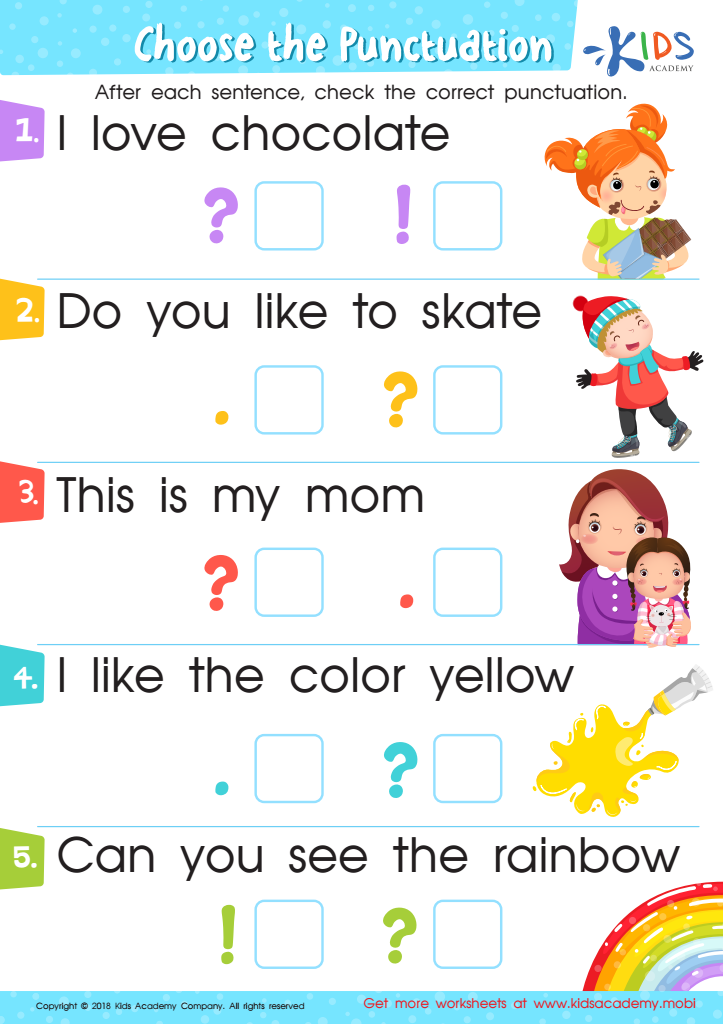
Choose the Punctuation: Assessment Worksheet
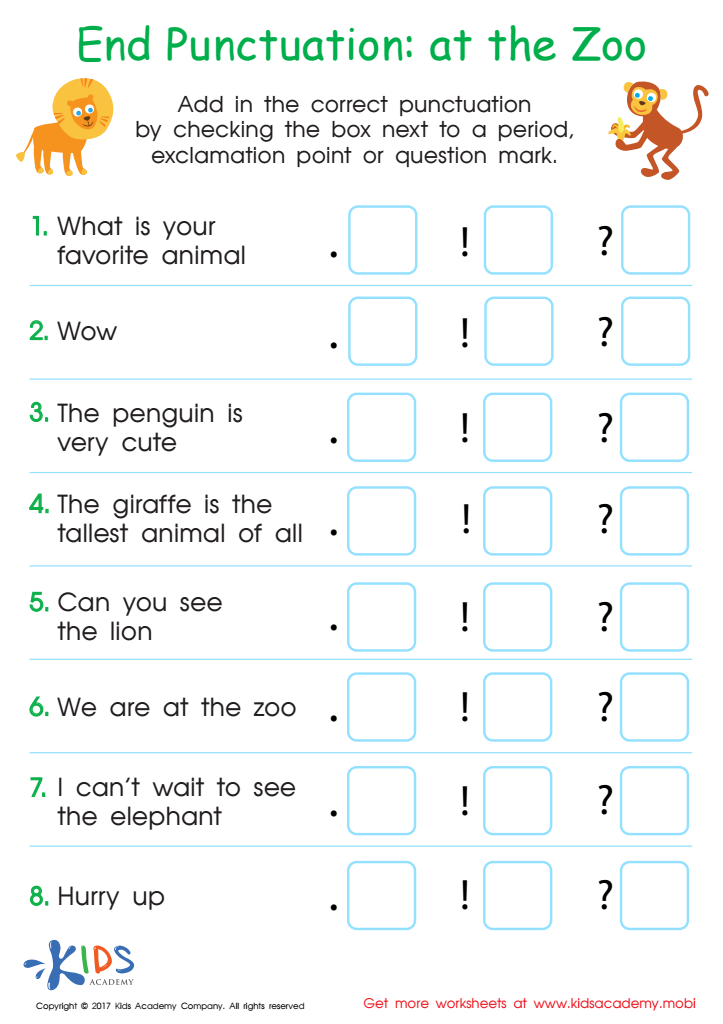
End Punctuation: At the Zoo Worksheet
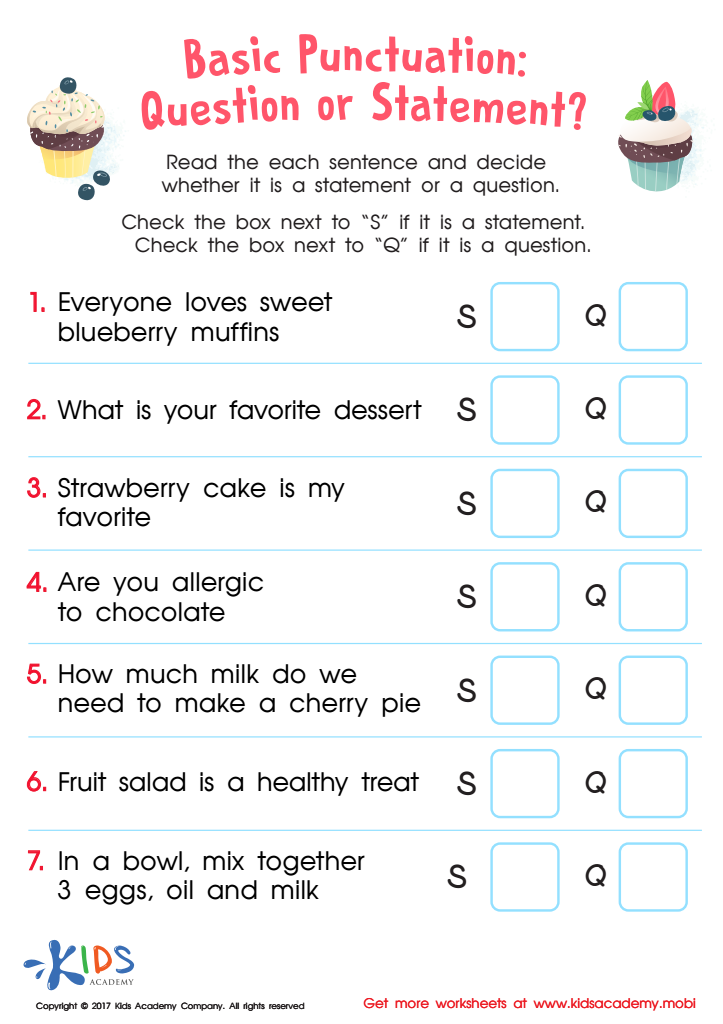
Basic Punctuation: Question or Statement Printable
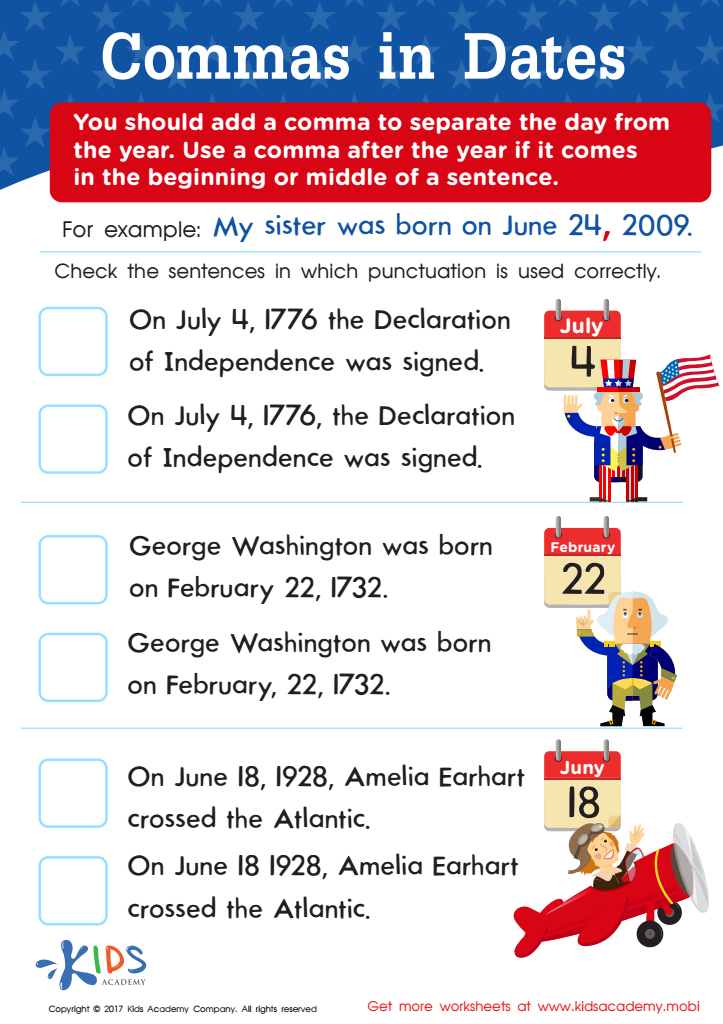
Commas in Dates Worksheet
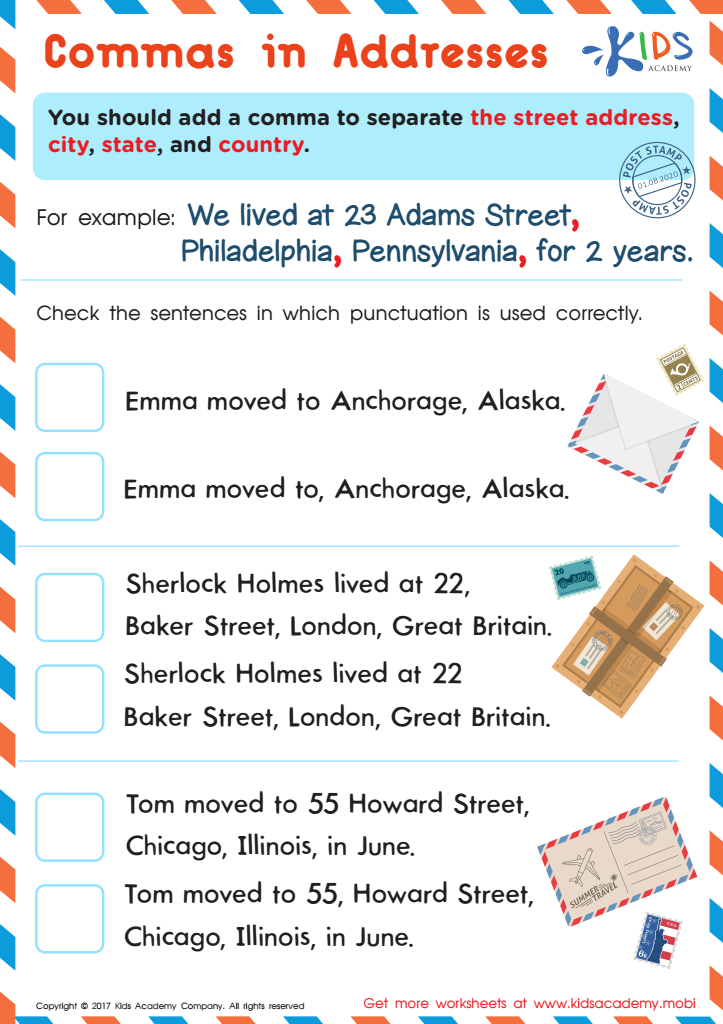
Commas in Addresses Worksheet
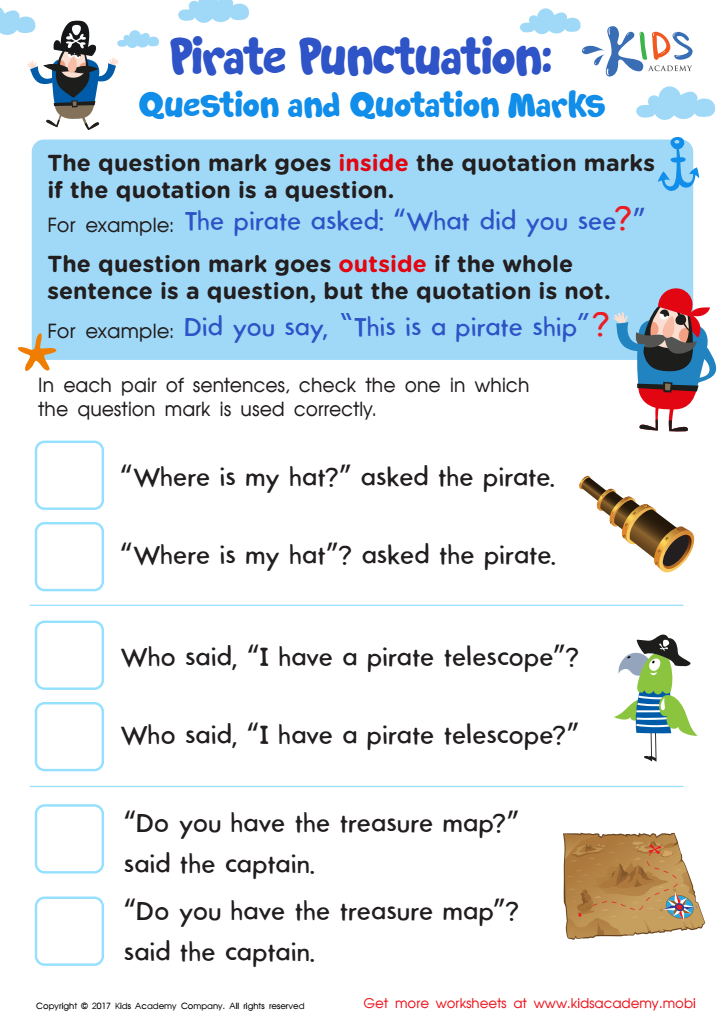
Question and Quotation Marks Worksheet






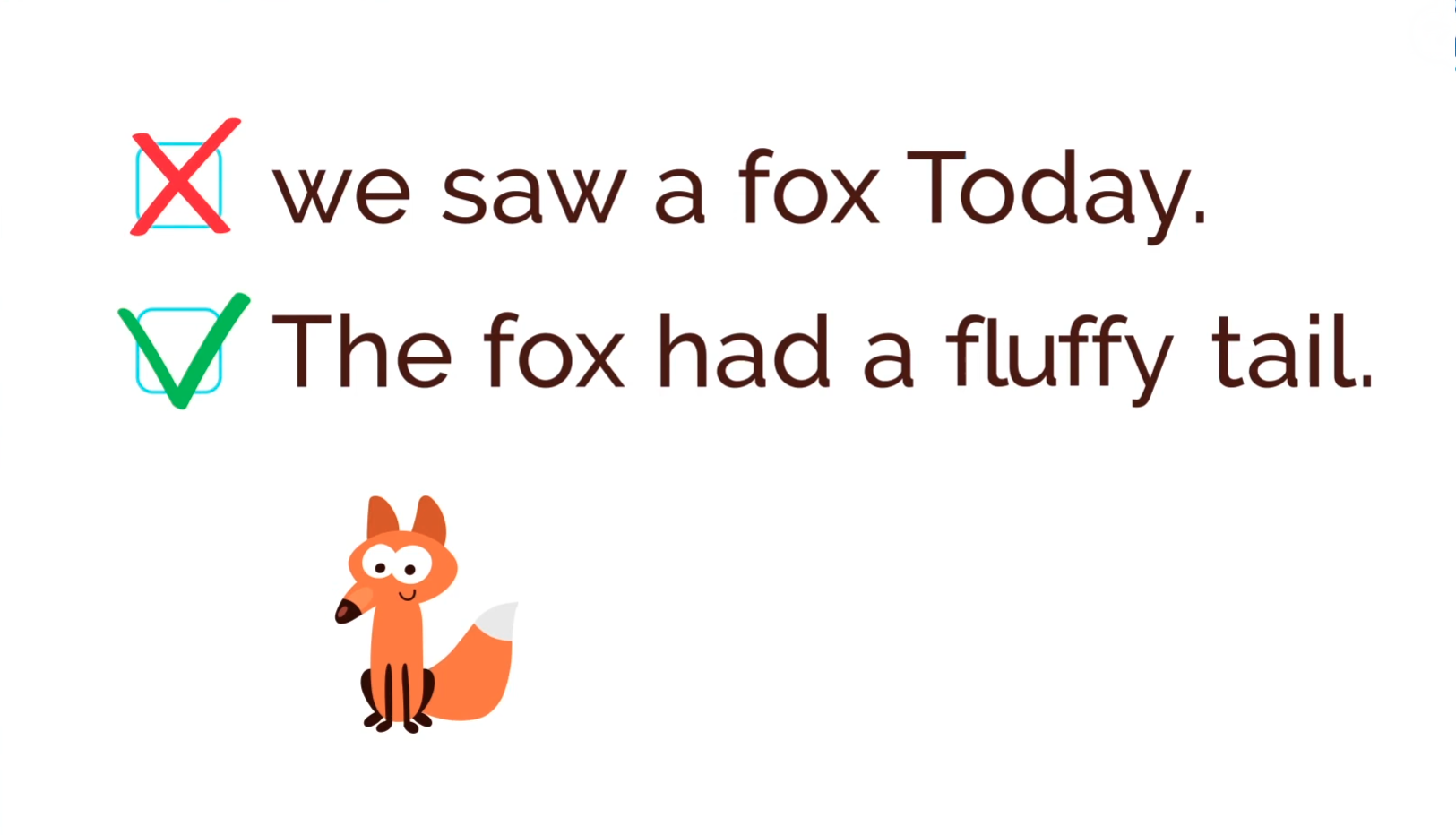

Normal punctuation plays a crucial role in the literacy development of children aged 6-9, making it essential for parents and teachers to care about its proper use. At this developmental stage, children are starting to form their writing skills and need a solid foundation in grammatical conventions to convey their thoughts clearly. Punctuation marks such as periods, commas, question marks, and exclamation points serve as navigational tools within sentences, guiding the reader through the writer's intended meaning.
When children understand punctuation, they become more effective communicators. This competency enhances their reading comprehension, as punctuation affects how texts are interpreted. For example, a simple change in punctuation can alter the meaning of a sentence entirely, leading to misunderstandings or confusion.
Moreover, teaching proper punctuation fosters critical thinking skills. Children learn to structure their writing logically and creatively express their ideas. Furthermore, consistent reinforcement of normal punctuation contributes to their academic success across various subjects, as clarity in written expression is vital in all areas of learning.
Ultimately, cultivating a grasp of normal punctuation helps instill confidence in young writers and readers, laying the groundwork for lifelong literacy skills essential in the modern world.