Online Reading Comprehension Worksheets for Kids - Page 5
285 filtered results
Difficulty Level
Grade
Age
-
From - To
Subject
Activity
Standards
Favorites
With answer key
Interactive
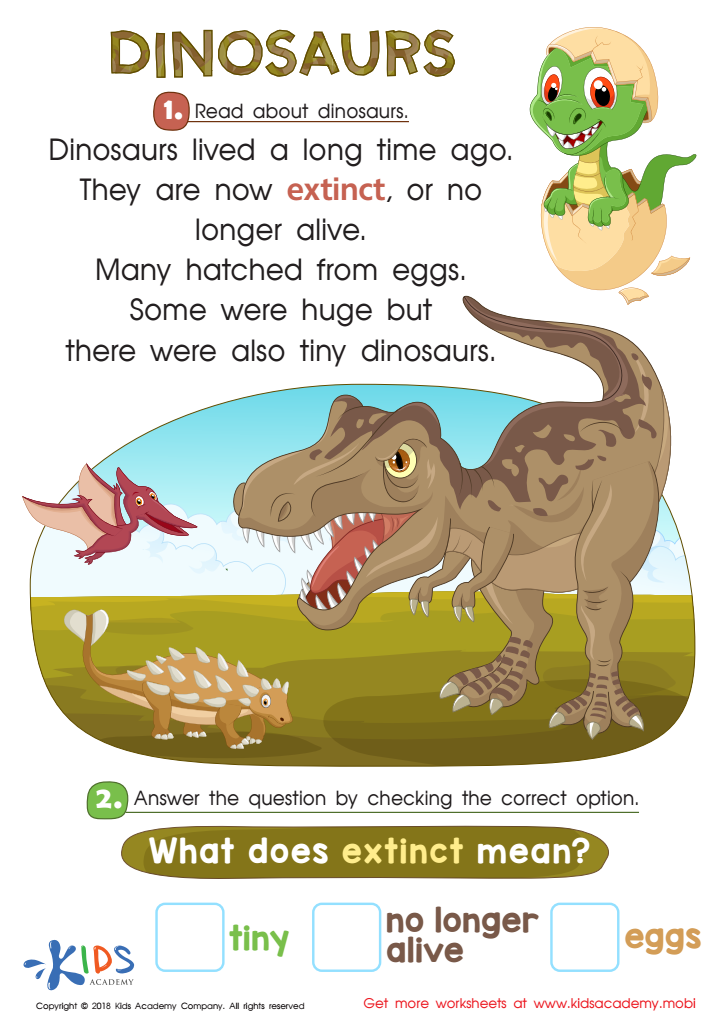
Dinosaurs Worksheet
Kids are often fascinated by dinosaurs, creatures that roamed the Earth before man. Sadly, they are now extinct. To learn more, read facts on this worksheet to your kids and help them answer the question at the end by selecting the correct option.
 Assign to My Students
Dinosaurs Worksheet
Worksheet
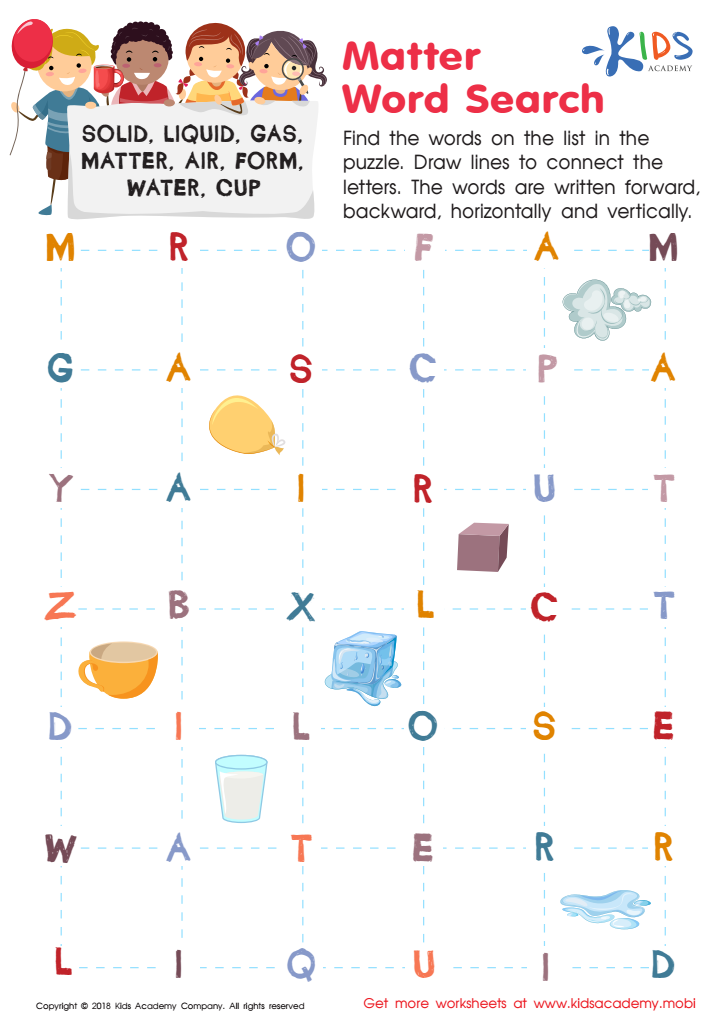
Matter Word Search Worksheet
Matter is anything with weight and taking up space. It exists in three forms: solid, gas and liquid. Examples of these are ice, air and water. Help kids find the words in the puzzle, which are written forward, backward, horizontally and vertically. Connect the letters!
Matter Word Search Worksheet
Worksheet
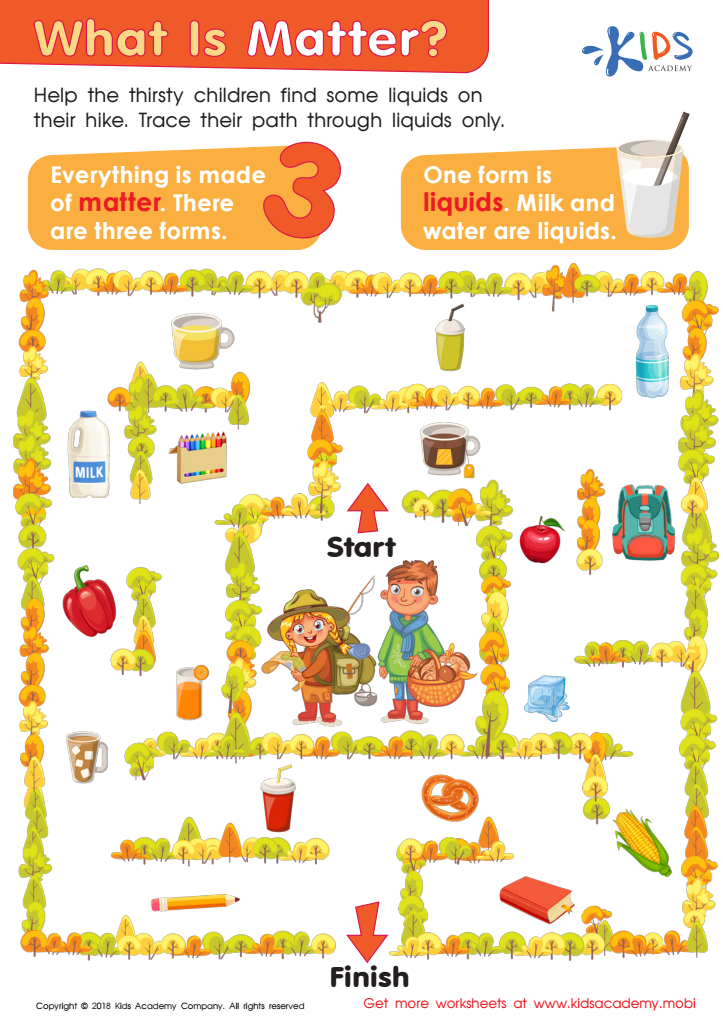
What Is Matter? Worksheet
Matter is anything that occupies space and has weight. Show your child examples, like people, cars, food, animals, objects etc. Ask them to name more. Help the thirsty kids in the picture find liquids - have them trace the path in the tracing sheet.
What Is Matter? Worksheet
Worksheet
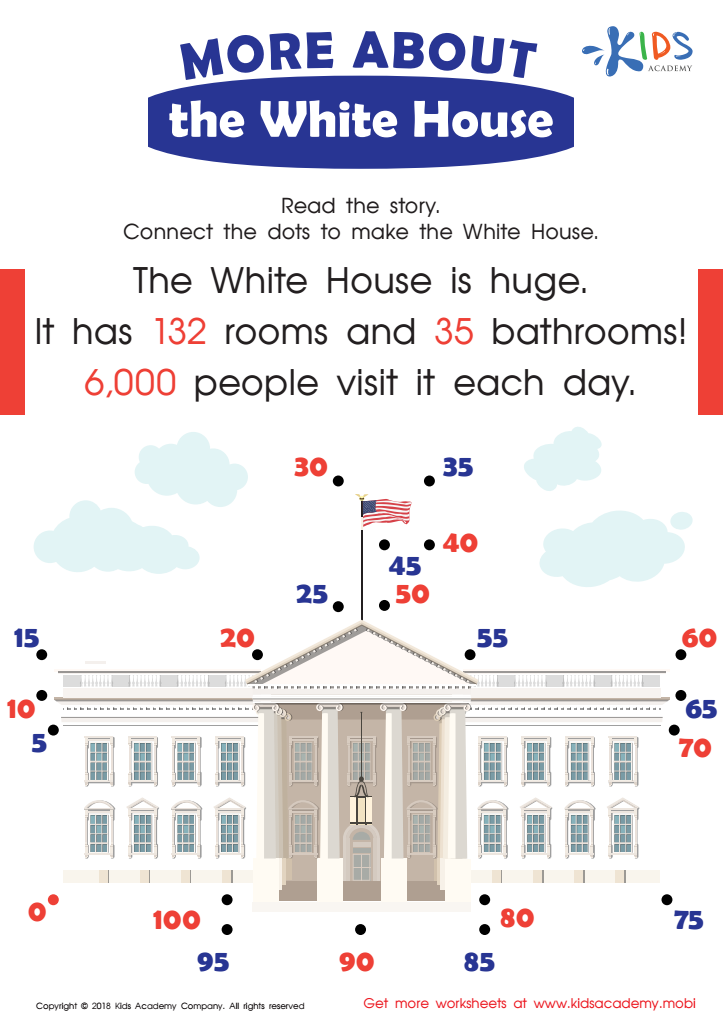
More About the White House Worksheet
The President of the United States lives in the White House, a huge building with 132 rooms and 35 bathrooms. It's home to the President's family, plus 6,000 visitors every day, and full of interesting stories. Teach your kids about it with this printout; help them connect the dots and learn more about this famous home. Learning never ends!
More About the White House Worksheet
Worksheet
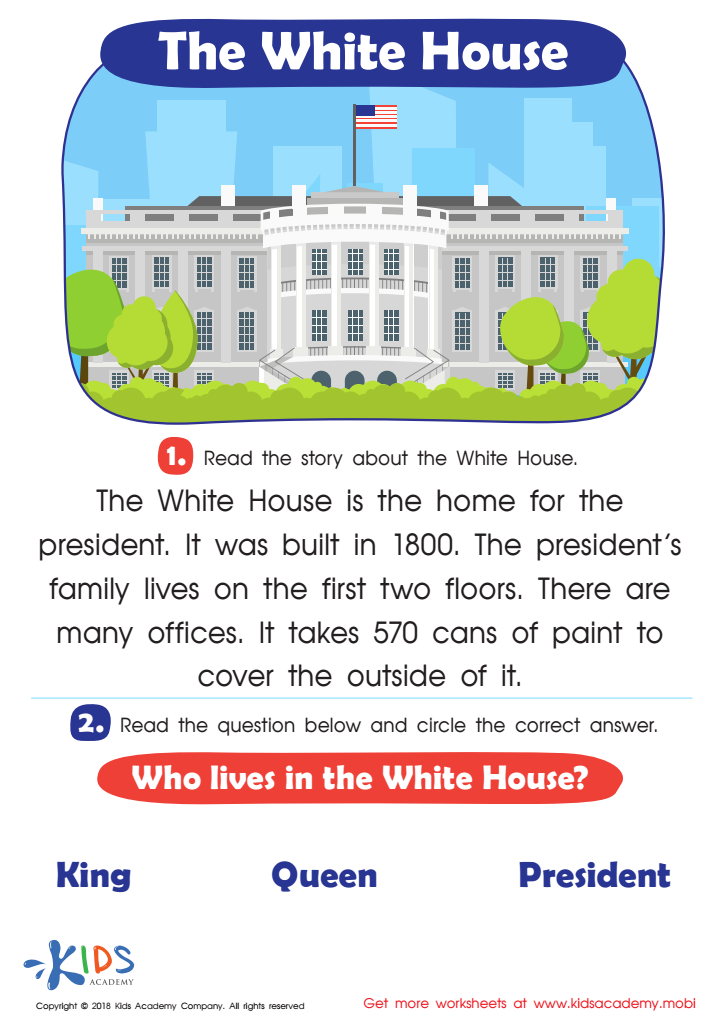
White House Worksheet
Read stories to your students to teach them new words, and about the White House. Before reading, ask your kindergartners what they already know. Then read short sentences for them to learn about the building the U.S President resides in.
White House Worksheet
Worksheet
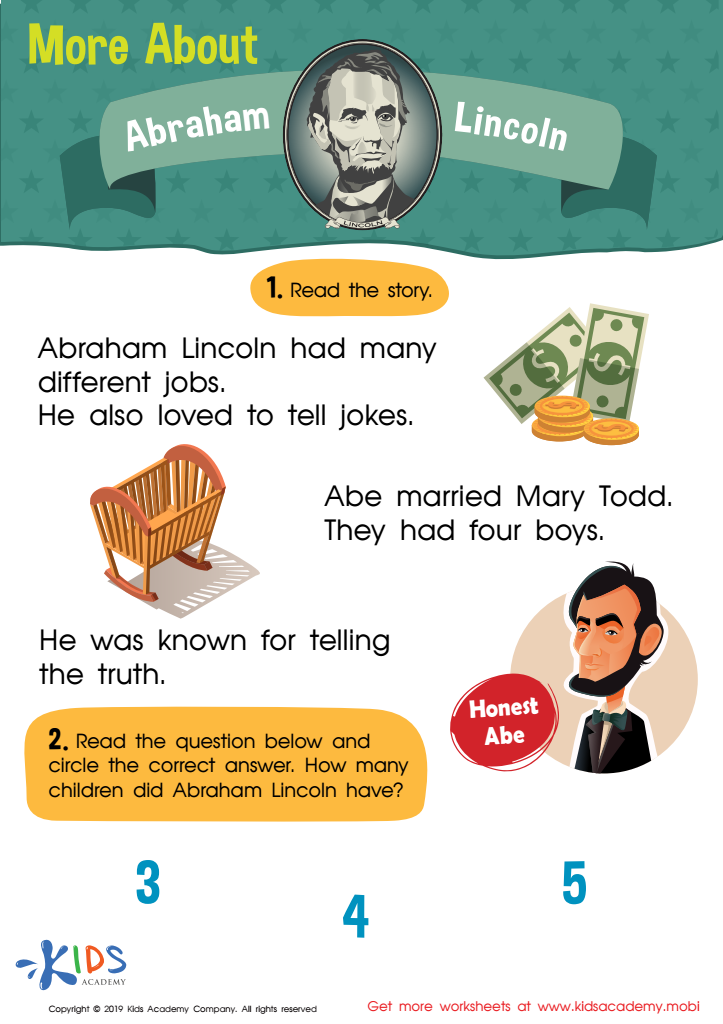
More About Abraham Lincoln Worksheet
Read the short story in the worksheet with your kids. Show them the pictures representing the sentences, then ask the questions and help them circle the correct answer. Make sure they are actually paying attention and learning from the stories.
More About Abraham Lincoln Worksheet
Worksheet
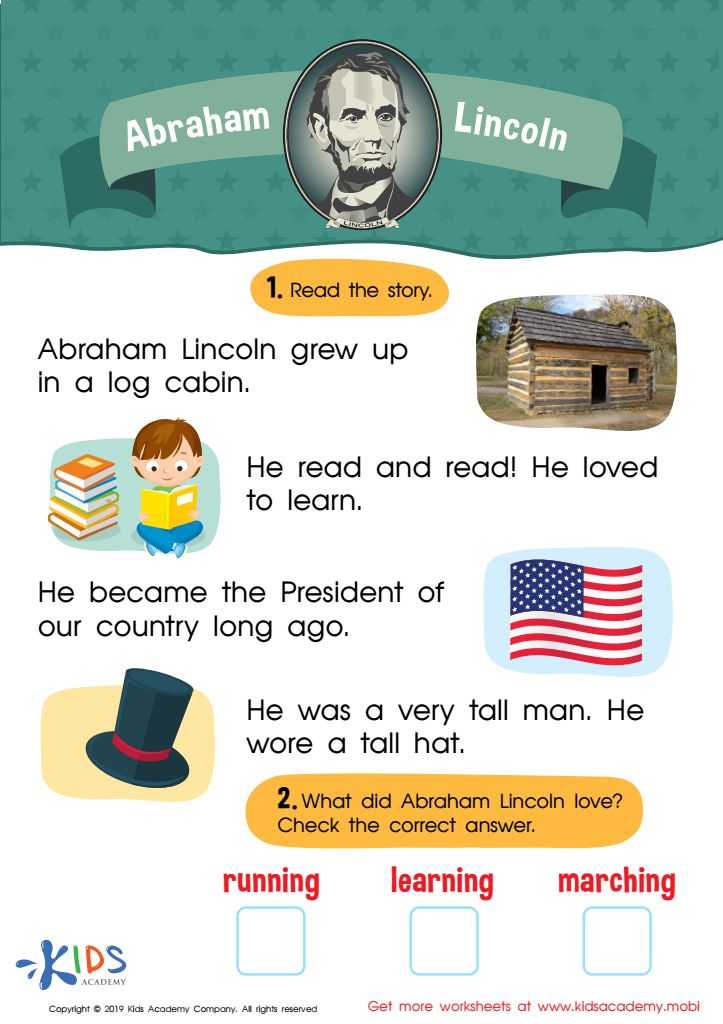
Abraham Lincoln Worksheet
Let your kids listen to interesting stories while having fun! Read the short story in this worksheet, point to the picture representing each sentence, then ask the questions and check the answers. Doing this will help your children learn new things and build their vocabulary.
Abraham Lincoln Worksheet
Worksheet
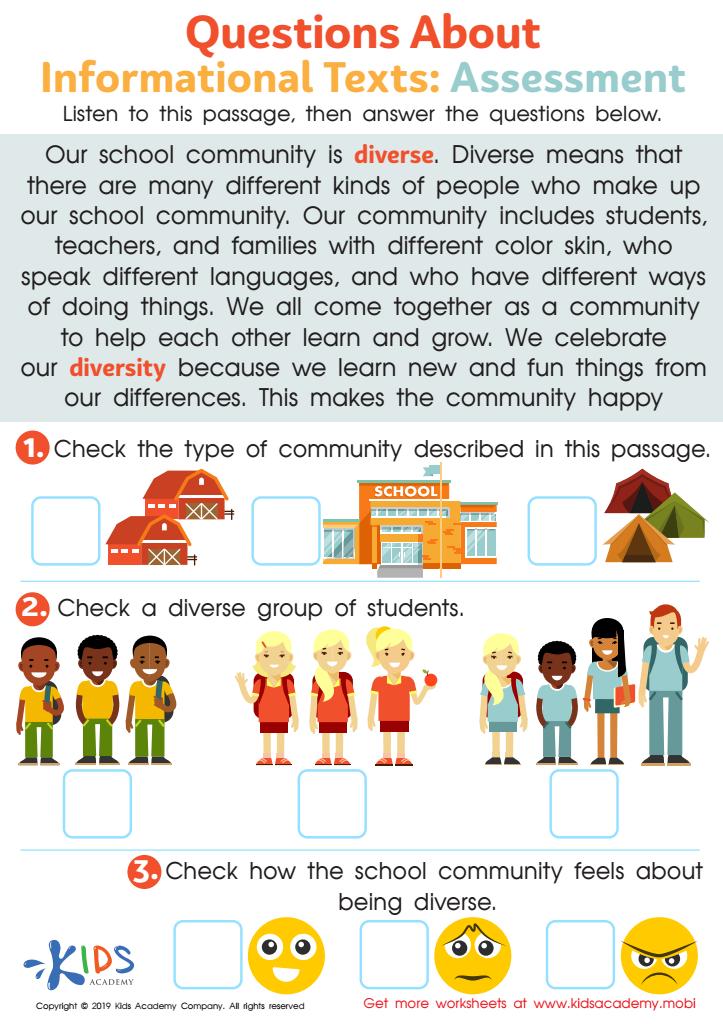
Questions About Informational Texts: Assessment 1 Worksheet
Ask your students: What comes to mind when we talk about a community? What different habits do people practice? What do fellow students do that seems strange? Read this passage aloud to your kindergartners and make sure they understand it. Then, answer the questions at the bottom of the page. (80 words)
Questions About Informational Texts: Assessment 1 Worksheet
Worksheet
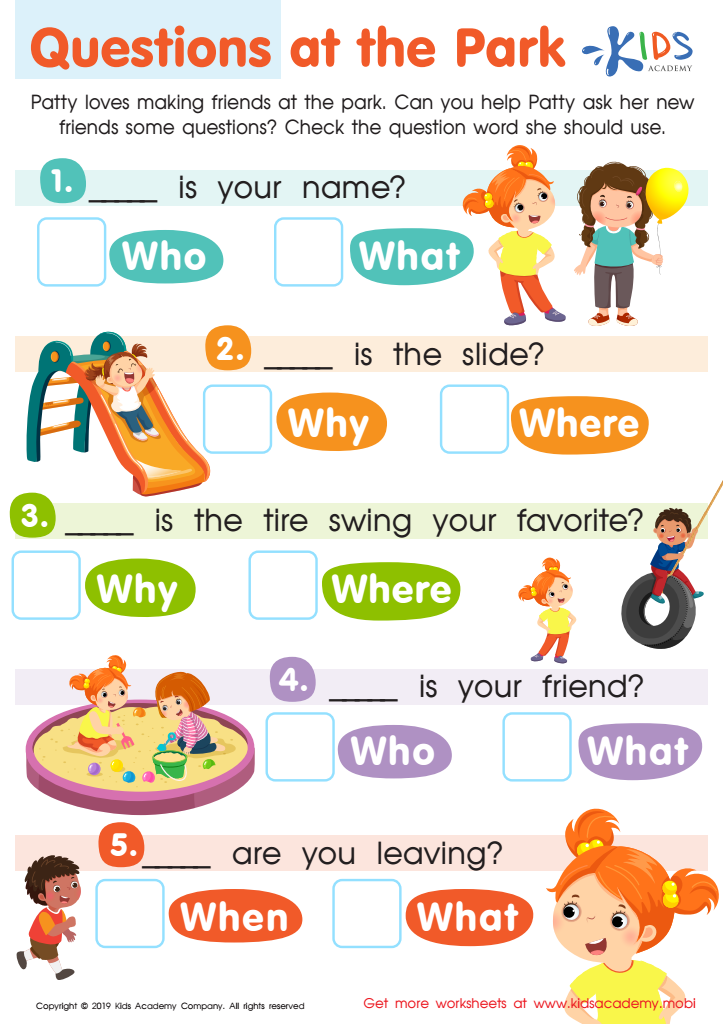
Questions at the Park Worksheet
Parks are great for fun! Kids can play, run and be as loud as they want! Ask them what their favorite activities are. If they love making friends, like Patty in this worksheet, help them practice their question words to get to know their new pals better.
Questions at the Park Worksheet
Worksheet
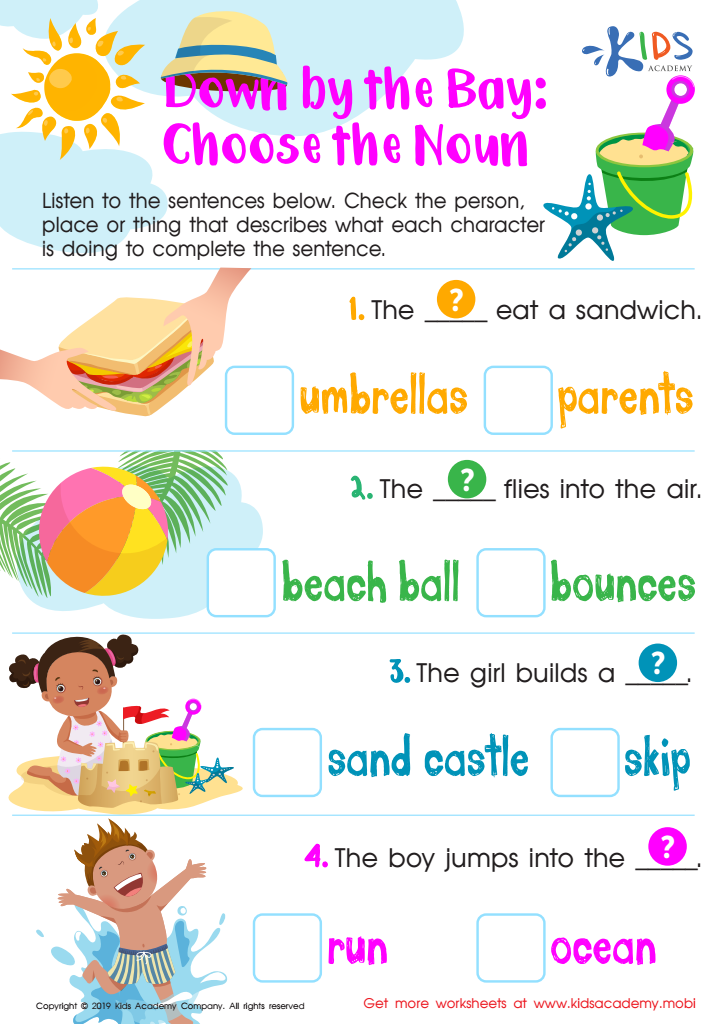
Down by the Bay: Choose the Noun Worksheet
Teach your child the basics of speaking and constructing English, like the parts of speech. Nouns are especially important; they are names of people, animals, objects, places, or things. Go through this worksheet with your kids and have them identify the nouns in the sentences. This exercise will help them understand the concept better.
Down by the Bay: Choose the Noun Worksheet
Worksheet
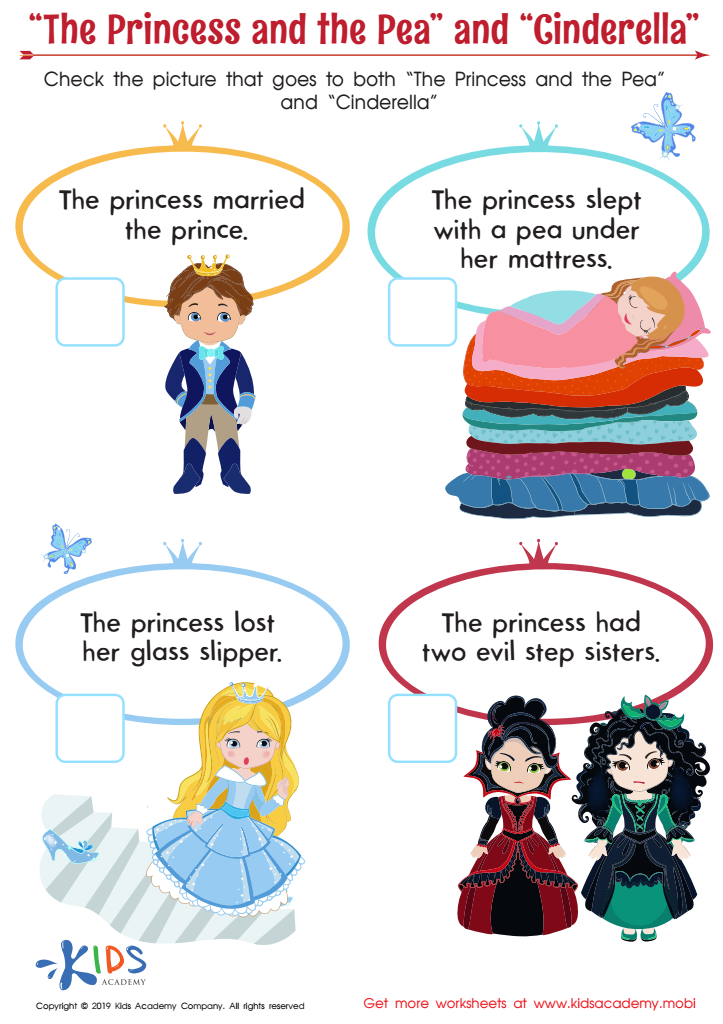
“The Princess and the Pea” and “Cinderella” Worksheet
Read "Cinderella" and "The Princess and the Pea" to your little ones. Ask them what their favorite parts were and what similarities they found in the princesses. This worksheet has four pictures of scenes from the stories. Ask your kids which picture goes with both tales.
“The Princess and the Pea” and “Cinderella” Worksheet
Worksheet
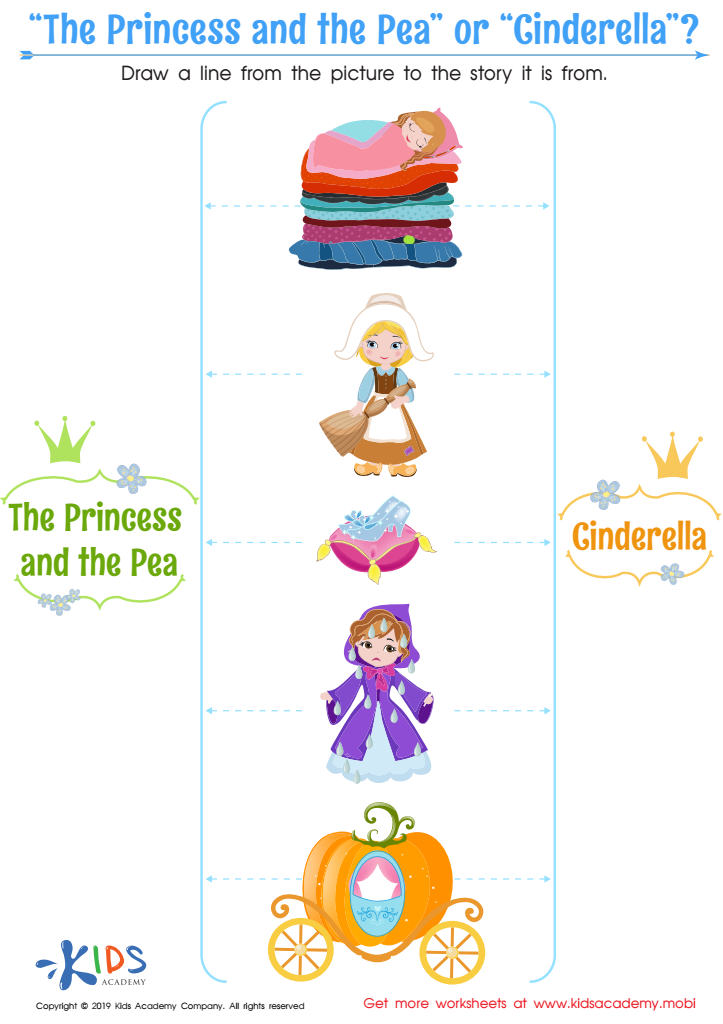
“The Princess and the Pea” or “Cinderella” Worksheet
Help your child identify the characters and objects from both the Princess and the Pea and Cinderella. Ask them to draw a line from the pictures to the story it's from on the tracing sheet. Encourage them to tell you the similarities between the two stories. Enjoy the tale with your daughter and watch her be fascinated by these two classic children's stories.
“The Princess and the Pea” or “Cinderella” Worksheet
Worksheet
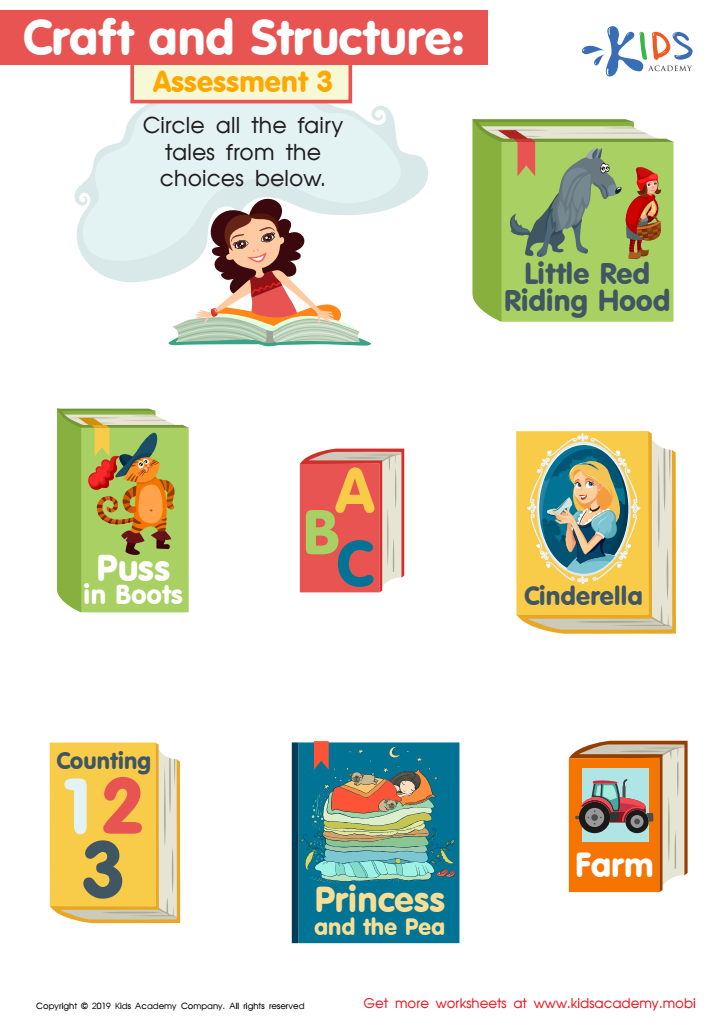
Craft and Structure: Assessment 3 Worksheet
Before starting the worksheet, ask your kids to recall their favorite bedtime stories. What characters and events can they remember? Four popular children's stories are hidden among pictures of other objects - help them search and circle the fairy tales in this PDF.
Craft and Structure: Assessment 3 Worksheet
Worksheet
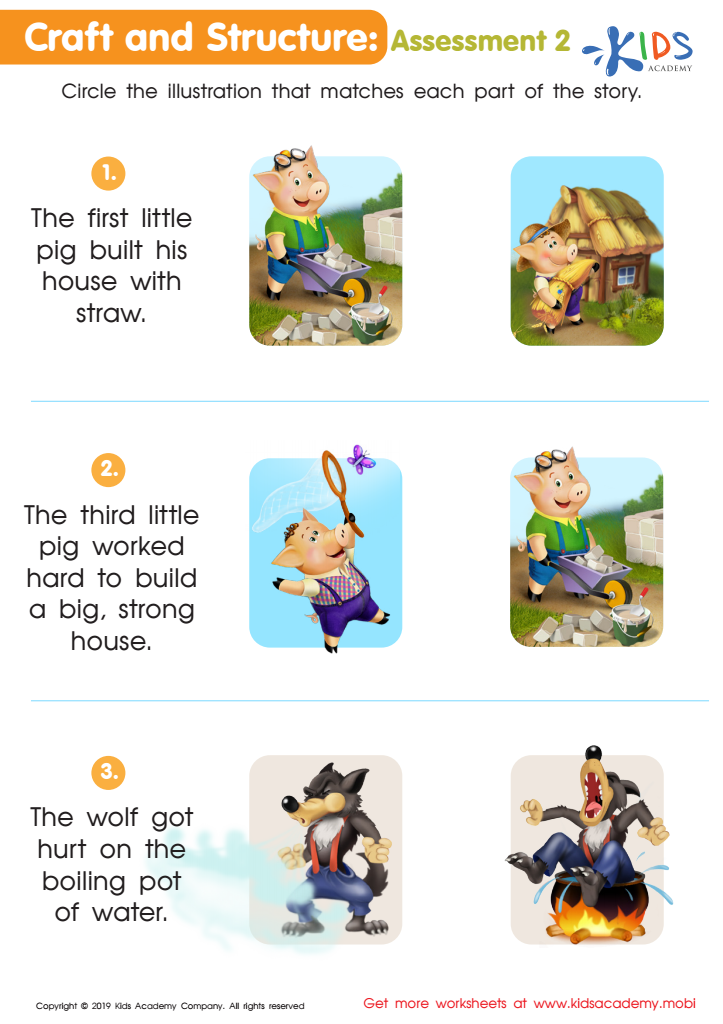
Craft and Structure: Assessment 2 Worksheet 2
This fun printout with colorful illustrations will assess how much your kids pay attention to story time. Go through the pictures and help them circle the ones that match each part of the story. Stimulate their brains and have fun in the process!
Craft and Structure: Assessment 2 Worksheet 2
Worksheet
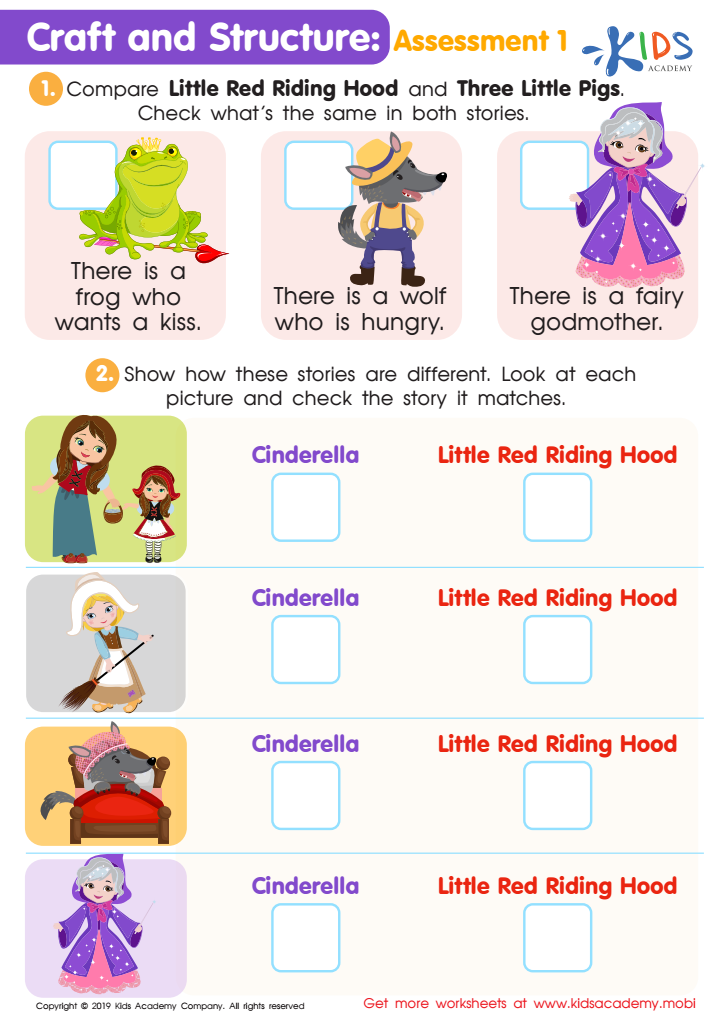
Craft and Structure: Assessment 1 Worksheet
Fairytales are a great way to bond with your kids while teaching them. Popular stories include Little Red Riding Hood and Three Little Pigs. Test how well they understood these two with this assessment worksheet. Ask them to compare the two stories and check what is the same. Doing this will help kids learn new words and sentence construction, as well as teaching them life lessons.
Craft and Structure: Assessment 1 Worksheet
Worksheet
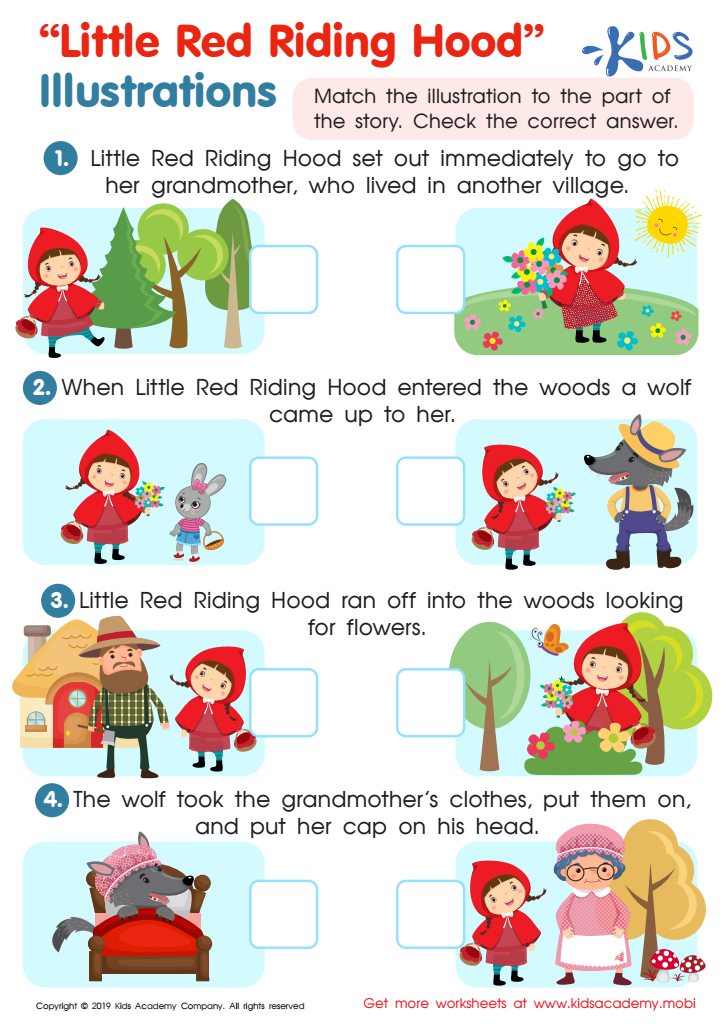
Little Red Riding Hood: Illustrations Worksheet
Comprehension is improved by having young readers recall and retell stories. This worksheet uses colorful illustrations of the fairytale Little Red Riding Hood. Children use their comprehension skills and strategy to match illustrations to the story parts, check off the appropriate boxes and use the pictures as clues.
Little Red Riding Hood: Illustrations Worksheet
Worksheet
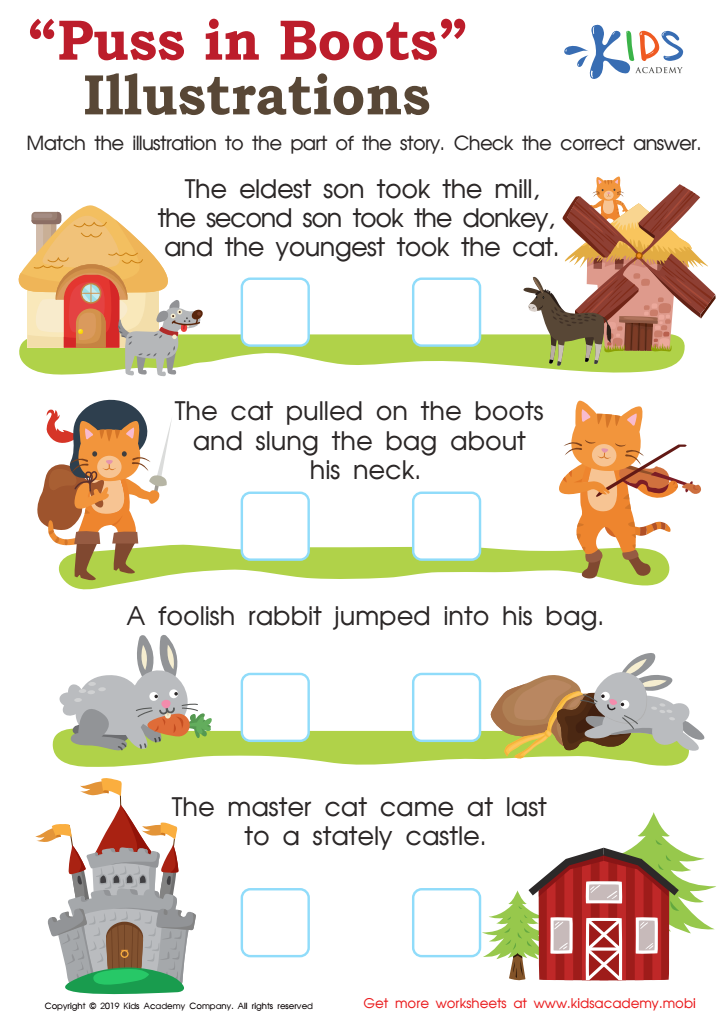
Puss in Boots Illustrations Worksheet
This Puss In Boots Illustrations worksheet is a great way to help kids learn about retelling stories. They'll match images to different parts of the story and check off the correct answer. As they recall events and put them in sequence they'll enjoy this fun and creative activity.
Puss in Boots Illustrations Worksheet
Worksheet
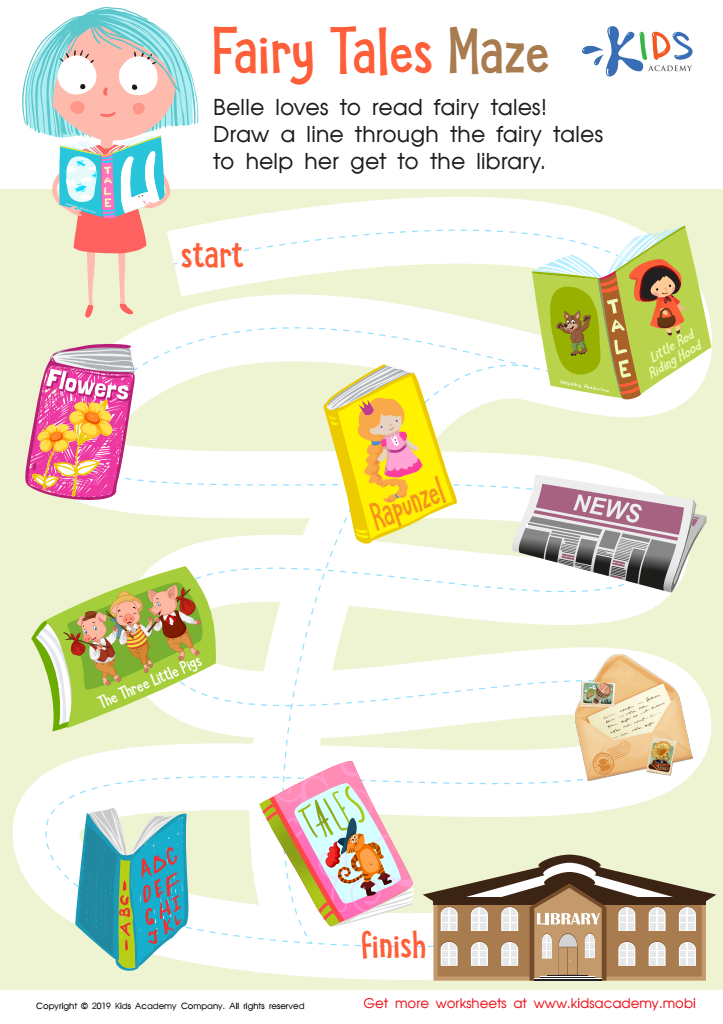
Fairy Tales Maze Worksheet
Kids love mazes and fairy tales, so this free worksheet is a great way to help teach young readers about familiar topics. They'll join Bella and use the traceable lines to travel through different reading genres, and find their way to the library for a nice reward!
Fairy Tales Maze Worksheet
Worksheet
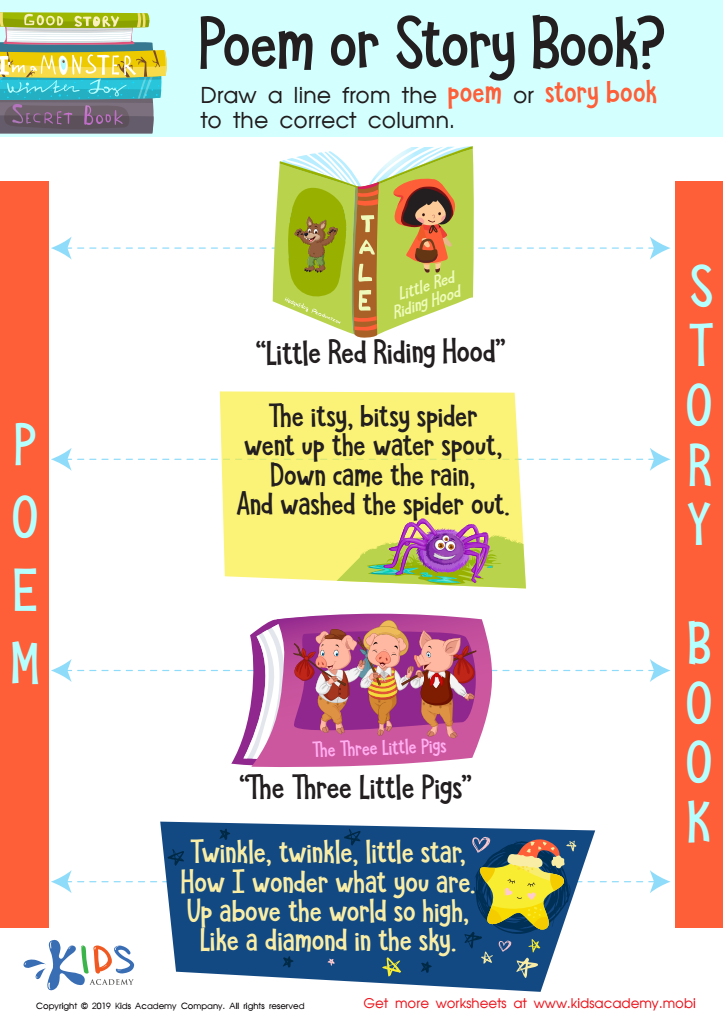
Poem or Story Book? Worksheet
Help your little readers comprehend different genres with this free worksheet! Colorful images and familiar themes help them distinguish between poems and story books. They'll identify which is which, then connect the picture to the right column with traceable lines. A fun way to expand their understanding!
Poem or Story Book? Worksheet
Worksheet
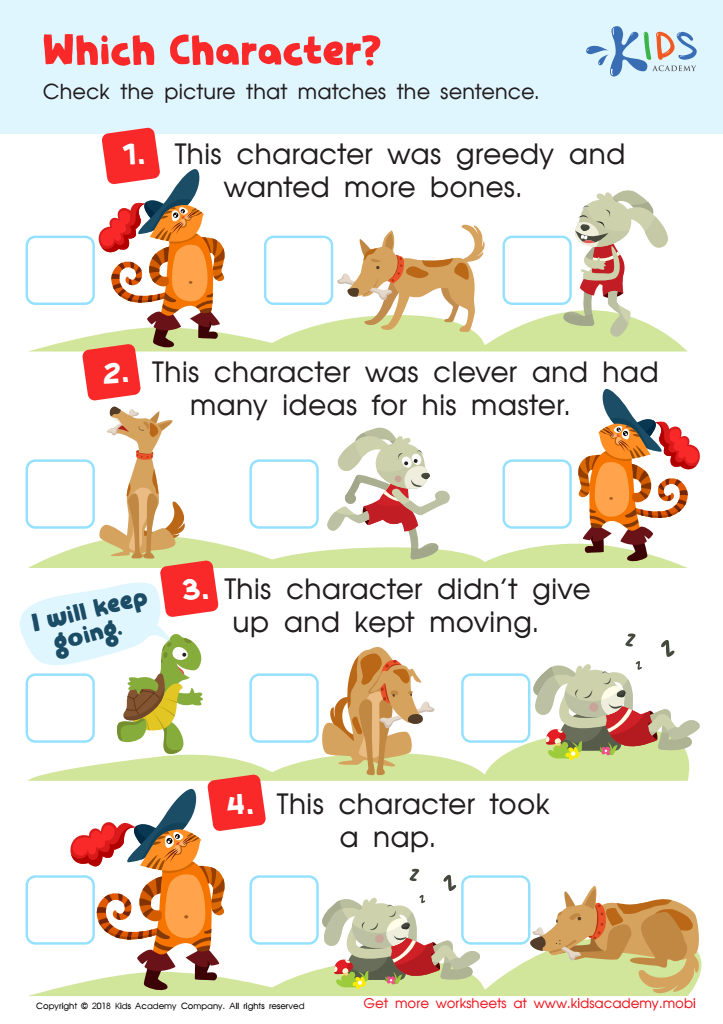
Which Character Worksheet
Kids learn best with stories, and this fun worksheet shows characters from popular tales. Like the tortoise who forgot hard work pays off, the cat defending its honor with wit, and the dog teaching a lesson about sharing. It's a great way to assess their understanding, and they'll be successful.
Which Character Worksheet
Worksheet
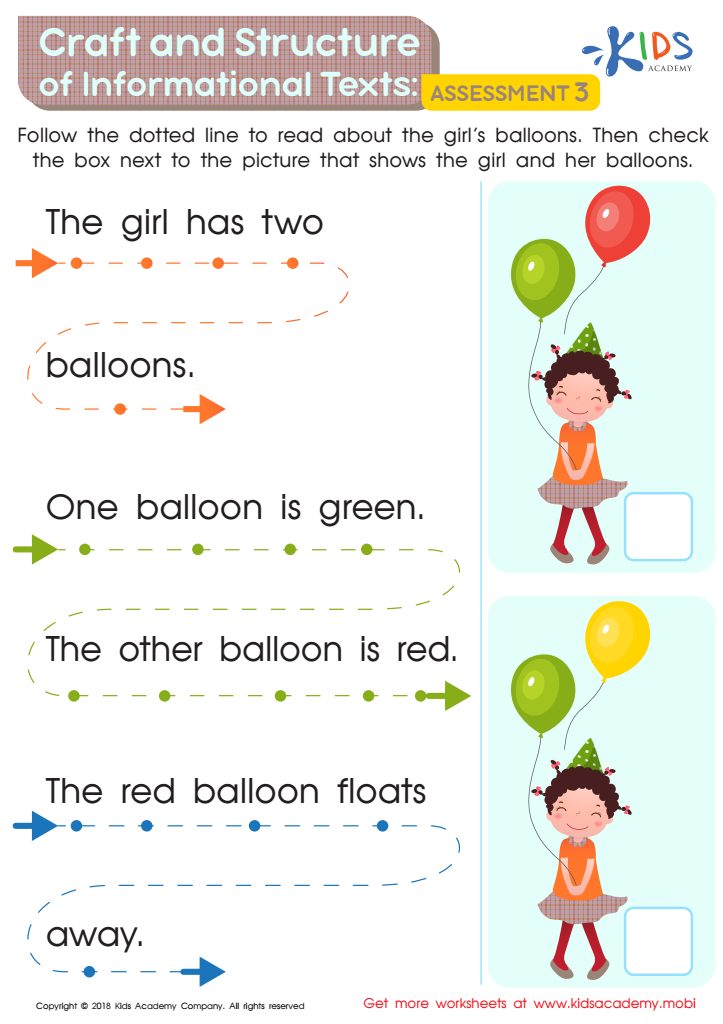
Craft and Structure of Informational Texts: Assessment 3 Worksheet
Test your beginning reader's understanding of left-to-right directionality and use of details from informational texts with this fun worksheet. Follow the traceable paths to find the right picture for each sentence. This will help your child gain confidence and be successful as a reader.
Craft and Structure of Informational Texts: Assessment 3 Worksheet
Worksheet
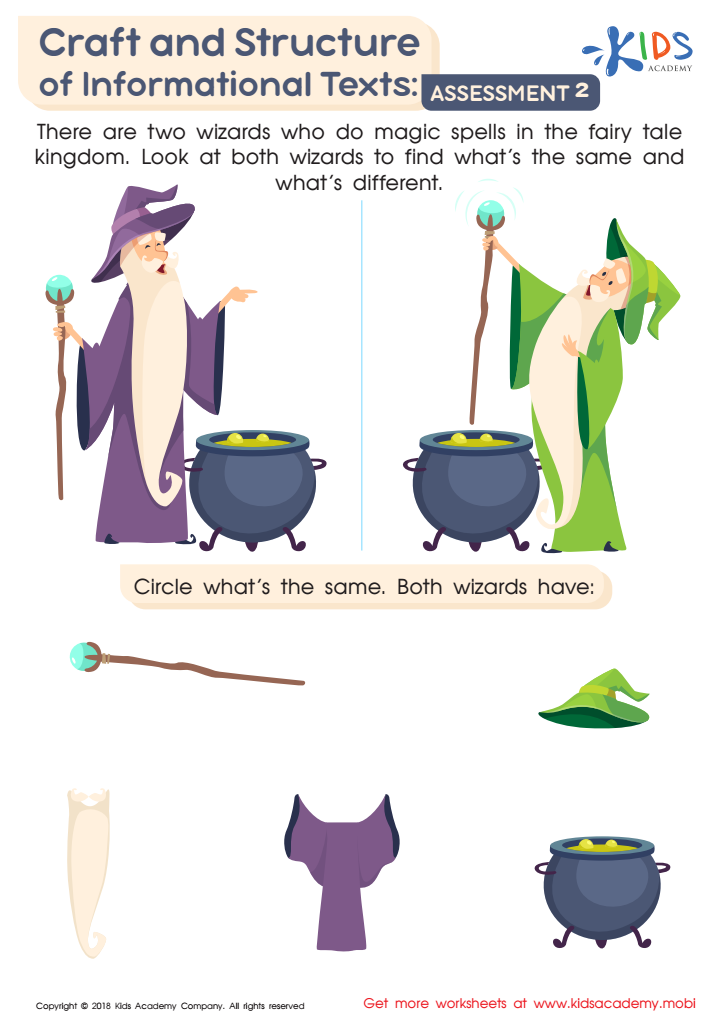
Craft and Structure of Informational Texts: Assessment 2 Worksheet
This assessment has kids looking at two similar fairy tale wizards, focusing on their visuals to find the similarities and differences. Then, they'll circle the things they both have. It's a great way to help children hone their detail-oriented comprehension skills, which is essential when using informational texts.
Craft and Structure of Informational Texts: Assessment 2 Worksheet
Worksheet
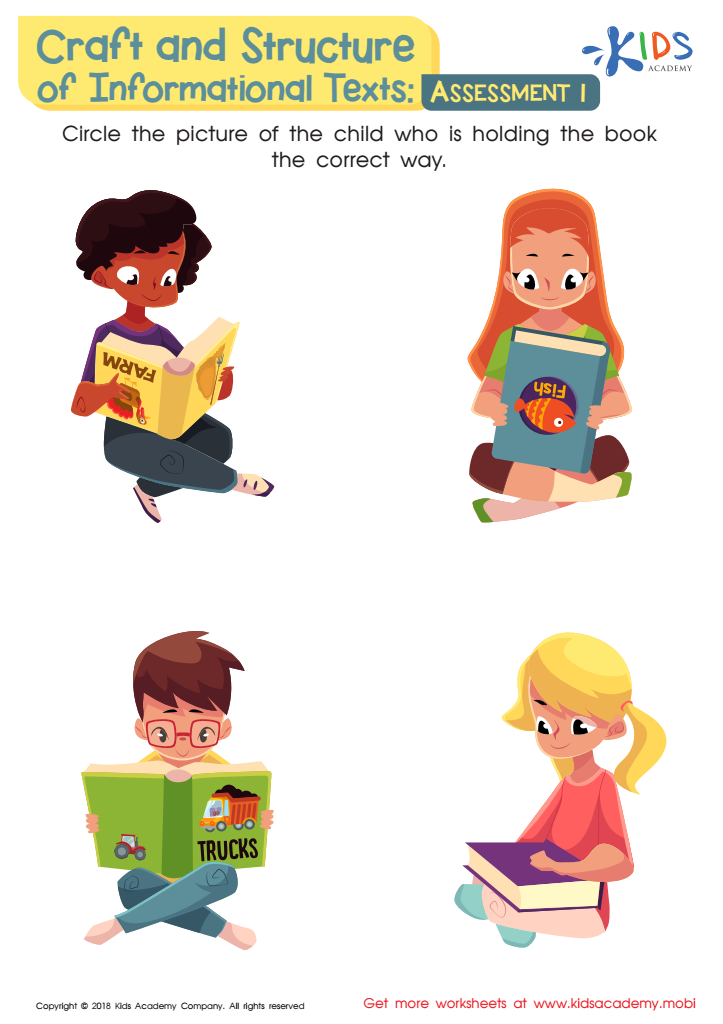
Craft and Structure of Informational Texts: Assessment 1 Worksheet
Young children need to know how to hold books correctly when they start reading. This assessment worksheet helps them show they know what to do. They'll look at the pictures and circle the child who is holding the book correctly. It's a great way to tell they are well on their way to becoming lifetime readers!
Craft and Structure of Informational Texts: Assessment 1 Worksheet
Worksheet
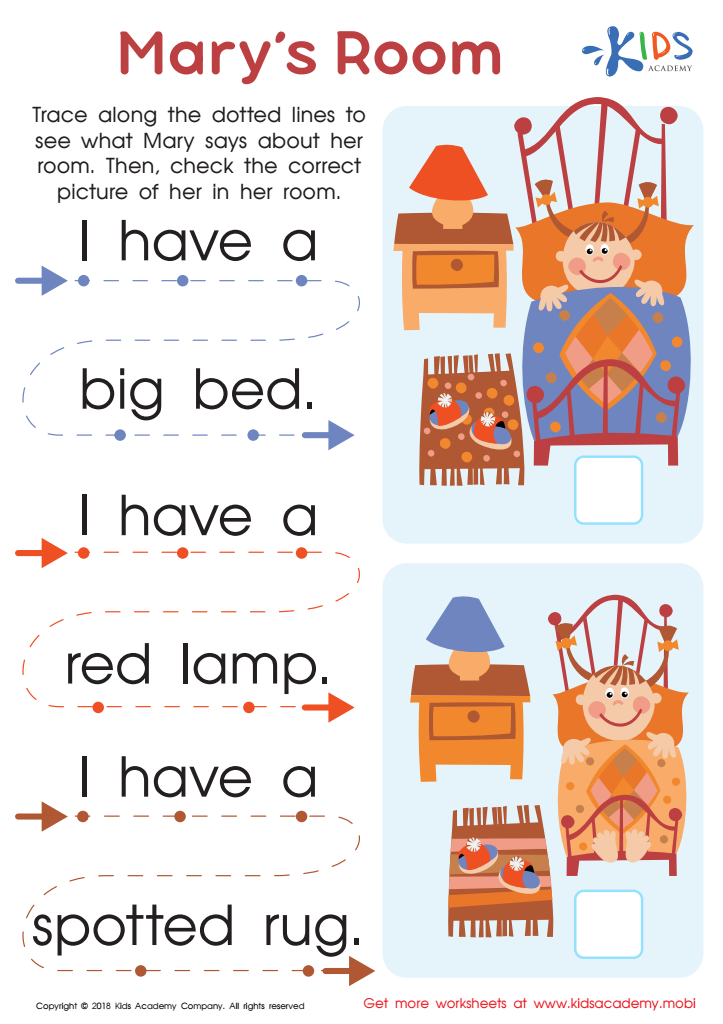
Mary's Room Worksheet
This cute PDF worksheet is a great way to help your young reader build their comprehension and directionality skills in a fun way. They'll use the images and clues to determine which room belongs to Mary. Following the traceable lines can give them a sense of being a detective, and help with directionality and fine motor skills too. Let them have fun and enjoy the activity - their skills will thank you!
Mary's Room Worksheet
Worksheet
Join Kids Academy for Free
Who is primarily going to use this learning content?




.jpg)