Math worksheets activities for Ages 7-9 - Page 2
49 filtered results
-
From - To
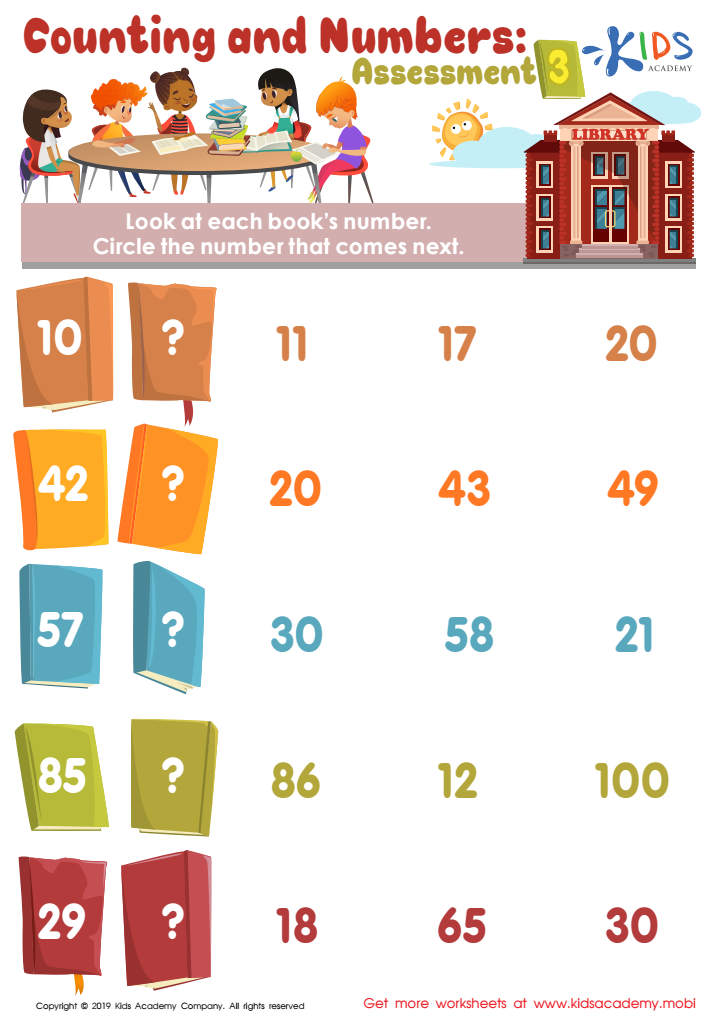
Counting and Numbers: Assessment Worksheet
 Assign to My Students
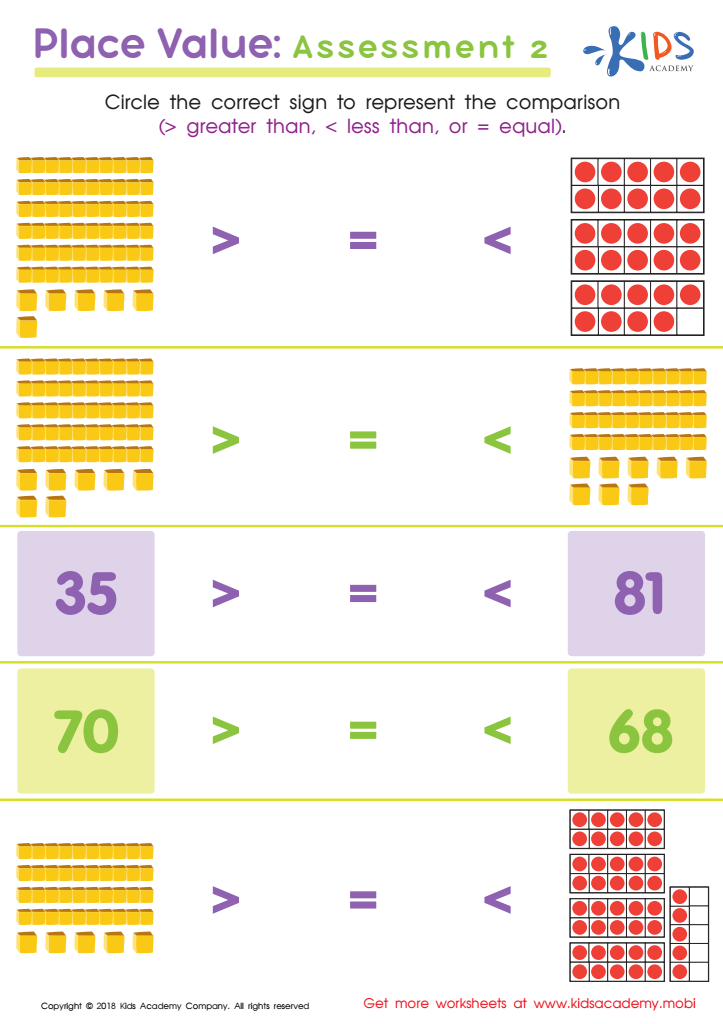
Place Value: Assessment 2 Worksheet
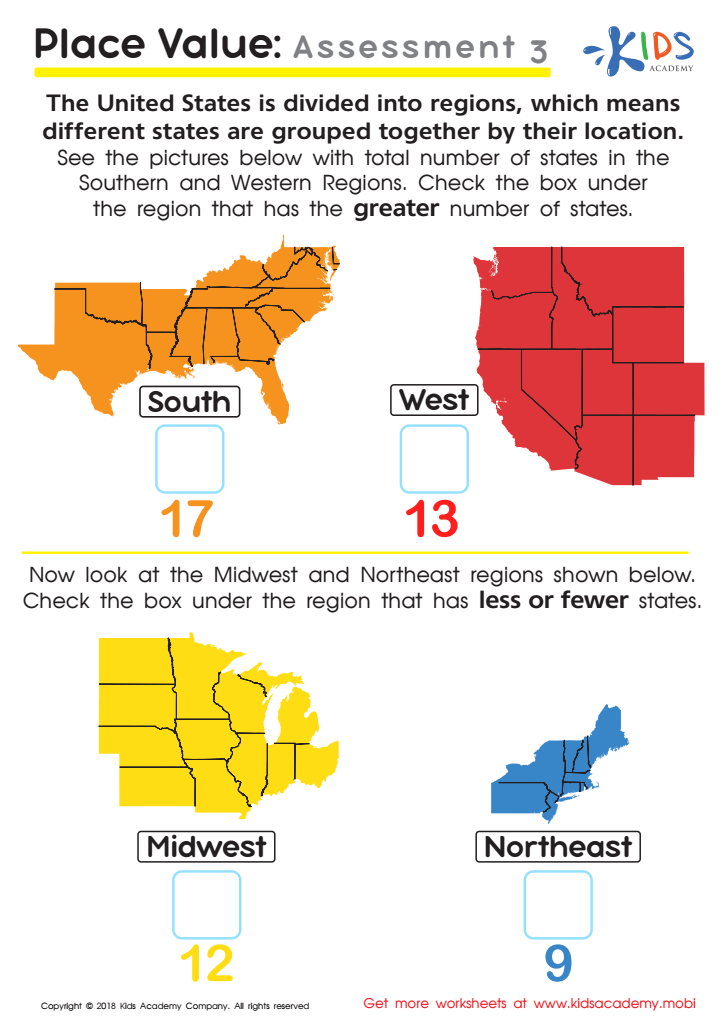
Place Value: Assessment 3 Worksheet
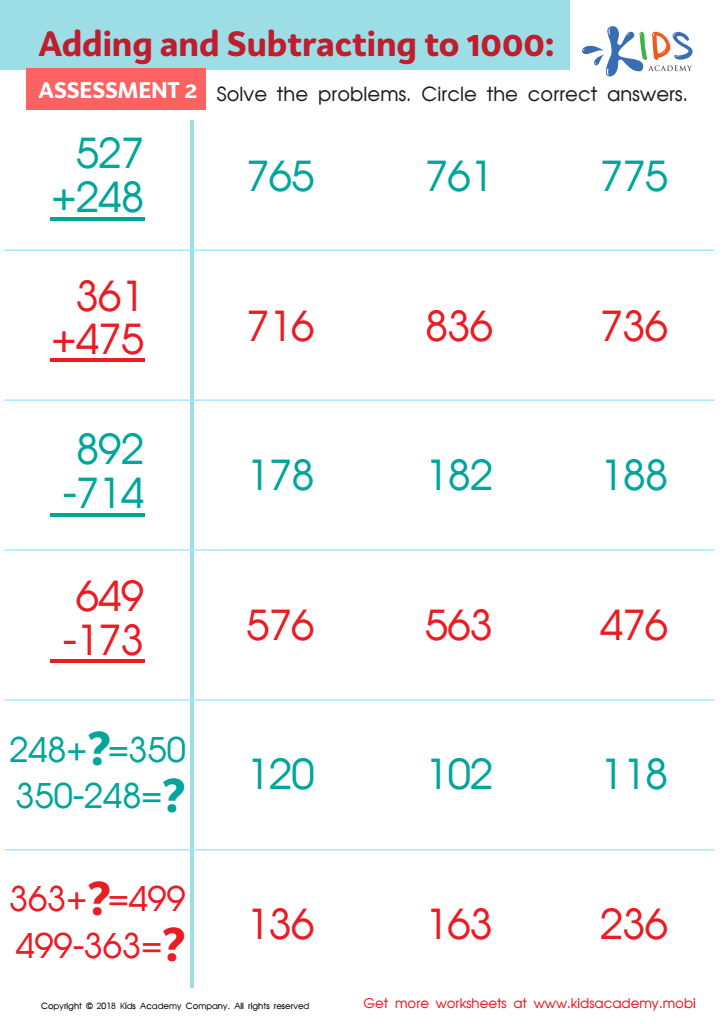
Adding and Subtracting to 1 Worksheet: Assessment 2
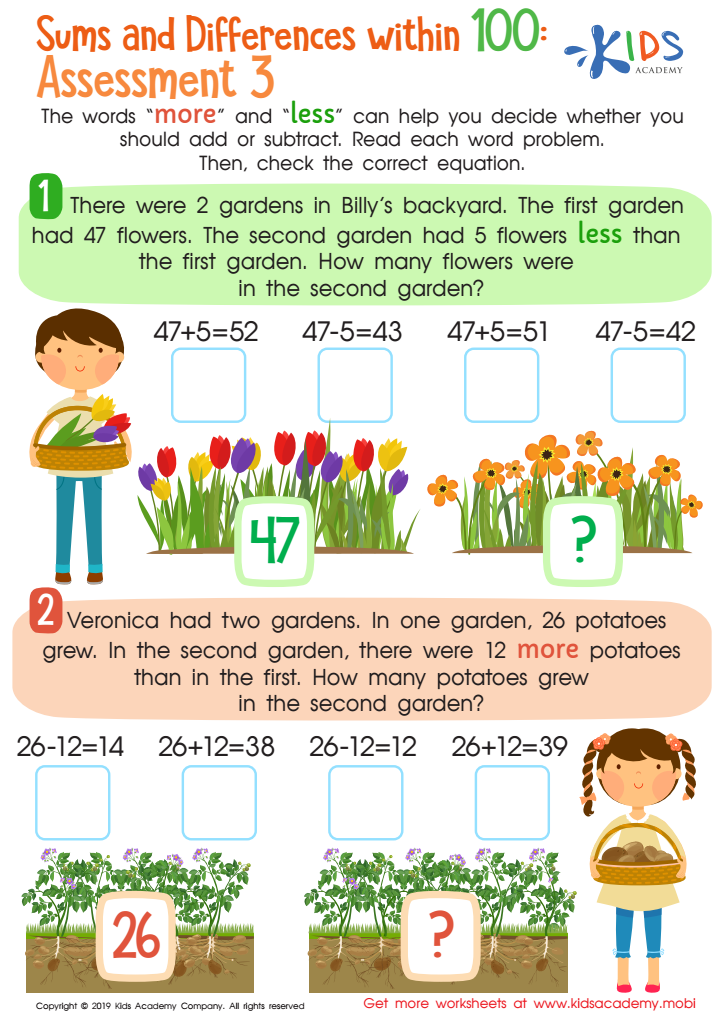
Sums and Differences Within 1 - Assessment 3 Worksheet
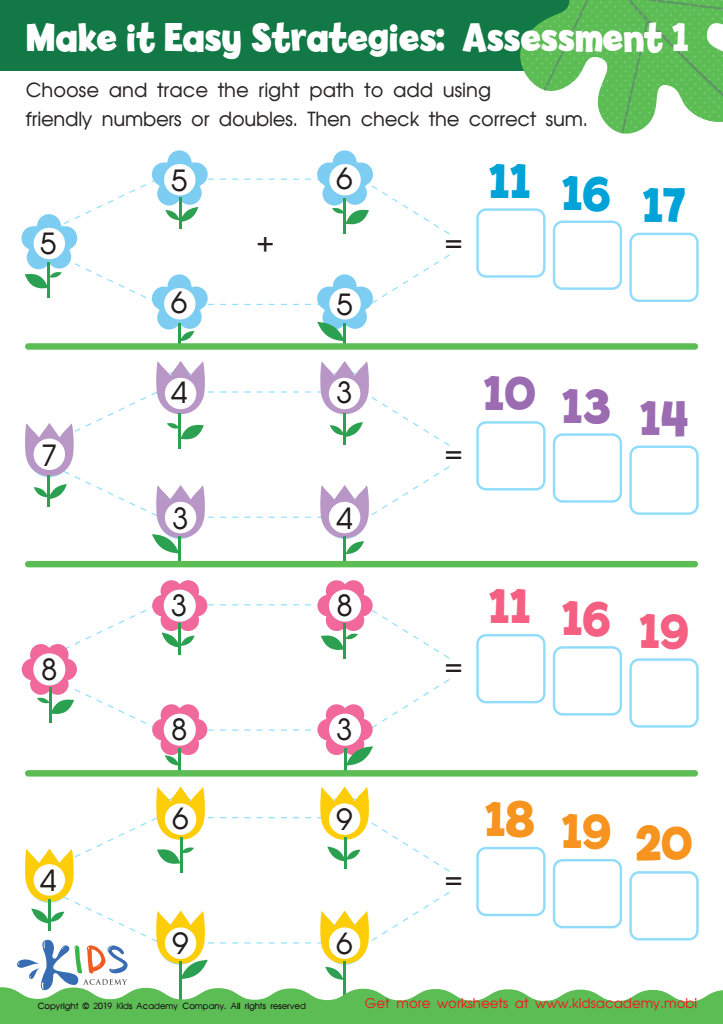
Make it Easy Strategies: Assessment 1 Worksheet
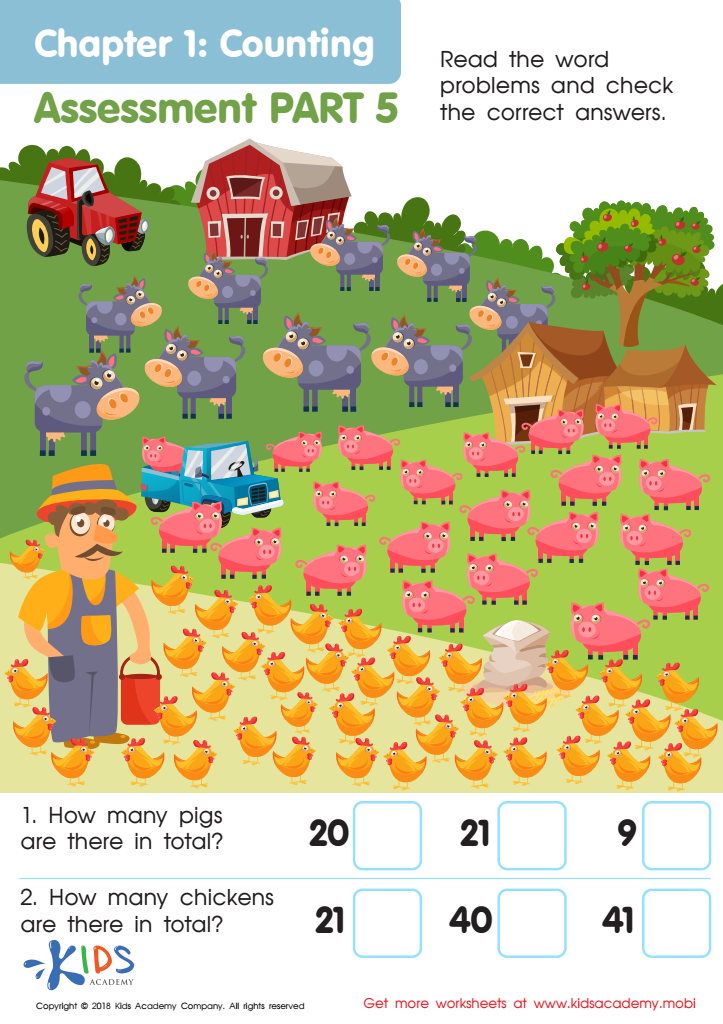
Counting: Assessment 5 Worksheet
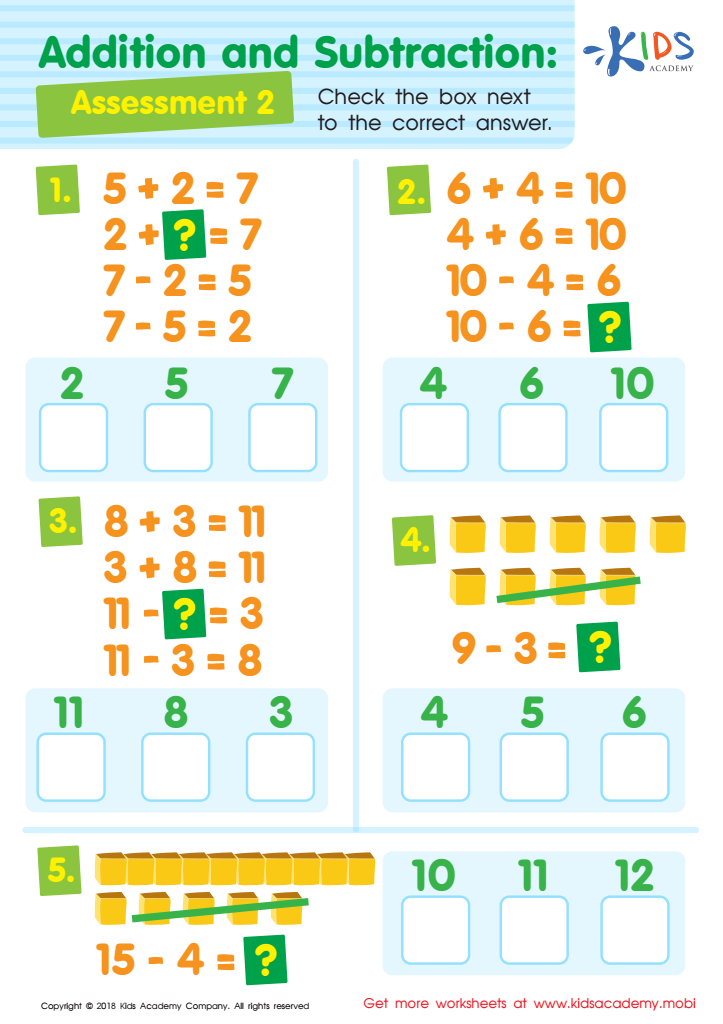
Addition and Subtraction Assessment 2 Worksheet
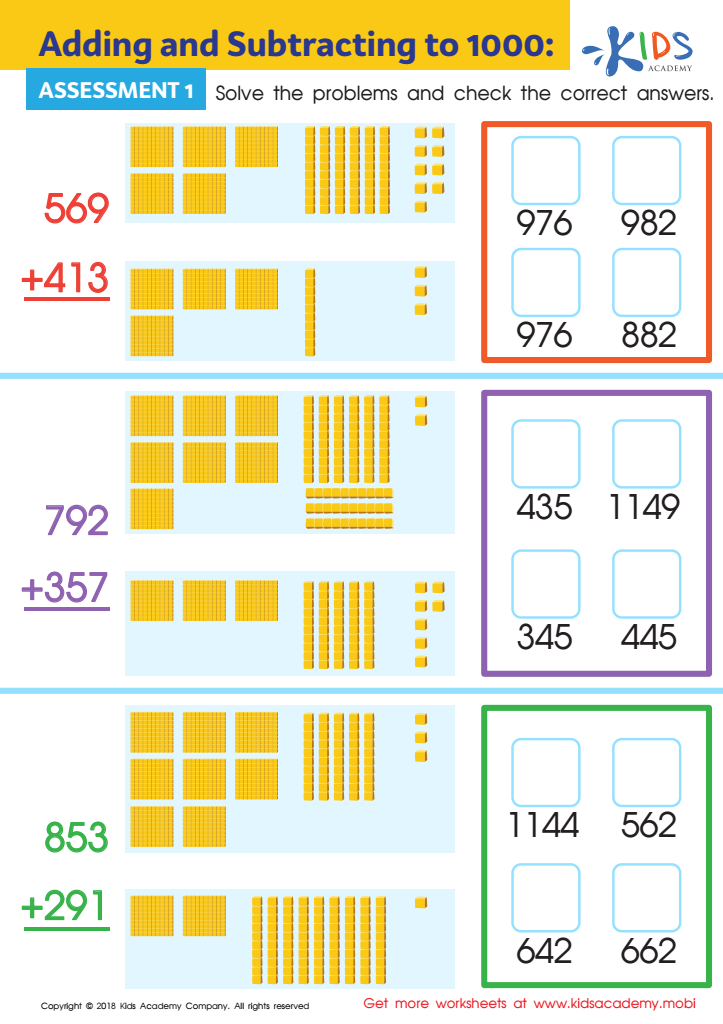
Adding and Subtracting to 1 Worksheet: Assessment 1
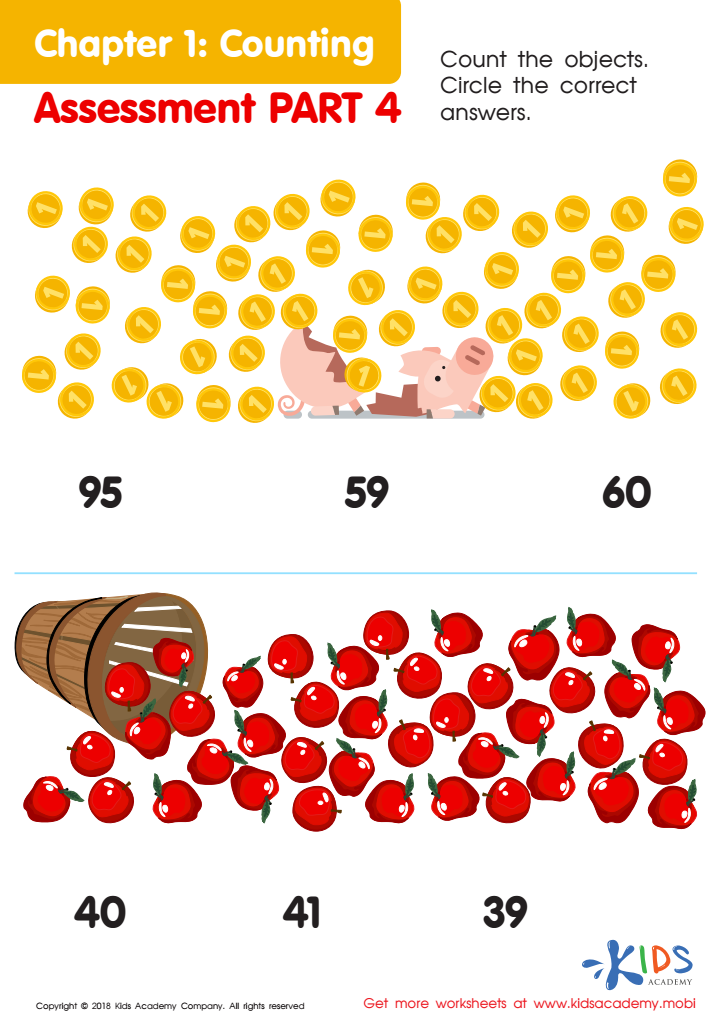
Counting: Assessment 4 Worksheet
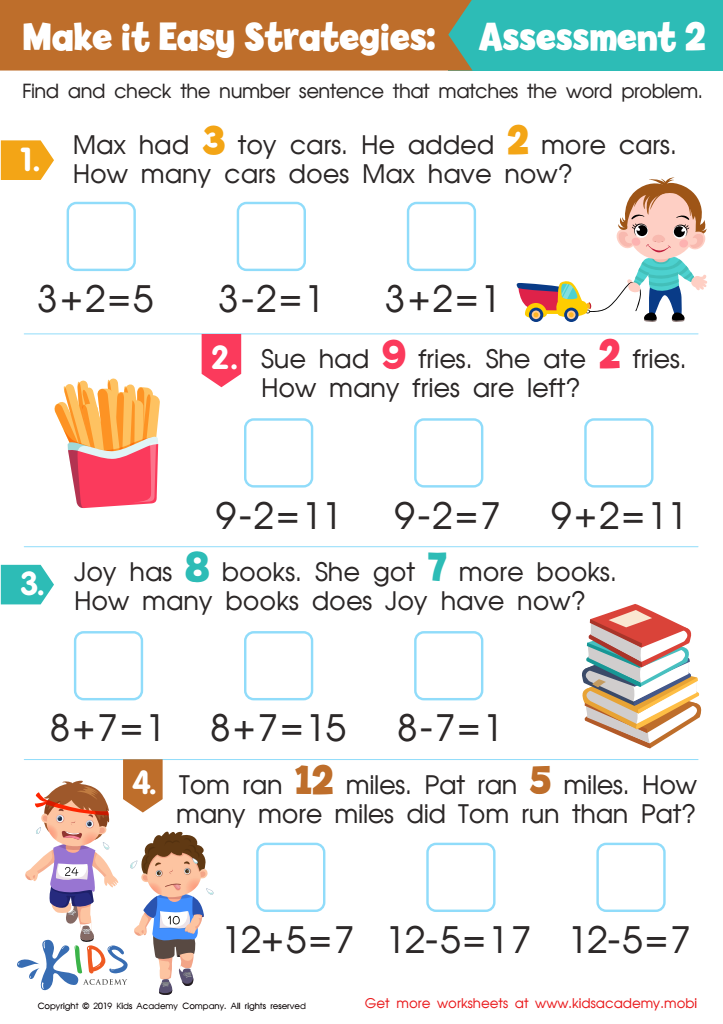
Make it Easy Strategies: Assessment 2 Worksheet
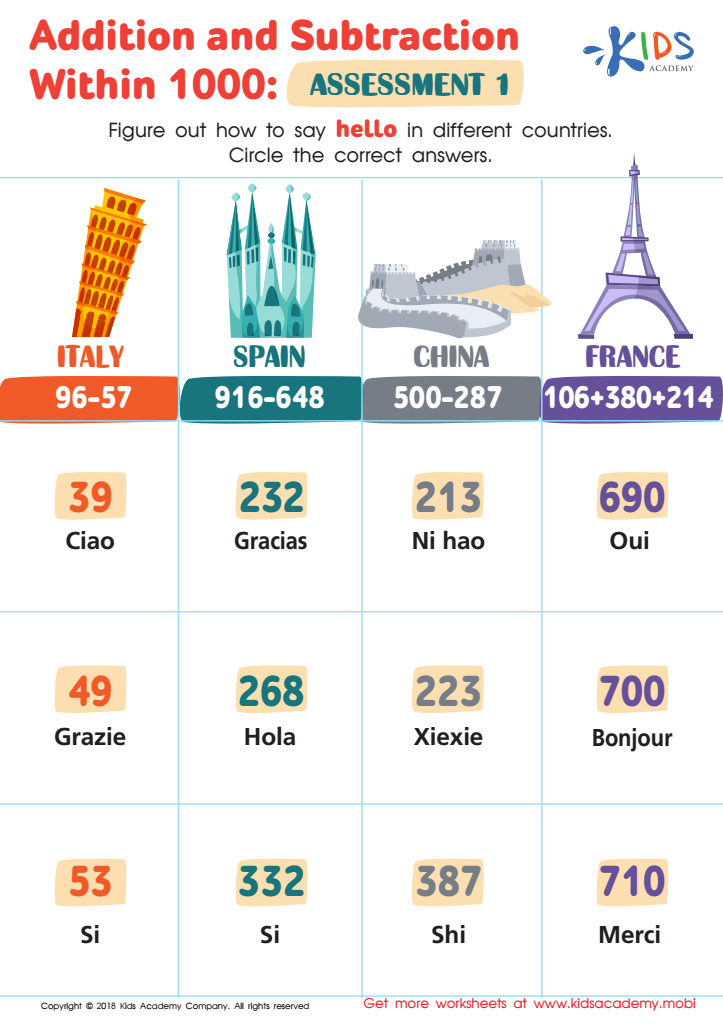
Addition and Subtraction Within 1000: Assessment 1 Worksheet
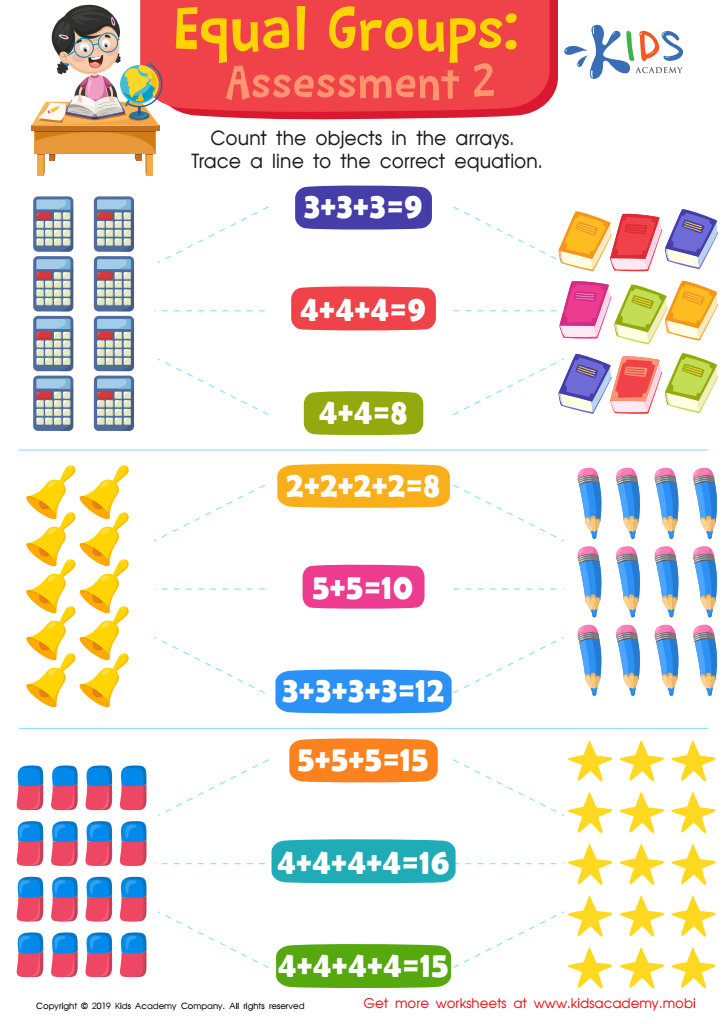
Equal Groups: Assessment 2 Worksheet
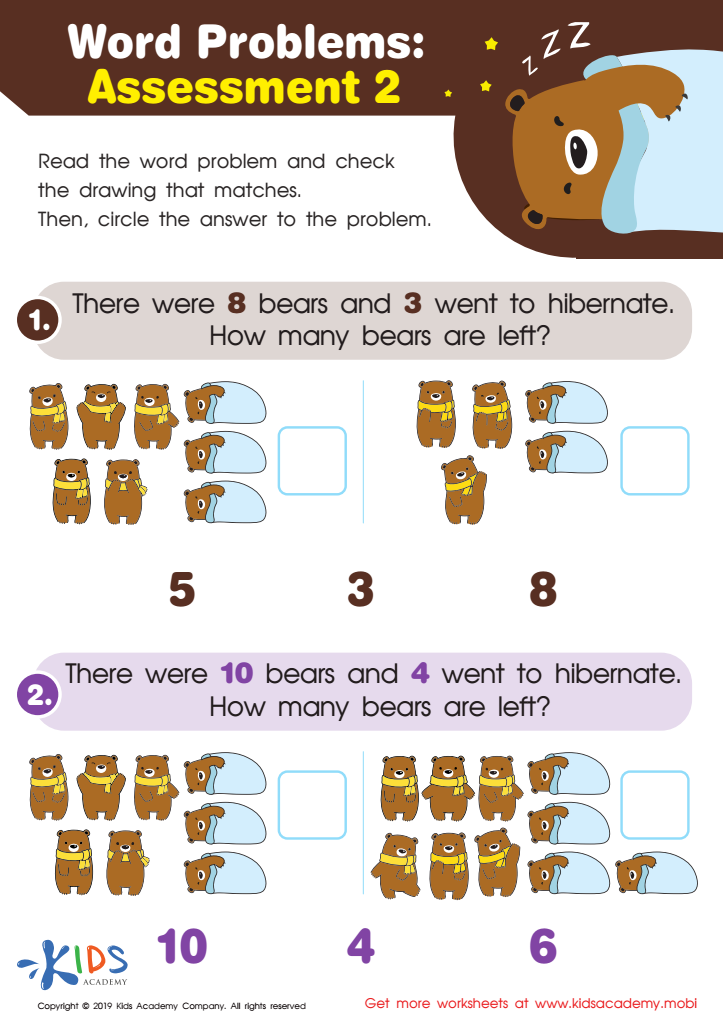
Word Problems: Assessment 2 Worksheet
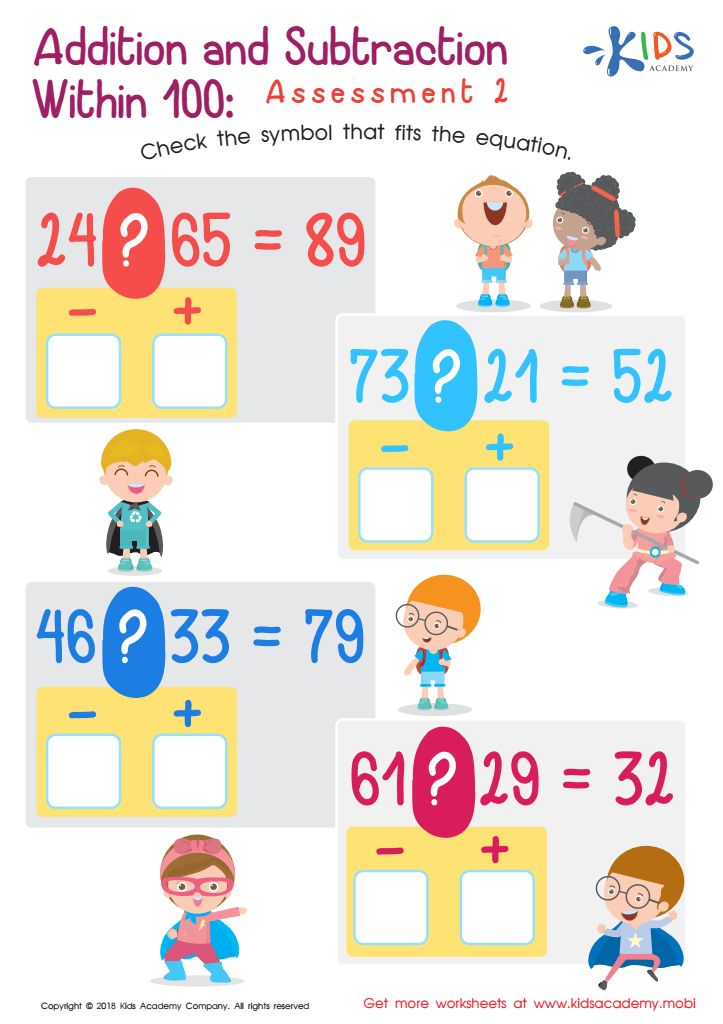
Addition and Subtraction Within 1: Assessment 2 Worksheet
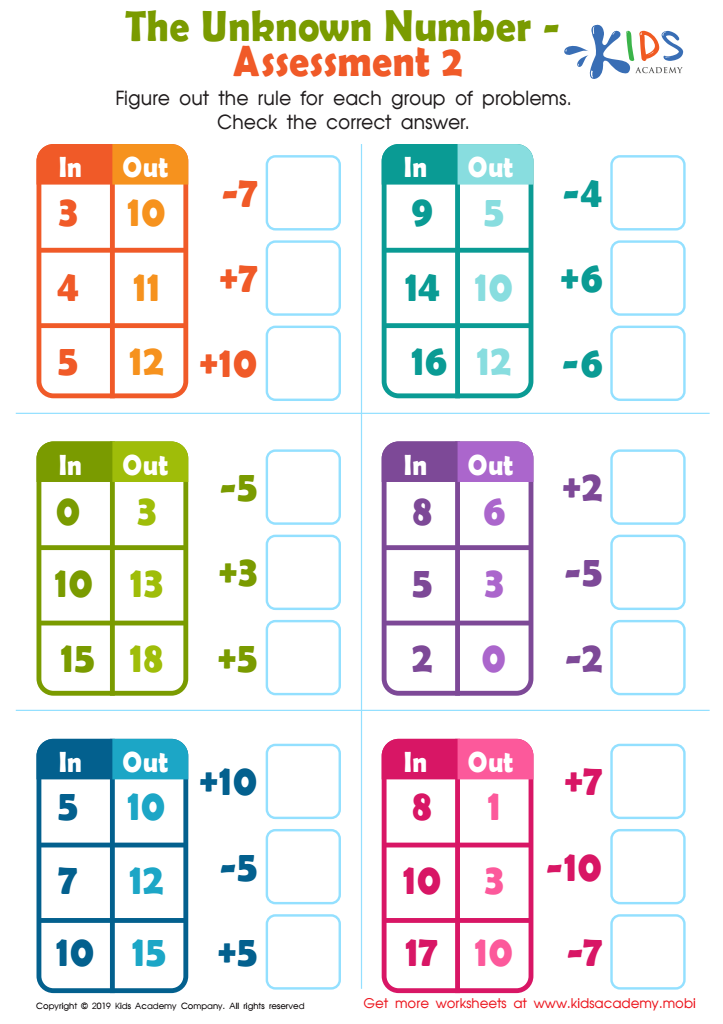
The Unknown Number - Assessment 2 Worksheet
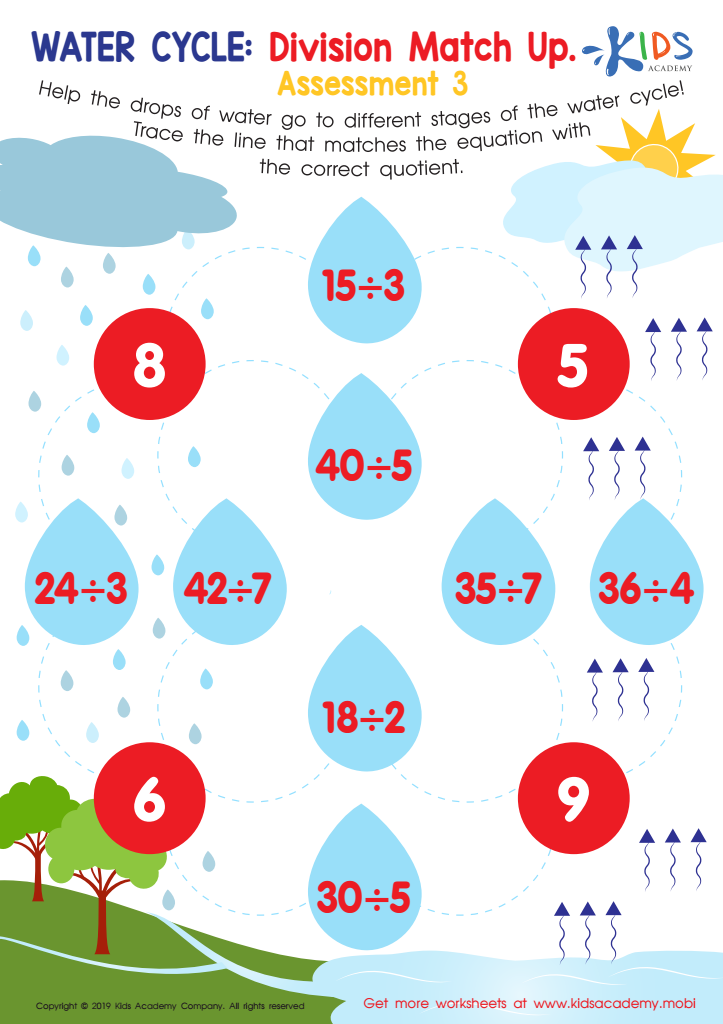
Water Cycle Division Match Up Assessment 3 Worksheet
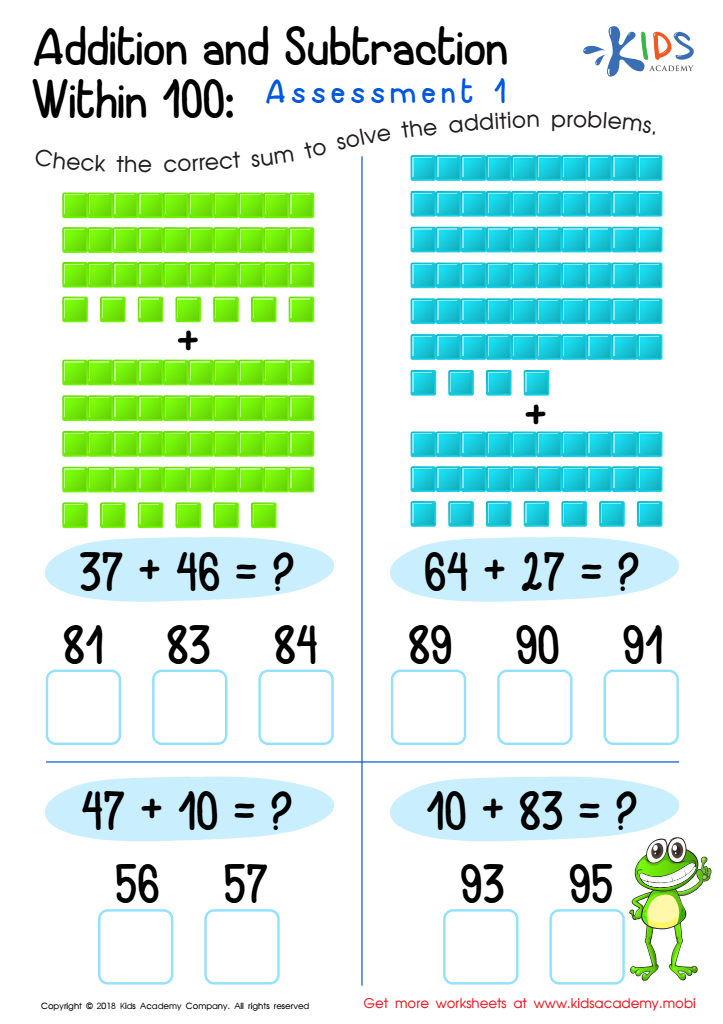
Addition and Subtraction Within 1: Assessment 1 Worksheet
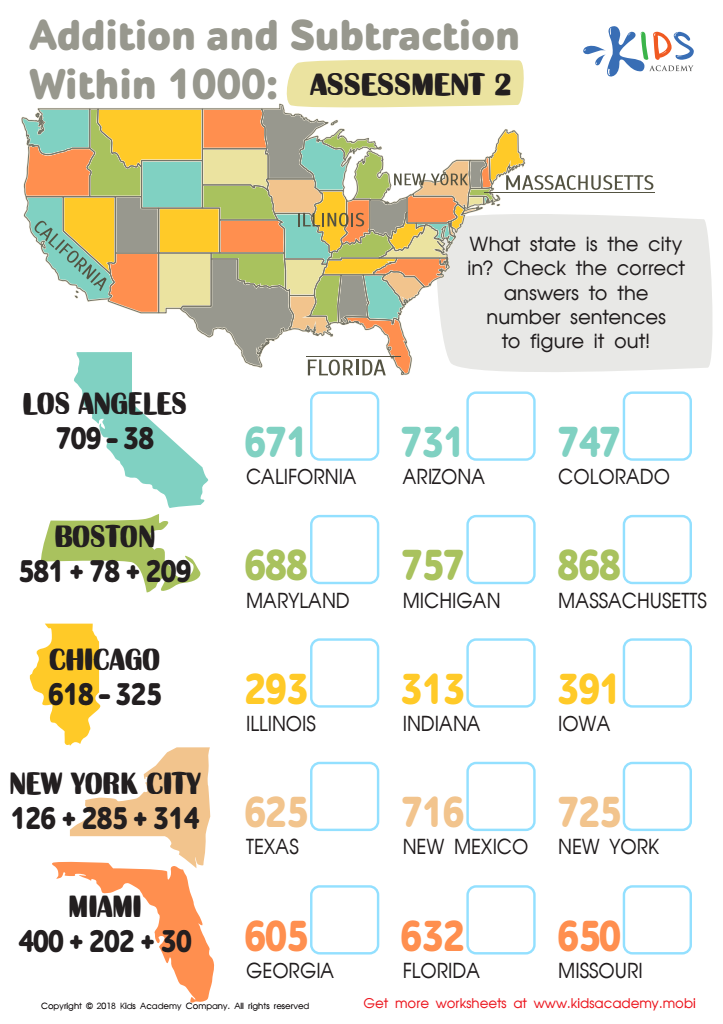
Addition and Subtraction Within 1000: Assessment 2 Worksheet
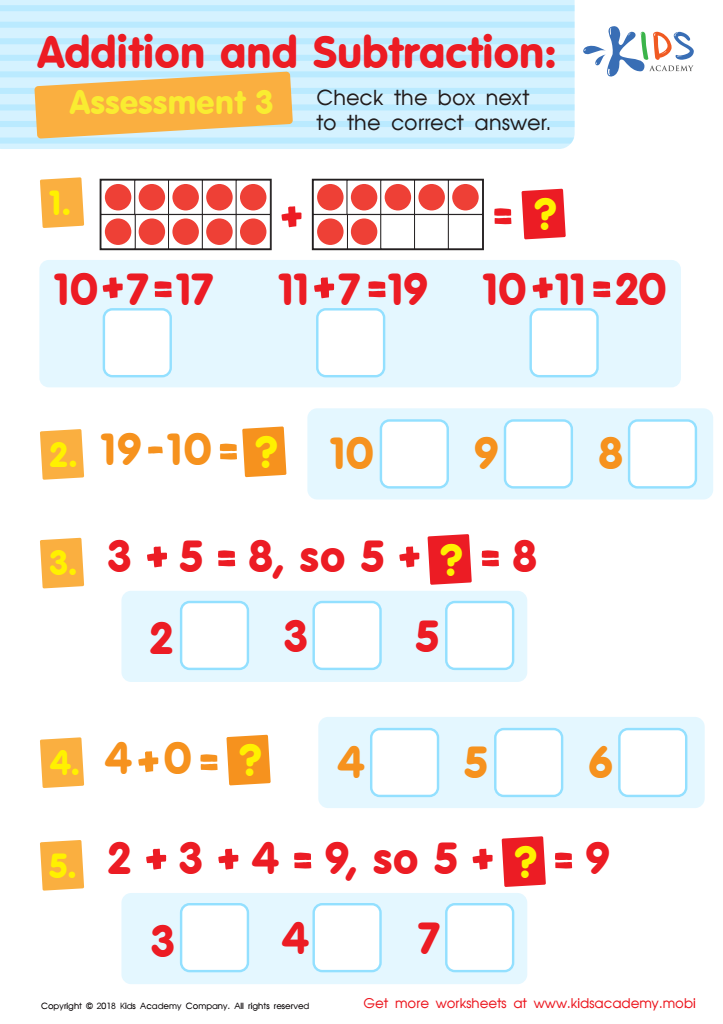
Addition and Subtraction Assessment 3 Worksheet
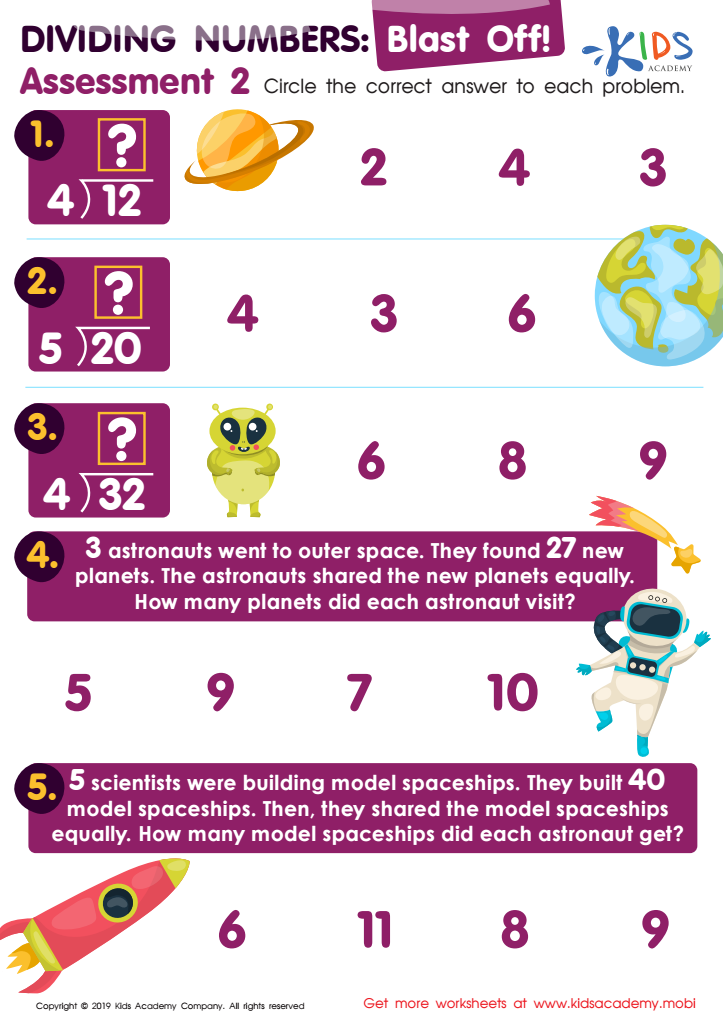
Dividing Numbers Assessment 2 Worksheet
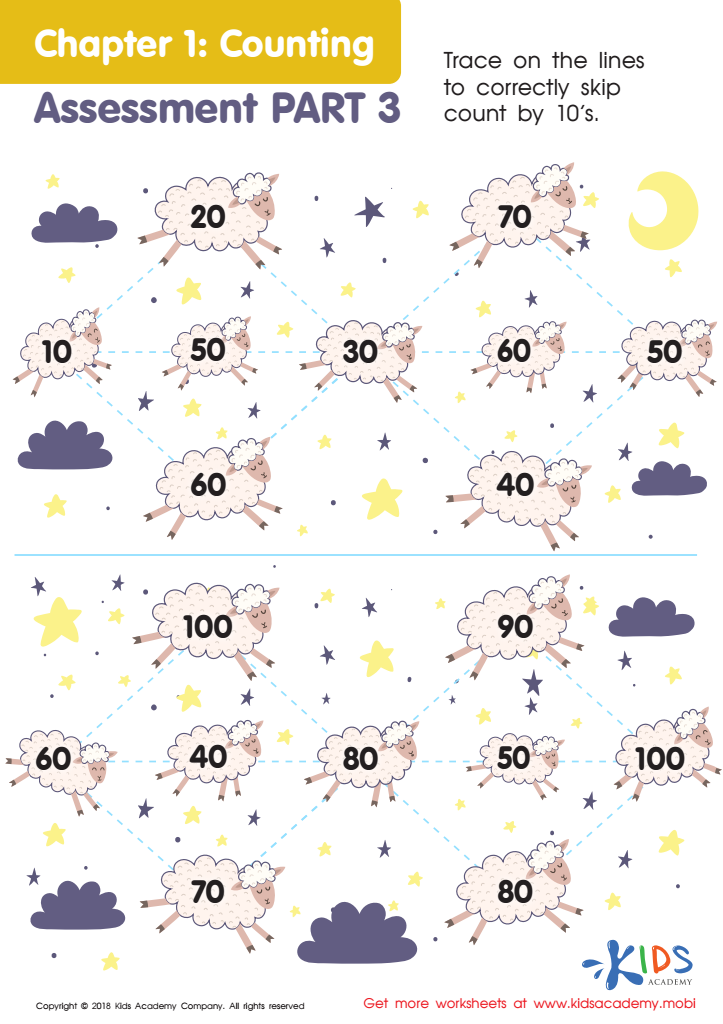
Counting: Assessment 3 Worksheet
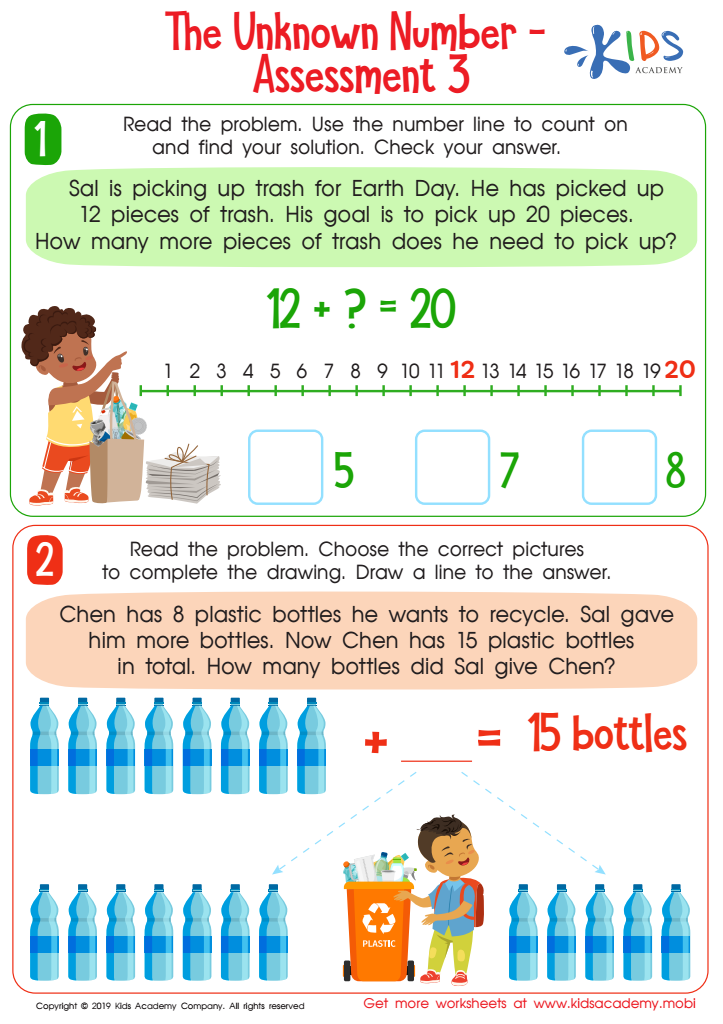
The Unknown Number - Assessment 3 Worksheet
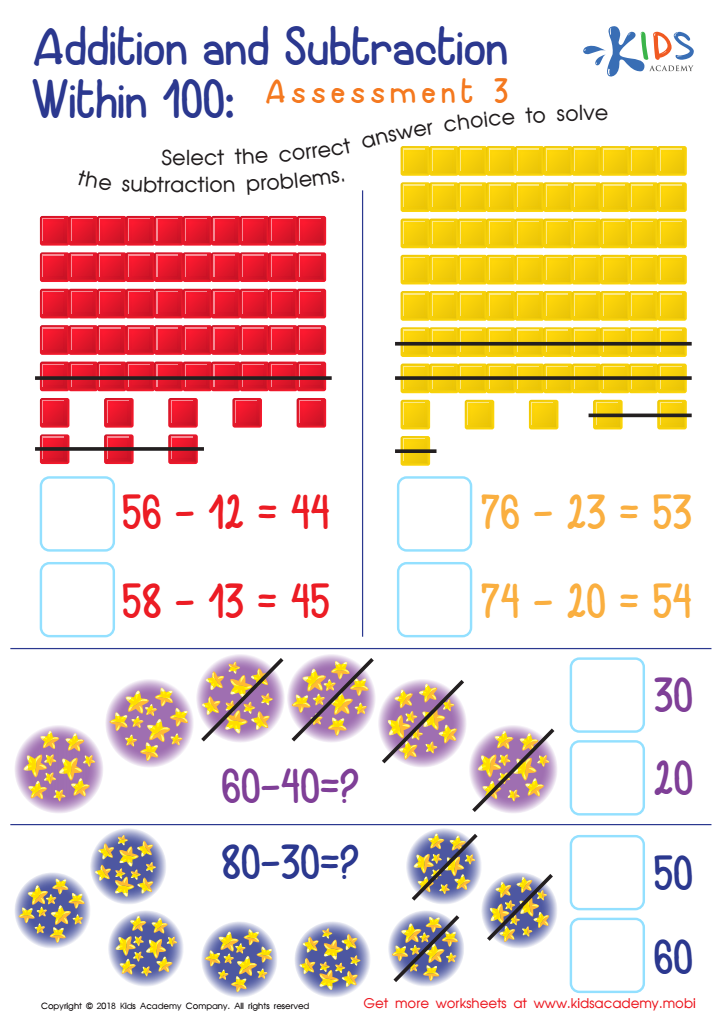
Addition and Subtraction Within 1: Assessment 3 Worksheet







Parents and teachers should prioritize math activities for children ages 7-9 as this age group marks a pivotal stage in the development of foundational math skills. During these years, children transition from basic arithmetic to more complex concepts such as addition, subtraction, multiplication, and beginning division. Engaging in math activities promotes not just skills but also critical thinking, problem-solving, and logical reasoning.
At this stage, children develop attitudes toward math that can last a lifetime. Positive experiences with math can bolster their confidence and enthusiasm, while negative experiences may lead to anxiety or aversion to the subject. Interactive math activities, such as games, puzzles, and real-life problem-solving scenarios, make learning enjoyable and relatable, fostering deeper understanding.
Moreover, math is essential in everyday life—whether balancing a budget, measuring ingredients for a recipe or planning a project. Early engagement in math can prepare children for future learning challenges, influencing their academic trajectory. Importantly, strong math skills are not only linked to success in school but are increasingly valuable in a technology-driven society. Therefore, investing time in math activities ensures children develop a robust skill set that lays the groundwork for their future endeavors.








