Fine Motor Skills Geometry Worksheets for Ages 3-5
14 filtered results
-
From - To
Introducing our Fine Motor Skills Geometry Worksheets for Ages 3-5! Designed to engage young minds, these worksheets improve children's fine motor coordination while introducing essential geometric concepts. Through tracing, coloring, and simple puzzles, kids develop hand-eye coordination, precise movements, and muscle strength crucial for early writing skills. Each activity is thoughtfully crafted to make learning fun and enjoyable. Ideal for preschoolers and kindergarteners, our worksheets provide foundational skills that build confidence and support cognitive development. Transform geometry learning into an exciting adventure with our expertly designed Fine Motor Skills Geometry Worksheets. Download yours today from Kids Academy!
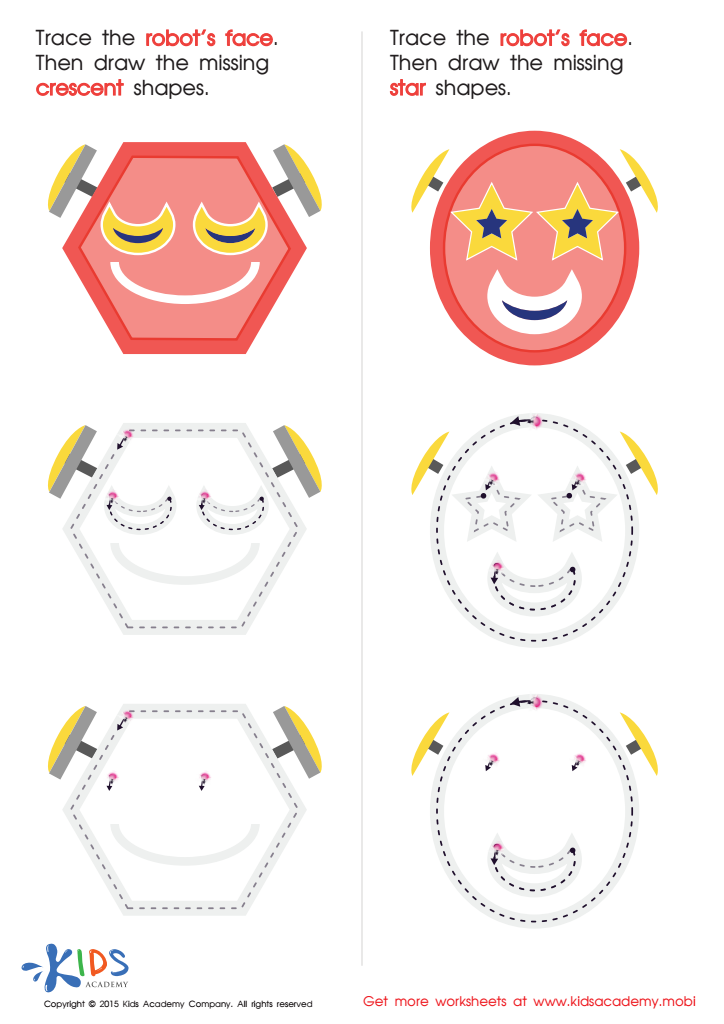
Composing a Robot's Face of Crescents And Stars Worksheet
 Assign to My Students











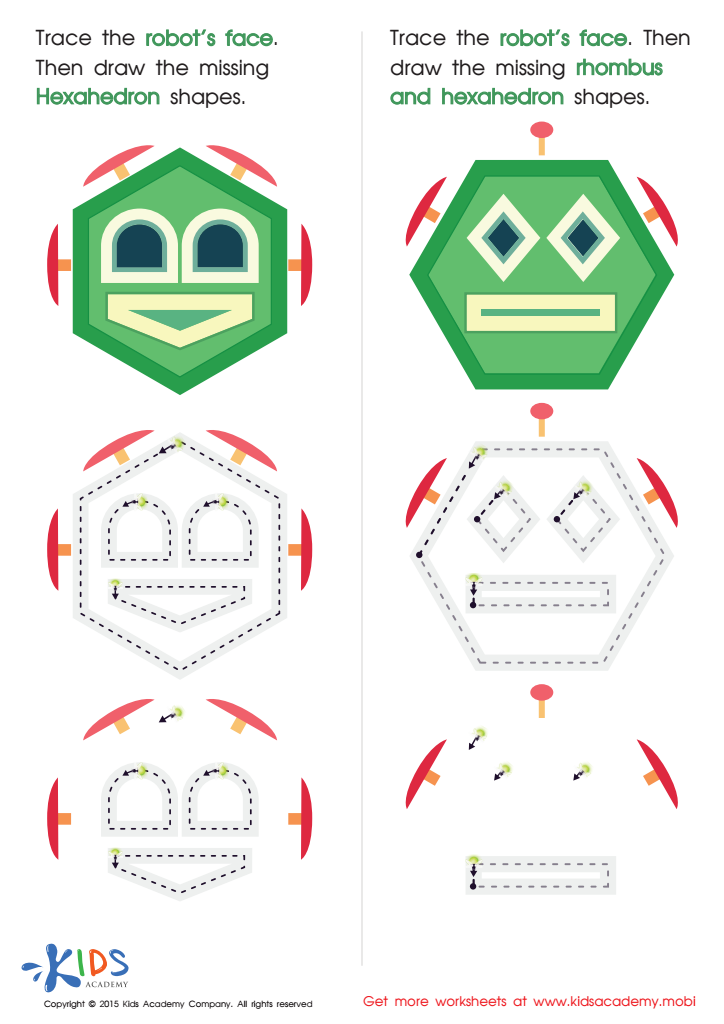
Practice Drawing Hexahedrons And a Rhombus Worksheet
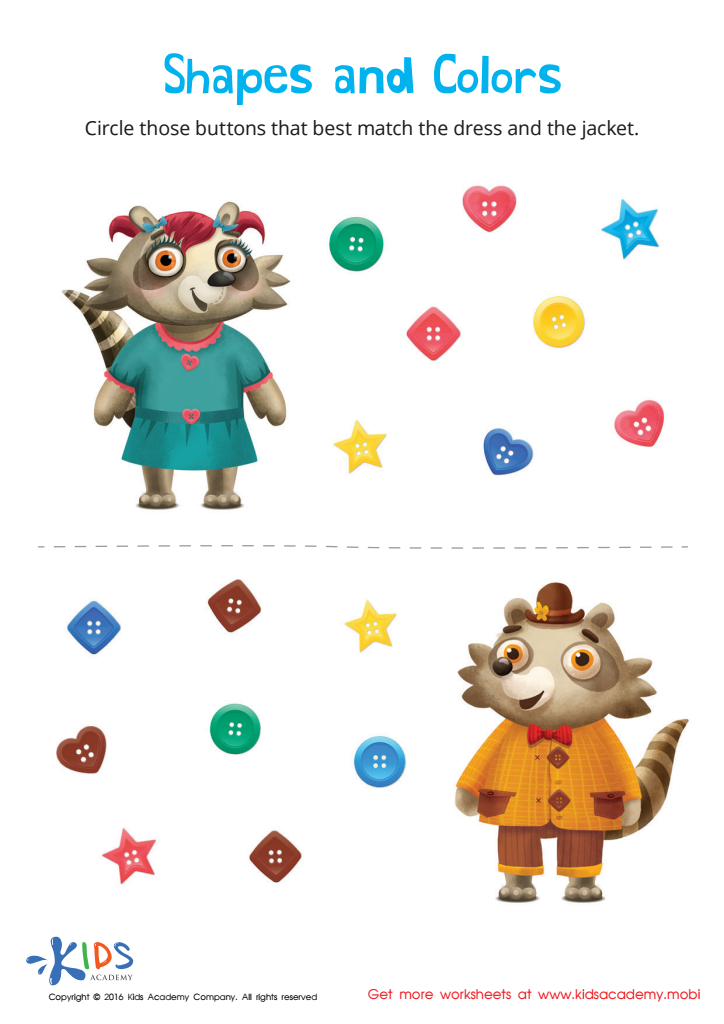
Matching: Shapes and Colors Worksheet
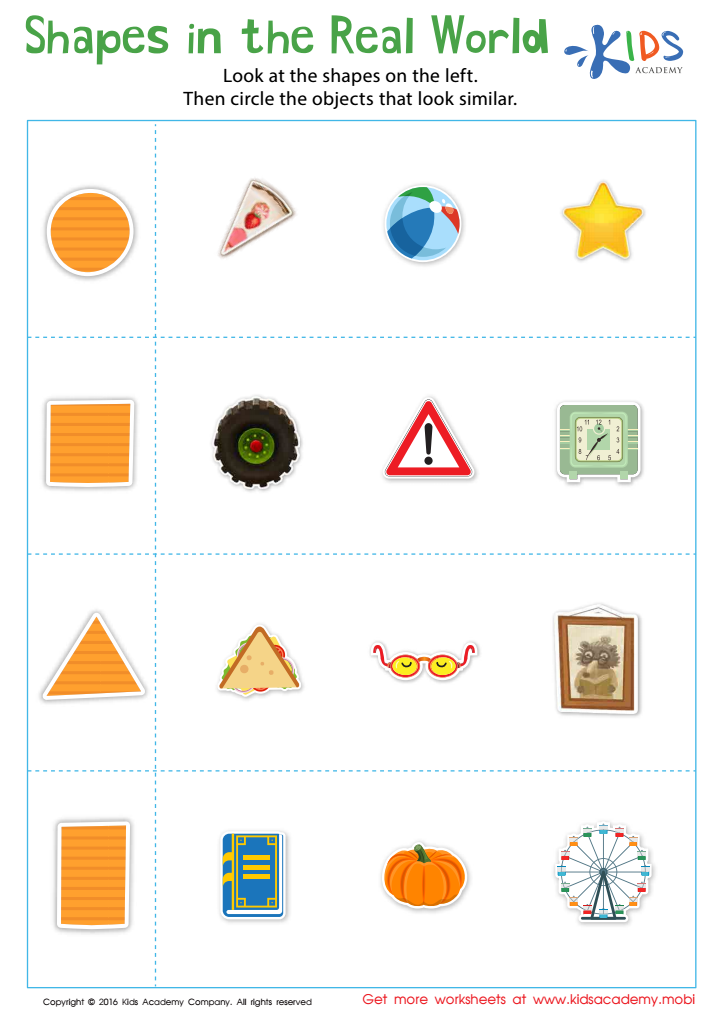
Shapes in the Real World Worksheet
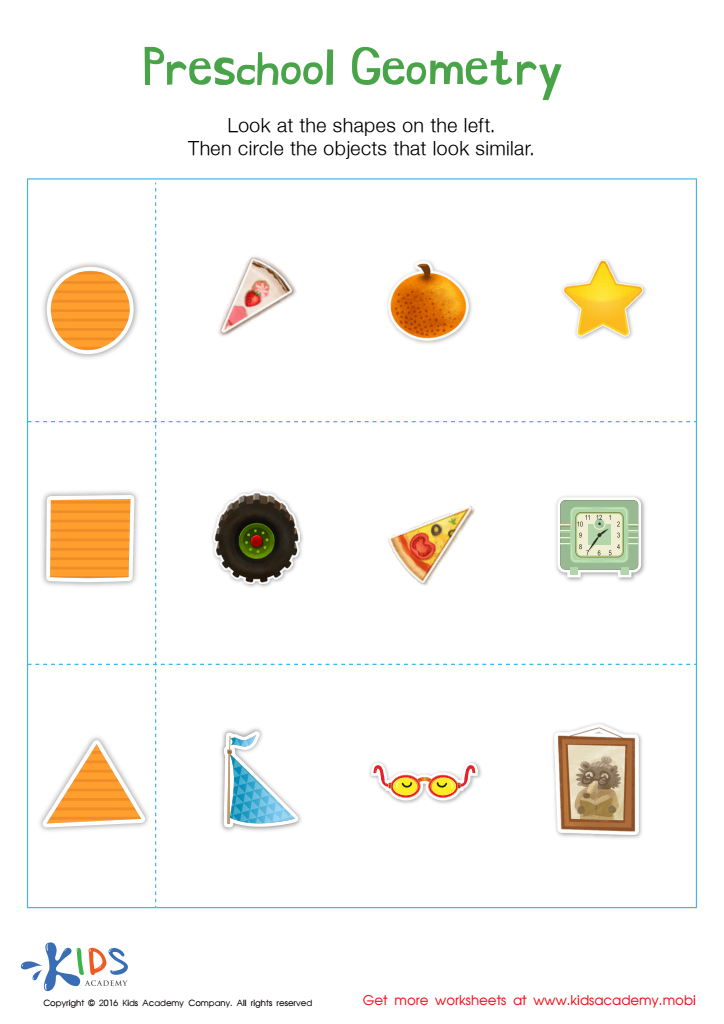
Preschool Geometry Match Up Worksheet
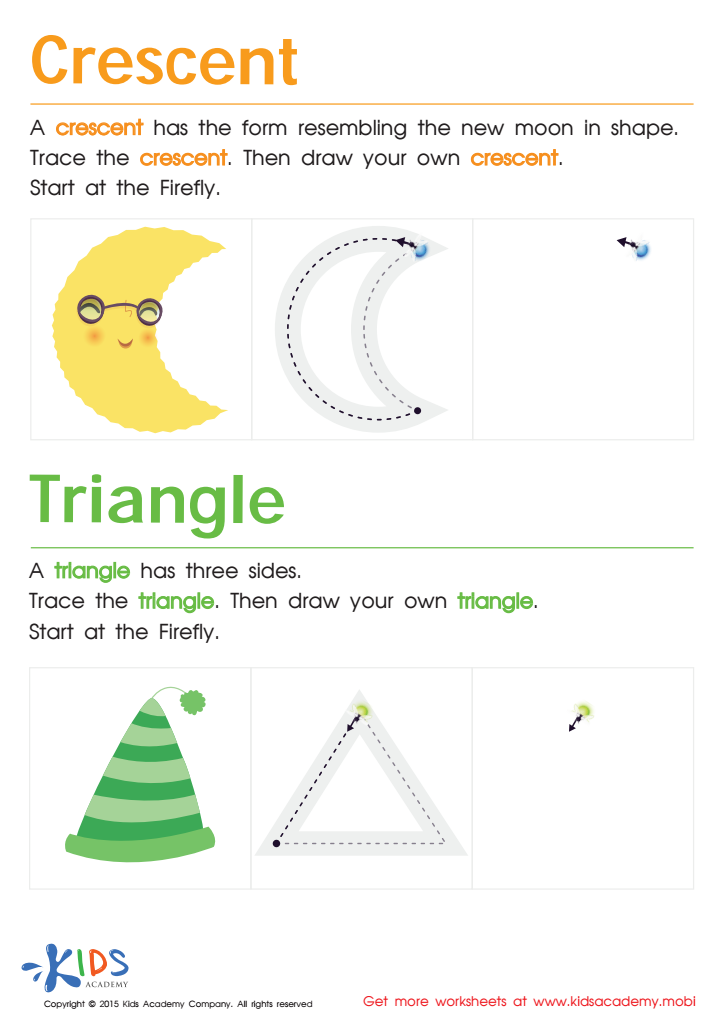
Learning to Draw Crescents And Triangles Worksheet
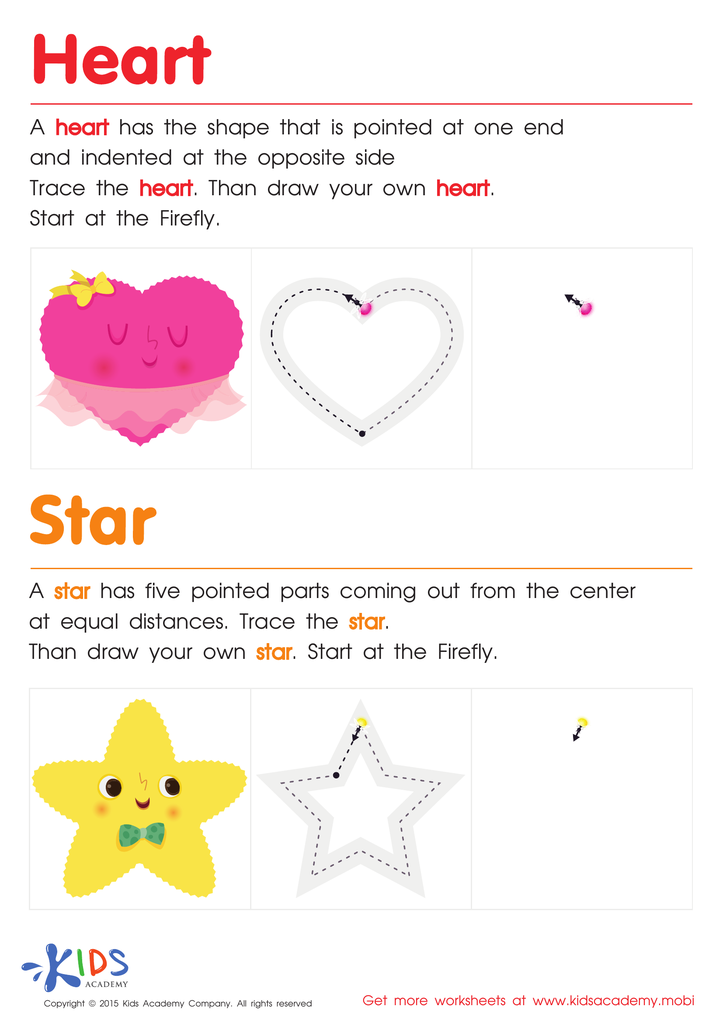
Let's Learn to Draw Hearts And Stars Printable
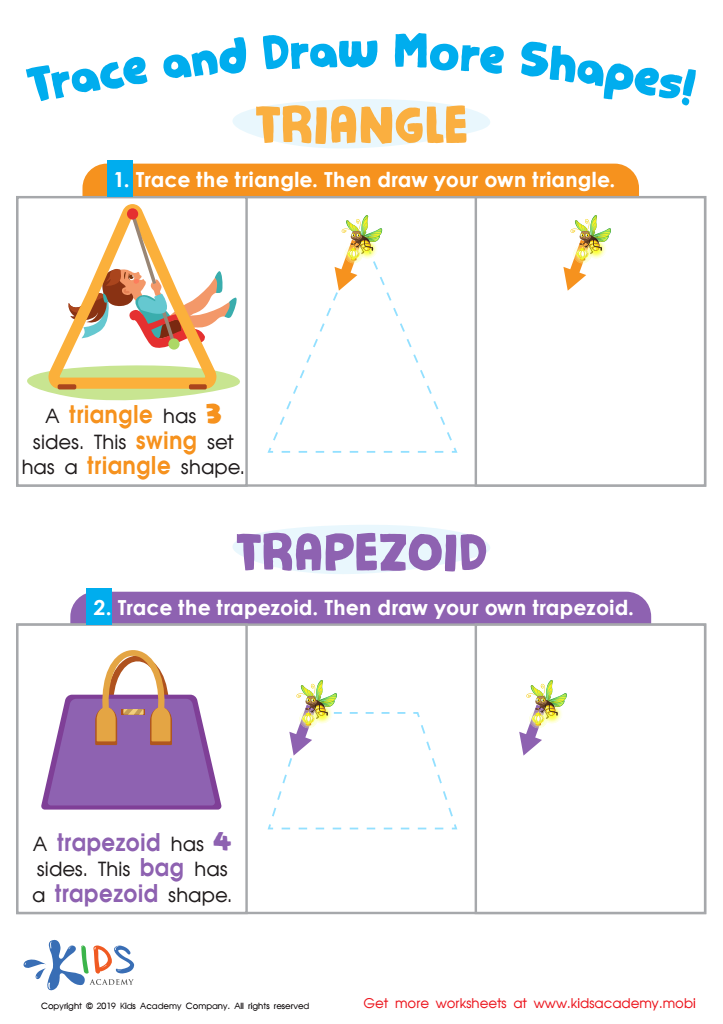
Trace and Draw More Shapes Worksheet
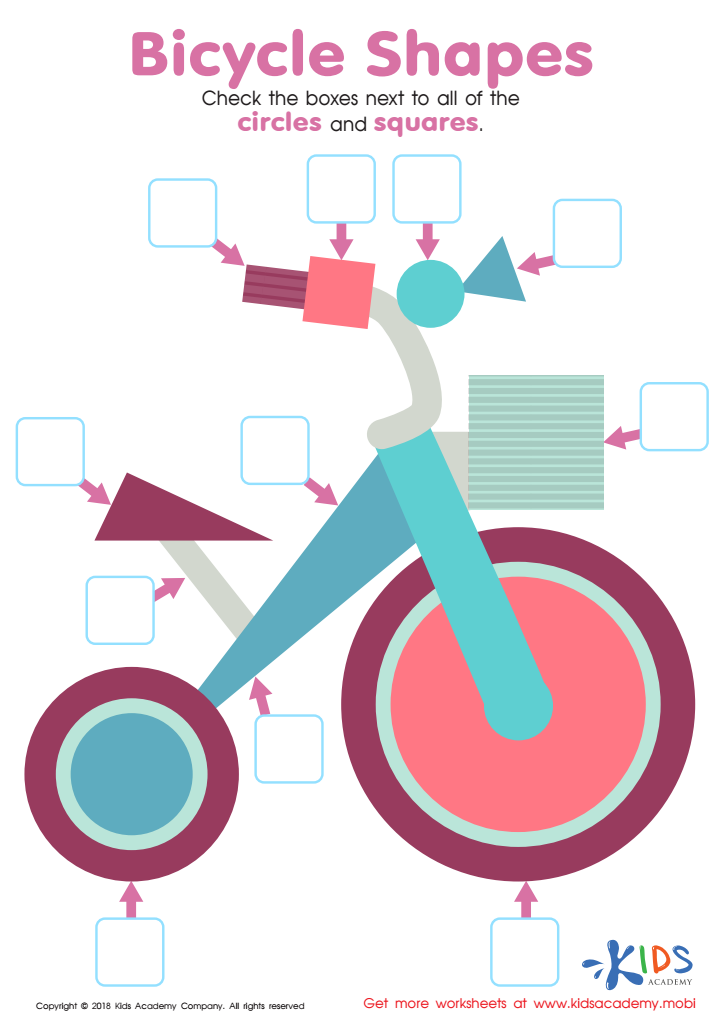
Bicycle Shapes Worksheet
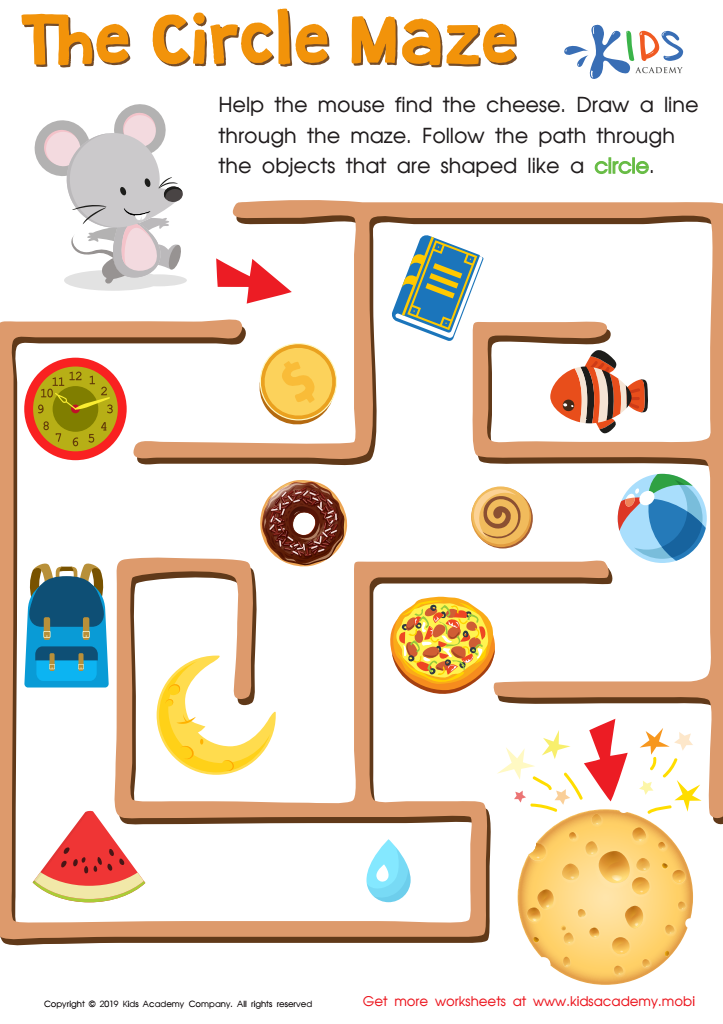
The Circle Maze Worksheet
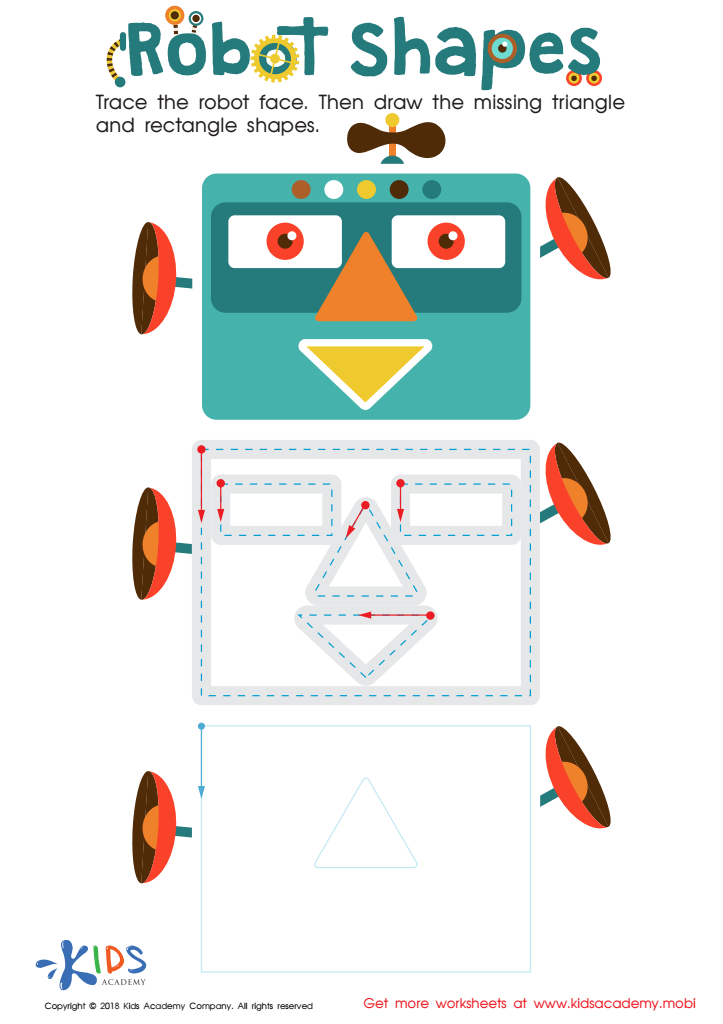
Robot Shapes Worksheet
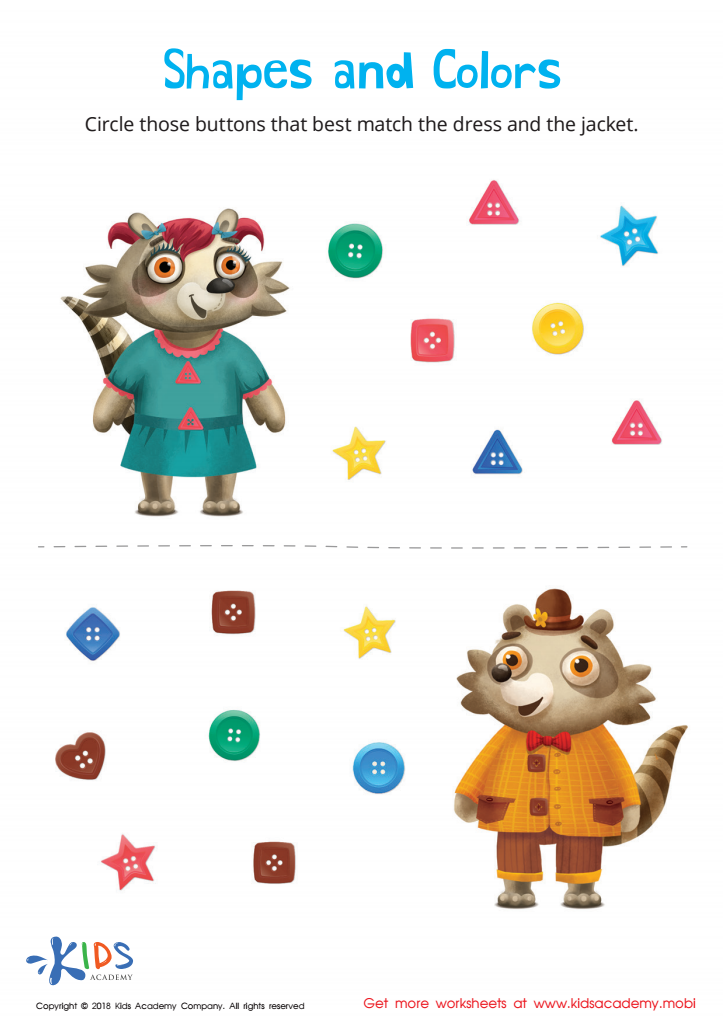
Shapes and Colors Worksheet
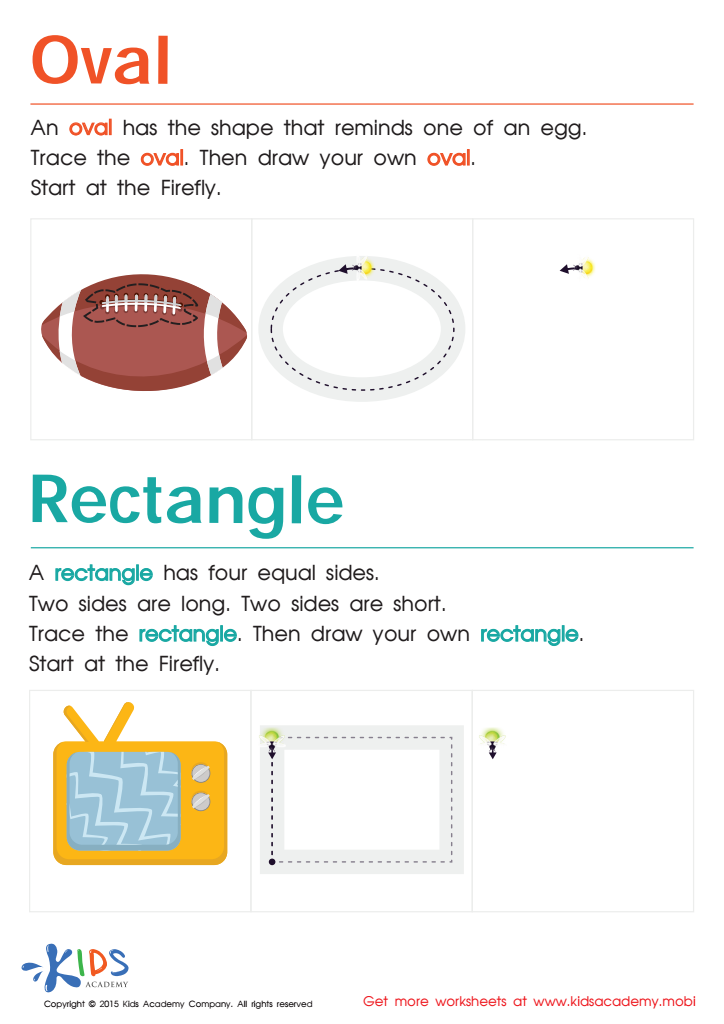
Easy Drawing of Ovals And Rectangles Worksheet
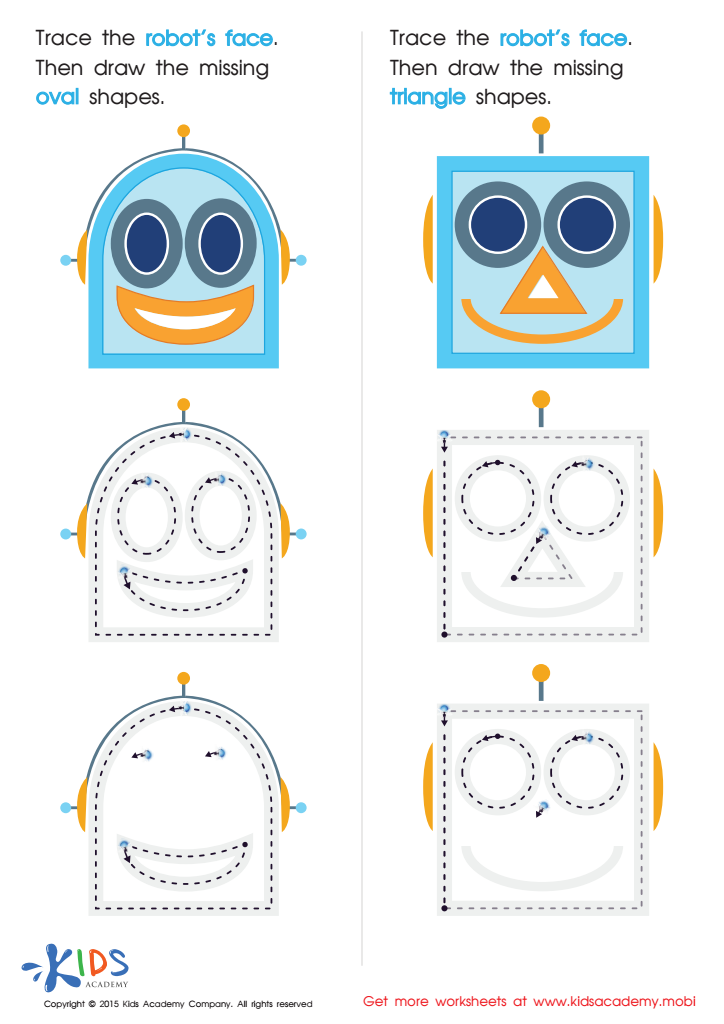
Drawing Ovals And Triangles with Fun Printable








Fine motor skills are crucial for young children, and integrating geometry into activities can be especially beneficial. For children ages 3-5, developing fine motor skills enhances their ability to perform everyday tasks such as writing, buttoning clothes, and using utensils, which are foundational for their independence and confidence. Engaging young learners in geometry through activities like drawing shapes, using building blocks, or solving simple puzzles not only makes the learning process enjoyable but also sharpens their fine motor skills.
As children manipulate small objects to form shapes or complete patterns, they enhance their hand-eye coordination, hand strength, and precision. This improved dexterity directly correlates with their ease and skill in performing other detailed tasks like writing and art. Moreover, early exposure to basic geometric concepts lays the groundwork for future learning in mathematics and spatial reasoning. Recognizing patterns, understanding shapes, and comprehending spatial relationships contribute to cognitive development, and make subjects like math more relatable and less intimidating as they grow.
By prioritizing activities that blend fine motor skills with geometry, parents and teachers help create a rich learning environment that supports both physical and cognitive development. This dual focus can foster a well-rounded educational foundation, preparing children for future academic and everyday challenges.








