
Logical Reasoning Math Worksheets for Ages 3-5
17 filtered results
Difficulty Level
Grade
Age
-
From - To
Subject
Activity
Standards
Discover the perfect collection of "Logical Reasoning Math Worksheets for Ages 3-5" to engage young minds in fun, educational activities. Our expertly designed worksheets help toddlers and preschoolers develop critical thinking, problem-solving skills, and a love for math. Through colorful illustrations and interactive tasks, children will learn to recognize patterns, compare objects, and enhance their spatial awareness. Kids Academy provides a playful and enriching experience, ensuring your little ones build a solid foundation in logical reasoning while enjoying every moment of their educational journey. Download and print today for endless learning and discovery!
Favorites
With answer key
Interactive
 Assign to My Students
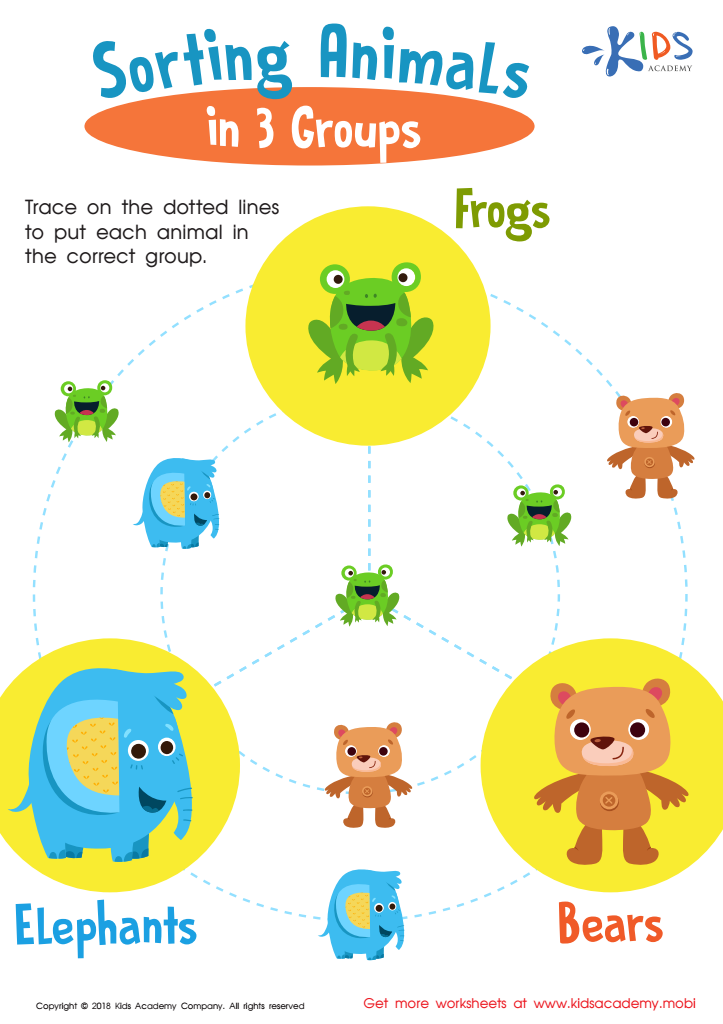
Sorting Animals in 3 Groups Worksheet
Let your kids practice and build skills for future Venn Diagrams with this PDF worksheet. They'll trace lines to match and group animals, and learn the differences and similarities of animals by categorizing with pictures and words. Plus, it's a great way to develop fine motor skills.
Sorting Animals in 3 Groups Worksheet
Worksheet
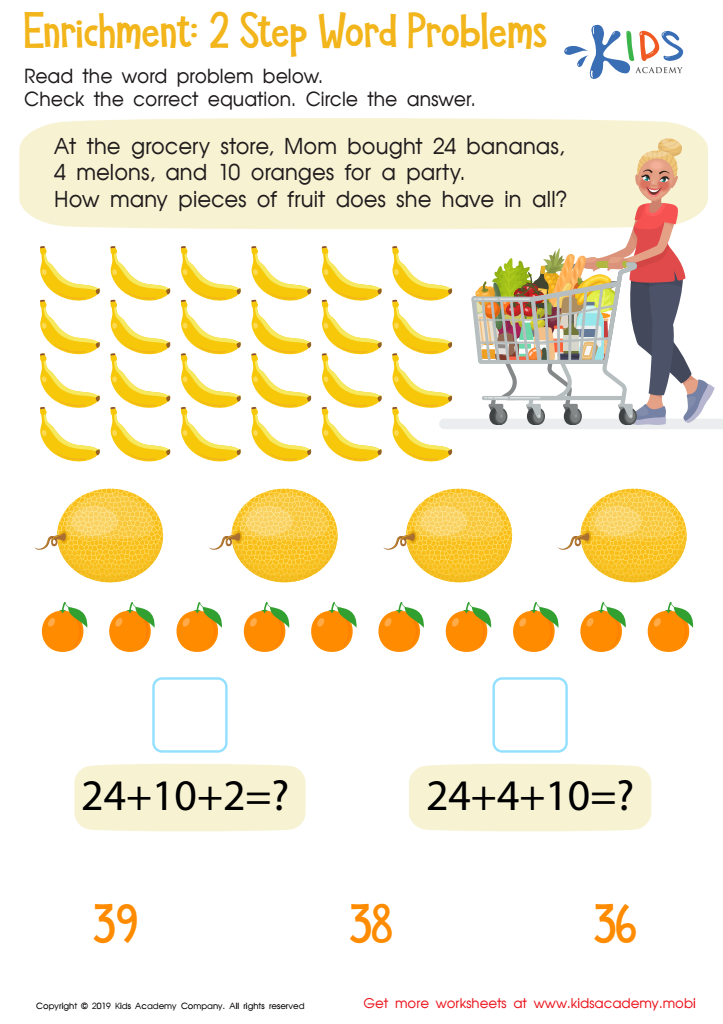
Enrichment -2 Step Word Problems Worksheet
Help your students learn math easier and faster with this colorful worksheet. Read the word problem and then guide them in checking the correct equation and finding the answer. Your students will benefit from the extra help, as they work through new concepts each day.
Enrichment -2 Step Word Problems Worksheet
Worksheet
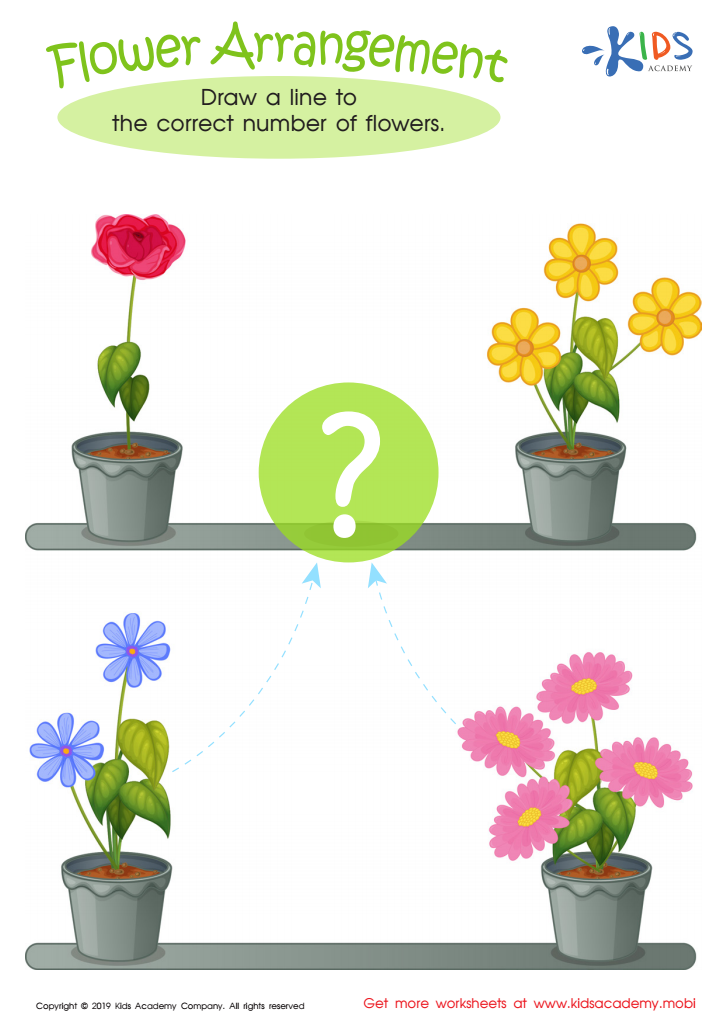
Flower Arrangement Worksheet
Your math whizzes can use flower power to showcase their counting skills with this bright PDF! One-to-one representation in pictures helps children build number sense, which leads to better math and computation efficiencies. This PDF features traceable lines for kids to draw to the correct number of flowers, all while practicing their counting with pretty pictures.
Flower Arrangement Worksheet
Worksheet
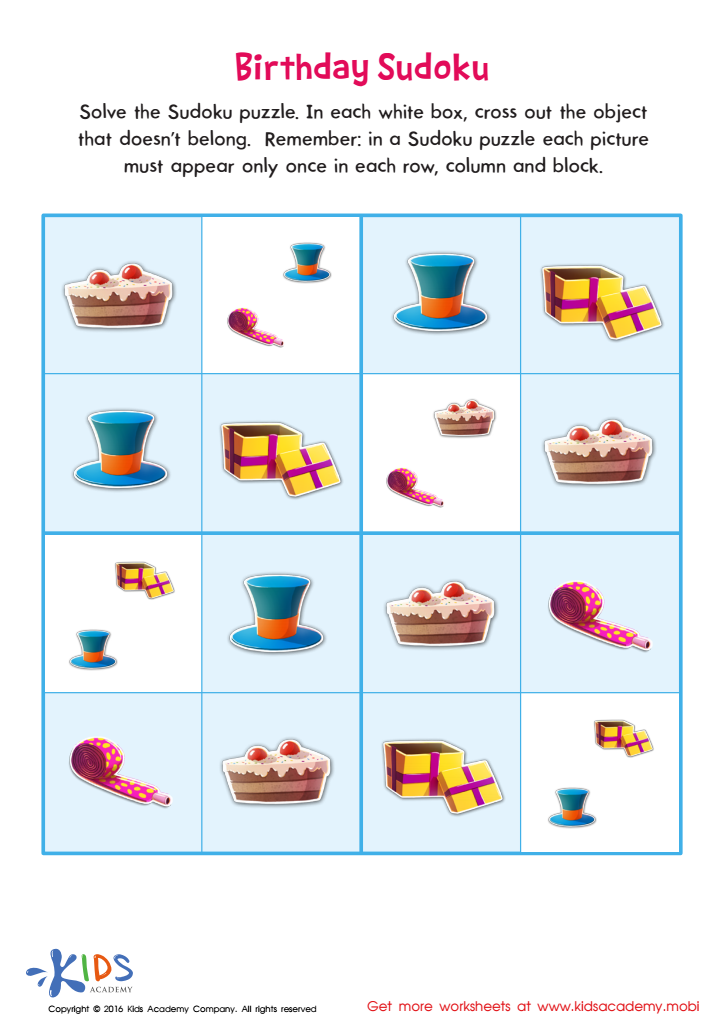
Birthday Sudoku Sorting Worksheet
With this Sudoku printable, your child will have fun and strengthen their problem-solving skills.
Birthday Sudoku Sorting Worksheet
Worksheet
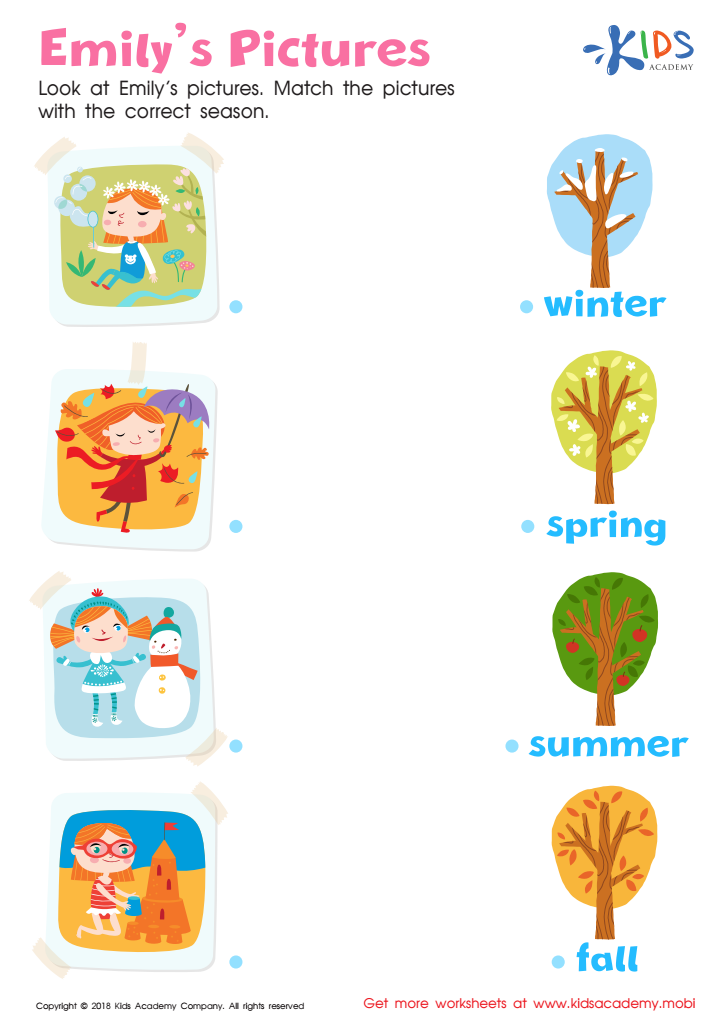
Emily's Pictures Worksheet
Look at the pictures of Emily on the left. Ask your child what she's doing in each one. Then, match the activities to the seasons on the right. Help your kids identify the correct season for each activity. Shorten to 80 words: Look at the pictures of Emily on the left. Ask your child what she's doing in each one, then match the activities to the seasons on the right. Help your kids find the correct season for each activity.
Emily's Pictures Worksheet
Worksheet
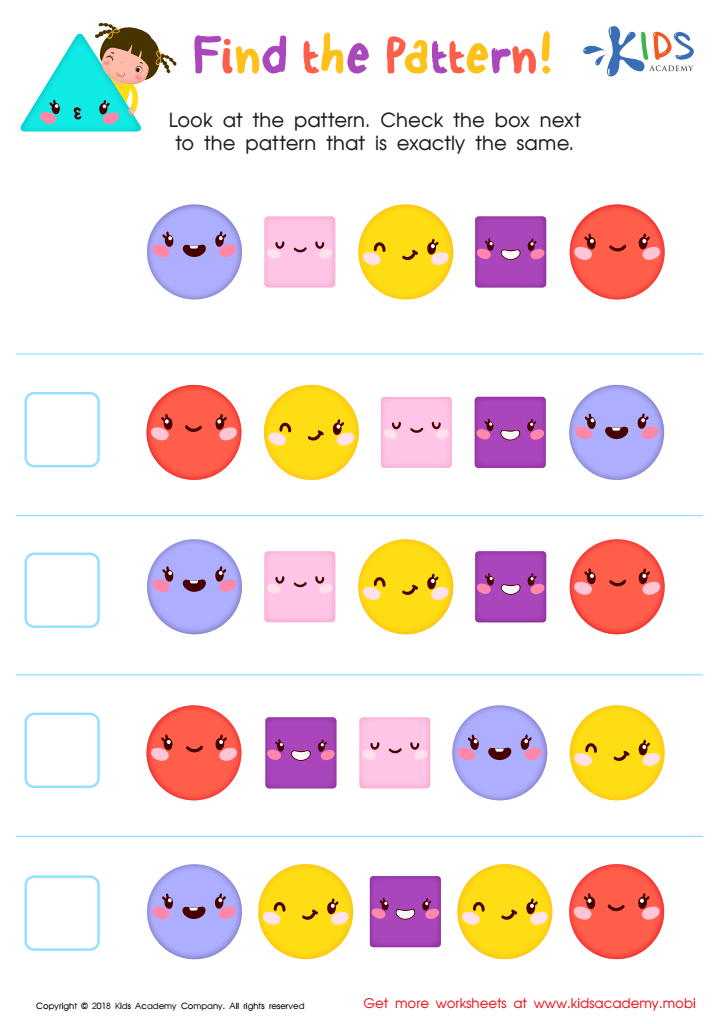
Find the Pattern Worksheet
This colorful pattern worksheet is perfect for testing your kids' pattern recognition. The bright colors will keep them engaged, while they check the box next to the pattern that is the same. Ask your kids to identify the colors used and see how well they can spot similarities!
Find the Pattern Worksheet
Worksheet
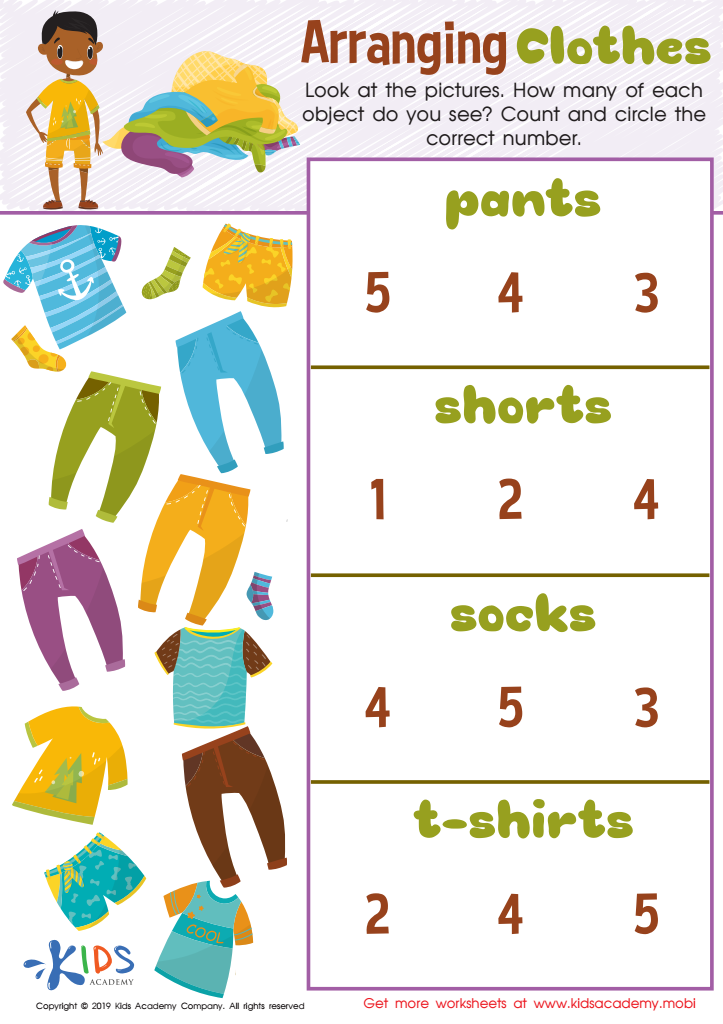
Arranging Clothes Worksheet
This worksheet uses familiar items, brightly colored to attract your kids. Ask them to name each item, then count them and circle the right number.
Arranging Clothes Worksheet
Worksheet
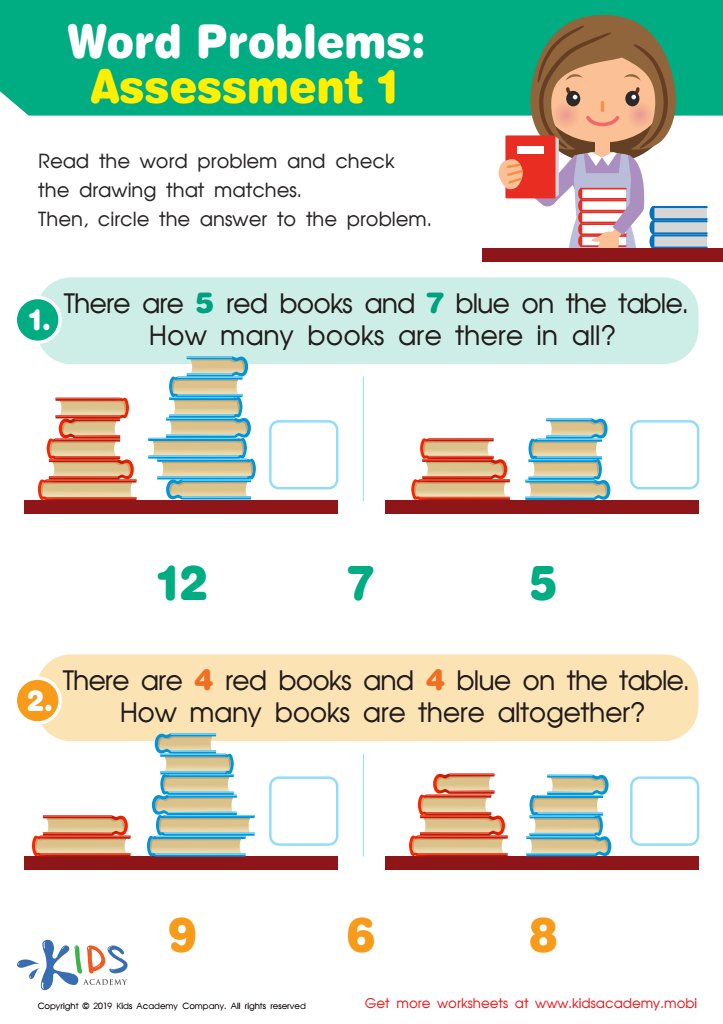
Word Problems: Assessment 1 Worksheet
This free worksheet assesses your child's basic addition word problem skills. It presents word problems with pictures offering clues in one-to-one representation. Your child will select the correct drawing to match the problem, without even knowing they're being assessed! This is a great way to gauge their math computation and reasoning abilities.
Word Problems: Assessment 1 Worksheet
Worksheet
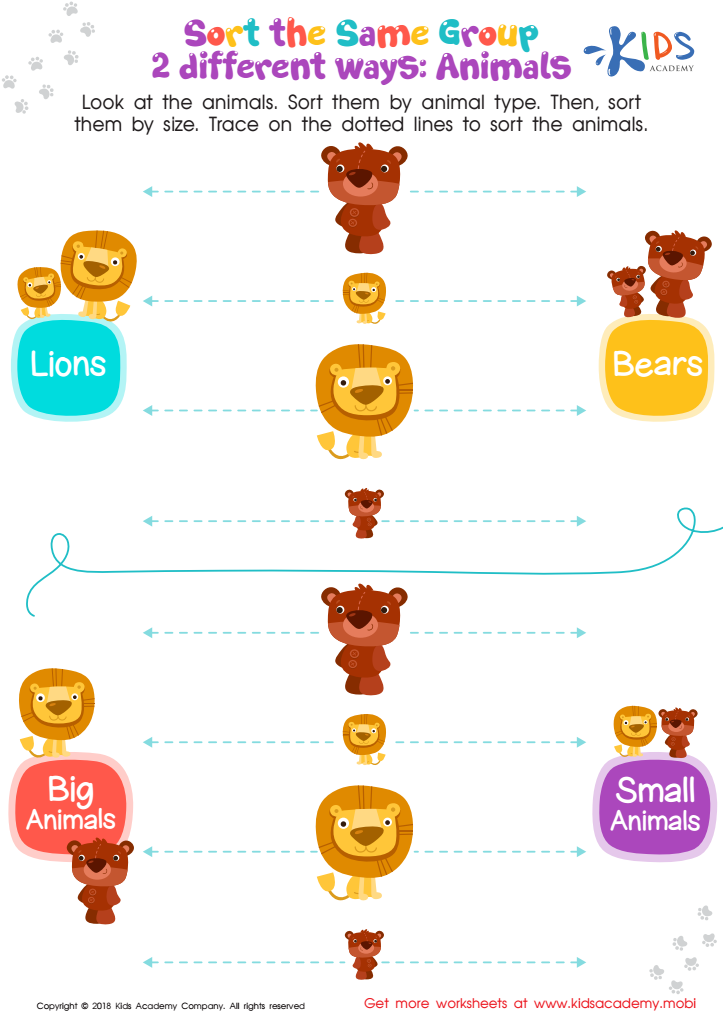
Sort the Same Group 2 Different Ways: Animals Worksheet
Look at the animals with your child. Ask them to name them, then sort them by type (e.g. lions and bears). Next, help them sort by size, tracing the dotted lines. This will teach them sorting skills.
Sort the Same Group 2 Different Ways: Animals Worksheet
Worksheet
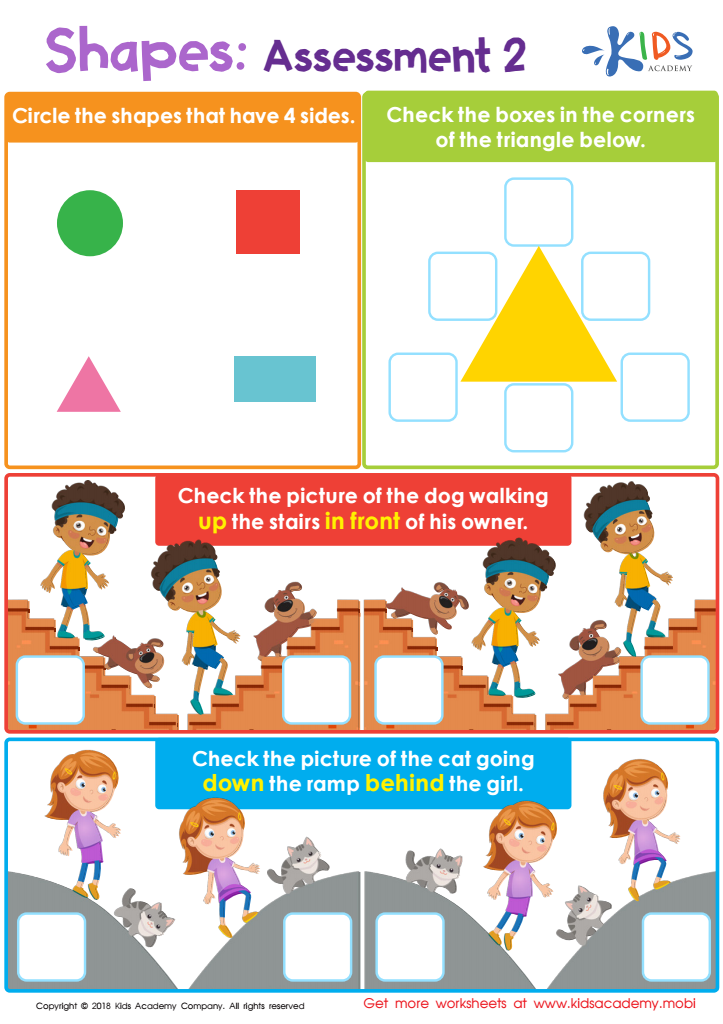
Shapes: Assessment 2 Worksheet
This geometry worksheet assesses a student's knowledge of shapes and positional words. They must identify shapes with 4 sides and corners on a triangle. The worksheet also tests understanding of words like "up", "front", "down" and "behind". Easily determine what your student knows about these concepts with this downloadable worksheet!
Shapes: Assessment 2 Worksheet
Worksheet
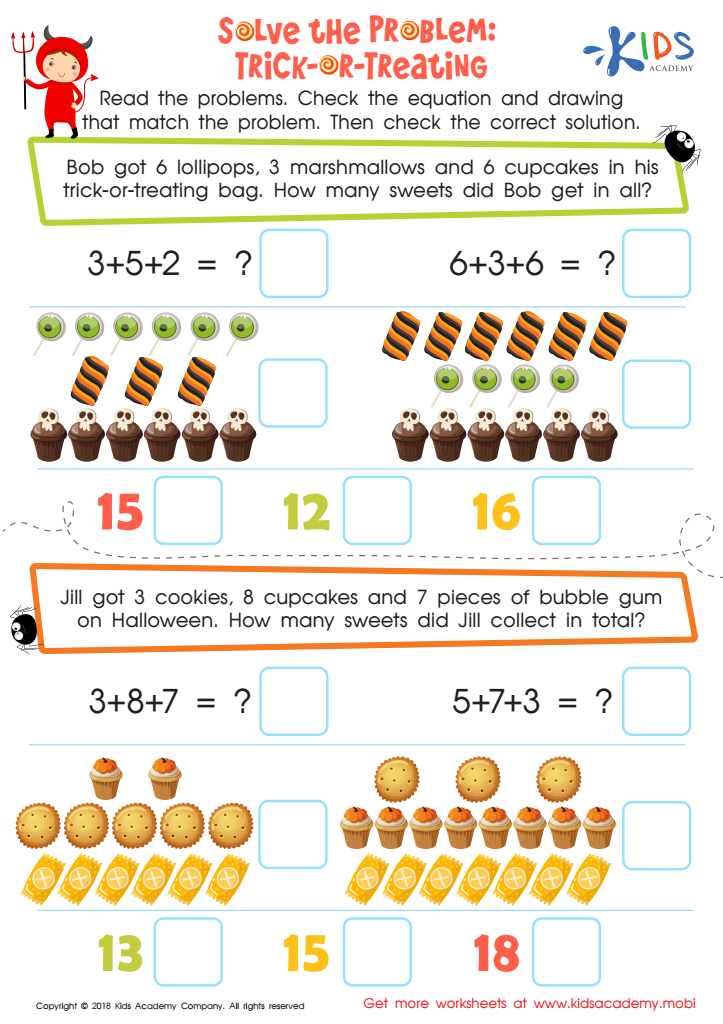
Solve the Problem: Trick–or–treating Worksheet
Kids will love this fun PDF worksheet for trick-or-treating! It's packed with yummy images and math practice. They can read the word problems, count and add numbers, check their answers, and match the addition equations with the pictures. Math made delicious!
Solve the Problem: Trick–or–treating Worksheet
Worksheet
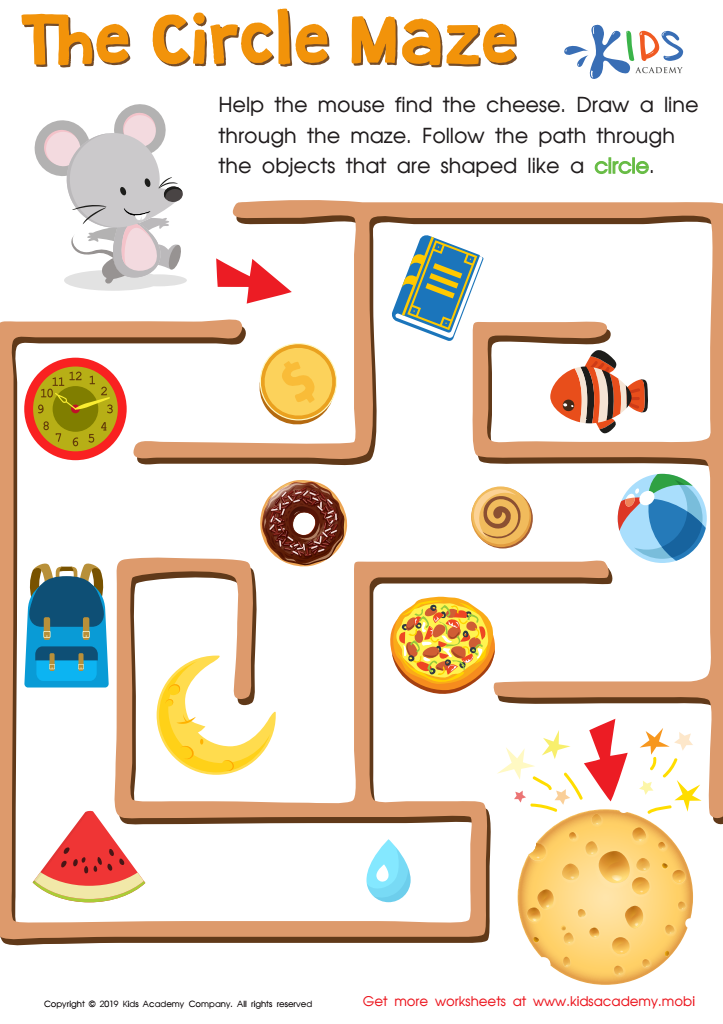
The Circle Maze Worksheet
Kids can have fun learning shapes with this maze worksheet. They can help the mouse find its cheese by tracing the path of a circle through the maze. This printable is great for classroom learning or as an activity at home.
The Circle Maze Worksheet
Worksheet
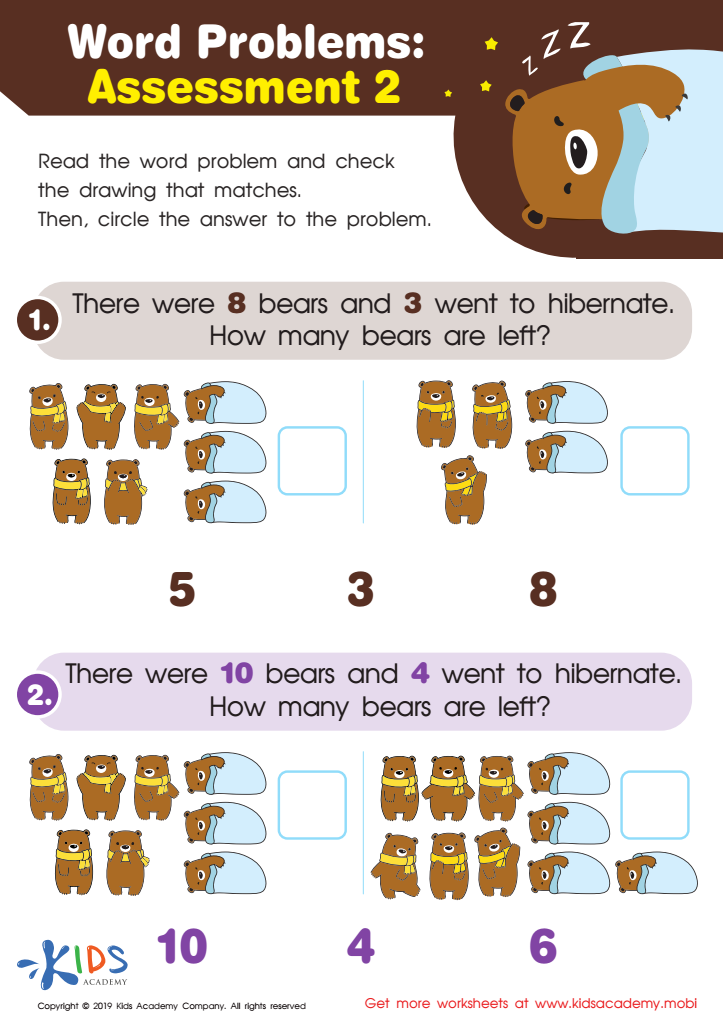
Word Problems: Assessment 2 Worksheet
This bear-themed worksheet is a great way to test subtraction skills. Have your child read the word problems and match the correct drawing with the answer. It's a fun way to quiz them without them even knowing. Enjoy counting cute snoozing bears! (80 words)
Word Problems: Assessment 2 Worksheet
Worksheet
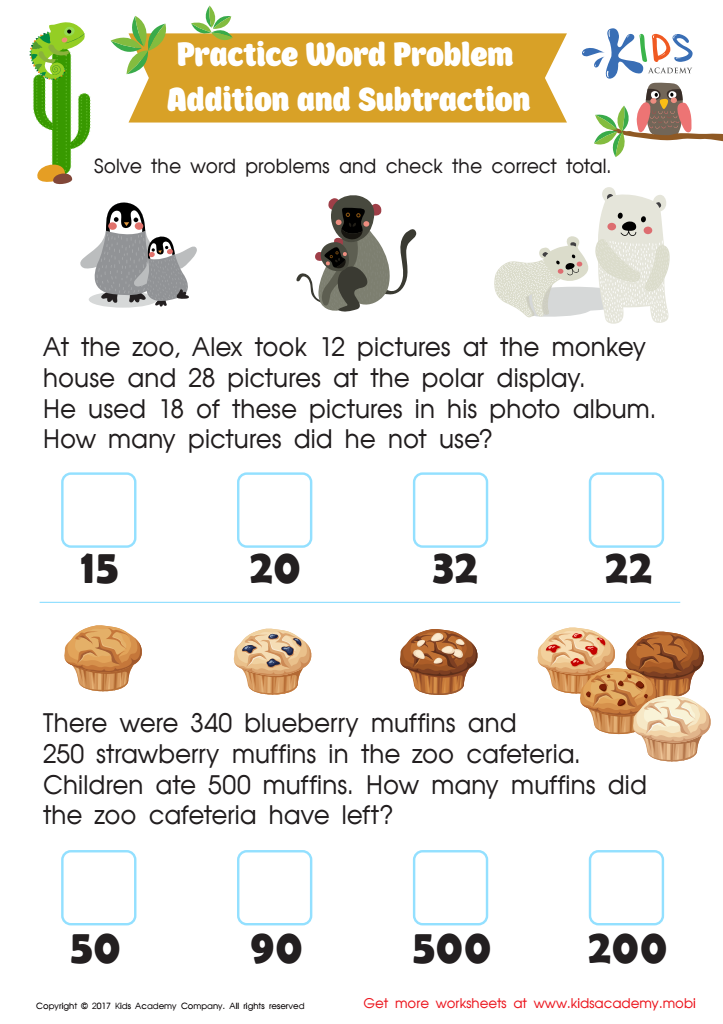
Addition and Subtraction: Word Problems Worksheet
Word problems can be difficult, but they offer another way to understand math. Our 3rd grade worksheet takes your child to the zoo; two intriguing word problems will test their thinking skills and help them find the total.
Addition and Subtraction: Word Problems Worksheet
Worksheet
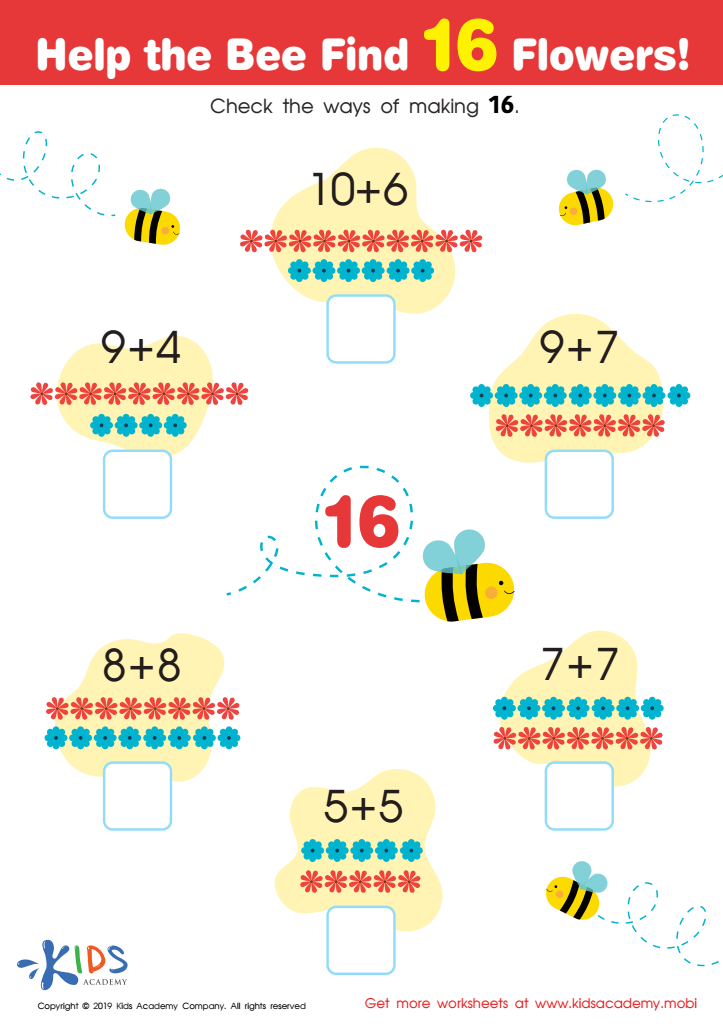
Help the Bee Find 16 Flowers Worksheet
Ask your students to count as high as they can. Show them that different numbers can equal the same figure with examples like 2+2=4 and 3+1=4. Ask for more examples, then help the bees find 16 flowers by checking the ways of making 16.
Help the Bee Find 16 Flowers Worksheet
Worksheet
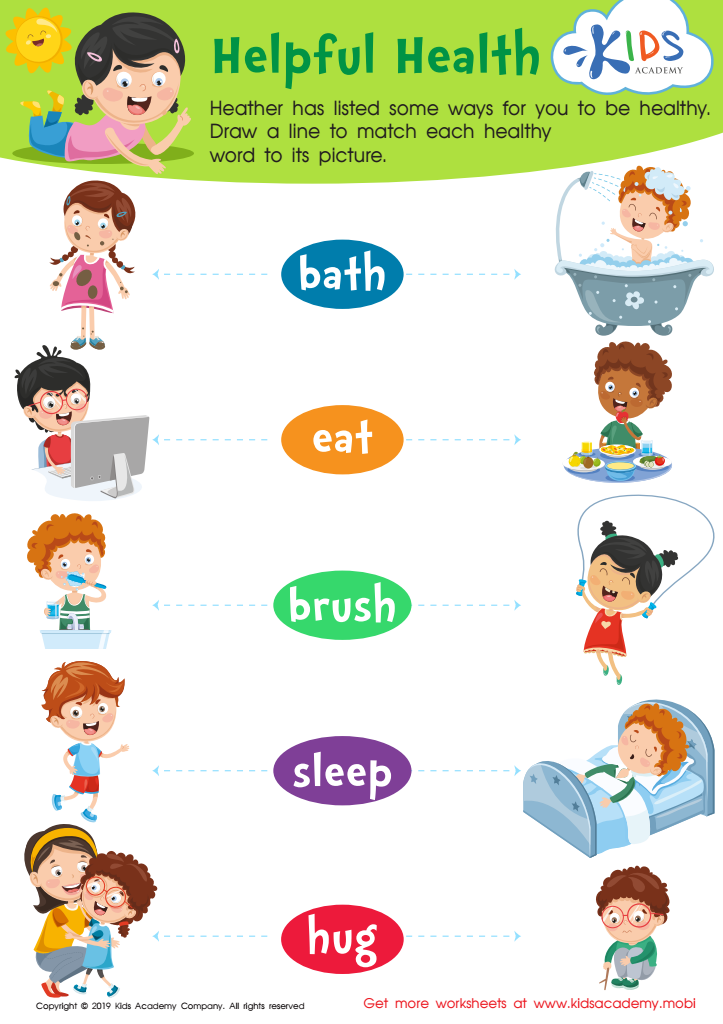
Helpful Health Worksheet
Kids can learn healthy habits with this free worksheet! With their pal Heather, they'll trace lines to connect health words with pictures like brushing teeth, hugging, and getting enough sleep. It's a great way to help young ones understand healthy activities.
Helpful Health Worksheet
Worksheet
Join Kids Academy for Free
Who is primarily going to use this learning content?







Logical reasoning skills are fundamental building blocks for early cognitive development, especially in ages 3-5. At this tender age, children's brains are incredibly malleable and receptive to learning, making it an ideal time to introduce mathematical concepts that build on logical reasoning.
First and foremost, logical reasoning in math helps children make sense of the world. Simple activities like sorting shapes, identifying patterns, or counting objects require children to observe, compare, and arrange information systematically. These activities enhance problem-solving skills, encouraging children to follow steps and use critical thinking to arrive at a solution.
Moreover, fostering these skills early lays a solid foundation for more complex math concepts they will encounter later in their education. Understanding basic principles of logic and order aids in grasping addition, subtraction, multiplication, and division as they progress.
In addition to academic benefits, strengthening logical reasoning skills can boost confidence. When children successfully figure out how to solve a problem or complete a pattern, they experience a sense of accomplishment and empowerment. This positive reinforcement encourages a lifelong love of learning and perseverance.
Lastly, logical reasoning is not confined to math alone; it spills over into everyday decision-making and other subjects, thus nurturing well-rounded, thoughtful individuals capable of engaging critically with their environment. Therefore, investing time in nurturing these skills at an early age can yield long-lasting educational and personal benefits.








