Filters

2280 filtered results

Clear all filters
Favorites
With answer key
Interactive

2280 filtered results

Difficulty Level

Grade


Subject

    Check out this FREE Trial Lesson on Math for age 3-7!

    Lesson 5- Comparing 2 Objects with the Same Attribute- Which has Less?

    Favorites
    With answer key
    Interactive
    • 3-7
    • Math
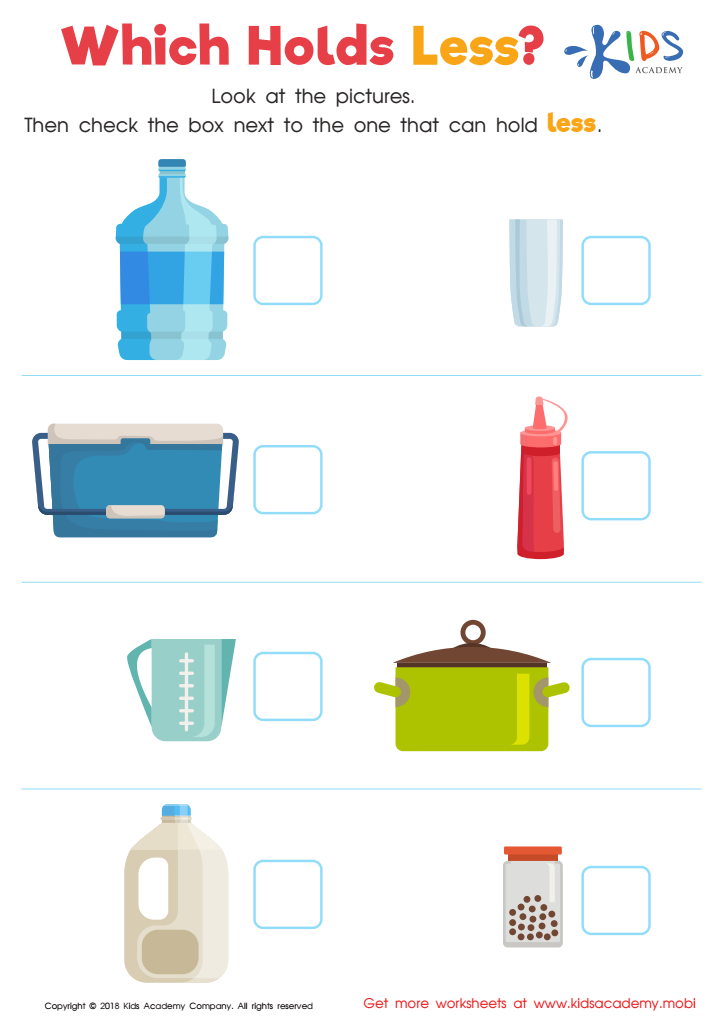
    Which Holds Less? Worksheet
    Which Holds Less? Worksheet

    Which Holds Less? Worksheet

    Students may find it hard to grasp volume without a visual aid. This free, downloadable worksheet helps with understanding by providing pictures of familiar objects. It allows students to practice comparing volumes and deciding which container holds less. It's a great introduction before they move onto using greater than and less than symbols.
    Which Holds Less? Worksheet
    Worksheet
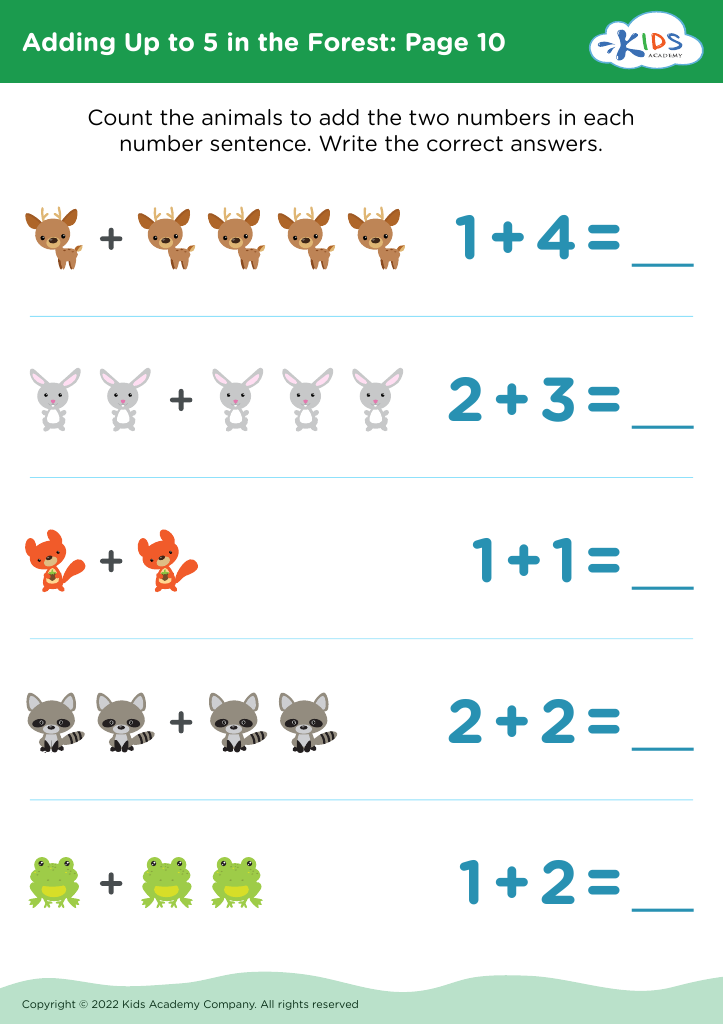
    Adding Up to 5 in the Forest: Page 10
    Adding Up to 5 in the Forest: Page 10
    Adding Up to 5 in the Forest: Page 10
    Worksheet
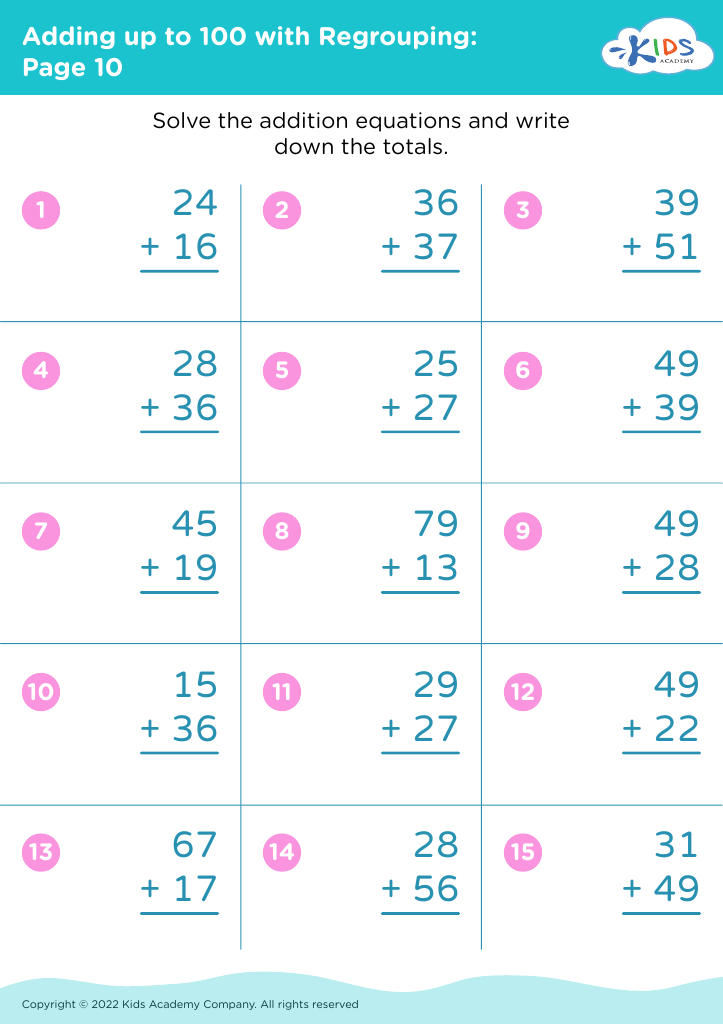
    Adding up to 100 with Regrouping: Page 10
    Adding up to 100 with Regrouping: Page 10
    Adding up to 100 with Regrouping: Page 10
    Worksheet
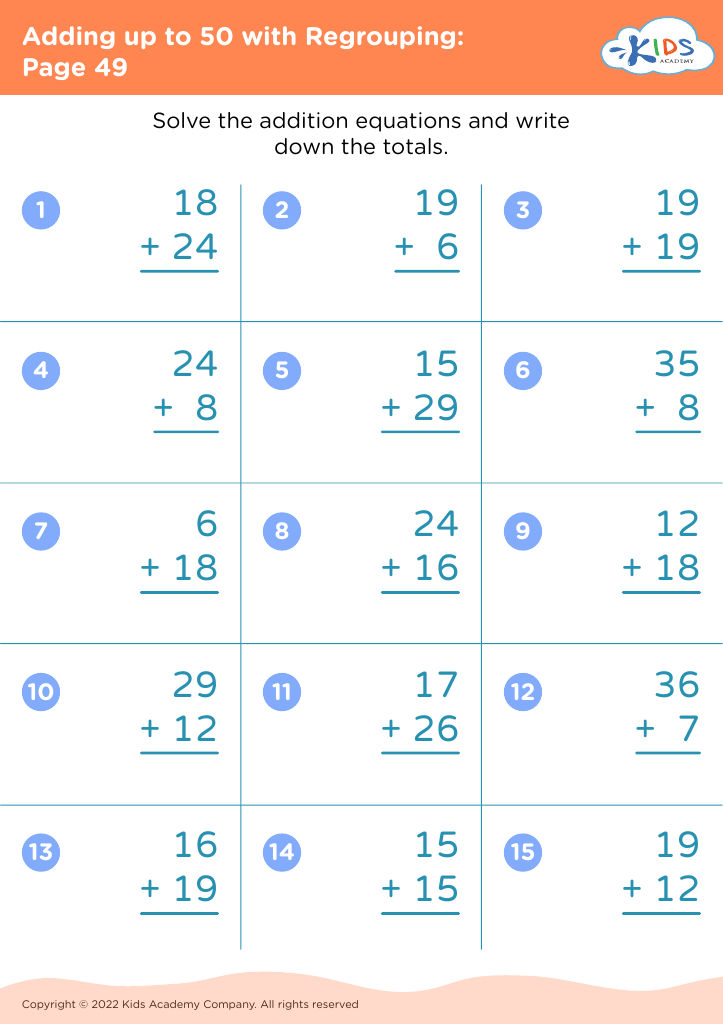
    Adding up to 50 with Regrouping: Page 49
    Adding up to 50 with Regrouping: Page 49
    Adding up to 50 with Regrouping: Page 49
    Worksheet
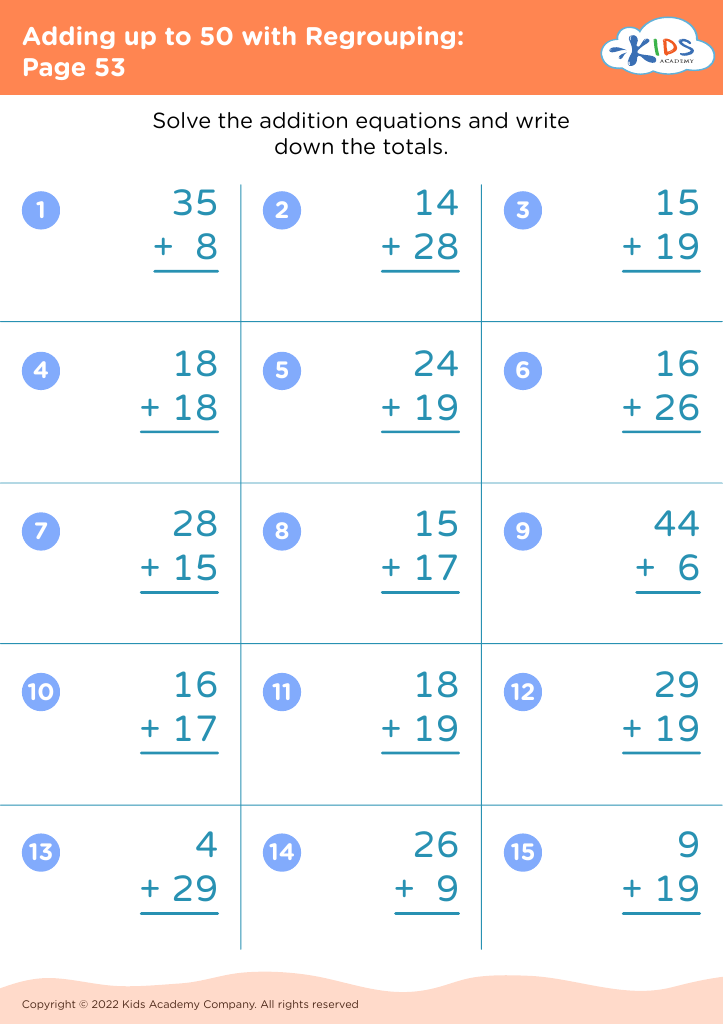
    Adding up to 50 with Regrouping: Page 53
    Adding up to 50 with Regrouping: Page 53
    Adding up to 50 with Regrouping: Page 53
    Worksheet
    Guess the Time Worksheet
    Guess the Time Worksheet

    Guess the Time Worksheet

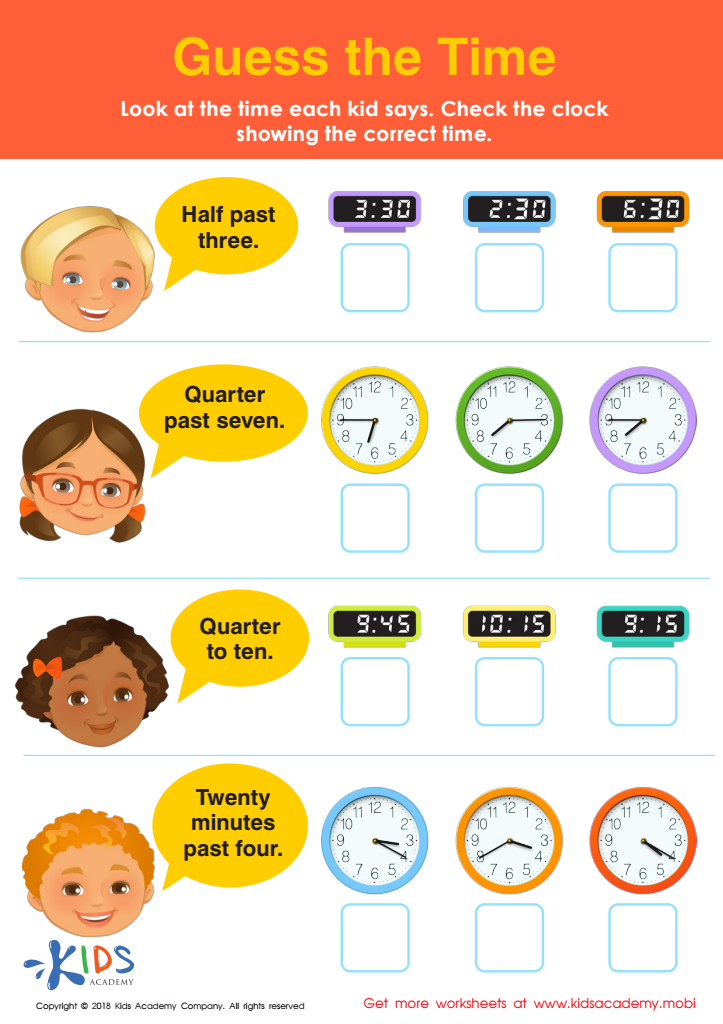
    Help students tell the time accurately with this fun exercise. Read the time each person says and find the corresponding clock. Check the options on the left and have students guess the right time. This worksheet is sure to sharpen their time-telling skills.
    Guess the Time Worksheet
    Worksheet
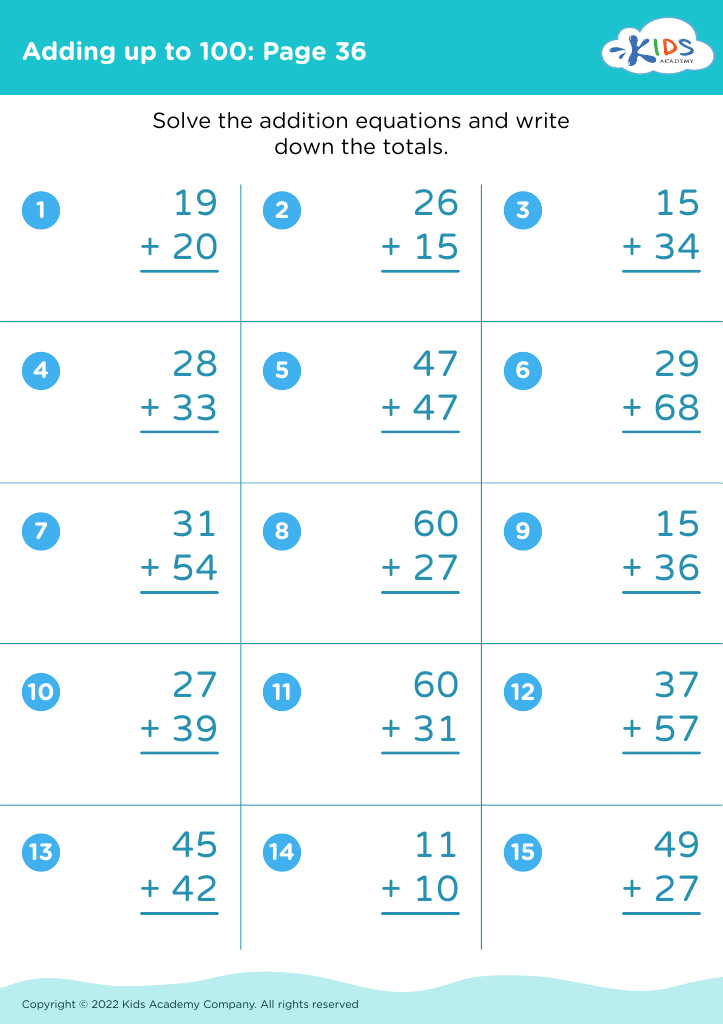
    Adding up to 100: Page 36
    Adding up to 100: Page 36

    Adding up to 100: Page 36

    Adding up to 100: Page 36
    Worksheet
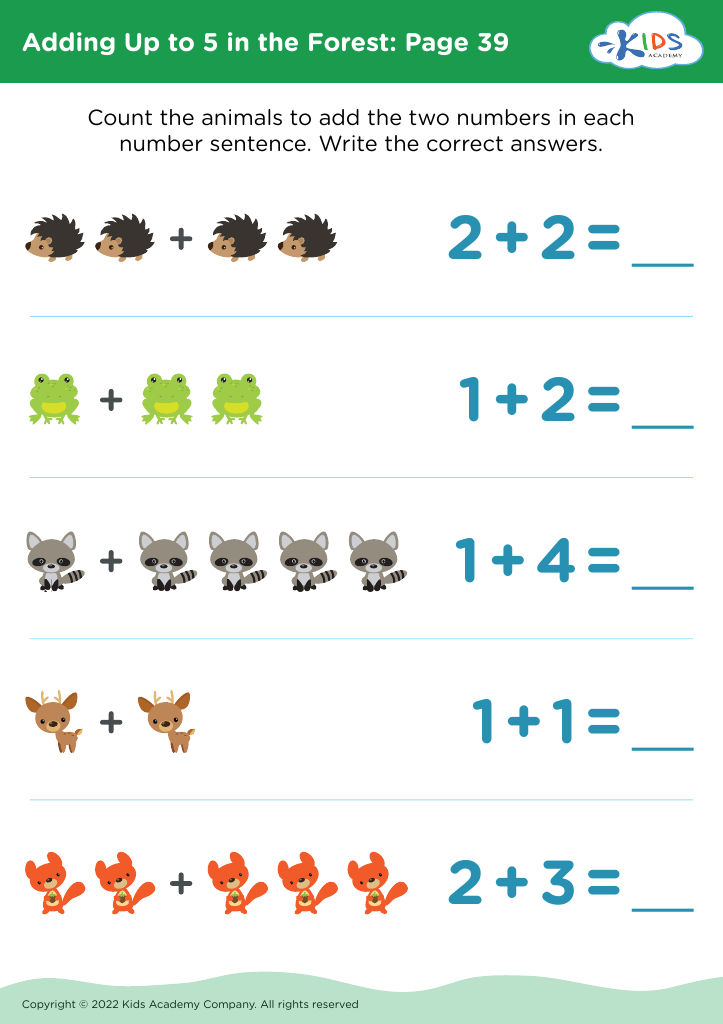
    Adding Up to 5 in the Forest: Page 39
    Adding Up to 5 in the Forest: Page 39
    Adding Up to 5 in the Forest: Page 39
    Worksheet
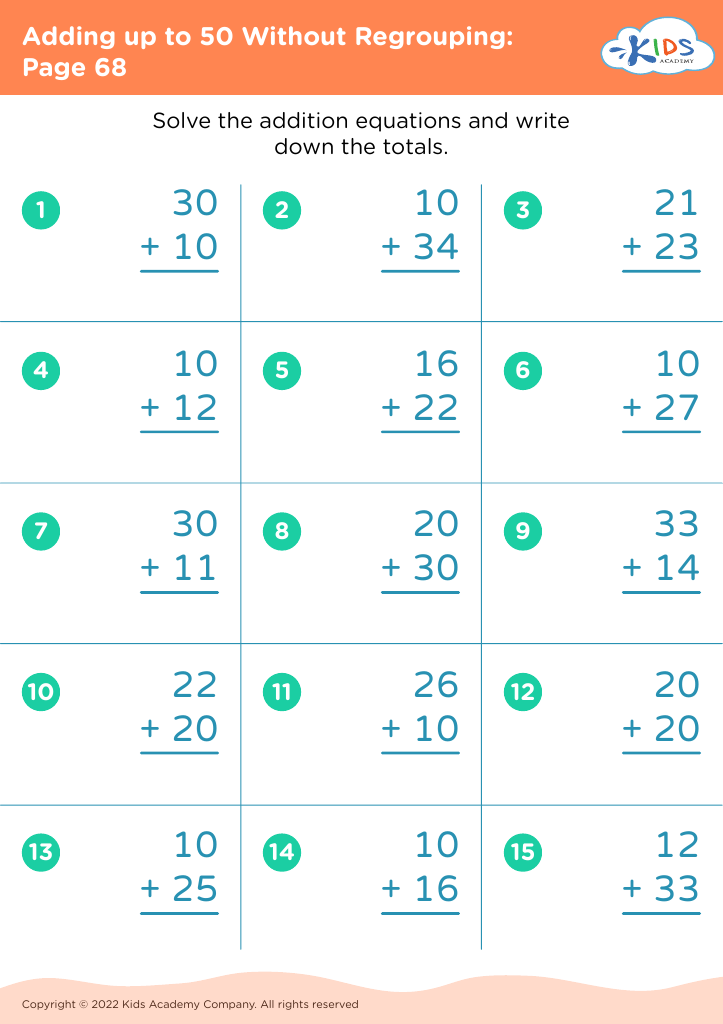
    Adding up to 50 Without Regrouping: Page 68
    Adding up to 50 Without Regrouping: Page 68
    Adding up to 50 Without Regrouping: Page 68
    Worksheet
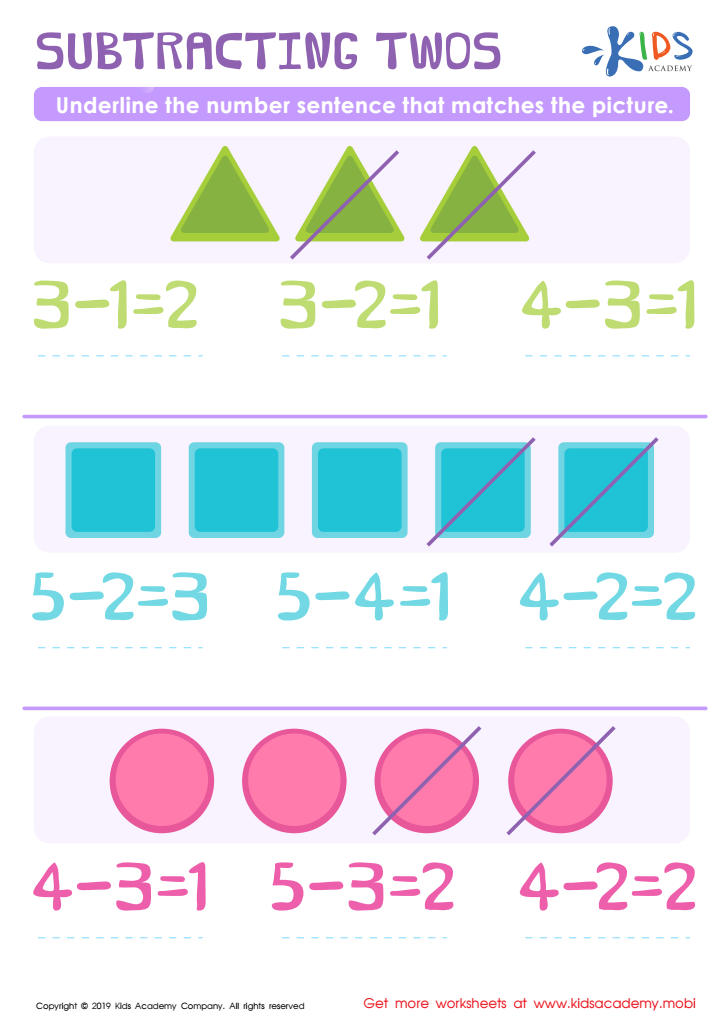
    Subtracting Twos Worksheet
    Subtracting Twos Worksheet

    Subtracting Twos Worksheet

    Help your children learn the basics of math with this worksheet. It has three number sentences they can match up with the pictures. Start by making math an enjoyable subject and help your kids underline the equation that matches up. This will give them a strong foundation to build on for the rest of their math journey.
    Subtracting Twos Worksheet
    Worksheet
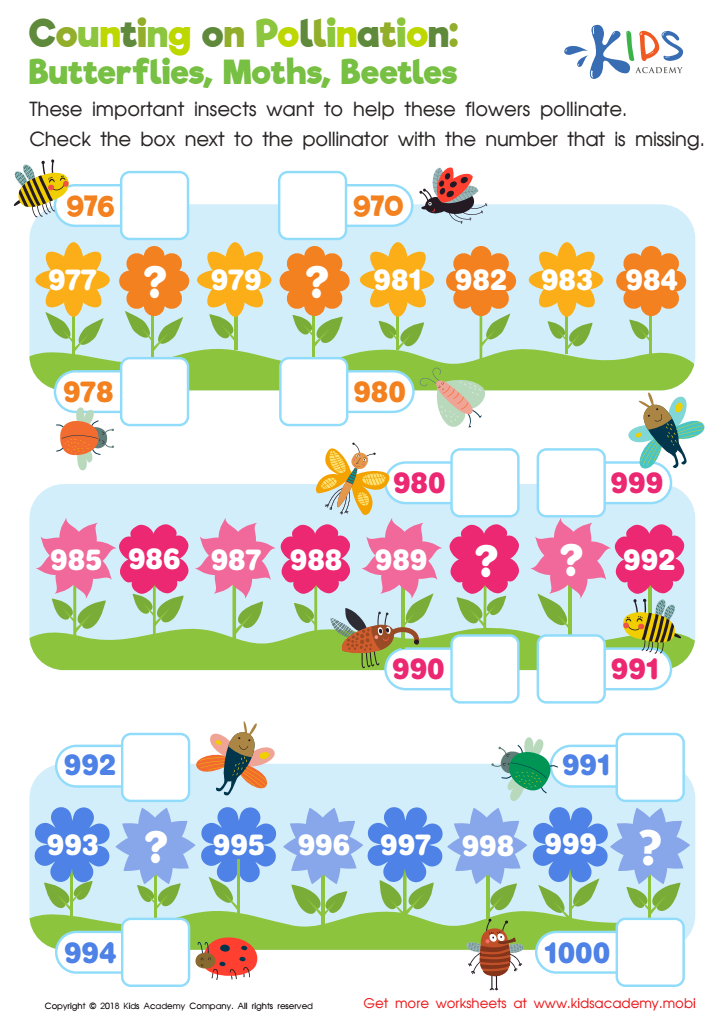
    Counting on Pollination: Butterflies, Moths, Beetles Worksheet
    Counting on Pollination: Butterflies, Moths, Beetles Worksheet

    Counting on Pollination: Butterflies, Moths, Beetles Worksheet

    A number line can help boost computation accuracy and efficiency. It can also be used with more advanced numbers. Help your child practice by having them identify missing numbers in sequences. This fun worksheet lets them help the pollinators in the process, as they strengthen their number sense.
    Counting on Pollination: Butterflies, Moths, Beetles Worksheet
    Worksheet
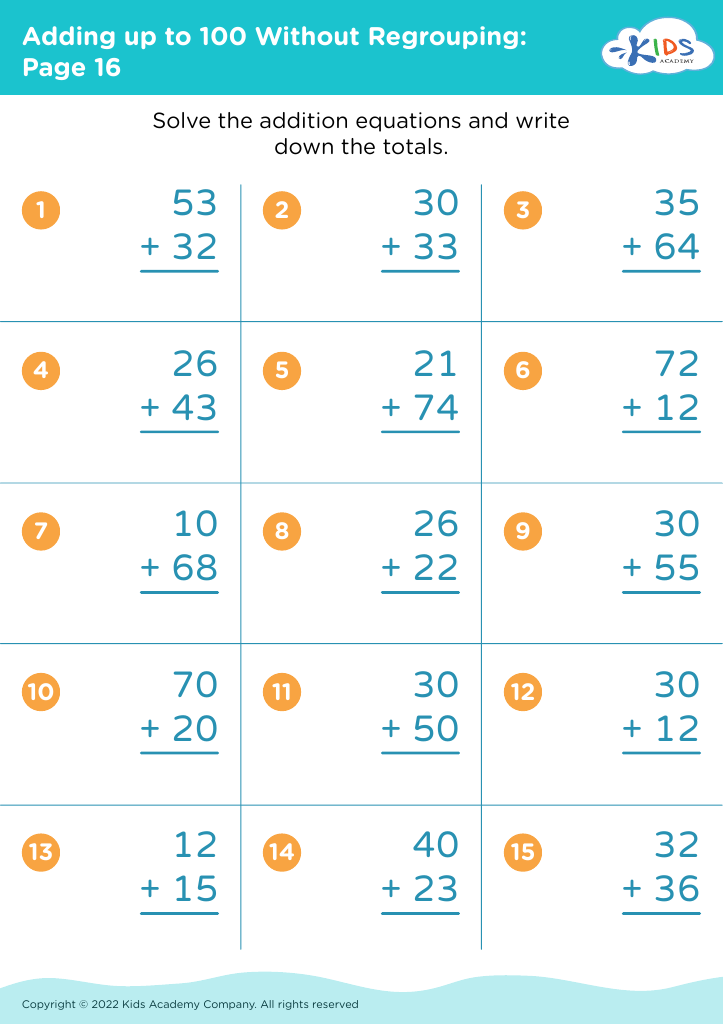
    Adding up to 100 Without Regrouping: Page 16
    Adding up to 100 Without Regrouping: Page 16
    Adding up to 100 Without Regrouping: Page 16
    Worksheet
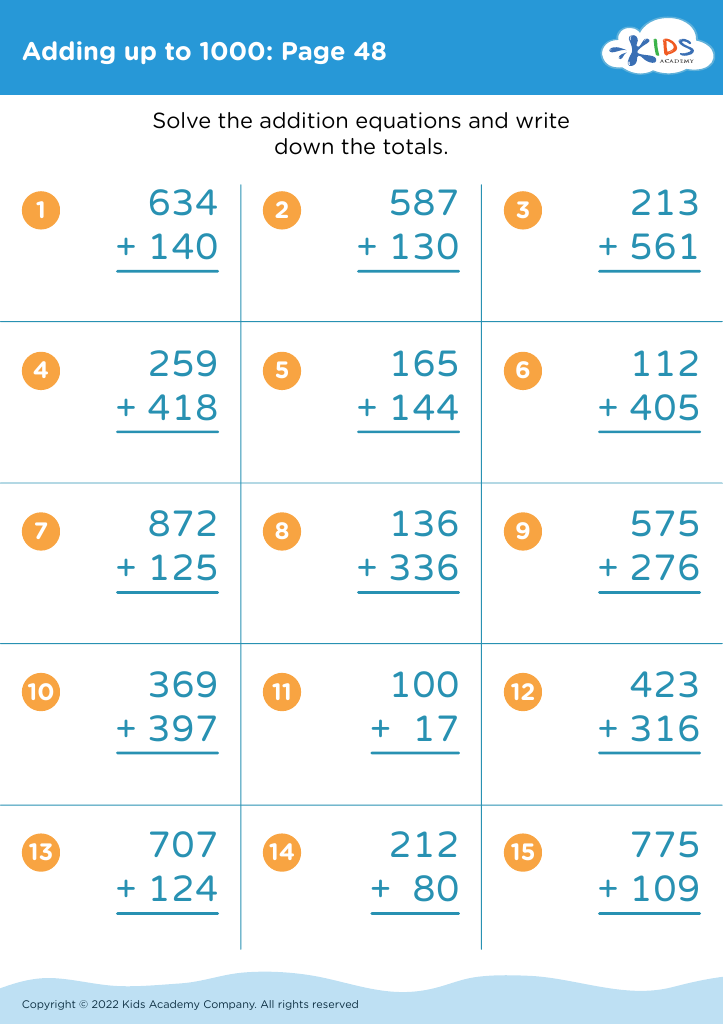
    Adding up to 1000: Page 48
    Adding up to 1000: Page 48

    Adding up to 1000: Page 48

    Adding up to 1000: Page 48
    Worksheet
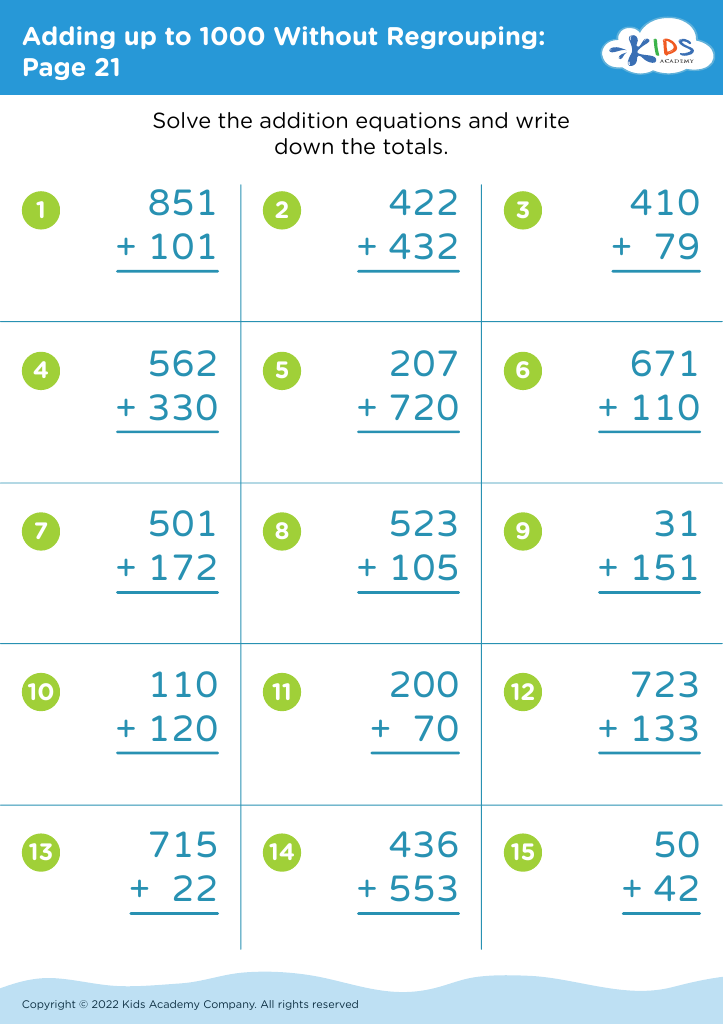
    Adding up to 1000 Without Regrouping: Page 21
    Adding up to 1000 Without Regrouping: Page 21
    Adding up to 1000 Without Regrouping: Page 21
    Worksheet
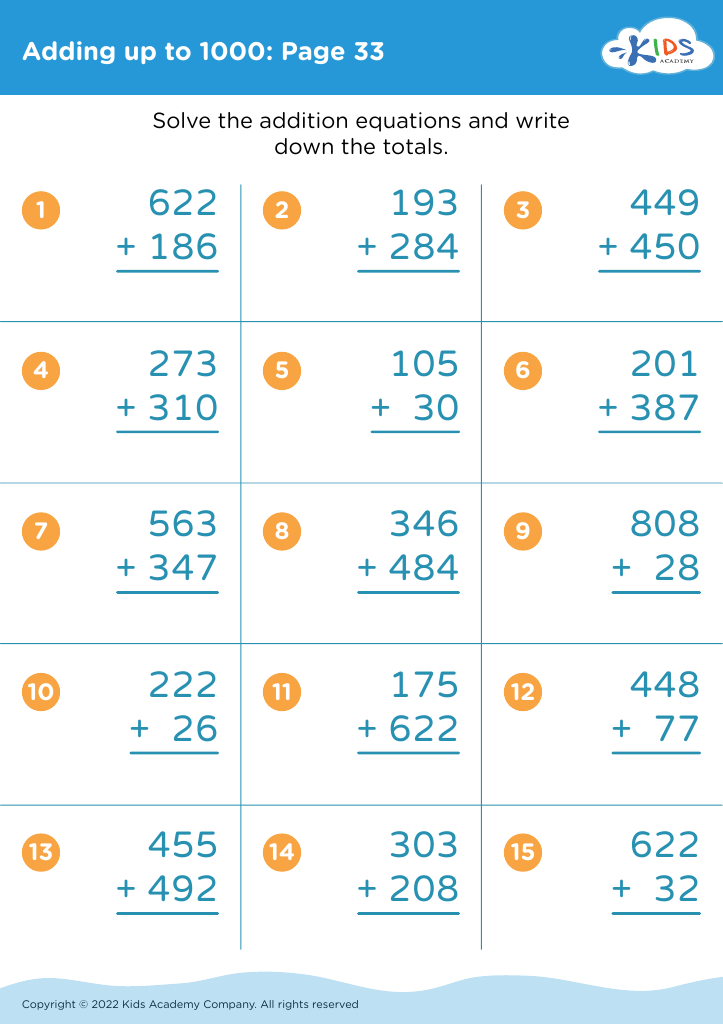
    Adding up to 1000: Page 33
    Adding up to 1000: Page 33

    Adding up to 1000: Page 33

    Adding up to 1000: Page 33
    Worksheet
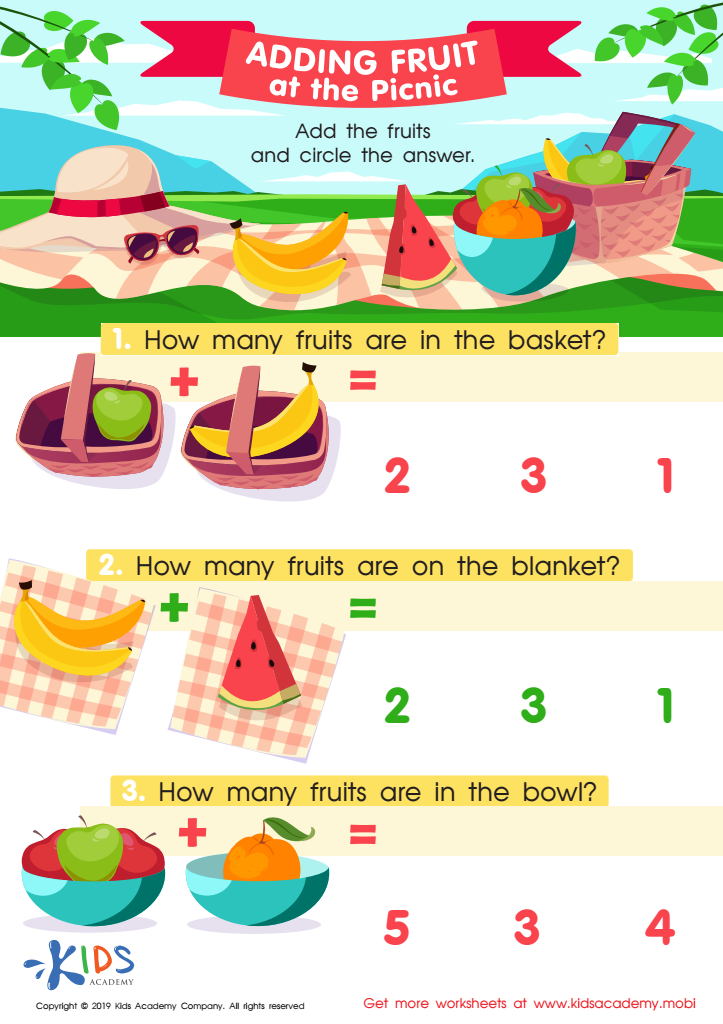
    Adding Fruit at the Picnic Worksheet
    Adding Fruit at the Picnic Worksheet

    Adding Fruit at the Picnic Worksheet

    Picnics are a great way for the family to enjoy a fun day in the sun! Get your kids involved by having them help load the picnic basket and do this worksheet to practice their math skills while they get ready. Identify the fruits in the picture, add them up, and circle the correct answer.
    Adding Fruit at the Picnic Worksheet
    Worksheet
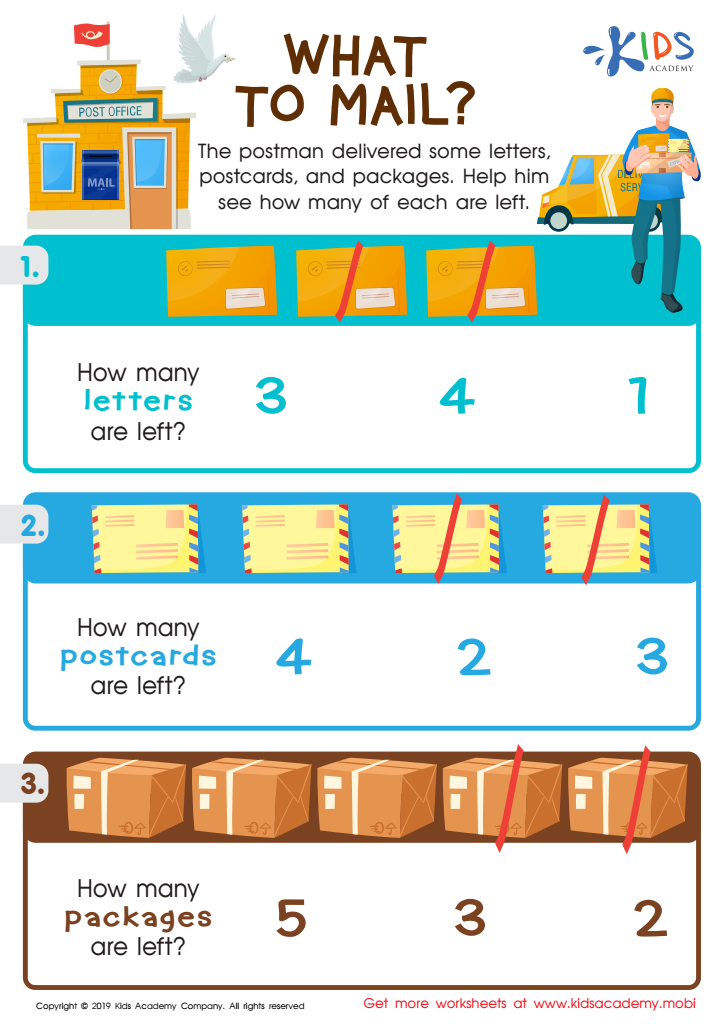
    What to Mail? Worksheet
    What to Mail? Worksheet

    What to Mail? Worksheet

    Do your kids know what postmen do? They deliver mail from the post office to the intended recipient. Word problems are math questions written in sentence form. Here, kids must examine the image, read the problem, and find the correct answer. This worksheet offers practice in that skill.
    What to Mail? Worksheet
    Worksheet
    Subtracting Numbers: Community Helpers Worksheet
    Subtracting Numbers: Community Helpers Worksheet
    Subtracting Numbers: Community Helpers Worksheet

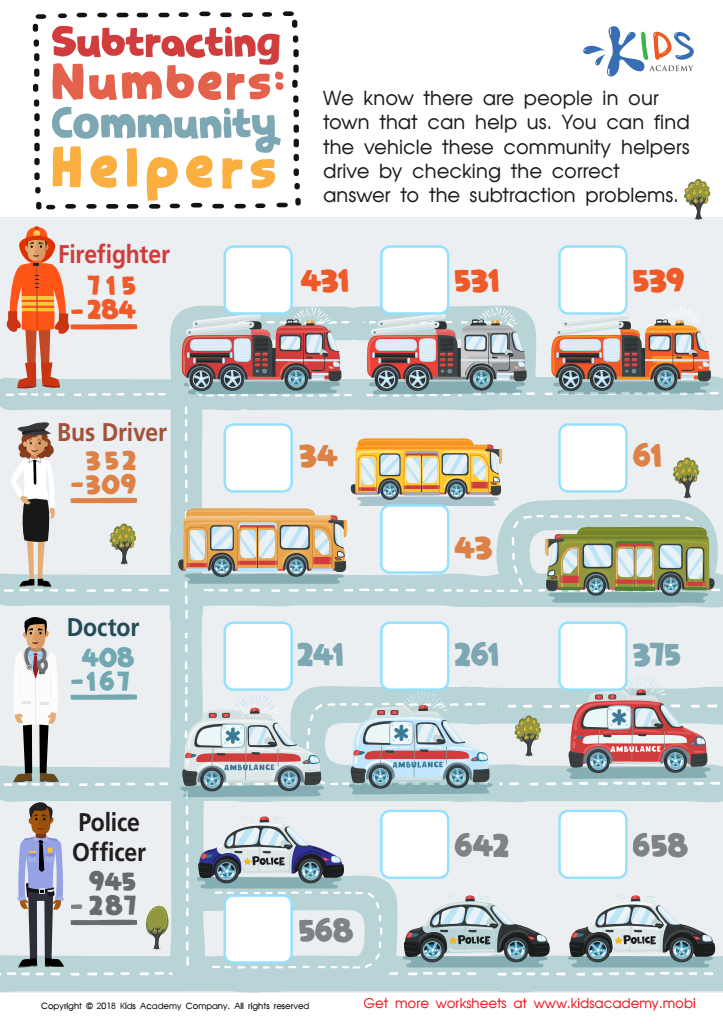
    A community is an area of different people, buildings and other elements. People in a community have varied roles and work together to make it thrive. Ask your child what community helpers they know and how they help. Match the helpers to their vehicles by solving subtraction problems!
    Subtracting Numbers: Community Helpers Worksheet
    Worksheet
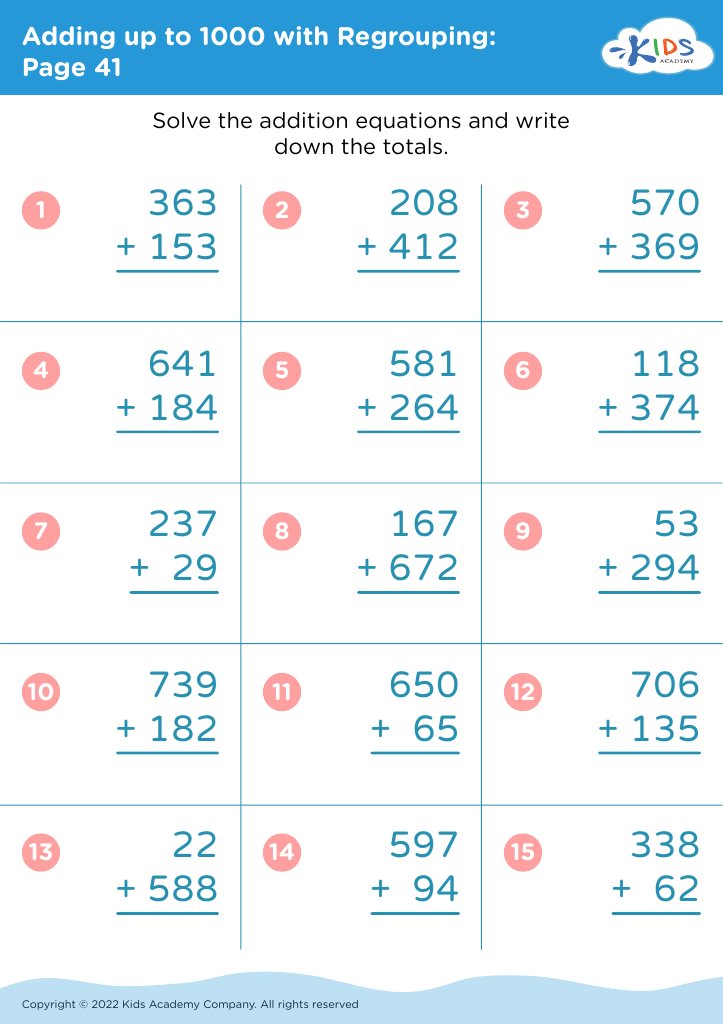
    Adding up to 1000 with Regrouping: Page 41
    Adding up to 1000 with Regrouping: Page 41
    Adding up to 1000 with Regrouping: Page 41
    Worksheet
    Marching Ants Worksheet
    Marching Ants Worksheet

    Marching Ants Worksheet

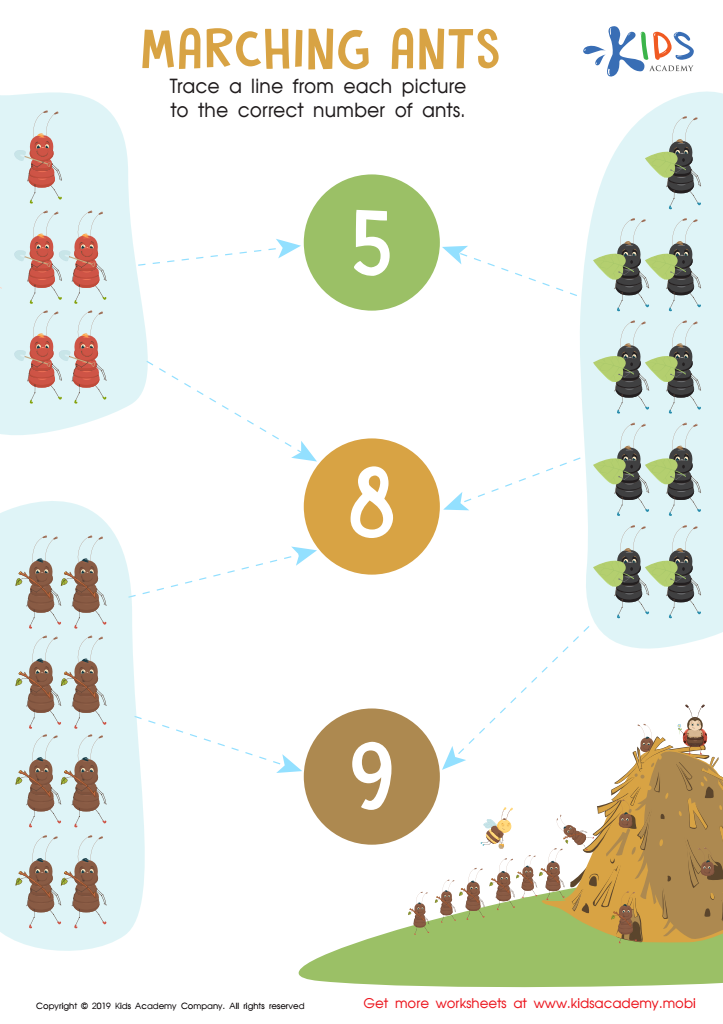
    Assess and help your kids practice counting with this worksheet. Ask them to identify the four groups of ants in the picture. Guide them as they count each group and trace the lines to the corresponding number.
    Marching Ants Worksheet
    Worksheet
    Count and Match: Feed the Animals Worksheet
    Count and Match: Feed the Animals Worksheet

    Count and Match: Feed the Animals Worksheet

    Learning and growing involves more than just numbers, phonics and comparison. This Feed the Animals worksheet helps kids to exercise their reasoning skills. They must work out how many rabbits and carrots there are, and then repeat the process for the squirrels. This encourages problem solving and counting skills.
    Count and Match: Feed the Animals Worksheet
    Worksheet
    Money Worksheet: Shopping for Sweets
    Money Worksheet: Shopping for Sweets

    Shopping for Sweets Worksheet

    Help your child hone their math and money skills with Shopping for Sweets! They'll count coins, work their way through a maze, and find the amount of money. Fun and educational - perfect for kids!
    Shopping for Sweets Worksheet
    Worksheet
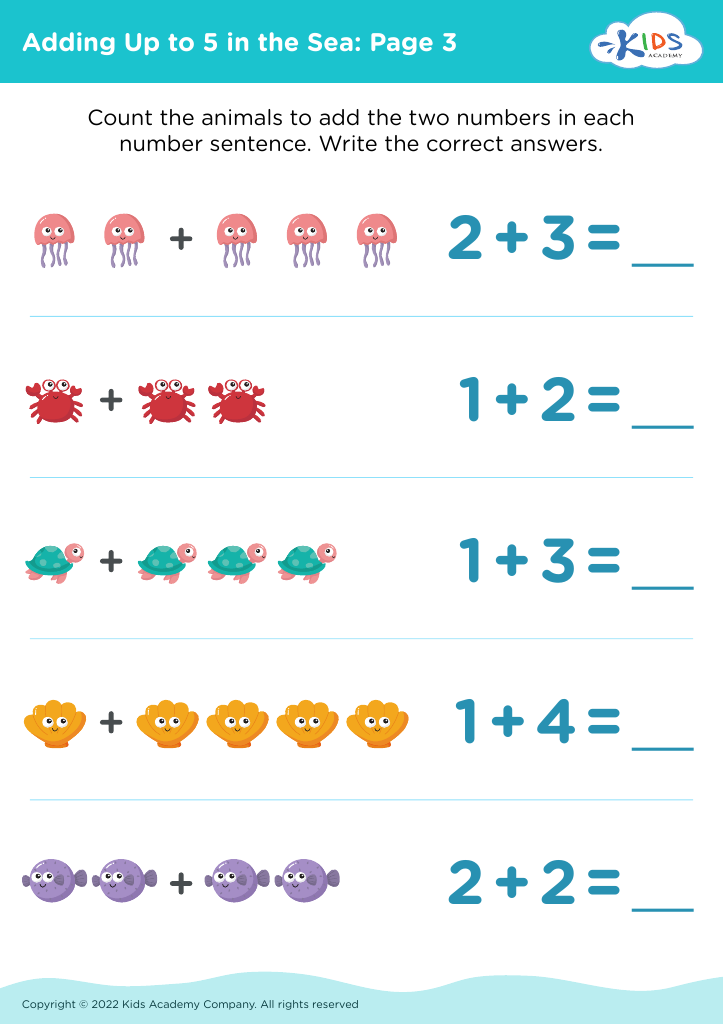
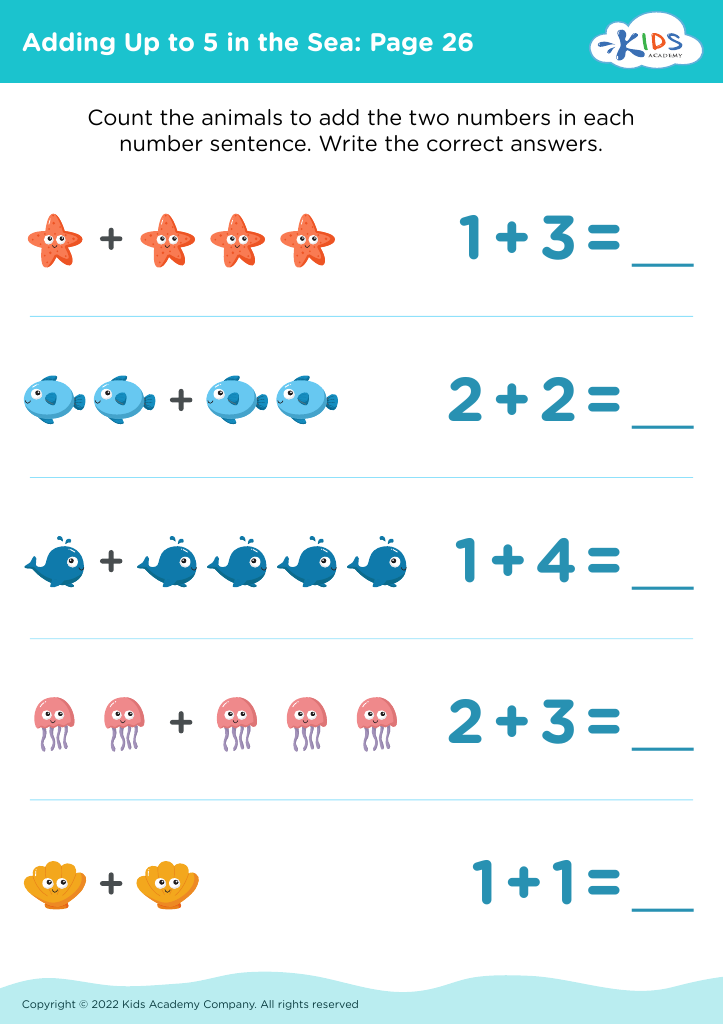
    Adding Up to 5 in the Sea: Page 26
    Adding Up to 5 in the Sea: Page 26
    Adding Up to 5 in the Sea: Page 26
    Worksheet
    Adding up to 100 Without Regrouping: Page 62
    Adding up to 100 Without Regrouping: Page 62
    Adding up to 100 Without Regrouping: Page 62
    Worksheet


    Parents and teachers should care greatly about introducing math to children ages 3-7 because early math skills form the foundational building blocks for future academic success and everyday problem-solving abilities. At this developmental stage, children’s brains are highly adaptive and primed for learning through play and exploration. Engaging them in math activities sets the stage for cognitive and intellectual growth, enhancing their ability to grasp more complex concepts later on.

    Math skills foster critical thinking and reasoning, important for both academic and real-world situations. For example, understanding numbers, patterns, and basic arithmetic operations builds the groundwork for more advanced subjects like science, technology, and engineering. Additionally, early math education can improve children's abilities in other subjects. Research shows there’s a link between early math proficiency and higher achievement in reading.

    Furthermore, early exposure to concepts like counting, spatial awareness, and measurement translates to better problem-solving and analytical skills, crucial for everyday tasks. Providing a solid math foundation gives children confidence, encourages curious mindsets, and diminishes future math anxiety. Parents and teachers investing time in nurturing these skills create an engaging, supportive environment that values academic growth and prospects.

    In sum, prioritizing early math education equips children with crucial tools that aid their overall development, setting them up for success inside and outside the classroom.