Animal identification Math Worksheets for Ages 3-7
33 filtered results
-
From - To
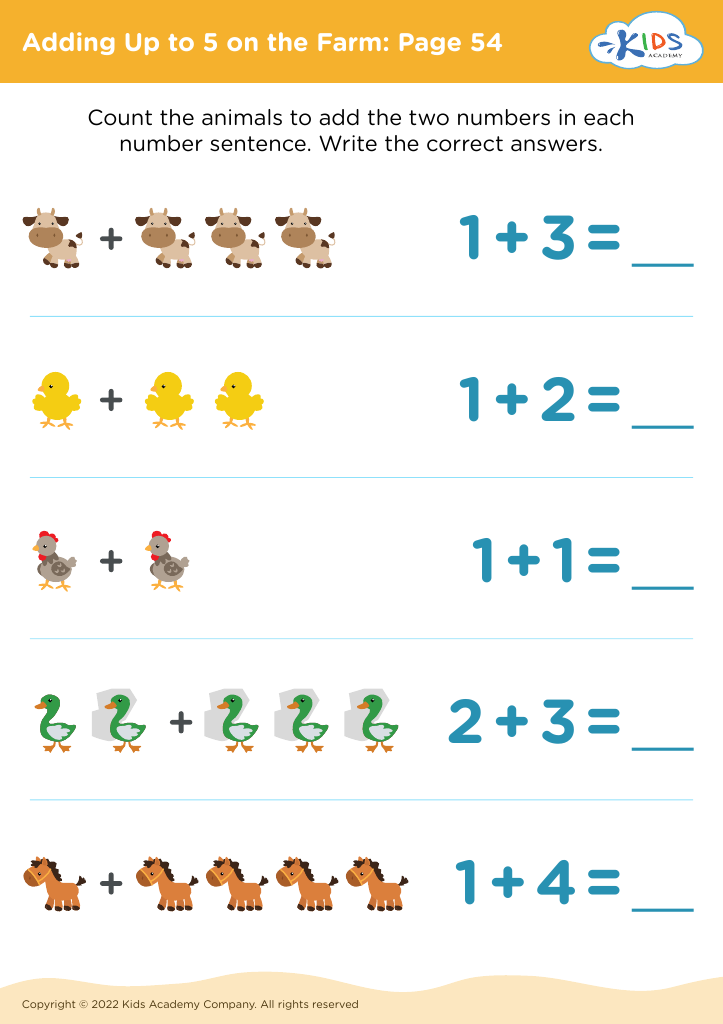
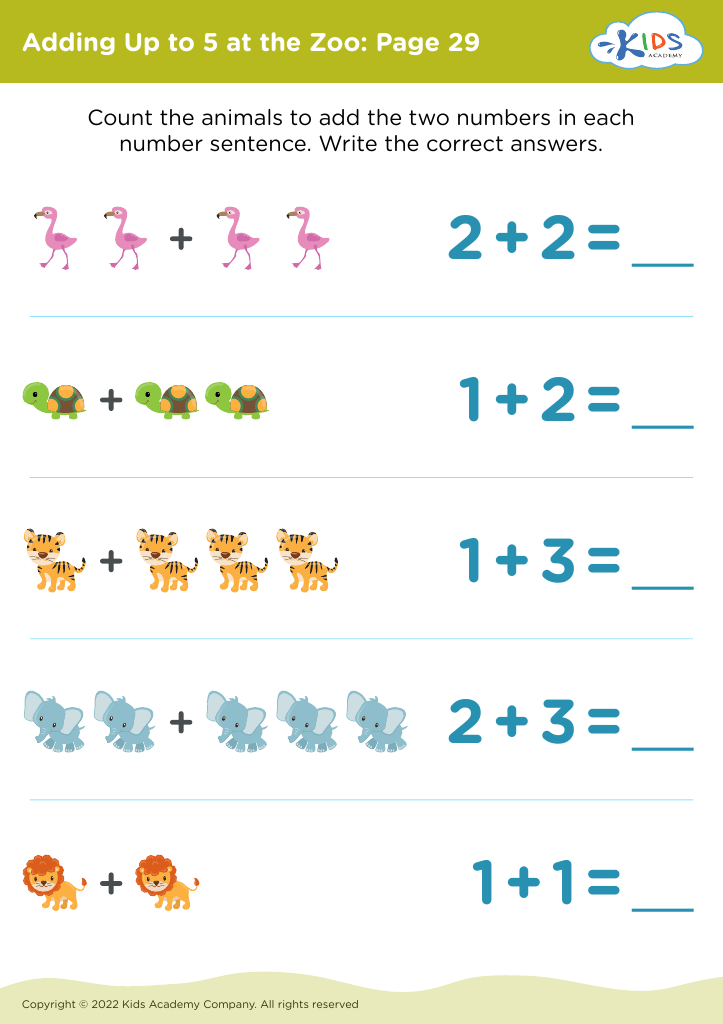
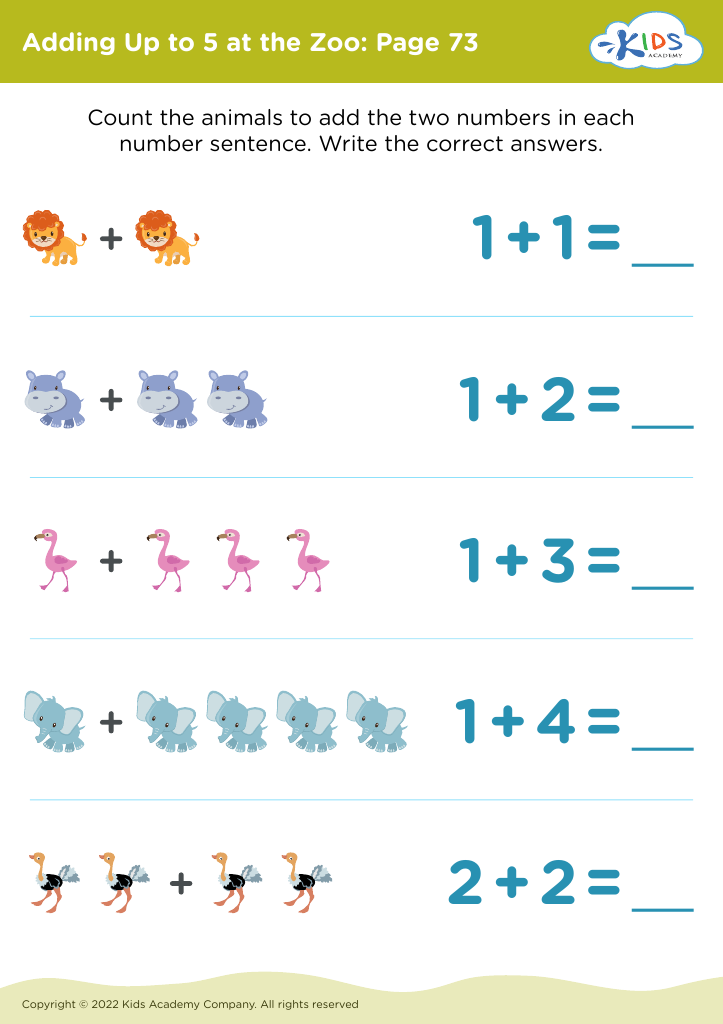
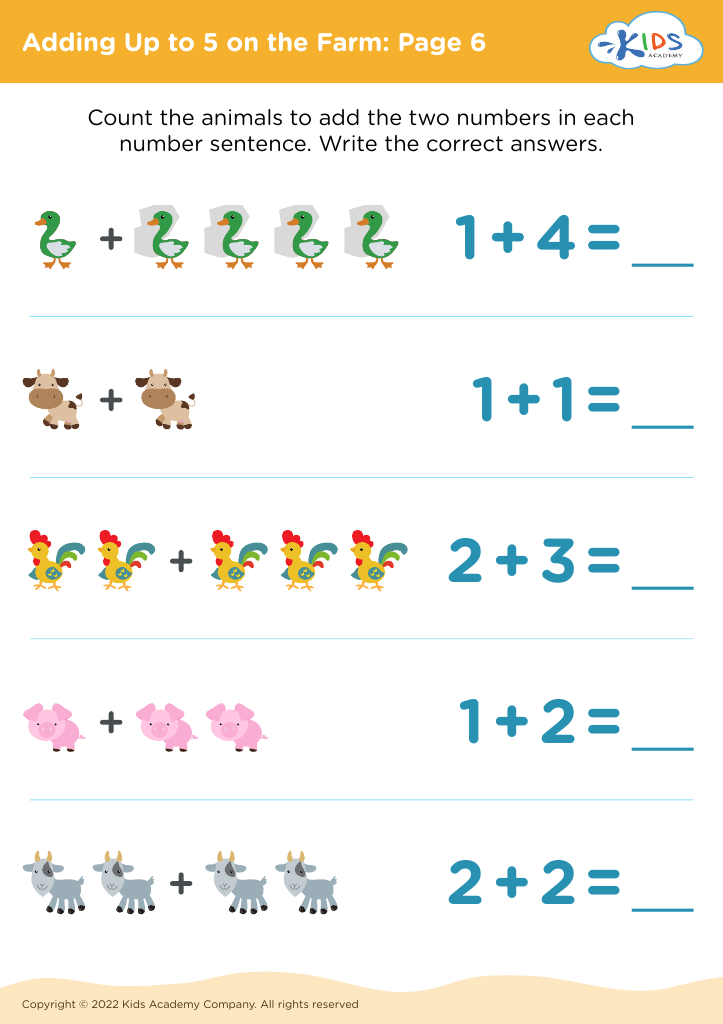
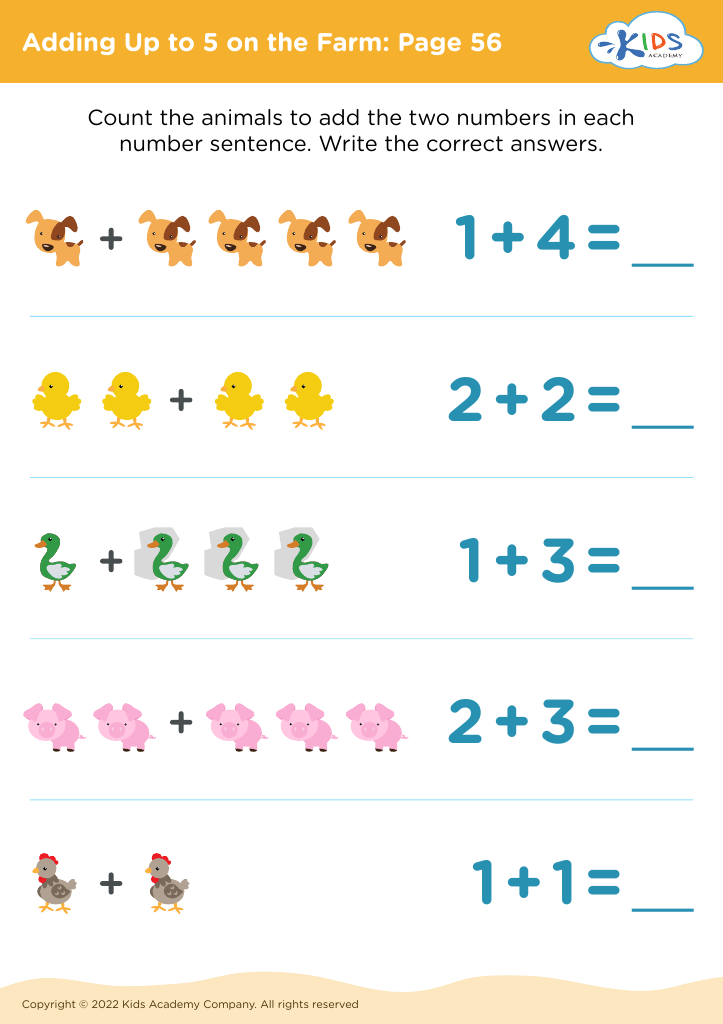
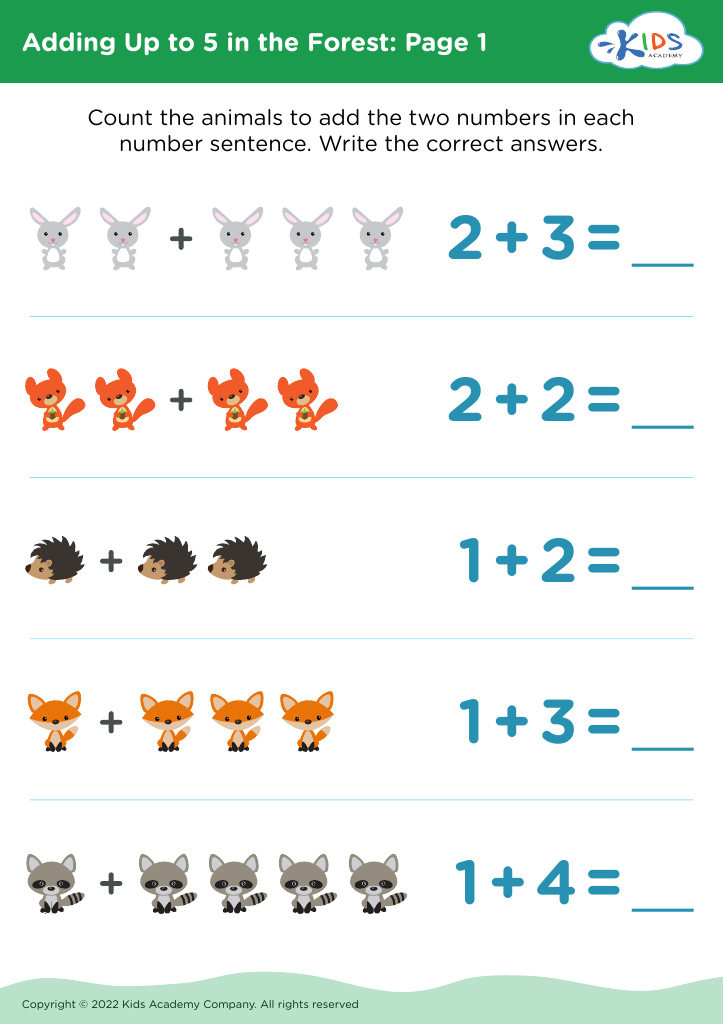
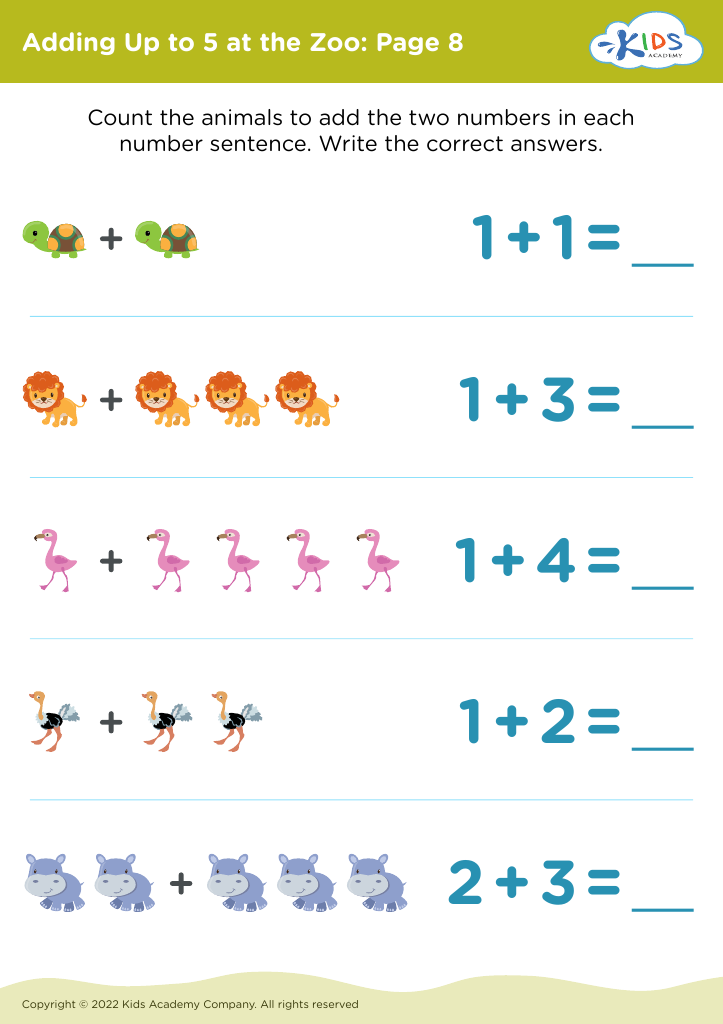
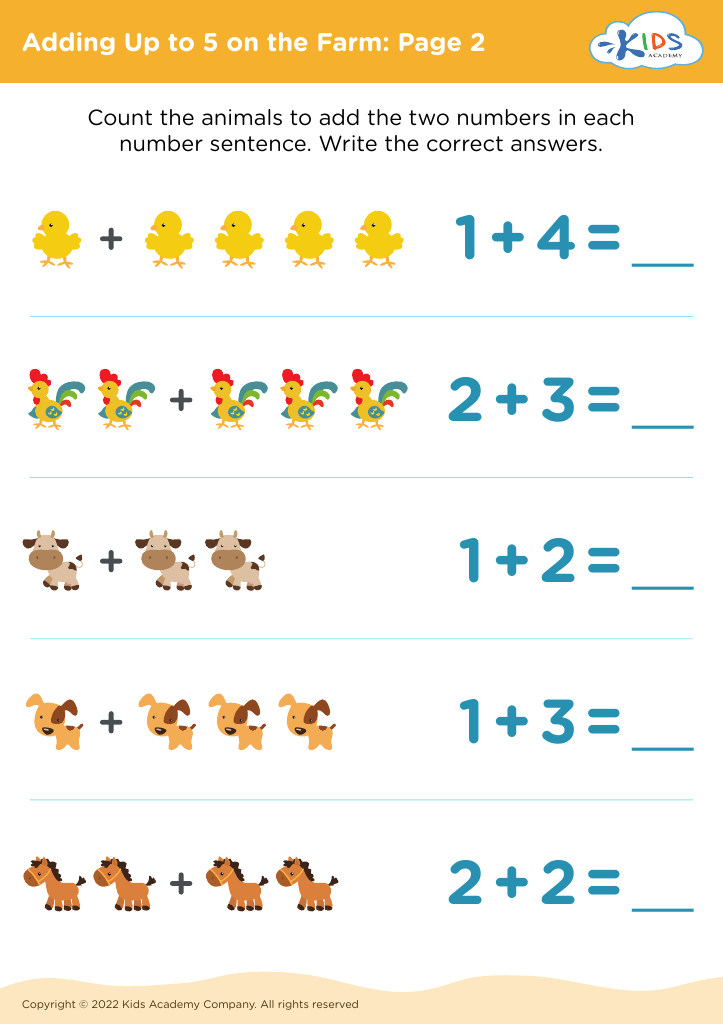
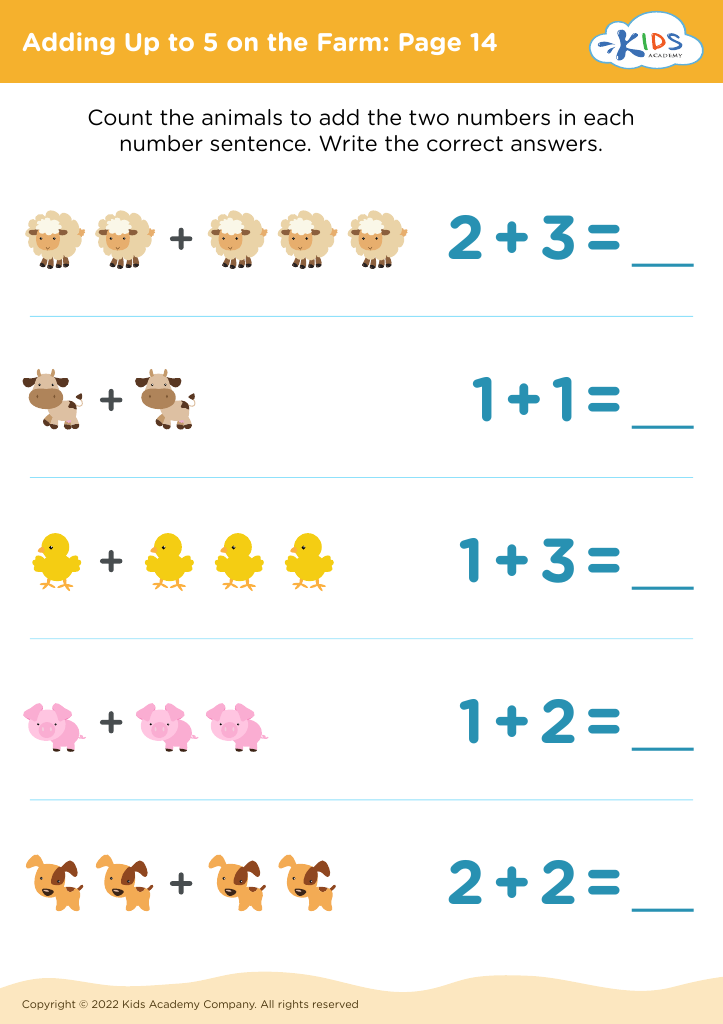
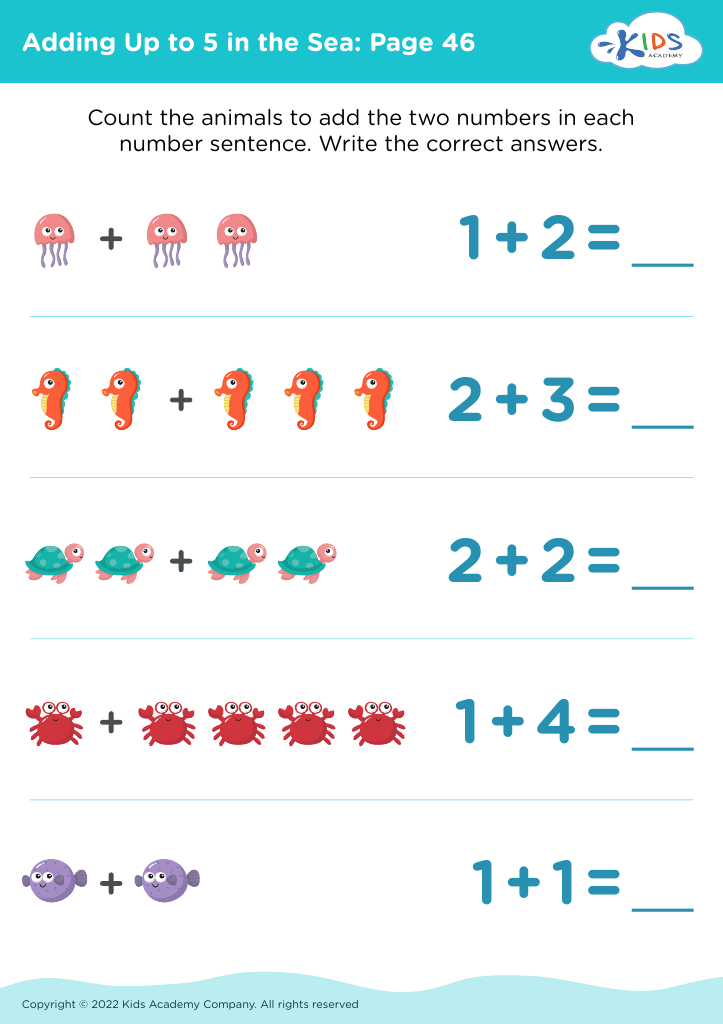
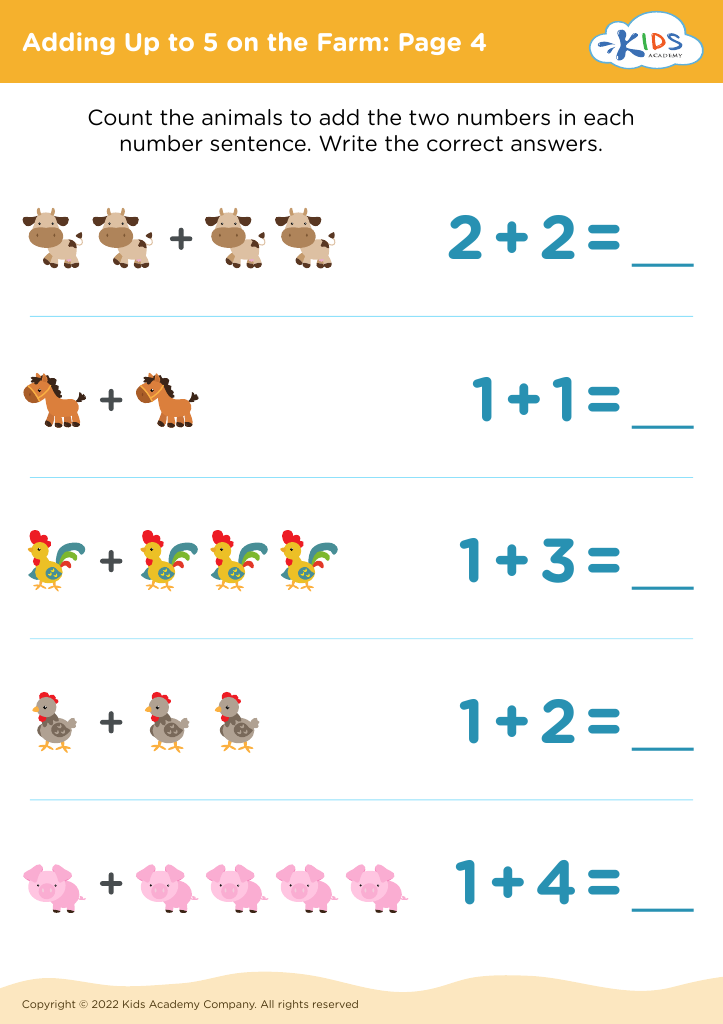
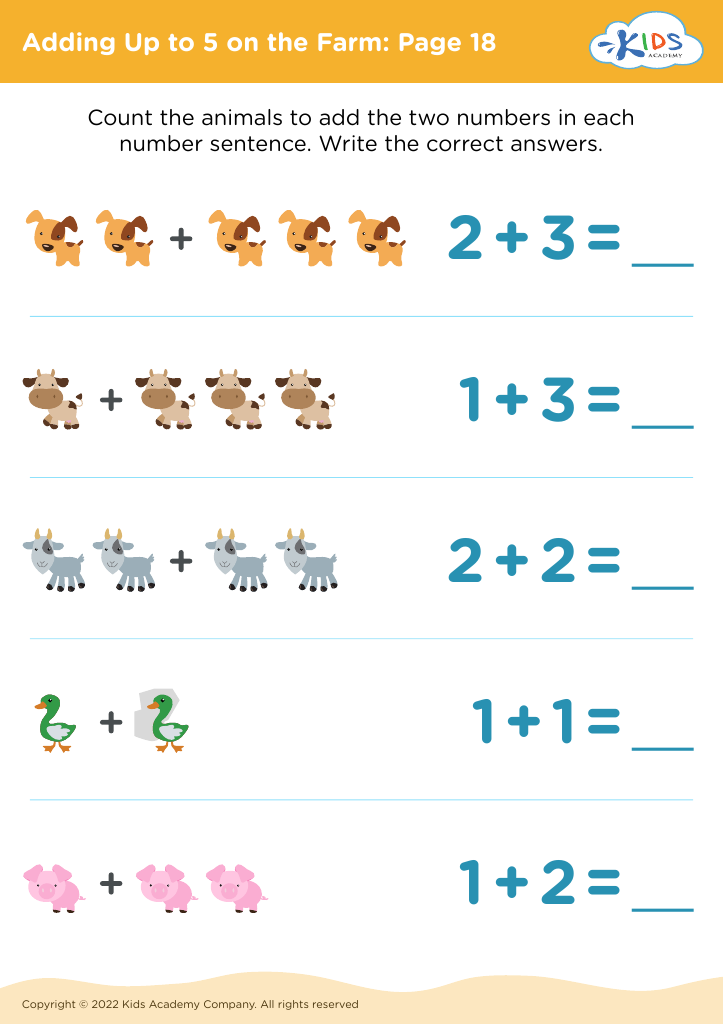
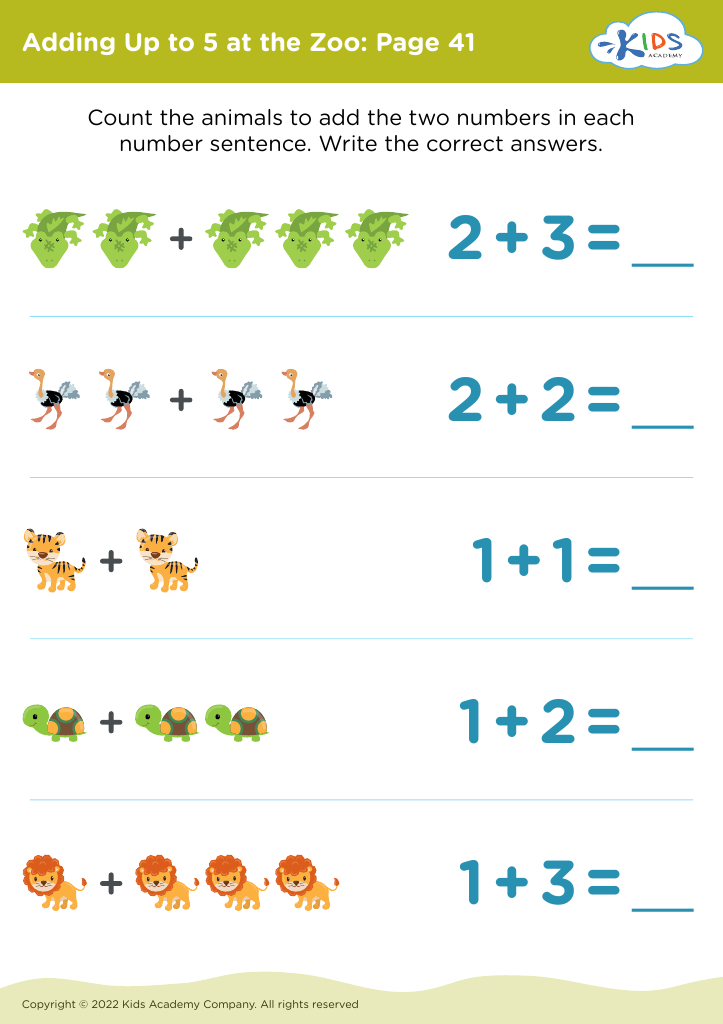
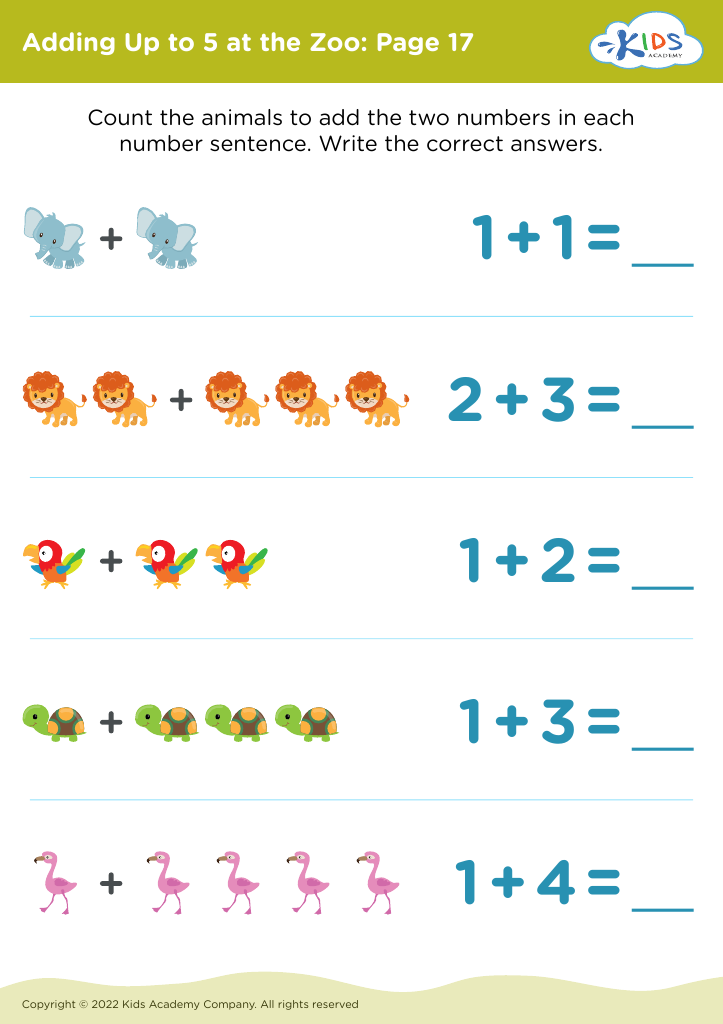
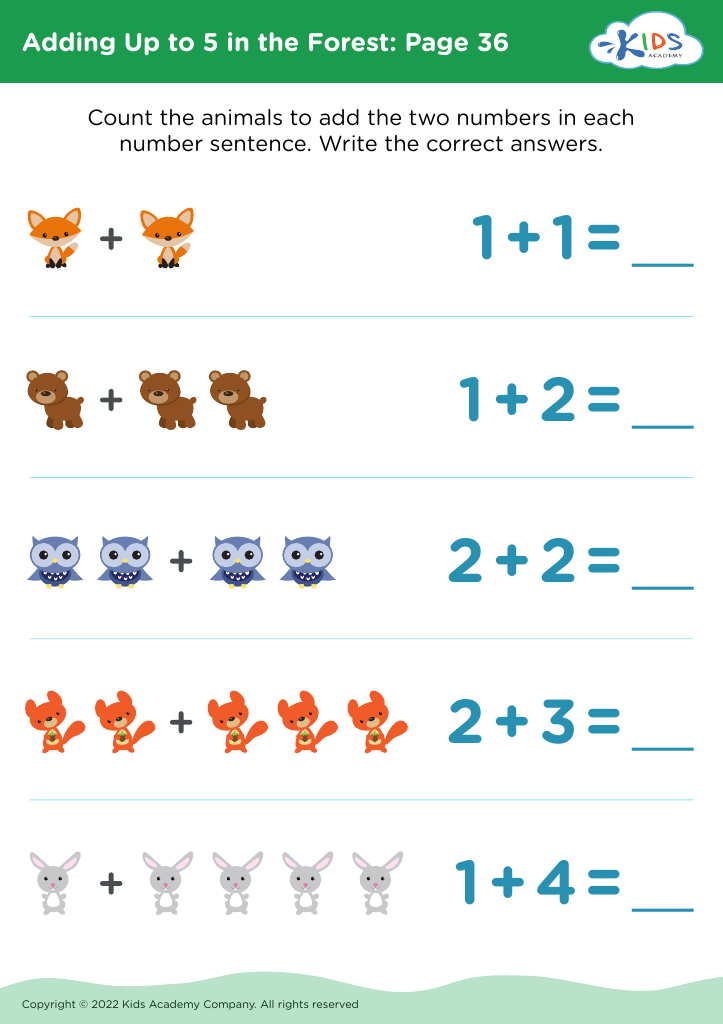
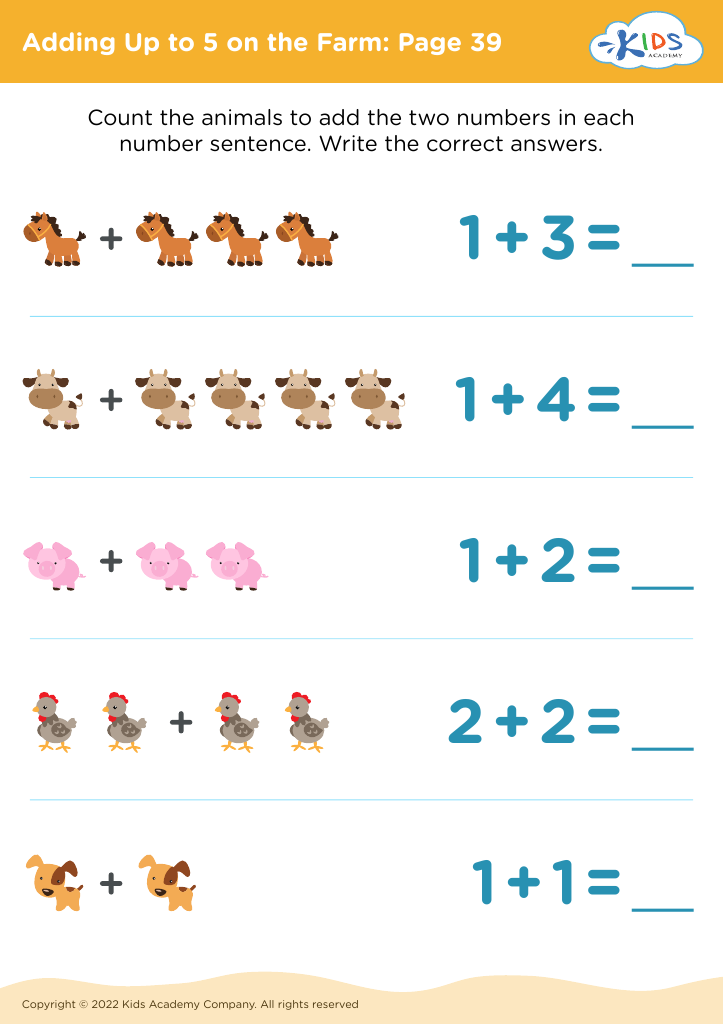
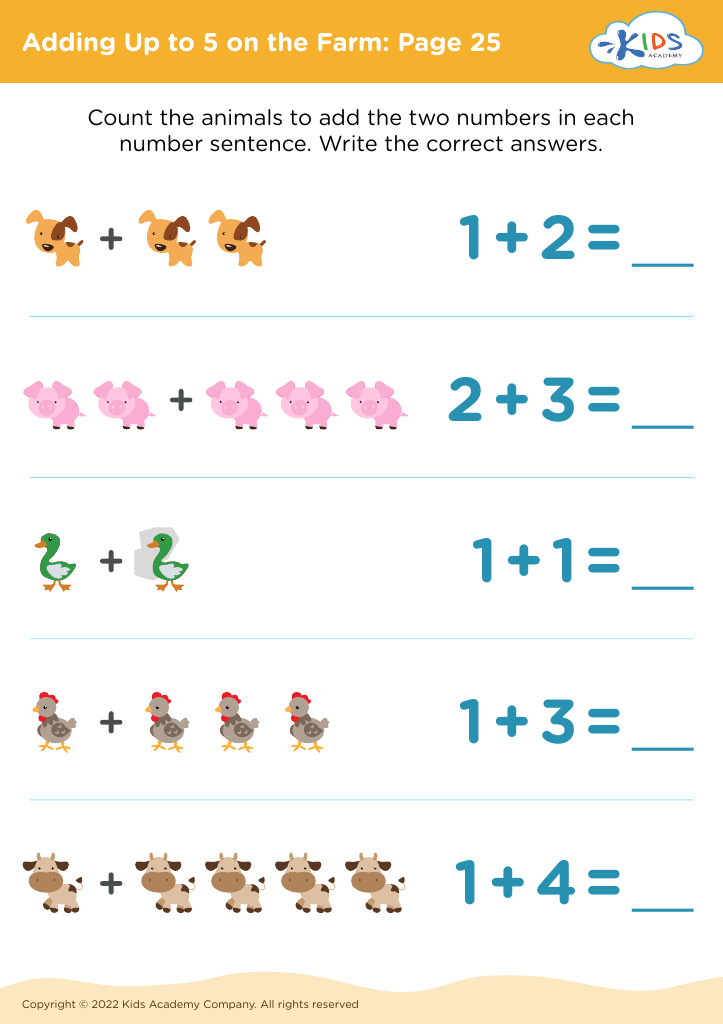
Discover our engaging "Animal Identification Math Worksheets for Ages 3-7". These thoughtfully designed activities combine the fun of animal discovery with foundational math skills, providing young learners an exciting educational experience. Children will identify various animals while practicing counting, sorting, and basic arithmetic. Perfectly suited for early learners, our printable worksheets foster cognitive development, enhance recognition abilities, and improve fine motor skills in an enjoyable and interactive setting. Ideal for home or classroom use, these worksheets make learning math an adventure, sparking curiosity and enthusiasm in young minds. Start today and watch your child excel with playful learning!
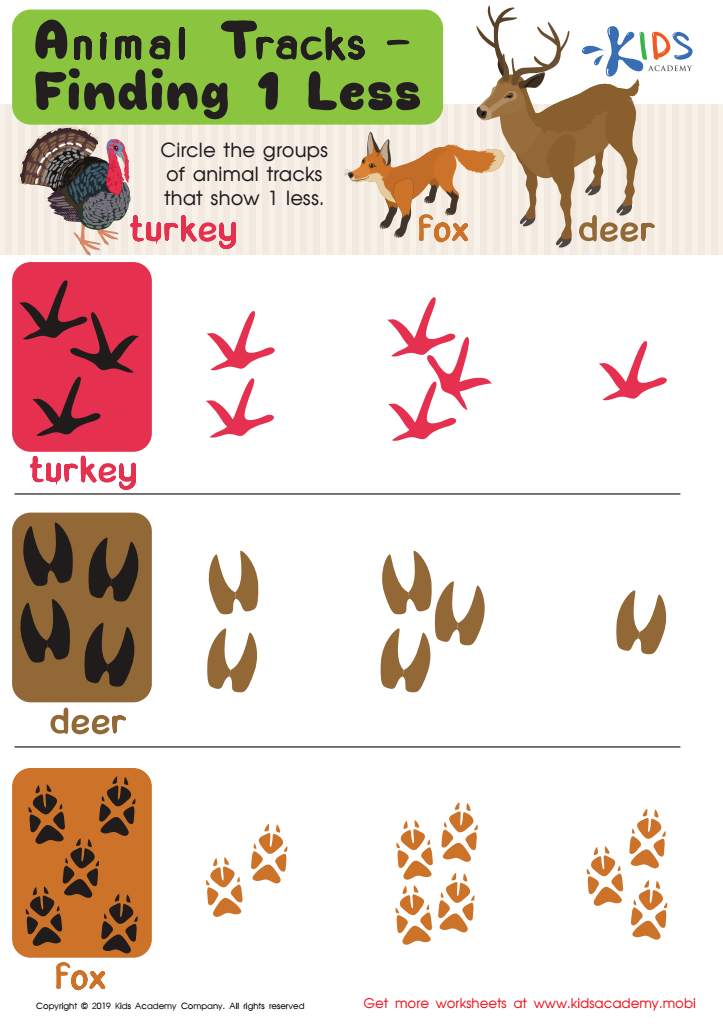
Animal Tracks: Find 1 Less Worksheet
 Assign to My Students
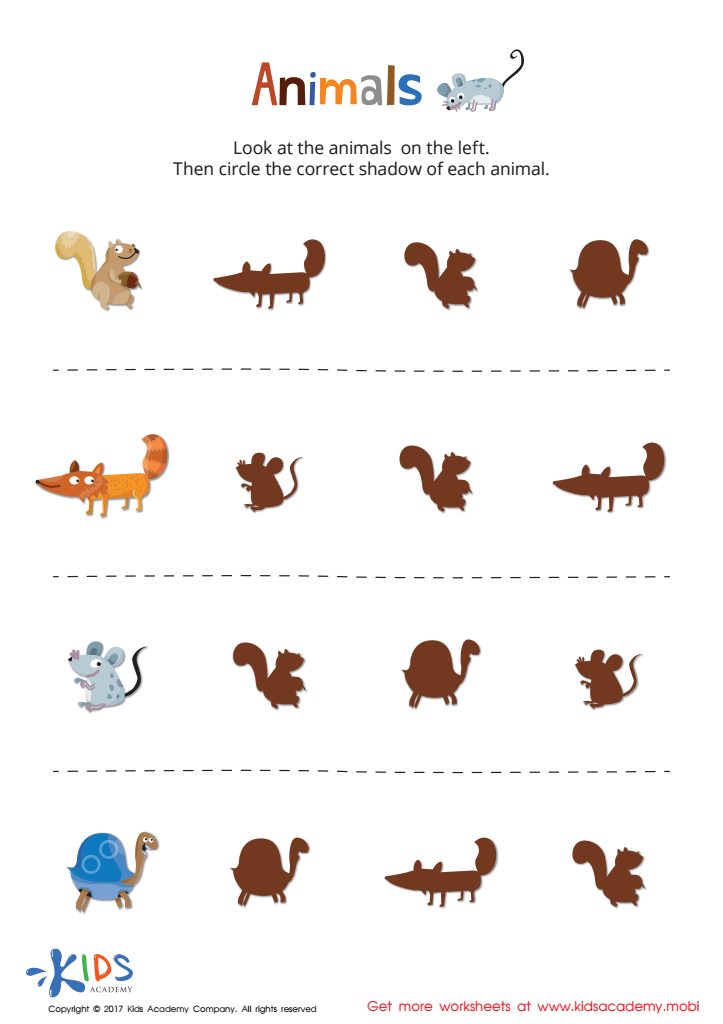
Animal Shadows Sorting Worksheet
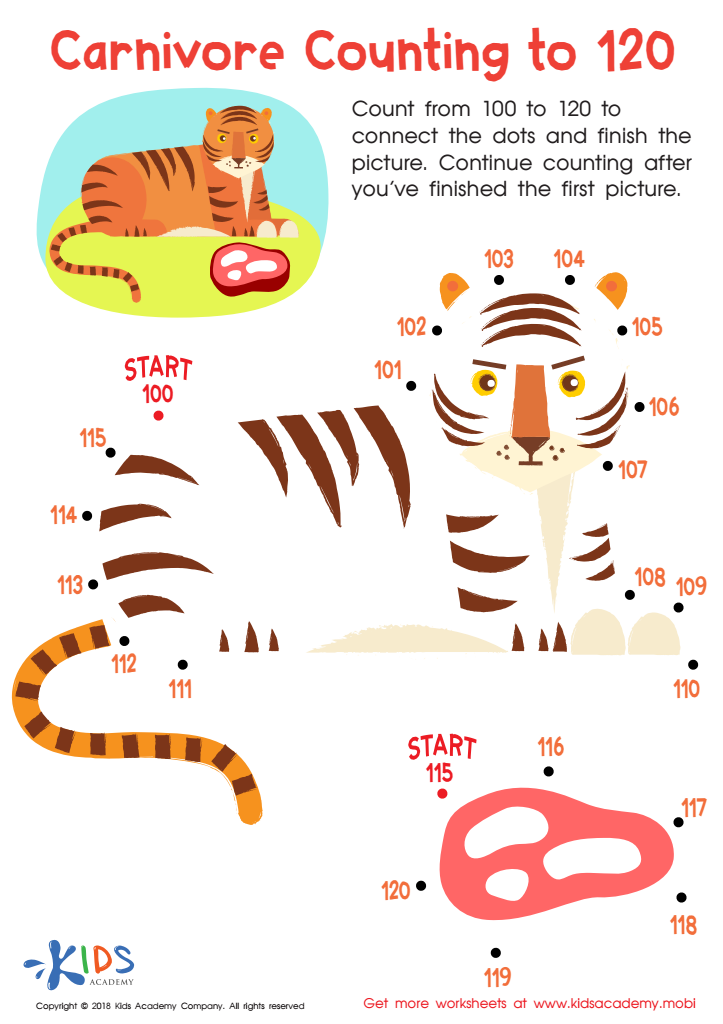
Carnivore Counting to 120 Worksheet
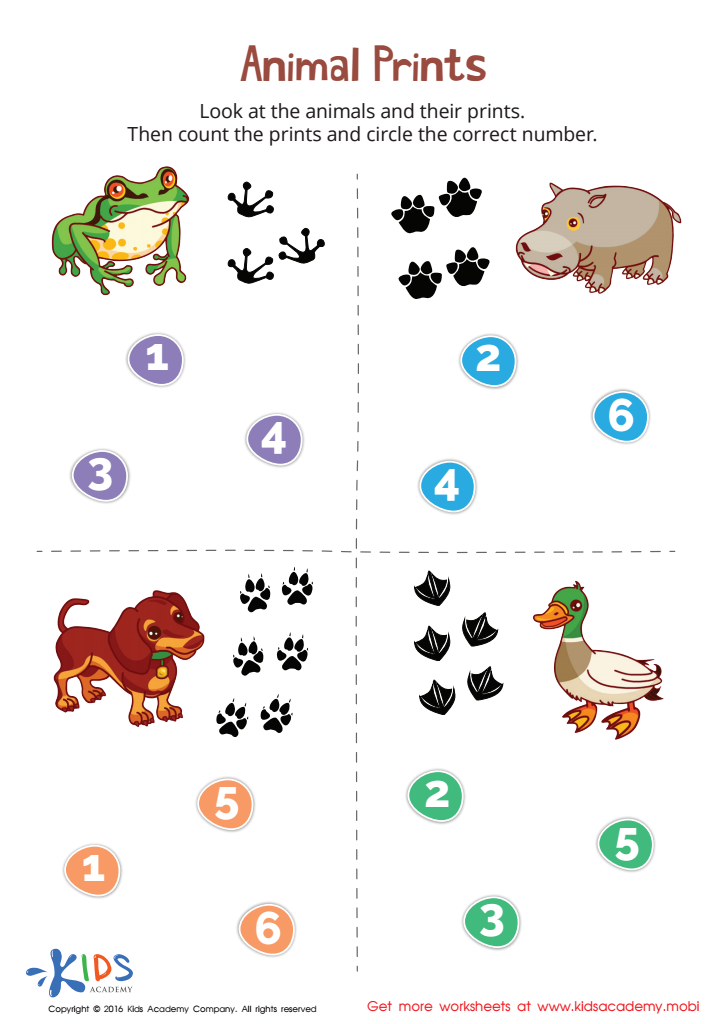
Animal Prints Match-Up Worksheet
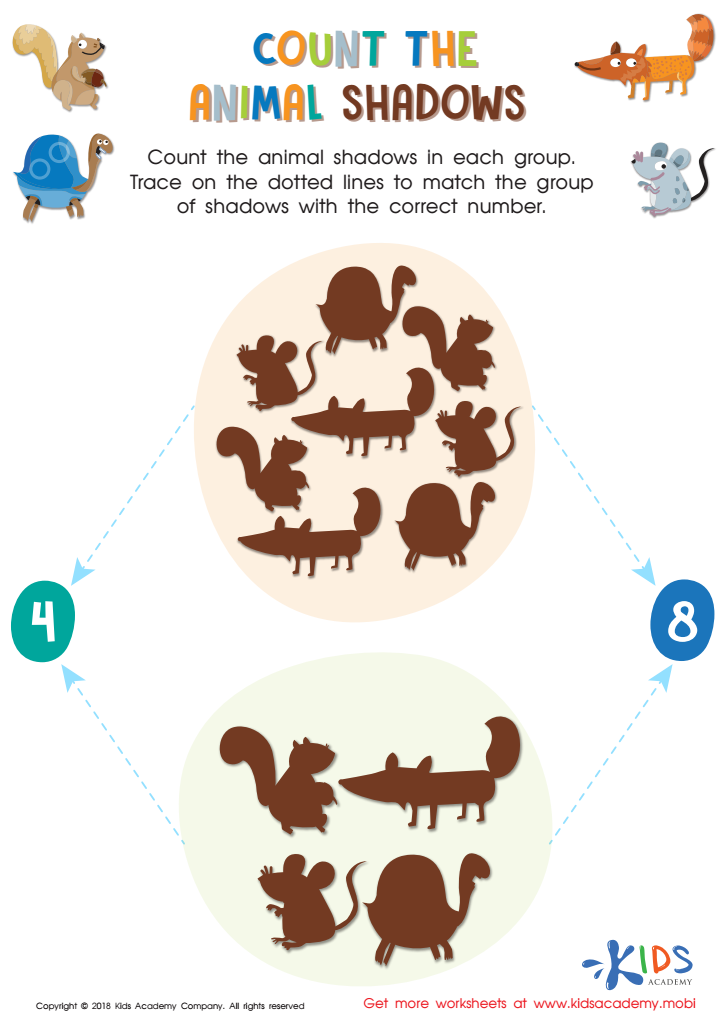
Count the Animal Shadows Worksheet








Parents and teachers play a crucial role in a child's early development, and encouraging activities like animal identification math for ages 3-7 can be incredibly beneficial. This dual-focus activity helps young learners develop both cognitive and emotional skills.
Firstly, identifying animals enhances a child's vocabulary and general knowledge about the world around them. As children learn to recognize and name different animals, they also learn about habitats, behaviors, and characteristics, fostering a sense of curiosity and respect for nature.
Secondly, integrating math with animal identification promotes numerical literacy. When children count the legs on a spider, group animals by categories, or compare the sizes of different species, they are practicing counting, sorting, and comparison—all essential math skills.
Moreover, this multidisciplinary approach keeps learning engaging and relatable. By combining a child's natural fascination with animals with math concepts, learning becomes less abstract and more interconnected. This can help lay a stronger foundation for more complex academic concepts later in life.
Emotionally, discussing animals—considering many children love animals—promotes empathy and caring. Understanding that animals, like humans, have needs and emotions can cultivate compassion and kindness in young hearts.
In essence, animal identification math isn't just a learning activity, but a holistic developmental tool that nurtures a child's mind and heart, setting them up for a lifetime of inquisitive and empathetic learning.








