Governance and Civics Worksheets for Ages 3-7 - Page 2
34 filtered results
-
From - To
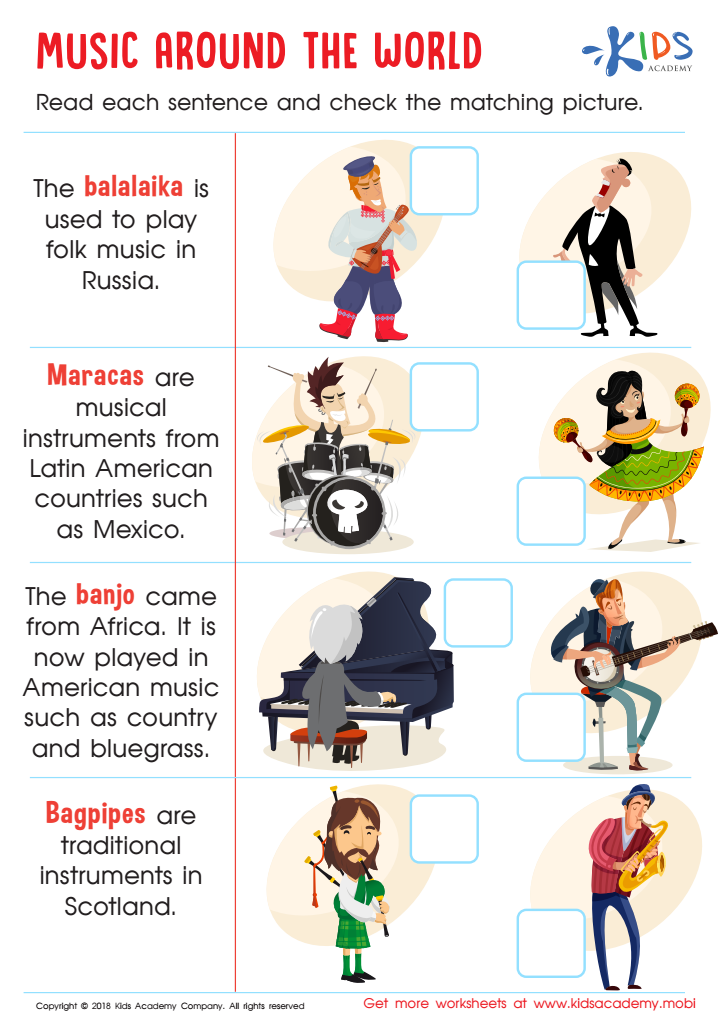
Music Around the World Worksheet
 Assign to My Students
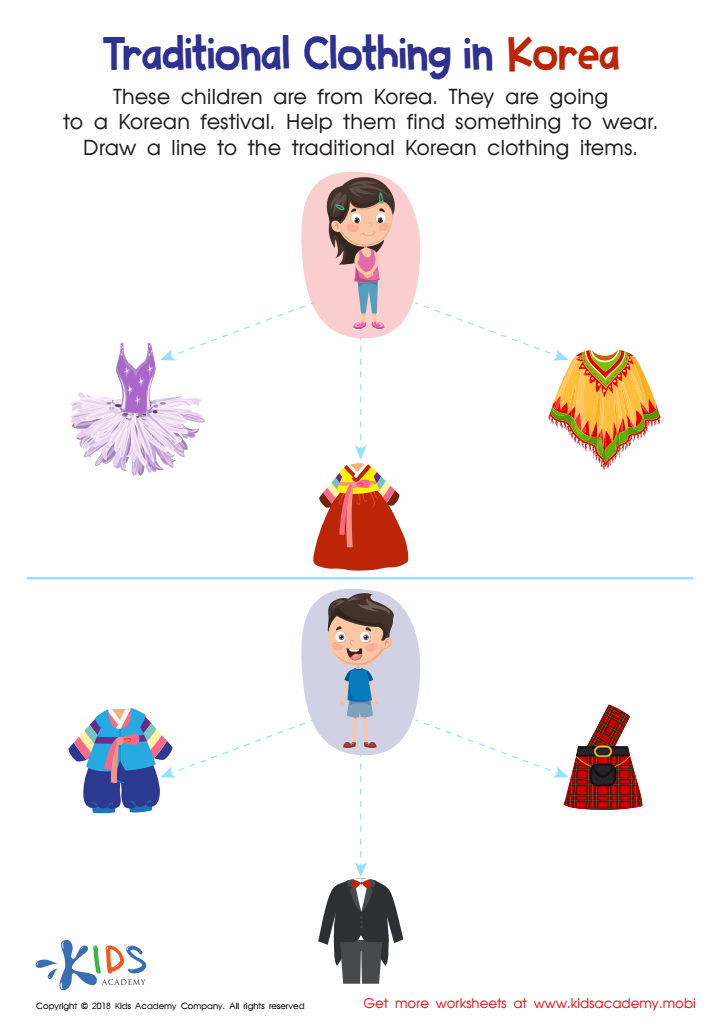
Traditional Clothing in Korea Worksheet
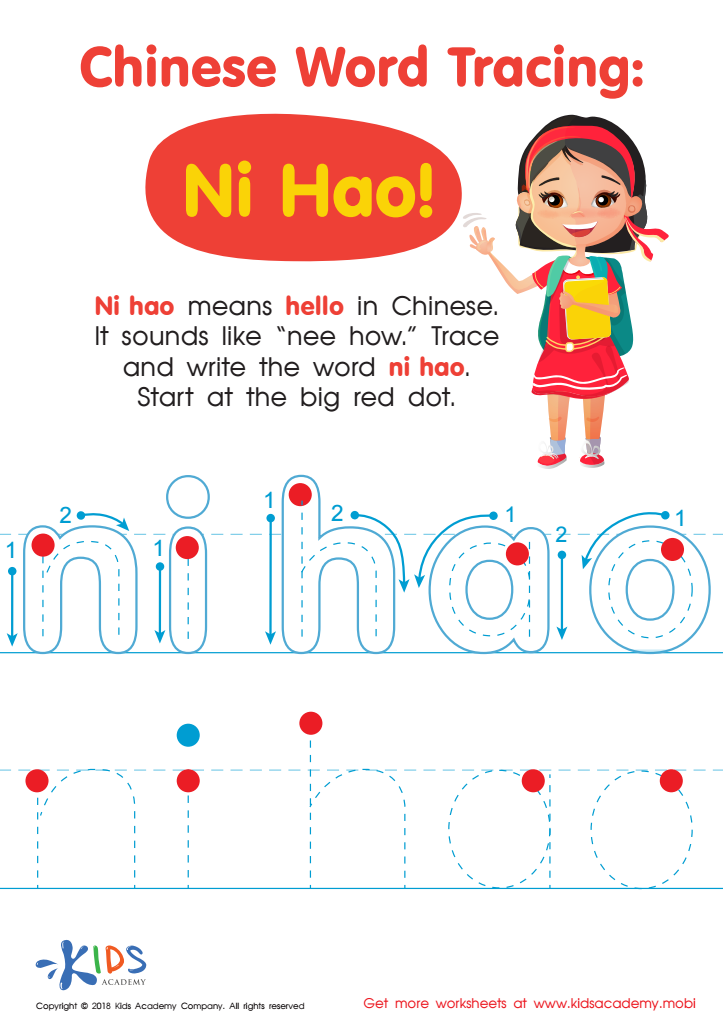
Chinese Word Tracing: Ni Hao Worksheet
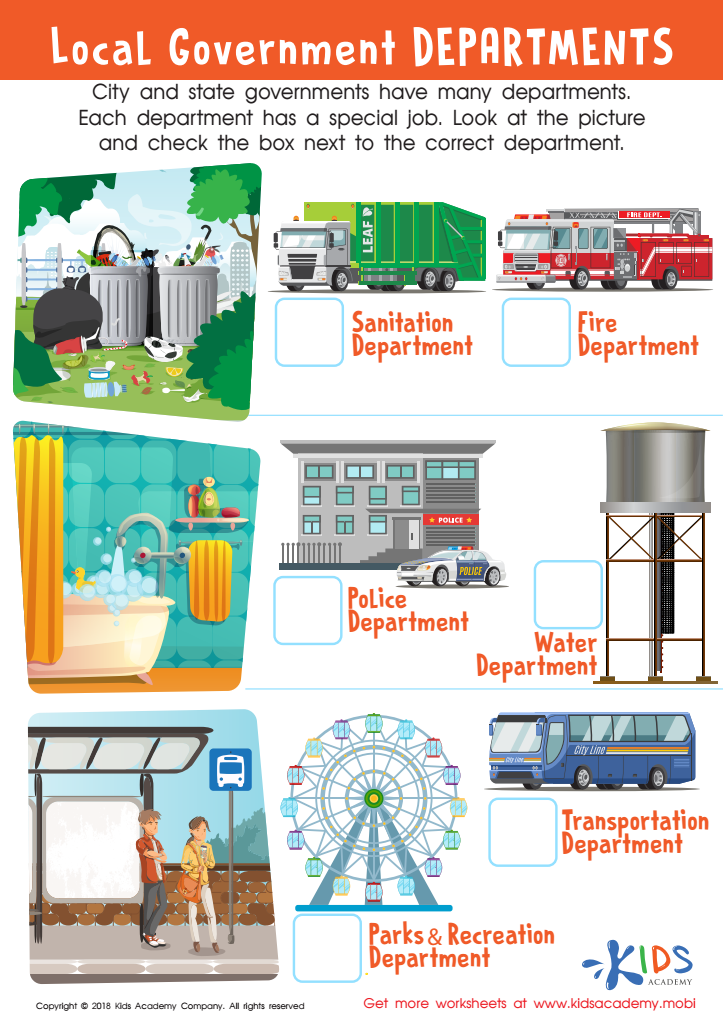
Local Government Departments Worksheet
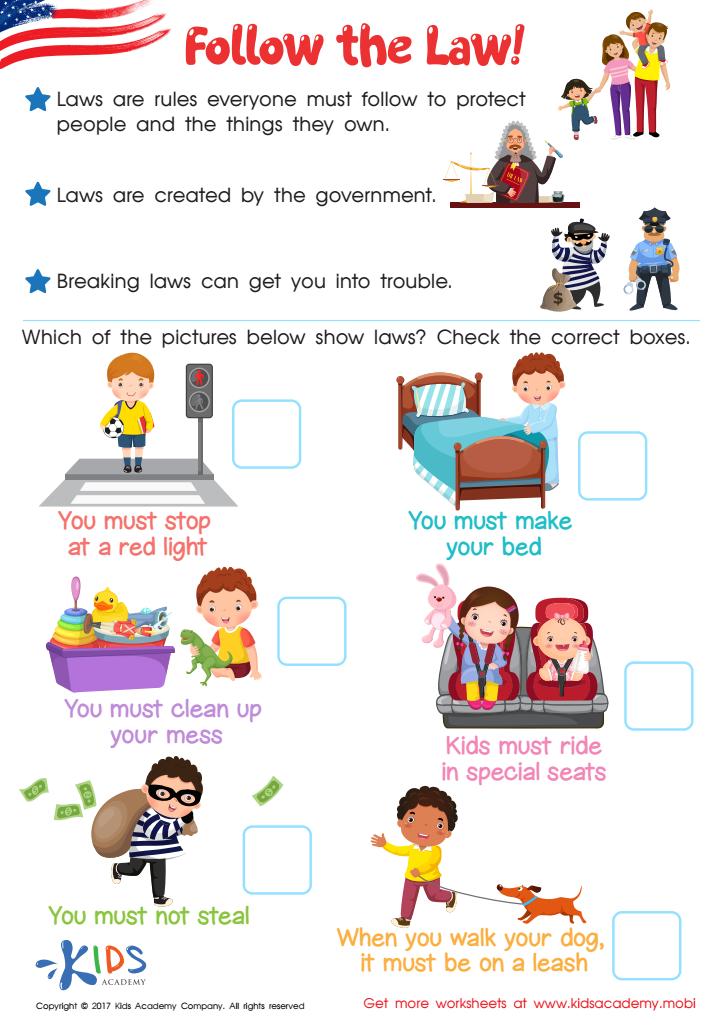
Follow the Law Worksheet
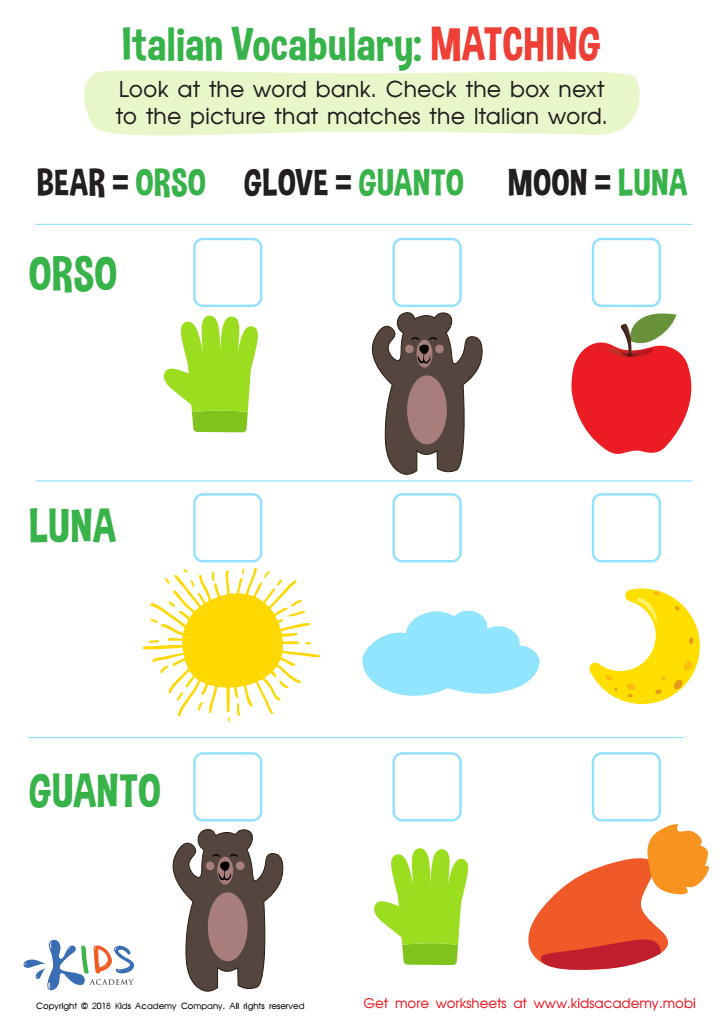
Italian Vocabulary Matching Worksheet
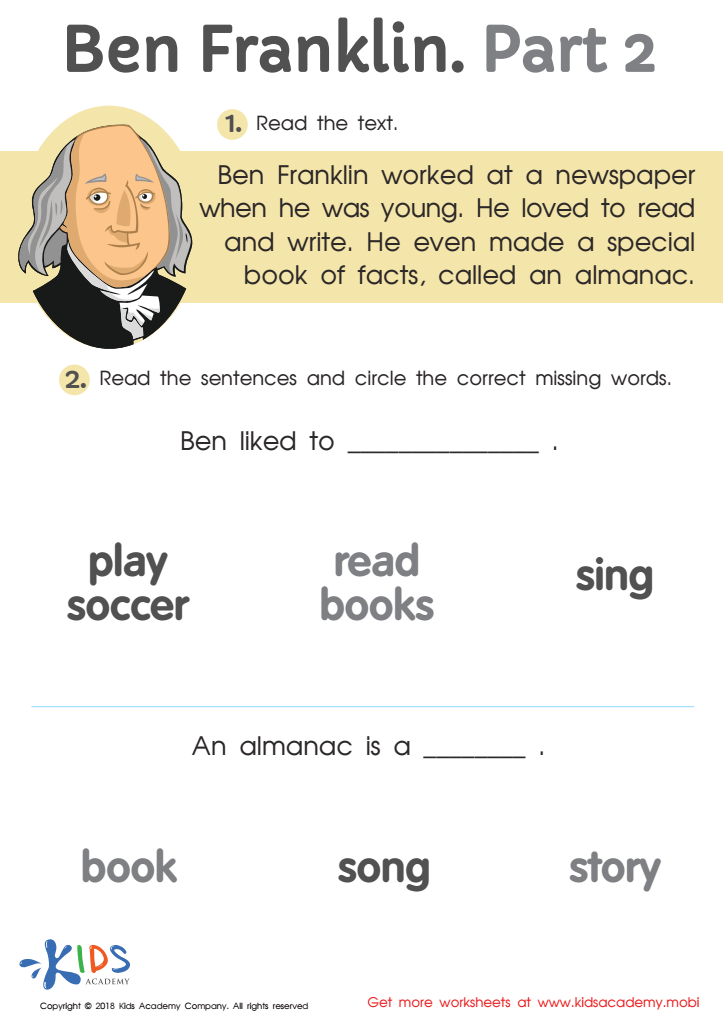
Ben Franklin Part 2 Worksheet
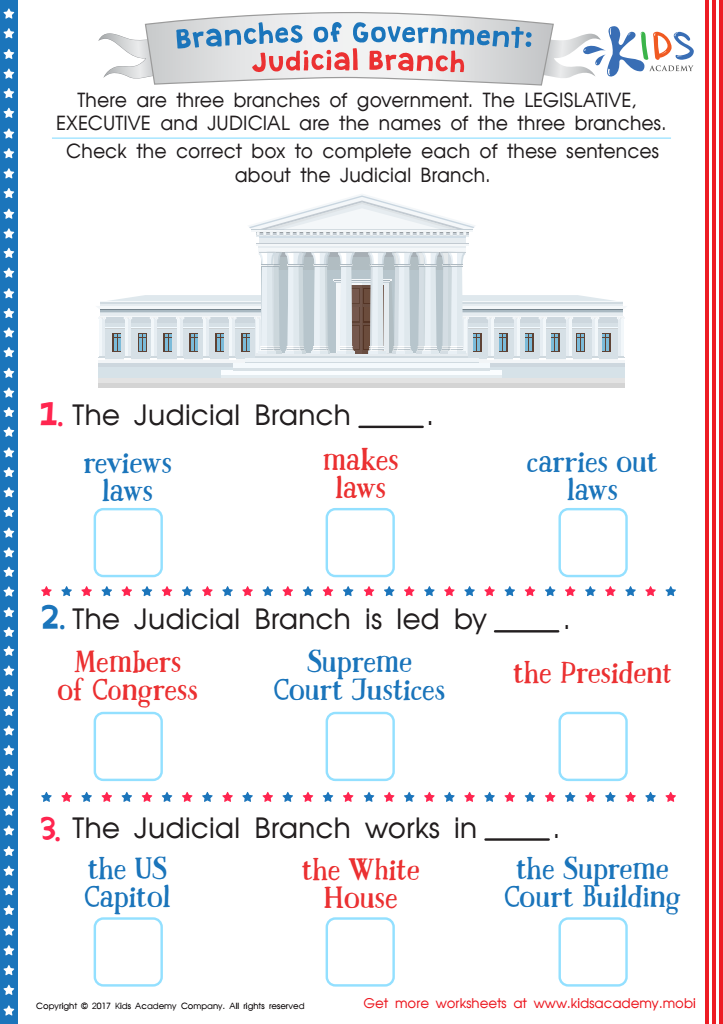
Braches of the Government: Judicial Branch Worksheet
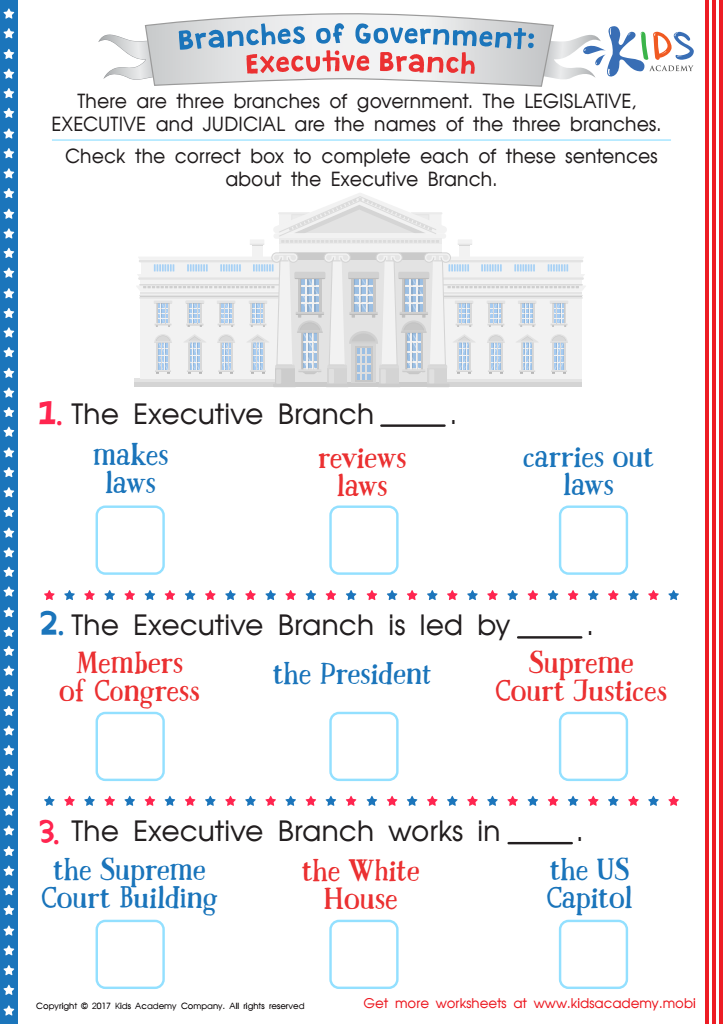
Branches of the Government: Executive Branch Printable
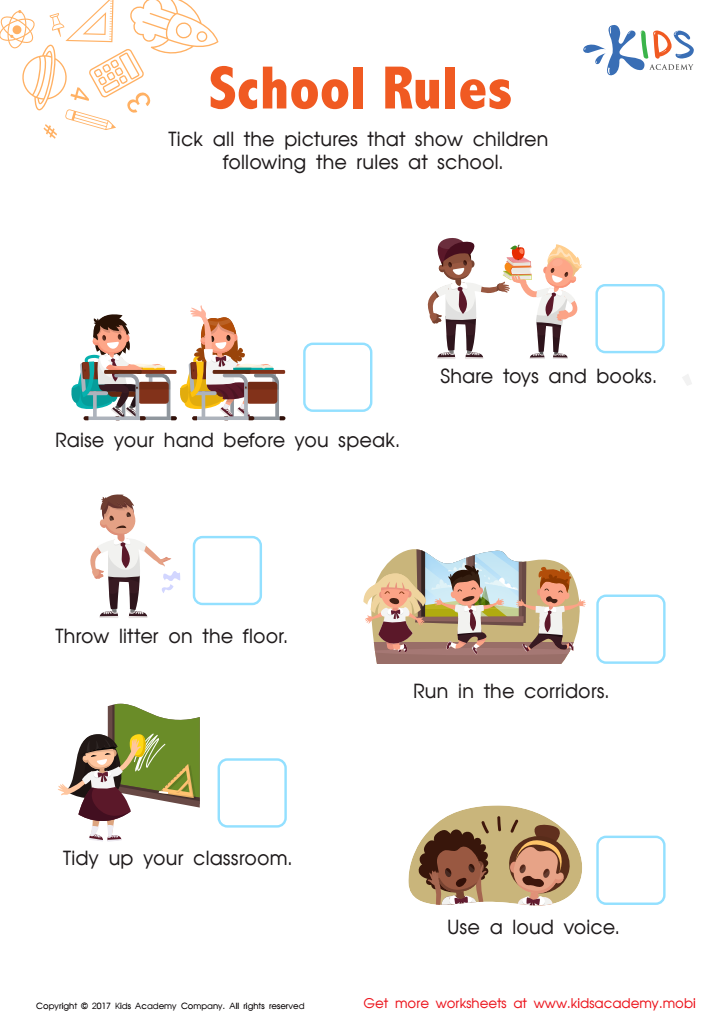
School Rules Worksheet


Teaching governance and civics to children aged 3-7 is essential for laying a strong foundation for their future as responsible citizens. At this young age, children are naturally curious about the world around them, eager to learn about social interactions, rules, and shared responsibilities. Introducing concepts of governance and civics fosters critical thinking, empathy, and a sense of community.
By engaging in early lessons about fairness, cooperation, and respect, children develop the ability to understand diverse perspectives, which is crucial for fostering inclusion and tolerance. Topics like taking turns, sharing, and understanding communal spaces help them grasp the importance of citizenship in their everyday lives.
Furthermore, parents and teachers shape children’s attitudes about authority and participation; they can model active engagement by encouraging kids to discuss their thoughts openly and make group decisions, nurturing their sense of agency. As they learn about simple democratic principles, children become aware of their role in larger societal contexts.
Ultimately, instilling these values early helps create an informed, empathetic generation ready to navigate and positively contribute to society, making governance and civics not just relevant, but essential in early childhood education.








