Sea creatures identification Worksheets for Ages 3-9
3 filtered results
-
From - To
Introduce your child to the wonders of marine life with our Sea Creatures Identification Worksheets designed for ages 3-9. These engaging and educational printables help young learners identify a variety of sea creatures, enhancing their recognition skills and curiosity about the ocean. With vibrant images and age-appropriate challenges, these worksheets cater to different learning levels. Perfect for at-home learning or classroom activities, they encourage kids to explore, discover, and develop a love for sea life. Make learning fun and interactive with these captivating and informative worksheets! Download now to dive into the underwater world.
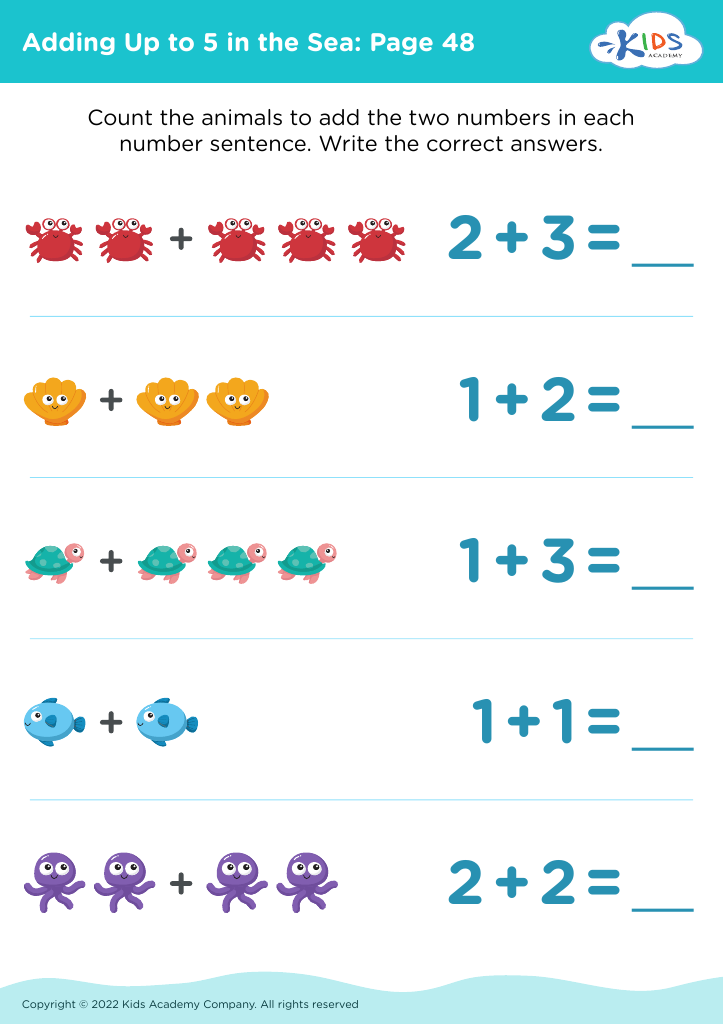
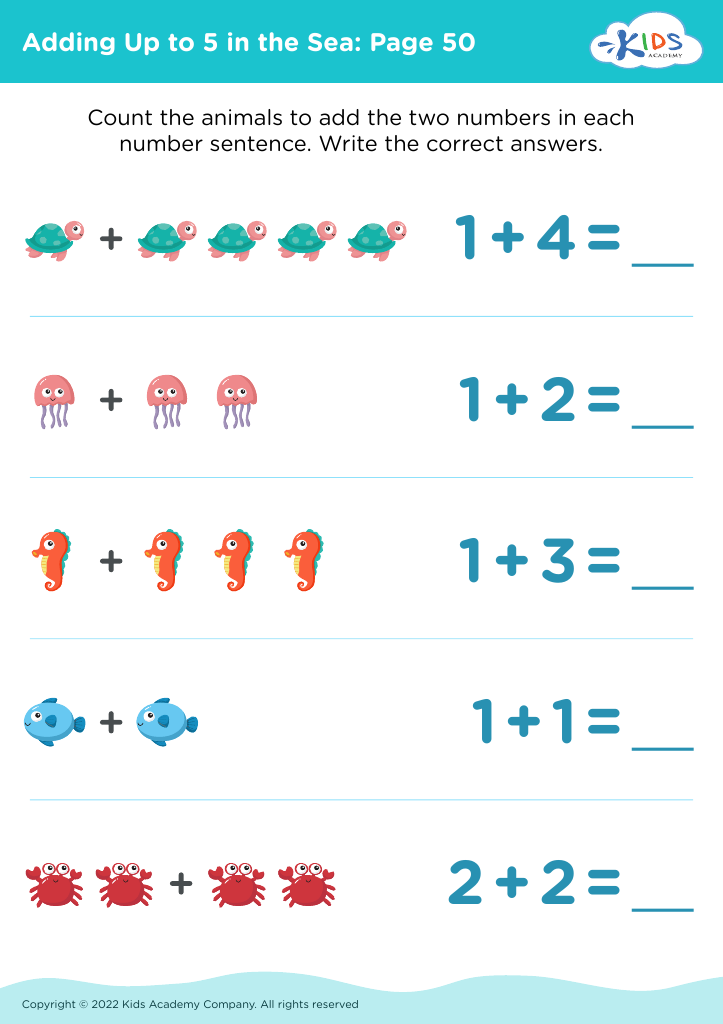
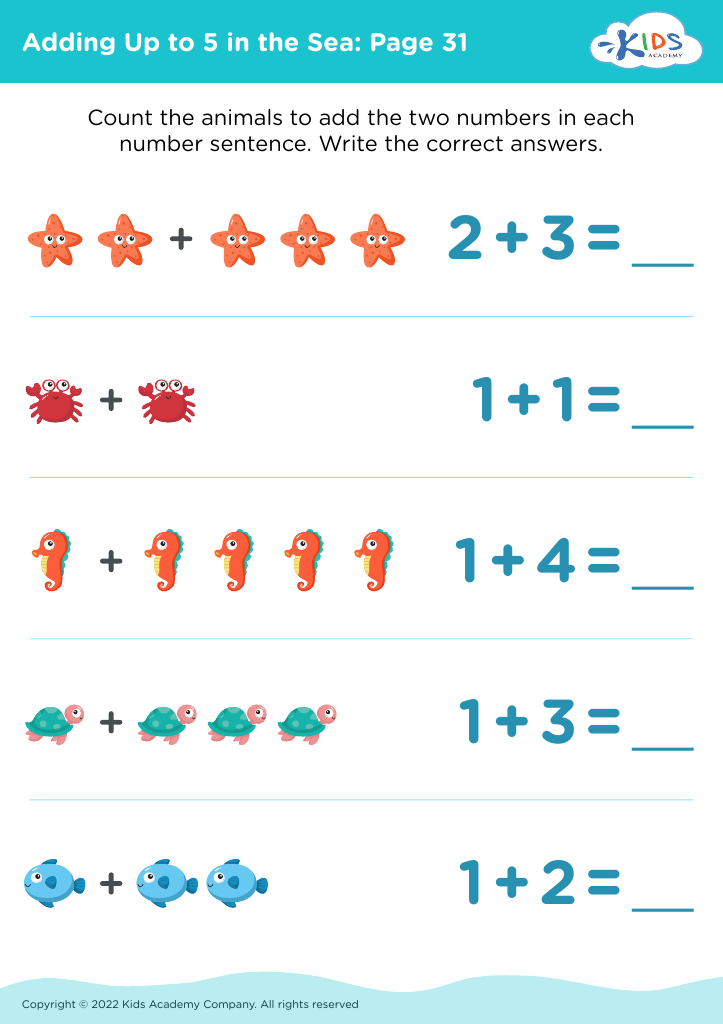




.jpg)


Introducing children between the ages of 3 to 9 to sea creature identification holds several significant benefits. At this formative stage, children are naturally curious and eager to learn about their environment. Learning about various sea creatures, such as dolphins, jellyfish, and crabs, nurtures this curiosity and fosters a love for nature and the ocean. These discussions can expand their vocabulary and comprehension skills, providing a dynamic way to learn new words and concepts outside the traditional classroom.
From a scientific perspective, recognizing and naming sea creatures builds foundational knowledge in biology and ecology. This can spark an early interest in the sciences, inspiring future marine biologists, environmentalists, or simply informed citizens who care about ocean conservation.
Moreover, understanding sea creatures and their ecosystems helps instill a sense of responsibility and empathy towards living organisms. As children learn where these creatures live, what they eat, and how they contribute to ocean health, they begin to understand the broader principles of interdependence and conservation. This can lead to more environmentally conscious behavior as they grow older.
Parents and teachers can use sea creature identification as an engaging educational tool that interlinks language development, scientific education, and environmental stewardship, fostering well-rounded growth in young minds.








