Sea creatures identification Worksheets for Ages 3-7
3 filtered results
-
From - To
Discover our engaging Sea Creatures Identification Worksheets, designed specifically for children aged 3-7! These fun and educational resources introduce young learners to the fascinating underwater world, helping them identify various sea animals through vibrant illustrations. Perfect for enhancing vocabulary and observational skills, each worksheet includes activities tailored to boost comprehension and recognition of popular sea creatures like sharks, starfish, and jellyfish. Ideal for classroom use or at-home learning, our worksheets encourage creativity and spark curiosity about marine life. Dive into interactive learning and make exploration of oceanic wonders an exciting experience for your little ones today!
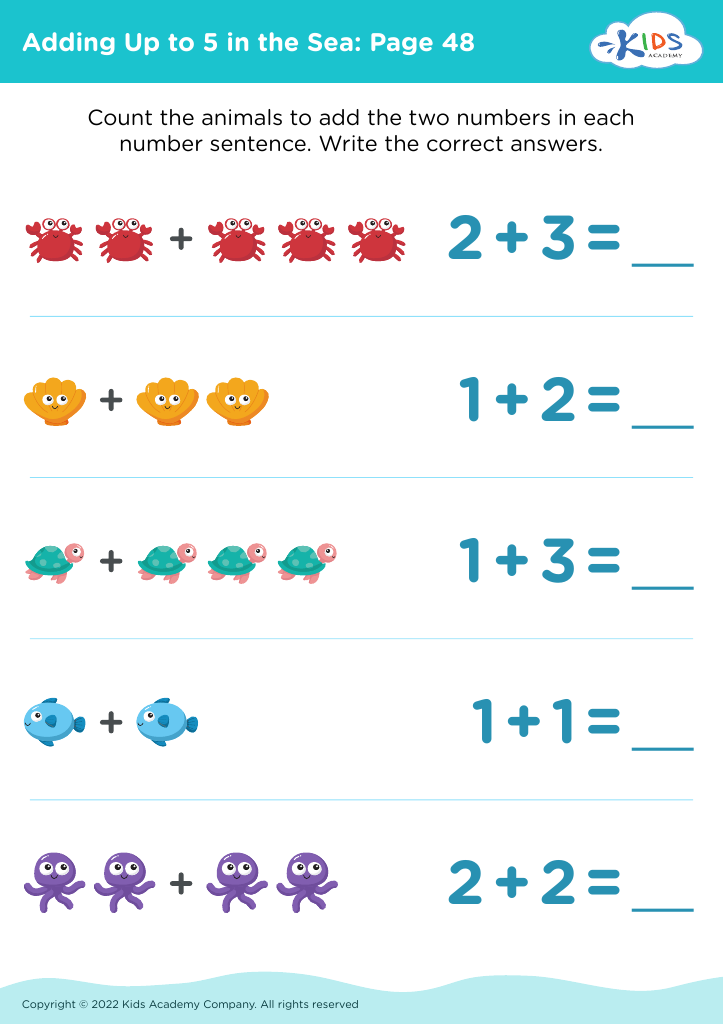
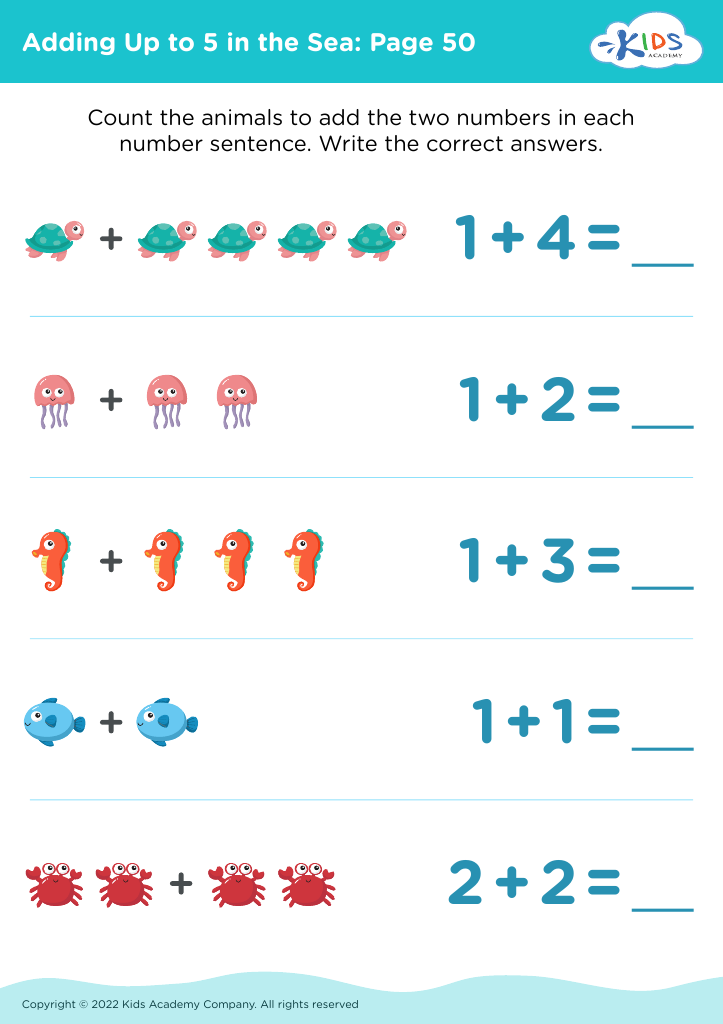
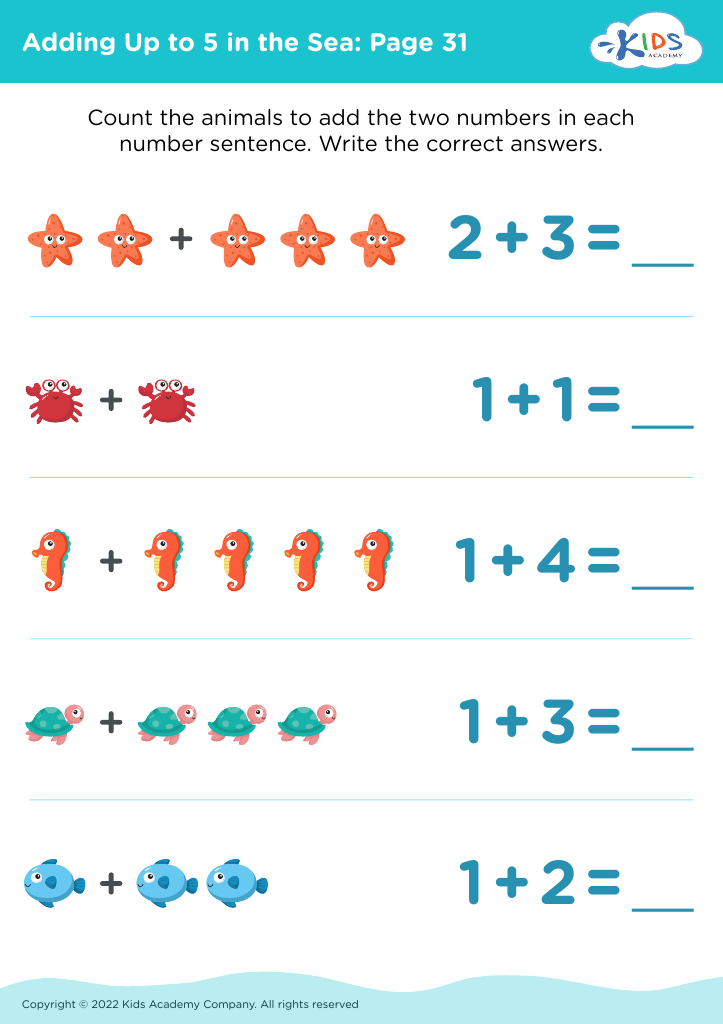







Caring about sea creature identification for ages 3-7 is vital for several reasons. Firstly, introducing young children to marine life fosters a sense of curiosity and wonder about the natural world. This age is crucial for cognitive development, and learning about sea creatures enriches their vocabulary and comprehension skills.
Secondly, understanding various sea creatures instills a sense of environmental awareness. Children who learn about marine biodiversity early on are more likely to develop a lifelong respect for the ocean and its inhabitants. This education can lead to more responsible behaviors toward conservation and sustainability as they grow older.
Moreover, identifying sea creatures enhances observational and critical-thinking skills. By recognizing different species, children practice attention to detail and memory retention. Creative activities centered around marine life, such as arts and crafts or storytelling, can further engage their imagination.
Lastly, sea creature identification can strengthen parent-child or teacher-student connections, as these explorations often involve cooperative learning and shared discoveries. Ultimately, nurturing an appreciation for the rich tapestry of marine life can inspire future generations to protect our oceans and understand their vital role in global ecosystems.








