Sea creatures identification Worksheets for Ages 3-6
3 filtered results
-
From - To
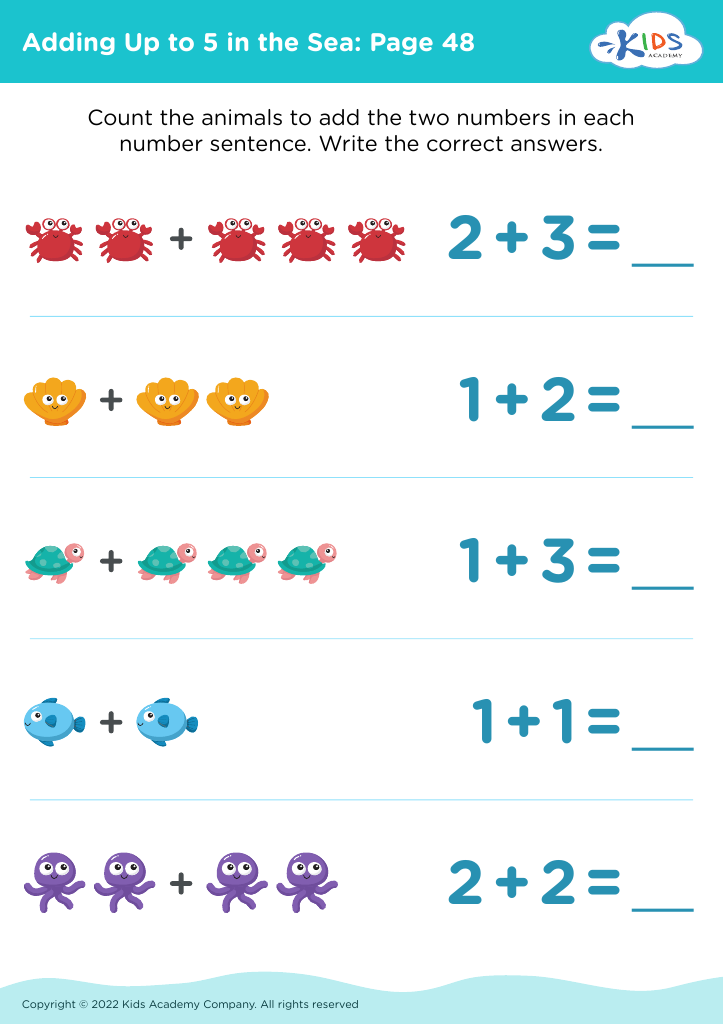
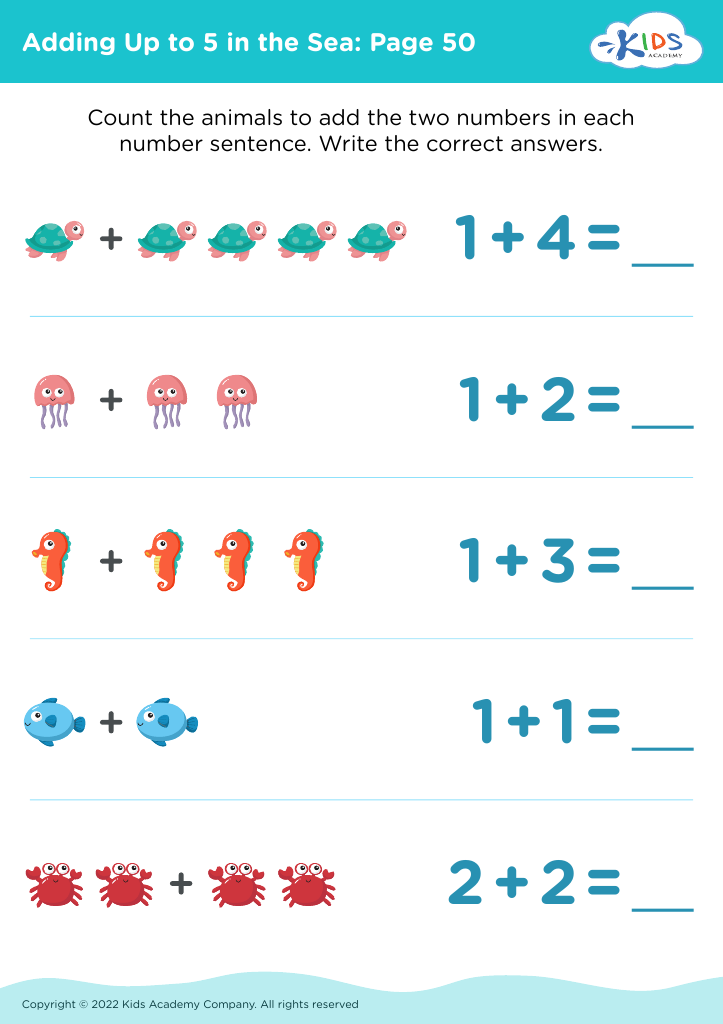
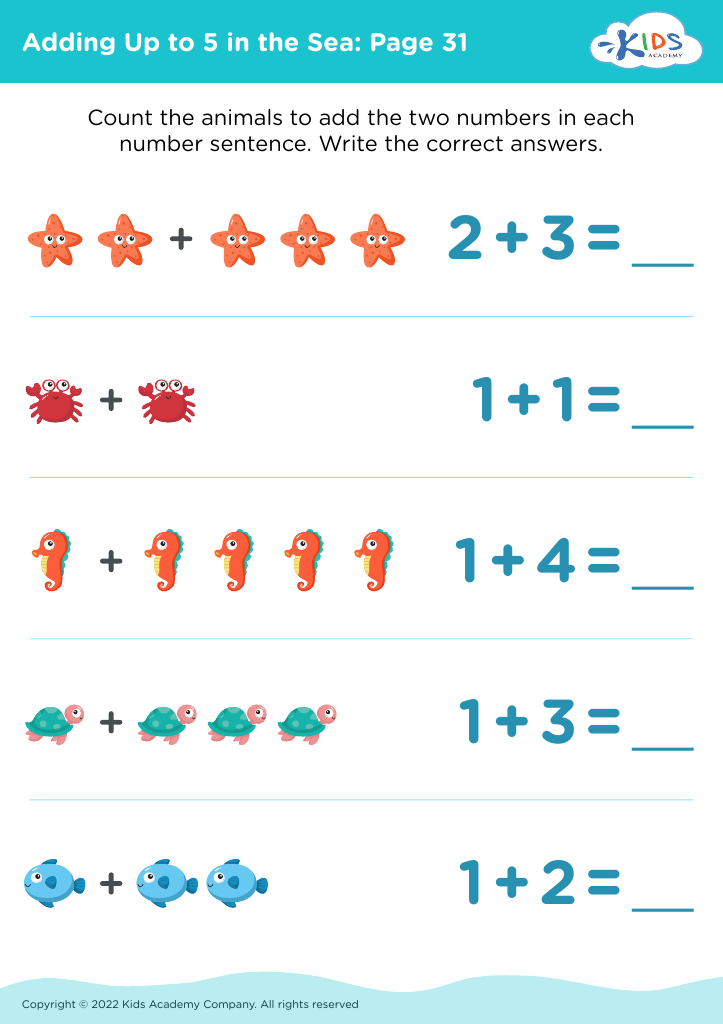
Explore the fascinating world of sea creatures with our Sea Creatures Identification Worksheets designed for ages 3-6! These engaging, interactive worksheets are perfect for young learners eager to discover marine life. Each worksheet features vibrant images and simple activities that encourage children to identify and learn about various sea creatures, from friendly fish to majestic whales. These resources promote early literacy and observational skills while making learning fun and exciting. Ideal for use at home or in the classroom, our worksheets support foundational learning through colorful visuals and enjoyable activities that spark curiosity about the ocean and its inhabitants!





Parents and teachers should care about sea creature identification for children aged 3-6 because it fosters early curiosity about the natural world and promotes critical thinking skills. During these formative years, children are highly impressionable and open to exploration. Introducing sea creatures through identification helps instill a sense of wonder and encourages a love for science and nature.
Additionally, learning about marine life can enhance vocabulary development and communication skills, as children engage in discussions about various species, their habitats, and behaviors. This topic can also lead to interactive activities, such as crafts or educational games, making learning dynamic and fun.
Understanding sea creatures also provides an opportunity to teach important concepts about ecology and environmental conservation. Children learn the significance of protecting marine ecosystems, fostering a sense of responsibility towards the planet at a young age.
Moreover, this knowledge can support social and emotional growth as children share their discoveries, collaborate with peers, and build self-confidence. By cultivating an interest in sea creature identification, parents and teachers help shape well-rounded individuals who appreciate biodiversity and develop key skills for lifelong learning.








