Sea creatures identification Worksheets for Ages 3-4
3 filtered results
-
From - To
Dive into the deep blue sea with our engaging and educational Sea Creatures Identification Worksheets designed for ages 3-4! These beautifully illustrated worksheets make learning a splash, helping young children identify various sea animals while boosting their cognitive and fine motor skills. Perfect for at-home or classroom use, parents and educators will find these resources invaluable for introducing little ones to the wonders of marine life. Each worksheet encourages creativity, enhances vocabulary, and fosters a love for oceanography in preschoolers. Make waves in their early education journey with Kids Academy’s fun-filled and interactive sea-themed activities!
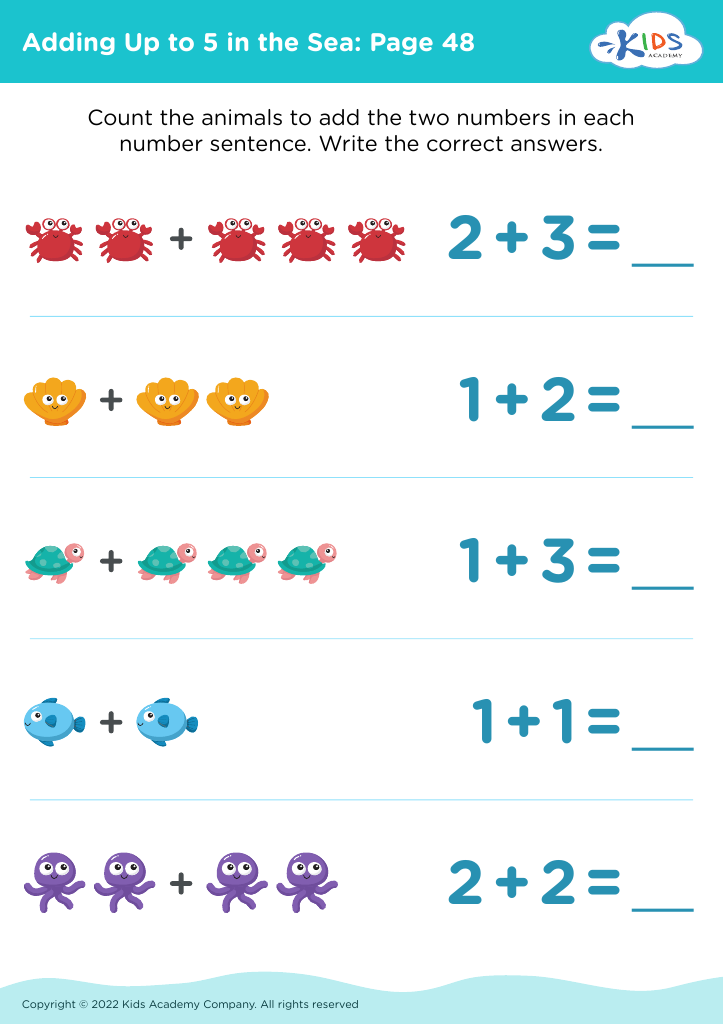
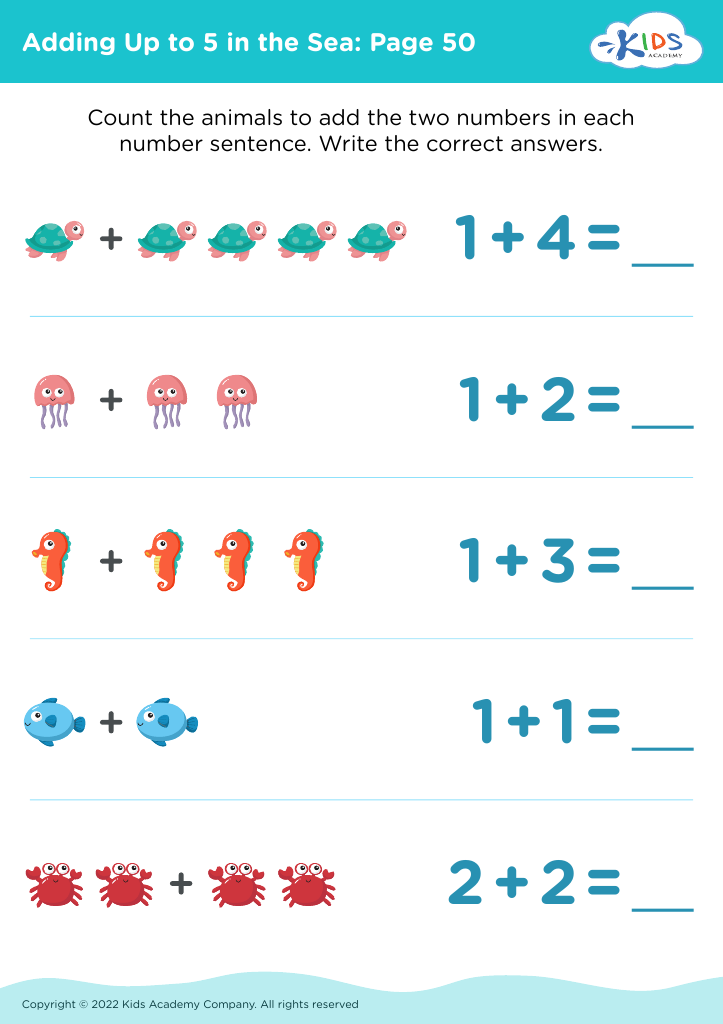
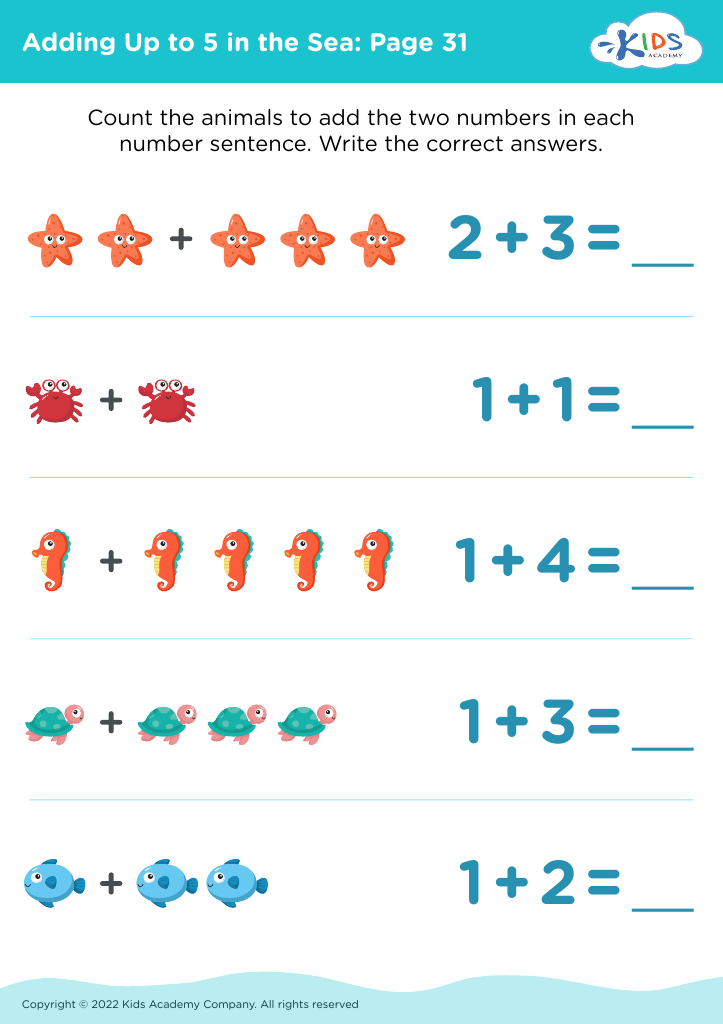







Parents and teachers should care about sea creatures' identification for ages 3-4 because it builds foundational knowledge and sparks curiosity about the natural world. At this developmental stage, children are naturally curious and eager to learn. Teaching them about sea creatures fosters an early appreciation for marine life and the environment, laying the groundwork for responsible eco-conscious attitudes in the future.
Engaging with sea creatures helps children develop cognitive and language skills. Learning to identify different species requires them to observe, compare, and categorize, which enhances critical thinking. Discussing these creatures' characteristics and habitats also expands their vocabulary and comprehension.
Moreover, identifying sea creatures can boost sensory and motor skills. Activities such as crafting sea creature models or playing identification games encourage hands-on learning and fine motor development. Social skills also improve through group activities and discussions about marine life.
Including sea creatures in early education makes learning more dynamic and entertaining. Stories, songs, and interactive activities around marine life captivate young minds, promoting engaged and enthusiastic learners. Parents and teachers, therefore, play a vital role in nurturing a child’s lifelong love for learning and nature by integrating sea creatures' identification in early education.








