Sea creatures identification Worksheets for Ages 4-5
3 filtered results
-
From - To
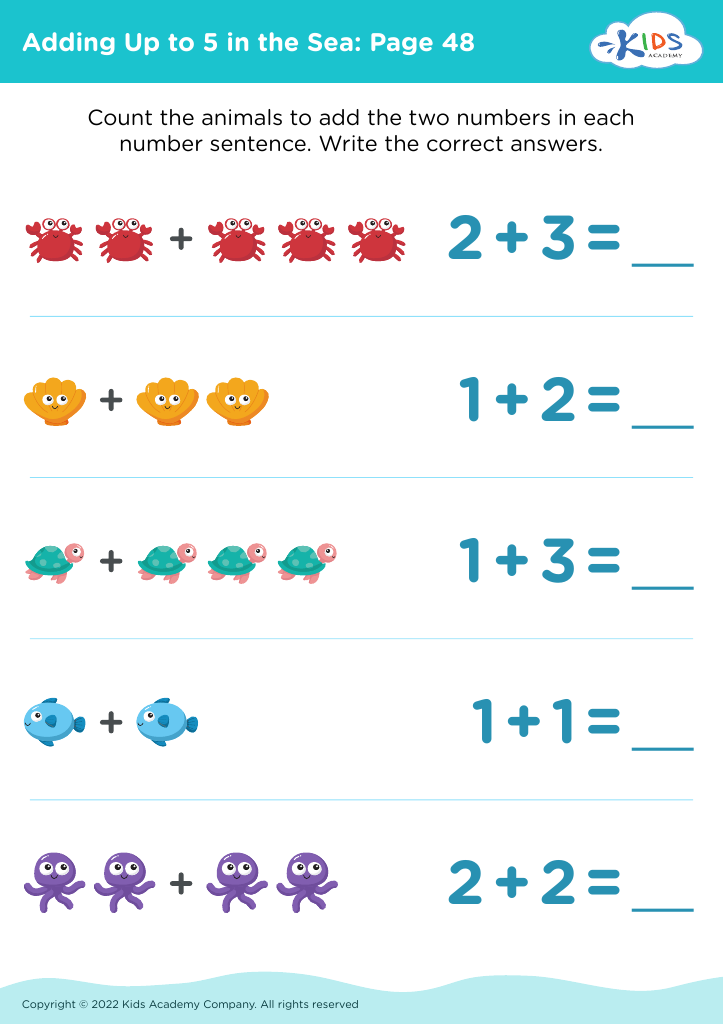
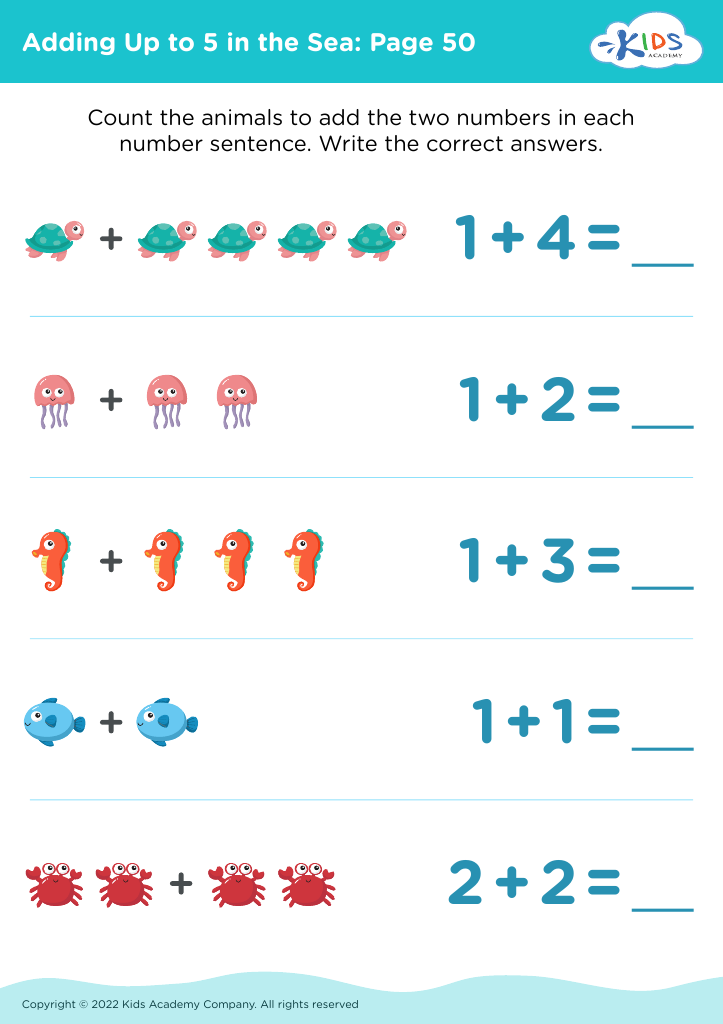
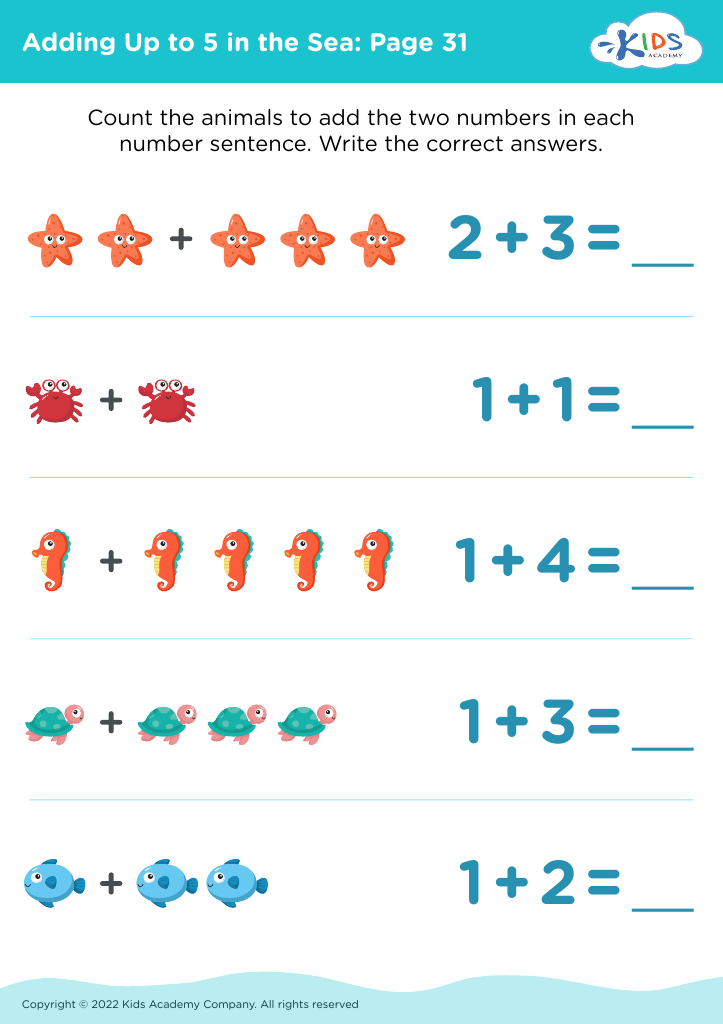
Discover the wonder of the ocean with our Sea Creatures Identification Worksheets tailored for children ages 4-5. These engaging and educational printables help foster early learning by encouraging kids to recognize and name various sea animals. Featuring vibrant illustrations, the worksheets promote visual learning and enhance vocabulary while bringing the magic of marine life into your classroom or home. Perfect for interactive learning, these worksheets inspire curiosity about the underwater world, streamline identification skills, and boost cognitive development. Dive into fun activities that facilitate exploration and joy in learning for preschoolers, transforming them into little ocean enthusiasts!






.jpg)
Supporting the identification of sea creatures for children aged 4-5 is crucial for several reasons. Firstly, it fosters a love for nature and encourages curiosity about the world around them. When young learners engage with sea creatures, they develop observational skills and begin to understand the diversity of marine life. This early exposure can cultivate environmental stewardship, nurturing a sense of responsibility toward ocean conservation.
Additionally, identifying sea creatures can enhance language development as children learn to label and describe different species. Engaging in discussions about characteristics, habitats, and behaviors helps to expand their vocabulary and grasp of basic science concepts. It also stimulates critical thinking and categorization skills as they differentiate between various animals.
Furthermore, exploring marine life can create a foundation for interdisciplinary learning. Teachers and parents can connect sea creatures to art, storytelling, and geography, making learning interactive and fun through crafts, games, and field trips to aquariums.
Encouraging identification of sea creatures early on nurtures a generation that is informed, curious, and aware of their environment—key traits needed for future leaders who understand and appreciate the importance of our oceans and their ecosystems.








