Sea creatures identification Preschool Worksheets
3 filtered results
-
From - To
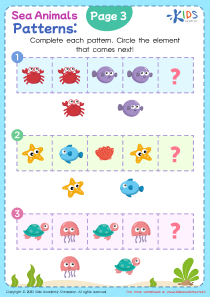
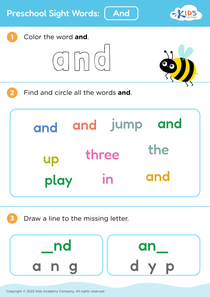
Unlock your child's curiosity with our engaging Sea Creatures Identification Preschool Worksheets! Designed for budding marine biologists, these printable worksheets help preschoolers recognize and name various sea creatures, from playful dolphins to enigmatic starfish. Each activity fosters observational skills, critical thinking, and fine motor development through coloring, matching, and fun facts. Perfect for hands-on learning at home or in the classroom, our sea creatures identification sheets provide a fun, educational adventure beneath the waves. Dive into a world of aquatic wonder and ignite your little one's love for marine life today!
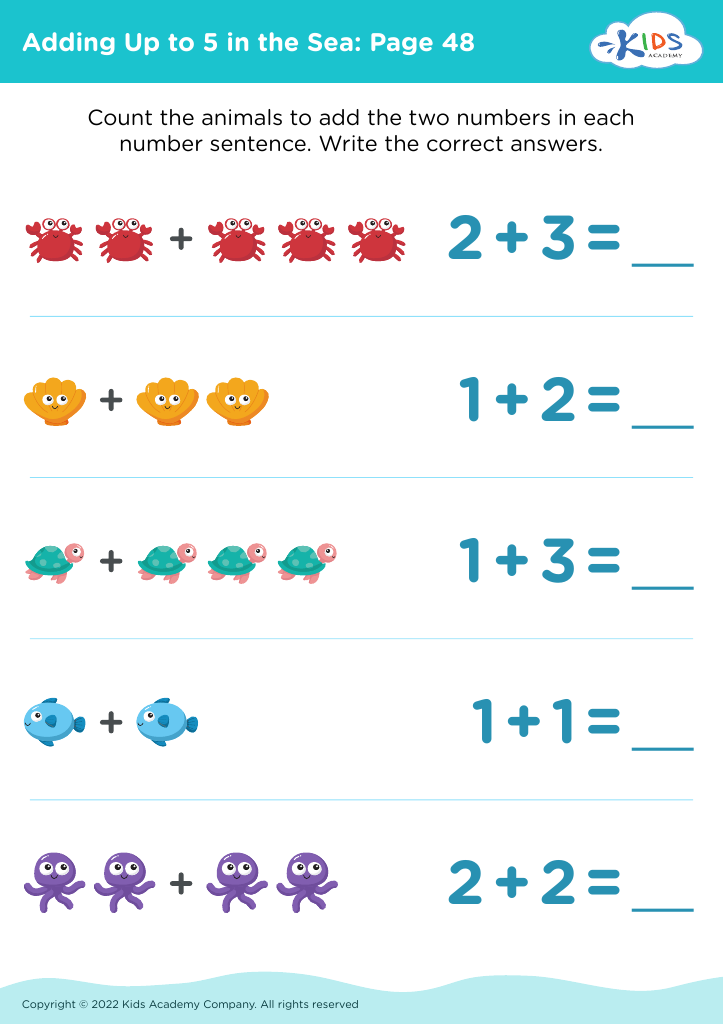
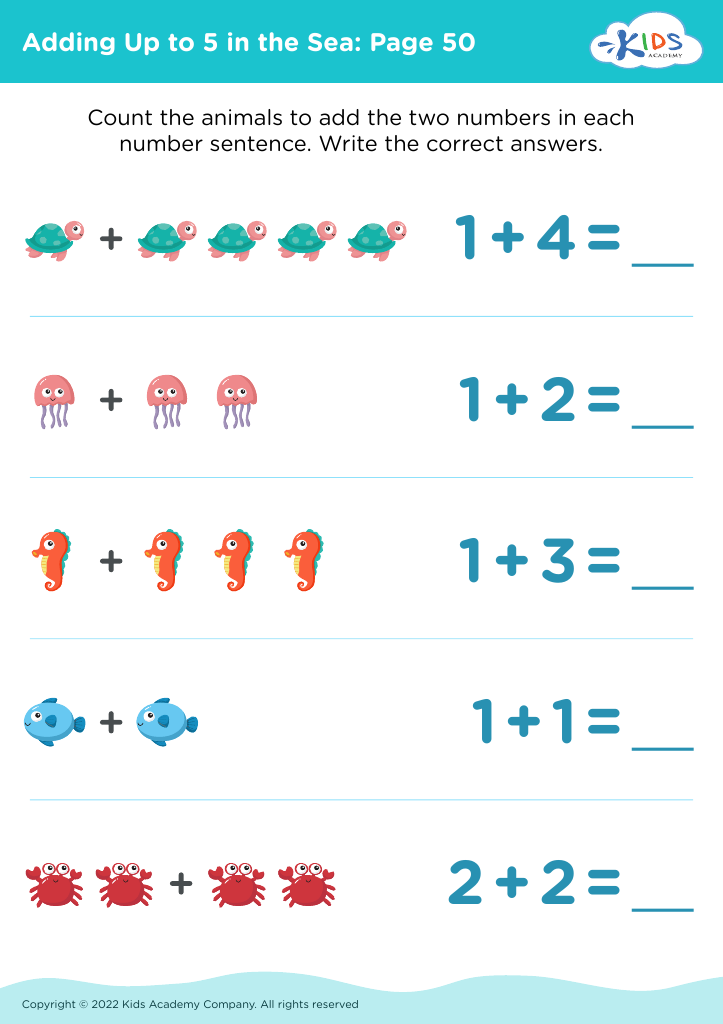
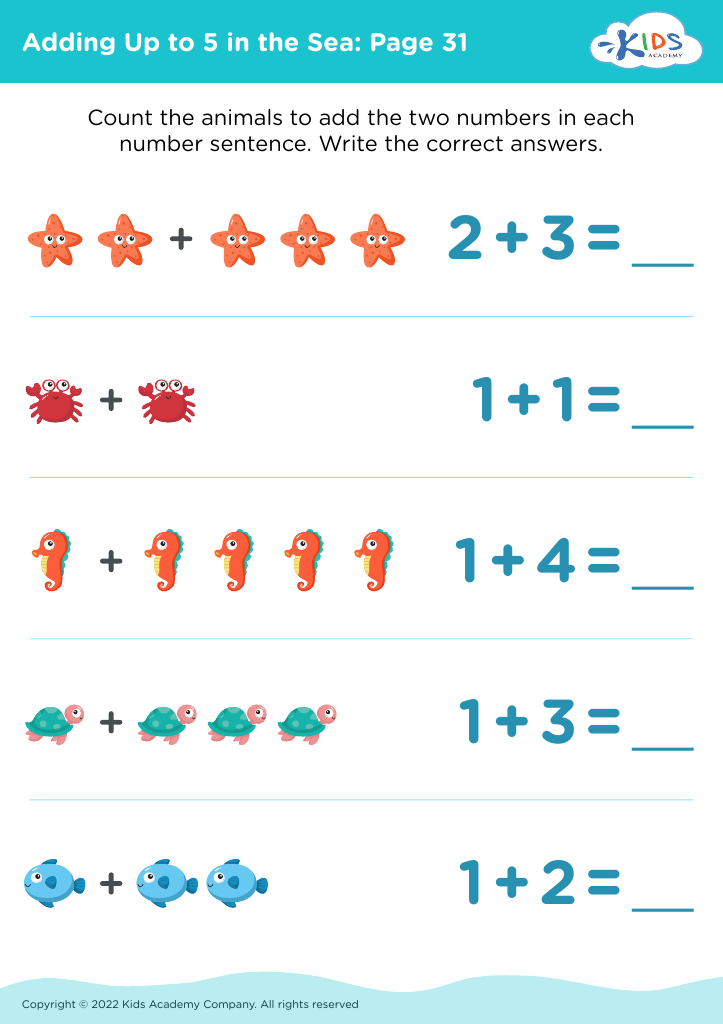








Parents and teachers should care about sea creature identification in preschool because it enriches young children's learning experiences and fosters a healthy curiosity about the natural world. At this developmental stage, children are incredibly receptive to new information and learning about sea creatures spark an interest in marine biology and nature conservation. Understanding different sea creatures helps children build vocabulary, improve memory, and develop categorization skills, which are foundational for cognitive development.
Moreover, identifying sea creatures cultivates a sense of wonder and respect for life beneath the oceans. By teaching preschoolers about diverse marine species, parents and teachers can instill values of environmental stewardship and conservation from an early age. This can lead to a generation that is more aware of and dedicated to protecting our planet.
Interactive activities, such as games, stories, and hands-on projects about sea life, also enhance social skills and teamwork, as children often engage in group learning. Additionally, integrating sea creature identification into the curriculum can make learning more enjoyable and relevant, encouraging a lifelong love of science and exploration.
Overall, early education about sea creatures not only supports various aspects of child development but also encourages a responsible attitude toward our environment, helping to raise informed and empathetic individuals.