Sea creatures identification Worksheets for 5-Year-Olds
3 filtered results
-
From - To
Welcome to our Sea Creatures Identification Worksheets for 5-Year-Olds! Designed to engage and educate young learners, these colorful and interactive worksheets help children discover the fascinating world of marine life. Each worksheet features delightful illustrations of various sea creatures, encouraging kids to identify and match them with their names. Fun activities, such as coloring and simple quizzes, promote critical thinking and enhance vocabulary, making learning about the ocean an exciting adventure. Perfect for home or classroom use, these worksheets foster a love for nature and help build foundational skills. Dive into the fun of sea creature exploration today!
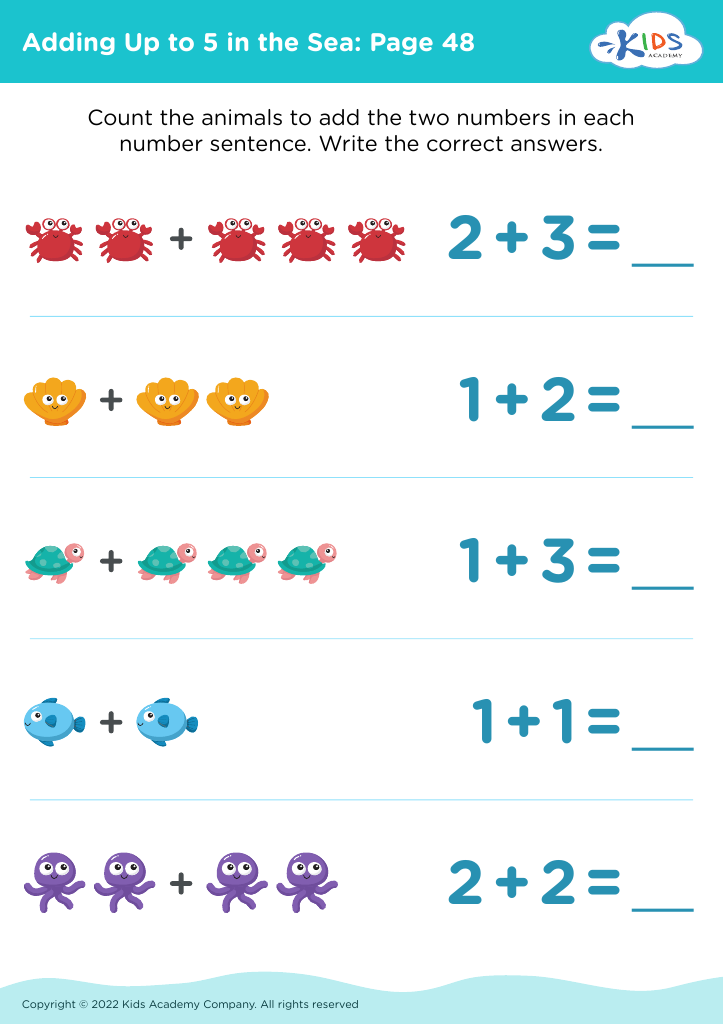
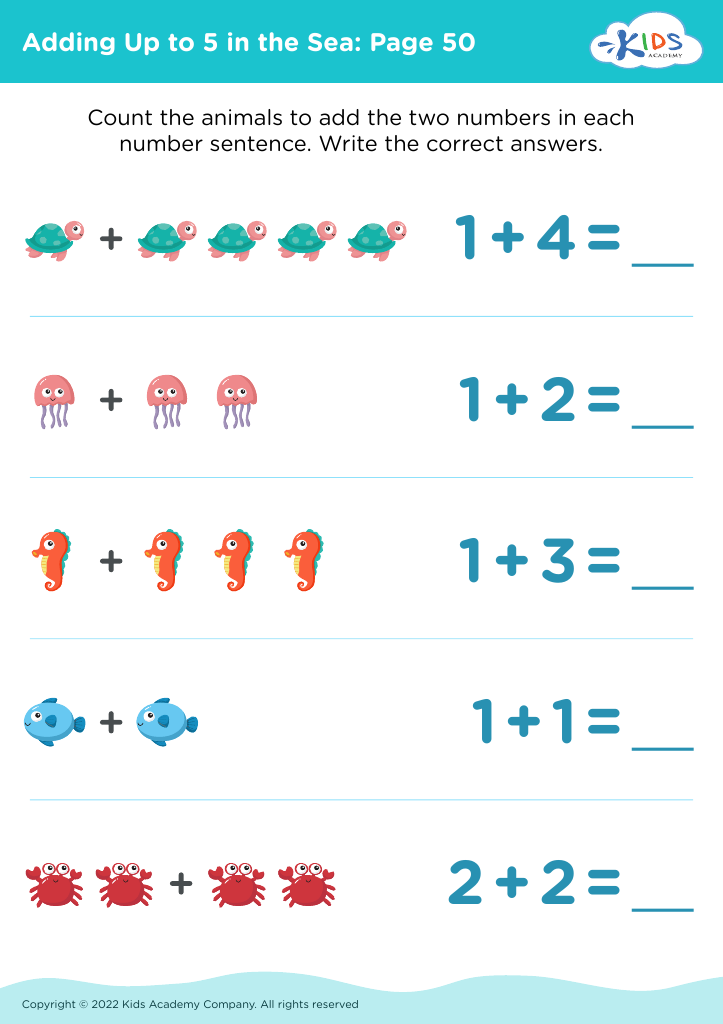
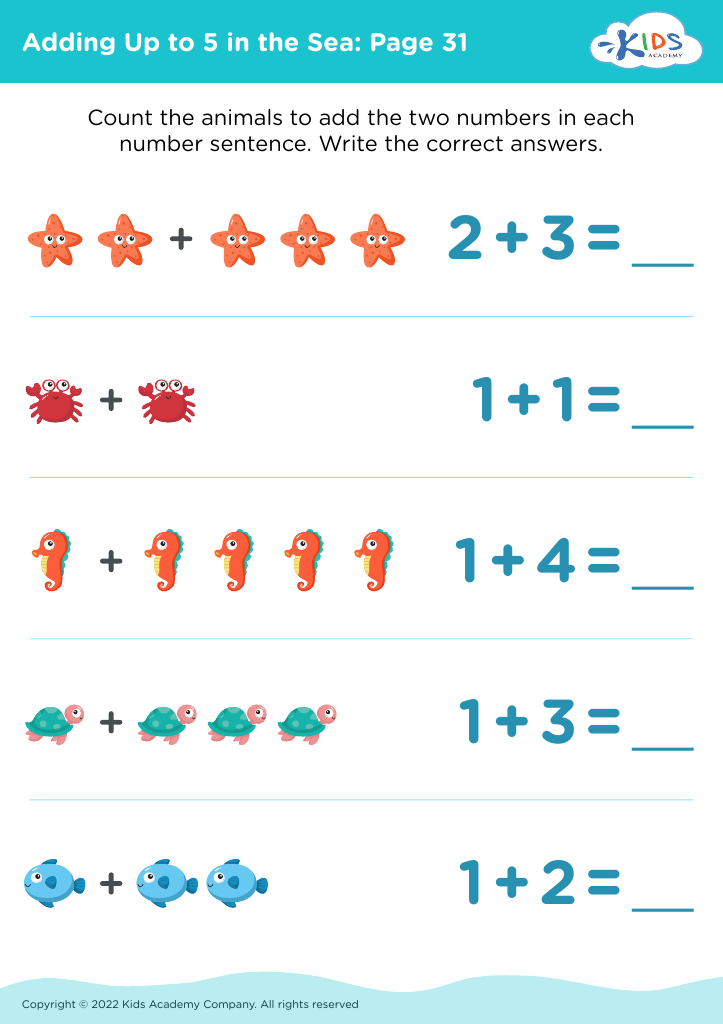








Introducing sea creature identification to five-year-olds is crucial for fostering a sense of curiosity and appreciation for the natural world. At this age, children are naturally inquisitive, making it an ideal time to engage them with vibrant marine life. By learning about different sea creatures, children develop critical observation skills and enhance their vocabulary, aiding cognitive development.
Moreover, understanding sea creatures promotes environmental awareness. By teaching young learners about various species and their habitats, we instill a sense of responsibility toward ocean conservation. This knowledge can spark a lifelong interest in marine biology and environmental science.
From a social perspective, learning in groups about sea creatures encourages teamwork and communication skills. Children can share their findings and ideas, fostering collaboration and building confidence. Interactive activities, such as crafts or storytelling about sea life, amplify engagement, making the learning experience enjoyable.
Lastly, fostering an interest in sea creatures can connect children with their families and the community, encouraging trips to aquariums or coastal exploration. All these aspects highlight the importance of integrating sea creature identification into early education, creating an opportunity for holistic growth and fostering a generation that values and protects our oceans.








