Sea creatures identification Worksheets for Ages 4-8
3 filtered results
-
From - To
Discover the captivating world of marine life with our Sea Creatures Identification Worksheets designed specifically for children ages 4-8. These engaging and colorful worksheets help young learners identify various sea animals like dolphins, starfish, and jellyfish while enhancing their observation and vocabulary skills. Perfect for classroom activities or at-home learning, these worksheets incorporate fun facts and engaging visuals that spark curiosity about ocean ecosystems. Foster your child’s love for nature and enhance their knowledge of ocean dwellers while providing a solid foundation for science education. Dive into a sea of learning and exploration with our thoughtfully curated worksheets!
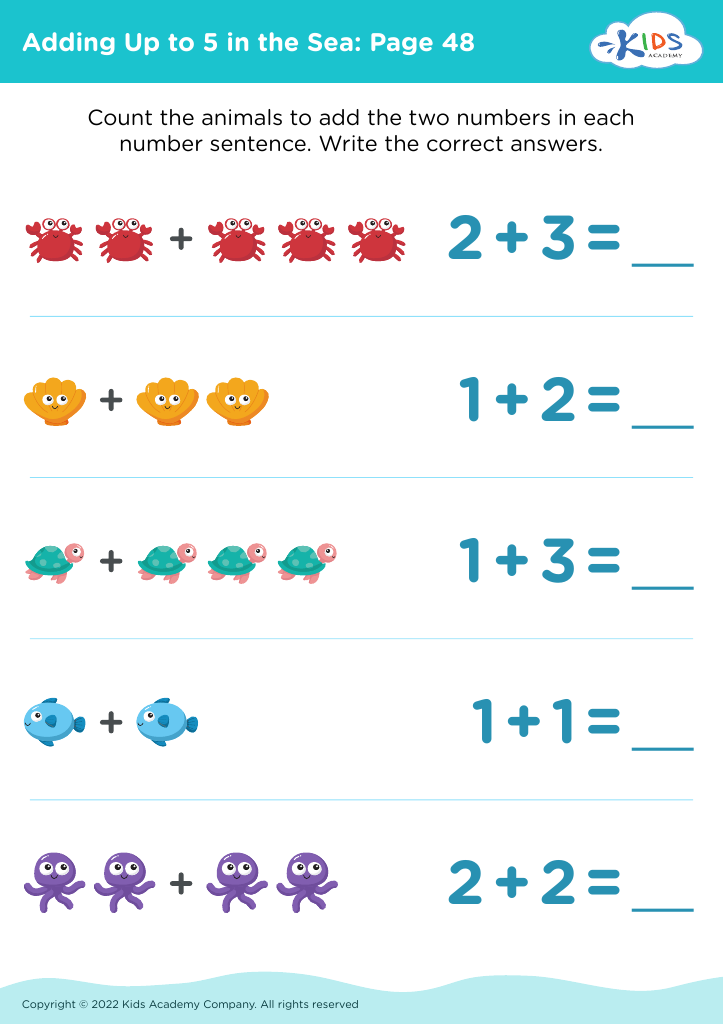
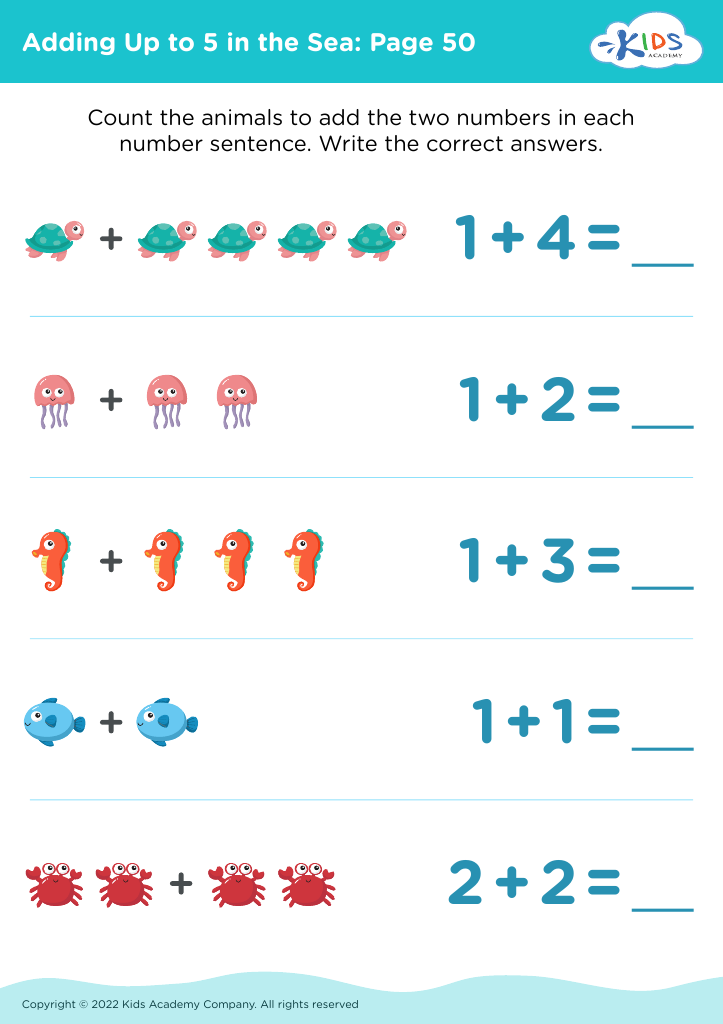
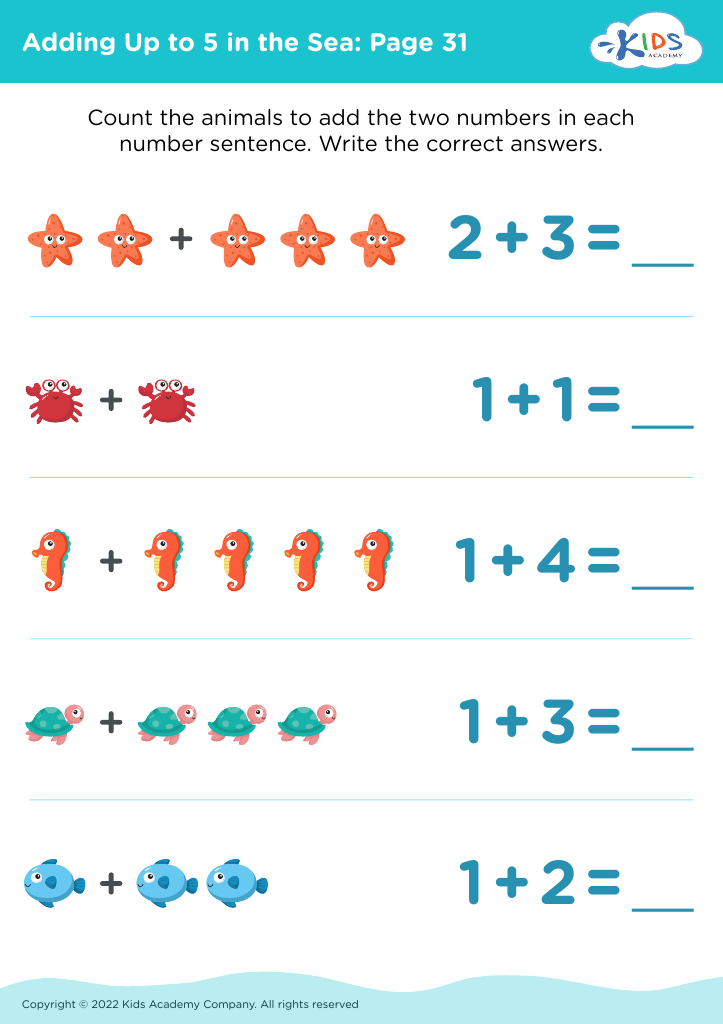




.jpg)



Teaching young children about sea creatures Identification is crucial for several reasons. First, it fosters a sense of curiosity and wonder about the natural world. Children aged 4-8 are naturally inquisitive, and introducing them to marine life can spark their imagination and encourage exploration. Identifying sea creatures enhances their observation skills and promotes scientific thinking, essential for cognitive development during these formative years.
Second, understanding marine biodiversity helps instill values of environmental stewardship and conservation. By recognizing different sea creatures, children learn about ecosystems' fragility and the interconnectedness of life. This awareness can make them more accountable for their actions as future environmental citizens.
Additionally, sea creatures can be linked to subjects like art, storytelling, and math, making learning engaging and multifaceted. Through songs, crafts, and interactive games, children can delve into ocean themes, developing language and social skills.
Lastly, identifying sea creatures can serve as a foundation for lifelong learning. Experiencing the ocean's wonders and understanding its inhabitants encourage children to develop a love for nature and science, paving the way for healthier lifestyles and informed, proactive future generations. In summary, sea creature identification can enrich education and foster appreciation for the environment.








