Sea creatures identification Worksheets for Ages 4-9
3 filtered results
-
From - To
Explore the enchanting underwater world with our "Sea Creatures Identification Worksheets" designed specifically for children aged 4 to 9. These engaging and interactive worksheets help young learners identify a variety of sea creatures while enhancing their observation skills. Each worksheet includes colorful images and fun facts, allowing kids to discover the diversity of marine life. Perfect for home or classroom use, these activities foster a love for ocean exploration and encourage children to learn through play. Download these free worksheets today to make learning about sea creatures an enjoyable and educational experience for your little ones!
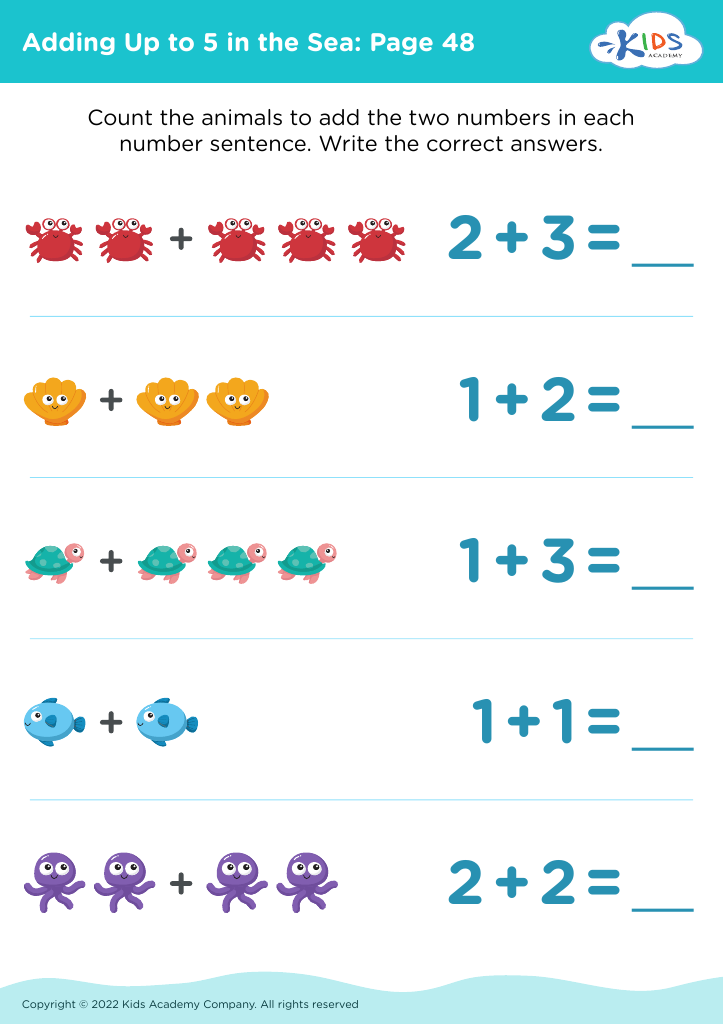
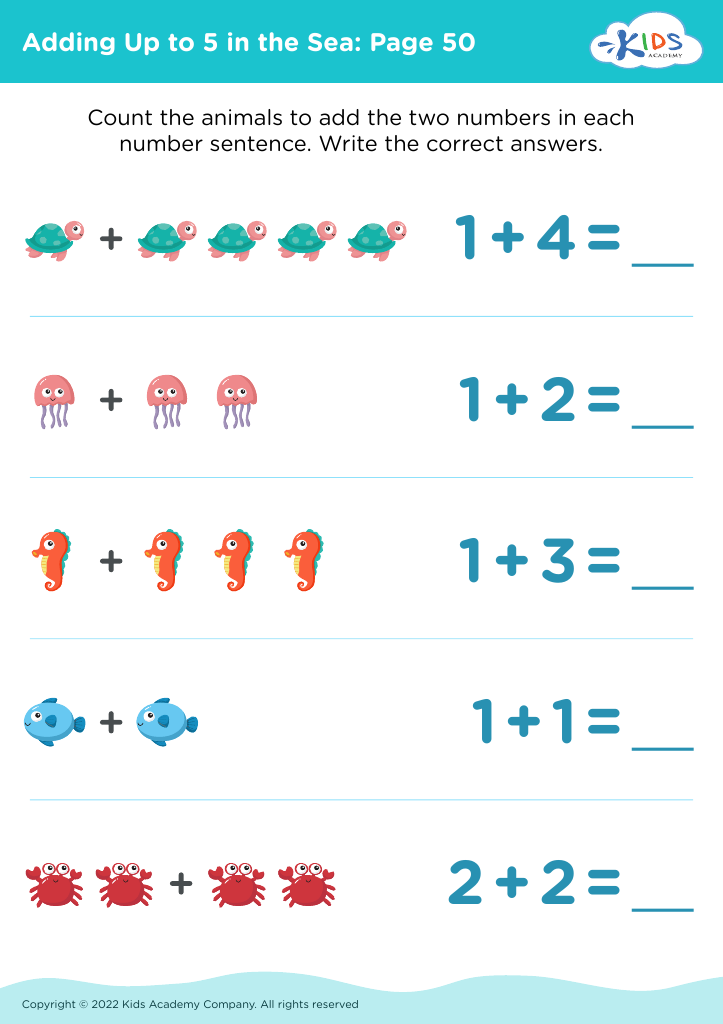
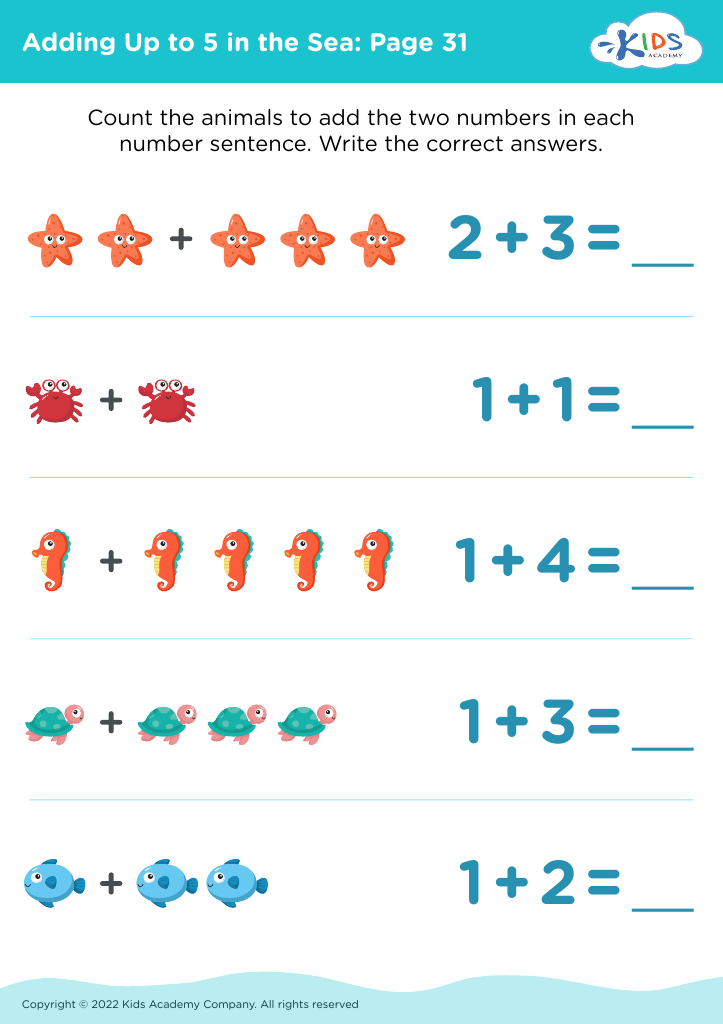


.jpg)



Teaching children about sea creature identification at an early age fosters a sense of wonder and curiosity about the natural world. For parents and teachers of children aged 4-9, this knowledge is crucial for several reasons. First, understanding marine life nurtures environmental awareness. Kids develop empathy for ocean ecosystems, leading to a greater appreciation for biodiversity and the importance of conservation. This educational foundation inspires them to become stewards of the planet.
Furthermore, identifying sea creatures enhances children's observational and critical thinking skills. When young learners engage in recognizing different species, they practice categorization, retention of information, and problem-solving. This aligns with key developmental milestones for this age group.
Additionally, integrating sea creature identification into lessons provides a fun and engaging way to combine science with art and creativity. It can stimulate storytelling, hands-on activities, and outdoor exploration, making learning dynamic and exciting.
Lastly, as conversations around climate change and ocean pollution become increasingly crucial, equipping children with the knowledge of the creatures inhabiting our oceans renders them informed advocates for marine conservation in their future. By fostering an understanding of sea life, we enable kids to connect with their environment and value the oceans that cover our planet.








