Sea creatures identification Worksheets for Ages 4-7
3 filtered results
-
From - To
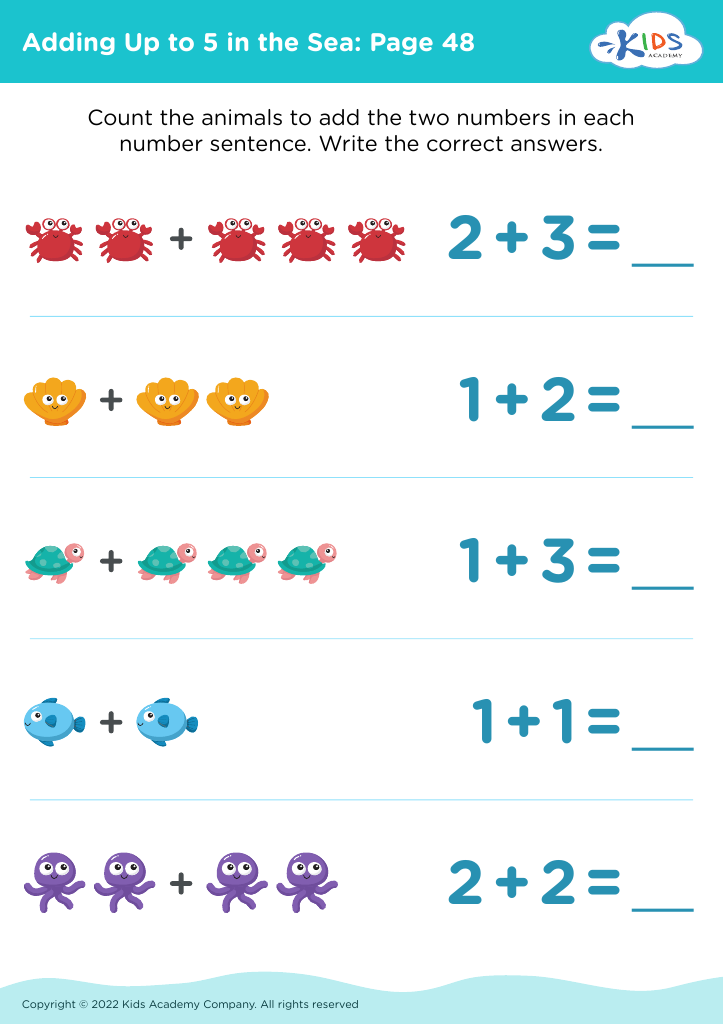
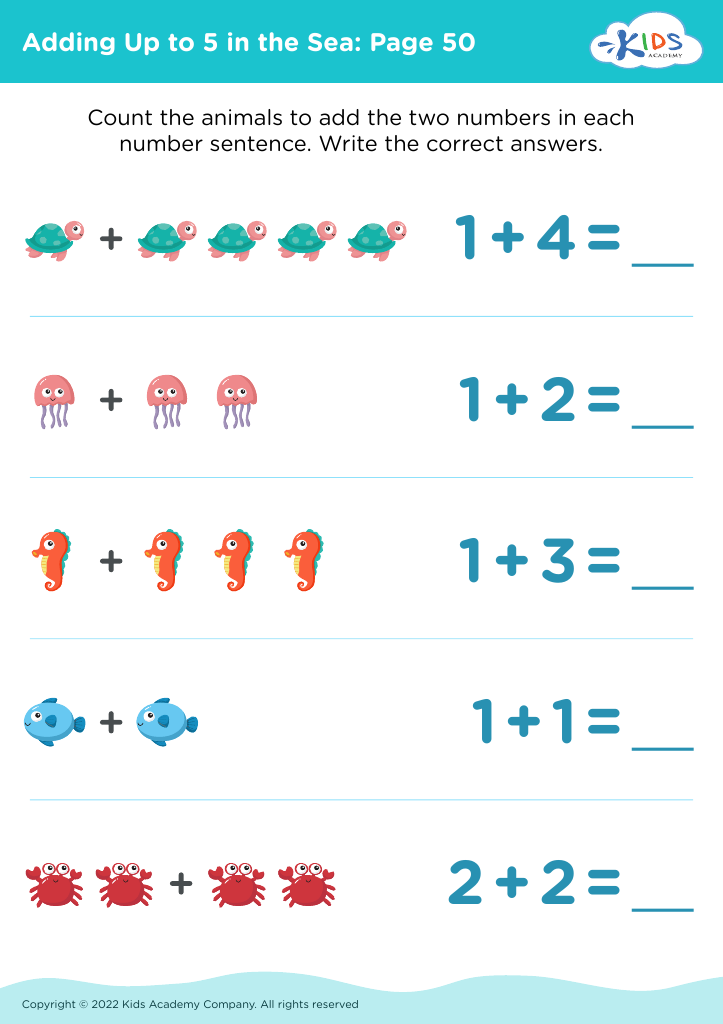
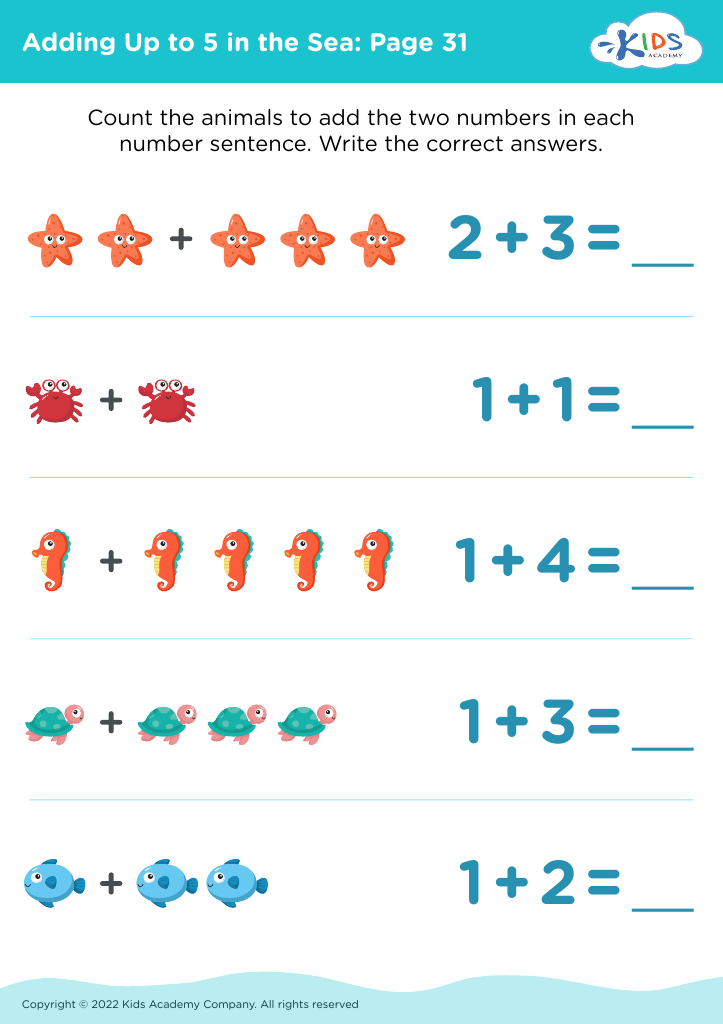
Discover the wonders of marine life with our Sea Creatures Identification Worksheets for ages 4-7. Specially designed for young learners, these engaging and educational printables help children identify various fascinating sea creatures. Each worksheet cultivates critical thinking, enhances vocabulary, and promotes observational skills through fun activities like matching, coloring, and name tracing. Perfect for preschool and early-grade lessons, these beautifully illustrated sheets turn learning about ocean life into an exciting adventure. Support your child’s development and curiosity with entertaining resources tailored to inspire a love for marine biology. Dive in and explore today!





.jpg)

Parents and teachers should care about sea creature identification for children aged 4-7 because it sparks curiosity and fosters an early love for marine life, essential for environmental stewardship. Learning about various sea creatures broadens children's horizons, making them more aware of the diverse ecosystem that thrives beneath our oceans. This knowledge cultivates empathy and a sense of responsibility toward protecting these environments.
By engaging in activities that involve identifying sea creatures, kids enhance their observational skills and cognitive development. Differentiating between a dolphin and a jellyfish, for instance, enhances their ability to notice details and categorize information, which are critical cognitive skills at this stage of learning.
Moreover, the vibrant colors and unusual shapes of marine life captivate young imaginations, laying a foundation for a lifelong interest in science and nature. Activities such as storytelling, drawing, and interactive lessons involving sea creatures can significantly enhance their language and motor skills.
Lastly, understanding sea creatures and their habitats can also strengthen their grasp on broader scientific concepts such as biodiversity, food chains, and the importance of conservation. By recognizing the relevance and beauty of sea creatures, children are more likely to grow into informed and passionate advocates for our planet.








