Sea creatures identification Worksheets for Ages 3-5
3 filtered results
-
From - To
Discover our engaging Sea Creatures Identification Worksheets designed specifically for children ages 3-5! These interactive resources are perfect for introducing young learners to the fascinating world of marine life. Each worksheet features colorful illustrations and fun activities that encourage children to identify various sea creatures, such as fish, dolphins, and starfish. By completing these worksheets, kids will enhance their observational skills, vocabulary, and cognitive abilities while having a blast exploring the ocean's wonders. Ideal for home or classroom use, our worksheets make learning about sea creatures an exciting adventure. Dive in and let your child's discovery journey begin!
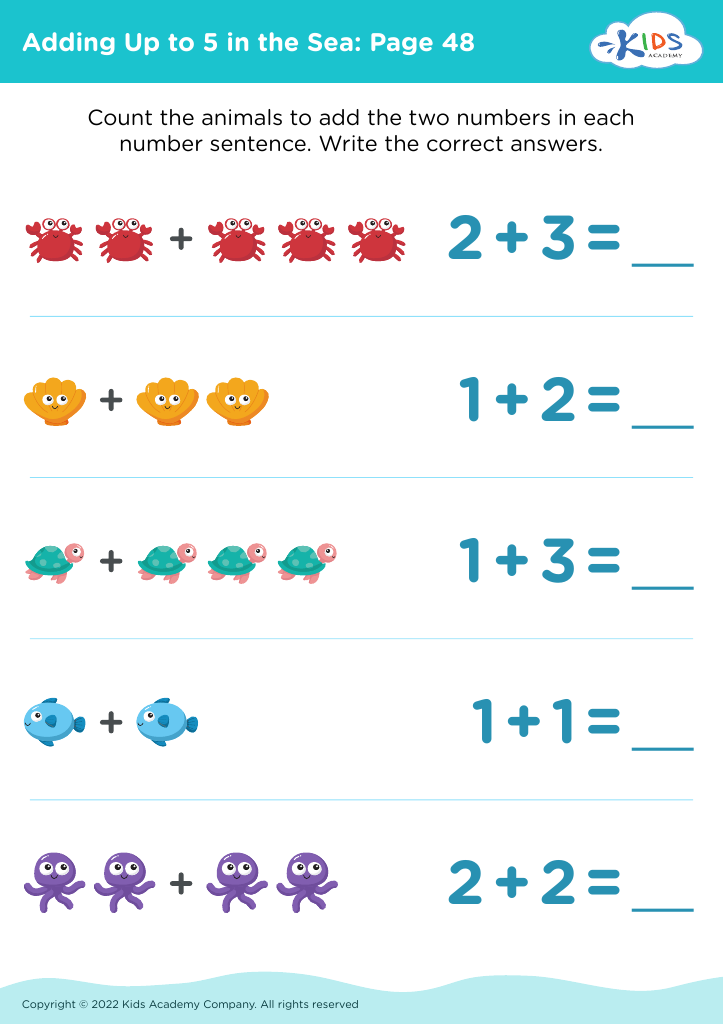
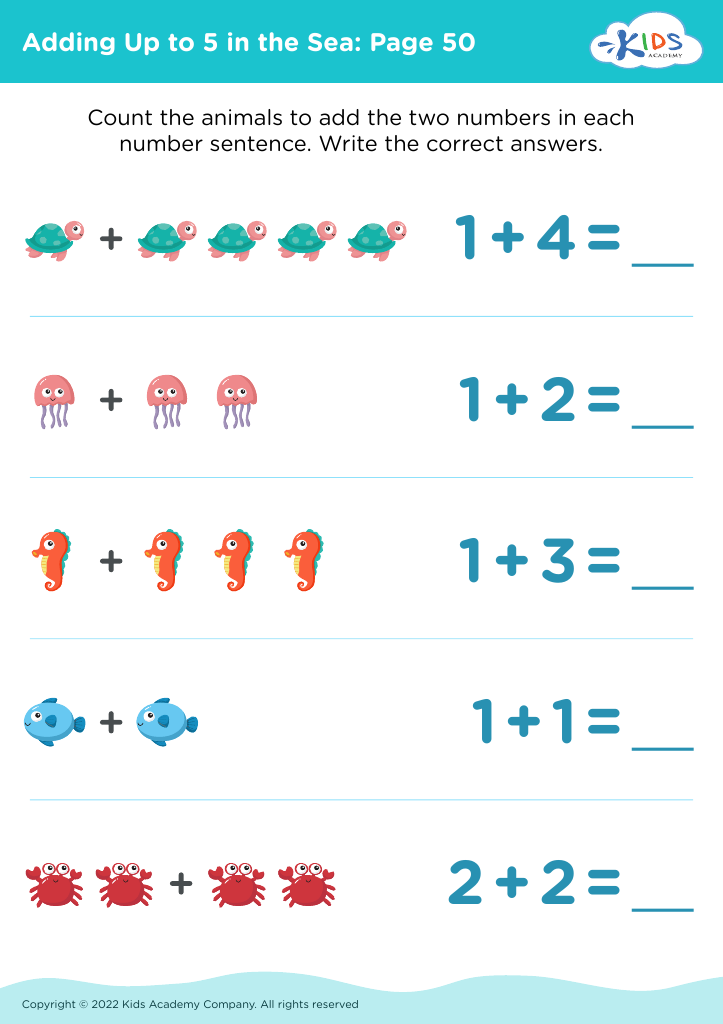
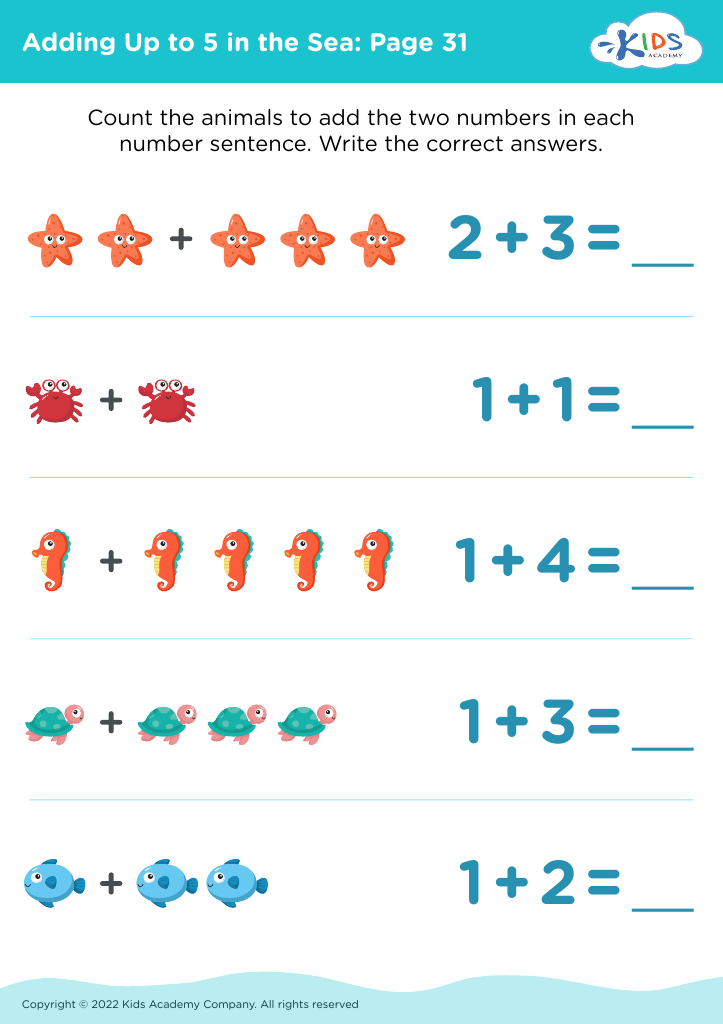







Teaching young children about sea creature identification is vital for several reasons. Firstly, it enhances their curiosity about the world. Engaging with the diverse animal life found in oceans fosters a sense of wonder and inspires a love for nature. This early exposure can lay the groundwork for lifelong environmental stewardship.
Through the identification of sea creatures, children also develop essential skills. Learning names, characteristics, and habitats of various species promotes vocabulary development and strengthens cognitive skills as they categorize and classify information. Interactive activities, like matching cards or ocean-themed stories, can enhance their communication abilities and foster social interactions with peers.
Additionally, understanding marine life can nurture empathy and respect for all living things. As young learners realize the beauty and fragility of these creatures, they become more aware of ocean conservation issues, encouraging a sense of responsibility toward protecting their environment.
By integrating sea creature identification into early education, parents and teachers not only enrich a child’s learning experience but also empower them to become more informed, compassionate individuals dedicated to preserving biodiversity. In short, nurturing an appreciation for sea creatures helps develop curious, knowledgeable, and responsible future caretakers of our planet.








