Filters

2280 filtered results

Clear all filters
Favorites
With answer key
Interactive

2280 filtered results

Difficulty Level

Grade


Subject

    Check out this FREE Trial Lesson on Math for age 4-7!

    Short and Long Vowel Sort

    Favorites
    With answer key
    Interactive
    • 4-7
    • Math
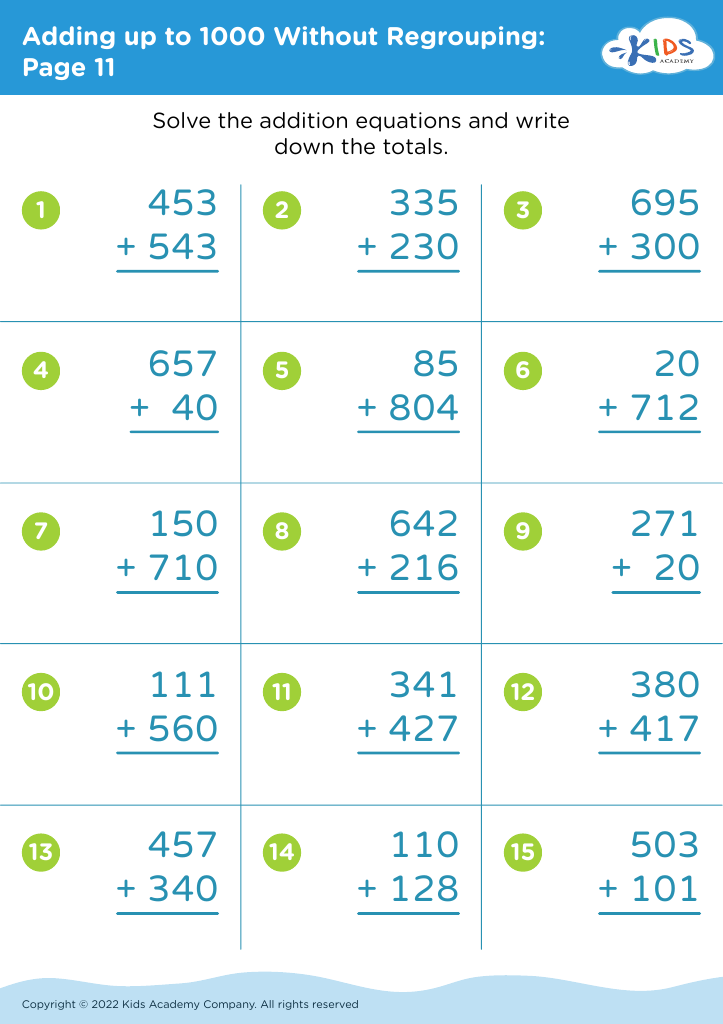
    Adding up to 1000 Without Regrouping: Page 11
    Adding up to 1000 Without Regrouping: Page 11
    Adding up to 1000 Without Regrouping: Page 11
    Worksheet
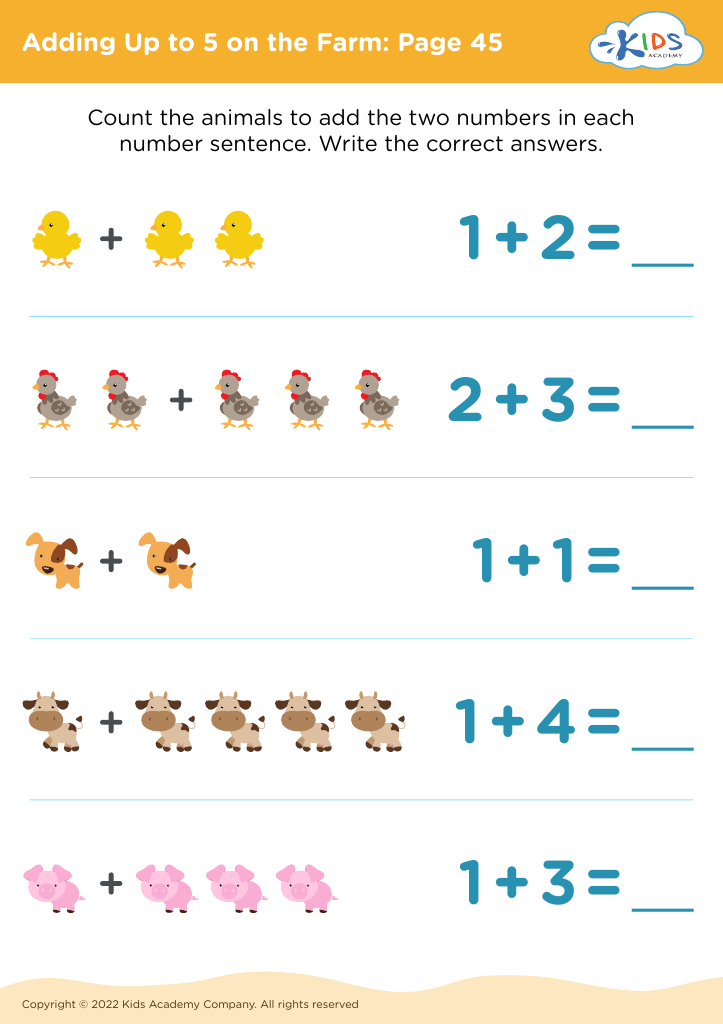
    Adding Up to 5 on the Farm: Page 45
    Adding Up to 5 on the Farm: Page 45
    Adding Up to 5 on the Farm: Page 45
    Worksheet
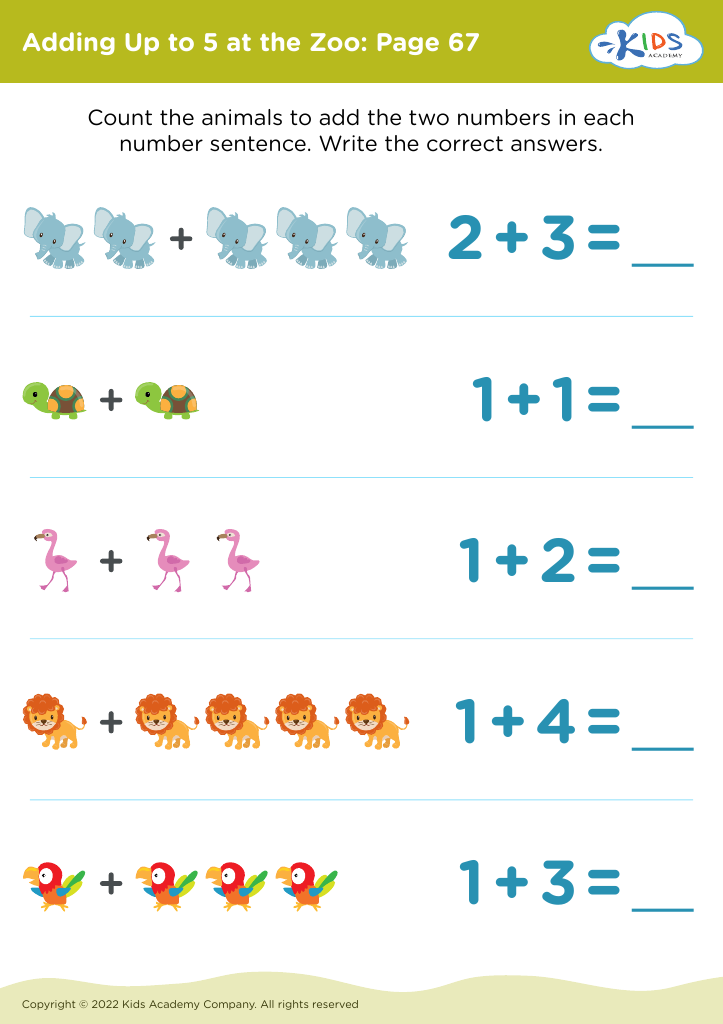
    Adding Up to 5 at the Zoo: Page 67
    Adding Up to 5 at the Zoo: Page 67
    Adding Up to 5 at the Zoo: Page 67
    Worksheet
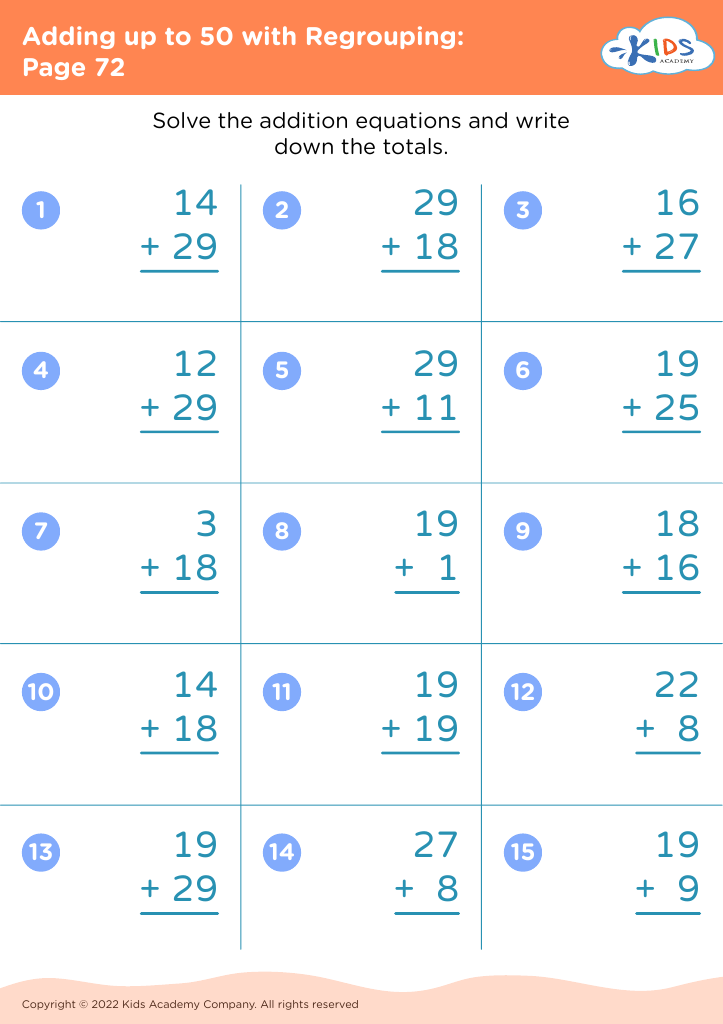
    Adding up to 50 with Regrouping: Page 72
    Adding up to 50 with Regrouping: Page 72
    Adding up to 50 with Regrouping: Page 72
    Worksheet
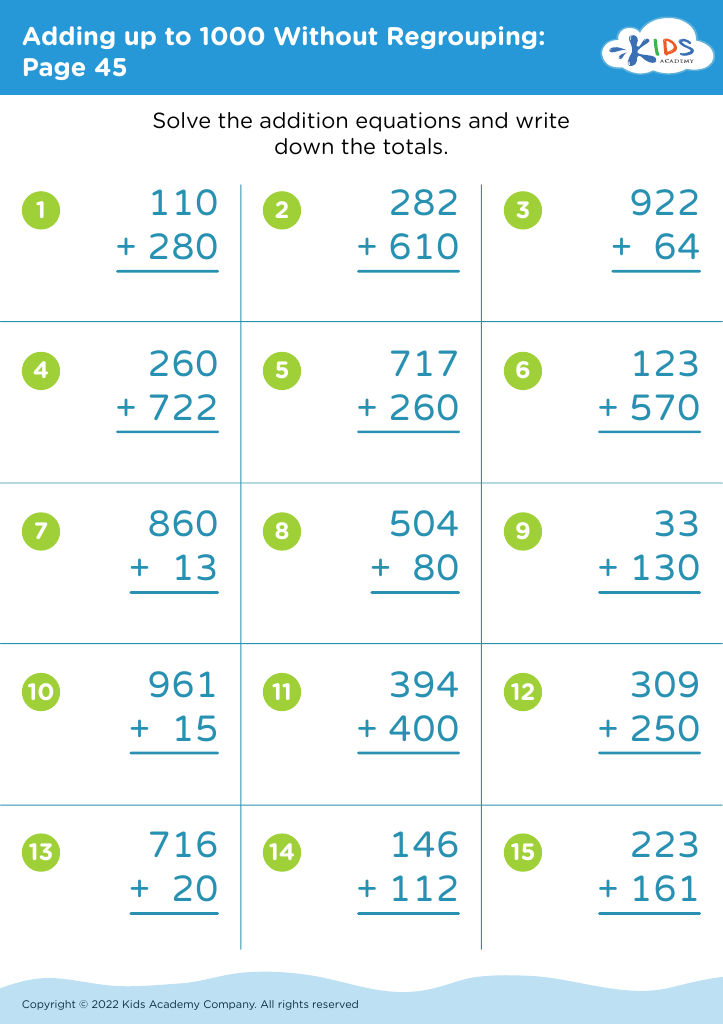
    Adding up to 1000 Without Regrouping: Page 45
    Adding up to 1000 Without Regrouping: Page 45
    Adding up to 1000 Without Regrouping: Page 45
    Worksheet
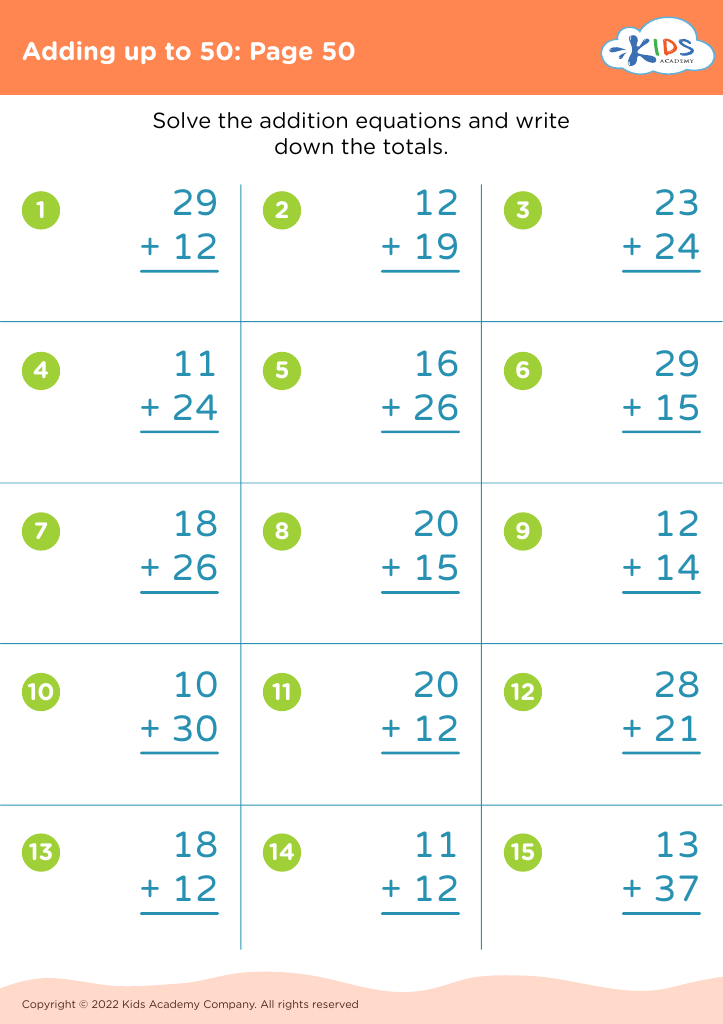
    Adding up to 50: Page 50
    Adding up to 50: Page 50

    Adding up to 50: Page 50

    Adding up to 50: Page 50
    Worksheet
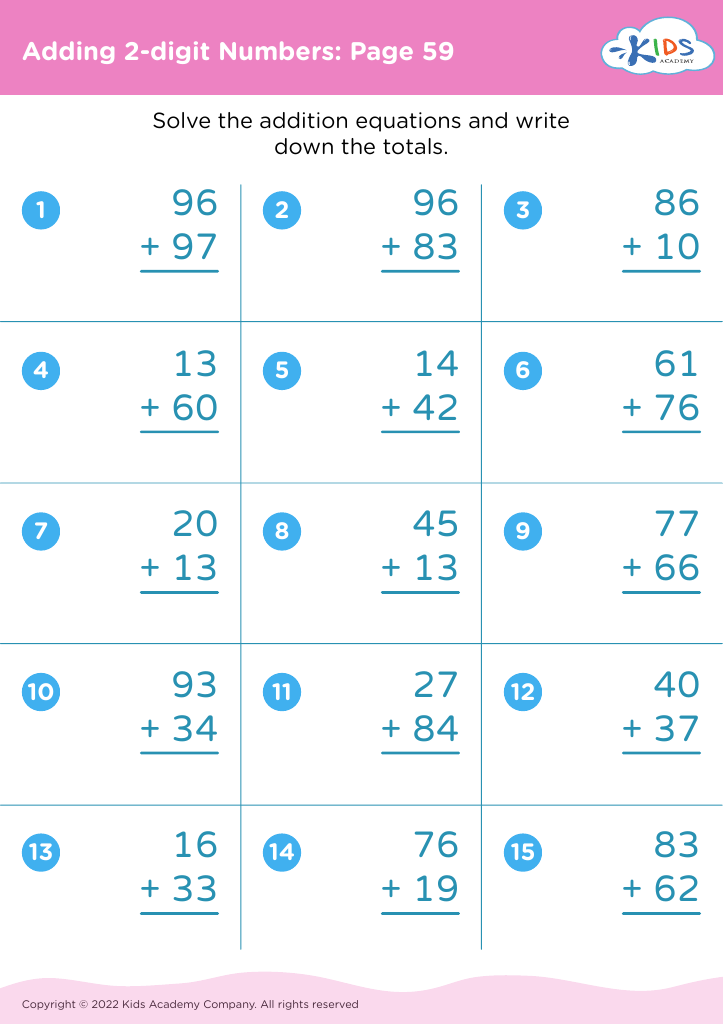
    Adding 2-digit Numbers: Page 59
    Adding 2-digit Numbers: Page 59

    Adding 2-digit Numbers: Page 59

    Adding 2-digit Numbers: Page 59
    Worksheet
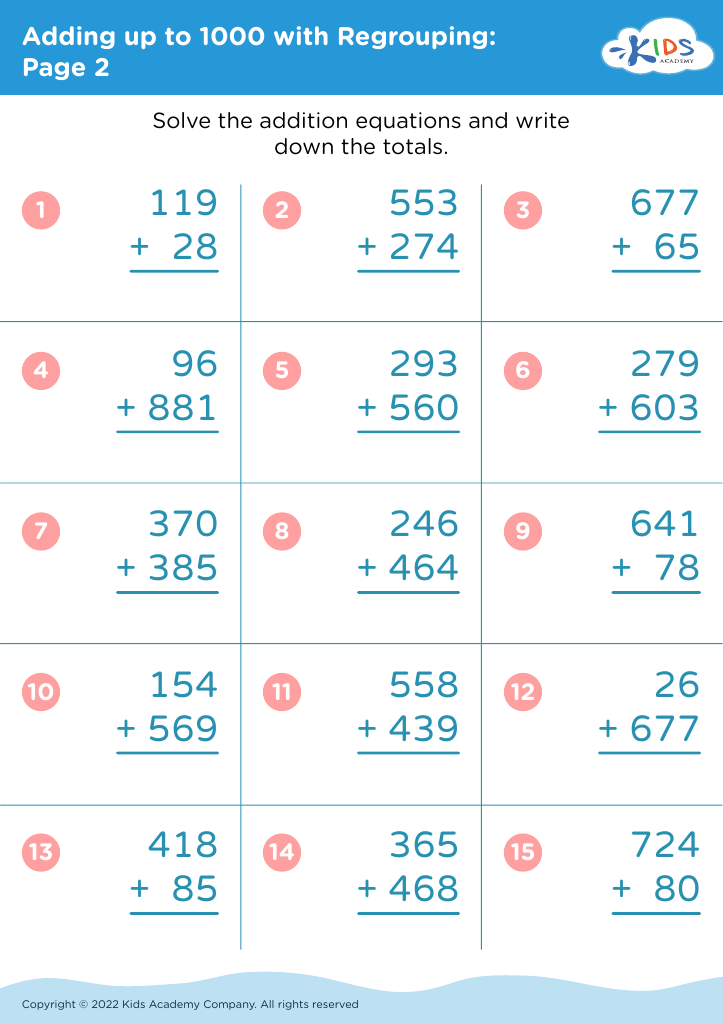
    Adding up to 1000 with Regrouping: Page 2
    Adding up to 1000 with Regrouping: Page 2
    Adding up to 1000 with Regrouping: Page 2
    Worksheet
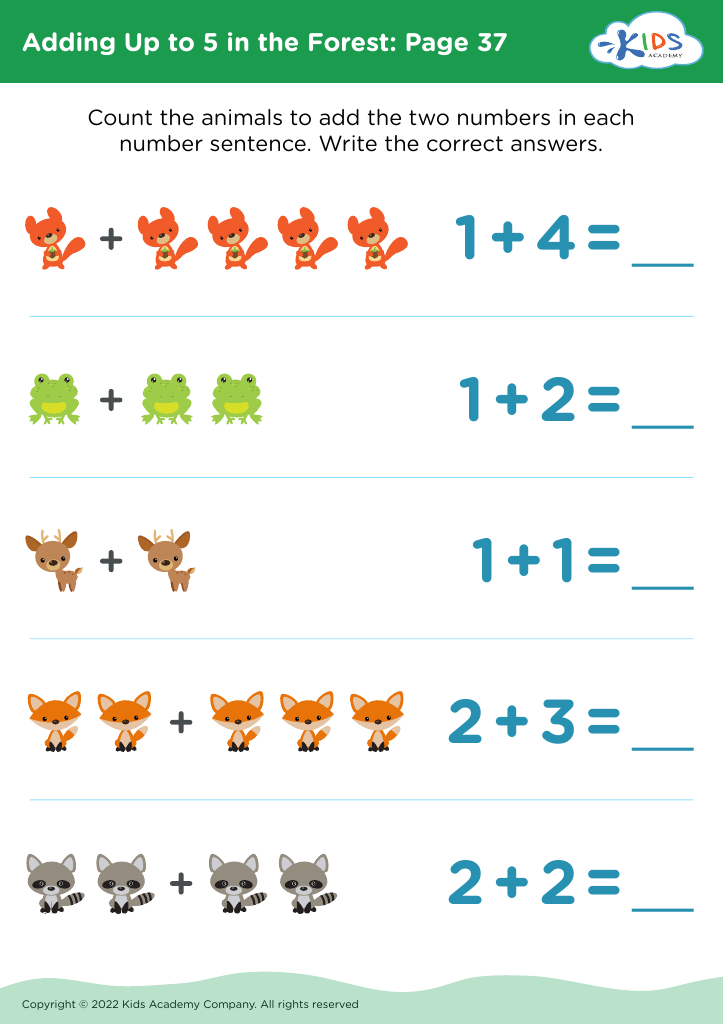
    Adding Up to 5 in the Forest: Page 37
    Adding Up to 5 in the Forest: Page 37
    Adding Up to 5 in the Forest: Page 37
    Worksheet
    Pet Survey Worksheet
    Pet Survey Worksheet

    Pet Survey Worksheet

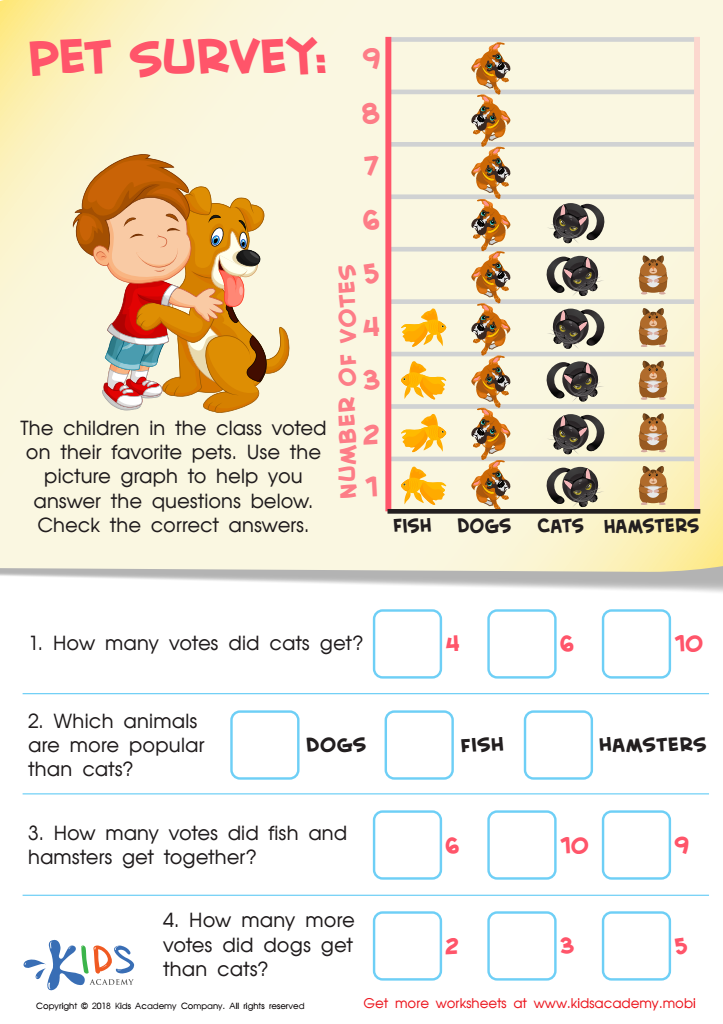
    Do you have a furry family member? If the answer is yes and your kids love animals, they'll enjoy this worksheet. The picture graph shows the children's votes for their favorite pet - fish, dog, cat and hamster. Ask your child to use the graph to answer the questions. Guide them to check the right answer.
    Pet Survey Worksheet
    Worksheet
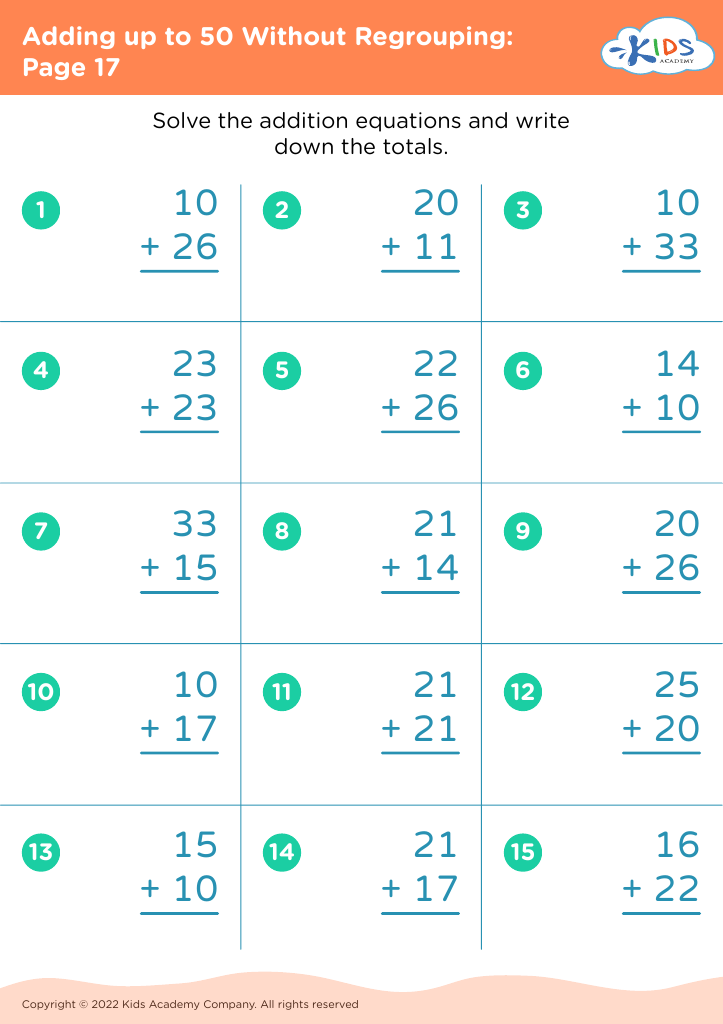
    Adding up to 50 Without Regrouping: Page 17
    Adding up to 50 Without Regrouping: Page 17
    Adding up to 50 Without Regrouping: Page 17
    Worksheet
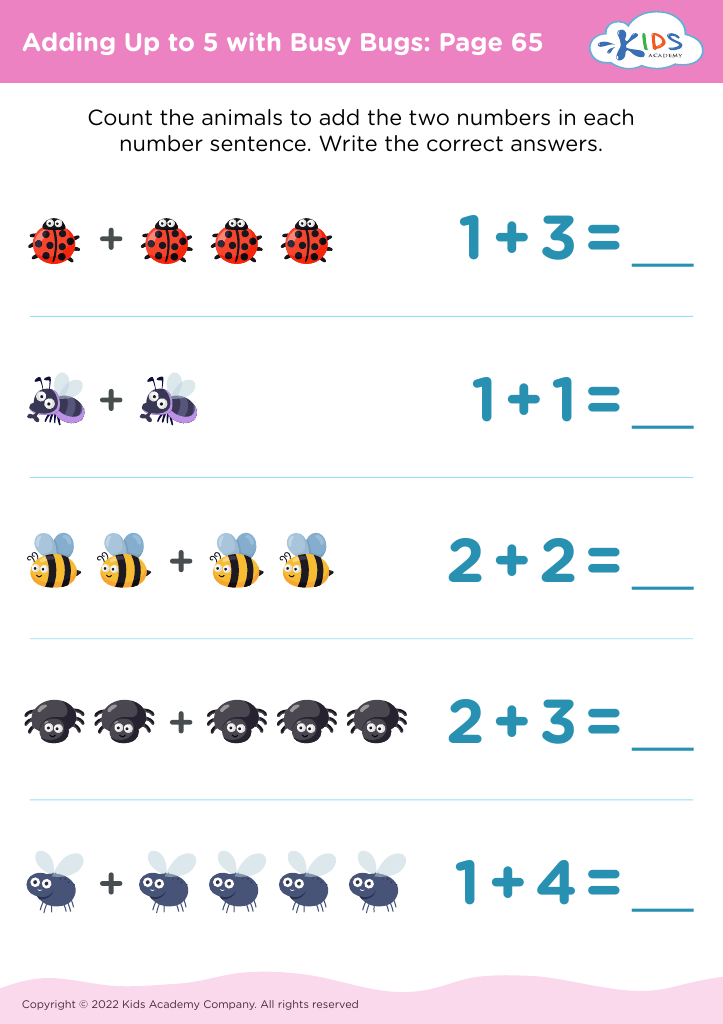
    Adding Up to 5 with Busy Bugs: Page 65
    Adding Up to 5 with Busy Bugs: Page 65
    Adding Up to 5 with Busy Bugs: Page 65
    Worksheet
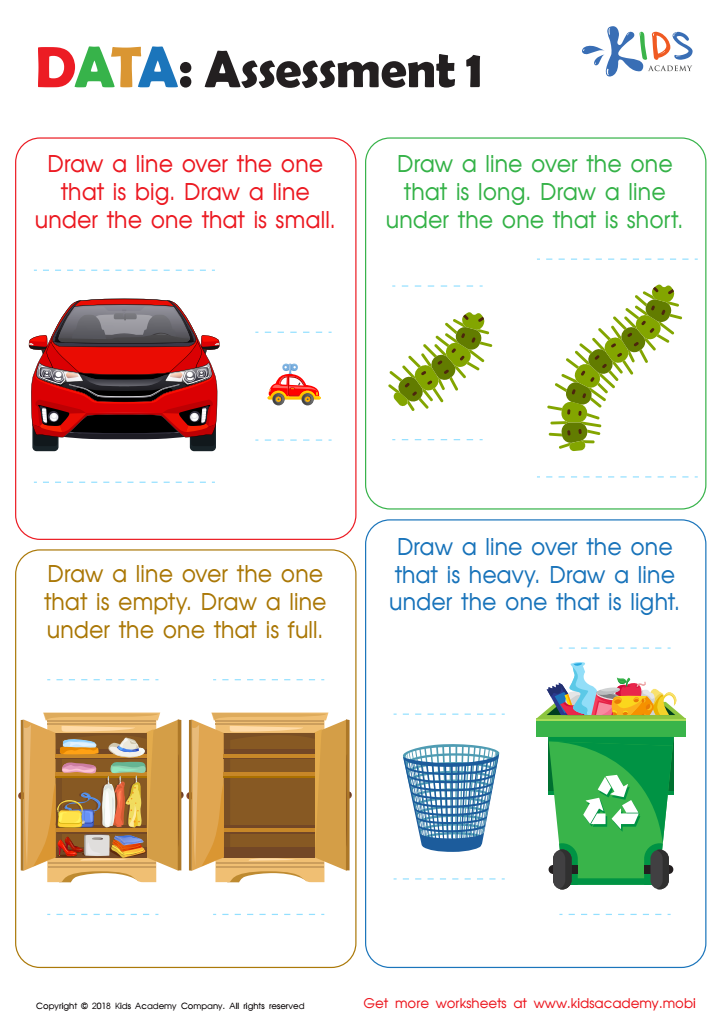
    Data: Assessment 1 Worksheet
    Data: Assessment 1 Worksheet

    Data: Assessment 1 Worksheet

    Assess your students' knowledge of measurement words with this worksheet. Have them compare and describe objects/quantities using words like "big", "small", "long", "short", "empty", "full", "heavy" and "light". Encourage further learning by asking students to provide examples of each word meaning.
    Data: Assessment 1 Worksheet
    Worksheet
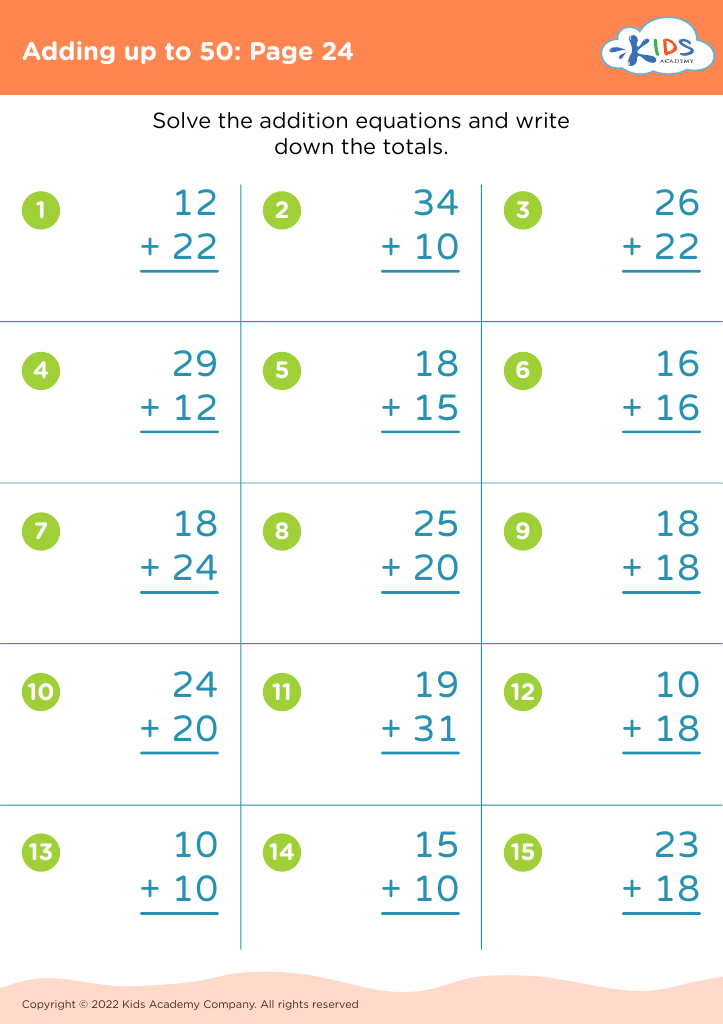
    Adding up to 50: Page 24
    Adding up to 50: Page 24

    Adding up to 50: Page 24

    Adding up to 50: Page 24
    Worksheet
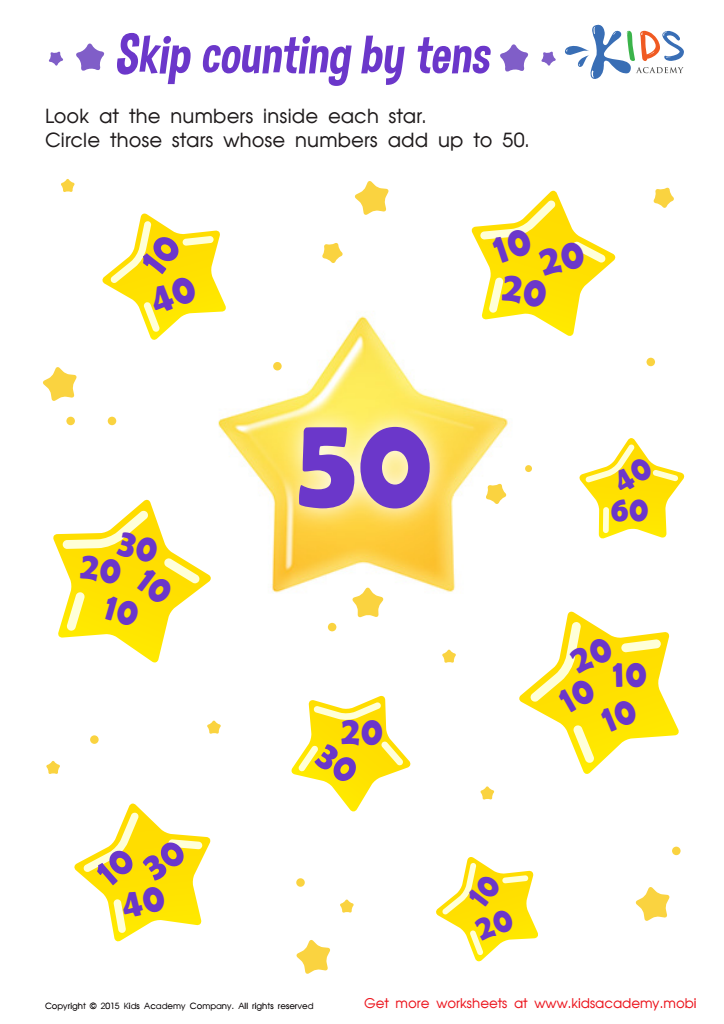
    Skip Counting by 10 Free Worksheet
    Skip Counting by 10 Free Worksheet

    Learn Dozens: Skip Counting by Tens Printable
    This skip counting by 10 worksheet helps kids strengthen fluency, practice addition & build number sense. They'll use problem-solving skills to find the correct answer, which is revealed by stars. This worksheet is a fun way to practice crucial foundational math skills.
    Learn Dozens: Skip Counting by Tens Printable
    Worksheet
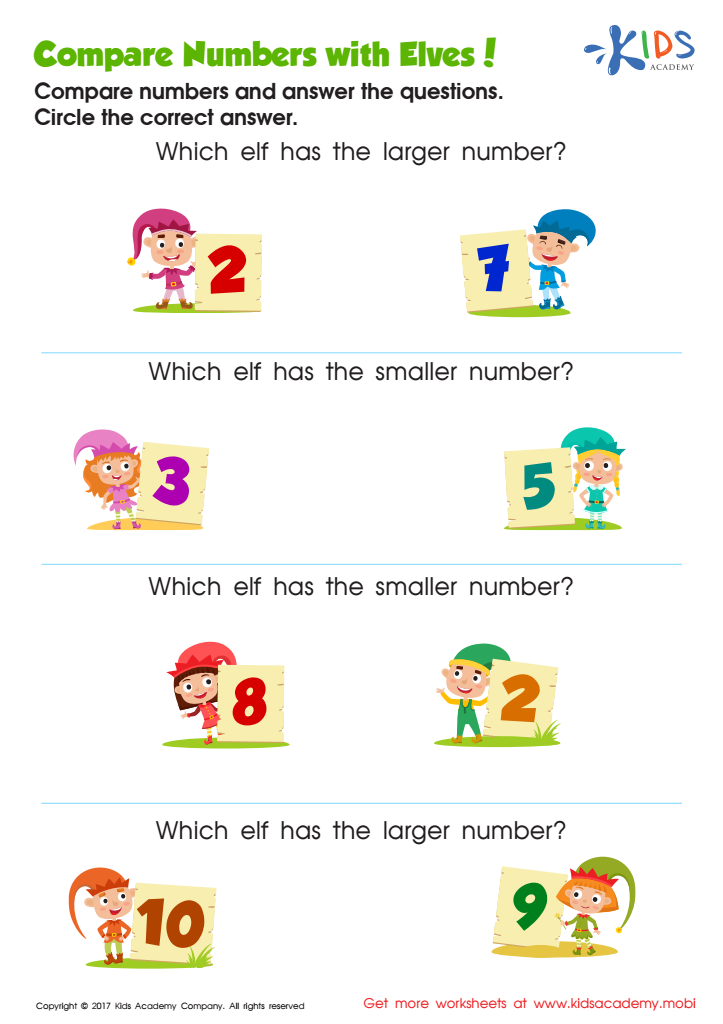
    Comparing numbers worksheet for kindergarten
    Comparing numbers worksheet for kindergarten

    Comparing Numbers Worksheet for Kindergarten
    Your child will love helping Santa's elves compare numbers with this fun worksheet for kindergarten! They must determine which number is bigger or smaller then circle the answer. It's a great activity for Christmas or any time!
    Comparing Numbers Worksheet for Kindergarten
    Worksheet
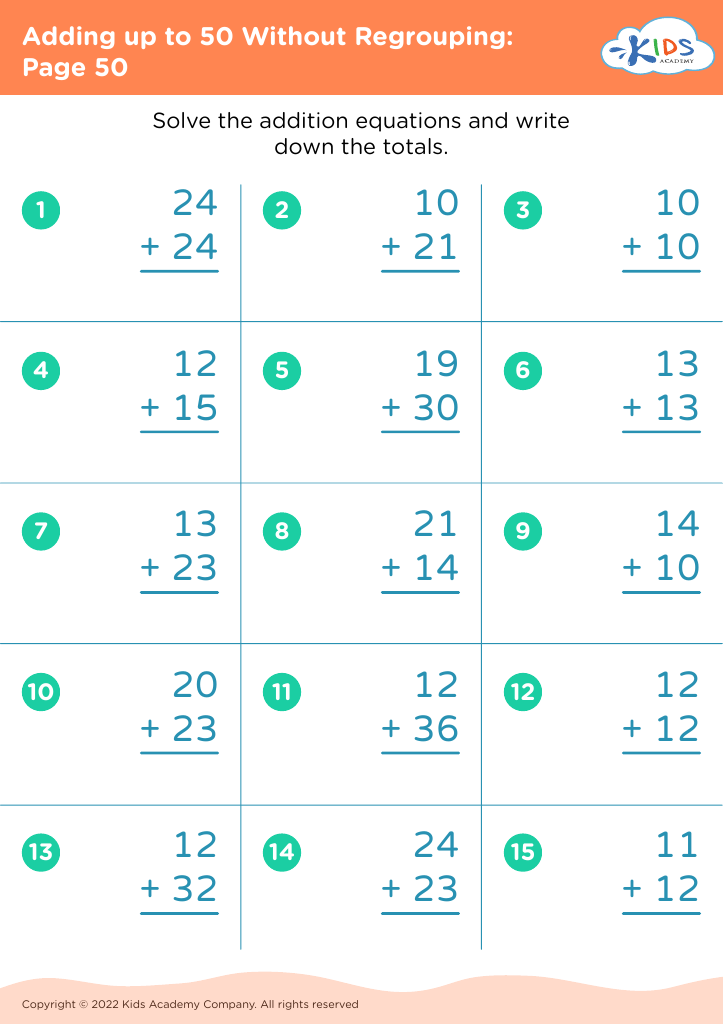
    Adding up to 50 Without Regrouping: Page 50
    Adding up to 50 Without Regrouping: Page 50
    Adding up to 50 Without Regrouping: Page 50
    Worksheet
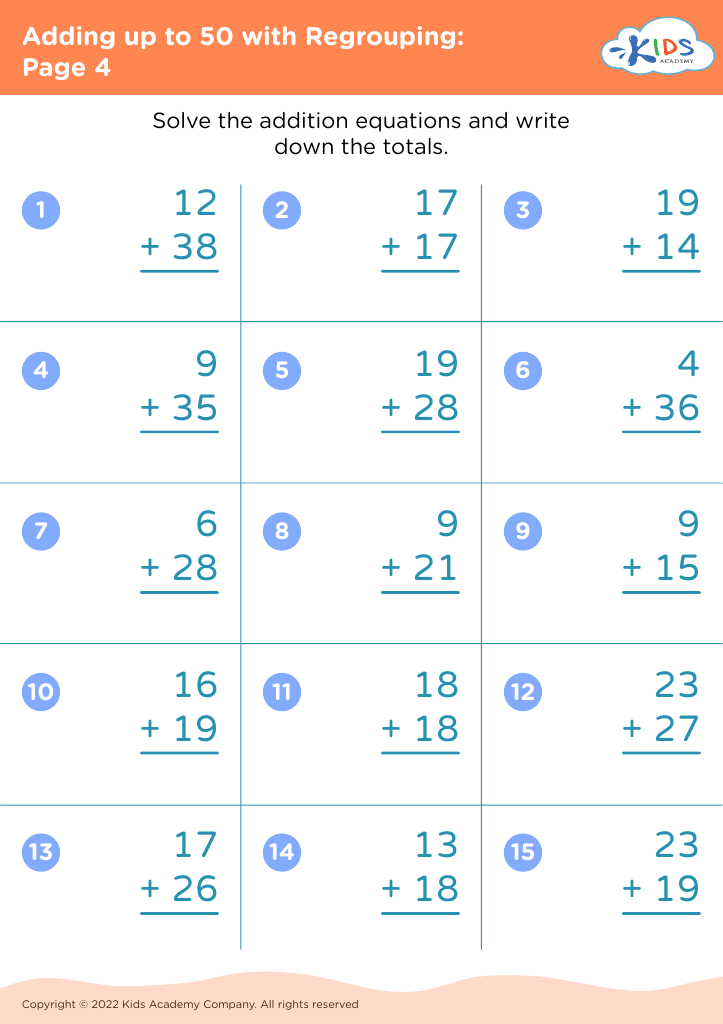
    Adding up to 50 with Regrouping: Page 4
    Adding up to 50 with Regrouping: Page 4
    Adding up to 50 with Regrouping: Page 4
    Worksheet
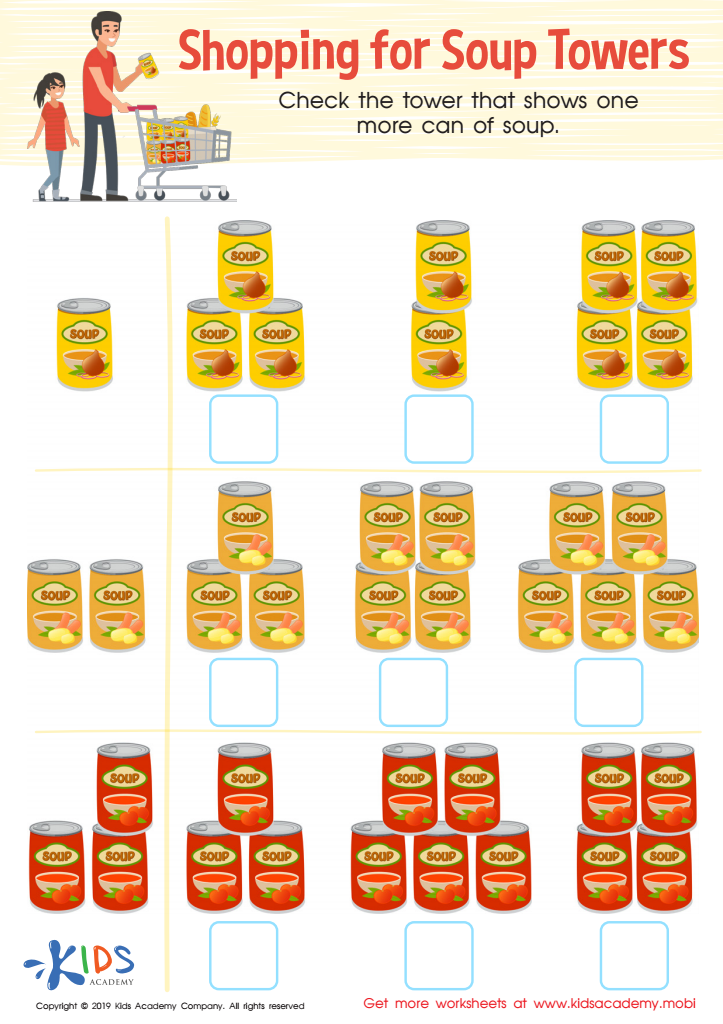
    Soup Towers Worksheet
    Soup Towers Worksheet

    Soup Towers Worksheet

    Do your kids come shopping? Transform it into a learning experience! Point out items and ask your kids what they are. Count each stack of cans, and have them check the tower with an extra can of soup. It's a great way to teach them counting and counting up!
    Soup Towers Worksheet
    Worksheet
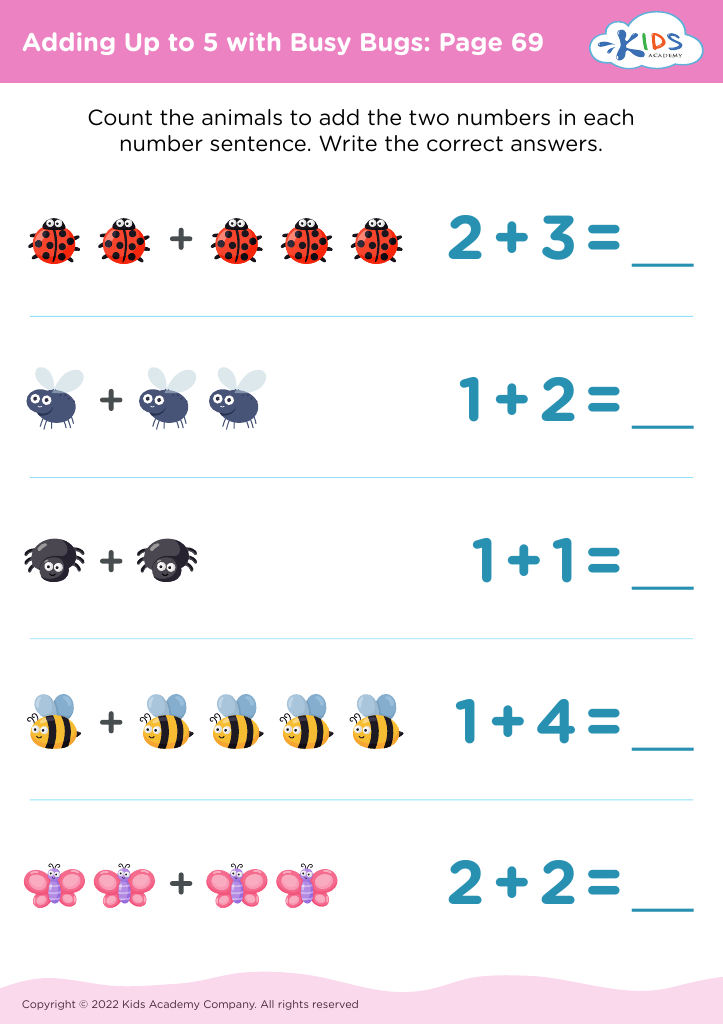
    Adding Up to 5 with Busy Bugs: Page 69
    Adding Up to 5 with Busy Bugs: Page 69
    Adding Up to 5 with Busy Bugs: Page 69
    Worksheet
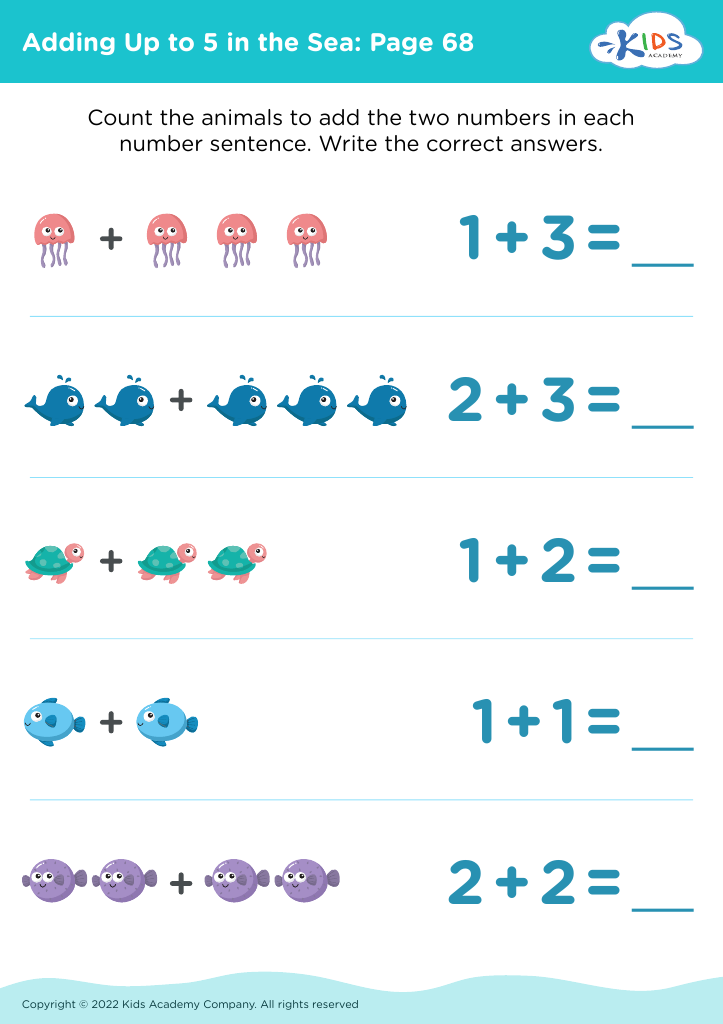
    Adding Up to 5 in the Sea: Page 68
    Adding Up to 5 in the Sea: Page 68
    Adding Up to 5 in the Sea: Page 68
    Worksheet
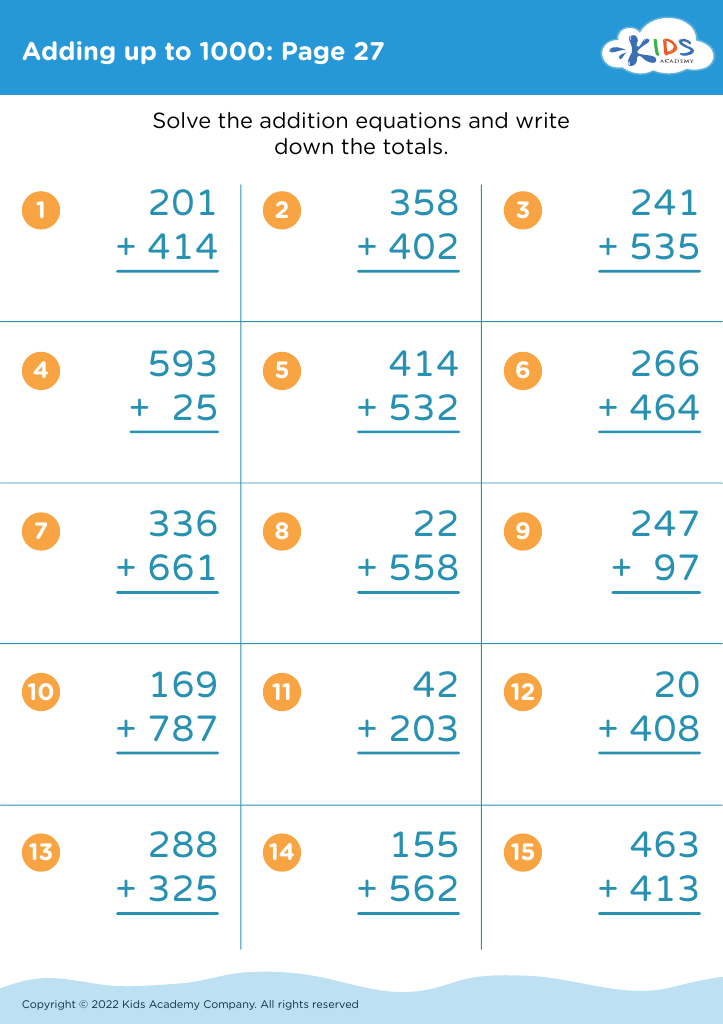
    Adding up to 1000: Page 27
    Adding up to 1000: Page 27

    Adding up to 1000: Page 27

    Adding up to 1000: Page 27
    Worksheet
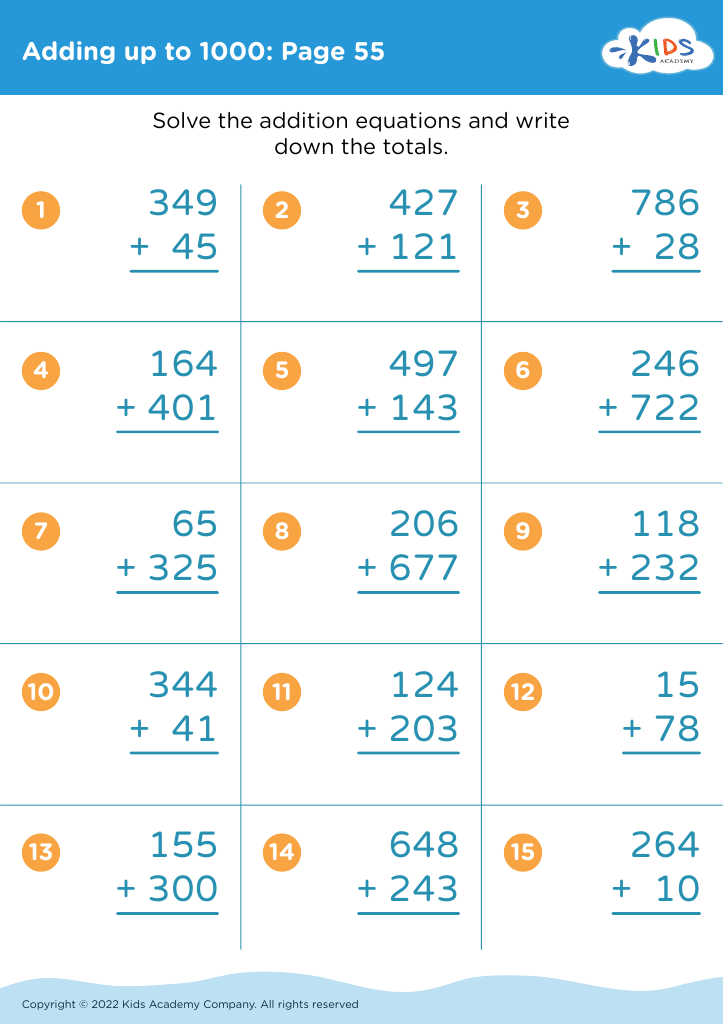
    Adding up to 1000: Page 55
    Adding up to 1000: Page 55

    Adding up to 1000: Page 55

    Adding up to 1000: Page 55
    Worksheet
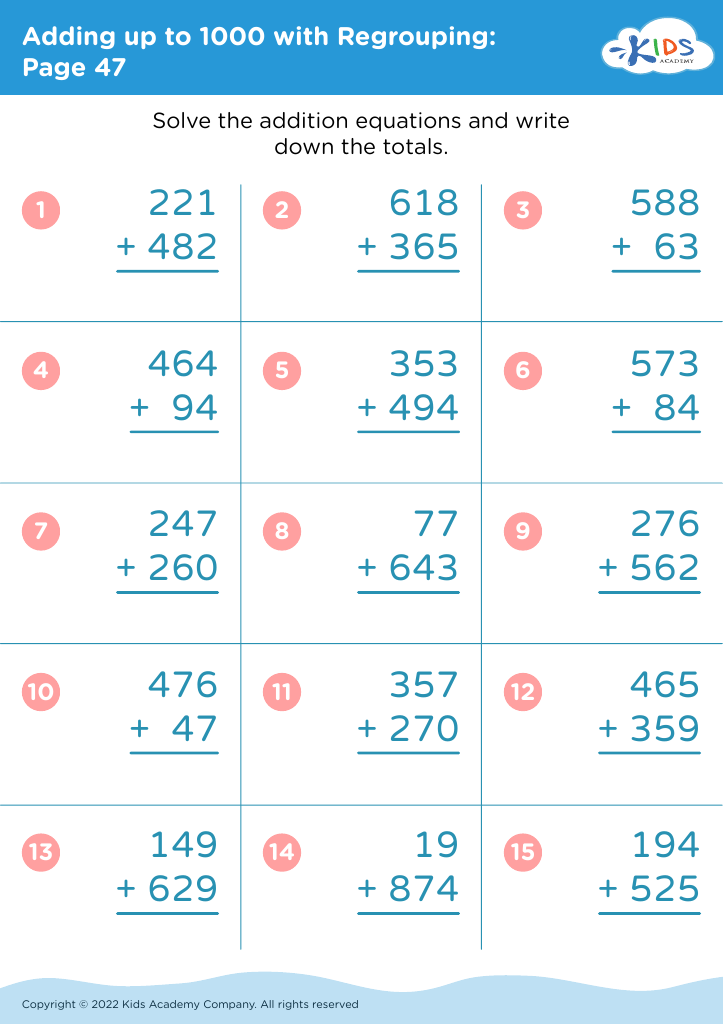
    Adding up to 1000 with Regrouping: Page 47
    Adding up to 1000 with Regrouping: Page 47
    Adding up to 1000 with Regrouping: Page 47
    Worksheet


    Parents and teachers should prioritize math for children aged 4-7 because these foundational years are critical for cognitive development. During this stage, children's brains are exceptionally receptive to learning, and mathematical concepts serve as building blocks for future academic success. Early math skills foster logical thinking, problem-solving abilities, and critical analysis, all of which are essential in everyday life and various career paths later on.

    Moreover, math is integrated into daily activities, from counting objects during playtime to understanding shapes while drawing. Engaging children in these activities cultivates a positive attitude toward math, demystifying the subject and reducing anxiety around numbers in later years. Additionally, learning math promotes perseverance and patience, as children learn to approach problems systematically and celebrate small achievements.

    Furthermore, the ability to work with numbers enhances children’s confidence not just academically but socially too, as they learn to collaborate and communicate ideas effectively. By fostering a strong foundation in math during these formative years, parents and teachers equip children with essential skills that extend beyond the classroom, ultimately preparing them for a world where numeracy is crucial. Thus, investing in early math education is investing in a child’s entire future.