Shape Recognition Tracing Shapes Worksheets for Ages 4-8
13 filtered results
-
From - To
Discover a fun and engaging way for children ages 4-8 to master shape recognition with our tracing shapes worksheets! These expertly designed worksheets promote early math skills by encouraging kids to trace various shapes, including circles, squares, triangles, and more. Not only do they enhance fine motor skills and hand-eye coordination, but they also build a solid foundation for future math concepts. Our colorful and interactive worksheets keep young learners motivated and excited about shapes. Perfect for at-home practice or classroom activities, these resources make learning enjoyable and effective. Start shaping your child's understanding of geometry today!
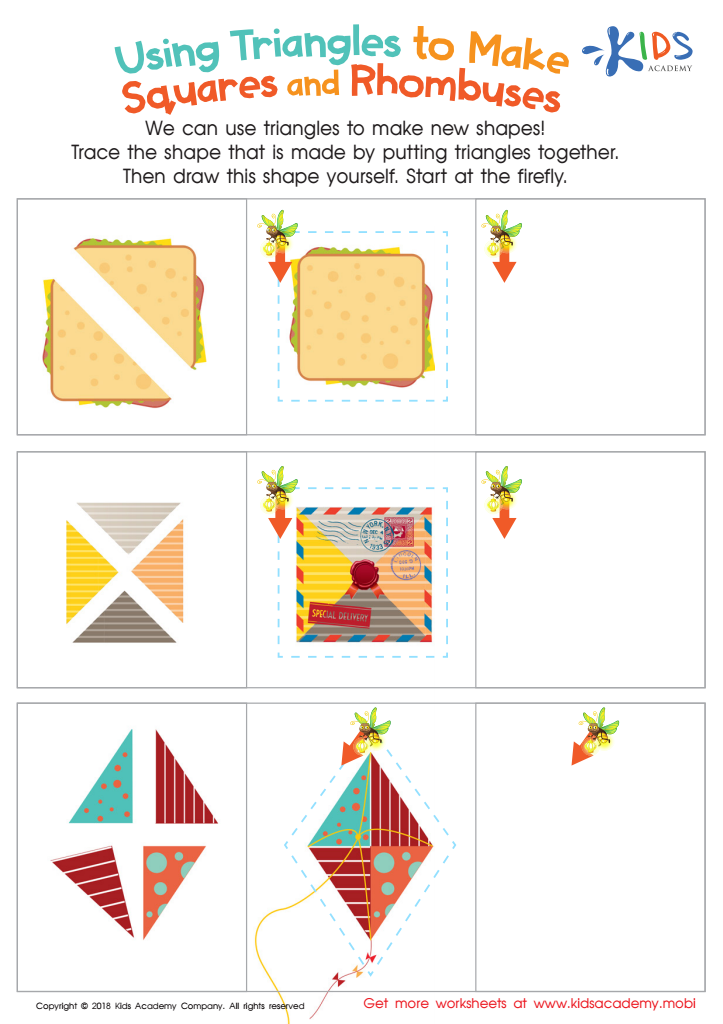
Using Triangles to Make Squares and Rhombuses Worksheet
 Assign to My Students
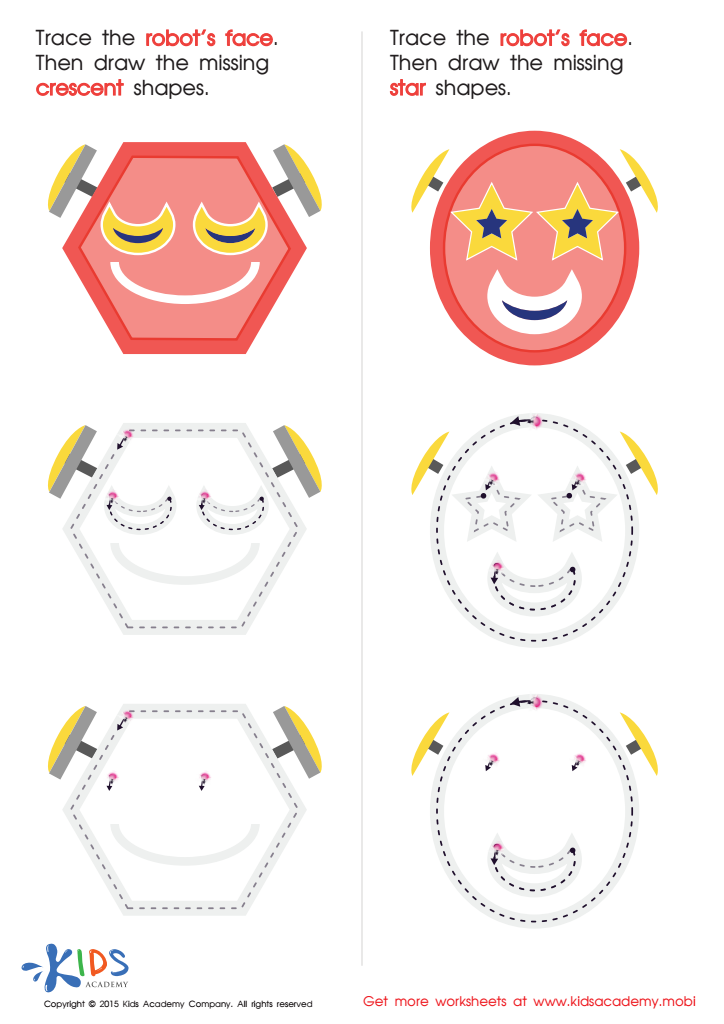
Composing a Robot's Face of Crescents And Stars Worksheet
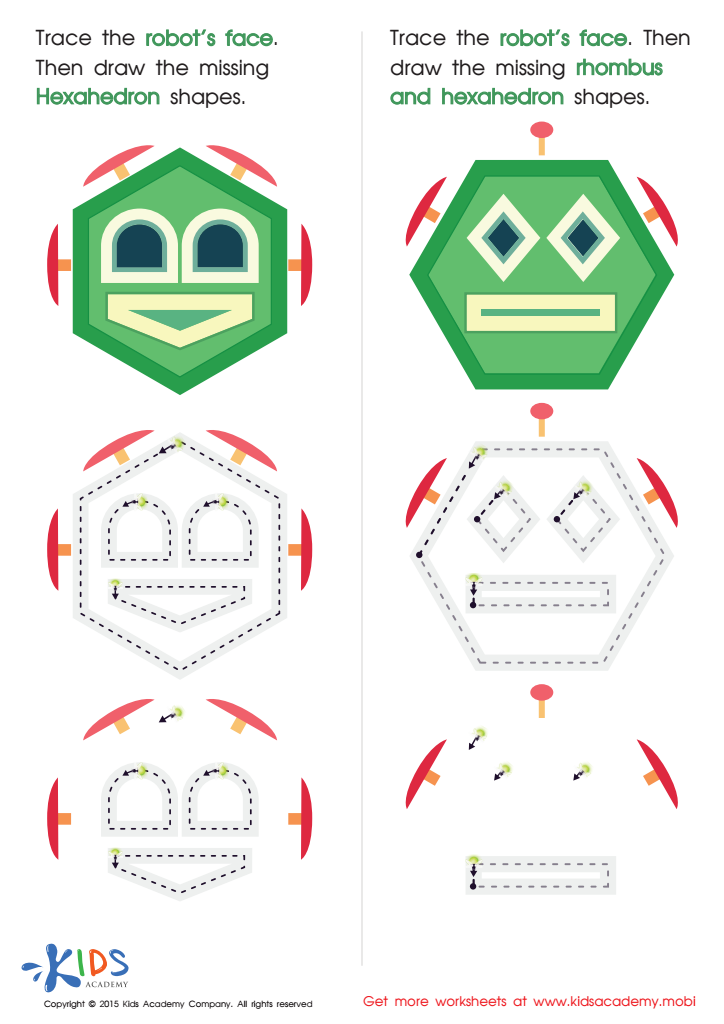
Practice Drawing Hexahedrons And a Rhombus Worksheet
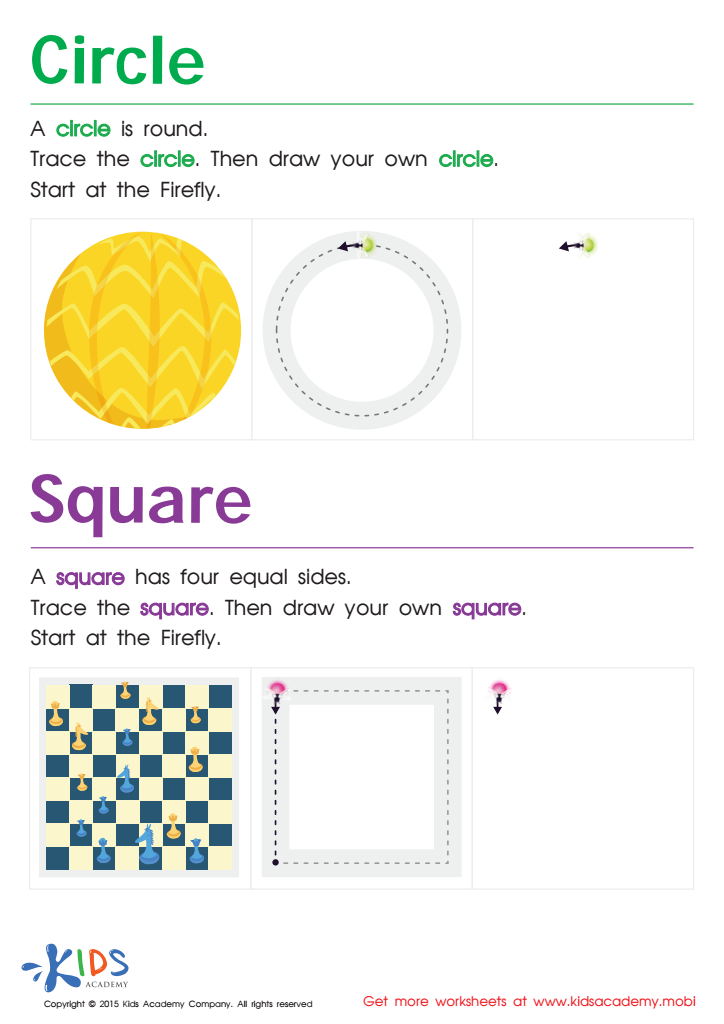
Trace And Draw a Circle And a Square Worksheet
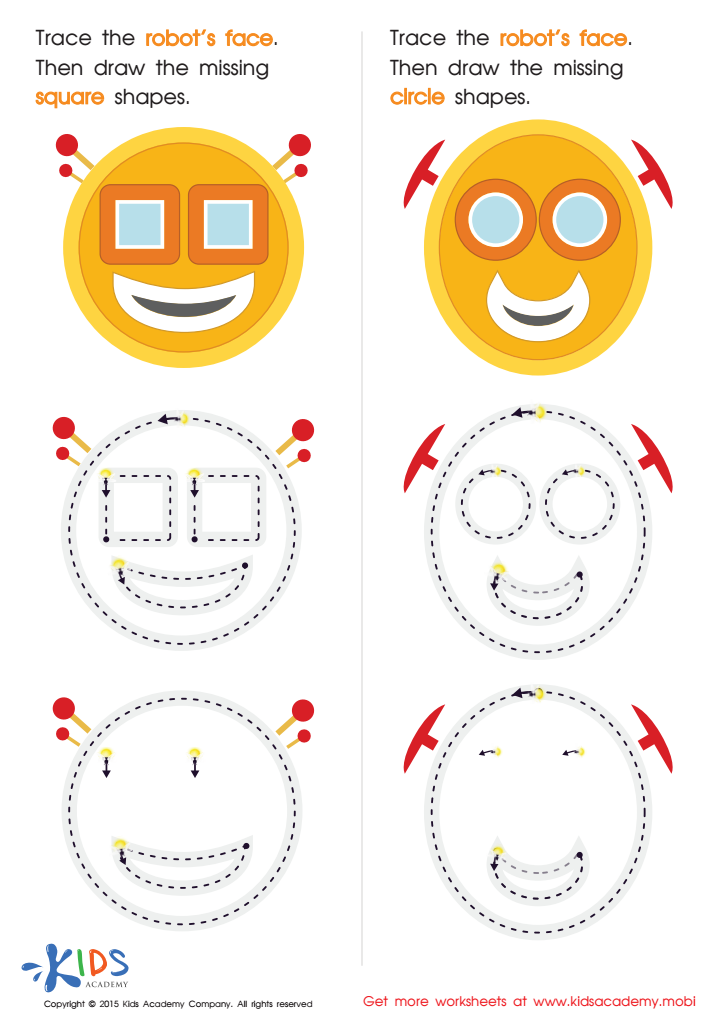
Practicing to Draw Circles And Squares Printable
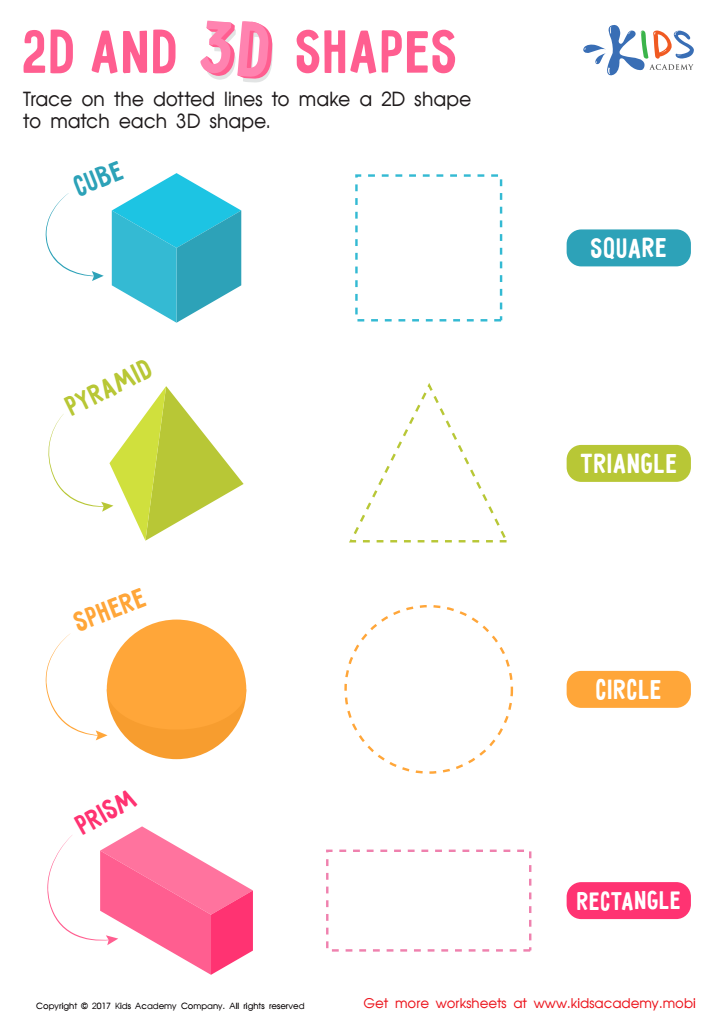
2D and 3D Shapes Worksheet
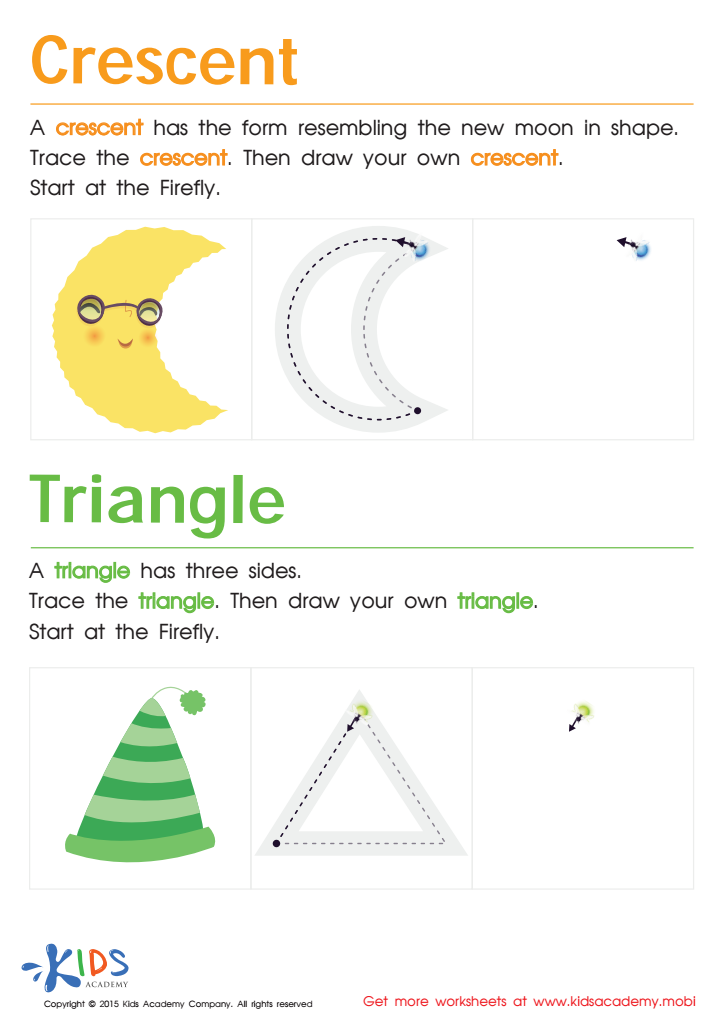
Learning to Draw Crescents And Triangles Worksheet
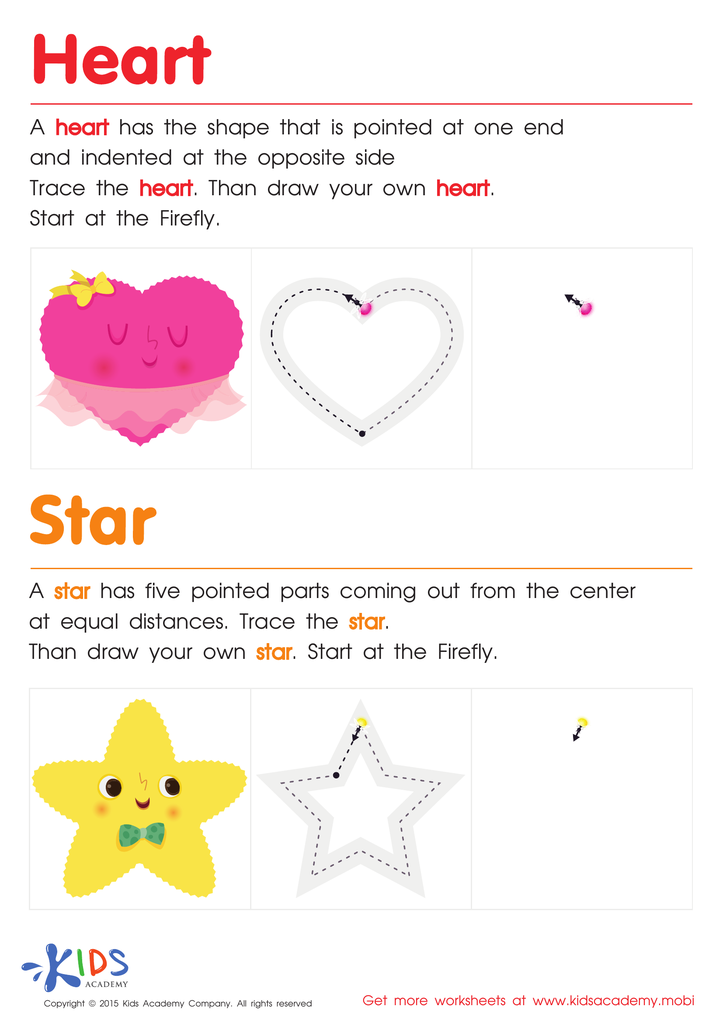
Let's Learn to Draw Hearts And Stars Printable
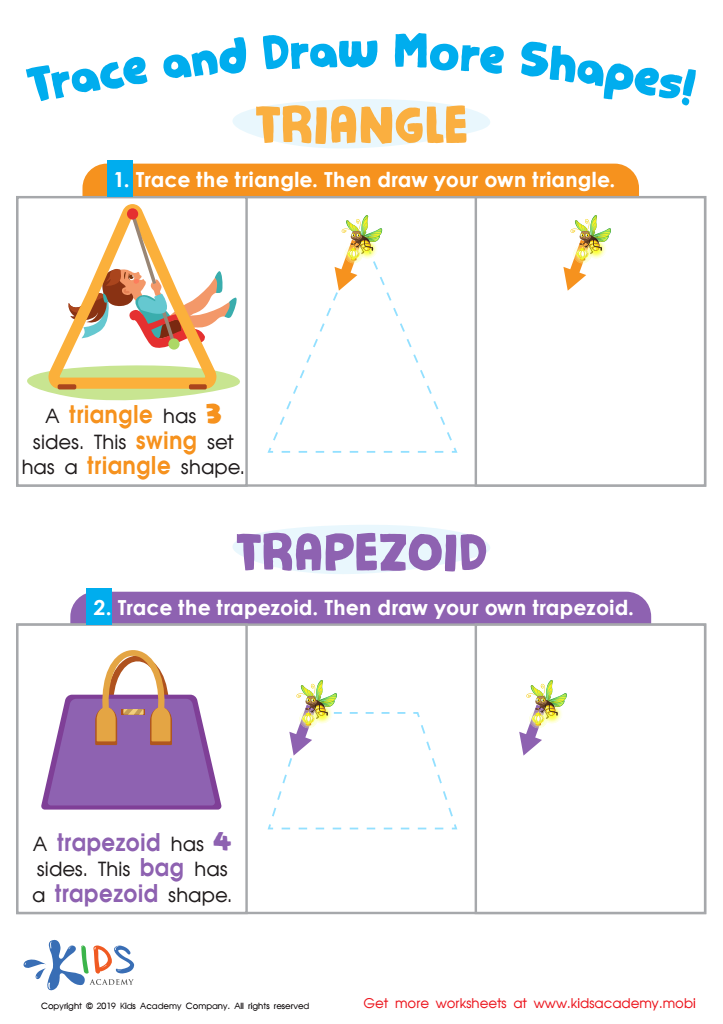
Trace and Draw More Shapes Worksheet
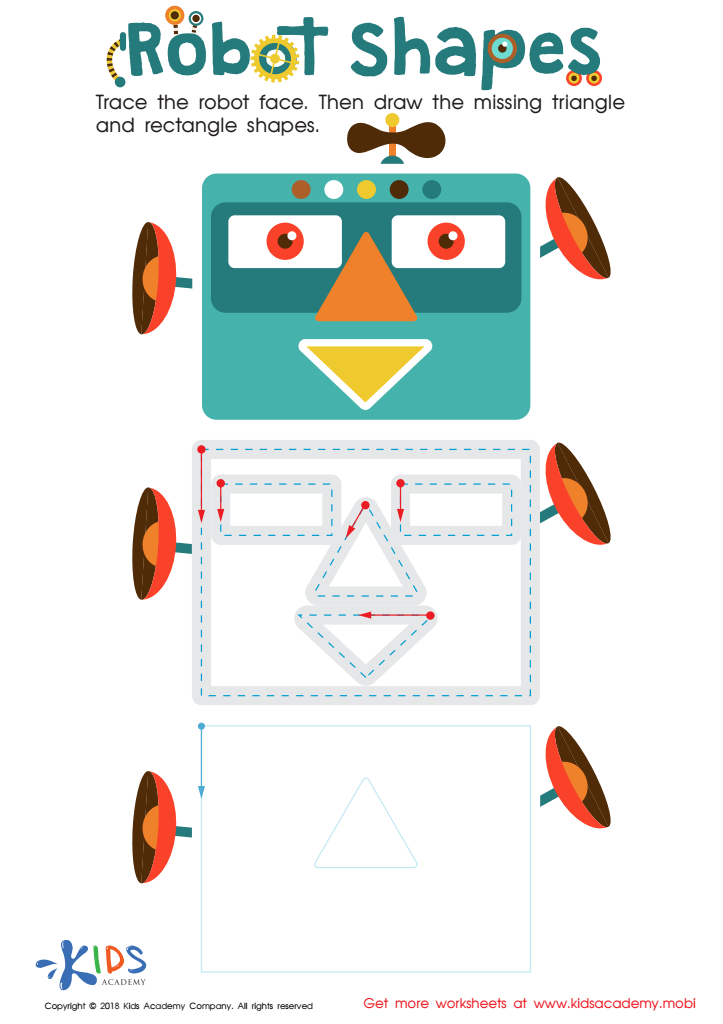
Robot Shapes Worksheet
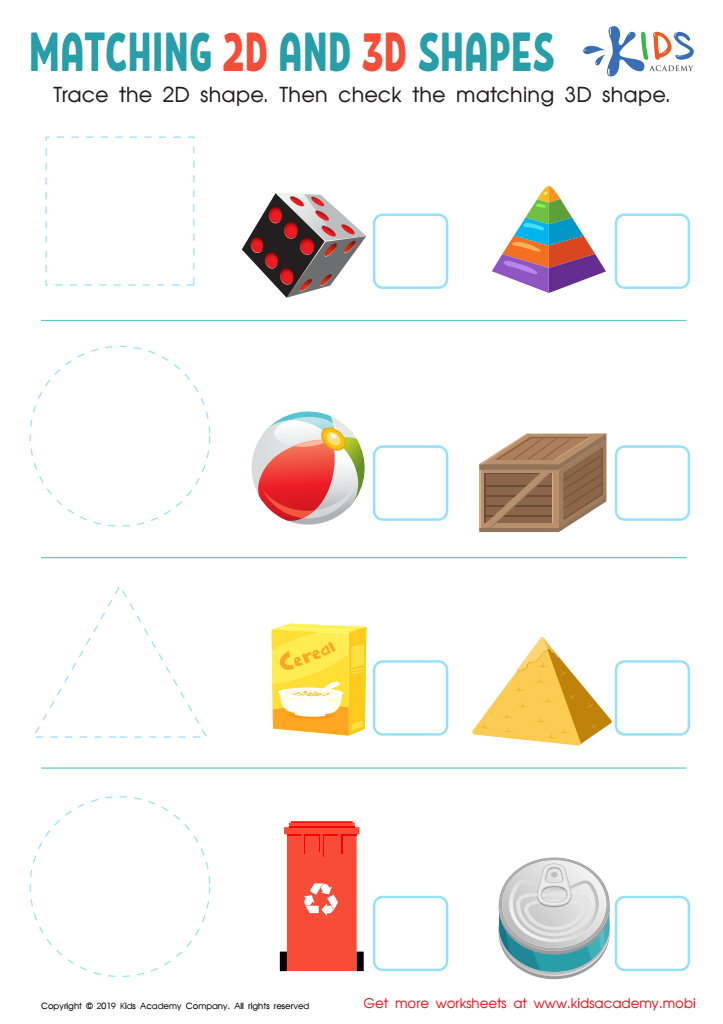
Matching 2D and 3D Shapes Worksheet
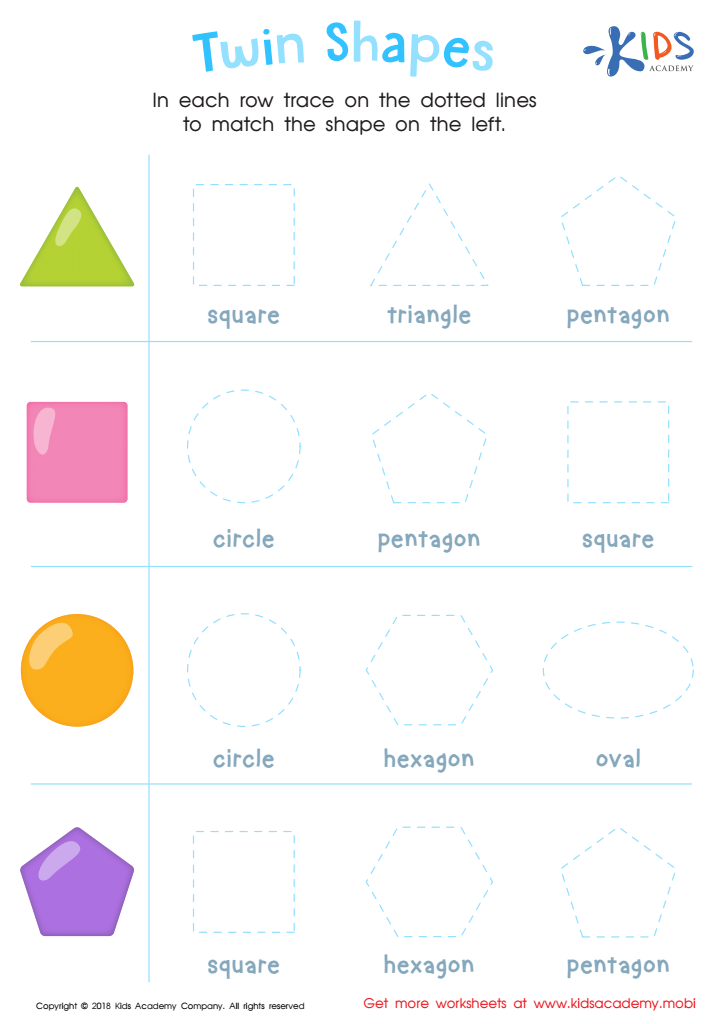
Twin Shapes Dot-to-Dot Worksheet
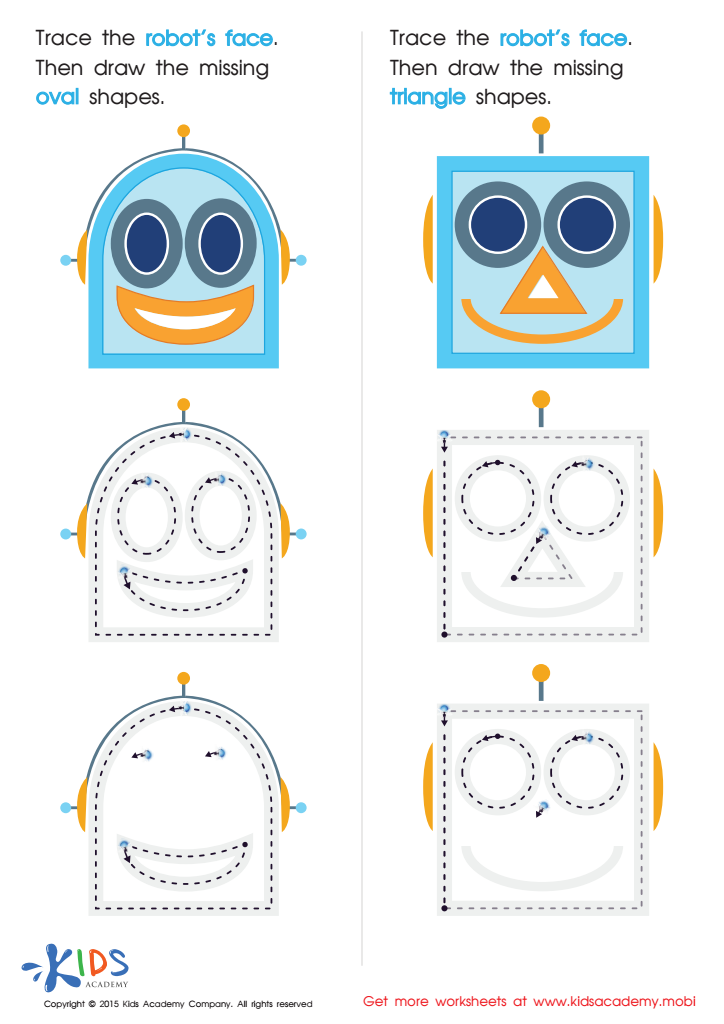
Drawing Ovals And Triangles with Fun Printable








Shape recognition and tracing shapes are foundational skills that play a vital role in the early development of children aged 4 to 8. Parents and teachers should care about these activities because they foster critical cognitive abilities, motor skills, and spatial awareness essential for a child’s overall growth.
Engaging in shape recognition helps children identify and categorize different geometric forms, enhancing their analytical thinking and problem-solving skills. This understanding provides the groundwork for more complex mathematical concepts, paving the way for success in subjects such as geometry later in life.
Tracing shapes hones fine motor skills, which are crucial for tasks like writing and using tools. It promotes hand-eye coordination and strengthens the muscles in a child’s hands, facilitating smoother writing and drawing. This practice also develops concentration and perseverance, as children learn to navigate through the shapes.
Additionally, incorporating shape activities into the learning process encourages creativity and self-expression, allowing children to explore and engage with their environment. Through playful engagement with shapes, children build confidence and a sense of achievement. By nurturing these skills, parents and teachers are ensuring that children are well-prepared for future challenges in both academic and real-world settings.