Fine Motor Skills 2D Shapes Worksheets for Ages 5-7
12 filtered results
-
From - To
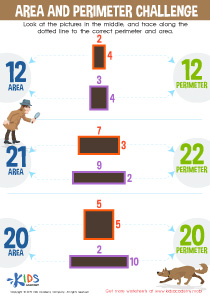
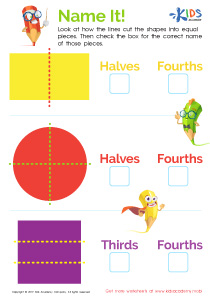
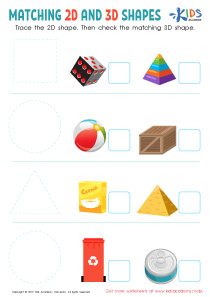
Help your child master fine motor skills with our engaging 2D shapes worksheets designed for ages 5-7! These printable resources combine fun and learning, guiding young learners as they explore basic shapes like circles, squares, and triangles. Each worksheet fosters hand-eye coordination through tracing, coloring, and cutting activities, making skill development enjoyable. Perfect for the classroom or home practice, our fine motor skills worksheets promote dexterity and precision while reinforcing shape recognition. Watch your child's confidence grow as they enhance their motor abilities and solidify their understanding of 2D shapes. Unlock creativity and readiness for future learning today!
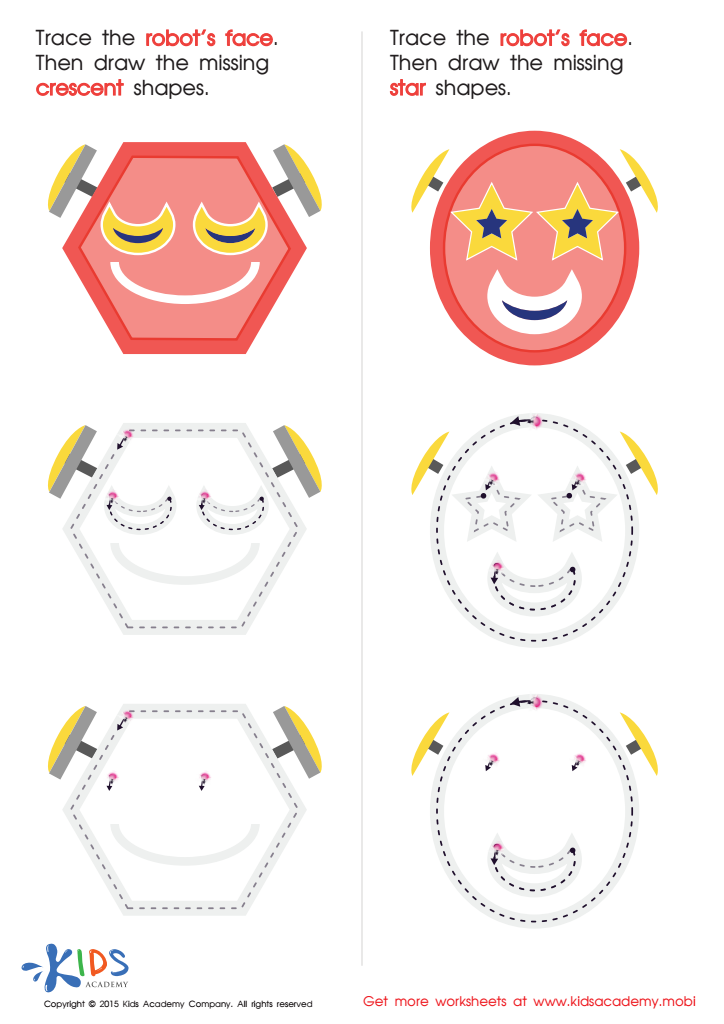
Composing a Robot's Face of Crescents And Stars Worksheet
 Assign to My Students








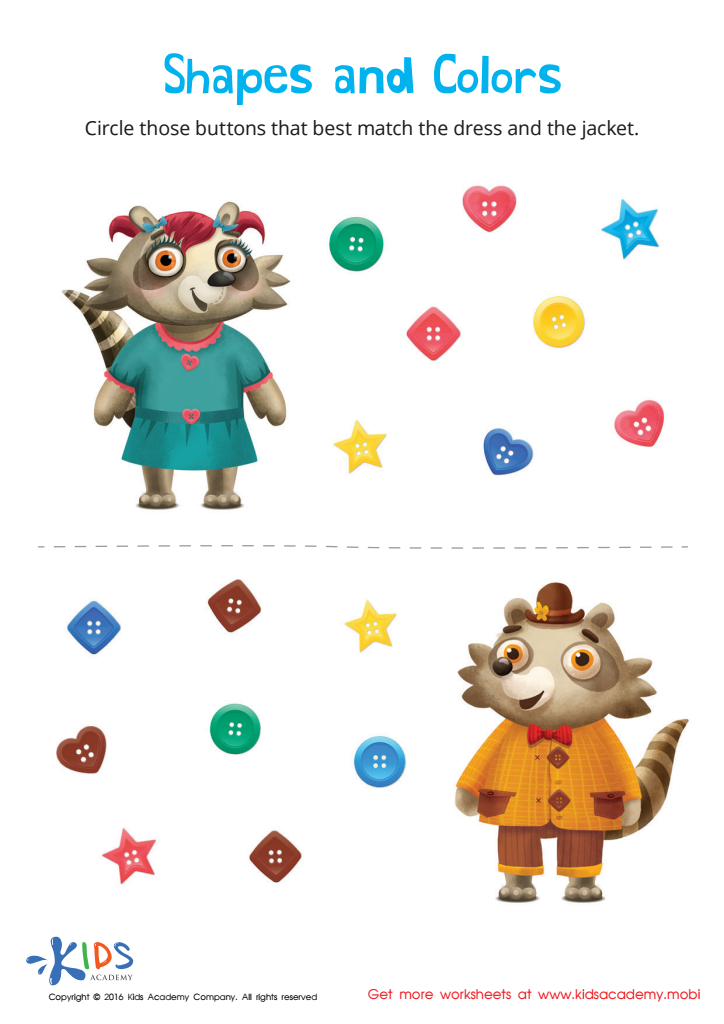
Matching: Shapes and Colors Worksheet
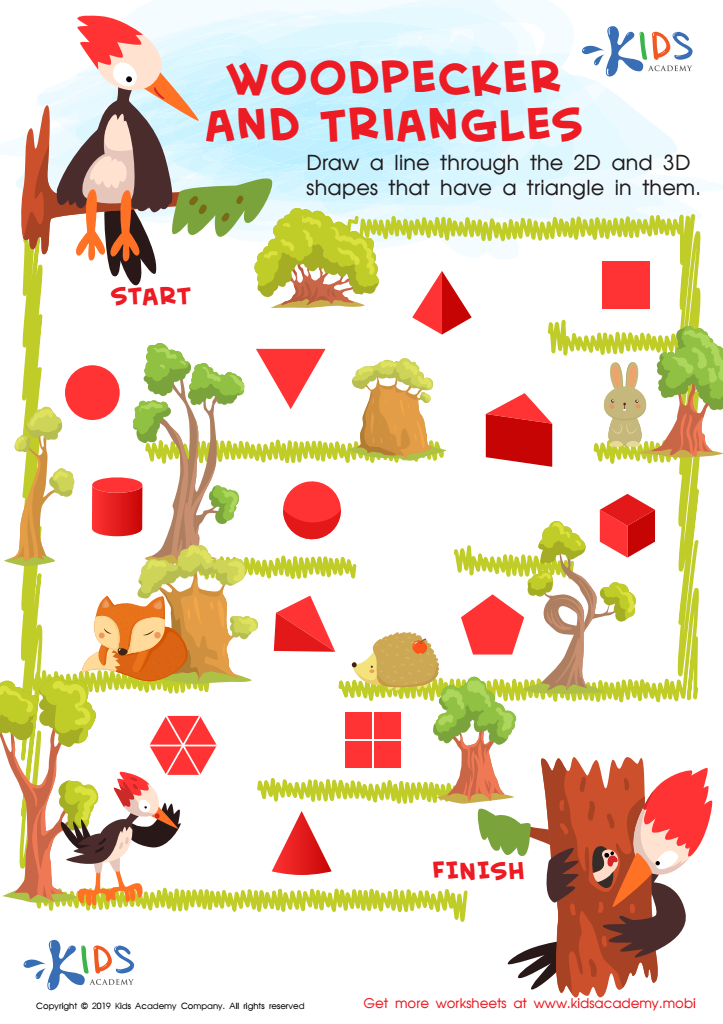
Woodpecker and Triangles Worksheet
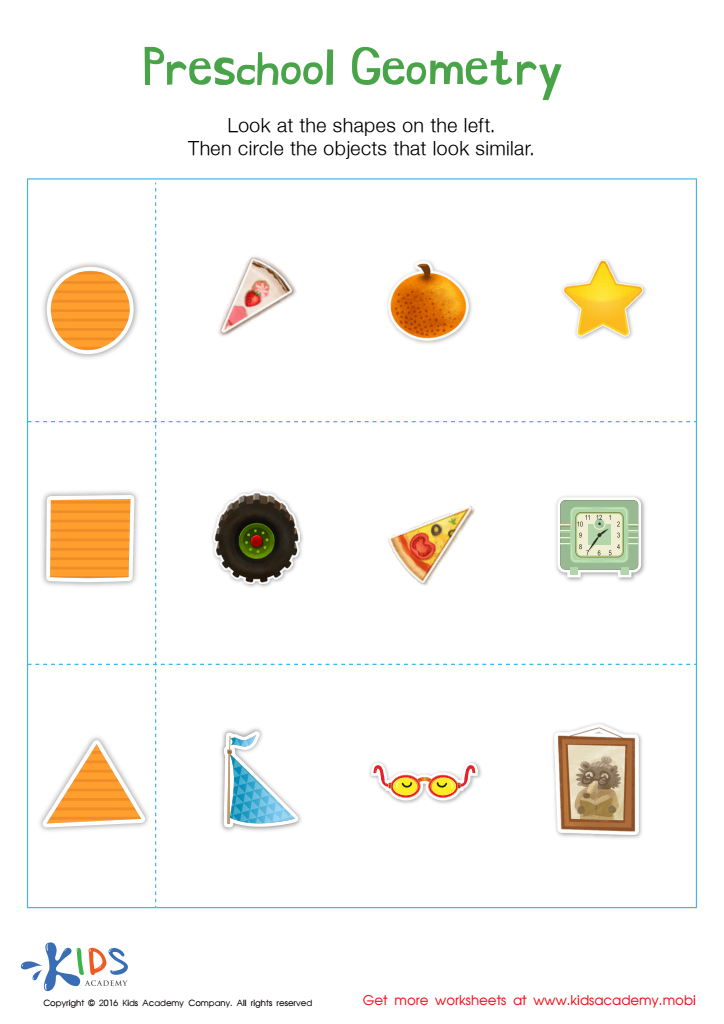
Preschool Geometry Match Up Worksheet
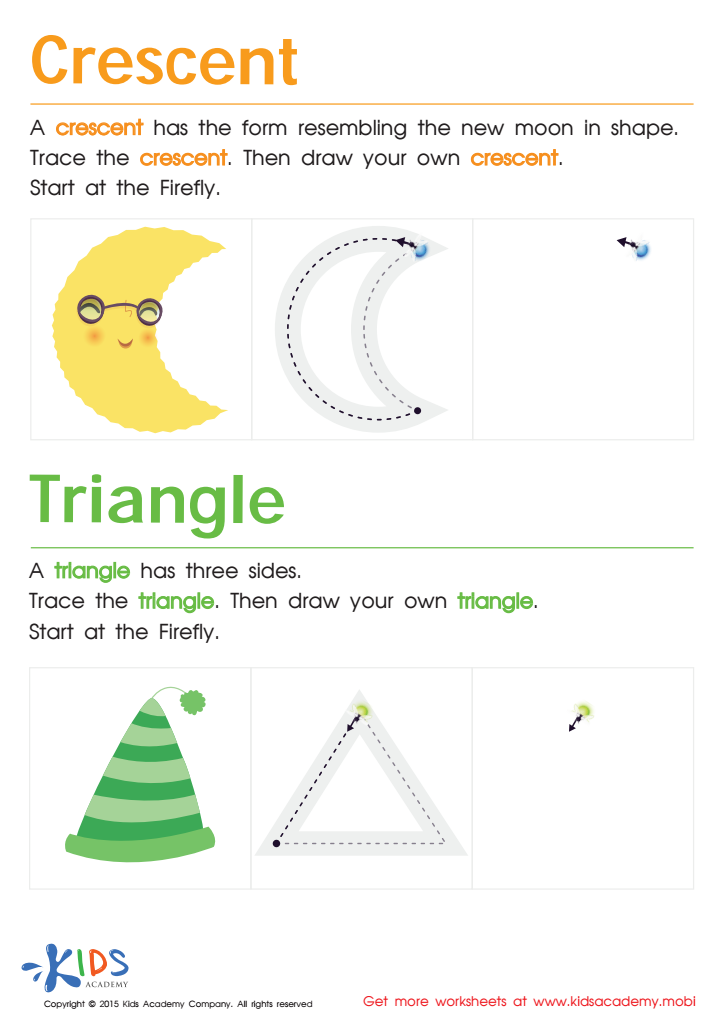
Learning to Draw Crescents And Triangles Worksheet
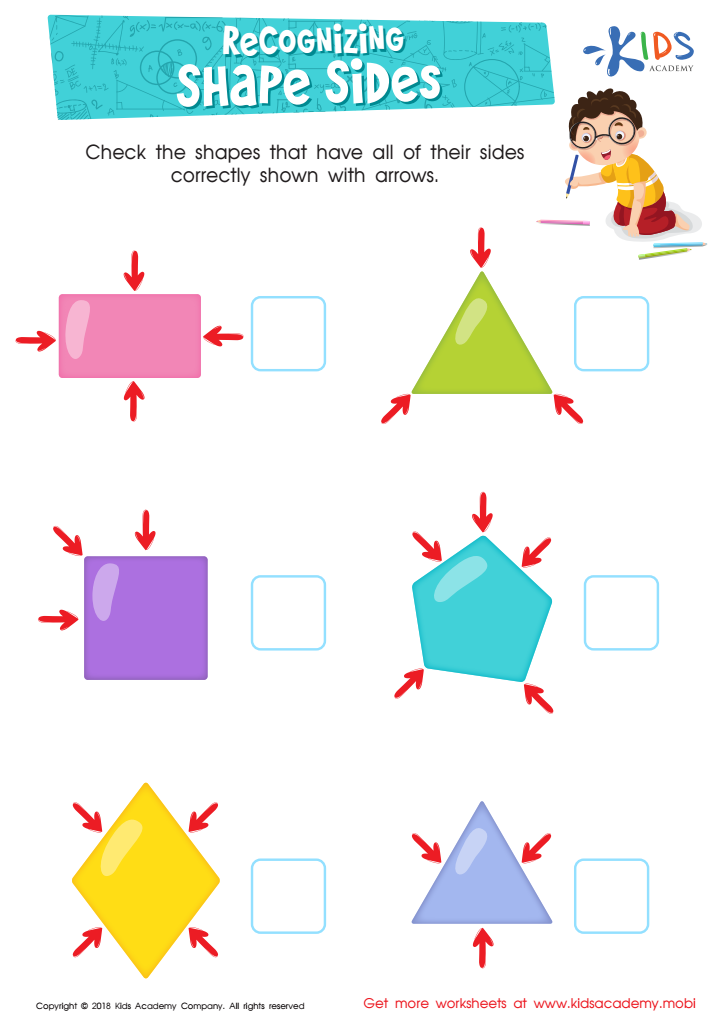
Recognizing Shape Sides Worksheet
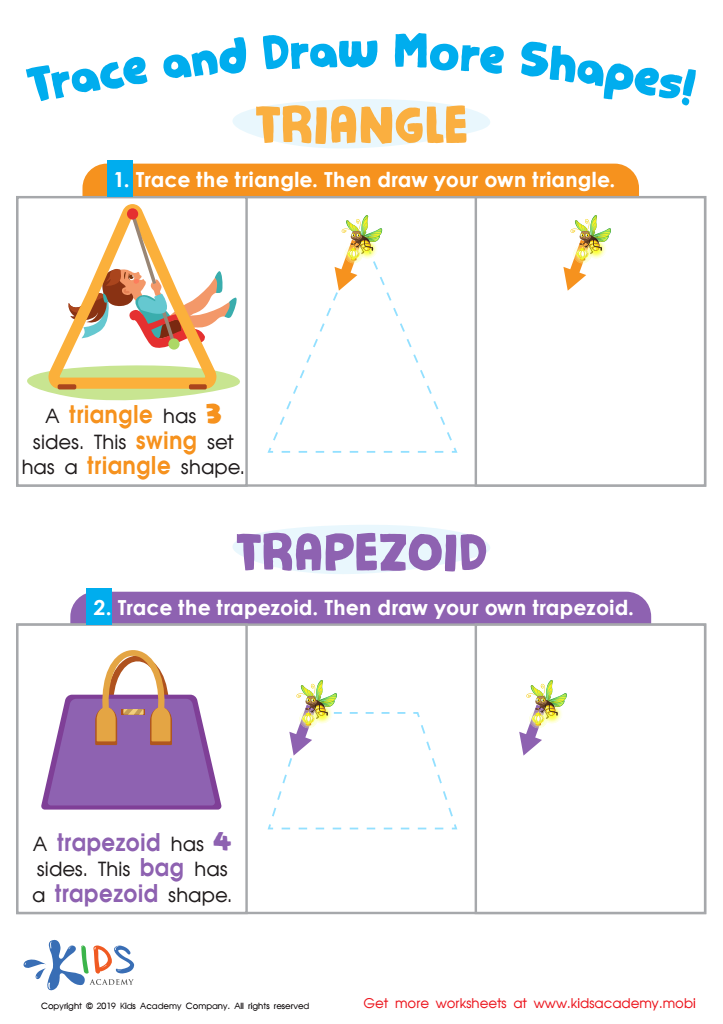
Trace and Draw More Shapes Worksheet
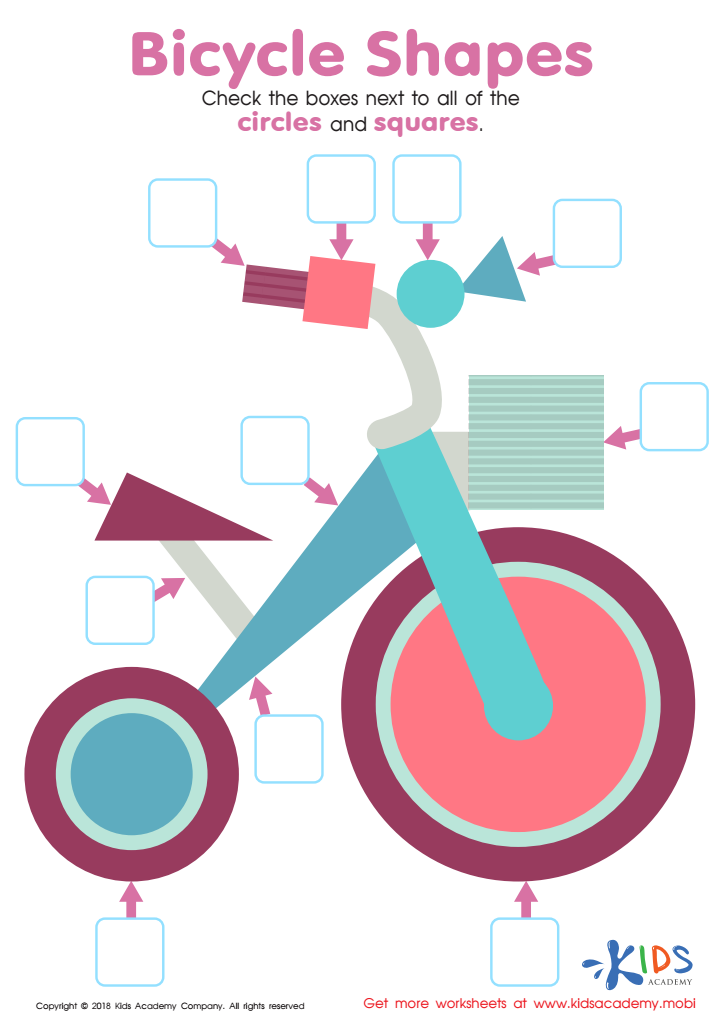
Bicycle Shapes Worksheet
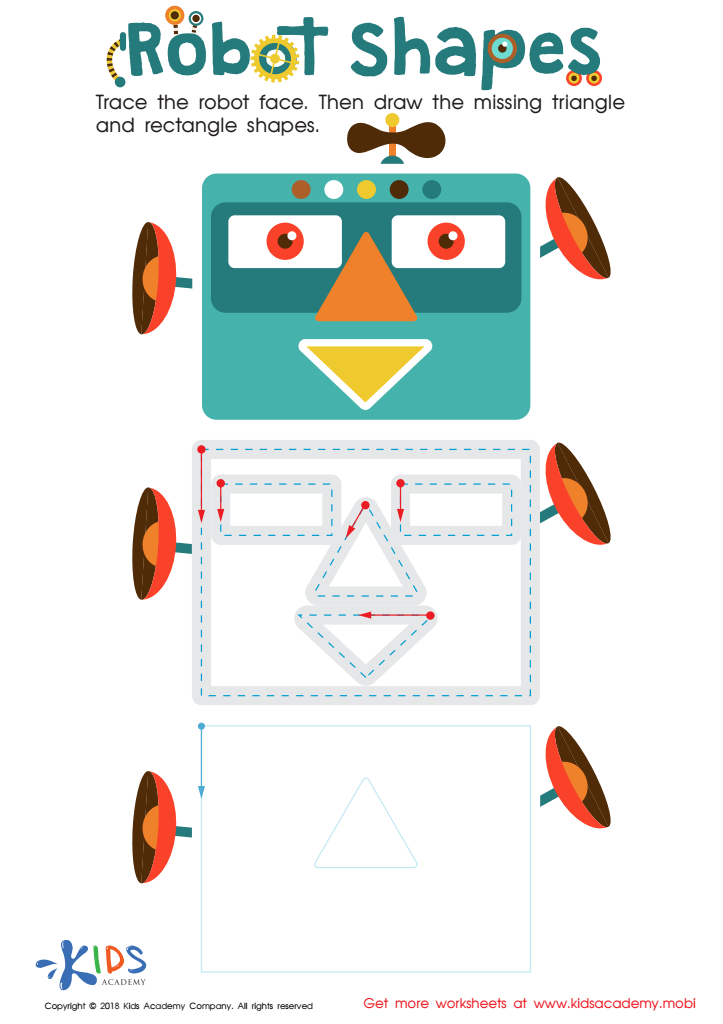
Robot Shapes Worksheet
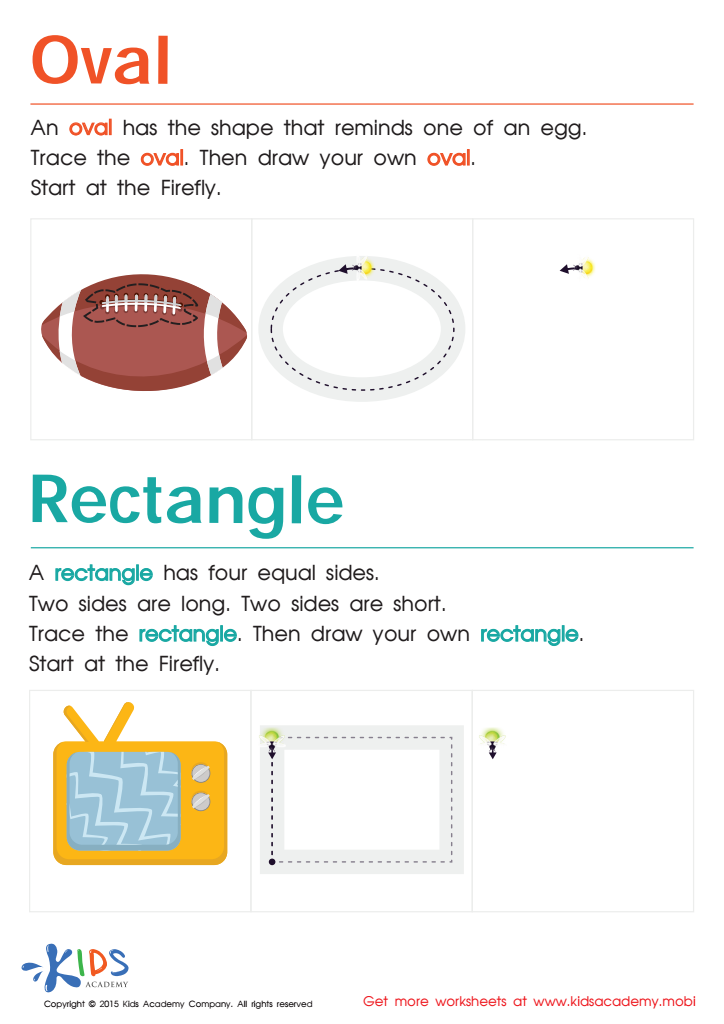
Easy Drawing of Ovals And Rectangles Worksheet
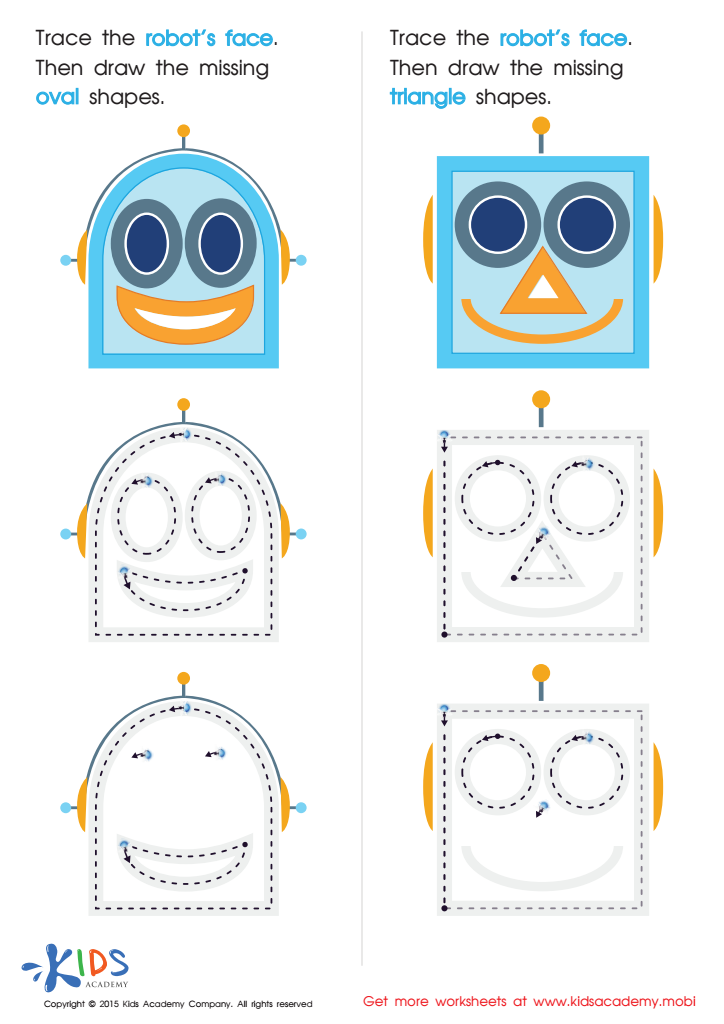
Drawing Ovals And Triangles with Fun Printable
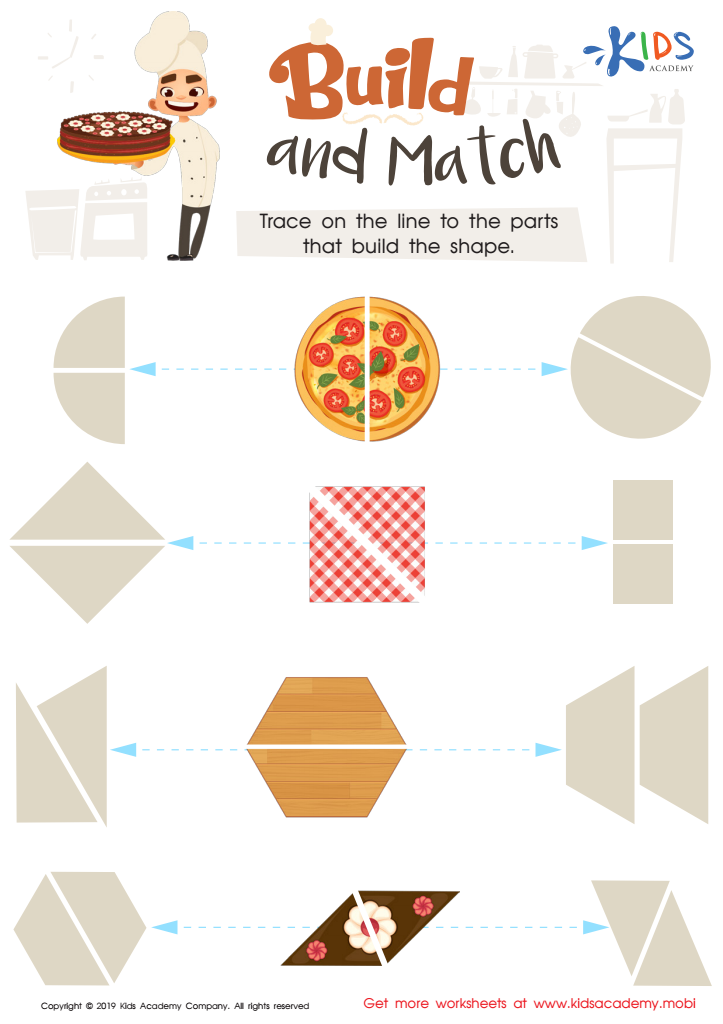
Build and Match Worksheet








Fine motor skills are essential for children's overall development, particularly for ages 5-7. At this stage, children are refining their hand-eye coordination, dexterity, and control over small muscles. Engaging with 2D shapes helps enhance these skills through activities that require cutting, tracing, and drawing. Parents and teachers must care about this because fine motor skills are foundational for everyday tasks such as writing, buttoning clothing, and using utensils, which contribute to a child's independence and confidence.
Moreover, understanding 2D shapes is crucial in building a strong mathematical foundation. Children learn to identify, compare, and manipulate shapes, which aids in their problem-solving abilities and spatial reasoning. These cognitive skills are important not only for math but also for subjects like art and science.
Additionally, focusing on fine motor skills and 2D shapes fosters creativity and expression, offering children numerous avenues for exploration and discovery. With a strong basis in these areas, children are better prepared for future academic challenges. Ultimately, raising awareness about the importance of fine motor skills helps cultivate an environment where children can thrive, learn efficiently, and develop essential life skills. Parents and teachers play a pivotal role in supporting this critical aspect of early childhood education.